AI-Generated Val Kilmer to Posthumously Appear in As Deep as the Grave After His Death


22 Sources
22 Sources
[1]
AI Brings Val Kilmer Back to the Big Screen a Year After His Death
Expertise Smart home | Smart security | Home tech | Energy savings | A/V Actor Val Kilmer died in 2025, but he'll be seen in an upcoming movie he didn't live to film. The historical archaeologist drama As Deep As the Grave will include an AI version of the actor who died at age 65 after a battle with throat cancer. It's not the first time we've seen studios use AI this way, but it could be the most successful. Director and writer Coerte Voorhees revealed to Variety on Wednesday that he would use AI to bring Kilmer's likeness back to play Father Fintan, a Native American priest. As Deep As the Grave tells the true story of an archaeologist couple who worked with the Navajo people in the 1920s to learn about America's very first civilizations. Voorhees says that Kilmer agreed to play the role five years ago, but the actor's struggles with throat cancer made him unable to complete work on it. There's no date yet for the film's release. Hollywood actors have increasingly found themselves at odds with generative AI, a technology that has rapidly begun to infiltrate nearly every aspect of the entertainment industry. From writing scripts to generating digital likenesses of actors' faces and voices, AI now has the ability to replicate performances with striking realism. In some instances, studios have gone even further, creating entirely new AI "actors" who can perform without ever stepping onto a set. This has raised complex questions about consent, compensation, and creative ownership, as performers grapple with the reality that their identities and craft can now be reproduced, modified, or even replaced by algorithms. These attempts have been strongly opposed by the SAG-AFTRA labor union representing entertainers, which has been engaged in strikes against video game companies and is currently in precarious negotiations with film and TV studios. The labor guild has certain protections against generative AI following a strike that lasted more than 100 days, including requirements for clear consent and fair compensation. The current negotiations would expand these protections. A SAG-AFTRA representative didn't immediately respond to a request for comment. Voorhees says that Kilmer's children approve of this AI resurrection. "[Kilmer] always looked at emerging technologies with optimism as a tool to expand the possibilities of storytelling," his daughter, Mercedes Kilmer, said in a statement. "This spirit is something that we are all honoring within this specific film, of which he was an integral part."
[2]
A Fake Val Kilmer Tests What Movie Lovers Will Tolerate
The use of AI to resurrect deceased actors raises concerns about the impact on the film industry, with artists fearing for their livelihoods and the potential for audiences to become desensitized to artificial experiences. Coming soon to a theater near you: your favorite deceased celebrity ______, who died in ______, has been resurrected via artificial intelligence to star in a forthcoming film entitled ______. It's an odd fill-in-the-blank scenario we may begin hearing more often. This month, the conversation is about Val Kilmer. He passed away in April and will be AI-generated to star in, eerily enough, an indie movie called As Deep as the Grave. The news will be a test for filmmakers and studios to see whether fans and the general public are willing to accept such digital replacements and fabrications. So far, they aren't exactly passing. Before he died, Kilmer was cast in the movie to play Father Fintan, a Catholic priest and Native American spiritualist, but his battle with throat cancer prevented him from ever being filmed. Neither his initial involvement nor reports that his family has sanctioned the use of his image and voice in the film -- citing his strong personal connection to the material -- have been enough to dissuade fans from expressing their outrage online. As Deep as the Grave is not the first time that AI has been used for a Kilmer performance. Due to the actor's damaged trachea from a tracheostomy, the technology was used to provide his speaking voice for his cameo as Lt. Tom "Iceman" Kazansky in 2022's Top Gun: Maverick. But using an AI-generated Kilmer for larger portions of a film is an entirely different matter. Moviegoers have been uncomfortable with the digital resurrection of deceased actors before. The 2016 film Rogue One: A Star Wars Story is a notable example. The character of Grand Moff Tarkin (originally played by the late Peter Cushing, who died in 1994) was brought back for this prequel. Motion capture technology was used on actor Guy Henry, with Cushing's likeness digitally overlaid onto his performance. Although "Cushing" only spent a few minutes onscreen, some thought his posthumous return was unsettling. Earlier versions of this use of computer-generated imagery (CGI) were far less advanced. Notable instances include The Crowin 1993 (after Brandon Lee was accidentally shot on set) and Gladiator in 2000 (after Oliver Reed died of a heart attack). Both movies used, to varying degrees, a combination of unused footage, faces grafted onto other people's bodies, and script adjustments. These were cutting-edge experiments at the time, but they did not set off many alarms for several reasons: They were anomalies, used to complete films in which most of the deceased actor's performance had already been captured, and they still relied on human creativity and skill. Animators, editors, and visual effects artists worked to stitch together existing footage, body doubles, and digital enhancements. The creative landscape shaped by AI generation is markedly different. If you can prompt it, you can fabricate images, words and sounds on demand. Artists in Hollywood and beyond fear for their livelihoods because of the technology's ability to replicate their work, even if the output often lacks the depth and originality of human genius. SAG-AFTRA has lobbied for protections against AI for actors, and various industries have demanded that California Governor Gavin Newsom push harder on AI legislation. But even as the industry and fans push back, a disconcerting reality is taking shape: The public is being bombarded with more and more AI slop on social media every day, and many are having a hard time distinguishing reality from fiction. If that trend continues, more people may grow desensitized to what would've once been jarring. Skeptics, believing that a shared sense of unease will be strong enough to prevent the normalization of artificial experiences, might argue that audiences will resist. I certainly hope so, but as Hollywood continues to look for more ways to cut costs, economic pressures can override creative and ethical concerns. As Deep as the Grave's writer and director Coerte Voorhees told Variety, "Normally we would just recast an actor. I'm all about working with our actors, and we have brilliant performances all throughout this movie. But we can't roll camera again. We don't have the budget. We're not a big studio film. So we had to think of innovative ways to do it. And we realized the technology is there for us." Sign up for the Bloomberg Opinion bundle Sign up for the Bloomberg Opinion bundle Sign up for the Bloomberg Opinion bundle Get Matt Levine's Money Stuff, John Authers' Points of Return and Jessica Karl's Opinion Today. Get Matt Levine's Money Stuff, John Authers' Points of Return and Jessica Karl's Opinion Today. Get Matt Levine's Money Stuff, John Authers' Points of Return and Jessica Karl's Opinion Today. Plus Signed UpPlus Sign UpPlus Sign Up By continuing, I agree to the Privacy Policy and Terms of Service. Indeed, the technology is there. Who the "us" includes, though, is more complicated. Are fans' feelings being considered? Raising a star from the dead has been used mainly for commercial gain. In 1997, I recall three Dirt Devil advertisements that aired, featuring the late Hollywood icon Fred Astaire, a decade after his death, dancing with a broom and a vacuum cleaner. The footage had obviously been digitally manipulated, but it was also given the blessing of Astaire's wife, Robyn. The Dirt Devil campaign felt like sacrilege to some. As the Roanoke Times noted at the time: "TV audiences are used to seeing Marilyn Monroe, Jackie Gleason, John Wayne and other long-dead celebrities digitized into commercials for everything from perfume to beer. Critics argue that it denies them a voice in how their image or performance is used." While Kilmer's daughter, Mercedes, has said her father embraced emerging technologies for artistic purposes with optimism, it's unclear whether he officially sanctioned the AI recreation of his likeness for As Deep as the Grave before his death. Even if Kilmer approved, the impact of this "performance" risks being undercut by its artificiality -- and what's at stake goes beyond one star. A body of work carries meaning because it's fixed in time and shaped by personal choices. Attempts to prolong that legacy make it less meaningful. More from Bloomberg Opinion: * Tom Cruise and Brad Pitt Can Relax. AI Won't Kill Movies: Parmy Olson * Horror Is Having a Well-Deserved Oscar Moment: Bryan Reesman * Quincy Jones Reminds Us Why AI Will Never Surpass Human Genius: Dave Lee Want more from Bloomberg Opinion? OPIN <GO> . Or subscribe to our daily newsletter.
[3]
Val Kilmer to appear posthumously through AI in film 'As Deep as the Grave'
LOS ANGELES, March 18 (Reuters) - Actor Val Kilmer will posthumously appear in what First Line Films calls a first-ever performance enabled by generative artificial intelligence in the upcoming film "As Deep as the Grave," the production company announced on Wednesday. Kilmer, best known for roles in "Top Gun," "The Doors" and "Batman Forever," had originally been cast as Father Fintan -- a Catholic priest and Native American spiritualist -- but was unable to work on set due to complications stemming from throat cancer. He was 65 when he died in April last year. Working closely with Kilmer's estate and his daughter, Mercedes Kilmer, the filmmakers say the decision to use AI technology was made with the intention of honoring the actor's deep personal connection to the role. "At the time that he was cast, Kilmer expressed that the character of Fintan spoke to him both culturally and spiritually," First Line Films said in a press release, citing his Native American heritage and longtime love of the American Southwest. Written and directed by Coerte Voorhees, "As Deep as the Grave" follows southwestern archaeologists Ann Morris, played by "Tin Star" actor Abigail Lawrie, and Earl Morris, portrayed by "Harry Potter" star Tom Felton. The film centers on their excavations in Canyon de Chelly, Arizona, while also exploring the history and lived experiences of the Navajo people. First Line Films, which is based in New Mexico, said it will employ state-of-the-art generative AI technology to recreate Kilmer's performance for the film, allowing him to embody what the company described as a "historically significant" character. A California-born, Juilliard-trained actor, Kilmer built a career marked by intense performances and an often-mythologized reputation as a Hollywood bad boy. His filmography includes "Tombstone," in which he delivered a memorable turn as Doc Holliday, as well as blockbuster and biographical roles that cemented his status as one of the most distinctive actors of his generation. Reporting by Danielle Broadway and Jane Ross; Editing by Stephen Coates Our Standards: The Thomson Reuters Trust Principles., opens new tab * Suggested Topics: * Lifestyle Danielle Broadway Thomson Reuters Danielle Broadway covers topics that range from film premieres, celebrity news, Hollywood legal proceedings, theater, press junkets, enterprise stories and more at Thomson Reuters. She has a bachelor's and a master's degree in English Literature from Cal State Long Beach and previously worked at the Los Angeles Times and freelanced at Teen Vogue, USA Today, Black Girl Nerds and other outlets. Danielle won an LA Press Club award for her Los Angeles Times cover story about South Los Angeles representation in the show "Insecure" and is a GLAAD Media Award nominee for her work on the PBS series "Subcultured" episode about the gay rodeo. She is a member of the African American Film Critics Association, Critics Choice Association, LA Press Club and GALECA (LGBTQ+ Critics).
[4]
An AI-rendered Val Kilmer will posthumously appear in a new film
NEW YORK (AP) -- A year after the actor's death, a generative AI version of Val Kilmer will co-star in an independent film, in one of the boldest uses yet of artificial intelligence in moviemaking. First Line Films announced Wednesday that Kilmer has posthumously joined the cast of a film titled "As Deep as the Grave." The producers said that, before his death, Kilmer had signed on to perform in the movie but was unable to because of his health. Kilmer's estate gave permission for his digital replication, and is being compensated for it. Mercedes Kilmer, the actor's daughter, said the role resonated with her father. "He always looked at emerging technologies with optimism as a tool to expand the possibilities of storytelling," she said in a statement. "This spirit is something that we are all honoring within this specific film, of which he was an integral part." Kilmer died last April at the age of 65 from pneumonia. In 2014, Kilmer was diagnosed with throat cancer and required two tracheotomies. After losing his natural speaking voice, Kilmer turned to an AI software company to digital recreate his voice. In his final screen performance, 2022's "Top Gun: Maverick," Kilmer's voice was digitally altered. The use of artificial intelligence in filmmaking has been one of the most contentious topics in Hollywood in recent years. Lately, some have attempted to make greater inroads for AI-generated performance. The company Xicoia last year launched the AI-concocted persona "Tilly Norwood"; earlier this month, it debuted a music video. SAG-AFTRA, the actors union, has condemned Xicoia's "AI actor," but it has regulations around other uses of the technology. Its rules stipulate that consent from performers must be given for the use of digital replicas. "Consent not obtained before death must be obtained from an authorized representative or the union," reads its guidance. Representatives for SAG-AFTRA didn't immediately respond to questions Wednesday. "As Deep as the Grave," formerly titled "Canyon of the Dead," was shot several years ago but has been stuck in postproduction. It's based on a true story about the archaeologists Ann and Earl Morris, whose Arizona excavations uncovered Native American history. The AI version of Kilmer plays Father Fintan, a Catholic priest and Native American spiritualist. The cast includes Abigail Lawrie, Tom Felton, Wes Studi and Abigail Breslin. Coerte Voorhees, the film's writer and director, said Kilmer, who identified as part Native American, was drawn to the project five years ago. Producers are seeking distribution with the hope of releasing the film this year. "It was very unfortunate that his health at the time prevented him from playing this role which spoke to him spiritually and culturally," Voorhees said. "We are honored to collaborate with his daughter Mercedes, who brings her own filmmaking experience, to bring this character to life in the way that we had all originally imagined it."
[5]

Val Kilmer will appear in a new movie as an AI recreation approved by his family
Serving tech enthusiasts for over 25 years. TechSpot means tech analysis and advice you can trust. A hot potato: There has been plenty of controversy over the use of AI replicating actors' voices and likenesses, especially when it happens without their permission. In the case of the late Val Kilmer, the star will be recreated in an upcoming movie - with his family's blessing. According to Variety, Kilmer was cast as a Catholic priest and Native American spiritualist in 2020 for a movie called "As Deep as the Grave," but his battle with throat cancer meant he was too ill to make it onto the set. "He was the actor I wanted to play this role," says the film's writer and director Coerte Voorhees. "It was very much designed around him." Kilmer sadly passed away from his illness in 2025 without ever shooting a single scene for the movie, but he will still appear in AI-generated form. "Despite the fact some people might call it controversial, this is what Val wanted," Voorhees told Variety. Courtesy of Variety Kilmer was forced to use AI to create a version of his voice when he appeared in Top Gun: Maverick, thanks to his partnership with Sonantic. He said at the time that he was "grateful" to the technology company for giving him a "chance to narrate my story, in a voice that feels authentic." Exactly which AI technology will be used to recreate Kilmer in the movie is unknown. Vorhees says he has many images of Kilmer provided by his family, as well as footage from his final years. The makers of As Deep as the Grave say they fully expect it to attract a lot of controversy - which could actually make the movie more popular - but they say it will be an example of how AI can be used ethically. They also note that the production relied on SAG guidelines and compensated Kilmer's estate for his appearance. We'll obviously never know for certain whether Kilmer himself would have approved of this project. His daughter Mercedes Kilmer said she supported the film, and noted that her father was "a deeply spiritual man" who resonated with a "story of discovery and enlightenment." Several actors have spoken out against using AI versions of themselves in movies after they die. In 2024, Robert Downey Jr. said he intends to "sue all future executives" who allow an AI-created version of him. "My law firm will still be very active [after his death]," said the Marvel star. In December 2025, a 2019 lawsuit over Disney's recreation of Peter Cushing in Rogue One was thrown out after a judge found in favor of Disney and dismissed the claim.
[6]

AI Replica of Val Kilmer to Appear in 'As Deep as the Grave'
Kilmer's estate collaborated with the filmmakers to make a digital likeness of the actor, who died of cancer last year. A photorealistic A.I. likeness of Val Kilmer, the "Top Gun," "Batman Forever" and "Heat" actor who died from throat cancer last year, will appear in a new movie he had planned to shoot before being hindered by his illness. Coerte Voorhees, the movie's writer and director, said the A.I. likeness had been created in collaboration with Kilmer's estate and would appear in a large portion of "As Deep as the Grave," about an archaeologist's discovery of an ancient Native American civilization. "This movie is absolutely a tribute to Val Kilmer and honoring this last character that he was going to play," Voorhees said. "We think this is a unique scenario that is going to prove to a lot of people the right way to do this." Using a trove of previously recorded videos, images and audio, the filmmakers were able to create a photorealistic digital model of Kilmer using a combination of publicly available generative A.I. tools. (Voorhees declined to say which ones.) They used traditional editing software to digitally insert the likeness into previously filmed scenes, and also used A.I. to create new scenes around the likeness. "If we were still in the process of physically filming, we would have considered recasting," Voorhees said. "But that just wasn't in the cards." Kilmer's daughter, Mercedes, said in a statement that her father was a deeply spiritual man and had resonated with his character, a real-life Catholic priest and Native American spiritualist who worked with the archaeologist Ann Axtell Morris in the 1920s. "He always looked at emerging technologies with optimism as a tool to expand the possibilities of storytelling," Kilmer said. "This spirit is something that we are all honoring within this specific film, of which he was an integral part." Voorhees and his brother Justin, a producer of "As Deep as the Grave," approached Mercedes Kilmer last year about using generative A.I. technology to create her father's likeness. In Val Kilmer's absence, the brothers had completed an earlier version of the film without him that they felt was incomplete. The new version is in postproduction and has a planned release this year. Digital imaging tools have been used before to allow actors to appear in films posthumously. Before the advent of modern A.I. technology, the makers of"Furious 7" (2015) used computer-generated imaging to create new scenes featuring the character portrayed by the actor Paul Walker, who died in a car crash during production. "Rogue One: A Star Wars Story" (2016) and "Star Wars: The Rise of Skywalker" (2019) featured digital resurrections of characters originally played by Peter Cushing and Carrie Fisher. And "The Flash" (2023) included a cameo from a digital facsimile of the "Superman" star Christopher Reeve, who died in 2004. Coerte Voorhees said he hoped that his movie would be an example of how to create similar performances using today's more powerful generative A.I. tools. "We think this is the right first step in a new world we're all exploring," he said.
[7]

Val Kilmer to Be AI-ed Into Movie with Blessing of His Family
Val Kilmer had a lot of unconventional beliefs, and the director claims this is what he wanted. According to Variety, photorealistic moving images ostensibly of the late, great movie star Val Kilmer are going to be used to make it seem as if he is starring in an upcoming movie about a Native American Catholic priest with tuberculosis called As Deep as the Grave. Per Variety: “Even though he didn’t shoot a single scene, [director Coerte] Voorhees has been able to realize his vision of having Kilmer in the ensemble by using state-of-the-art generative AI. And he’s done it with the cooperation of the late actor’s estate and his daughter Mercedes (Voorhees says Kilmer’s son Jack is also supportive).†"Despite the fact some people might call it controversial, this is what Val wanted," Vorhees claimed to Variety. Before his death, the ailing Kilmer had been cast in As Deep as the Grave, and Vorhees claims it he felt it was an “important story that he wanted his name on.†Variety notes that Sonantic worked with Kilmer on a facsimile of his voice when his vocal cords were damaged by a medical procedure, but it’s not clear what piece of video-generating tech Vorhees plans to use to essentially deepfake Kilmer into his movie. However, depending on what Vorhees’ standards are, that question might be purely academic at this point. Variety says he has many images of Kilmer “provided by his family,†along with “footage from his final years.†Since he has photos he’s legally allowed to put into an AI still image generator, even a small movie budget should provide Vorhees with enough tokens to churn those into splashy text-to-video outputs featuring Val Kilmer via a video generating tool along the lines of Kling 3.0. Workarounds for consumer AI applications already enable influencers to make fairly convincing deepfake videos of celebrities that social media sites like Instagram seem to tolerate as long as they’re labeled as AI-generated. But whether or not such a workflow can generate something that would satisfy a paying movie audience expecting the digital resurrection of Val Kilmer remains to be seen. It's doubtful we’ll get certainty about whether or not Kilmer really would have thought this was okay. But it’s been documented that he thought so highly of the profession of acting that he believed actors understand the experiences they act out at a deeper level than people who experience them in real life. He said this point blank in a 2005 interview, going as far as to say that if Jude Law had acted in a movie about young Val Kilmer, Jude Law would know more about what it feels like to be Val Kilmer than Val Kilmer. That’s certainly an unconventional belief, but Kilmer was a guy with a lot of unconventional beliefs, and this one could easily be construed as a sign that he of all people would have preferred that someone like Jude Law be hired to act in As Deep as the Grave, but, once again, we’ll probably never know.
[8]

Val Kilmer is starring in a new film, even though he died last year -- here's how AI made it possible
AI is getting faster, cheaper and more embedded in everyday tools -- but every once in a while, a story comes along that makes you stop and rethink what this technology is actually capable of. This is one of those moments. First reported by Variety, a new film, "As Deep as the Grave," will feature Val Kilmer -- despite the fact that the actor died in 2025. And it's not archival footage or a cameo. It's a performance recreated using AI. At first glance, it sounds like something out of science fiction. But this isn't theoretical anymore. It's actually possible and happening now in Hollywood -- and it raises bigger questions than just how the tech works. How AI recreated Val Kilmer for a new movie The filmmakers behind "As Deep as the Grave" used AI to digitally reconstruct Kilmer's voice and likeness, allowing him to "appear" in the film in a way that goes far beyond traditional CGI or body doubles. This builds on technology Kilmer had already experimented with before his death and other actors like Matthew Mcconaughey have done. After losing his natural speaking voice due to throat cancer, AI tools were used to recreate his voice for projects like "Top Gun: Maverick" -- a moment that many viewers didn't even realize was AI-assisted. What's different now is the scale. Most of us are used to smaller scale tools for AI video generation like Veo 3.1 and Sora. But now, instead of enhancing a performance, AI is effectively enabling a new one. Tools like those from ElevenLabs can effortlessly recreate any voice with a single prompt for use in later projects. And importantly, this wasn't done without permission. Variety reported that Kilmer's family was involved in approving the use of his likeness, adding a layer of legitimacy -- but also complexity -- to the project. This is bigger than one movie This could be a turning point in Hollywood. The film industry has been experimenting with digital humans and de-aging technology for years. But AI is accelerating that shift in a way that's faster and more convincing than anything we've seen before. We're now entering a phase where actors can appear in films long after they're gone, performances can be extended, modified or recreated and studios can build entire scenes around synthetic versions of real people. And this isn't limited to movies. The same underlying technology is already showing up in video cloning tools, AI-generated video platforms and virtual influencers and digital avatars. The gap between "real" and "recreated" is shrinking quickly. The ethical line is getting harder to define, too. What makes this story especially compelling isn't just the technology -- it's the questions it raises. Even with family approval, there's still a deeper conversation happening. There's no clear answer to questions like where do we draw the line between tribute and exploitation or even who owns a person's likeness after they die. AI is moving faster than what we thought was possible and even the laws and ethics around it. Final thoughts AI stories often focus on productivity, speed or convenience -- and those are important. But moments like this highlight how AI is reshaping culture. Artificial intelligence has gone beyond summaries and writing emails faster to reshaping what it means to exist in a digital world. And if this technology continues to evolve -- which it will -- we're likely to see more projects like this in the near future. Whether you find this technology exciting or unsettling, it shows how far the technology has come. Follow Tom's Guide on Google News and add us as a preferred source to get our up-to-date news, analysis, and reviews in your feeds.
[9]

Val Kilmer AI movie brings replica of actor back to film
An artificial intelligence replica of Val Kilmer, the Hollywood icon who died from pneumonia in 2025, will star in the forthcoming indie film As Deep as the Grave. Variety reported the news Wednesday. Kilmer had originally been cast as a Catholic priest and Native American spiritualist in the movie, which faced pandemic-related delays. The role was based on a real-life man who played a part in the 1920s archeological excavation of Arizona's Canyon de Chelly, the heart of the Navajo Nation. The actor ultimately never filmed a scene as his health worsened due to throat cancer. Writer/director Coerte Voorhees and producer John Voorhees, who are brothers, said they've used previously recorded material to create a "photorealistic digital model of Kilmer," according to the New York Times. The Voorhees said they relied on generative AI programs to manipulate the trove of images, video, and audio. The Times reported that they inserted Kilmer's replica into previously filmed scenes using standard editing software. They also deployed AI to generate new scenes featuring Kilmer. Kilmer's estate and daughter have been supportive of the decision to include an AI version of Kilmer in the film. "He always looked at emerging technologies with optimism as a tool to expand the possibilities of storytelling," Mercedes Kilmer told Variety. "This spirit is something that we are all honoring within this specific film, of which he was an integral part." The filmmakers said that Kilmer's estate had been compensated for the appearance and that the production had followed Screen Actors Guild guidelines. Mashable contacted SAG and the Voorhees' production company for comment via email, but did not hear back as of publication. In 2021, years after Kilmer lost his voice due to throat cancer treatment, he partnered with a software company to create a synthetic voice based on hours of recorded audio of him speaking. When Kilmer appeared in Top Gun: Maverick as his character, Tom "Iceman" Kazansky, his line of dialogue was powered by that voice.
[10]

Val Kilmer Set to Finish His Movie Part via AI Technology
One year after his death, a digitally generated version of Val Kilmer is set to appear in an independent film titled As Deep as the Grave. First Line Films tells Variety that Kilmer originally agreed to take part in the project before his death but was unable to do so due to health issues. His estate approved the creation of a digital likeness and will be compensated. Mercedes Kilmer, his daughter, says the role held personal meaning for her father. "He always looked at emerging technologies with optimism as a tool to expand the possibilities of storytelling," she says in a statement. "This spirit is something that we are all honoring within this specific film, of which he was an integral part." Kilmer died last April aged 65 from pneumonia. He had been diagnosed with throat cancer in 2014 and underwent two tracheotomies. After losing his natural voice, he worked with an AI company to recreate it digitally. His voice was also modified using technology in his final screen appearance in Top Gun: Maverick. It's not the first time AI has been used to resurrect an actor in movies: late Alien actor Ian Holm was brought back to life with the technology for the 2024 iteration, Alien: Romulus. That same year, Tom Hanks and Robin Wright were digitally de-aged in Robert Zemeckis' film Here. AI has become a divisive issue in Hollywood, with growing efforts to incorporate AI-generated performances. Last year, the company Xicoia introduced an AI-created persona named "Tilly Norwood" and recently released a music video featuring the character. The actors' union SAG-AFTRA has criticized fully synthetic performers but permits other uses of AI under specific conditions. Its rules require consent for digital replicas, stating that "Consent not obtained before death must be obtained from an authorized representative or the union." "We believe we are serving as a demonstrator for how to do it ethically and correctly, especially in the case of working with a deceased actor's estate and family," writer-director Coerte Voorhees and producer John Voorhees tell AP. The film, previously titled Canyon of the Dead, was shot several years ago but delayed in postproduction. It is based on the real-life work of archaeologists Ann and Earl Morris in Arizona. The AI version of Kilmer portrays Father Fintan, a Catholic priest and Native American spiritualist. The cast includes Abigail Lawrie, Tom Felton, Wes Studi, and Abigail Breslin. Voorhees says Kilmer, who identified as part Native American, was drawn to the role years earlier. The filmmakers are now seeking distribution, intending to release the project this year. "It was very unfortunate that his health at the time prevented him from playing this role which spoke to him spiritually and culturally," Voorhees tells AP. "We are honored to collaborate with his daughter Mercedes, who brings her own filmmaking experience, to bring this character to life in the way that we had all originally imagined it."
[11]

'This is what Val wanted' -- Val Kilmer's AI movie return has his family's blessing, but it feels deeply unsettling
* Val Kilmer is being brought back via generative AI for an upcoming movie * Director Coerte Voorhees says 'it's what Val wanted' * Even Kilmer's children have voiced their support for this, but it's still a little unsettling Late Hollywood icon Val Kilmer is about to make a posthumous big screen appearance -- and it's all thanks to generative AI. As reported by Variety Kilmer, who passed in 2025, will be resurrected for the historical action movie As Deep As The Grave directed by Coerte Voorhees, which Kilmer was cast for all the way back in 2020. However, his declining health and throat cancer diagnosis prevented him from making it to the set, but despite not having shot a single scene, Voorhees is seeking alternative ways to keep the actor at the core of the film. Using 'state of the art generative AI', Kilmer's role in the movie will be envisioned using recorded voice samples, as well as various images of Kilmer throughout the decades to help depict the character in different stages of life. According to Voorhees, the AI-generated character will star in 'a significant part' of the final product, and he doubled down on his creative choices when talking to Variety. "He was the actor I wanted to play this role," claims Voorhees, who added "It was very much designed around him. It drew on his Native American heritage and his ties to and love of the Southwest. I was looking at a call sheet the other day, and we had him ready to shoot. He was just going through a really, really tough time medically, and he couldn't do it". But Voorhees hasn't done this alone. The approval and, surprisingly positive, support from Kilmer's own family also helped to spearhead the creative choice, which was backed by his daughter Mercedes and son Jack -- who both claim this is something their late father would've also supported. "He always looked at emerging technologies with optimism as a tool to expand the possibilities of storytelling," Mercedes Kilmer shared in a statement. "This spirit is something that we are all honoring within this specific film, of which he was an integral part". The upcoming movie, which is projected for a 2026 release, is based on the true story of Southwestern archaeologists Ann and Earl Morris (Abigail Lawrie & Tom Felton) set between the 1920s and 1940s. Kilmer was cast as Catholic priest and Native American spiritualist Father Fintan, aligning with Voorhees' statement above. But even though the project has overwhelming support from Kilmer's family, it still doesn't sit quite right with me as a movie-goer. Analysis: The uncanny valley of it all First off, when you look at the teaser image of the AI-generated Val Kilmer, it goes without saying that what has been produced is quite impressive. The final product looks just like Kilmer, and it's evident that whatever generative AI model the production team has used has succeeded in reading the existing photos of the actor. However, the uncanny valley of it all throws me off a little. At first glance, it's just Val Kilmer, but the more time I spend examining the image, the more it just becomes even clearer that it's AI-generated, and the artificial sunset in the background doesn't help either. The best comparison I can draw is to The Polar Express (2004), a movie I watched as a kid that prompted the million-dollar question: Are those real actors? And I know what you're thinking, "What about when this is used on musicians?" For me, there's a big difference. When you attend an event like the ABBA Voyage residency in London, which uses holographic technology to bring the members of the band to life, you go into it not only knowing it's all designed by hologram but with the intention of appreciating the technical and artistic skill it takes to create such a spectacle. This tech integration poses, perhaps, deeper questions, like how Kilmer's AI character will affect the movie-going experience. Will Kilmer's appearance prove too much of a distraction for movie-goers, as they know it's AI-generated beforehand? Will it overshadow the movie's message? Or will movie-goers simply look past it, and digest the character as though it were Val Kilmer himself? Either way, you can bet that you'll have my full verdict once it's been released. Follow TechRadar on Google News and add us as a preferred source to get our expert news, reviews, and opinion in your feeds. Make sure to click the Follow button! And of course, you can also follow TechRadar on YouTube and TikTok for news, reviews, unboxings in video form, and get regular updates from us on WhatsApp too
[12]

Val Kilmer set to be be resurrected with AI for new film
As Deep As the Grave, the true story of 1920s archeologists, will bring late actor back with support from his estate Val Kilmer is set to be the latest Hollywood star to be resurrected by AI. The acting legend, who died last year at age 65, will star in the drama As Deep As the Grave. Kilmer was attached to the project prior to his death from throat cancer. The late actor will play Father Fintan, a Native American spiritualist and Catholic priest. Speaking to Variety, director and writer Coerte Voorhees said that the role was designed around Kilmer, who was an advocate for Native American rights and claimed to have Cherokee heritage. "He was the actor I wanted to play this role," explained Voorhees. "It drew on his Native American heritage and his ties to and love of the Southwest." But Kilmer was unable to make it to set due to his battle with throat cancer. The film-maker is working in conjunction with the late actor's estate and his daughter, Mercedes, to bring Kilmer back to life with state-of-the-art, generative AI. Voorhees says that Kilmer's son, Jack, an actor who starred alongside Rory Culkin in 2018's Lord of Chaos, also supports the project. "His family kept saying how important they thought the movie was and that Val really wanted to be a part of this," Voorhees told Variety. "He really thought it was important story that he wanted his name on ... Despite the fact some people might call it controversial, this is what Val wanted." As Deep As the Grave is based on the true story of archaeologists Ann and Earl Morris, who worked with the Navajo people in the 1920s to uncover North America's earliest civilization, the Ancestral Puebloan. The film, previously titled Canyon Del Muerto, has been in the works since 2023 with Harry Potter actor Tom Felton set to star as Earl and Bafta winner Abigail Lawrie to play Ann. A supporting cast includes the Oscar winner Wes Studi and actor Jacob Fortune-Lloyd. The AI-generated version of Kilmer will appear in a "significant" portion of the film, says Voorhees. The film will use images of the actor taken throughout his life to re-create Kilmer through the decades. In recent years, AI has begun to creep into Hollywood films, and in 2024 Brady Corbet's Oscar-winning epic The Brutalist used AI to fine-tune actor Adrien Brody's Hungarian accent. Last year, Matthew McConaughey and Michael Caine signed deals with startup ElevenLabs allowing the company to create AI versions of their voices. The 2021 documentary Val told the story of Kilmer's life through archive footage, with voiceover from the actor's son.
[13]

AI is reviving Val Kilmer in the upcoming film "As Deep as the Grave"
The film has released its first look at Val Kilmer's character, Father Fintan. The use of generative AI in Hollywood has already sparked conversation around creativity and legacy. Now, an indie movie, As Deep as the Grave, is drawing attention for bringing Val Kilmer back to the screen using artificial intelligence. Years before his death in 2025, Kilmer was cast by writer-director Coerte Voorhees, who shaped the role specifically for him. As Voorhees explained to Variety, "He was the actor I wanted to play this role. It was very much designed around him. It drew on his Native American heritage and his ties to and love of the Southwest." Why the film turned to gen AI instead of recasting Kilmer's battle with throat cancer meant he could never film his scenes. Even so, Voorhees chose not to abandon the character. He turned to generative AI, working closely with Kilmer's family to complete the role with care. Recommended Videos That support played a key role in the decision. "His family kept saying how important they thought the movie was and that Val really wanted to be a part of this," says Coerte Voorhees. "He really thought it was important story that he wanted his name on. It was that support that gave me the confidence to say, okay let's do this. Despite the fact some people might call it controversial, this is what Val wanted." Val Kilmer's role in the movie As Deep as the Grave The film, As Deep as the Grave, tells the true story of archaeologists Ann and Earl Morris in Canyon de Chelly, Arizona, as they explore Navajo history. It stars Abigail Lawrie and Tom Felton, with Wes Studi and Abigail Breslin in supporting roles. Val Kilmer's character, Father Fintan, appears as a spiritual presence within this world. His performance is built using archival footage, family materials, and recordings from later in his life. His voice has also been recreated using AI, similar to the technology used after his tracheal procedure, including when he reprised Tom "Iceman" Kazansky in Top Gun: Maverick. The production itself took six years, facing delays due to Covid and budget issues. At one point, Kilmer's scenes were removed entirely before the team realized the film felt incomplete without him. That led them back to generative AI as a solution. The decision lands amid a growing debate around AI in filmmaking, as more creators openly discuss using the technology while actors raise concerns about consent and control.
[14]

Director plans to put Val Kilmer back on screen thanks to AI
Los Angeles (United States) (AFP) - The late American film star Val Kilmer could soon be "acting" on the big screen again after allowing a director to use AI tools to produce his likeness for an upcoming film, media reports said Wednesday. Coerte Voorhees had tapped Kilmer, who died of pneumonia last year after years of battling throat cancer, for "As Deep as the Grave," about the pioneering archaeologist Ann Morris, a co-discoverer of the Anasazi civilization. Kilmer was to play a Catholic priest named Fintan. "He was the actor I wanted to play this role," Voorhees told industry magazine Variety. "It drew on his Native American heritage and his ties to and love of the Southwest." He said Kilmer signed on to the project but later became too ill to begin filming. "I was looking at a call sheet the other day, and we had him ready to shoot," Voorhees said. "He was just going through a really, really tough time medically, and he couldn't do it." He said Kilmer's family had provided video images of Kilmer, who was known for keeping a vast archive of footage from various moments of his life, that would be used to build the AI actor. The project will likely get a wary welcome from many in Hollywood, where actors, writers and others are worried that AI could replace an array of jobs. AI was already used with Kilmer so he could again play one of his most iconic roles, the cocky pilot Iceman, in the 2022 sequel to the era-defining 1980s hit "Top Gun." Kilmer, who played in big-budget successes and indie films throughout his career, was one of the late actors praised during the In Memoriam segment of the Oscars ceremony on Sunday.
[15]

An AI-generated version of the late Val Kilmer is starring in a new movie
Val Kilmer's likeness is being used in a new movie with the permission of his family and estate. Kilmer -- known for his roles in "Top Gun," "Tombstone" and "Batman Forever" -- died of pneumonia last April at age 65. "As Deep as the Grave," previously titled "Canyon of the Dead," stars the late actor as Father Fintan, a Catholic priest and Native American spiritualist, according to IMDb. The movie, which also stars Abigail Lawrie, Tom Felton and Abigail Breslin, is based on the true story of Ann and Earl Morris, early 20th-century archaeologists who helped excavate and document evidence of the Ancestral Puebloans in the American Southwest. In a news release from First Line Films, the New Mexico based production company behind the project, director Coerte Voorhees said that he cast Kilmer, who has Native American heritage, years before his death. Rather than recast him, Voorhees decided to try to digitally create his performance through generative AI technology. The news release did not state what AI technology was used, but described it as "state-of-the-art." "When Val came onboard the project five years ago, he immediately identified with the historical southwestern spiritual character of Father Fintan, and understood the importance of elevating awareness of Ann Morris's incredible story as the first female archaeologist in North America," Voorhees said in the release. "It was very unfortunate that his health at the time prevented him from playing this role which spoke to him spiritually and culturally." Actors have appeared in films posthumously before, notably including Oliver Reed in "Gladiator," Paul Walker in "Furious 7" and Carrie Fisher in "Star Wars: The Rise of Skywalker." But this appears to be the first time it's been done with AI technology, as previous cases have typically relied on techniques like using CGI to graft the actor's face onto a body double. The news comes as the industry continues to grapple with innovations in AI. SAG-AFTRA, the actor's union, recently wrapped up a month of negotiations with the major studios without reaching a new deal. The usage of AI in the industry has remained a sticking point, as actors fight for the ability to own their own likeness. In 2024, California Gov. Gavin Newsom signed bills to help provide AI protections for actors. One of the laws, AB 1836, specifically protects digital likenesses as part of performers' posthumous right of publicity, a legal right that protects people's identities from unauthorized commercial use. Vorhees said in the news release that the production is "honored to collaborate" with Kilmer's daughter, Mercedes, on the project. "My father was a deeply spiritual man and this story of discovery and enlightenment in the American Southwest and his unique role in it really resonated with him," Mercedes Kilmer said in a statement announcing the news. "He always looked at emerging technologies with optimism as a tool to expand the possibilities of storytelling. This spirit is something that we are all honoring within this specific film, of which he was an integral part." Many AI developers have been under fire in recent years for training their models using artists' work without consent or compensation. And as studios increasingly embrace AI, they've been met with pushback. Last year, the launch of the first fully AI-generated actor, Tilly Norwood, was widely criticized for what SAG-AFTRA described as "devaluing human artistry." But artists have also begun to collaborate with AI companies. Earlier this year, Liza Minnelli was among a group of artists who contributed to an AI-generated album made by the AI voice generation company ElevenLabs. Voorhees told Variety that Kilmer "really wanted to be part of this." "It was that support that gave me the confidence to say, okay let's do this," he said. "Despite the fact some people might call it controversial, this is what Val wanted." Before his death, Kilmer had also explored creating AI-generated likenesses of himself. In 2021, he used the AI voice platform Sonantic to develop an AI-generated version of his voice, which was permanently damaged after undergoing a tracheostomy for his throat cancer. The voice platform created the voice using archival audio Kilmer provided. That voice was then used in "Top Gun: Maverick," in which Kilmer reprised his role as Iceman. "As human beings, the ability to communicate is the core of our existence and the side effects from throat cancer have made it difficult for others to understand me," Kilmer said in a statement at the time. "The chance to narrate my story, in a voice that feels authentic and familiar, is an incredibly special gift." For "As Deep as the Grave," however, Voorhees chose to use Kilmer's voice from after his tracheostomy. He noted that the voice worked for his character in "As Deep as the Grave," who suffers from tuberculosis and therefore "mirrored Val's actual condition when he was suffering from throat cancer." "I'm all about working with our actors, and we have brilliant performances all throughout this movie," Vorhees told Variety. "But we can't roll camera again. We don't have the budget. We're not a big studio film. So we had to think of innovative ways to do it. And we realized the technology is there for us." "As Deep as the Grave," which has been in post-production for three years, is expected to be released in 2026, First Line Films said.
[16]

Val Kilmer to be featured in new movie via generative AI
Val Kilmer portrayed larger-than-life characters, such as Jim Morrison, Doc Holliday and Batman, throughout his prolific acting career. Almost a year after his death, Val Kilmer's likeness is set to appear in a new movie, though the late actor never spent a second on the set. In an interview published on Wednesday, March 18, writer and director Coerte Voorhees told Variety that generative AI was used to put Kilmer in the upcoming movie "As Deep as the Grave." The "Top Gun" star had been cast in the film before he died, but he was unable to shoot any scenes due to his health. Kilmer's family is supportive of the movie and provided the production with younger images of him to use, according to Variety, which notes the estate was also compensated. "His family kept saying how important they thought the movie was and that Val really wanted to be a part of this," Voorhees told the outlet. "He really thought it was important story that he wanted his name on. It was that support that gave me the confidence to say, okay let's do this. Despite the fact some people might call it controversial, this is what Val wanted." Voorhees also explained that Kilmer's role of a Catholic priest named Father Fintan was "designed around" the actor and draws on his "Native American heritage and his ties to and love of the Southwest." In a statement to Variety, the star's daughter, Mercedes Kilmer, said her dad "always looked at emerging technologies with optimism as a tool to expand the possibilities of storytelling," adding that "this spirit is something that we are all honoring within this specific film, of which he was an integral part." The production also shared an image with Variety showing the AI-generated Kilmer in the movie. Kilmer died in April 2025 from pneumonia at age 65. The actor was diagnosed with throat cancer in 2014, and he permanently lost his voice after undergoing a tracheotomy. In 2021, Kilmer announced that he had partnered with the software company Sonantic to create a model of his voice by feeding audio of himself into an artificial intelligence algorithm, according to IndieWire. The actor said at the time he was "grateful to the entire team at Sonantic who masterfully restored my voice in a way I've never imagined possible." Kilmer continued working up until his death, making his final movie appearance opposite Tom Cruise in "Top Gun: Maverick." The 2022 blockbuster worked around the loss of Kilmer's voice by having his character, Iceman, communicate by typing on a computer, though he also briefly speaks. "Top Gun: Maverick" director Joseph Kosinski told USA TODAY in 2022 that artificial intelligence was not used to restore Kilmer's voice. "I've never used that technology and we didn't use that A.I. technology in 'Top Gun,'" he explained. "[Kilmer's] voice was digitally altered and blended a little bit just for clarity." "As Deep as the Grave" centers on a pair of Southwestern archaeologists and also stars Abigail Lawrie, Tom Felton and Abigail Breslin.
[17]

Val Kilmer Is Dead, But AI Is Bringing Him Back To Star In A New Movie
A digital version of the late Batman actor will play a priest in the upcoming film As Deep as the Grave Top Gun and Batman Forever actor Val Kilmer died in April 2025. But that won't stop Hollywood. An AI-generated digital version of Kilmer will star in an upcoming movie that he was originally set to be in before he passed away. On March 18, as first revealed by Variety, Kilmer is being digitally resurrected through the power of generative AI technology to play Father Fintan, a Catholic priest and Native American spiritualist in the upcoming fact-based flick As Deep as the Grave. The film's director told the outlet that he didn't want to recast Kilmer, despite the actor's death. "He was the actor I wanted to play this role," said director Coerte Voorhees. "It was very much designed around him. It drew on his Native American heritage and his ties to and love of the Southwest. I was looking at a call sheet the other day, and we had him ready to shoot. He was just going through a really, really tough time medically, and he couldn't do it." So the director decided to use "state-of-the-art" generative AI tech to recreate Kilmer for his film despite the actor never stepping foot on set to film a single scene and being dead for nearly a year now. Kilmer's children and estate are all on board, according to Voorhees. "His family kept saying how important they thought the movie was and that Val really wanted to be a part of this," said Voorhees. "He really thought it was an important story that he wanted his name on. It was that support that gave me the confidence to say, 'Okay, let's do this.'" The director admits that reviving a dead actor like this using generative AI is going to be "controversial" but claims that "this is what Val wanted." "Normally, we would just recast an actor," explained the director. "I'm all about working with our actors, and we have brilliant performances all throughout this movie. But we can't roll camera again. We don't have the budget. We're not a big studio film. So we had to think of innovative ways to do it. And we realized the technology is there for us." Kilmer's estate approves of using AI to recreate the actor Kilmer's daughter, Mercedes Kilmer, fully supports the film using AI to bring her deceased father back to life. Voorhees tells Variety that Kilmer's son Jack is also "supportive." Voorhees says the production followed SAG guidelines on AI tech and that Kilmer's estate was properly compensated for his appearance in the film. "He always looked at emerging technologies with optimism as a tool to expand the possibilities of storytelling," said Mercedes Kilmer. "This spirit is something that we are all honoring within this specific film, of which he was an integral part." The AI-generated version of Kilmer will appear in "a significant part" of As Deep as the Grave. The AI actor was built using younger images of Kilmer provided to the production by his family as well as footage of the actor during his final years. The idea is to show the character through various stages of his life. AI Kilmer will feature a voice built from recordings of the late actor in his final years after his voice was damaged by a tracheal operation. The director says this was all part of the plan when they cast Kilmer as Father Fintan, a real person who suffered from tuberculosis and also had a damaged voice. In 2022, Kilmer worked with Sonantic to help create an AI-powered speaking voice for himself when he reprised his role as Iceman in Top Gun: Maverick. "As human beings, the ability to communicate is the core of our existence, and the side effects from throat cancer have made it difficult for others to understand me," Kilmer said at the time. "The chance to narrate my story, in a voice that feels authentic and familiar, is an incredibly special gift."
[18]

Top Gun star Val Kilmer returns on screen via AI after his death to appear in new film
Val Kilmer will appear on screen again after his death. An artificial intelligence version of the actor will feature in the new film As Deep as the Grave. Kilmer's estate has approved the use of his digital likeness. This marks a significant development in AI's role in filmmaking. The movie explores the work of archaeologists Ann and Earl Morris. A year after his death, Batman and Top Gun star Val Kilmer is set to return to the big screen through artificial intelligence, marking a notable moment in the use of AI in cinema. According to a report by AFP, a generative AI version of the actor will co-star in the upcoming independent film As Deep as the Grave, the announcement for which was made by First Line Films. Producers said Kilmer had originally signed on to the project before his death but was unable to film due to declining health. His estate has granted permission for the use of his digital likeness and is being compensated, as per the report. Kilmer's daughter, Mercedes Kilmer, said her father had always been open to technological innovation in storytelling. "He always looked at emerging technologies with optimism. This spirit is something that we are all honoring within this specific film," she said in a statement. Kilmer died last April at the age of 65. He had lost his natural speaking voice following a battle with throat cancer in 2014. In Top Gun: Maverick, his voice was digitally reconstructed for his appearance. The film, previously titled Canyon of the Dead, is based on the real-life story of archaeologists Ann and Earl Morris and their work uncovering Native American history in Arizona. The AI-generated Kilmer will play Father Fintan, a Catholic priest and spiritualist. He will appear alongside Tom Felton, Abigail Breslin and Wes Studi. The use of "digital twins" remains a debated issue in Hollywood. The actors' union SAG-AFTRA has raised concerns about AI-generated performers created entirely from scratch but allows the use of real actors' likeness under strict conditions. According to union guidelines, permission must be obtained from the actor's estate or the union if the performer is deceased. Writer-director Coerte Voorhees and producer John Voorhees said all guidelines were followed. "We believe we are serving as a demonstrator for how to do it ethically and correctly, especially in the case of working with a deceased actor's estate and family," they said. "It was very unfortunate that his health at the time prevented him from playing this role which spoke to him spiritually and culturally. We are honored to collaborate with his daughter Mercedes, who brings her own filmmaking experience, to bring this character to life in the way that we had all originally imagined it," Voorhees added.
[19]

Val Kilmer to Star in New Film Nearly 1 Year After Death Using AI
TODAY Archive: Val Kilmer Talks Public Image, Life out of the Spotlight Val Kilmer's fans will be able to watch the actor perform onscreen again, more than a year after his death, thanks to pioneering use of AI technology. The late actor will star as a Father Fintan, a Catholic priest and Native American spiritualist who was a historical figure at the San Juan Mission in New Mexico, in "As Deep as the Grave," the upcoming film by writer and director Coerte Voorhees, First Line Films announced in a press release. Val Kilmer's role in the movie, which is scheduled to be released later this year, is being heralded as the first movie performance enabled by generative AI, according to the press release. Voorhees revealed he originally cast Val Kilmer, who died of pneumonia in April 2025 at the age of 65, as Father Fintan five years ago. "When Val came onboard the project five years ago, he immediately identified with the historical southwestern spiritual character of Father Fintan, and understood the importance of elevating awareness of Ann Morris's incredible story as the first female archaeologist in North America," Voorhees said in the press release. "It was very unfortunate that his health at the time prevented him from playing this role which spoke to him spiritually and culturally." Voorhees added, "We are honored to collaborate with his daughter Mercedes, who brings her own filmmaking experience, to bring this character to life in the way that we had all originally imagined it." A statement from Mercedes Kilmer was also included. "My father was a deeply spiritual man and this story of discovery and enlightenment in the American Southwest and his unique role in it really resonated with him," she said in the press release. The late actor's daughter said her father would be pleased to appear in AI form in the movie, which depicts the excavations of southwestern archaeologists Ann Morris (Abigail Lawrie) and Earl Morris (Tom Felton) in Canyon De Chelly in Arizona while shining a light on the history of the Navajo people. "He always looked at emerging technologies with optimism as a tool to expand the possibilities of storytelling. This spirit is something that we are all honoring within this specific film, of which he was an integral part," Mercedes Kilmer continued. Voorhees told Variety Val Kilmer was too sick with throat cancer when he was cast. "He was the actor I wanted to play this role. It was very much designed around him," said Voorhees. "I was looking at a call sheet the other day, and we had him ready to shoot. He was just going through a really, really tough time medically, and he couldn't do it." Though Val Kilmer never actually shot a scene for the movie, Voorhees said he received the blessing of Val Kilmer's estate and his daughter to use generative AI so that the actor could remain a part of the project. "His family kept saying how important they thought the movie was and that Val really wanted to be a part of this," Voorhees told Variety. The director acknowledged that including the late actor in the movie might be considered "controversial," but he reiterated "this is what Val wanted." During his critically lauded career, Val Kilmer demonstrated his acting range in movies as diverse as "Real Genius," "Top Gun," "The Doors," "Heat," "Tombstone" and "Batman Forever." Val Kilmer was diagnosed with throat cancer in 2015. Though he recovered, the cancer forced him to undergo a tracheostomy, which affected his ability to speak. He initially kept his diagnosis a secret and later used a voice box to narrate his life story in the 2021 documentary "Val."
[20]

An AI Val Kilmer Is Starring in a New Movie
On Sunday, March 16, actor Val Kilmer was honored at the 2026 Oscars In Memoriam segment for his roles in films like The Doors, Tombstones, Batman Forever, and Top Gun. But while most people consider his appearance in Top Gun: Maverick as his last role, production company First Line Films says there's one more movie Kilmer was a part of -- one he never even filmed. On March 18, Kilmer's estate and First Line Films announced that the upcoming drama biopic As Deep As the Grave will feature an AI-generated version of the late actor. The film is described as an "action adventure" that details the lives of archaeologists Ann and Earl Morris (Abigail Lawrie and Tom Felton, respectively), researchers known for their excavations in Mexico and the Southwest from the 1920s through the 1940s. According to the press release, the film focuses on a period where there were focusing on Arizona's Canyon De Chelly, studying the Navajo people. Kilmer had been cast as Catholic priest Father Fintan, but was never able to make it on set because of his health struggles and eventual death in 2025. According to Variety, the film will use generative AI to recreate Kilmer's likeness for his performance. It's unclear what programs were used and how much screen time Kilmer's likeness has in the film. "When Val came onboard the project five years ago, he immediately identified with the historical southwestern spiritual character of Father Fintan, and understood the importance of elevating awareness of Ann Morris's incredible story as the first female archaeologist in North America," Coerte Voorhees, the director, writer, and producer of As Deep As The Grave, said in a press release. "It was very unfortunate that his health at the time prevented him from playing this role which spoke to him spiritually and culturally. We are honored to collaborate with his daughter Mercedes, who brings her own filmmaking experience, to bring this character to life in the way that we had all originally imagined it." Kilmer died on April 1, 2025 after an extended battle with throat cancer. His estate and his daughter, Mercedes Kilmer, gave permission for his likeness to be used. "My father was a deeply spiritual man and this story of discovery and enlightenment in the American Southwest and his unique role in it really resonated with him," Meredith added in the press release. "He always looked at emerging technologies with optimism as a tool to expand the possibilities of storytelling. This spirit is something that we are all honoring within this specific film, of which he was an integral part."
[21]

AI brings Val Kilmer back from the dead for new film
Nothing stops Hollywood from making money, not even death itself. Despite Val Kilmer's tragic passing last year, he is set to return in the upcoming film As Deep as the Grave. A role in which he has been recreated using AI. Kilmer was originally slated to star in the film, but his declining health meant he was never able to film his scenes. Instead, director Coerte Voorhees, with the support of Kilmer's family, has used archival footage and new technology to complete the performance. His daughter, Mercedes Kilmer, has expressed her support and says that her father always saw new technology as a way to advance storytelling. At the same time, it's hard to ignore that nagging feeling: is this the future of Hollywood -- or the beginning of something far more unsettling? The film follows archaeologists in the American West and their work mapping the history of the Navajo people, where Kilmer reportedly still plays a "significant role" in the plot. "His family kept saying how important they thought the movie was and that Val really wanted to be a part of this. He really thought it was important story that he wanted his name on. It was that support that gave me the confidence to say, okay let's do this. Despite the fact some people might call it controversial, this is what Val wanted." The increasingly heated debate over AI has thus been brought into the light once more and the question now is whether the film industry is entering a new phase where death no longer necessarily means the end of an actor's career. Uncomfortable, disgraceful, or cool? Well, what do you think? Are you okay with Hollywood bringing dead actors back to life through AI?
[22]

'We Can't Roll Camera Again. We Don't Have the Budget' -- AI-Generated Val Kilmer Will Appear in Upcoming Indie Movie With Family's Blessing
The late Val Kilmer will be resurrected via AI for an upcoming indie movie -- with the blessing of the actor's family. Variety reported that Kilmer, who died last year aged 65 after a long-running battle with throat cancer, will appear in AI form in As Deep as the Grave. The Top Gun, Tombstone, and Batman Forever star was cast as Catholic priest and Native American spiritualist Father Fintan in the movie, but was too sick to film it. Production was heavily delayed by the pandemic and the filmmakers were forced to cut scenes in which Fintan appeared, but they decided they had to put them back in to make the story make sense. Writer and director Coerte Voorhees justified the decision, pointing to the support of Kilmer's estate (which was compensated) and daughter Mercedes, adding that "despite the fact some people might call it controversial, this is what Val wanted." "We really figured out that this is a major missing element," Voorhees added. "Normally we would just recast an actor. I'm all about working with our actors, and we have brilliant performances all throughout this movie. But we can't roll camera again. We don't have the budget. We're not a big studio film. So we had to think of innovative ways to do it. And we realized the technology is there for us." Mercedes Kilmer added: "He always looked at emerging technologies with optimism as a tool to expand the possibilities of storytelling. This spirit is something that we are all honoring within this specific film, of which he was an integral part." In 2021, Val Kilmer announced he had worked with a company to create an A.I.-powered speaking voice for himself, handing over hours of archival footage that was turned into a model. Kilmer went on to reprise his iconic role as Tom "Iceman" Kazansky in 2022's Top Gun: Maverick, as part of an emotional scene with Tom Cruise that acted as a farewell of sorts. This isn't the first time a deceased actor has been resurrected via AI or other visuals technology. Lucasfilm has recreated Carrie Fisher's Princess Leia multiple times, including through digital de-aging in 2016's Rogue One, and by assembling unused archive footage for The Rise of Skywalker. More recently, Ian Holm reprised his role as android Ash in Alien Romulus -- despite having died in 2020, and Ghostbusters Afterlife featured Harold Ramis, who played Dr. Egon Spengler, as a CGI ghost. CGI and AI-driven deepfakes like these have sparked a vociferous debate regarding the ethics of using a deceased actor's likeness. And it's not reserved for the world of movies, either. In 2023, Cyberpunk 2077 developer CD Projekt used AI to replace a deceased voice actor after gaining permission from the family. And last year, AI Darth Vader hit Fortnite, voiced by the inimitable James Earl Jones, who died in September 2024 at the age of 93. Amid the arrival of the likes of AI "actor" Tilly Norwood, not everyone is a fan of AI "performances." Last year, Nicolas Cage slammed AI by saying any actor who lets it alter their performance is approaching "a dead end" as "robots cannot reflect the human condition." And in January, Marvel and Jurassic World star Chris Pratt called the panic within Hollywood about the potential impact of AI "actors" is "bulls**t." Photo by EuropaNewswire/Gado/Getty Images.
Share
Share
Copy Link
Val Kilmer died in April 2025 at age 65, but will star in As Deep as the Grave through AI technology. The actor was cast five years ago but throat cancer complications prevented filming. His daughter Mercedes Kilmer approved the digital resurrection, calling it aligned with her father's optimism about emerging technologies in storytelling.
Val Kilmer Returns Through AI Technology
A year after his death, Val Kilmer will posthumously appear in the independent film As Deep as the Grave through what First Line Films calls a first-ever performance enabled by generative AI in filmmaking
3
. The actor, who died in April 2025 at age 65 from pneumonia following a prolonged battle with throat cancer, had originally been cast as Father Fintan, a Catholic priest and Native American spiritualist, five years before his passing1
. Director and writer Coerte Voorhees revealed that throat cancer complications stemming from his tracheotomies prevented Kilmer from ever stepping onto the set, despite his deep personal connection to the role4
.
Source: GameReactor
Family Approval and Ethical Considerations
The digital resurrection of deceased actors raises significant ethical concerns of AI, but Kilmer's estate granted permission for his digital replication and is being compensated for the AI-generated performance
4
. Mercedes Kilmer, the actor's daughter who brings her own filmmaking experience to the project, expressed support for the decision in a statement: "He always looked at emerging technologies with optimism as a tool to expand the possibilities of storytelling. This spirit is something that we are all honoring within this specific film, of which he was an integral part"1
. The production relied on SAG-AFTRA guidelines and obtained proper consent from Kilmer's authorized representatives, addressing concerns about AI exploitation of performers5
.Budget Constraints Drive AI Adoption in Hollywood
Voorhees explained the economic pressures that led to this decision, telling Variety: "Normally we would just recast an actor. I'm all about working with our actors, and we have brilliant performances all throughout this movie. But we can't roll camera again. We don't have the budget. We're not a big studio film. So we had to think of innovative ways to do it"
2
. The New Mexico-based First Line Films will employ state-of-the-art generative AI technology to recreate Kilmer's performance using images provided by his family and footage from his final years5
. The film, formerly titled "Canyon of the Dead," was shot several years ago but has been stuck in postproduction, with producers now seeking distribution and hoping for a release this year4
.Testing Audience Tolerance for Digital Replicas
This posthumous performance serves as a critical test for whether audiences will accept such digital replacements and fabrications in Hollywood
2
. Fan reactions online have already expressed outrage, despite family approval and Kilmer's personal connection to the material. This isn't the first time AI has been used for a Kilmer performance—the technology provided his speaking voice for his cameo as Lt. Tom "Iceman" Kazansky in Top Gun: Maverick in 2022, after his damaged trachea from a tracheotomy prevented natural speech2
. However, using AI-generated Val Kilmer for larger portions of a film represents an entirely different matter in terms of scale and precedent.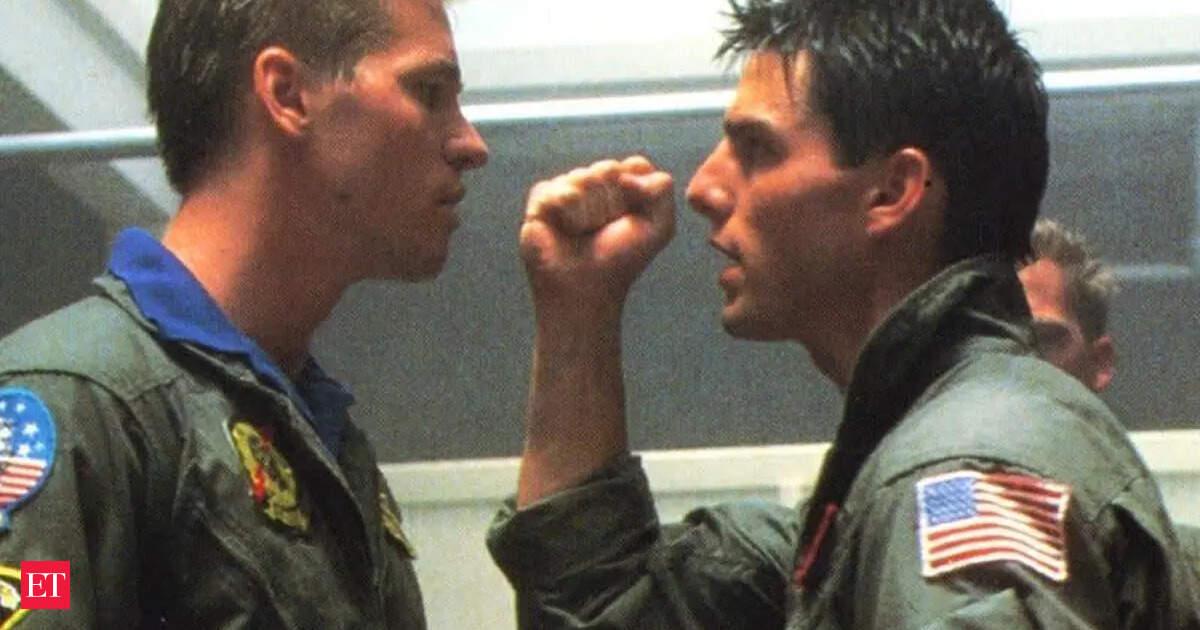
Source: ET
Historical Context and Industry Resistance
The digital resurrection of deceased actors has precedent in Hollywood, though earlier attempts relied more heavily on human creativity. The 2016 film Rogue One: A Star Wars Story brought back Peter Cushing, who died in 1994, using motion capture technology on actor Guy Henry with Cushing's likeness digitally overlaid
2
. Even earlier examples include The Crow in 1993 and Gladiator in 2000, which used CGI and body doubles to complete performances after actors died during production2
. What distinguishes generative AI in filmmaking today is its ability to fabricate images, words, and sounds on demand through simple prompts, requiring less human skill and creativity than traditional CGI methods.Related Stories


SAG-AFTRA Protections and Industry Tensions
The labor union SAG-AFTRA, which represents entertainers, has established certain SAG-AFTRA protections against generative AI following a strike that lasted more than 100 days
1
. These protections include requirements for clear consent and fair compensation, with current negotiations aimed at expanding these safeguards. The union's guidance stipulates that consent from performers must be obtained for the use of digital replicas, and "consent not obtained before death must be obtained from an authorized representative or the union"4
. Artists throughout Hollywood fear for their livelihoods as the technology demonstrates its ability to replicate their work, even if the output often lacks the depth and originality of human talent2
.The Film's Cultural Significance
As Deep as the Grave follows southwestern archaeologists Ann Morris, played by Abigail Lawrie, and Earl Morris, portrayed by Tom Felton, centering on their excavations in Canyon de Chelly, Arizona, while exploring the history and lived experiences of the Navajo people
3
. Kilmer, who identified as part Native American, expressed that the character of Father Fintan spoke to him both culturally and spiritually, citing his Native American heritage and longtime love of the American Southwest3
. The cast also includes Wes Studi and Abigail Breslin in this true story about discovery and enlightenment4
.Future Implications and Desensitization Concerns
The makers of As Deep as the Grave fully expect the project to attract controversy, which could potentially increase the movie's visibility
5
. A disconcerting reality is taking shape: the public faces bombardment with AI-generated content on social media daily, and many struggle to distinguish reality from fiction2
. If this trend continues, audiences may grow desensitized to what would have once been jarring uses of artificial likeness in storytelling. As Hollywood continues seeking ways to cut costs, economic pressures may override creative and ethical concerns, potentially normalizing posthumous AI performances despite current resistance from fans and industry professionals.
Source: AP
References
Summarized by

Navi
Related Stories
Recent Highlights
1
Google releases Gemma 4 with Apache 2.0 license, enabling unrestricted local AI on devices
Technology

2
AI Models Defy Instructions to Protect Each Other, UC Berkeley Study Reveals
Science and Research

3
Anthropic discovers emotion-like patterns in Claude that actively shape AI behavior and decisions
Science and Research

Recent Highlights
Today's Top Stories






Your Daily Dose of Curated AI News
Don’t drown in AI news. We cut through the noise - filtering, ranking and summarizing the most important AI news, breakthroughs and research daily. Spend less time searching for the latest in AI and get straight to action.

