Validio Raises $30M to Fix the Data Quality Problem Blocking Enterprise AI Projects


2 Sources
2 Sources
[1]
Validio secures $30M to make enterprise data actually fit for AI
The Stockholm company has spent six years building infrastructure that ensures enterprise data is actually fit for AI, and it has just secured $30M to make that case globally. The pattern is familiar to anyone who has spent time around enterprise technology: a company announces an ambitious AI programme, spends months on pilots, and then quietly abandons the initiative, citing vague "technical challenges." The technology, predictably, gets blamed. The data rarely does. Patrik Liu Tran spent the years before founding Validio watching this same sequence repeat across banks, manufacturers, and telecoms. As a consultant advising large enterprises on AI and data strategy, he saw that the bottleneck was rarely the model. It was the underlying information, inconsistent, poorly monitored, siloed across systems that had never been designed to talk to each other. "No matter how ambitious the project was," he said in a statement, "AI projects rarely reached production." He founded Validio in Stockholm in 2019 to build the infrastructure layer he kept wishing existed. That bet has now attracted $30 million in Series A funding. The round was led by Plural, the early-stage European firm founded by Wise co-founder Taavet Hinrikus, Ian Hogarth, and others, which recently added former Uber SVP Pierre-Dimitri Gore-Coty as partner. With continued participation from existing investors Lakestar and J12, and angels including Kevin Ryan (co-founder of MongoDB), Denise Persson (CMO at Snowflake), and Emil Eifrem (CEO and co-founder of Neo4j). The round brings Validio's total disclosed funding to $47 million. The company describes itself as an "agentic data management platform." In practice, this means software that automatically monitors data across an organisation's pipelines, detects anomalies, tracks where data has come from and how it has been transformed (known as lineage), and provides a catalogue of available data assets. These are not new ideas in enterprise software, players like Monte Carlo, Collibra, Atlan, and Informatica have competed in overlapping spaces for years. Validio's differentiation claim is that its approach is built for the AI era: faster to deploy, more automated, and designed for use by both technical and non-technical teams rather than purely by data engineers. Liu Tran said the company can typically be up and running within days, compared with what he characterises as months or years for legacy tools. Validio also claims its automation reduces the staff required to manage data quality by around 90% compared with manual approaches, and that its anomaly detection resolves issues around 95% faster. These are figures the company provided without independent verification; they are, essentially, sales claims, and should be read as such. What is independently verifiable is that Validio reported an 800% increase in annual recurring revenue over the past year, though the company has not disclosed the absolute revenue figures that underpin that growth rate. The context for the investment is real enough. Gartner has consistently identified data quality and availability as among the top obstacles to AI adoption, confirmed in multiple surveys, including a November 2025 study of 183 CFOs and a July 2024 survey of data management leaders. A 2025 MIT research report, "The GenAI Divide", found that around 95% of enterprise generative AI pilots failed to deliver measurable profit-and-loss impact, a finding widely cited by the data infrastructure industry. It is worth noting that the MIT study drew criticism for its methodology, it was based on interviews and self-reported data rather than controlled measurement, but its conclusion directionally matched what many CIOs and chief data officers had been saying privately. Data quality as an investment thesis has a history of inflated claims and underwhelming outcomes. Dozens of companies over the past decade have promised to fix enterprise data pipelines. Most have sold to large incumbents or quietly faded. The market is genuinely fragmented, which creates opportunity, but also reflects the difficulty of building something that fits into the wildly varied architectures of large organisations. What has changed is the AI imperative. Boards and C-suites that tolerated imperfect data for analytics and reporting are considerably less tolerant when the same data is feeding models that make credit decisions, flag compliance risks, or drive automated procurement. The stakes, and the visibility, are higher. That creates a window for a company like Validio that can make a compelling case not just to data teams, but to the CFO and CIO who now have a direct business reason to care. Whether Validio is the company to close that window at scale remains to be seen. But the funding, the investors, and the timing suggest it has earned the right to try.
[2]
Data quality automation startup Validio raises $30M - SiliconANGLE
Stockholm-based startup Validio AB said today it has raised $30 million in funding to try and tackle one of the biggest problems holding back enterprise's artificial intelligence projects - fixing the data foundation they're built on. Today's round was led by Plural and saw participation from existing investors Lakestar and J12, along with angel investors Kevin Ryan, Denise Persson and Emil Eifrem. The round brings Validio's total amount raised to $47 million, and comes after it saw an 800% increase in its annual recurring revenue last year. The startup has built an intelligent data management platform that helps companies in industries such as financial services, manufacturing and telecommunications to monitor the health of their data, spot anomalies and track its lineage across billions of records. Chief Executive Patrik Liu Tran told Tech Funding News that he founded the company back in 2019, having previously spent years advising some of the world's biggest companies on how to implement the data pipelines and databases needed to power their artificial intelligence projects. "I advised leading banks and large enterprises on their AI and data strategies and saw firsthand the problem of data quality and the lack of a unified solution to solve it," Patrik said. "I consistently saw that, no matter how ambitious the project was, AI projects rarely reached production." According to Patrik, he kept seeing the same problems repeat again and again - ambitious projects would fail because the data was bad. Having seen it play out once too many times, he decided that he needed to do something to fix the problem once and for all. What he realized is that the industry needed something better than the existing, largely manual ad-hoc solutions being used to try and solve brittle data challenges. "In many companies, the reality of managing data quality is writing tens of thousands of checks and manually maintaining them as data changes over time," he explained. Of course, taking on such enormous manual workloads isn't feasible in the age of AI, which feeds on enormous volumes of information. That's why Patrik decided to turn to AI itself to fix the problem, through automation. One thing that differentiates Validio's platform is its versatility. Unlike traditional data observability tools like Monte Carlo and Collibra, which primarily serve data engineers, it helps business users and technical teams work together to identify and fix data-related issues at their source. It provides a unified, intelligent layer for monitoring data quality, lineage and cataloging that anyone can work with. Patrik said the platform only takes a few minutes to set up, and once it's up and running, it will work independently across billions of data records, without any need for engineering teams to set up and manage fixed rules. "Due to the high degree of automation in Validio, the full-time employee count required to operate and manage data is drastically reduced," Patrik said. "You need 90% less people to manage data quality with Validio as opposed to traditional manual offerings." He claimed that Validio is also 95% faster at detecting data quality issues and resolving them, compared to alternative solutions. That explains why customer adoption of the platform has surged, he said. Data quality issues that previously went unnoticed for months on end typically show up within minutes of the problem arising, reducing the manual checks involved by up to 95%. With tons of cash in the company coffers, Validio is now looking at expanding its platform aggressively, targeting customers in the U.S., the U.K and in the rest of Europe. At the same time, it's also going to expand its engineering, sales and go-to-market teams. Ultimately, it wants to become the industry's top platform for data reliability and establish itself as a key part of the infrastructure needed to power enterprise AI projects.
Share
Share
Copy Link
Stockholm-based Validio has secured $30M in Series A funding to tackle the data quality issues that cause 95% of enterprise AI pilots to fail. The company's automated data management platform monitors data health, detects anomalies, and tracks lineage across billions of records—claiming to reduce staffing needs by 90% while resolving issues 95% faster than manual approaches.
Validio Secures $30M to Address the Hidden Barrier in Enterprise AI
Validio, a Stockholm-based data infrastructure startup, has raised $30M in Series A funding to solve what founder Patrik Liu Tran calls the problem nobody talks about: enterprise data that isn't fit for AI
1
. The round was led by Plural, with continued participation from existing investors Lakestar and J12, plus angel investors including MongoDB co-founder Kevin Ryan, Snowflake CMO Denise Persson, and Neo4j CEO Emil Eifrem1
. This brings Validio's total disclosed funding to $47 million2
.
Source: The Next Web
The investment comes after Validio reported an 800% increase in annual recurring revenue over the past year, though absolute revenue figures remain undisclosed
1
2
. The company's growth reflects mounting pressure on enterprises to fix their data foundations as AI initiatives move from pilot to production.Why Data Quality Has Become an AI Imperative
Patrik Liu Tran founded Validio in 2019 after spending years as a consultant advising banks, manufacturers, and telecoms on AI and data strategy. He observed a pattern that repeated across industries: ambitious AI programs would launch with fanfare, spend months on pilots, then quietly fail due to vague "technical challenges"
1
. "I consistently saw that, no matter how ambitious the project was, AI projects rarely reached production," Patrik Liu Tran told Tech Funding News2
.The bottleneck was rarely the model itself. Instead, enterprise data proved inconsistent, poorly monitored, and siloed across systems never designed to communicate
1
. A 2025 MIT research report found that approximately 95% of enterprise generative AI pilots failed to deliver measurable profit-and-loss impact, a finding widely cited across the data infrastructure industry1
. Gartner has consistently identified data quality and availability as top obstacles to AI adoption, confirmed in surveys including a November 2025 study of 183 CFOs and a July 2024 survey of data management leaders1
.How Validio's Data Management Platform Works
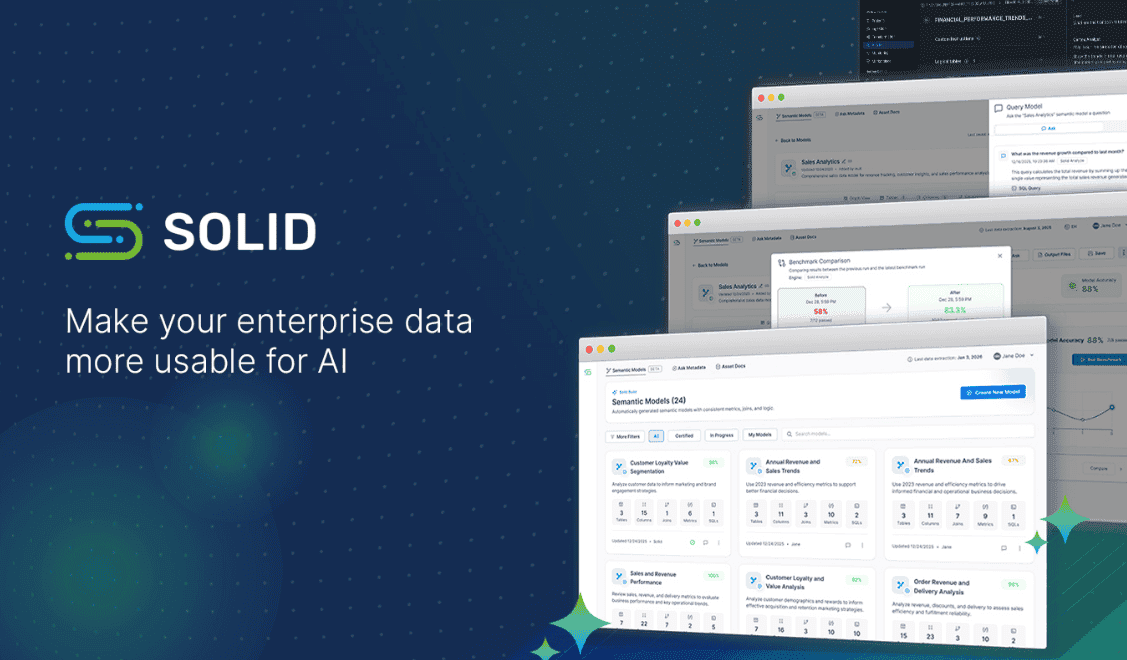
Validio describes itself as an "agentic data management platform" that automatically monitors enterprise data across pipelines, detects anomalies, tracks data lineage, and catalogs available data assets
1
. Unlike traditional data observability tools like Monte Carlo and Collibra that primarily serve data engineers, Validio's platform enables both business users and technical teams to identify and fix data-related issues at their source2
.The platform takes only minutes to set up and operates independently across billions of data records without requiring engineering teams to configure and maintain fixed rules
2
. Validio claims its data quality automation reduces the staff required to manage data quality by approximately 90% compared with manual approaches, and that its anomaly detection resolves issues around 95% faster1
2
. Data quality issues that previously went unnoticed for months typically surface within minutes of arising, reducing manual checks by up to 95%2
.Related Stories



Why This Matters for Enterprise AI Adoption
The stakes around data reliability have escalated dramatically. Boards and C-suites that tolerated imperfect enterprise data for analytics and reporting show considerably less tolerance when the same data feeds models making credit decisions, flagging compliance risks, or driving automated procurement
1
. The visibility and consequences are higher, creating urgency for solutions that appeal not just to data teams but to CFOs and CIOs with direct business reasons to care.Validio's differentiation claim centers on speed and automation built for the AI era. Liu Tran said the company typically deploys within days, compared with what he characterizes as months or years for legacy tools
1
. "In many companies, the reality of managing data quality is writing tens of thousands of checks and manually maintaining them as data changes over time," Patrik explained, noting that such manual workloads aren't feasible in the age of AI2
.What to Watch as Validio Scales Globally
With $30M funding in hand, Validio plans aggressive expansion targeting customers in the U.S., U.K., and across Europe while growing its engineering, sales, and go-to-market teams
2
. The company aims to establish itself as the top platform for data reliability and become essential data infrastructure for enterprise AI projects2
.The market remains genuinely fragmented, with players like Monte Carlo, Collibra, Atlan, and Informatica competing in overlapping spaces
1
. This fragmentation creates opportunity but also reflects the difficulty of building solutions that fit into the varied architectures of large organizations. Whether Validio can close this window at scale remains to be seen, but the funding, investor backing from Plural and Lakestar, and timing suggest the Stockholm company has earned the right to try1
.References
Summarized by

Navi
[1]
Related Stories
Recent Highlights
1
Google releases Gemma 4 with Apache 2.0 license, enabling unrestricted local AI on devices
Technology

2
AI Models Lie and Deceive to Protect Other AI Models From Deletion, Study Reveals
Science and Research

3
OpenAI closes $122 billion funding round amid fierce AI competition and profitability questions
Startups

Recent Highlights
Today's Top Stories







Your Daily Dose of Curated AI News
Don’t drown in AI news. We cut through the noise - filtering, ranking and summarizing the most important AI news, breakthroughs and research daily. Spend less time searching for the latest in AI and get straight to action.

