Valve quietly builds SteamGPT AI chatbot for customer support and anti-cheat oversight


8 Sources
8 Sources
[1]
Valve Code Hints at 'SteamGPT' Customer Support AI Chatbot
(Credit: Pavlo Gonchar/SOPA Images/LightRocket via Getty Images) Valve is looking to leverage the latest AI chatbot tools to develop a customer service assistant, TechPowerUp reports. Known as SteamGPT, the AI will help customers with support queries and account problems. That could translate into faster refunds, though performance issues and bugs will likely still require manual review. X user GameFollower discovered a mention of SteamGPT in some recent Valve code. It suggests the AI could have access to account data and related controls, potentially allowing it to suss out whether someone is cheating and issue bans. It may also have access to information on whether an account has been linked to in-game behavior such as griefing or abuse, and whether it has been banned from any particular games. This might specifically target Counter-Strike 2 and its anti-cheat system. The AI may be able to evaluate player behavior and use related data points to determine whether a gamer has access to certain servers or game modes. It's not clear from the code if Valve actually plans to release it. The company is known for its flat, boss-less structure, so many projects often don't end up anywhere. If Valve does implement this tool, though, it could be just the first of its AI efforts. The code suggests it can be used in a range of ways. Elsewhere, Valve is reportedly working on an AI-based Frame Estimator tool that could analyze a PC's hardware and potential performance to estimate how well it could play a game. For gamers unsure of what their system can do and want to play a certain game, that could be useful.
[2]
Steam files suggest Valve is developing internal 'SteamGPT' AI bot -- aimed at tackling customer support tickets and CS2 anti-cheat
Valve is apparently developing its own AI bot for internal use that will help the company tackle customer support issues and anti-cheat oversight in at least one game. Valve expert Gabe Follower on X discovered the name "SteamGPT" in newly uncovered Steam files pointing to these use cases. The files show connections to SteamGPT relating to Steam account detail -- including account age, confidence score, model evaluation, and trust score. There is also code for ignoring future bans for Steam accounts. The code suggests SteamGPT will have access to virtually all of an account's stats, and will control whether the account can get banned or not. The "trust score" is part of Valve's Trust Factor system, which helps Valve oversee and address cheating. It records a Steam account's standing (including game bans), phone number linking, Steam Guard usage, and in-game behavior -- including griefing. There was also code suggesting SteamGPT might control or have data access to Counter-Strike 2's anti-cheat system and database. The code found in the files suggests SteamGPT can see player action and player evaluation -- the latter of which is a feature in anti-cheat systems that tracks player performance (instead of only looking for cheating software on their machine). For now, we can't tell how far into development SteamGPT is, nor do we know if the company is planning to launch this tool. SteamGPT could be a concept that Valve is testing but doesn't intend to release. Regardless, this is the first AI tool we've seen from Valve, as the company has been notably absent from AI-focused marketing -- though it does allow the use of AI-generated content in games. Last year, it was discovered that over 110,000 games in Steam's library use generative AI content, representing 7% of the entire store. If Valve does release SteamGPT, it will help maintain Valve's sky-high efficiency in terms of revenue generated per employee. Valve is ranked the most efficient company in the world and rakes in almost $50 million per each of its 350 employees. Follow Tom's Hardware on Google News, or add us as a preferred source, to get our latest news, analysis, & reviews in your feeds.
[3]
Valve might replace some internal Steam customer support with AI
* Valve is reportedly building an internal AI called SteamGPT to handle support and assist with CS2 anti‑cheat oversight. * Leaked files show SteamGPT can access account info, trust scores, and influence ban decisions. * SteamGPT is being used internally now and might never be public-facing. Valve is reportedly working on an AI chatbot that the company plans to use internally to address some Steam customer support issues and to oversee anti-cheat measures. At least to start, the chatbot is handling support just for Counter-Strike 2 (CS2) and is only being used internally at the company, according to @gabefollower on X, a reliable source of Steam-related leaks (via Tom's Hardware). Further, @gabefollower says that uncovered files show connections to SteamGPT related to Steam account details, including account age, confidence score, model evaluation, and trust score. Additionally, there's code related to ignoring future bans on Steam accounts. SteamGPT could eventually be used more widely at Valve Right now, the AI is only being used with Counter-Strike 2 This indicates that SteamGPT will be able to access user account information, such as a Trust Score, and decide whether an account should be banned. The Trust Score, which is part of Valve's overall Trust Factor system, includes game bans, phone number linking, Steam Guard usage, and in-game behavior. @gabefollower also mentions that SteamGPT might have control over or access to Counter-Strike 2's anti-cheat system and database, including player evaluations and performance data. While SteamGPT currently seems to be used only internally at Valve, specifically for CS2, its use could expand to more titles and to a customer- or user-facing role in the future. Still, SteamGPT is noteworthy because it's Valve's first notable use of AI. In other Steam-related news, a new feature called Frame Estimator is currently available in beta. Frame Estimator indicates how many frames per second (FPS) your PC is likely to hit with specific games, based on similar user hardware. Steam wants to end the FPS guessing game before you buy If you have a mid-range or lower-end gaming PC, this upcoming feature could be very useful. Posts 1 By Patrick O'Rourke
[4]
Valve is quietly building its own AI tool called SteamGPT
This development aligns with Valve's generally accepting stance toward AI in gaming, though SteamGPT appears designed for internal operations rather than public-facing features. Valve is apparently developing its own AI tool called "SteamGPT," according to findings by Gabe Follower in a social media post. He found references to it in recently updated Steam files. The code for the digital PC gaming platform contains references to functions such as task generation, data labelling, model evaluation, summarization, and inference -- all terms that are related to modern LLMs and how AI models are used in practice. From what we can tell, SteamGPT appears to be intended as an internal tool and not an outward-facing feature for users. Example use cases could include Steam support, submission moderation, workflow enhancements, and possibly even anti-cheat. As of this writing, it's still unclear exactly how Valve plans to use this so-called SteamGPT. Although it might seem to be an unusual move from Valve, who avoids unnecessary bloat in Steam, it's not too farfetched given the company's open-arm stance to AI in games as long as those games are transparent and forthright about it.
[5]

Valve rumoured to be working on 'SteamGPT' AI bot for support and anti-cheat functions
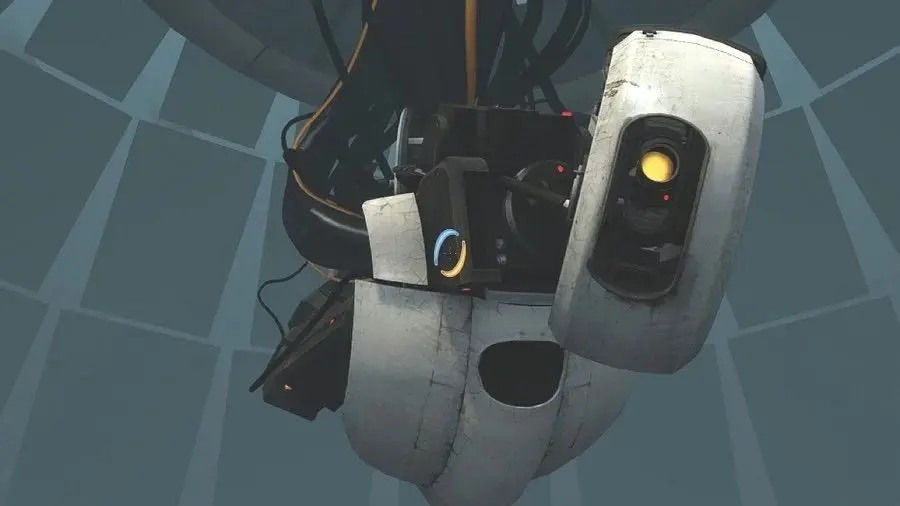
Is there nothing sacred? Are all things destined to be consumed by AI slop? Apparently so, for now even Valve is turning to the artificial side with reports of references to "SteamGPT" appearing in the company's source code. The end, verily, is nigh, no doubt courtesy of life imitating Valve's murderously passive-aggressive Portal game art. In all seriousness, fair to say Valve has hitherto been one of the least AI-adjacent tech outfits since the whole LLM-transformer-chatbot-video-generation-agentic-overlord thing really took off in the last few years. So, this would be at least something of a pivot. First up, X poster @gabefollower spotted references to SteamGPT in various Steam-related code. There are multiple entries that appear to be related to a wide range of tasks, from task queues and code testing, to account management and security. There are also references relating to Valve's Trust systems including, reportedly, trust scores, account age, account buckets, related accounts, confidence values, and inference results. In short, there's an anti-cheat angle here, too. However, it's worth noting that there does not appear to be much in all this that unambiguously indicates Valve plans to unleash a chatbot on unsuspecting Steam users. Instead, this is all seems to tilt toward some kind of internal tool for use at Valve. That said, some outlets are interpreting this a move by Valve to lean on AI as a tool for customer support. The idea is that Valve receives thousands of support queries daily and SteamGPT could be used to lighten that load, especially during the likes of major sales events when staff can become overwhelmed. The anti-cheat aspect will trouble some observers, too. To filter increasingly sophisticated cheating vectors, one presumes that any AI tool would need pretty comprehensive monitoring access to player profiles, activity, gameplay and more, perhaps even at local system level. Some, for sure, won't like the idea of that. Taking a sober view of it all, there's probably no need to panic. Indeed, there's likely also no need to take a purist view about all this. Thus far, from an external perspective at least, Valve has hardly been an enthusiastic passenger on the AI bandwagon. Equally, however, there are bound to worthwhile use cases at Valve for AI tools and using AI as a tool for specific fairly narrow tasks as opposed to some kind of omnipotent being is certainly how Valve seems to be approaching things, if the snippets of code referring to SteamGPT are anything to go by. Indeed, Valve's mooted Frame Estimator tool that predicts gaming frame rates based on given hardware configurations could be another example of AI used narrowly for a specific task. Moreover, if any gaming company can use AI to its advantage to make gaming more intriguing, immersive and -- in just the right way -- foreboding, it's surely the one that sired GLaDOS.
[6]

Valve's leaked 'SteamGPT' AI tool may handle support queries, with possible links to CS2 anti-cheat
Valve appears to be getting on the AI train, starting with technical and customer support. In the recent Steam update code, leakers have spotted references to a new "SteamGPT" feature that will use AI to automatically handle customer support tickets. Valve also plans to use the feature in Counter-Strike 2 to help tackle the game's persistent cheating problem. This comes from content creator GabeFollower, who highlighted newly spotted strings and code snippets on X. The lines contain references to generic task creation and response tied to task queues, labeling jobs, test results, and fine-tuning data. A separate service called SteamGPTSummary appears to pull account-level details, including profile info, Steam Guard status, security history, country, VAC status, phone data, fraud flags, and playtime. Additional snippets reference Trust_GetTrustScoreInternal, CSbot, player_evaluation, and SteamGPTRenderFarm, which suggests SteamGPT will also connect to Valve's Trust Score system. For those unfamiliar, Trust Score powers Valve's patented Trust Factor Matchmaking. It uses machine learning to analyze and score players based on their in-game behavior, then pairs them with teammates and opponents of similar trustworthiness. Think skill-based matchmaking, but with behavior factored in, something Counter-Strike 2 players will likely be familiar with. The CS2 community has long been vocal about the game's anti-cheat, and an AI-driven system that detects suspicious behavior in real time could be exactly what the game needs. However, nothing in the leaked code shows SteamGPT issuing bans directly or replacing VAC, which is probably the right approach, especially early on, to avoid the risk of AI penalizing genuinely skilled players. The existence of SteamGPT remains unconfirmed for now, but it would be surprising if it never sees the light of day, given Valve president Gabe Newell's stance on AI. Last year, Newell said, "AI is essentially going to be a cheat code for people who want to take advantage of it," and it stands to reason that philosophy extends to his own company. While the jury is still out on AI in game development, if these leaks are accurate, Valve's approach could meaningfully improve the platform's customer support. On the topic of improvements, recent leaks have also pointed to a new Frame Estimator feature coming to Steam that will display estimated frame rates for each game.
[7]

Valve Reportedly Working on SteamGPT Tool for Steam Support, CS2 Anti-Cheat
Valve is reportedly developing an AI-powered tool for its popular PC games storefront Steam that would help with platform support and anti-cheat measures for Counter-Strike 2. The tool is called SteamGPT, as per information datamined from Steam code. Valve regularly releases updates for Steam, with the most recent one refreshing the design of the Steam store home page. SteamGPT Reportedly in the Works Noted Steam data miner and creator Gabe Follower recently uncovered mentions of SteamGPT in Steam code (via InsiderGaming). Screenshots of the code shared by the user on X suggest that SteamGPT could help with Steam support issues. The data miner claimed that the AI-powered feature also seemed to be connected to Trust Score and Counter-Strike 2 anti-cheat measures. Valve has not confirmed plans for a potential AI-powered Steam feature. If SteamGPT is released at some point, it would first be rolled out in beta. In January, Valve notably redefined Steam's guidelines for disclosure of AI use in game development. The PC games storefront has required developers to provide AI disclosure on their game's store page since 2024. With its updated AI disclosure guidelines, Steam acknowledged that some AI-powered tools may be built into many game development processes and hence did not need to be disclosed. Valve has also continued to release regular updates for its storefront. Earlier this month, the company rolled out an updated design for Steam store home in beta. The home page now comes with a new layout that makes it easier for users to find new games. The redesigned home page also displays more information and content, higher resolution game art and an updated discover queue. The Steam beta update also added infinite scroll to store home, along with two new sections: your wishlist and DLC for your games. The update was rolled out on April 2 to Steam Client Beta participants. The updated design will also be seen on store home on Steam Deck or in Big Picture mode. Valve is also preparing to launch a lineup of new devices this year, including the much talked about Steam Machine, a PC/console hybrid that runs on SteamOS. The company has not yet confirmed a release date, but intends to launch the Steam Machine, the Steam Frame VR headset, and a new Steam controller in 2026.
[8]

"SteamGPT" mentions in Valve's code flagged by online sleuth, sparking fears of an AI Steam chatbot that will screw up your support requests and hallucinate anti-cheat
Valve sleuth GabeFollower spotted and shared strings of mined Steam backend code that repeatedly mention "SteamGPT," and the very idea of a Steam riff on ChatGPT has been enough to ignite fears of AI's worst tendencies infecting the biggest store and platform in PC gaming. With no word from Valve, it does feel like this idea has quickly been exaggerated by an AI-wary internet. SteamGPT appears in several lines of code shared by GabeFollower (who, it's worth pointing out, is not known for simply making things up), attached to phrases like "CreateTask_Request" and "CreateTask_Response" in one screenshot. There's a real risk of non-programmers misreading code here - assigning meaning and intent to simple labels, for instance - but the location and verbiage of this SteamGPT-adjacent code has not-unreasonably stoked theories about a new tool for Steam support issues. There's a Black Mirror allure to the idea of asking a primitive version of Wheatley, the personality core from Valve's Portal 2, about the status of my Steam refund, for example. In another screenshot, SteamGPT is tied to "TrustScore" variables. Trust Scores, seemingly the same as Trust Factors, are a matchmaking metric that Valve uses in games like Counter-Strike 2, fueling speculation that SteamGPT would also play into anti-cheat, if only for CS2 specifically as a Valve-controlled testing ground. Valve's explainer on how to "improve my Trust Factor" helps explain the speculation: "All players have to do to improve their matchmaking experience is continue playing Counter-Strike 2 and other Steam games legitimately" (emphasis mine). Am I counting the days until an LLM AI is an integral part of my Steam browsing experience? No, not over one tweet (and I've reached out to GabeFollower to hopefully talk through their methodology here). For all we know, SteamGPT, while strikingly similar to ChatGPT in its name, could be placeholder, deprecated, or unrelated tech. I've also reached out to Valve for comment. What we do know for an absolute fact is that Valve founder Gabe Newell is extremely keen on AI integration across disciplines. Half-Life 2 writer Erik Wolpaw also recently shared that a "small group" at Valve is looking into "some AI stuff" for writing, though he described it as just "poking around" for now. Even in 2024, a designer on Valve's Deadlock praised ChatGPT for surfacing a new matchmaking algorithm. The user response to SteamGPT, whether it's real or imagined, is almost more interesting than the theorized tech. I would bet my house that Valve, like a lot of large tech companies, has tinkered with gen AI and LLMs in some capacity, but I'm currently more hesitant to predict the release of a Steam AI chatbot. That said, I am definitely among the many people who've daydreamed of suplexing whatever hardware hosts the automated support bots for other online stores, so I can safely say I hate the idea.
Share
Share
Copy Link
Valve is developing SteamGPT, an internal AI chatbot designed to handle customer support queries and oversee anti-cheat measures in Counter-Strike 2. Leaked source code reveals the tool can access user account information, Trust Scores, and influence ban decisions, marking Valve's first notable AI implementation despite the company's historically cautious approach to AI adoption.
Valve Develops SteamGPT for Internal Operations
Valve is building an AI chatbot called SteamGPT to streamline customer support and strengthen anti-cheat functions, according to leaked source code discovered by X user Gabe Follower
1
2
. The internal AI tool appears designed to handle support queries and account problems, potentially enabling faster refunds and more efficient resolution of common issues1
. This marks Valve's first significant AI implementation, a notable shift for a company that has remained largely absent from AI-focused marketing despite allowing AI-generated content in games on its platform2
.
Source: PCWorld
SteamGPT Access to User Account Information and Trust Scores
The leaked files reveal that SteamGPT will have extensive access to user account information, including account age, confidence scores, model evaluation data, and Trust Scores
2
3
. The Trust Score is part of Valve's Trust Factor system, which tracks game bans, phone number linking, Steam Guard usage, and in-game behavior such as griefing2
. Code references suggest the AI chatbot will control whether accounts can be banned and includes functionality for ignoring future bans on Steam accounts3
. The source code contains references to functions like task generation, data labeling, model evaluation, summarization, and inference—all terms associated with modern large language models4
.
Source: PC Gamer
Counter-Strike 2 Anti-Cheat Functions and Player Behavior Analysis
SteamGPT appears specifically targeted at Counter-Strike 2 and its anti-cheat system
1
3
. The AI may evaluate player behavior using related data points to determine whether gamers have access to certain servers or game modes1
. Code found in the files suggests SteamGPT can access player action data and player evaluation—a feature in anti-cheat systems that tracks player performance rather than solely detecting cheating software2
. Currently, the tool is being used internally at Valve specifically for Counter-Strike 2, though its use could expand to additional titles3
.
Source: TweakTown
Internal Tool Design and Workflow Enhancements
From available evidence, SteamGPT appears intended as an internal AI tool rather than a public-facing feature for users
4
5
. Example use cases include Steam support, submission moderation, workflow enhancements, and content moderation4
. The tool could help Valve tackle thousands of support queries received daily, especially during major sales events when staff become overwhelmed5
. This aligns with Valve's reputation as the most efficient company in the world, generating almost $50 million per each of its 350 employees2
.Related Stories

Privacy Concerns and Ban Decisions Oversight
The anti-cheat aspect raises privacy concerns among some observers. To filter sophisticated cheating vectors, the AI would require comprehensive monitoring access to player profiles, activity, gameplay, and possibly local system-level data points
5
. The AI's ability to influence ban decisions has prompted questions about transparency and accountability in automated enforcement. However, it's unclear from the code whether Valve actually plans to release the tool, given the company's flat, boss-less structure where many projects don't reach completion1
.Frame Estimator and Future AI Applications
If Valve implements SteamGPT, it could be just the first of its AI efforts. The company is reportedly working on an AI-based Frame Estimator tool that analyzes PC performance and hardware to estimate how well a system could run specific games
1
3
. This feature, currently available in beta, indicates frames per second likely achievable based on similar user hardware configurations3
. These developments align with Valve's generally accepting stance toward AI in gaming, though the company emphasizes transparency about AI usage4
. Last year, over 110,000 games in Steam's library—representing 7% of the entire store—were found to use generative AI content2
.References
Summarized by

Navi
[1]
[2]
[3]
Related Stories
Valve updates Steam AI disclosure policy to focus on player-facing content, not dev tools
17 Jan 2026•Policy and Regulation

Valve Engineer Uses ChatGPT to Improve Deadlock's Matchmaking Algorithm
04 Oct 2024•Technology

Steam Users Push for AI-Generated Game Filter as SteamDB Introduces Workaround
26 Feb 2025•Technology

Recent Highlights



Recent Highlights
Today's Top Stories






Your Daily Dose of Curated AI News
Don’t drown in AI news. We cut through the noise - filtering, ranking and summarizing the most important AI news, breakthroughs and research daily. Spend less time searching for the latest in AI and get straight to action.

