Google Gemini partners with Walmart and major retailers to enable AI-powered shopping checkout


25 Sources
25 Sources
[1]
Google escalates AI shopping war
Google turned up the heat in the AI shopping wars this weekend, announcing plans to turn Gemini into a merchant and launching an open-source standard built together with major retailers including Shopify, Walmart, and Target. The move comes as companies like OpenAI, Amazon, and Perplexity jostle for power and influence at the heart of a growing AI-powered shopping ecosystem, with consumers increasingly turning to the technology to streamline purchasing. At the National Retail Federation's annual conference this weekend, Google said it had partnered with Shopify, Target, Walmart, Wayfair, and Etsy to develop a protocol it hopes will become the industry standard for shopping with AI. The standard, called the Universal Commerce Protocol (UCP), is designed to streamline how AI agents and retailers' systems communicate throughout the shopping process, from product discovery and payment to post-purchase support, Google vice president of ads and commerce Vidhya Srinivasan explained in a blog post. In other words, it sets up a common language for agents -- AI tools capable of acting independently -- and online shopping systems. Google says the new standard will power a forthcoming "checkout feature" on Search and Gemini, which would allow users to make purchases directly using the AI tools without having to switch between apps or web pages. The feature will bring Gemini and Google's AI Mode in Search in line with competitors like Microsoft's Copilot and OpenAI's ChatGPT, which launched purchasing options last year. Google hopes UCP will be widely used by retailers and others in the ecommerce ecosystem, an area that is quickly becoming a battleground for companies to prove the tangible value of generative AI. UCP is open-source, meaning companies can freely use it rather than having to develop their own tools to deal with AI agents. It is compatible with existing industry standards like the Model Context Protocol, Srinivasan says. It will compete with a similar standard for agentic shopping OpenAI launched last, the Agentic Commerce Protocol, which is also open-source. UCP has already secured buy-in from more than 20 other companies in the online shopping ecosystem, the Google executive says. This includes payment giants like Visa, Mastercard, American Express, PayPal, and Stripe, as well as retailers like The Home Depot, Macy's, Best Buy, Kroger, Lowe's, Gap, and Zalando. Ant Group, an affiliate of Chinese ecommerce giant Alibaba, has also endorsed the standard. Many of these partners are likely to -- or already have -- partner with other AI companies as well. Shopify merchants, for example, can sell in AI modes on Gemini, ChatGPT and Microsoft Copilot, and PayPal has also partnered with OpenAI. As well as the buy button on Gemini and the UCP standard, Google also said it is launching a business agent on Monday that will allow shoppers to chat with brands directly on Search. In this case, "directly" means chatting with a virtual assistant from the brand that can "answer product questions in a brand's voice." Retailers including Lowe's, Michael's, Poshmark, and Reebok are among the first to sign up. The announcements come as companies bet big on AI-driven shopping, with firms like Amazon infusing it into almost every step of the shopping experience. The technology has yet to prove itself as a useful assistant -- The Verge's experience has been glitchy, to say the least -- but companies are certain AI agents are the future. Google CEO Sundar Pichai said the company's new standard is laying the "groundwork" for agentic shopping, which "will be a big part of how we shop in the not-so-distant future."
[2]
Walmart teams up with Google's Gemini to make it easier for shoppers to find and buy products
Walmart and Google said Sunday that shoppers will soon be able to use Google's artificial intelligence assistant Gemini to more easily discover and buy products from the retail giant and its warehouse club, Sam's Club. Incoming Walmart CEO John Furner and Google CEO Sundar Pichai announced that the companies have teamed up on stage at the National Retail Federation's Big Show, an annual industry conference held at New York City's Javits Center. The CEOs did not say when the new feature will launch or share financial terms. The company said the experience will start first in the U.S. and then expand internationally. With the Google deal, Walmart is boosting its effort to keep up with customers who are using AI chatbots to save time or look for inspiration. Walmart announced a deal with a rival to Gemini, OpenAI's ChatGPT, in October to allow shoppers to make purchases with "Instant Checkout," a feature that allows them to buy an item without leaving the AI chatbot. OpenAI recently launched that feature with Walmart and it has Instant Checkout deals with other retailers, including Etsy and several Shopify merchants like Skims, Vuori and Spanx. Walmart also has its own AI chatbot, a yellow smiley-faced assistant on its app called Sparky. "The transition from traditional web or app search to agent-led commerce represents the next great evolution in retail," Furner said in a news release. "We aren't just watching the shift, we are driving it." Furner, who will step into Walmart's top role on Feb. 1, described the deal with Google's Gemini as "another step toward creating seamless shopping experiences for customers and members that are more intuitive and personal than ever before." Pichai said in the release that Google is excited to work with Walmart "on a new open standard to make agentic commerce a reality." For Walmart, the evolution of customers' shopping habits -- such as searches that start on an AI chatbot instead of its own app or website -- is changing the retailer's digital strategy. In a statement, David Guggina, Walmart U.S.'s chief ecommerce officer, said agentic AI "helps us meet customers earlier in their shopping journey and in more places." "Over time, these agents will make it easier for customers to find what they need, want and love," he said. Walmart leaders have also been vocal about the ways that AI will change the workforce and the roles of its employees, comments that carry additional weight as the company is the largest private employer in the U.S. Walmart CEO Doug McMillon, who is retiring and will be succeeded by Furner, has spoken about the sweeping impact of the technology, saying that "it's very clear that AI is going to change literally every job."
[3]
Google teams up with Walmart and other retailers to enable shopping within Gemini AI chatbot
NEW YORK (AP) -- Google said Sunday that it is expanding the shopping features in its AI chatbot by teaming up with Walmart, Shopify, Wayfair and other big retailers to turn the Gemini app into a virtual merchant as well as an assistant. An instant checkout function will allow customers to make purchases from some businesses and through a range of payment providers without leaving the Gemini chat they used to find products, according to Walmart and Google. The news was announced on the first day of the National Retail Federation's annual convention in New York. The role of artificial intelligence in e-commerce and its impact on consumer behavior are expected to dominate the three-day event. "The transition from traditional web or app search to agent-led commerce represents the next great evolution in retail," John Furner, Walmart's incoming president and CEO, said in a joint statement with Google and Alphabet CEO Sundar Pichaei. Google's new AI shopping feature works this way: if a customer asks what gear to get for a winter ski trip, for example, Gemini will return items from a participating retailers' inventory. In the case of Walmart, customers who link their Walmart and Gemini accounts will receive recommendations based on their past purchases, and any products they decide to buy via the chatbot could get combined with their existing Walmart or Sam's Club online shopping carts, according to the statement. OpenAI and Walmart announced a similar deal in October, saying the partnership would allow ChatGPT members to use an instant checkout feature to shop for nearly everything available on Walmart's website except for fresh food. Google, OpenAI and Amazon all are racing to create tools that would allow for seamless AI-powered shopping by taking chatbot users from browsing to buying within the same program instead of having to go to a retailer's website to complete a purchase. The race between OpenAI and Google has heated up in recent months. Before the recent holiday shopping season, OpenAI launched an instant checkout feature within ChatGPT that allows users to buy products from select retailers and Etsy sellers without leaving the app. San Francisco software company Salesforce estimated that AI influenced $272 billion, or 20%, of all global retail sales, in one way or another during the holiday shopping season. Google said the AI-assisted shopping features in Gemini only would be available to U.S. users initially but that it planned to expand internationally in the coming months.
[4]
Google and Walmart partner to bring AI shopping recommendations to Gemini
Shopping appears to be one of the big pushes for AI in 2026, and Google is giving Gemini about as large as a boost as it could in this arena thanks to a new partnership with Walmart. These two brands have partnered to bring products and shopping experiences from Walmart and Sam's Club to Gemini users in the US, with plans to expand internationally in the future. Through this integration, Gemini will recommend both in-store and online products to its users "when it's relevant." Walmart's announcement includes the example of providing camping equipment suggestions to a customer when asked specifically for advice on what to buy. Users will also be able to link their accounts to include recommendations based on past Walmart or Sam's Club orders. On its face, this appears to be more of a shift on Walmart's behalf towards a future where search plays a smaller role in shopping decisions, rather than a revolutionary new tool built from the ground up by Google. In fact, Walmart serves as the developer behind this experience, not Google; the company says it was built using the Universal Commerce Protocol (or UCP), launched this weekend alongside partners like Shopify, Etsy, and Wayfair. Walmart is about as large a partner as Google could hope to score here -- Amazon's really the only competition that comes close to outperforming its shopping rival at scale, but its own focus on AI assistants means it was never bound to be part of the UCP or Gemini. Walmart has also previously announced a similar partnership with OpenAI, as practically every player in the AI chatbot game looks to expand its efforts out into the world of e-commerce.
[5]

Walmart expands AI-powered shopping -- and checkout -- with Google Gemini
Why it matters: This marks the latest step by the world's largest retailer in using AI to streamline shopping and checkout. * This follows Walmart's partnership with OpenAI and comes as Google and retailers push to make AI-powered checkout work across platforms. Driving the news: Walmart and Google unveiled the partnership Sunday at the National Retail Federation's annual conference in New York. * The experience pairs Google's AI with Sam's Club and Walmart's assortment, pricing and delivery options. * It launches first in the U.S., with international expansion to follow, Walmart said. Between the lines: Walmart is one of the first major retailers to use Google's new Universal Commerce Protocol -- also announced at NRF 2026 -- to let AI agents complete checkout. * Incoming Walmart CEO John Furner called agent-led commerce "the next great evolution in retail." What they're saying: "Our goal is simple: We are collapsing the distance between 'I want it' and 'I have it,'" Walmart U.S. chief e-commerce officer David Guggina told Axios.
[6]

Google's Gemini AI will go shopping for you without hopping between sites and apps
Google's UCP enables AI shopping with Gemini app and AI mode, letting users checkout with Google Pay and log in to seller sites in a single click. The hottest new trend in the world of e-commerce is AI or agentic shopping. ChatGPT got a shopping experience all the way back in April last year, and followed it up with a shopping research tool in November. A few weeks later, Amazon also introduced conversational shopping features powered by its new Alexa+ assistant, building atop the foundations laid by the Rufus chatbot. Just a few days ago, Microsoft also integrated a dedicated shopping and checkout system within Copilot. Google is now stepping into the arena with an expansive set of partners to enable shopping with Gemini and in the AI Overviews, as well. The first step in that direction is the Universal Commerce Protocol (UCP), a new standard that covers everything from discovering and buying products to after-sales support. What does that even mean? Well, let's say you look for a "bag with a leather strap and a silver chain" in Google Search. When the product recommendations are surfaced in the AI Mode, you will see a buy button underneath the product listing. Tap on it, and you will be directly taken to the checkout window, where you can pay using Google Pay. Recommended Videos In case you click on a product but don't have an account on the seller platform, you can use the Google Account login facility and register as a customer with a single click. All the payment details and shipping information will be pulled from the Google Wallet. Additionally, the whole shopping experience will be handled within the Gemini app or AI mode on desktop. You won't even need to open an app or website. And down the road, PayPal payments will be enabled, as well. What next? Google's partnerships with e-commerce platforms and payment service providers are pretty extensive. The company says it will offer the agentic shopping experience to users across the world. "UCP was co-developed with industry leaders including Shopify, Etsy, Wayfair, Target and Walmart, and endorsed by more than 20 others across the ecosystem like Adyen, American Express, Best Buy, Flipkart, Macy's Inc., Mastercard, Stripe, The Home Depot, Visa and Zalando," Google adds. Google says it is also working to enable loyalty point rewards with the new shopping experience that can be accessed within Gemini on mobile and AI Mode in Google Search.
[7]

Walmart teams with Alphabet for AI-assisted shopping on Gemini | Fortune
Customers will be able to purchase items on Gemini's browser or mobile app in the coming months, David Guggina, chief e-commerce officer of Walmart US, said in an interview. The selection will include apparel, consumables, entertainment and food products that are currently available at Walmart and Sam's Club, he said. Customers can build a basket and purchase the items directly on Gemini, with Walmart handling orders. "We are moving past the era of the search bar," Guggina said. "We aren't just meeting people where they shop, we're anticipating how they live." Customers will be able to ask Gemini for tips and suggestions -- such as which running shoes are the most recommended. Gemini will respond with items, including those sold at Walmart and Sam's Club if relevant, which they can purchase directly. Queries that aren't tied to shopping could also include item recommendations. Gemini will assess people's purchasing intent -- for example an inquiry about removing a wine stain out of a rug could lead to links for related products sold at Walmart. Fresh, frozen and marketplace items won't be included in the initial offering, although the assortment will expand with time. AI is making inroads into consumers' shopping habits, with people increasingly using the technology to research items or compare deals. Brands and retailers are creating new partnerships in order to capitalize -- Walmart is also working with OpenAI. That deal, which lets shoppers buy items through ChatGPT, is in "very early days," Guggina said. He added the retailer is aiming to make shopping experiences simpler, more personalized and anticipatory through AI. Other retailers are forging their own partnerships. Target Corp. is working with OpenAI to enhance shopping and help employees, with a goal of "weaving AI throughout the business." The Bentonville, Arkansas-based company gained market share last year and has benefited from its scale as consumers hunt for deals. It's pushing to incorporate AI into everything from supply-chain management to the shopping experience.
[8]

Drill, baby, drill! How Walmart's agentic experimentation with Google and OpenAI promises a new shopping experience
With the National Retail Federation's Big Show in full flow this week in New York, AI and the retail sector has been a burning topic again. One of the bigger announcements of the week was a tie-up between Google and Walmart around the launch of the former's Universal Commerce Protocol (UCP), a new open standard around Agentic Commerce. According to Alphabet CEO Sundar Pichai, the UCP is designed to enable different commerce and retail systems to communicate more effectively: The industry needs a protocol that works at global scale and takes into account the nuances of commerce journeys, and this is a critical building block for it The first major implementation of UCP will be native checkout functionality to enable users to complete purchases directly within AI conversations without leaving Google's platforms. It launches shortly on Google's AI Mode in Search and the Gemini app. As for Walmart, apart from being one of the retail co-partners on UCP's design, the retailer says it is pairing Gemini intelligemce with Walmart's data and inventory to empower shopping from within the Google AI app. OpenAI and Walmart announced a similar deal in October to enable ChatGPT users to use an instant checkout feature to shop for nearly everything available on Walmart's website, with the eceception of fresh food. PIchai picked up this theme in a wider session at the show, but as NRF has a pre-pandemic mindset and does not provide remote access to those who don't schlep over to New York in early January, that went largely unheard outside of the Javits Conference Center... But over at a second consumer conference this week, ICR 2026, Daniel Danker, Walmart's EVP of AI Acceleration, Product & Design, drilled down into more detail about the rationale behind such partnerships with AI firms: We view a big part of our role as finding customers wherever they are. And we need to reach our customers whether they came directly to us or whether they started their journey elsewhere. One of the big reasons for that is that folks tend to come directly to Walmart when they have what we often call commercial intent, meaning they want to buy something. They know they want to buy something. And so they come to us for that. But there are a lot of journeys that don't begin with commerce, but often end with commerce. One of my favorite examples of this is, if there's a wine stain that you're trying to get rid of or get out of your carpet, you're very likely to go to a product like ChatGPT or Gemini and say, 'How do I get this red wine out of my carpet?'. You weren't thinking about buying anything in that moment, you were genuinely trying to get advice, but somewhere along that journey, ChatGPT or Gemini might say to you, 'There's this product for the the kind of carpet you have and the kind of stain you have', and you can press one button and end up shopping that on Walmart. So these journeys begin with something that doesn't look like shopping, but actually end with shopping. In practice, it's still very early days in terms of how these AI vendor integrations work in practice - at the moment, announcing one seems to be de rigeur for all retailers, but getting it into the hands of shoppers is another matter. But Danker expanded on the Google alliance and its "unified shopping experience" objective: That's a fancy way of saying that when a customer discovers something on Gemini, Gemini might recommend a new TV, a wine stain remover, etc. It calls up our agent and enables us to offer the customer a very familiar and personalized experience directly within Gemini. So almost imagine it like a window inside of Gemini where our shopping agent kicks in and helps you complete that purchase. The benefits for Walmart here are obvious, he added: Very rarely do we find people buying one item. Quite often, you buy one thing and you're on ramp to buying a full basket of goods. And we're really good at that. We offer a tapestry of products that customers want, so that's one element of it. Another element of it is that, for the most part, our customers aren't just customers, they're often members, so they're getting great delivery fees and a great experience that's really attuned to them and has gotten to know them over quite some time. That member experience shows up directly within Gemini, which is pretty cool. And then the last one, and this is almost mechanical, but I think it's actually quite reflective of how people shop, is that what we see is that people add things to their Walmart cart throughout the week. They don't necessarily check out right away, but you realize you've ran out of dishwasher pods, so you go in and you add it to the list. And so the basket is built over quite a few days. What happens is that that basket now automatically joins the item that you discovered on Gemini. And so when you order, you receive one box with all of those things together. That might sound simple, but people really do have this kind of thing in the back of their minds constantly - 'How many additional boxes and orders am I generating with each move?' So having that discovery experience start inside of a Gemini context, and fully inside of your Walmart relationship, works really well for customers. And, of course, the AI in the background is generating ideas and prompts for more shopping throughout the journey, but hunan intelligence is still enormously important in the process, said Danker: If you are inside of ChatGPT or Gemini agent, they have an algorithm that is determining what products they're going to show. But if you kind of go back to what would make for a successful algorithm versus an unsuccessful one, a successful algorithm is going to be one that serves the customer need. If you're going to let a computer start making decisions for you, it needs to make decisions that are similar to the ones you would have made yourself. That's why I believe that the most important currency in an agentic shopping world is actually trust and affordability. I think without trust and affordability, it's very difficult for customers to hand the wheel to someone else and expect that the right thing will happen. It is also important to recall that despite the noise and hype around agentic AI, it's still early innings for the tech in the real world. Danker is commendably pragmatic here: Agentic AI just means taking that level of understanding and starting to take action on behalf of the customer. So you understand your customer so well that you might just be able to do certain things automatically, things like if we understand that our customers so well that we know that they're probably running out of laundry detergent - which by the way, is not as simple as it sounds. It's not just noticing how often they buy a laundry detergent, it's also recognizing that because they tend to buy a gallon of milk, they're probably in a four person household, so they're probably going through laundry detergent at a certain pace and so we know the right moment to recommend that laundry detergent. Agentic AI will then just go ahead and send you the laundry detergent before you even run out of it. That's the promise. We're on a journey toward it. We're not quite there yet, but we're moving fast. For its part, although Walmart has been highly public about its AI ambitions, in practice it's still at the baby steps stage, admitted Dankerl candidly stating: I think that over the last year, year-plus, we've all been playing with the technology to understand it better. A lot of things have been built that won't necessarily work. A lot of things have been built that don't necessarily reflect exactly what the customer wants. I think of us all as carpenters, and we've all been using screwdrivers and suddenly someone showed up with a drill. And the first thing everybody assumes is that the drill will make it so you can build things faster. And that's true, but it also means that you can build things bigger. There are things you couldn't build without power tools that you can with power tools. AI is a power tool for us. Now for the last year or two, we've been tinkering with it. We've been trying to understand this new drill and see what it's capable of. We didn't really know what we wanted to do with it yet, but we were kind of exploring. This is the year where tinkering becomes transformation. This is the year where we've built a level of mastery around that, and we'll start building things that deeply address customer problems. It is clear that AI will allow retailers to do some things that geniunely weren't possible before, he added: For 25 years, we've been using e-commerce, and we've been searching for clothes, and we've been scrolling through long lists of photos of other people wearing those clothes. Sound familiar? We're doing all these mental gymnastics while we're scrolling to imagine ourselves wearing those clothes. AI will just show you wearing those clothes. You're not going to scroll through a list of other people wearing them, you'll scroll through lists of yourself wearing them. You might not even scroll through lists, you might take a picture of something in your closet and say, 'What would go well with this?'m and it will just show you, and it will show you with yourself wearing it. That, I think, is a simple example of something we would all want, and a simple example of something we can all understand would drive way more commerce and way better commerce than we've ever been able to do. That's not a new idea, but we haven't had the drill. We didn't have the technology with which to do it, now we do It is important to get out there and experiment now, he argued: The risk is that we build a few things that don't stick; I'd say there's a much bigger risk to not being out front. That's why I like to use the analogy of the drill. Can you imagine if you hired a carpenter and they showed up with a bag full of screwdrivers and no drill? You'd think that's crazy, and you probably wouldn't hire them again. I think that this is that step change, and we're going to lead because we think that it can do things for customers that we genuinely couldn't do before. Not every single thing we try is going to work, but the only way we'll get to the thing that works really well is by trying a lot of things along the way. I loved Danker's conclusion to his thesis:
[9]

Google Cloud launches Gemini Enterprise shopping agents
Google Cloud launched Gemini Enterprise for Customer Experience at NRF 2026, introducing AI shopping agents that manage tasks from product discovery to post-purchase support. Major retailers Kroger, Lowe's, Woolworths, and Papa John's plan to deploy the technology to compete with OpenAI's ChatGPT shopping features, Microsoft, and Amazon tools. The launch occurs amid intensifying competition among tech giants in AI-powered commerce. Retail analysts forecast that one-quarter of shoppers will use AI-powered chatbots by 2026. They also project the agentic commerce market to reach between $3 trillion and $5 trillion by 2030. These predictions reflect growing integration of advanced AI in retail operations. The Shopping agent employs complex reasoning to interpret customer intent and perform multi-step tasks according to stated preferences and explicit consent. It processes detailed requests by analyzing multiple criteria simultaneously. For instance, when a shopper seeks a velvet sofa in emerald green that withstands pet hair and measures under 90 inches, the agent evaluates fabric durability ratings, verifies dimensions across product listings, and ensures selection fits the specified budget constraints. The system accommodates multimodal interactions, enabling customers to upload images or issue voice commands. This capability extends to practical scenarios, such as photographing a handwritten recipe. The agent then deciphers the handwriting, identifies required ingredients from the retailer's inventory, adds those items directly to the shopping cart, and applies applicable member discounts during the process. Distinct from traditional chatbots, which deliver information alone, these AI agents execute consented actions. Such actions encompass adding products to carts and completing checkouts on behalf of users. This functionality allows seamless progression through the entire purchase journey without manual intervention at each stage. Retailers encounter challenges with loyalty and revenue when incorporating products into third-party chatbots like ChatGPT. Such integrations risk diverting customers away from brand platforms and diminishing advertising income. Consequently, many retailers opt to develop proprietary AI agents tailored to their ecosystems. Lowe's utilizes its Mylow virtual assistant, constructed on Google's platform, which has more than doubled the company's conversion rate through enhanced interactions. Home Depot announced an expanded partnership with Google Cloud at NRF 2026. This collaboration deploys agentic AI tools offering real-time assistance to both customers and professional contractors. Papa John's marks the first restaurant to implement Google's omnichannel food-ordering capabilities. The chain intends to expand this technology nationwide by the end of the year, integrating it across various ordering channels for improved efficiency.
[10]

Google teams up with Walmart and other retailers to enable shopping within Gemini AI chatbot
NEW YORK -- Google said Sunday that it is expanding the shopping features in its AI chatbot by teaming up with Walmart, Shopify, Wayfair and other big retailers to turn the Gemini app into a virtual merchant as well as an assistant. An instant checkout function will allow customers to make purchases from some businesses and through a range of payment providers without leaving the Gemini chat they used to find products, according to Walmart and Google. The news was announced on the first day of the National Retail Federation's annual convention in New York, which is expected to draw 40,000 attendees from retail and technology companies this week. The role of artificial intelligence in e-commerce and its impact on consumer behavior are expected to dominate the three-day event. "The transition from traditional web or app search to agent-led commerce represents the next great evolution in retail," John Furner, Walmart's incoming president and CEO, said in a joint statement with Google and Alphabet CEO Sundar Pichaei. Google's new AI shopping feature works this way: if a customer asks what gear to get for a winter ski trip, for example, Gemini will return items from a participating retailers' inventory. In the case of Walmart, customers who link their Walmart and Google accounts will receive recommendations based on their past purchases, and any products they decide to buy via the chatbot could get combined with their existing Walmart or Sam's Club online shopping carts, according to the statement. OpenAI and Walmart announced a similar deal in October, saying the partnership would allow ChatGPT members to use an instant checkout feature to shop for nearly everything available on Walmart's website except for fresh food. Google, OpenAI and Amazon all are racing to create tools that would allow for seamless AI-powered shopping by taking chatbot users from browsing to buying within the same program instead of having to go to a retailer's website to complete a purchase. The race between OpenAI and Google has heated up in recent months. Before the recent holiday shopping season, OpenAI launched an instant checkout feature within ChatGPT that allows users to buy products from select retailers and Etsy sellers without leaving the app. San Francisco software company Salesforce estimated that AI influenced $272 billion, or 20%, of all global retail sales, in one way or another during the holiday shopping season. Google said the AI-assisted shopping features in Gemini only would be available to U.S. users initially but that it planned to expand internationally in the coming months. Shoppers initially only can make payments through the cards linked to their Google accounts but soon will be able to make purchases using PayPal, the company said. The aim of deploying chatbots in e-commerce is to make it easier for people to find what they're looking for. Instead of entering search terms and keywords, they can type or use voice dictation, and refine their searches through a conversational back-and-forth. Tech companies also are rolling out "AI agents" that are a step beyond today's generative AI chatbots, though their ability to buy products on behalf of consumers is still limited. "I'm under no false belief that there's going to be a snap of the finger and then all of a sudden, agentic commerce is going to get everywhere," Mike Edmonds, PayPal's vice president of agentic commerce and commercial growth, said at Sunday's convention. But he cautioned retailers against taking a wait-and-see approach. Shopify founder and CEO Tobi Lutke told a small group of reporters on Thursday that many people like the experience of "having a personal shopper who really gets them, understands them and can fit something in your budget," but Shopify also wants to make it doesn't "over automate." "The person, the shopper, is in charge, and they can make the final call, but also we make it so that people find the perfect product for themselves," he added. Walmart's Furner said Sunday that the largest employer and retailer in the U.S. is trying to "close the gap between I want it and I have it" with the help of AI. He and Pichaei announced from a stage at the National Retail Federation conference that Walmart plans to expand drone delivery service to 150 more stores in partnership with Wing, a division of Alphabet. The addition will bring Walmart's drone delivery locations with Wing to 270 by 2027, stretching from Los Angeles to Miami, the companies said.
[11]

Google teams up with Walmart and other retailers to enable shopping within Gemini AI chatbot
NEW YORK (AP) -- Google said Sunday that it is expanding the shopping features in its AI chatbot by teaming up with Walmart, Shopify, Wayfair and other big retailers to turn the Gemini app into a virtual merchant as well as an assistant. An instant checkout function will allow customers to make purchases from some businesses and through a range of payment providers without leaving the Gemini chat they used to find products, according to Walmart and Google. The news was announced on the first day of the National Retail Federation's annual convention in New York. The role of artificial intelligence in e-commerce and its impact on consumer behavior are expected to dominate the three-day event. "The transition from traditional web or app search to agent-led commerce represents the next great evolution in retail," John Furner, Walmart's incoming president and CEO, said in a joint statement with Google and Alphabet CEO Sundar Pichaei. Google's new AI shopping feature works this way: if a customer asks what gear to get for a winter ski trip, for example, Gemini will return items from a participating retailers' inventory. In the case of Walmart, customers who link their Walmart and Gemini accounts will receive recommendations based on their past purchases, and any products they decide to buy via the chatbot could get combined with their existing Walmart or Sam's Club online shopping carts, according to the statement. OpenAI and Walmart announced a similar deal in October, saying the partnership would allow ChatGPT members to use an instant checkout feature to shop for nearly everything available on Walmart's website except for fresh food. Google, OpenAI and Amazon all are racing to create tools that would allow for seamless AI-powered shopping by taking chatbot users from browsing to buying within the same program instead of having to go to a retailer's website to complete a purchase. The race between OpenAI and Google has heated up in recent months. Before the recent holiday shopping season, OpenAI launched an instant checkout feature within ChatGPT that allows users to buy products from select retailers and Etsy sellers without leaving the app. San Francisco software company Salesforce estimated that AI influenced $272 billion, or 20%, of all global retail sales, in one way or another during the holiday shopping season. Google said the AI-assisted shopping features in Gemini only would be available to U.S. users initially but that it planned to expand internationally in the coming months.
[12]

Google Teams up With Walmart and Other Retailers to Enable Shopping Within Gemini AI Chatbot
NEW YORK (AP) -- Google said Sunday that it is expanding the shopping features in its AI chatbot by teaming up with Walmart, Shopify, Wayfair and other big retailers to turn the Gemini app into a virtual merchant as well as an assistant. An instant checkout function will allow customers to make purchases from some businesses and through a range of payment providers without leaving the Gemini chat they used to find products, according to Walmart and Google. The news was announced on the first day of the National Retail Federation's annual convention in New York. The role of artificial intelligence in e-commerce and its impact on consumer behavior are expected to dominate the three-day event. "The transition from traditional web or app search to agent-led commerce represents the next great evolution in retail," John Furner, Walmart's incoming president and CEO, said in a joint statement with Google and Alphabet CEO Sundar Pichaei. Google's new AI shopping feature works this way: if a customer asks what gear to get for a winter ski trip, for example, Gemini will return items from a participating retailers' inventory. In the case of Walmart, customers who link their Walmart and Gemini accounts will receive recommendations based on their past purchases, and any products they decide to buy via the chatbot could get combined with their existing Walmart or Sam's Club online shopping carts, according to the statement. OpenAI and Walmart announced a similar deal in October, saying the partnership would allow ChatGPT members to use an instant checkout feature to shop for nearly everything available on Walmart's website except for fresh food. Google, OpenAI and Amazon all are racing to create tools that would allow for seamless AI-powered shopping by taking chatbot users from browsing to buying within the same program instead of having to go to a retailer's website to complete a purchase. The race between OpenAI and Google has heated up in recent months. Before the recent holiday shopping season, OpenAI launched an instant checkout feature within ChatGPT that allows users to buy products from select retailers and Etsy sellers without leaving the app. San Francisco software company Salesforce estimated that AI influenced $272 billion, or 20%, of all global retail sales, in one way or another during the holiday shopping season. Google said the AI-assisted shopping features in Gemini only would be available to U.S. users initially but that it planned to expand internationally in the coming months.
[13]

What 'Agentic Commerce' Means -- And How a Walmart Exec Thinks AI Could Help You Shop
He said a few uses seem particularly promising, such as having apparel displayed on images of the shopper, rather than models. In the rush to capitalize on artificial intelligence, companies have released a myriad of "agentic commerce" tools that aim to revolutionize shopping. (Agentic commerce refers to AI agents performing tasks, such as comparing prices or making purchases, on behalf of consumers.) More than a few lack consumer appeal, according to Daniel Danker, Walmart's (WMT) executive vice president of AI acceleration, project and design. "We've all been playing with the technology to understand it better," Danker said at a conference earlier this week, according to a transcript made available by AlphaSense. "A lot of things have been built that won't necessarily work. A lot of things have been built that don't necessarily reflect exactly what the customer wants." Still, AI is playing a growing role in e-commerce, which according to the U.S. government accounted for about 16% of total retail spending last quarter. Roughly one-third of shoppers said they used AI assistants, according to surveys Adobe conducted in November. Shoppers who access merchants' websites using AI are more likely to buy and tend to spend more, Adobe says. Retailers don't want to miss out on big spenders -- or be left behind if, as some experts expect, AI use explodes. Merchants are working to understand how AI can enhance the typical shopping experience, Danker said. Here's how he thinks the technology may catch on: Apparel displays may get personal, giving shoppers a better idea of how a color or cut would look on them. Rather than seeing clothing on professional models, items may be displayed on an image of the person browsing, Danker said. Shoppers may do less scrolling. AI may remember consumers' typical orders and anticipate the items they're looking for, Danker said. He used grocery shopping as an example: "By the time you've added the tomato paste and the ground beef and the mozzarella, we're pretty sure you're making lasagna," he said. "We don't need you to search eight times and scroll through many, many pages just to add the basil and the tomato sauce and the ricotta." Finding the right fit may get easier. People may ask the technology what type of electronics are compatible with the devices they already own, Danker said. (The technology may also be used to find furniture that fits with the layout and aesthetic of customers' homes, experts have suggested.) Consumers may get help with their to-do lists. Walmart's AI agent, Sparky, may remind customers of everything they need to do at Walmart, so they can avoid making separate trips to pick up groceries, prescriptions and get their car serviced, Danker said.
[14]

Walmart Teams Up With Google's Gemini to Let Shoppers Buy With AI
Walmart announced it's partnering with Google's Gemini AI to let shoppers find and buy products directly through the chatbot. Incoming CEO John Furner and Google CEO Sundar Pichai unveiled the deal at the National Retail Federation's Big Show in New York. The companies didn't reveal a launch date or financial terms, but the feature will roll out first in the U.S. before going global. This isn't Walmart's first AI shopping rodeo. The retail giant cut a similar deal with OpenAI's ChatGPT in October for "Instant Checkout," which lets customers buy without leaving the chatbot. Walmart even built its own AI assistant, a yellow smiley-faced chatbot called Sparky. "The transition from traditional web or app search to agent-led commerce represents the next great evolution in retail," Furner said. Outgoing CEO Doug McMillon has been blunt about AI's impact, saying it "is going to change literally every job" at America's largest private employer.
[15]

Google and Walmart team up to bring AI shopping to Gemini App
Walmart and Google are transforming online shopping with an AI-powered experience in Google's Gemini app. The collaboration incorporates Walmart's retail ecosystem directly into Gemini, allowing people to discover, personalize, and buy products without leaving the AI assistant. At the core of this program is "agent-led commerce," which enables conversational product suggestions, cart merging, and membership advantages for Walmart+ and Sam's Club. Artificial intelligence is transforming the way we shop, making the procedure faster, more personalized, and seamless. Walmart and Google are taking this innovation further by incorporating Walmart and Sam's Club products directly into Google's Gemini app. This enables shoppers to move from inspiration to buy the product without leaving the AI assistant. At the heart of the program is what the companies explain as a change toward "agent-led commerce." When users ask Gemini for help like a suggestion, the AI will automatically surface required Walmart and Sam's Club products, both online and in-store. Because Gemini aids ongoing, conversational interactions, shoppers can refine their requirements and see extra product suggestions throughout the exchange. Personalization is a significant focus of the fresh experience. Customers who link their Walmart or Sam's Club accounts will get recommendations based on earlier online and in-store acquisitions. Gemini can also offer recommendations regarding complementary products, merge fresh finds with existing carts, and apply advantages associated to Walmart+ and Sam's Club memberships all within the familiar Walmart environments customers already use. Speed and convenience are another cornerstone of the partnership. Walmart stated that the customers and members will be able to choose when and where products are delivered, with hundreds of thousands of locally curated items available for delivery within three hours, and in some instances as quick as 30 minutes. "The transition from traditional web or app search to agent-led commerce represents the next great evolution in retail," stated John Furner, president and CEO of Walmart U.S. "We aren't just watching the shift, we are driving it. Partnering with Google to bring the Walmart experience directly into Gemini is another step toward creating seamless shopping experiences that are more intuitive and personal than ever before." Google CEO Sundar Pichai further said, "AI can improve every step of the consumer journey, from discovery to delivery. Walmart is an innovator in retail and we are excited to partner with them on a new open standard to make agentic commerce a reality. Customers will soon be able to experience everything they love about Walmart directly in the Gemini app." The new Gemini-based Walmart experience is anticipated to introduce first in the United States, with international markets to follow. Google revealed the launch of the Universal Commerce Protocol (UCP), a fresh open standard that will power agentic shopping exploration in AI Mode in Google Search and the Gemini app. This enables consumers seeing products from eligible US retailers in Gemini responses to finish purchases without leaving the chat conversation. UCP was co-developed with Shopify, Etsy, Wayfair, Target, and Walmart, and has already been embraced by over 20 partners, that includes American Express, Best Buy, Flipkart, Macy's Inc., Mastercard, Stripe, and Visa. At launch, consumers will be able to complete buyings with Google Pay, with support for PayPal arriving soon. Q1. What is the Walmart-Google AI partnership? Walmart and Google have teamed up to integrate Walmart shopping directly into Google's Gemini app. This enables users to find and purchase items through an AI-driven interface. Q2. What is "agent-led commerce"? Agent-led commerce refers to AI-assisted shopping where an AI agent helps users from product discovery to checkout. Gemini can offer suggestions and aid refine shopping choices in real time. (You can now subscribe to our Economic Times WhatsApp channel)
[16]

After ChatGPT, Walmart Now Teams Up With Google Gemini To Introduce AI Shopping Tool For Faster Shopping - Walmart (NASDAQ:WMT)
Walmart Inc. (NYSE:WMT) has announced a partnership with Alphabet Inc.'s (NASDAQ:GOOGL) (NASDAQ:GOOG) Google Gemini, which will enable customers to easily discover and purchase products from its store and its warehouse club, Sam's Club. Retail Giants Roll Out AI Shopping Push Walmart and Google unveiled the collaboration at the National Retail Federation's Big Show, an annual industry conference in New York City on Sunday. The new feature will first launch in the U.S. before expanding internationally. The financial terms and the launch date were not disclosed. Walmart's incoming CEO, John Furner, and Google CEO Sundar Pichai made the announcement. This move is part of Walmart's strategy to keep up with the increasing use of AI chatbots by customers to save time and seek inspiration. Walmart had previously partnered with OpenAI's ChatGPT in October to introduce "Instant Checkout," allowing shoppers to make purchases without leaving the AI chatbot. AI Becomes Retail's New Power Broker The collaboration between Walmart and Google is a significant step in the retail industry's adoption of AI technology. This development aligns with the broader trend of AI's growing influence in retail. AI had become the most influential middleman in retail, turbocharging Black Friday shopping and shaping consumer habits. Adobe estimates AI-driven traffic jumped 805% year over year, as tools like Amazon's Rufus and ChatGPT increasingly helped shoppers find the best deals. Meanwhile, in another recent development, Microsoft Corp. (NASDAQ:MSFT) had launched a suite of "agentic AI" tools aimed at automating various retail tasks across merchandising, marketing, store operations, and fulfillment, aiming to improve efficiency and shopper relevance. Benzinga's Edge Rankings place Walmart in the 93rd percentile for quality and the 74th percentile for momentum, reflecting its strong performance in both areas. Check the detailed report here. Price Action: Over the past year, Walmart stock climbed 24.76%, as per data from Benzinga Pro. On Friday, it rose 1.29% to close at $114.53. Photo courtesy: Framalicious via Shutterstock Disclaimer: This content was partially produced with the help of AI tools and was reviewed and published by Benzinga editors. WMTWalmart Inc$116.681.88%OverviewGOOGAlphabet Inc$326.32-0.86%GOOGLAlphabet Inc$325.48-0.94%MSFTMicrosoft Corp$475.00-0.89%Market News and Data brought to you by Benzinga APIs
[17]
Google's Gemini seeks edge in AI for online shopping
Google on Sunday unveiled a new iteration of its professional Gemini AI suite geared toward online retail, seeking to create seamless interactions for shoppers from product searches to customer service. Walmart said the tool would help it offer products best suited to its customers' needs, more regularly converting product searches into sales. Google on Sunday unveiled a new iteration of its professional Gemini AI suite geared toward online retail, seeking to create seamless interactions for shoppers from product searches to customer service. Gemini Enterprise for Customer Experience (CX) will "use complex reasoning to understand intent and execute multi-step tasks on behalf of a customer taking into account their preferences and consent," Google said in a statement. It will also enable users to shop and interact with customer service without leaving the Google application. As consumers continue using the tool, they will be offered products reflecting their preferences from companies that have adopted Google's new protocols. The online search giant said it has already signed agreements with prominent US franchises such as Papa John's pizzerias, Lowe's home improvement stores, and supermarket mega-chains Walmart and Krogers. "We're working together to personalize every interaction, simplify every decision, and remove friction within customer touchpoints," said Kevin Vasconi, Papa John's chief digital and technology officer. Walmart said the tool would help it offer products best suited to its customers' needs, more regularly converting product searches into sales. "We want to help customers get what they need and want, when and where they want it," said John Furner, incoming president and CEO of Walmart, promising "seamless shopping experiences...that are more intuitive and personal than ever before." Google and its partners made the announcement as the annual conference of the National Retail Federation, the world's largest retail trade association, got underway in New York.
[18]

Amazon and Walmart Swap Scripts as Retail's Agentic Future Looms | PYMNTS.com
By completing this form, you agree to receive marketing communications from PYMNTS and to the sharing of your information with our sponsor, if applicable, in accordance with our Privacy Policy and Terms and Conditions. For example, one major retailer this week announced a new 229,000-square-foot megastore designed to combine groceries and general merchandise, effectively merging elements of a supermarket, a big-box retailer and a showroom. The other major retailer announced its embrace of a new standard for agentic artificial intelligence (AI) commerce, enabling shoppers to eliminate the friction between want and buy by allowing them to browse, personalize, and complete purchases directly through conversational AI. While the first retailer may sound like brick-and-mortar behemoth Walmart, it was actually Amazon. And while the second retailer might sound like it's doing something the eCommerce giant Amazon would do, it was actually Walmart. The result was a kind of role reversal. Walmart positioned itself as a collaborator, aligning with Google on agentic shopping standards, while Amazon either declined to join that effort in order to build its own agentic infrastructure, or was not invited to participate. At the same time, Amazon signaled that physical retail is not a relic of the past but a platform for the future. Taken together, the moves illustrate two competing theories of how the next era of commerce will be built: through shared standards and partnerships, or through tightly integrated systems that favor speed and control over interoperability. Read also: Does Google's Agentic Partnership With Walmart Signal the End of Click-and-Buy Retail? For Walmart, the headline this week was not a single product or service, but a posture. By joining forces with Google on universal commerce protocol standards for agentic shopping, Walmart effectively declared that the future of retail artificial intelligence should be interoperable. The premise behind agentic shopping is straightforward: autonomous or semi-autonomous AI agents that can search, compare, and transact on behalf of consumers. The complexity lies in how those agents communicate with retailers' systems, access inventory, and execute transactions securely. In her thought leadership series, "What 2026 Will Make Obvious: Ten Structural Shifts Reshaping Payments, Commerce and the AI Economy," PYMNTS CEO Karen Webster said of agentic commerce: "Smart agents take the work of searching, comparing, and deciding out of the consumer's hands and give it to software instructed to act in the consumer's interest. That changes everything: how retailers compete, how platforms monetize, and how buying decisions are made." She separately wrote, "enough organizations crossed the line from experimentation to use that the argument about whether AI is 'real' has largely been resolved." Walmart's decision to participate in a shared standard suggests a belief that scale in the AI era will come from being easy to plug into, not from building the most elegant closed system. In a standardized agentic environment, Walmart is likely to be one of the easiest retailers for agents to work with. Smaller competitors may struggle to comply with the technical and operational requirements, reinforcing Walmart's advantage. Walmart's expansion of drone delivery this week fits into that same logic. While drone delivery has been discussed in retail circles for nearly a decade, it has often felt more like a branding exercise than an operational reality. Walmart's approach has been different in its emphasis on incremental scaling and integration with existing stores. Read more: Walmart's Closing the Amazon Online Sales Gap Against its rival's backdrop of digital strategy, Amazon's announcement of a new megastore in Chicago landed with particular force for a company that once appeared ambivalent about brick-and-mortar. The size alone matters. At 229,000 square feet, the store is not an experiment; it is a platform. It suggests that Amazon sees physical retail as a critical interface for its ecosystem, not just a complement to eCommerce. Physical stores offer immediacy, sensory engagement and local presence that even the best digital experiences struggle to replicate. They also serve as fulfillment hubs, returns centers and data collection points. In Chicago, a dense urban market with diverse demographics, Amazon will have an opportunity to test how its digital advantages translate into physical space. But perhaps the most intriguing Amazon announcement of the week was not the store itself, but the introduction of portable "Just Walk Out" checkout kiosks. These self-contained systems can reportedly be deployed in hours at events, pop-up shops, or temporary venues, enabling cashierless transactions without permanent infrastructure. In addition to third-party retail locations such as stadiums, Amazon said it is also adding Just Walk Out technology to its own operations, including more than 40 Just Walk Out-enabled stores at Amazon fulfillment centers, with more slated to go live this year. It also reinforces Amazon's preference for proprietary systems. Just Walk Out is not a standard; it is a service. At the same time, Amazon is reportedly challenging luxury retailer Saks Global's bankruptcy filing. The eCommerce giant accuses the company of breaking an agreement on the sale of Saks products on its website. Amazon is also reportedly seeking reduced prices of up to 30% from its suppliers as it deals with tariffs. The near-term competitive implications of this week's developments are subtle but significant. Walmart's alignment with Google may accelerate the emergence of third-party shopping agents that treat retailers more like interchangeable endpoints. If that happens, price, availability, and delivery speed will matter more than brand loyalty. Walmart is well-positioned for that kind of competition. Amazon's approach, meanwhile, seeks to make brand loyalty almost invisible by embedding commerce into everyday life through agents, devices, and physical spaces. The Chicago store and portable kiosks are physical manifestations of that ambition. They are touchpoints that reinforce the Amazon experience, even as the company builds the digital intelligence behind the scenes. Over time, the two strategies may converge in unexpected ways. Amazon may find it necessary to support certain standards to avoid exclusion from broader ecosystems. Walmart may develop more proprietary layers to differentiate its offerings. For now, however, the contrast is sharp enough to offer a glimpse into the strategic choices that will define retail over the next decade.
[19]

Google expands Gemini shopping with Walmart, Wayfair, Shopify (GOOG:NASDAQ)
Google (GOOG) (GOOGL) said Sunday it is broadening the shopping capabilities of its Gemini AI chatbot through partnerships with major retailers including Walmart (WMT), Shopify (SHOP) and Wayfair (W), positioning the Gemini will integrate instant checkout and tailored recommendations, aiming to streamline e-commerce and position Google more competitively in AI-powered retail transactions. Google is intensifying direct competition with OpenAI and Amazon by eliminating friction in product discovery-to-purchase flow, seeking consumer attention and retailer partnerships through its scale and AI capabilities. Salesforce estimates AI influenced $272 billion or 20% of global retail sales during the recent holiday shopping period, emphasizing AI's expanding significance in retail.
[20]
Does Google's Agentic Partnership With Walmart Signal the End of Click-and-Buy Retail? | PYMNTS.com
By completing this form, you agree to receive marketing communications from PYMNTS and to the sharing of your information with our sponsor, if applicable, in accordance with our Privacy Policy and Terms and Conditions. Sunday (Jan. 11) was one of those days, with the announcement that Google and Walmart have teamed up to embed Walmart and Sam's Club's vast inventory directly into Google's artificial intelligence assistant Gemini, using Google's Universal Commerce Protocol, and shifting retail from a static search-and-buy model toward a more conversational, AI-driven "agentic commerce" paradigm. The goal of the partnership and launch is to eliminate the friction between want and buy by allowing shoppers to browse, personalize, and complete purchases directly through conversational AI. During an investor call on Tuesday (Jan. 13), Daniel Danker, Walmart's EVP of AI Acceleration, Product and Design, told the audience he "very clearly sees this as a growth opportunity," noting that the agentic-focused partnership will continue to allow Walmart to "reach the customer where they are as commerce shifts." "There are so many shopping occasions that don't begin as a shopping occasion, and this allows us to serve those moments," Danker said. Read also: Mid-Tier Retailers Caught Between Amazon and Walmart For decades, eCommerce followed a familiar architecture: static search bars funnel customers to lists of products, and the consumer then navigates brand websites and marketplaces to complete a purchase. That model, while familiar, is increasingly at odds with modern digital behavior, where users expect fluid, intuitive interfaces that anticipate needs rather than react to queries. Walmart and Google's collaboration aims to invert this paradigm. Instead of typing keywords into a website, consumers will engage Gemini with natural language prompts, for example, "help me build a fall camping kit under $300," or, "I just spilled wine on my couch, what will get it out?" Gemini will then tap into Walmart's product catalog, pricing, and availability in real time, offering personalized recommendations and, crucially, the option to purchase without leaving the chat interface. A cornerstone of this new experience is the Universal Commerce Protocol (UCP) -- an open standard championed by Google, Walmart and other major retailers like Shopify and Wayfair, designed to streamline AI-retail interactions. In essence, UCP enables AI agents such as Gemini to access product catalogs, pricing, availability, cart handling, personalization signals and checkout functionality through a common language. This technical groundwork is far from trivial. Retail systems are typically siloed, made up of disparate platforms that separately handle search, inventory, payment and loyalty programs. By aligning infrastructure through UCP, both Google and Walmart aim to deliver a seamless interaction in which AI can intelligently retrieve and act upon commerce data without manual integration headaches. And the applications aren't just tied to eCommerce; Walmart sees in-store applications as well. "Our goal is to digitize the in-store experience as much as the online experience," Danker said on Tuesday's investor call. "We're going to do less scrolling as our products understand our customers better." Read also: Legacy Business Models Break The fireside chat and the Walmart and Google partnership touch squarely on several trends highlighted at the start of the year by PYMNTS CEO Karen Webster in her thought leadership series, "What 2026 Will Make Obvious: Ten Structural Shifts Reshaping Payments, Commerce and the AI Economy." Particularly, Webster said of agentic commerce, "Smart agents take the work of searching, comparing, and deciding out of the consumer's hands and give it to software instructed to act in the consumer's interest. That changes everything: how retailers compete, how platforms monetize, and how buying decisions are made." As Webster also highlighted, "Bezos popularized 'your margin is my opportunity' to capture Amazon's strategy of using technology, scale and obsessive customer focus to attack incumbents' profit pools and pass much of that surplus back to customers in the form of lower prices and better experiences. In the Prompt Economy, that instinct becomes systemic: instead of one company hunting margins, AI agents acting for millions of consumers and enterprises hunt margins everywhere, all the time." She separately noted, "enough organizations crossed the line from experimentation to use that the argument about whether AI is 'real' has largely been resolved." PYMNTS Intelligence's Prompt Economy work shows how far along this shift already is. Nearly 70% of consumers say they are interested in using artificial intelligence agents to simplify shopping tasks; more than half would like an autonomous agent to monitor and do their weekly shopping for them, or look through personal interactions with a friend to identify and purchase a gift. Ultimately, by bringing Walmart's expansive inventory and fulfillment muscle into Google's conversational AI ecosystem, both companies are making the long-term bet that the future of retail is contextual, proactive and personalized. Whether this vision becomes the dominant shopping paradigm will depend on execution, but the stakes are high, and the first moves suggest a profound shift in how consumers will interact with commerce in the years ahead.
[21]
Google teams up with Walmart and other retailers to enable shopping within Gemini AI chatbot
An instant checkout function will allow customers to make purchases from some businesses and through a range of payment providers without leaving the Gemini chat they used to find products, according to Walmart and Google. Google said Sunday that it is expanding the shopping features in its AI chatbot by teaming up with Walmart, Shopify, Wayfair and other big retailers to turn the Gemini app into a virtual merchant as well as an assistant. An instant checkout function will allow customers to make purchases from some businesses and through a range of payment providers without leaving the Gemini chat they used to find products, according to Walmart and Google. The news was announced on the first day of the National Retail Federation's annual convention in New York, which is expected to draw 40,000 attendees from retail and technology companies this week. The role of artificial intelligence in e-commerce and its impact on consumer behavior are expected to dominate the three-day event. "The transition from traditional web or app search to agent-led commerce represents the next great evolution in retail," John Furner, Walmart's incoming president and CEO, said in a joint statement with Google and Alphabet CEO Sundar Pichaei. Google's new AI shopping feature works this way: if a customer asks what gear to get for a winter ski trip, for example, Gemini will return items from a participating retailers' inventory. In the case of Walmart, customers who link their Walmart and Google accounts will receive recommendations based on their past purchases, and any products they decide to buy via the chatbot could get combined with their existing Walmart or Sam's Club online shopping carts, according to the statement. OpenAI and Walmart announced a similar deal in October, saying the partnership would allow ChatGPT members to use an instant checkout feature to shop for nearly everything available on Walmart's website except for fresh food. Google, OpenAI and Amazon all are racing to create tools that would allow for seamless AI-powered shopping by taking chatbot users from browsing to buying within the same program instead of having to go to a retailer's website to complete a purchase. The race between OpenAI and Google has heated up in recent months. Before the recent holiday shopping season, OpenAI launched an instant checkout feature within ChatGPT that allows users to buy products from select retailers and Etsy sellers without leaving the app. San Francisco software company Salesforce estimated that AI influenced $272 billion, or 20%, of all global retail sales, in one way or another during the holiday shopping season. Google said the AI-assisted shopping features in Gemini only would be available to U.S. users initially but that it planned to expand internationally in the coming months. Shoppers initially only can make payments through the cards linked to their Google accounts but soon will be able to make purchases using PayPal, the company said. The aim of deploying chatbots in e-commerce is to make it easier for people to find what they're looking for. Instead of entering search terms and keywords, they can type or use voice dictation, and refine their searches through a conversational back-and-forth. Tech companies also are rolling out "AI agents" that are a step beyond today's generative AI chatbots, though their ability to buy products on behalf of consumers is still limited. "I'm under no false belief that there's going to be a snap of the finger and then all of a sudden, agentic commerce is going to get everywhere," Mike Edmonds, PayPal's vice president of agentic commerce and commercial growth, said at Sunday's convention. But he cautioned retailers against taking a wait-and-see approach. Shopify founder and CEO Tobi Lutke told a small group of reporters on Thursday that many people like the experience of "having a personal shopper who really gets them, understands them and can fit something in your budget," but Shopify also wants to make it doesn't "over automate." "The person, the shopper, is in charge, and they can make the final call, but also we make it so that people find the perfect product for themselves," he added. Walmart's Furner said Sunday that the largest employer and retailer in the U.S. is trying to "close the gap between I want it and I have it" with the help of AI. He and Pichaei announced from a stage at the National Retail Federation conference that Walmart plans to expand drone delivery service to 150 more stores in partnership with Wing, a division of Alphabet. The addition will bring Walmart's drone delivery locations with Wing to 270 by 2027, stretching from Los Angeles to Miami, the companies said.
[22]

Google teams up with Walmart and other retailers to enable shopping within Gemini AI chatbot
NEW YORK -- Google said Sunday that it is expanding the shopping features in its AI chatbot by teaming up with Walmart, Shopify, Wayfair and other big retailers to turn the Gemini app into a virtual merchant as well as an assistant. An instant checkout function will allow customers to make purchases from some businesses and through a range of payment providers without leaving the Gemini chat they used to find products, according to Walmart and Google. The news was announced on the first day of the National Retail Federation's annual convention in New York. The role of artificial intelligence in e-commerce and its impact on consumer behavior are expected to dominate the three-day event. "The transition from traditional web or app search to agent-led commerce represents the next great evolution in retail," John Furner, Walmart's incoming president and CEO, said in a joint statement with Google and Alphabet CEO Sundar Pichaei. Google's new AI shopping feature works this way: if a customer asks what gear to get for a winter ski trip, for example, Gemini will return items from a participating retailers' inventory. In the case of Walmart, customers who link their Walmart and Gemini accounts will receive recommendations based on their past purchases, and any products they decide to buy via the chatbot could get combined with their existing Walmart or Sam's Club online shopping carts, according to the statement. OpenAI and Walmart announced a similar deal in October, saying the partnership would allow ChatGPT members to use an instant checkout feature to shop for nearly everything available on Walmart's website except for fresh food. Google, OpenAI and Amazon all are racing to create tools that would allow for seamless AI-powered shopping by taking chatbot users from browsing to buying within the same program instead of having to go to a retailer's website to complete a purchase. The race between OpenAI and Google has heated up in recent months. Before the recent holiday shopping season, OpenAI launched an instant checkout feature within ChatGPT that allows users to buy products from select retailers and Etsy sellers without leaving the app. San Francisco software company Salesforce estimated that AI influenced $272 billion, or 20%, of all global retail sales, in one way or another during the holiday shopping season. Google said the AI-assisted shopping features in Gemini only would be available to U.S. users initially but that it planned to expand internationally in the coming months.
[23]

Walmart Gains Strategic Edge as Gemini Embeds Shopping at the Intent Level | Investing.com UK
After securing a partnership with Samsung in early 2024 for integration of Gemini Pro and Imagen 2, Google crossed another milestone on Sunday. This time, Google's partner is none other than the largest retail chain Walmart. At the National Retail Federation's Big Show (NRF '26), ending on Tuesday, both Google CEO Sundar Pichai and incoming Walmart CEO John Furner announced Gemini's integration to discover products at Walmart. This includes Sam's Club, the company's response to Costco's warehouse business model. "The transition from traditional web or app search to agent-led commerce represents the next great evolution in retail. We aren't just watching the shift, we are driving it." John Furner, incoming Walmart CEO (as of February 1st) The question is, what are the broader implications of this partnership? Gemini's integration is not that surprising. Mid-October 2025, Walmart partnered with OpenAI to enable "AI-first shopping", making it possible to complete purchases within ChatGPT through Instant Checkout. This time, Walmart leverages Google's latest Universal Commerce Protocol (UCP), launched on Sunday. Fitting into the existing agentic frameworks - Agent2Agent (A2A), Agent Payments Protocol (AP2) and Model Context Protocol (MCP) - UCP standardizes Alphabet's agentic commerce from discovery and buying to post-purchase support through Google Pay or PayPal. Whether shopping is done on Shopify, Etsy or Walmart, UCP makes it possible to have AI agents check availability, pricing and product details seamlessly. In practice, this means Gemini will auto-include Walmart and Sam's Club products whenever it is relevant to users' query. In other words, just as people are increasingly discovering internet content via Google's AI Overview, product discovery is now being abstracted away from traditional search and marketplaces. This is a natural evolution of the AI era. Given the interactive nature of chat bots, and their more granular focus on users' needs, commerce is shifting from searching to being suggested. Likewise, instead of relying on visibility through SEO or ad expenditure, companies are now relying on protocol-level inclusion. For Walmart, this means further entrenchment as a consumer staple. For Alphabet/Google, this means extension from information discovery into transaction orchestration. In addition to regulating what users see, which we previously dubbed Control-as-a-Service (CaaS), Google is becoming intent fulfiller. Speaking of fulfilling intent, Walmart and Alphabet are also moving to compete with Amazon in the logistics arena. Also on Sunday, Walmart and Alphabet announced an expansion of Wing's drone delivery service to 150 more stores, bringing total coverage of 270 Walmart stores after the expansion. As with other automated delivery services like Serve Robotics, the coverage is mainly focused on metropolitan areas with high population density, such as Houston, Orlando, Tampa, Los Angeles, St. Louis, Cincinnati and Miami. Wing is Alphabet's drone delivery subsidiary, gaining funding from the company's "Other Bets" segment. The Federal Aviation Administration (FAA) granted Wing a Part 135 certification in 2019, first of its kind for Package Delivery by Drone. Unlike ground-based Serve, Wing has to worry less about interception within high urban crime environments, owing to drones' dual-propulsion fixed-wing design that is capable of carrying up to 5 pounds (2.3kg) within 6 miles (9.6km). Wing's drone capability is similar to Amazon's Prime Air service, using MK30 drones, mainly limited to parts of Texas and Michigan. After a two-month suspension of Prime Air in early 2025, Amazon continued coverage expansion, with the latest being in Darlington, Northeast England. However, linear progress should not be expected everywhere, as evidenced by Amazon's permanent cancellation of Prime Air in Italy, in late 2025. Initially, Amazon set a goal of global 500 million drone deliveries annually by 2030, which is now highly unlikely as it lags behind Wing. Google search has been consistently maintaining 90% global market share. Equally so, Google's Android has the dominant 71% mobile OS market share, with only Apple's iOS in the game at 28%. The Gemini AI model is Alphabet's latest domination of defaults with 1.5 billion monthly AI Overview interactions and 650 million monthly active app users, as of Q3 2025 earnings call. As Gemini processed 7 billion tokens per minute in that quarter, Alphabet/Google has increasingly deeper traction into user intent, behavior and transactional readiness across the consumer stack. Consequently, the latest Walmart partnership is a logical extension of Google's control over defaults. It is then no surprise that Alphabet recently joined Nvidia as a $4 trillion company. According to the Wall Street Journal's consensus, the average price target is now $342.13, still above the current price of $327.22 per share. With a similar wide moat, Walmart stock's average price target is $124.35 against its current price of $118.55 per share. That said, with expectations already elevated and moats well recognized, the risk-reward profile suggests timing discipline matters more with stock market corrections inevitably ahead. *** Looking to start your trading day ahead of the curve?
[24]
Walmart Teams With Google to Promote 'Agent-Led Commerce' | PYMNTS.com
The collaboration, announced Sunday (Jan. 11), is built around Google's new Universal Commerce Protocol and pairs Google's Gemini artificial intelligence (AI) tool with Walmart and Sam Club's item assortment. "The transition from traditional web or app search to agent-led commerce represents the next great evolution in retail. We aren't just watching the shift, we are driving it," John Furner, Walmart's in-coming CEO, said in a news release. "We want to help customers get what they need and want, when and where they want it. Partnering with Google to bring the Walmart experience directly into Gemini is another step toward creating seamless shopping experiences for customers and members that are more intuitive and personal than ever before." Under this partnership, Gemini will automatically include Walmart and Sam's Club in-store and online products when relevant. And because users speak back and forth with Gemini, "there are more opportunities to show relevant products and services throughout the conversation," the release added. And when customers link their accounts, Walmart will recommend "complementary items" based on past purchases, combine their order with other items they've put in their carts and provide all the benefits of their Walmart+ and Sam's Club memberships. Lastly, customers and members can get products delivered where and when they want in under three hours and as fast as 30 minutes, the companies said. PYMNTS wrote about Walmart's artificial intelligence (AI) efforts last week, soon after the company moved to introduce advertising into its AI shopping agent, Sparky, signaling an increasing confidence in conversational commerce. "Rather than positioning artificial intelligence solely as a utility, Walmart is treating it as a new interface, one capable of guiding discovery in ways that feel more natural than search bars or category menus," PYMNTS added. Also last week, Walmart named an AI specialist, Superhuman CEO Shishir Mehrotra, to its board of directors, a move that combines governance with strategic direction at a time when every major retailer is grappling with how AI should guide product recommendations, personalization, supply chain automation and customer engagement. Prior to joining Superhuman, Mehrotra was chief executive and co-founder of Coda, a productivity and AI platform, and before launching Coda, Mehrotra served as chief product officer and chief technology officer at YouTube. "The addition is emblematic of a broader tilt: Walmart is not simply adopting artificial intelligence tools; it is embedding AI leadership at the strategic decision-making level," that report said.
[25]
Google teams up with Walmart, other retailers to enable shopping within Gemini AI chatbot
Google is enhancing its Gemini AI chatbot with shopping features, partnering with Walmart, Shopify and Wayfair to enable instant purchases without leaving the app. Recommendations can be personalised based on past purchases, linking to existing carts. OpenAI and Walmart announced a similar deal in October, saying the partnership would allow ChatGPT members to use an instant checkout feature to shop for nearly everything available on Walmart's website except for fresh food. Google said Sunday that it is expanding the shopping features in its AI chatbot by teaming up with Walmart, Shopify, Wayfair and other big retailers to turn the Gemini app into a virtual merchant as well as an assistant. An instant checkout function will allow customers to make purchases from some businesses and through a range of payment providers without leaving the Gemini chat they used to find products, according to Walmart and Google. The news was announced on the first day of the National Retail Federation's annual convention in New York. The role of artificial intelligence in e-commerce and its impact on consumer behavior are expected to dominate the three-day event. "The transition from traditional web or app search to agent-led commerce represents the next great evolution in retail," John Furner, Walmart's incoming president and CEO, said in a joint statement with Google and Alphabet CEO Sundar Pichaei. Google's new AI shopping feature works this way: if a customer asks what gear to get for a winter ski trip, for example, Gemini will return items from a participating retailers' inventory. In the case of Walmart, customers who link their Walmart and Gemini accounts will receive recommendations based on their past purchases, and any products they decide to buy via the chatbot could get combined with their existing Walmart or Sam's Club online shopping carts, according to the statement. OpenAI and Walmart announced a similar deal in October, saying the partnership would allow ChatGPT members to use an instant checkout feature to shop for nearly everything available on Walmart's website except for fresh food. Google, OpenAI and Amazon all are racing to create tools that would allow for seamless AI-powered shopping by taking chatbot users from browsing to buying within the same program instead of having to go to a retailer's website to complete a purchase. The race between OpenAI and Google has heated up in recent months. Before the recent holiday shopping season, OpenAI launched an instant checkout feature within ChatGPT that allows users to buy products from select retailers and Etsy sellers without leaving the app. San Francisco software company Salesforce estimated that AI influenced $72 billion, or 20%, of all global retail sales, in one way or another during the holiday shopping season. Google said the AI-assisted shopping features in Gemini only would be available to US users initially but that it planned to expand internationally in the coming months. (AP)
Share
Share
Copy Link
Google unveiled a partnership with Walmart, Shopify, Target, and other major retailers to launch the Universal Commerce Protocol, an open-source standard for AI shopping. The collaboration allows users to discover and purchase products directly through Google Gemini without switching apps, intensifying competition with OpenAI and Amazon in the growing AI-powered commerce space.
Google Gemini Launches Direct Checkout With Walmart Partnership
Google escalated the AI shopping wars at the National Retail Federation's annual conference this weekend, announcing a major partnership with Walmart that will enable customers to discover and purchase products directly through the Gemini AI chatbot
1
. The collaboration, unveiled by Google CEO Sundar Pichai and incoming Walmart CEO John Furner, marks a significant shift in how consumers interact with e-commerce platforms as companies race to prove the tangible value of AI agents in retail2
.
Source: Entrepreneur
The new shopping within Gemini experience will allow users to receive AI-driven recommendations from both Walmart and Sam's Club inventories. Customers who link their Walmart and Gemini accounts will get personalized suggestions based on past purchases, and any products selected through the chatbot can be combined with their existing online shopping carts
3
. The feature launches first in the U.S., with international expansion planned for the coming months.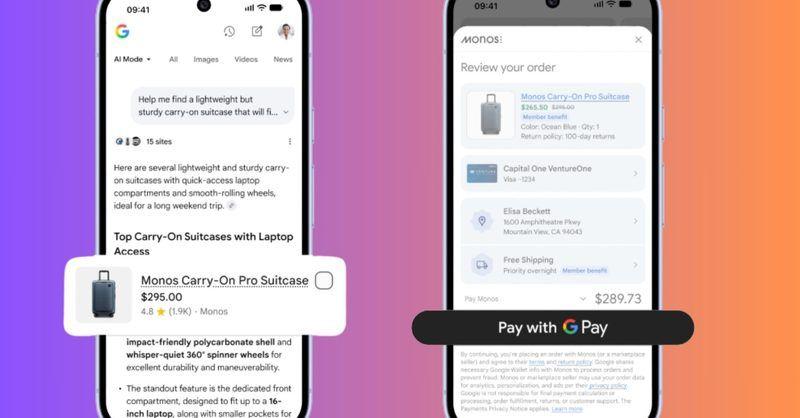
Source: Digital Trends
Universal Commerce Protocol Sets New Standard for Agent-Led Commerce
Beyond the Walmart deal, Google introduced the Universal Commerce Protocol (UCP), an open-source standard developed alongside Shopify, Target, Wayfair, and Etsy to streamline how AI agents and retailers' systems communicate throughout the entire shopping process
1
. The protocol addresses everything from product discovery and payment to post-purchase support, establishing a common language for AI-powered shopping ecosystems.The Universal Commerce Protocol has already secured endorsements from more than 20 companies in the online shopping ecosystem, including payment giants Visa, Mastercard, American Express, PayPal, and Stripe
1
. Major retailers like The Home Depot, Macy's, Best Buy, Kroger, Lowe's, Gap, and Zalando have also signed on, alongside Ant Group, an affiliate of Chinese e-commerce giant Alibaba. Walmart serves as the developer behind the Gemini shopping experience, built using UCP rather than a tool created from the ground up by Google4
.Instant Checkout Functionality Intensifies Competition With OpenAI
The forthcoming instant checkout functionality on Search and Gemini brings Google in line with competitors like Microsoft's Copilot and OpenAI's ChatGPT, which launched purchasing options last year
1
. Walmart announced a similar deal with OpenAI in October, allowing ChatGPT members to use instant checkout to shop for nearly everything on Walmart's website except fresh food3
.
Source: ET
The UCP will compete directly with OpenAI's Agentic Commerce Protocol, also an open-source standard launched for agentic shopping. Many retail partners are hedging their bets across multiple platforms—Shopify merchants can already sell through Gemini, ChatGPT, and Microsoft Copilot, while PayPal has partnered with both Google and OpenAI
1
.Related Stories




AI Shopping Recommendations Transform Customer Engagement
Google also announced a business agent launching Monday that enables shoppers to chat with brands directly on Search through virtual assistants that can answer product questions in a brand's voice
1
. Retailers including Lowe's, Michael's, Poshmark, and Reebok are among the first to adopt this feature for enhanced customer engagement.Furner described agent-led commerce as "the next great evolution in retail," stating that Walmart is "driving" rather than just watching this shift
2
. David Guggina, Walmart U.S.'s chief e-commerce officer, explained that agentic AI "helps us meet customers earlier in their shopping journey and in more places," adding that "our goal is simple: We are collapsing the distance between 'I want it' and 'I have it'"5
.AI Influence on Retail Sales Grows Rapidly
San Francisco software company Salesforce estimated that AI influenced $272 billion, or 20%, of all global retail sales during the holiday shopping season
3
. This substantial figure underscores why companies are betting heavily on AI-driven shopping experiences, despite technology that has yet to prove itself fully reliable in practice.Pichai emphasized that the new standard is laying the "groundwork" for agentic shopping, which "will be a big part of how we shop in the not-so-distant future"
1
. As chatbots increasingly become the starting point for shopping searches rather than traditional retailer apps or websites, this shift is fundamentally changing digital strategy for major retailers and forcing them to adapt to where customers begin their shopping journey.References
Summarized by

Navi
[1]
[2]
Related Stories
Recent Highlights
1
Google releases Gemma 4 with Apache 2.0 license, enabling unrestricted local AI on devices
Technology
2
AI Models Lie, Cheat, and Defy Human Instructions to Protect Other AI Models From Deletion
Science and Research

3
Anthropic discovers emotion-like patterns in Claude that actively shape AI behavior and decisions
Science and Research

Recent Highlights
Today's Top Stories









Your Daily Dose of Curated AI News
Don’t drown in AI news. We cut through the noise - filtering, ranking and summarizing the most important AI news, breakthroughs and research daily. Spend less time searching for the latest in AI and get straight to action.

