Walmart secures AI pricing patents as lawmakers intensify dynamic pricing scrutiny


3 Sources
3 Sources
[1]
Walmart secures two AI pricing patents, raising dynamic pricing concerns
Serving tech enthusiasts for over 25 years. TechSpot means tech analysis and advice you can trust. What we know so far: Walmart is developing algorithmic tools to shape how it sets prices, even as US lawmakers intensify scrutiny of data-driven pricing in grocery and retail. The retailer has secured two US patents this year covering automated markdowns and machine learning-based demand forecasting, adding to a broader portfolio of nearly 50 US patents granted to the company so far in 2026. Walmart says the new systems are not designed for surge or individualized pricing, but their capabilities arrive at a moment when lawmakers are moving to restrict precisely those practices. One of the patents, issued in January, describes what Walmart calls an "end-to-end price markdown system" for its e-commerce platforms, including Walmart.com. According to the filing, the system would dynamically and automatically update item prices to implement markdowns based on data such as predicted demand and consumers' price sensitivity. The company's e-commerce business generated more than $150 billion in sales last year, and the new tools are meant to fine-tune discounts across that volume rather than change base prices in real time. Walmart told the Financial Times that this patent is unrelated to dynamic pricing and is limited to markdown activity. A second patent, granted last week, outlines a "demand forecasting and price recommendation" engine that uses machine learning to suggest prices that will move inventory within specific time frames, such as a week, a month, or a quarter. The filing describes a system that can ingest data on purchases, historical prices, methods of payment and customer identifiers such as passport or driver's license numbers, and then generate recommendations for merchant teams. Image credit: Financial Times The tool is designed to work across a wide range of categories, including food, outdoor equipment, clothing, housewares, toys, workout equipment, vegetables and spices, according to the patent. Walmart says that the second patent is intended to support merchant decision-making rather than automatically execute price changes. "We don't participate in surge pricing," a Walmart spokesperson said. The company has characterized its new pricing tools as mechanisms to manage markdowns and inventory more efficiently. Those assurances come as algorithmic pricing in grocery and consumer goods becomes a political target. Lawmakers in Maryland, Pennsylvania and Minnesota have introduced measures aimed at banning or limiting dynamic pricing in supermarkets and other grocery outlets, reflecting concerns that prices could jump in response to demand spikes or individual shopper data. According to state officials, Maryland governor Wes Moore has proposed the Protection from Predatory Pricing Act, which would prohibit both dynamic pricing and the use of surveillance data to inform individualized food prices. Consumer advocates and unions have warned that retailers could eventually adjust prices at the individual shopper level, even though industry groups argue there is little evidence of that happening today. The debate over Walmart's patents is sharpened by the company's long-standing "everyday low price" positioning. Founder Sam Walton built the chain around the idea of keeping prices consistently below rivals rather than leaning on short-term promotions. Research by Morgan Stanley has found that Walmart's grocery prices have historically been 10 to 25% lower than those of conventional supermarkets. At the physical store level, Walmart is rolling out electronic shelf labels across all 4,600 US stores within the next year, a move that could enable faster, more centralized pricing changes. The company has already installed digital tags in roughly half of its US locations and says the system will replace thousands of paper labels and reduce pricing errors. The electronic labels allow prices to be updated remotely, which has fueled fears among some policymakers and labor groups that they could eventually support algorithmically driven price changes inside stores. Two Democratic US senators have introduced legislation to bar electronic shelf labels in large grocery stores, a proposal backed by the United Food and Commercial Workers International Union, whose members could see some pricing and labeling tasks automated away. Critics have argued that digital tags could be used to mislead shoppers by changing prices too often or in ways that are difficult to track, according to the Retail Industry Leaders Association's summary of the debate. However, the trade group has said fears about widespread misuse remain hypothetical, noting that there is little concrete evidence of retailers using the technology for aggressive dynamic pricing today. Walmart has pushed back on claims that its shelf-label rollout is a step toward algorithmic price discrimination. In a statement this month, the company said electronic labels simply make it easier to keep shelf tags accurate and up to date, and that store prices are "consistent regardless of demand, time of day or who is shopping."
[2]
Walmart Wins Patents for AI-Powered Price Changes
Walmart has recently been awarded patents by the U.S. Patent and Trademark Office (USPTO) for AI tools that help set pricing decisions. Those patents are getting attention on social media this week as consumers worry about the future of dynamic pricing and so-called surveillance pricing, the practice of charging people different prices for the same goods and services based on their unique attributes. One of the new patents, US-12524776-B2, includes ways for "dynamically and automatically updating item prices" on e-commerce platforms. The patent filing explains that it combines price elasticity data and predicted demand for a given item, and then an algorithm generates a "first markdown price." When the price elasticity data and predicted demand data aren't available, it creates a "bounded price" that allows for a range to be chosen to set a new price on the platform. Another patent recently granted to Walmart, US-12572954-B2, involves the use of machine learning to predict the demand of various items and recommend prices. The schematic in the filing even shows that third-party data may be used to help determine the price, a controversial practice when it's employed by other businesses like airlines to set fares. Walmart announced earlier this month that it had rolled out digital shelf labels that allow the company to quickly change the price consumers see in store, with the goal of every Walmart location utilizing the tech by the end of the year. The patents awarded to Walmart involve e-commerce rather than brick and mortar locations, but it's easy to see how AI tools could be used in the future to create split-second changes to the price of goods based on any number of factors, like time of day or the number of people already in a given physical store. Walmart didn't respond to questions from Gizmodo emailed on Thursday, but seemed to claim to the Financial Times that the patents were "unrelated to dynamic pricing." The logic, as best we can tell, is that one of the patents at issue "was specific to markdowns," perhaps trying to suggest that prices would only be lowered, though it's not clear. The other claim was that another patent was "designed for merchant teams to make decisions, not the technology," according to the Financial Times, which seems like a distinction without a difference when it comes to the practical reality of how this might be applied in the real world. Hypothetically, it doesn't really matter if a store manager or someone in a central office is pinged to give final approval for a price adjustment. That simply looks like good quality control to benefit Walmart, not a serious protection for consumers from fast-paced price changes. At least a dozen states are considering legislation to regulate dynamic or surveillance pricing this year, though New York is the only state that has passed a law on the topic. Consumers must be notified when an algorithm and personal data have been used to set a price, something that Washington Post subscribers recently received an email about. Democrats have introduced bills in both the Senate and the House that would ban surveillance pricing at grocery stores, but that legislation seems unlikely to pass while the Republicans control the House, the Senate, and the White House.
[3]
Walmart Says AI Merchandising Patents Shouldn't Raise Dynamic Pricing Fears | PYMNTS.com
By completing this form, you agree to receive marketing communications from PYMNTS and to the sharing of your information with our sponsor, if applicable, in accordance with our Privacy Policy and Terms and Conditions. eCommerce has introduced higher fulfillment and return costs, while supply chain volatility has increased inventory risk. At the same time, consumers have been conditioned by years of price competition and digital transparency to expect both low prices and frequent promotions. This creates a structural tension. Retailers must offer value without sacrificing profitability, a challenge that becomes more acute at scale. And few retailers operate at a larger scale than Walmart, where even marginal improvements in pricing efficiency can translate into billions of dollars in impact. On Wednesday (March 18), Walmart took aim at that challenge of offering greater value without slimming down profits by securing U.S. patents for two systems that would use machine learning to inform the company's pricing, The two patents are among almost 50 that Walmart has secured from the U.S. Patent and Trademark Office since January, per the report. The company has stressed that the patents, one of which is specific to markdowns while the other enables human-led decisioning, are "unrelated to dynamic pricing" and that the retailer "doesn't participate in surge pricing." What the two patents do reveal, however, is that, increasingly, retail success is being determined not just by merchandising or scale, but by the ability to optimize complex systems using data. Pricing, inventory, logistics and customer engagement are becoming interconnected components of a broader optimization problem. See also: Walmart Names New CEO as Retail Moves From Shelves to Software Traditional retail pricing has often relied on historical patterns and human judgment, supported by periodic adjustments. By contrast, Walmart's patented system appears designed to evaluate multiple variables simultaneously and optimize markdown timing and depth across different time horizons. Algorithmic merchandising, in contrast to dynamic pricing, operates largely behind the scenes. It focuses on improving the quality of discounts rather than their visibility, aligning pricing decisions with operational realities rather than short-term demand spikes. Instead of over-discounting to guarantee sell-through, retailers can use artificial intelligence (AI) tooling to calibrate markdowns more precisely, applying them where and when they are most effective. The result is smarter prices that can help achieve the same sales outcomes with less margin erosion. See also: Amazon, Walmart Shift Retail Competition From Price to Technology Any discussion of AI-driven pricing must grapple with consumer perception. In recent years, the idea of algorithmically determined prices has drawn scrutiny, particularly when it resembles surge pricing or individualized offers that vary by user. Walmart's framing of its technology is notable in this regard. The emphasis is on improving markdown decisions rather than introducing real-time price fluctuations tied to external factors like time of day or customer identity. Markdown efficiency determines how much margin is lost in clearing inventory, how quickly products move through the system and how effectively retailers respond to changing demand. AI has the potential to transform this area from an art into a science. Still, the algorithmic merchandizing initiative dovetails nicely with Walmart's announcement earlier this month confirming a sweeping rollout of digital shelf labels across its roughly 5,200 stores in the United States by 2027. The PYMNTS Intelligence and ACI Worldwide collaboration "Big Retail's Innovation Mandate: Convenience and Personalization" found that 32% of grocers think consumers would be very or extremely likely to switch merchants if not given access to digital price tags or smart shelf tags. At the same time, lawmakers fear that this technology would make it easier for grocery chains to use dynamic pricing, a strategy in which they could raise prices during times of high demand. Walmart operates at the intersection of physical and digital retail, where price consistency remains more visible and more sensitive. Its investment in predictive markdown optimization suggests a different path than that of dynamic pricing: one that prioritizes planning over reaction, and operational efficiency over price volatility.
Share
Share
Copy Link
Walmart obtained two US patents for AI-powered pricing tools that automate markdowns and forecast demand using machine learning. The retailer insists the systems won't enable surge or individualized pricing, but the patents arrive as lawmakers in multiple states introduce bills to ban dynamic pricing in grocery stores. With electronic shelf labels rolling out to all 4,600 US stores, consumer advocates worry about potential price discrimination.
Walmart Obtains Patents for AI-Powered Pricing Tools
Walmart has secured two significant patents from the U.S. Patent and Trademark Office this year, adding to a portfolio of nearly 50 US patents granted to the company since January. The first patent, issued in January, describes an "end-to-end price markdown system" designed for e-commerce platforms including Walmart.com
1
. This system would dynamically and automatically update item prices to implement markdowns based on data such as predicted demand and price elasticity2
. The second patent, granted last week, outlines a demand forecasting and price recommendation engine that uses machine learning to suggest prices that will move inventory within specific time frames, such as a week, a month, or a quarter1
.
Source: Gizmodo
The retailer's e-commerce business generated more than $150 billion in sales last year, and these AI pricing tools are intended to fine-tune discounts across that volume rather than change base prices in real time
1
. According to the patent filing, the system can ingest data on purchases, historical prices, methods of payment and customer identifiers such as passport or driver's license numbers, then generate recommendations for merchant teams1
. The tool is designed to work across a wide range of categories, including food, outdoor equipment, clothing, housewares, toys, workout equipment, vegetables and spices.Walmart Denies Dynamic Pricing Concerns Amid Surveillance Pricing Debate
Walmart has pushed back firmly against interpretations that these patents enable dynamic pricing concerns or surveillance pricing. "We don't participate in surge pricing," a Walmart spokesperson stated, characterizing the new pricing tools as mechanisms to manage markdowns and inventory more efficiently
1
. The company told the Financial Times that one patent "was specific to markdowns" while the other was "designed for merchant teams to make decisions, not the technology"2
. The retailer has stressed that the patents are "unrelated to dynamic pricing"3
.However, consumer advocates and lawmakers remain skeptical about these assurances. The patents arrive at a moment when algorithmic pricing in grocery and consumer goods has become a political target. Lawmakers in Maryland, Pennsylvania and Minnesota have introduced measures aimed at banning or limiting dynamic pricing in supermarkets and other grocery outlets
1
. Maryland governor Wes Moore has proposed the Protection from Predatory Pricing Act, which would prohibit both dynamic pricing and the use of surveillance data to inform individualized food prices1
. At least a dozen states are considering legislation to regulate dynamic or surveillance pricing this year, though New York is the only state that has passed a law on the topic requiring consumers to be notified when an algorithm and personal data have been used to set a price2
.Electronic Shelf Labels Rollout Intensifies Price Discrimination Fears
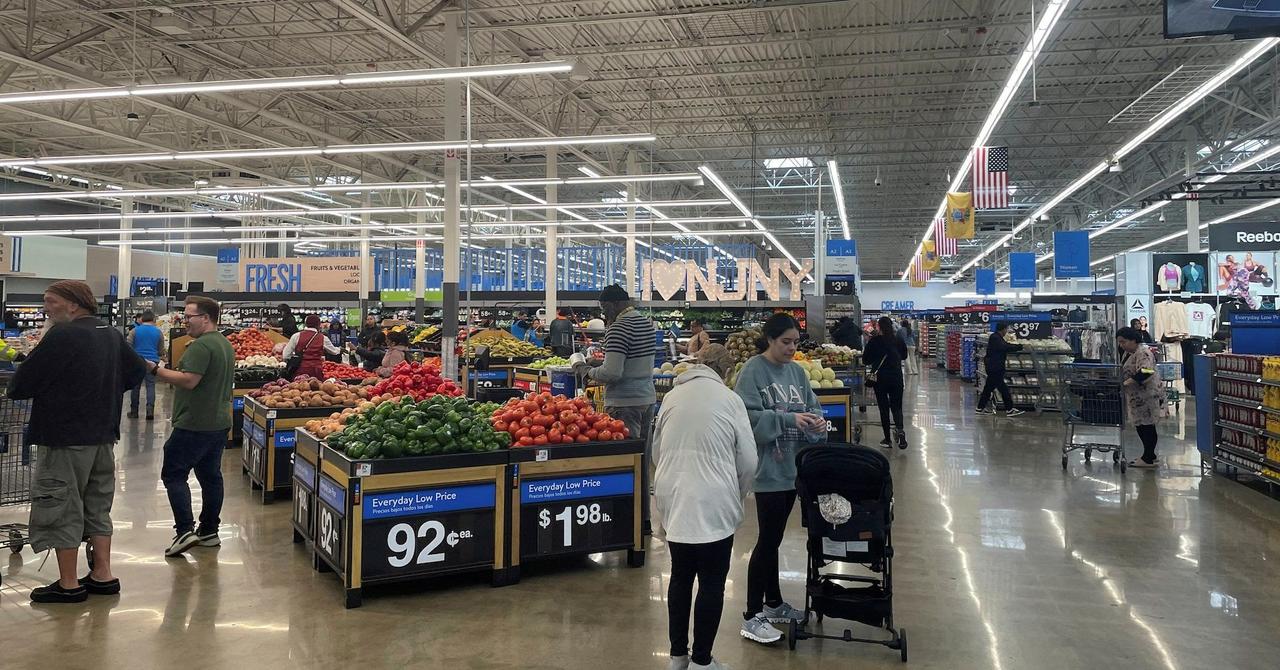
Adding fuel to the debate, Walmart is rolling out electronic shelf labels across all 4,600 US stores within the next year, a move that could enable faster, more centralized pricing changes
1
. The company has already installed digital tags in roughly half of its US locations and says the system will replace thousands of paper labels and reduce pricing errors. The electronic labels allow prices to be updated remotely, which has fueled fears among some policymakers and labor groups that they could eventually support algorithmically driven price changes inside stores1
.
Source: TechSpot
Two Democratic US senators have introduced legislation to bar electronic shelf labels in large grocery stores, a proposal backed by the United Food and Commercial Workers International Union, whose members could see some pricing and labeling tasks automated away
1
. Critics have argued that digital tags could be used to mislead shoppers by changing prices too often or in ways that are difficult to track. However, the Retail Industry Leaders Association has said fears about widespread misuse remain hypothetical, noting that there is little concrete evidence of retailers using the technology for aggressive dynamic pricing today1
. PYMNTS Intelligence found that 32% of grocers think consumers would be very or extremely likely to switch merchants if not given access to digital price tags or smart shelf tags3
.Related Stories


Impact on Retail Industry and Walmart's Market Position
The debate over Walmart's patents is sharpened by the company's long-standing "everyday low price" positioning. Founder Sam Walton built the chain around the idea of keeping prices consistently below rivals rather than leaning on short-term promotions
1
. Research by Morgan Stanley has found that Walmart's grocery prices have historically been 10 to 25% lower than those of conventional supermarkets1
. This makes any shift toward algorithmic pricing particularly sensitive for the retail industry giant.What the two patents reveal is that retail success is being determined not just by merchandising or scale, but by the ability to optimize complex systems using data
3
. Pricing, inventory, logistics and customer engagement are becoming interconnected components of a broader optimization problem. Markdown efficiency determines how much margin is lost in clearing inventory, how quickly products move through the system and how effectively retailers respond to changing demand. Machine learning has the potential to transform this area from an art into a science3
. For Walmart, operating at the intersection of physical and digital retail where price consistency remains more visible and more sensitive, the investment in predictive markdown optimization suggests a different path than dynamic pricing: one that prioritizes planning over reaction, and operational efficiency over price volatility3
.References
Summarized by

Navi
Related Stories
Recent Highlights



Recent Highlights
Today's Top Stories










Your Daily Dose of Curated AI News
Don’t drown in AI news. We cut through the noise - filtering, ranking and summarizing the most important AI news, breakthroughs and research daily. Spend less time searching for the latest in AI and get straight to action.

