Wit Studio apologizes after generative AI found in Ascendance of a Bookworm anime opening


5 Sources
5 Sources
[1]
Wit Studio Apologizes After Being Caught Using Generative AI Background Art Again
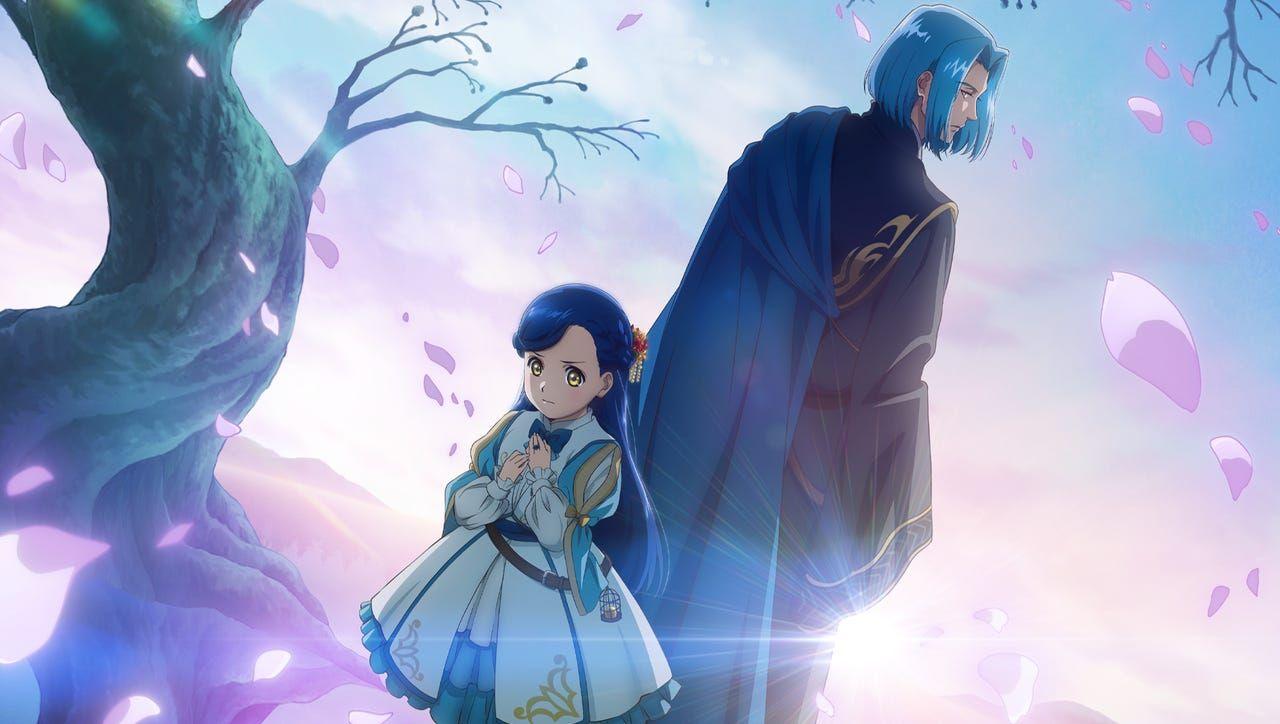
Wit Studio is a household name among anime fans and for good reason. It gave them the first three seasons of Attack on Titan, co-created Spy x Family, sleeper hits like Ranking of Kings, and it's poised to helm the remake of One Piece. Which is why it's pretty disappointing to see the anime production studio apologize for using AI to create the background art for one of its newest shows after fans roasted the studio online for it. As reported by Kotaku, the show in question is the fourth season of Ascendance of a Bookworm: Adopted Daughter of an Archduke, a fantasy isekai anime on Crunchyroll. Fans began to notice the usual stink of AI-smeared background art in its opening sequence and began sharing screenshots on X/Twitter, which spread like wildfire, voicing their sharp disappointment that Wit Studio, of all people, would lazily implement AI into the anime. Eventually, enough justifiable rabble-rousing from anime fans led Wit Studio to release a statement on April 10th, six days after the show's premiere. In it, Wit Studio wrote that it had conducted an internal investigation into the anime's production process following "feedback" it received online, and confirmed that generative AI was used in cuts in its opening sequence in its first episode. In tandem with its statement, the studio promised to redraw the background in its opening sequence for its second episode and to replace the opening sequence in its first episode. Wit Studio also aired out its stance on AI, writing the following: While we at our company are always interested in and closely monitor new technologies related to video production, we have, in principle (*), not permitted the use of generative AI in the video production of our works, including this one. Despite this, the current situation has occurred solely due to shortcomings in our production management and inspection systems, and we take full responsibility for this series of events. As the production company of this work, we sincerely apologize to our fans, the original author, and all other related parties. To date, with the exception of this particular cut, no use of AI-generated images has been confirmed in this work. Furthermore, we would like to add that NAM HAI ART, the art director and background production company for this work, has no involvement whatsoever in the above-mentioned matters. Taking this incident as an opportunity, we will strive to prevent recurrence by revising our production process guidelines and management system. Thank you for your understanding. As noted up top, this isn't the first time Wit Studio has been caught using AI on an anime. In fact, the asterisk in Wit Studio's post was, as it puts it, "an exception," for "the experimental work Dog and Boy, which was created for the purpose of technical verification. " A cop-out, if any, given the reporting Kotaku did on the incident, many anime fans in a tizzy over Ascendance of a Bookworm might've forgotten that this marks the second time the studio got caught using AI. Back in the somewhat less stupid times of 2023, the studio was in the hot seat after fans noticed its Netflix anime series Dog and Boy very explicitly credited AI in its production credits. At the time, the show's production credits specifically listed AI as a co-creator of its background art and music. What's worse, the show didn't even go the extra length to credit the human artist who had to babysit the AI in its credits, simply labeling the background designer's credits as "AI (+ Human)." To further step on rakes in an already bad situation, Netflix Japan issued a tweet about the whole snafu, justifying its AI usage, writing, "As an experimental initiative to support the labor-short anime industry, image generation technology is utilized for the background artwork of all cuts in a 3-minute video." This statement (very shittily) ties into the reality that the anime industry doesn't pay freelancers a living wage to create the work that winds up making beaucoup bucks. Whether the AI usage looks good or bad is besides the point when we're talking about one of the biggest and most adored anime studios around not doing the bare minimum to hire human artists to animate their shows. Which only makes the sting of the company's second public infraction with AI all the more shitty when you consider the lengths the company went to prevent issues like crunch. In an interview with Kotaku at Anime Expo later that year, Wit Studio president, CEO, and producer George Wada revealed that one of the benefits of working with fellow studio CloverWorks on Spy x Familyâ€"an at-the-time unheard-of practice for an ongoing animeâ€"is that it helped the studios maintain a healthy worker environment that didn't lean on overworking animators to make a show (cough cough, Mappa). In that very same interview, Wada explained why Wit Studio was no longer working on shows like Attack on Titan (which infamously took four years to release its second season) and Vinland Saga, which were taken over by Mappa in their fourth and second seasons, respectively. "There was a schedule set by like the manga side saying, 'Can you air it on this and this date' and it just did not mesh with the studio. We can’t really create something with that schedule because the fans want to get the show sooner than later," Wada told Kotaku, adding that Wit hires creators as employees so it can give them a salary to ensure they're "properly paid. A statement that reads glaringly hollow in hindsight. There's no putting the proverbial toothpaste back in the tube with generative AI, but that doesn't make its pervasiveness in the arts any less disappointing to see. Plainly speaking, it's a slap in the face to fans and to professional animators. Time and time again, it's ruined any sense of excitement for otherwise promising shows when a whiff of it is sheepishly admitted to and mucks up any admiration one might've had with actors caught using it. And for good reason. Why should anyone care about something nobody bothered to make in the first place?
[2]
The One Piece studio slammed by fans in anime's first major AI controversy
Anime's darling WIT Studio, makers of Attack on Titan and the upcoming One Piece remake, just went toe-to-toe with its own fans -- and lost. The studio released an apology after receiving backlash from its use of generative AI in the opening sequence (OP) of Ascendance of a Bookworm. The anime series debuted in early April, but was immediately criticized when fans noticed tiny distortions throughout the OP. Although one of the most well-known studios in the space, WIT isn't above the use of generative AI. While it's withdrawing the OP and replacing it with a "completed version," it feels as AI's influence in the anime industry is starting to fester. We saw how things went in late 2025, when Amazon tried using AI-generated dubbing to speed up production for shows like Banana Fish, Vinland Saga, No Game No Life: Zero, and more. The company hoped no one would notice, but the translations were so poor it was hard not to. Like WIT, Amazon walked back the use of AI and replaced the fumbled translations. However, that didn't stop the multi-billion dollar company from posting a new opening for an undisclosed AI dubbing platform in January 2026. AI's encroachment on anime doesn't stop there. In 2025, Toei Animation -- the studio behind One Piece and Dragon Ball -- released a 10-year, 100 billion yen ($650 million) plan to expand its reach globally. One of the main tenets in the plan was to embrace next-gen technology, like AI, VR, and AR. While many online were frightened by the mention of AI, I think the scariest part of Toei's announcement was the goal to increase its IP creation threefold. That's no easy feat. Animated TV series take time to bring to life, with most productions lasting around one to two years for completion. Even with the addition of new studios across the globe, a much larger workload means you're bound to see some cutting corners. Working conditions in the anime industry are already pitiful at best. Adding AI to the equation assuredly won't solve the problem. In fact, it will only lead to a far worse outcome if left unchecked. Subscribe to the newsletter for deeper AI-in-anime insight Want clearer context on AI in anime? Subscribe to the newsletter for thoughtful coverage of studio decisions, creative risks, and industry implications so you can understand how technology is reshaping animation. Get Updates By subscribing, you agree to receive newsletter and marketing emails, and accept our Terms of Use and Privacy Policy. You can unsubscribe anytime. WIT, like many other studios in the industry, is facing immense pressure to release content on a consistent basis. It only makes sense why it would dip its toes into the mix, especially given that WIT Studio reportedly lost 170 million yen in the fiscal year ending May 2025. There's a level of necessity to satisfy the heightened demand for anime today that makes the use of AI almost an inevitability in the industry -- and WIT's recent actions only solidify my conviction. If you thought the example set by WIT was bad, think again. This won't be the last time you'll see AI in anime.
[3]
Attack On Titan Studio Caught With Generative AI In Latest Anime
Wit Studio, the legendary Japanese animation house behind the likes of Attack on Titan, Spy x Family, and Vinland Saga, has confirmed in an official statement that “generative AI was utilized in the production process†of its latest project, Ascendance of a Bookworm. The announcement comes less than a week after the first episode of the anime’s fourth season aired on April 4, which prompted questions from fans regarding the background art in Ascendance of a Bookworm’s opening song. “Regarding our anime production, â€~Ascendance of a Bookworm: The Lord's Adopted Daughter’ (hereinafter referred to as "this work"), we conducted an investigation into the production process of this work, including the opening sequence, based on the feedback we received after April 4, 2026,†reads the statement on Wit Studio’s official website, per Google's machine translation from the original Japanese). “As a result, we confirmed that [genAI] was used in the production process of some cuts in the opening sequence.†The opening song in question has been removed from Crunchyroll’s YouTube channel, and Wit Studio notes in its statement that “the opening sequence will be replaced with the completed version using the aforementioned background art materials†for all future episodes of Ascendance of a Bookworm. The anime is an adaptation of a light novel series that debuted back in 2013 about a librarian who's crushed to death by books and becomes reincarnated as a small child in a world where books are scarce and reserved for aristocrats. The anime series began in 2019 and Wit Studio didn't take over production until the fourth season which first started airing earlier this month. “While we at our company are always interested in and closely monitor new technologies related to video production, we have, in principle [. . .] not permitted the use of generative AI in the video production of our works, including this one,†continued the statement. “Despite this, the current situation has occurred solely due to shortcomings in our production management and inspection systems, and we take full responsibility for this series of events. As the production company of this work, we sincerely apologize to our fans, the original author, and all other related parties.†While Wit Studio made a point of noting that NAM HAI ART, the production studio in charge of the background art for Ascendance of a Bookworm, is not to blame for the oversight, it does lend additional credence to a statement made by director and animator Terumi Nishii, who has worked on the likes of Jujutsu Kaisen and Death Note, earlier this year. According to Nishii’s post on Bluesky, several animation studios are already “using AI to generate rough drafts for direction corrections,†which makes it difficult to spot when scenes are outsourced to other production companies.
[4]
Attack on Titan studio apologizes and heads back to the drawing board after using generative AI in an anime opening
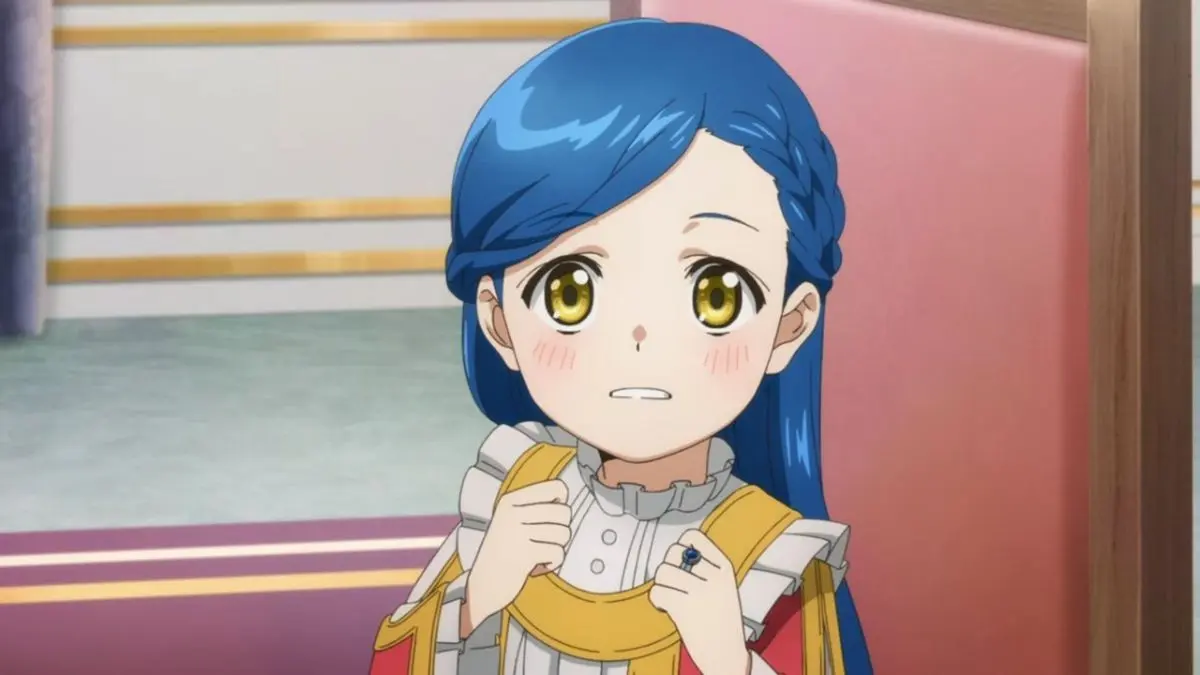
Wit Studio, the animation team behind multiple seasons of Attack on Titan, has apologized after an internal investigation uncovered generative AI in its latest anime series Ascendance of a Bookworm. Upon the debut of Ascendance of a Bookworm's fourth season, a backlash began brewing among viewers after some - including those on Reddit - spotted odd details that were reflective of work generated by AI during its opening (or 'OP') sequence. As it turns out, that was precisely the case. In a statement on its official website (H/T Anime News Network), Wit announced that it had investigated those claims and apologized for the inclusion of generative AI. The animation studio then promised the opening sequence would be "replaced" moving forward with a "completed version." Ascendance of a Bookworm, based on a light novel from Miya Kazuki and You Shiina, follows a peculiar premise. In it, a post-graduate student perishes underneath a pile of books during an earthquake, but is reincarnated as a child in a world where books aren't available to common folk. Unfortunately, Wit's dabbling with AI isn't an isolated incident in the anime industry. Last year, Amazon came under fire for using an AI-generated English dub in series Banana Fish, while a ChatGPT prompt appeared in German subtitles on Crunchyroll. Crunchyroll CEO Rahul Purini has at least been vocal about "not using AI in the creative process" in an interview with Forbes. Wit Studio, meanwhile, is working on a One Piece anime remake over at Netflix. For more, check out the other new anime in the works, plus our picks for the best anime movies to add to your watchlist.
[5]

Attack on Titan Studio to Redraw Opening of Latest Anime Series After Investigation Reveals Gen AI Usage, Apologizes to Fans
Wit Studio has apologized after confirming fan suspicions that generative AI was used in the opening of Season 4 of its latest anime, Ascendance of a Bookworm. The studio, known for popular shows including Spy x Family and Attack on Titan (Seasons 1-3), has announced that future episodes of Ascendance of a Bookworm will feature a redrawn opening with the gen AI elements removed. Based on Miya Kazuki's light novel series about a trainee librarian reincarnated in a magical world, Season 4 of Ascendance of a Bookworm hit Japanese TV screens on April 4. However, eagle-eyed viewers were quick to claim that the isekai fantasy anime's opening showed telltale signs of generative AI use, sharing their observations on Reddit and Twitter/X. Today, Wit Studio issued an official statement addressing the matter. After conducting an internal investigation, the studio determined that gen AI was indeed used to create the assets for the background art in a portion of the anime's opening. Wit announced that it will redraw the backgrounds of the affected shots from scratch. According to the studio, Ascendance of a Bookworm will get a final, gen-AI free version of the opening from Episode 2 onwards. Continuing with its apology, Wit stated that "in principle, we have not permitted the use of generative AI in anime production in our works." (Wit Studios noted that the only exception is The Dog & The Boy, a short created as a technological experiment back in 2023). It reassured fans that its investigation uncovered no other incidents of gen AI usage in Ascendance of a Bookworm. In these circumstances, fans may rush to blame Nam Hai Art, the company which worked on the backgrounds for the opening. However, Wit Studios stated that Nam Hai "had no involvement in the incident." Instead, Wit Studios' statement blamed the blunder on its own production management and quality control systems. Wit Studios added that it will take this incident as an opportunity to revise its guidelines and production management systems to prevent similar incidents happening in the future. "As the production company behind this series, we would like to apologize to all fans and to all the people involved, including the original author," it said. Gen AI usage in anime is a contentious topic. Amazon removed its AI-generated English dub of Banana Fish soon after launch, in response to audience backlash that lambasted both the lack of human voice actors and the bad quality of the dub. The making of many anime series nowadays involves outsourcing different parts of the process to multiple companies (sometimes in different countries), making it difficult to keep tabs on aspects like gen AI usage. Perhaps this incident with Ascendance of a Bookworm will also prompt other anime producers to revise their monitoring and management methods to ensure that unauthorized gen AI usage does not slip through the net into the final product.
Share
Share
Copy Link
Wit Studio, the renowned animation house behind Attack on Titan and Spy x Family, issued an apology after fans discovered generative AI in the opening sequence of Ascendance of a Bookworm Season 4. The studio confirmed AI background art was used despite internal policies prohibiting it, blaming production management shortcomings. This marks the second time the studio has faced AI controversy, raising questions about oversight in the anime industry.
Wit Studio Confirms Generative AI Use in Ascendance of a Bookworm
Wit Studio, the celebrated animation house behind Attack on Titan, Spy x Family, and the upcoming One Piece remake, has confirmed that generative AI was used in the opening sequence of Ascendance of a Bookworm Season 4
1
. The admission came six days after the show premiered on April 4, following intense fan backlash on social media platforms like Twitter/X and Reddit3
. Eagle-eyed viewers spotted telltale distortions and irregularities in the background art that suggested AI-generated content, prompting widespread criticism of one of the anime industry's most respected studios4
.
Source: IGN
In an official statement released on April 10, Wit Studio acknowledged the AI controversy and took full responsibility for what it described as production management shortcomings . The studio emphasized that it has "in principle, not permitted the use of generative AI in the video production of our works" and attributed the incident to failures in its inspection systems
1
. Notably, the studio cleared NAM HAI ART, the background production company for the series, of any involvement in the matter3
.Studio Promises to Redraw Opening Sequence
Wit Studio announced it will redraw the opening sequence entirely, with the corrected version appearing from Episode 2 onwards . The original opening has been removed from Crunchyroll's YouTube channel, and the studio confirmed that no other AI-generated content has been found elsewhere in the production
3
. The apology extended to fans, the original author Miya Kazuki, and all related parties, with the studio pledging to revise its production process guidelines and management systems to prevent similar incidents1
.
Source: GamesRadar
This marks the second time Wit Studio has been caught using AI in anime production. In 2023, the studio released Dog and Boy on Netflix, which explicitly credited AI as a co-creator of AI background art and music
1
. The experimental short listed background credits simply as "AI (+ Human)" without properly acknowledging human artists1
. Netflix Japan defended the decision at the time, citing support for the "labor-short anime industry," a statement that highlighted the sector's ongoing struggles with inadequate compensation for human artists1
.Related Stories
Growing Concerns About AI in Anime Production
The incident reflects broader tensions within the anime industry as studios face mounting pressure to produce content at an accelerated pace. Wit Studio reportedly lost 170 million yen in the fiscal year ending May 2025, underscoring the financial strain that may drive studios toward cost-cutting measures like AI
2
. Working conditions in the sector remain challenging, with freelance animators often receiving wages far below living standards despite the industry generating substantial revenue1
.Other major players have also embraced AI technology. Toei Animation, the studio behind One Piece and Dragon Ball, announced a 10-year, 100 billion yen ($650 million) plan in 2025 that includes adopting next-generation technologies like AI, VR, and AR
2
. Meanwhile, Amazon faced similar fan backlash in late 2025 after using AI-generated dubbing for shows including Banana Fish and Vinland Saga, eventually walking back the decision due to poor translation quality2
.According to director and animator Terumi Nishii, who has worked on Jujutsu Kaisen and Death Note, several animation studios are already using AI to generate rough drafts for direction corrections, making it difficult to spot when outsourcing partners employ such tools . This revelation suggests that AI in anime production may be more widespread than publicly acknowledged, raising questions about animation quality and transparency across the industry. As production pipelines increasingly involve multiple companies across different countries, maintaining oversight becomes more complex .
References
Summarized by

Navi
[4]
Related Stories
Recent Highlights


Recent Highlights
Today's Top Stories





Your Daily Dose of Curated AI News
Don’t drown in AI news. We cut through the noise - filtering, ranking and summarizing the most important AI news, breakthroughs and research daily. Spend less time searching for the latest in AI and get straight to action.

