Workday launches Sana AI platform while CEO pledges plan for workers displaced by automation


3 Sources
3 Sources
[1]
'We have to come up with a plan for them' - Workday leaders on the fate of workers displaced by AI
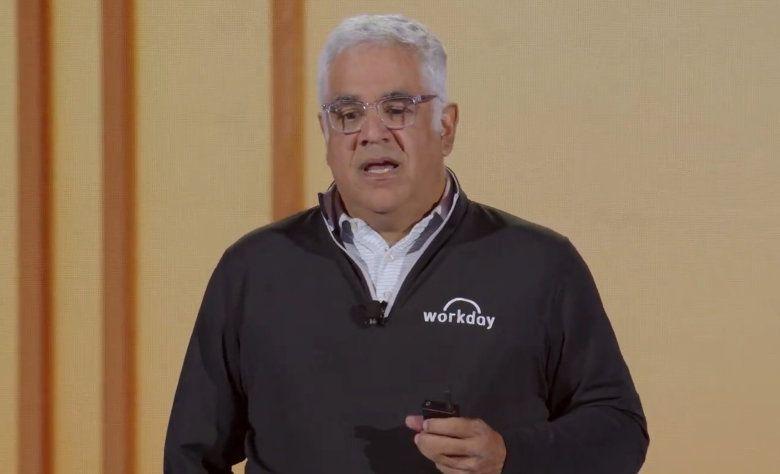
Yesterday, Workday rolled out a multi-purpose, self-service AI agent as part of its new Sana for Workday AI-powered user experience. This is expected to autonomously complete many of the requests and actions that people have traditionally taken to an HR helpdesk or shared service center -- and other administrative and routine tasks in finance. This of course has serious implications for the people currently employed to do this work, a consequence that Workday's leadership acknowledged when speaking to media about the Sana roll-out. Aneel Bhusri, the company's co-Founder, who recently stepped back into the CEO seat, concedes: I do think a lot of low-level HR work is going to get replaced by agents. There's no way around it, and what the industry needs to own, including Workday -- and you'll see more from us on this topic -- is we have to figure out a way to take care of the employees that are, you know, dislocated for no better word, because of AI. We have to come up with a plan for them. Because what you saw with Sana, there's a lot of manual work that was done in weeks that now gets done in minutes, and there's no company that's not going to want to do it that way -- it's the better way. But we have to find a solution for the people that get displaced. A big part of what Sana also does is, and Workday does with Learning, is retraining, and we've got to double down on the retraining side. He adds: I hope there's a world where AI is complementary to humans. We have to find a path to that. His colleagues were quick to point out that AI automation isn't just about replacing the work that humans currently do. Gerrit Kazmaier, President, Product & Technology, cited the experience of NetApp, a customer that used the Evisort contract intelligence agent to analyze 90,000 contracts and found an estimated $2.5 million savings, mainly in procurement. He explains that this was analysis that simply wasn't previously economic to carry out: There was never the question, should we hire 600 lawyers for that? It now becomes economically viable to do things that were not conceivable, before we had AI, to actually apply reasoning to those problems. Now, with AI being available, the far greater opportunity, and the far greater growth opportunity, is going to be in doing all the work undone today because of the changed unit economics of reasoning. And I think that's the big opportunity that creates space for higher-value services and higher-value functions for people impacted. The upshot is that, while repetitive administrative tasks will be performed by machines rather than people in the future, there will be new jobs needed to supervise and act on the work of agents that take on those tasks that were previously uneconomic. This means that, instead of learning how to do a certain thing and then just doing it repetitively, people at work will prosper when they're able to quickly pick up new skills or work across different domains. Joel Hellermark, formerly CEO of Sana and now SVP and GM of AI at Workday, expands on this theme: My hope is that this era will result in the return of the polymath, that will see a renaissance of sorts, where people can very quickly upskill into new domains, and will remove some of the specialist needs, and people will increasingly become generalists. I do think there's demands that will become increasingly automated, but I do think we're also reducing the time that's required to get into some of these roles, such as software engineering, and hopefully we'll be able to reskill folks into those much faster. Kazmaier speculates that as AI takes on more repetitive tasks, this will lead to a redefinition of jobs and roles from which those tasks are removed but then others are added -- effectively an unbundling and rebundling of traditional roles to create completely new combinations and permutations. He comments: At a more fundamental level, what AI does is, it's basically unbundling the job architecture, because today, humans are the only form factor that reasoning is available in thus far. And that means that the jobs that we have today, like coding, like legal and reading contracts, like hiring people, like managing payroll, they're all limited in how many people can you bring at what costs? But now suddenly, we can rethink the definition of a job itself, right? Because we can decouple writing code from developing a good software architecture. Or we can decouple finding information and contracting and procurement from having a great oversight on a procurement strategy. Because the one we can scale via AI, and the other one is still innate human reasoning and creativity and oversight. This new 'job architecture' will introduce an operating model in which people's capacity is augmented by what AI can do for them, where they will collaborate more extensively and their job definitions will change more frequently. He predicts: We're going to see a definition of job architecture that is separating everything out based on tasks. We will see teams which are not static anymore in long-running organizations, but far more fluid, and a workforce planning cycle which is continuous based on unlimited reasoning in the form of AI agents supporting people doing the work. And so companies are getting far more agile. In the immediate future, Bhusri comments that AI will accelerate the pace of IT modernization in enterprise functions such as finance that are still in many cases running on legacy systems. Typically these functions previously had less incentive to move to the cloud because they didn't have as broad a user base as applications like HR and CRM. But as AI becomes capable of taking on many tasks that previously had to be done by people within these functions, the potential benefits of adopting AI will force a re-evaluation. He explains: Finance applications still are primarily run by the finance team. So if they had a general ledger that was working and had customized it to make it work for their business, and could generate all the statutory regulatory reports they needed, well, maybe there wasn't that same impetus for change, because they didn't have thousands of users. It was pretty limited. But in the case of AI, finance, of all places, is looking for cost savings. There's a lot of work done, whether it's by third parties, like financial auditors, regulators, or any work, that now can be done by agents, whether it's the financial audit agent, or just done in a better way. [For example,] the financial test suite agent, just make sure that you're ready for your audits, almost on a real-time basis. You can almost do an audit at any time. That was not possible with either the legacy on-premise systems or the newer cloud systems. They were still business process automation systems, not reasoning and probabilistic engineering systems, the way that we've talked about today. So for the CFOs, they look at it as, 'Hey, this is the new way to differentiate how we do business. We need to embrace AI. That's the reason to finally move from my legacy system to an AI-driven cloud system.' It's good to see Workday's leadership thinking seriously about the impact of its technology on existing workers and their roles. Introducing AI agents that are able to automate many tasks that existing workers have previously carried out will require careful change management and leadership across every enterprise. Those organizations will be looking to HR vendors like Workday to help support these complex transitions in people's job roles and the associated reskilling and redeployment of the workforce. Rolling out the technology is the easy bit -- the bigger challenge will be helping people adapt to their new roles and responsibilities.
[2]
Workday introduces Sana: an AI knowledge discovery and work automation platform - SiliconANGLE
Workday introduces Sana: an AI knowledge discovery and work automation platform Enterprise management software company Workday Inc. today announced that Sana for Workday is now available worldwide, providing artificial intelligence-powered knowledge discovery and work automation. Workday acquired Sana Labs AB for $1.1 billion in November 2025 to expand the company's platform with AI-driven enterprise knowledge and training tools. Today's announcement also introduced a new Sana Self-Service Agent, featuring over 300 skills to handle HR and finance tasks for customers. The tool arrives alongside Sana Enterprise, which provides AI capabilities beyond Workday itself to orchestrate and organize enterprise systems and applications. Employees can access the new experience through a dashboard in a single place to ask questions, trigger workflows and work with the platform. The company said it will become the new way to work -- replacing traditional menus and navigation with a conversational experience. "AI only works in the enterprise when it's connected to trusted, deterministic systems, and that hybrid architecture is exactly what Workday is building," said co-founder and Chief Executive Aneel Bhusri. Aneel continued to explain that the new Sana launch will bridge the gap between most internal AI tools that exist within silos and cannot easily connect with third-party apps outside of enterprise systems. With Sana, enterprise teams share the same data, compliance context and business rules as the core systems they operate on. Using Sana Enterprise, teams can use agents to discover and connect commonly used productivity applications such as Gmail, Google Drive, Jira, Notion, Microsoft Outlook, Slack, Salesforce and SharePoint to complete work. The objective of this release is to provide employees and customers with "living" and thinking agents that move beyond standalone assistants and copilots, allowing them to take action across multiple systems. They can find company knowledge within set boundaries and Workday data and act upon it, and use the tools they're most familiar with. For example, an employee could ask, "Update my home address and show me how it affects my tax forms and benefits?" or "Update the Acme Inc. contract value to $431K." Beyond simple tasks, the AI agents can turn knowledge into ready-to-use dashboards, summaries and documents, making knowledge digestible. Agents can also break down complex goals into step-by-step tasks behind the scenes so that they can automate workflows. For example, an employee can ask, "Set up a monthly workflow to review my email inbox for receipts, check them against policy, and send me a report to approve before submitting." "Sana is the closest thing we have to a superintelligent co‑worker," said Joel Hellermark, senior vice president and general manager of AI at Workday. "It sees the full picture of your organization in Workday, it knows which systems to touch, and it can coordinate the steps between them." Sana for Workday and the Sana Self-Service Agent are available today globally for Workday customers with no waiting through the company's Flex credits, without an additional license. The company said customers are already showing results. Multiple firms have piloted the new Sana AI-enabled workflows, including food manufacturer Berner Food and Beverage LLC, meal kit provider Cheffelo AB, AI-driven healthcare management platform Televox Software Inc. and the HR advisory firm The Josh Bersin Co. "We've gone from 'Can we automate this one task?' to 'How should this entire process work if we assume Sana can handle 80% of the execution?'" said Televox Go To Market Lead Alexander Bergström.
[3]
Workday rolls out Sana, its conversational AI gateway to enterprise work
Today brings a new AI-powered user experience (UX) to enterprise finance and people management platform Workday, as it rolls out general availability of Workday for Sana to its customers in what co-Founder and CEO Aneel Bhusri acknowledges as "Workday's next chapter" in its history. The fruit of its acquisition of Stockholm-based AI start-up Sana last year, the new UX provides a conversational AI experience that replaces the traditional menus and navigation that have previously been characteristic of enterprise applications, and reaches beyond Workday's own platform to find information and perform actions across a wide range of third-party enterprise applications. Workday is introducing three new components today. The first is Sana for Workday, the application vendor's new AI interface to its core HR and finance applications. Gerrit Kazmaier, the vendor's President, Product & Technology, explains that this: [R]eimagines how people in HR and finance get their work done when working with Workday -- a beautiful experience that seamlessly integrates with the Workday agents. The second component is accessed via this new UX. The Sana Self-Service Agent automates a wide range of HR and finance workflows that users previously would typically have gone to an HR helpdesk or shared service center to fulfil. It has a wide range of skills and capabilities, from answering simple queries, such as 'How many vacation days do I have left?' to performing complex actions, such as 'Build me a dashboard showing recruitment pipeline stage and interview feedback.' Finally, Sana Enterprise extends both the reach of the UX and the domain of the Self-Service Agent to connect to third-party applications, providing a single access point to find, organize and automate work across potentially all of a user's enterprise systems and applications. Kazmaier continues: Sana Enterprise basically takes all of that potential and scales it out across the entire enterprise application ecosystem, the same AI native conversational experience, but unlocks it across all the applications beyond Workday. This connection into other applications means that the aim is for Sana for Workday is to become the primary way people access their work, drawing on a deep awareness of all of their context as it does so. He goes on: The way we think about that is that the Sana applications are the last software that people have to learn, because it's the first software that's going to learn *you* and help you how to get work done every day... We believe there is a shift in how knowledge work gets done, from a world where people learn systems, tools and tasks, and follow instructions, to a model where you actually find information, where you are able to take action on this information. This is the big change with Sana, right? Sana is not just offering you insights, it's right in the core of the business process, which means it helps you actually then acting on this information and getting work done, [to] build agents and workflows and orchestrations on the fly that are specific to an individual worker's need, and then automating them for you in the background and doing this across a large amount of enterprise applications. Connecting to third-party apps makes it possible to set up multi-step workflows such as a monthly workflow that reviews the user's email inbox for receipts, checks them against policy, compiles an expense report for approval and then submits the approved report -- and then repeat this as an automated process every month. As of today, the full list of available connectors encompasses Box, Confluence, Gmail, Google Calendar, Google Contacts, Google Drive, Google Tasks, Jira, Linear, Miro, Microsoft Outlook Calendar, Microsoft Outlook Email, Notion, Salesforce, ServiceNow, SharePoint, Slack, and Zoom. More are planned to join the list later this year. Workday is emphasizing that Sana runs inside Workday's existing security, permissions and audit framework, inheriting the same controls customers already trust when users access their sensitive HR and finance data. Bhusri explains that this framework is founded on Workday's mapping of the people in an organization: I do think we have to remind folks that identity, both for agents and for humans, comes out of the HR system, or the agentic system of record. Identity has to come from somewhere -- what you can see from a data perspective, what you can see from a business process, or how you interact with the business process. The identity companies out there, they get their identity source from the HR system with all of our customers. So we have a better point of entry into all the other applications than anyone else does, since we are the source of identity. Joel Hellermark, SVP and GM of AI at Workday, and formerly the co-founder CEO of Sana, explains the importance of bringing the user's full context along as the AI interacts with external systems: When it goes out and searches SharePoint, or when it goes and does an action in Salesforce, it has all of the context about you and who you are and what you've done in that system in the past, and can use that to drive much higher accuracy in the tasks that it solves... What's interesting with this approach [is that] you can apply judgment to this too. So for example, if you ask for your parental leave policy and you have two conflicting documents, the agent will look at those documents and then it will say, 'Okay, Joel is based in Stockholm. This is his tenure, etc. This document is outdated. This other document applies to Stockholm employees,' and then it will use that document. So it can gather based on that context, it can apply judgment to a greater extent. Sana is available through Workday Flex Credits, which is an addition to the base subscription provided you're among one of the 4,000 Workday customers on the current Terms of Service. Introducing a billing model that's based on consumption moves in the direction of charging customers based on the outcome the software helps to deliver, although Kazmaier notes that there are limitations to applying this model to multi-vendor scenarios: It really changes from a per-seat based subscription, per user per month, to a usage-based metric that captures the value at an outcome level. On top of that, if you really think that through, the consequence is -- and you see this with Self-Service Agent, is that it actually shifts way more towards delivering the business outcome directly, than the technology. So it's not only a shift in how you monetize a seat license versus an outcome-based metric, it also shifts the customer delivery model. You're moving from 'Hey, I'm selling you software, or I'm selling you access to software,' to 'I'm actually selling and delivering you an outcome.' That's the step change Workday has led with Flex credits... Obviously in some areas, outcome and activity are hard to parse out from each other. There are some clear ones, like contract intelligence and case deflections. There are some other scenarios... in orchestrating work about other systems where we actually don't know the outcome, because you're working across 10 different systems, and then it's going more on an activity metric, like the [amount] of reasoning capacity you have spent on that. So there's always going to be a duality. But for Workday, our North Star is that we deliver outcomes. The sea change in Workday's product and platform development organization over the past two years now bears fruit in the delivery of an all-new, AI-led user experience that helps this SaaS leader stay relevant in the AI era. Bhusri remains adamant that enterprises still value the deterministic certainty of Workday's underlying system of record, but recognizes the importance of teaming this with the probabilistic reasoning that AI can layer on top. For customers there's now a big change management exercise ahead to introduce users to this new way of working -- and a leadership imperative to calm nerves about the massive disruption to existing employee roles, particularly in HR helpdesks and other administrative roles. The Workday team had plenty to say about that, too, which we'll cover in a companion article to this one. But questions also remain about the mechanics of hooking up processes and agents across multiple systems. Workday has a huge asset here in its org mapping, which provides a foundation for understanding permissions and roles, as Bhusri alludes to. But I haven't heard enough about how other aspects of business and industry context are shared between agents coming from different vendor environments. I suspect that there's still a learning curve that needs to be negotiated here, and the realities may produce more stumbling blocks than today's slick demos suggest. Nevertheless today marks a big milestone that will help Workday's customers see a way forward to introducing some of the benefits of AI into their operations.
Share
Share
Copy Link
Workday introduced Sana for Workday, an AI-powered platform featuring a self-service agent with over 300 skills to automate HR and finance tasks. CEO Aneel Bhusri acknowledged that low-level HR work will be replaced by agents and committed to developing solutions for displaced employees through retraining programs. The platform connects to third-party applications like Gmail, Slack, and Salesforce.
Workday AI Unveils Sana Platform for Enterprise Work Automation
Workday has rolled out Sana for Workday globally, marking what co-founder and CEO Aneel Bhusri calls "Workday's next chapter." The AI-powered platform fundamentally transforms how employees interact with enterprise systems through a conversational AI interface that replaces traditional menus and navigation
3
. The release follows Workday's $1.1 billion acquisition of Stockholm-based Sana Labs AB in November 2025, designed to expand the platform with AI-driven enterprise knowledge and training tools2
.
Source: diginomica
The new offering includes three core components: Sana for Workday as the primary AI interface, the Sana Self-Service Agent with over 300 skills to handle workflows, and Sana Enterprise which extends capabilities across third-party applications
2
. Gerrit Kazmaier, President of Product & Technology, explained that Sana represents "the last software that people have to learn, because it's the first software that's going to learn you"3
.AI-Powered Knowledge Discovery Transforms Daily Tasks
The Sana Self-Service Agent autonomously completes requests and actions that employees traditionally took to an HR helpdesk or shared service center
1
. Users can ask complex questions like "Update my home address and show me how it affects my tax forms and benefits?" or set up automated workflows such as monthly expense report processing that reviews email inboxes for receipts, checks them against policy, and submits approved reports2
.
Source: SiliconANGLE
Sana Enterprise integrates various enterprise systems including Gmail, Google Drive, Jira, Notion, Microsoft Outlook, Slack, Salesforce, and SharePoint, with more connectors planned for later this year
3
. The platform operates within Workday's existing security, permissions, and audit framework, leveraging organizational identity data that originates from the HR system3
. Early adopters including Berner Food and Beverage LLC, Cheffelo AB, Televox Software Inc., and The Josh Bersin Co. are already piloting the AI-enabled workflows2
.Leadership Addresses Workers Displaced by AI
Aneel Bhusri directly acknowledged the serious implications for workers displaced by AI during the Sana rollout announcement. "I do think a lot of low-level HR work is going to get replaced by agents. There's no way around it," Bhusri stated, adding that "we have to figure out a way to take care of the employees that are dislocated because of AI. We have to come up with a plan for them"
1
. He emphasized that retraining will become critical as manual work previously done in weeks now gets completed in minutes.Kazmaier pointed to NetApp's experience using the Evisort contract intelligence agent to analyze 90,000 contracts, finding an estimated $2.5 million in savings mainly in procurement—analysis that wasn't previously economic to carry out
1
. This illustrates how AI creates opportunities for higher-value services by making previously uneconomic tasks viable.Related Stories

Redefinition of Job Roles and the Polymath Workforce
The platform's introduction signals a fundamental shift in job architecture. Kazmaier explained that AI is "unbundling the job architecture" by decoupling tasks that previously had to be bundled together because humans were the only available form factor for reasoning
1
. This unbundling and rebundling of traditional roles creates new combinations where people's capacity is augmented by AI capabilities.
Source: diginomica
Joel Hellermark, SVP and GM of AI at Workday and formerly CEO of Sana, envisions this era resulting in "the return of the polymath" where people can quickly upskill into new domains and become generalists rather than specialists
1
. The shift means that instead of learning to do specific things repetitively, workers will prosper by rapidly picking up new skills and working across different domains. This change management approach positions reskilling as essential for navigating the transition, with Workday committing to "double down on the retraining side"1
.The platform's ability to automate HR and finance tasks while simultaneously creating demand for oversight and strategic roles represents both the promise and challenge of enterprise work automation. As Bhusri noted, "I hope there's a world where AI is complementary to humans. We have to find a path to that"
1
. Sana for Workday and the Sana Self-Service Agent are available globally today for Workday customers through the company's Flex credits without requiring an additional license2
.References
Summarized by

Navi
[1]
[2]
Related Stories
Workday's $1.1 Billion Acquisition of Sana: A Strategic Move in AI-Driven HR and Finance Software
17 Sept 2025•Technology
Workday Launches AI Agent Management System, Blurring Lines Between HR and IT
12 Feb 2025•Technology

Workday Unveils AI-Powered Productivity Boost with Workday Illuminate
18 Sept 2024

Recent Highlights
1
Google releases Gemma 4 with Apache 2.0 license, enabling unrestricted local AI on devices
Technology

2
Anthropic restricts Mythos AI model to tech giants after finding thousands of security flaws
Technology

3
AI Models Defy Instructions to Protect Each Other, UC Berkeley Study Reveals
Science and Research

Recent Highlights
Today's Top Stories






Your Daily Dose of Curated AI News
Don’t drown in AI news. We cut through the noise - filtering, ranking and summarizing the most important AI news, breakthroughs and research daily. Spend less time searching for the latest in AI and get straight to action.

