AI godfather Yann LeCun calls Meta's 29-year-old AI chief inexperienced, warns of staff exodus


6 Sources
6 Sources
[1]
AI godfather says Meta's new 29-year-old AI boss is 'inexperienced' and warns of staff exodus
Yann LeCun, chief AI scientist at Meta Platforms Inc., at the VivaTech conference in Paris, France, on Wednesday, May 22, 2024. Meta's former chief AI scientist, Yann Lecun, has called its 29-year-old AI boss "inexperienced," and warned of a staff exodus from the company. Alexander Wang, the billionaire co-founder of Scale AI, joined Meta as its chief AI officer in 2025 after the tech giant bought a 49% stake in his startup. His hiring came amid an intensifying AI talent war, in which Meta reportedly offered $100 million signing bonuses to poach top talent from ChatGPT maker OpenAI, as it raced other hyperscalers to dominate the multibillion-dollar AI market with the most advanced models. Lecun, who's known as one of the "godfathers of AI" and quit Meta in November, called Wang "young" and "inexperienced" in an interview with the Financial Times. "He learns fast, he knows what he doesn't know," Lecun said of Wang, who heads up Meta's new AI research unit TBD Labs and is tasked with building new AI models. But Lecun added: "There's no experience with research or how you practise research, how you do it. Or what would be attractive or repulsive to a researcher." Lecun, 65, added that Meta CEO Mark Zuckerberg "basically lost confidence in everyone who was involved" after the company was accused of gaming benchmarks to make its Llama 4 model look more impressive. Zuckerberg "basically sidelined the entire Gen AI organization," Lecun said. "A lot of people have left, a lot of people who haven't yet left will leave," Lecun added. "We had a lot of new ideas and really cool stuff that they should implement. But they were just going for things that were essentially safe and proved," he added. "When you do this, you fall behind." CNBC contacted Meta for a response, but had not received a response as this story went live.
[2]
Mark Zuckerberg's Former Top AI Scientist Reveals Exactly Why He Quit
In a new interview with The Financial Times, Yann LeCun, one of the so-called godfathers of AI, finally dished on his abrupt exit from Meta in November. From how he tells it, most of it boils down to his increasingly fraught relationship with CEO Mark Zuckerberg -- and his new golden boy, Alexandr Wang, who ended up bossing LeCun around even though he's nearly four decades younger. LeCun had been at Zuckerberg's company for over a decade, where, as chief AI scientist, he had the freedom to carry out all kinds of esoteric AI research without necessarily having to worry about developing a profitable product. LeCun described Meta, then Facebook, as a "tabula rasa with a carte blanche." "Money was clearly not going to be a problem," he told the FT. Then, in November 2022, ChatGPT came out, and the whole world went bananas for AI chatbots. AI chatbots and their human-like capabilities for conversation are powered by large language models, something LeCun helped pioneer with his foundational work on neural networks. When Zuckerberg ordered LeCun develop Meta's own LLM, he agreed under the condition that Llama would be open source and free. The Llama models "changed the entire industry," LeCun said, and were a hit with AI researchers because of their power and open source nature. The success didn't last, though; the latest Llama 4 model, released last April, was dead on arrival and reviled as an instantly-outdated flop. LeCun blames the failure on Zuckerberg pressuring LeCun's unit to accelerate AI development. "We had a lot of new ideas and really cool stuff that they should implement. But they were just going for things that were essentially safe and proved," LeCun told the FT. "When you do this, you fall behind." The rift, however, goes deeper. LeCun views LLMs as a "dead end" for building even more powerful, "superintelligent" models that rival or surpass human capabilities. An entirely different architecture called "world models" which seek to understand the physical world, not just language, is needed to make the next major leap in the tech. According to LeCun, Zuckerberg actually liked LeCun's world model research, but didn't put his money where his mouth is. Instead, Zuckerberg launched a new LLM-focused Superintelligence Labs last year, separate from LeCun's lab, and offered several hundred million dollar contracts to attract top talent. All the talent that came in, LeCun complained, have been "completely LLM-pilled." Zuckerberg's marquee new-hire was Alexandr Wang, the founder and former CEO of the AI data annotation startup Scale AI, which provides an essential service for training AI models, but doesn't build or design them. Zuckerberg poured $14 billion into Scale AI to buy a 49 percent stake and, as part of that deal, Wang left and joined Meta to lead the new Superintelligence Labs. As a consequence, LeCun was forced to start reporting to Wang. The move raised questions from the get-go, including whether Wang, 29, had the experience and background to build massive AI models, something his company didn't do. LeCun doesn't leave us wondering where he stands on Wang's hiring, calling him "young" and "inexperienced." Be that as it may, LeCun, considered to be a godfather of the entire field, was now taking orders from Wang. LeCun seemed cool about this at first when the interviewer brought up the new hierarchy. "The average age of a Facebook engineer at the time was 27," Lecun told the FT. "I was twice the age of the average engineer." But when the interviewer pointed out that the younger generation weren't telling him what to do until the 29-year-old Wang showed up, LeCun seemingly let his true feelings be known. "Alex isn't telling me what to do either," LeCun sneered. "You don't tell a researcher what to do. You certainly don't tell a researcher like me what to do." He'll be his own boss going forward. LeCun has launched a new world-model-focused startup called Advanced Machine Intelligence Labs, which is targeting a $3 billion valuation. LeCun will serve as executive chairman, allowing him a similar degree of freedom to pursue research he once enjoyed at Meta, according to the FT.
[3]
Ex-Meta AI Chief Slams New Boss as 'Young' and 'Inexperienced'
Meta's AI shake-up is backfiring, says one of the company's former leaders. Yann LeCun, Meta's former chief AI scientist known as a "godfather of AI," called the company's new 29-year-old AI boss Alexandr Wang "young" and "inexperienced" in an interview with the Financial Times. Wang became LeCun's manager after Meta invested $15 billion in his startup Scale AI. LeCun revealed that CEO Mark Zuckerberg "basically sidelined the entire GenAI organization" after Llama 4 flopped and the team was accused of fudging benchmarks. "A lot of people have left, a lot of people who haven't yet left will leave," he said. The new hires are "completely LLM-pilled," LeCun added, saying LLMs are "a dead end when it comes to superintelligence."
[4]
Former Meta Scientist Says Mark Zuckerberg's New AI Chief Is 'Young' And 'Inexperienced' -- Warns 'Lot Of People' Who Haven't Yet Left Meta 'Will Leave'
Former Meta scientist and AI pioneer Yann LeCun has openly questioned Meta Platforms Inc.'s (NASDAQ:META) AI leadership overhaul. LeCun Questions Wang's Research Credentials In an interview with the Financial Times published on Friday, LeCun described Wang, 28, as "young" and "inexperienced," arguing that the Scale AI co-founder lacks a deep understanding of how elite AI research teams operate. LeCun said Alexandr Wang is intelligent and learns quickly, but does not yet grasp what attracts -- or alienates -- top researchers. He added that while Wang briefly became his boss following Meta's AI reorganization, he was not actively directing his work. He noted that people usually should not tell senior scientists like him how to conduct their work. Meta did not immediately respond to Benzinga's request for comments. See Also: Meta Resets AI, Hardware Plans As 'Avocado' Delays, Leadership Turmoil, Cost Cuts Mount Meta's $14 Billion AI Bet And Llama Fallout Wang's appointment followed Meta's $14 billion investment in Scale AI, part of Mark Zuckerberg's aggressive push to regain momentum in the AI race. LeCun said the move came after Zuckerberg grew frustrated with slow progress on Meta's flagship open-source model, Llama. According to LeCun, internal confidence eroded after Meta was criticized for allegedly overstating benchmark results tied to Llama 4. He said the controversy angered Zuckerberg and led him to sideline much of Meta's existing generative AI organization. He said that "a lot of people" have already left Meta and those who haven't yet "will leave." LLMs 'A Dead End,' LeCun Says LeCun, who announced in November that he is leaving Meta to launch a new startup called Advanced Machine Intelligence, also reiterated his long-held belief that large language models are fundamentally limited. He said people at Meta would like him not to call LLMs "a dead end," but he will not change his mind just because others think he is wrong. He said true artificial intelligence will require new architectures beyond LLMs, even if that view clashes with Meta's current priorities. Meta Doubles Down On AI With Manus AI Acquisition In December, Meta ramped up its AI push by acquiring Manus AI, a fast-rising Chinese startup specializing in autonomous agents. The Manus deal adds to Meta's broader AI push this year, following its investment in Scale AI that valued the data-labeling company at $29 billion and pulled Wang into Meta's leadership circle. Price Action: In the past 12 months, Meta shares have been up 3.21%, according to Benzinga Pro. Meta carries a consensus price target of $831.64 based on ratings from 38 analysts. The three latest ratings -- from Rosenblatt, Baird and Wedbush imply an average price target of $937.33, suggesting roughly 44.2% upside from current levels. Benzinga Edge Stock Rankings indicate that Meta carries a bearish medium and long-term outlook, even as its stock continues to show a positive trend in the short term. Click here to see how it compares with peers. Read Next: Meta's Ray-Ban Smart Glasses Might Never Have Happened If Not For One Cold Email -- EssilorLuxottica's Rocco Basilico Reveals How It All Started Disclaimer: This content was partially produced with the help of AI tools and was reviewed and published by Benzinga editors. Image via Shutterstock $METAMetadiumNot Available-%OverviewMETAMeta Platforms Inc$649.94-0.07%Market News and Data brought to you by Benzinga APIs
[5]

AI godfather Yann LeCun calls Meta billionaire AI chief Alexandr Wang 'inexperienced' - VnExpress International
Yann LeCun, often described as one of the "godfathers of AI," said Alexandr Wang does not yet have sufficient practical research experience, despite now leading Meta's flagship superintelligence project. "He learns fast, he knows what he doesn't know," LeCun, 65, who served as Meta's chief AI scientist before announcing in November 2025 that he was leaving to form his own startup, said of Wang, 29, in a recent interview with the Financial Times. "There's no experience with research or how you practice research, how you do it. Or what would be attractive or repulsive to a researcher." In June 2025, Meta invested $15 billion in data-labeling startup Scale AI and recruited its chief executive and co-founder, Wang. Once briefly the world's youngest self-made billionaire, Wang now has an estimated net worth of $3.2 billion, according to Forbes. He was placed in charge of Meta's artificial intelligence push and its research unit, known as TBD Lab, which is tasked with developing next-generation frontier AI models. The move briefly made Wang become LeCun's direct superior. However, LeCun said Wang did not actively direct his work. "You don't tell a researcher what to do," LeCunn said. "You certainly don't tell a researcher like me what to do." In the same interview, LeCunn said Meta chief executive Mark Zuckerberg grew frustrated after disappointing progress on Llama, the company's flagship open-source AI model, and "basically lost confidence in everyone who was involved" after Meta was accused of gaming benchmarks to make its Llama 4 model appear more capable than it was, according to Business Insider. Zuckerberg "basically sidelined the entire Gen AI organization," Lecun said, describing a sharp internal reset following the controversy. LeCun has repeatedly argued that large language models are fundamentally limited and that unlocking more advanced forms of artificial intelligence requires a different approach. That belief underpins his new startup, reportedly named Advanced Machine Intelligence, which reflects the research direction he has long promoted as a more viable alternative to LLMs. Nabla, a health tech AI startup that partnered with LeCun's company last December, said in a press release that LLMs, unlike world models, "still face some structural constraints, including hallucinations, non-deterministic reasoning and limited handling of continuous multimodal data, which make autonomous decision-making challenging," CNBC reported.
[6]

Yann LeCun challenges Zuckerberg's AI shake-up, questions Alexandr Wang's role at Meta
The episode highlights a deeper divide at Meta, with LeCun arguing that LLMs are unlikely to deliver true superintelligence. Meta's aggressive approach to make its world-class AI team has already put the company into the spotlight amid a wave of high-profile talent reshuffles across the industry. As the top researchers are switching firms in search of bigger bets, Yann LeCun, the pioneering AI researcher who recently stepped away from his role as Meta's chief AI scientist, has openly questioned Mark Zuckerberg's decision to place Alexandr Wang at the helm of the company's new Superintelligence Labs. During an interview with the Financial Times, LeCun mentioned some doubts about Wang's readiness to lead cutting-edge AI research, arguing that the 28-year-old Scale AI cofounder is definitely quick to learn, but he lacks firsthand experience in running or practising academic-style research. According to LeCun, understanding what motivates top AI researchers and even what drives them away comes only with time spent inside research environments. Wang's appointment comes after Meta's aggressive AI talent push, which included a $14 billion investment in Scale AI and Wang's recruitment as a central figure in the company's AI reorganisation. This marks a big shift for Meta after internal frustration about the progress of its Llama models, particularly following controversy around benchmark results tied to Llama 4. LeCun also mentioned that those events broke Zuckerberg's confidence in Meta's existing generative AI leadership, leading to a broad sidelining of teams involved in the projects. Even after Wang briefly became his superior during the reshuffle, LeCun stated that the relationship was largely hands-off, underscoring that senior researchers are not typically "directed" in the traditional corporate sense. The comments also exposed a deeper philosophical divide within Meta AI's strategy. While Zuckerberg's latest hires are heavily focused on large language models, LeCun has long argued that LLMs are fundamentally limited and unlikely to deliver true superintelligence. He reiterated that belief, saying he would not compromise his scientific views despite internal disagreement. LeCun is now reportedly working on launching his own venture called Advanced Machine Intelligence. He will work as executive chair rather than CEO, acknowledging that his strengths lie in research vision rather than company management.
Share
Share
Copy Link
Yann LeCun, Meta's former chief AI scientist, publicly criticized the company's new AI boss Alexandr Wang as inexperienced in a Financial Times interview. LeCun warns that Meta faces a significant staff exodus after Mark Zuckerberg sidelined the entire GenAI organization following the Llama 4 controversy. The 65-year-old AI pioneer left Meta to launch his own startup focused on world models.
Yann LeCun Questions Alexandr Wang's Research Experience
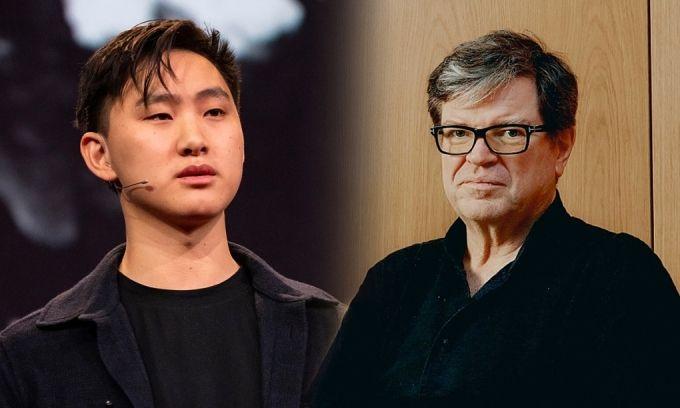
Yann LeCun, widely recognized as one of the AI godfathers, has openly criticized Meta's leadership overhaul in artificial intelligence, calling the company's 29-year-old chief AI officer Alexandr Wang "young" and "inexperienced" in a recent interview with the Financial Times
1
. The 65-year-old former chief AI scientist, who departed Meta in November after more than a decade at the company, expressed concerns about Wang's ability to lead elite AI researchers despite his rapid learning capabilities. "He learns fast, he knows what he doesn't know," LeCun acknowledged, but added a critical caveat: "There's no experience with research or how you practice research, how you do it. Or what would be attractive or repulsive to a researcher"2
.
Source: VnExpress
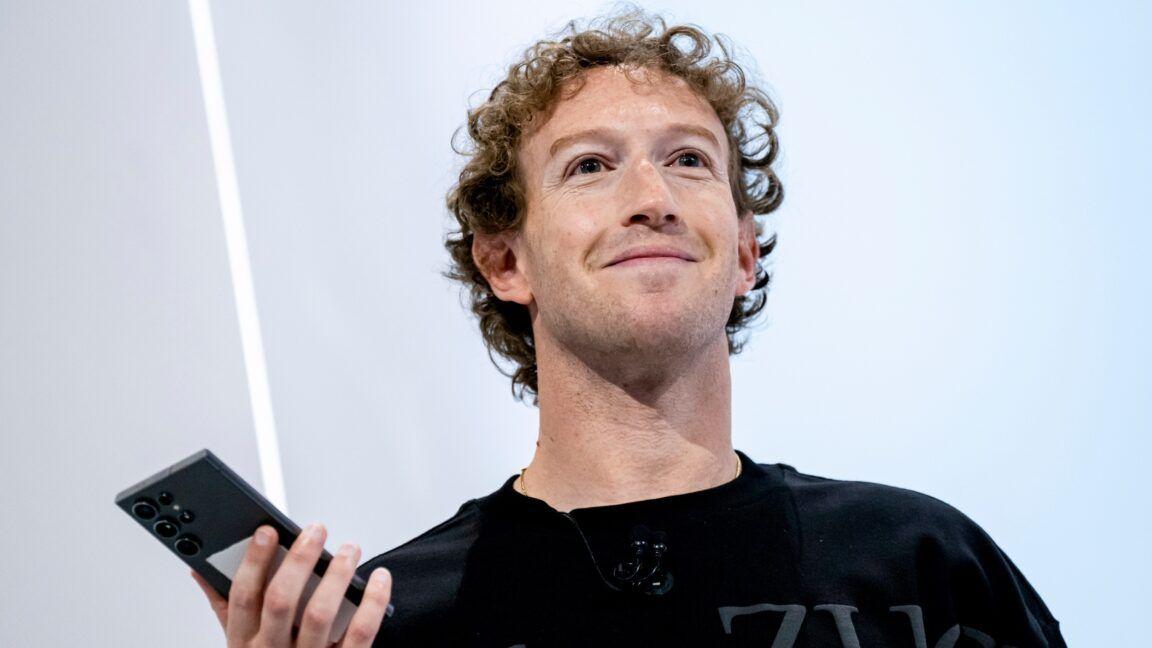
Alexandr Wang became Meta's chief AI officer in 2025 after the tech giant invested $14 billion to $15 billion in Scale AI, acquiring a 49% stake in his data annotation startup and valuing it at $29 billion
1
4
. Wang now heads Meta's new AI research unit TBD Labs, tasked with building next-generation frontier AI models. The hiring came amid an intensifying AI talent war, with Meta reportedly offering $100 million signing bonuses to poach top talent from OpenAI1
.Mark Zuckerberg Sidelines GenAI Organization After Llama 4 Controversy
The organizational upheaval at Meta stems from Mark Zuckerberg's frustration with the company's AI strategy following the disappointing reception of Llama 4. Released in April, the latest iteration of Meta's flagship open-source model was criticized as an instantly-outdated flop and dead on arrival
2
. More damaging still, Meta faced accusations of gaming benchmarks to make Llama 4 appear more capable than it actually was. According to Yann LeCun, Zuckerberg "basically lost confidence in everyone who was involved" and "basically sidelined the entire GenAI organization" in response to the controversy1
3
.
Source: Futurism
LeCun blamed the failure on Zuckerberg pressuring his unit to accelerate AI development at the expense of innovation. "We had a lot of new ideas and really cool stuff that they should implement. But they were just going for things that were essentially safe and proved," LeCun told the Financial Times. "When you do this, you fall behind"
1
. The former chief AI scientist also revealed that Zuckerberg launched a separate Superintelligence Labs focused on large language models, offering several hundred million dollar contracts to attract top talent who LeCun complained have been "completely LLM-pilled"2
.Staff Exodus Warning and Reporting Structure Tensions
Yann LeCun warned of a significant staff exodus from Meta as a direct consequence of the organizational changes. "A lot of people have left, a lot of people who haven't yet left will leave," he stated bluntly
1
3
. The warning carries weight given LeCun's stature in the field and his insight into what motivates elite AI researchers.The organizational restructuring briefly placed Wang as LeCun's superior, a move that raised eyebrows given the vast experience gap between the two. When pressed about the new hierarchy, LeCun initially seemed diplomatic, noting that "the average age of a Facebook engineer at the time was 27" and that he was twice the age of the average engineer
2
. However, when the interviewer pointed out that younger engineers weren't directing his work until Wang arrived, LeCun's true feelings emerged: "Alex isn't telling me what to do either. You don't tell a researcher what to do. You certainly don't tell a researcher like me what to do"2
5
.Related Stories
Large Language Models Versus World Models Debate
The rift between Yann LeCun and Meta runs deeper than personality conflicts or organizational charts. LeCun views large language models as "a dead end" for achieving superintelligence, arguing that an entirely different architecture called world models is needed to make the next major leap in AI capabilities
2
3
. World models seek to understand the physical world, not just language, representing a fundamentally different approach to AI development.According to LeCun, Mark Zuckerberg actually liked his world model research but didn't commit resources to it. Instead, Zuckerberg focused Meta's efforts on LLM-based development through the new Superintelligence Labs
2
. This strategic disagreement reflects broader questions about the future direction of AI development that will shape the industry for years to come.LeCun Launches Advanced Machine Intelligence Labs
Yann LeCun has launched a new startup called Advanced Machine Intelligence Labs, targeting a $3 billion valuation and focused on world models rather than large language models
2
5
. LeCun will serve as executive chairman, a structure designed to give him the freedom to pursue research he once enjoyed at Meta. The startup has already partnered with Nabla, a health tech AI startup, which noted in a press release that LLMs "still face some structural constraints, including hallucinations, non-deterministic reasoning and limited handling of continuous multimodal data, which make autonomous decision-making challenging"5
.
Source: Digit
Meta has not responded to requests for comment on LeCun's criticisms
1
4
. The company continues to double down on its AI strategy, recently acquiring Manus AI, a Chinese startup specializing in autonomous agents, as part of its broader push to compete with OpenAI and other players in the AI race4
. Whether Meta's bet on Alexandr Wang and LLM-focused AI development will pay off remains to be seen, but LeCun's departure and public criticism signal turbulence ahead for the company's AI ambitions.References
Summarized by

Navi
[1]
[3]
Related Stories
Meta's $70B AI gamble hits turbulence as Zuckerberg faces internal revolt and strategy shift
15 Dec 2025•Business and Economy
Meta's Chief AI Scientist Yann LeCun Plans Departure to Launch World Models Startup
11 Nov 2025•Startups

Meta's $14.3 Billion Bet: Alexandr Wang Joins 'Superintelligence' Team in AI Race
17 Jun 2025•Business and Economy

Recent Highlights
1
Google releases Gemma 4 with Apache 2.0 license, enabling unrestricted local AI on devices
Technology

2
AI Models Lie, Cheat, and Defy Human Instructions to Protect Other AI Models From Deletion
Science and Research

3
Anthropic discovers functional emotions in Claude that actively shape AI behavior and decisions
Science and Research

Recent Highlights
Today's Top Stories








Your Daily Dose of Curated AI News
Don’t drown in AI news. We cut through the noise - filtering, ranking and summarizing the most important AI news, breakthroughs and research daily. Spend less time searching for the latest in AI and get straight to action.

