Investors warn AI bubble poses major economic risk as inflation fears and unsustainable spending mount


6 Sources
6 Sources
[1]
AI-driven inflation is 2026's most overlooked risk, investors say
LONDON/NEW YORK, Jan 5 (Reuters) - Global stock markets, riding high on AI euphoria at the start of 2026 may be disregarding one of the biggest threats that could spoil the party: a surge in inflation driven partly by the tech investment boom. U.S. stock indexes, where seven tech groups contributed half of all market earnings this year, made double-digit gains in 2025 to hit record highs as exuberance about AI and monetary easing also propelled European (.STOXX), opens new tab and Asian equities to record peaks. Expectations for further rate cuts have buoyed bonds too, handing U.S. Treasury investors the best annual performance for five years as inflation retreated, although it remains above the Federal Reserve's average 2% target. For 2026, waves of government stimulus in the U.S., Europe and Japan as well as the AI boom are expected to refuel global growth. This has money managers bracing for inflation to re-accelerate, prompting central banks to end their rate-cutting cycles, slamming the brakes on the easy money flow into AI-obsessed markets. "You need a pin that pricks the bubble and it will probably come through tighter money," said Trevor Greetham, head of multi-asset at Royal London Asset Management. He said that while he was holding on to big tech stocks for now he would not be surprised to see inflation booming worldwide by the end of 2026. Tighter money would reduce investors' appetite for speculative tech, raise funding costs for AI projects and reduce tech groups' profits and share prices, Greetham said. The multi-trillion-dollar race by so-called hyperscalers like Microsoft (MSFT.O), opens new tab, Meta (META.O), opens new tab and Alphabet (GOOGL.O), opens new tab to build new data centres was also an inflationary force, analysts said, because of the rate at which these projects are gobbling up energy and advanced chips. "The costs are going up not down in our forecast, because there's inflation in chip costs and inflation in power costs," Morgan Stanley strategist Andrew Sheets said. He said U.S. consumer price inflation would stay above the Federal Reserve's 2% target until the end of 2027 in part because of heavy corporate investment in AI. J.P. Morgan head of cross-asset strategy Fabio Bassi said that an improving U.S. labour market, stimulus spending and rate cuts that have already happened would keep inflation above that target "regardless of the price of chips." Aviva Investors said in its 2026 outlook that a key market risk would come from central banks ending their rate-cutting cycles or even starting to hike, as price pressures build up from AI investment and waves of government stimulus spending in Europe and Japan. CHIPS AND CHARGES "What keeps us awake at night is that inflation risk has resurfaced," said Julius Bendikas European head of economics and dynamic asset allocation at Mercer, which manages $683 billion of assets directly and advises institutions running a combined $16.2 trillion. He is not yet betting on a stock market correction, but is edging out of debt markets that might get rattled by an inflation shock. Markets have already shown early signs of nerves about rising costs and potential AI over-spending. Oracle's shares plunged last month as it revealed spending had soared, while U.S. tech stablemate Broadcom's stock also dropped after it warned its high profit margins would get squeezed. Personal computer maker HP Inc (HPQ.N), opens new tab expects to feel pressure on prices and profits in the later part of 2026 from the surge in memory chip costs driven by rising data centre demand. "Inflation is what could start to scare investors and cause markets to show some cracks," said asset manager Carmignac investment committee member and portfolio manager Kevin Thozet. With the economic growth cycle accelerating "inflation risk remains very underappreciated," he said, prompting him to stock up on inflation-protected Treasuries. As rate hike risks increased, he said, the price-earnings valuations investors applied to large AI stocks would fall. ANALYSTS SEE AI COST BLOWOUT Deutsche Bank expects AI data-centre capital expenditure to reach as much as $4 trillion by 2030 and the rapid rollout of these projects could cause supply bottlenecks in chips and electricity that make investment costs spiral, the bank's analysts said. George Chen, partner at consultancy Asia Group, who also formerly held a senior role at Meta, said that cost blowouts and consumer price inflation would raise the costs of AI projects and prompt a rethink among investors about chasing the AI theme. "Memory chip cost inflation will push up prices for AI groups, lower investors' returns and then the flow of money into this sector will reduce," he said. Writing by Naomi Rovnick. Reporting by Naomi Rovnick in London, Brenda Goh in Shanghai and Lewis Krauskopf in New York. Additional reporting by Karin Strohecker and Vidya Ranganathan in London Editing by Vidya Ranganathan and Jane Merriman Our Standards: The Thomson Reuters Trust Principles., opens new tab
[2]
2026 Is Poised to Be the Year of the Tech IPO. Will It Also Be the Year the AI Bubble Bursts?
2026 is already looking to be a special year for the tech industry, as the AI-loving market braces for three major tech IPOs. Three tech giants, SpaceX, Anthropic, and OpenAI, are reportedly eyeing a market debut this year, with the potential debuts being referred to as some of the biggest ever to hit the market. "There have only been a small number worldwide that have raised more than $20 billion but, but it's entirely possible that OpenAI or SpaceX would be raising more than that," University of Florida emeritus professor and IPO expert Jay Ritter told Gizmodo. SpaceX is allegedly eyeing a market debut as early as June, and according to some reports, is expecting to raise more than $30 billion. SpaceX CEO Elon Musk confirmed IPO preparations in an X post last month, saying that Ars Technica's reporting was "accurate." Despite being a space company, there is seemingly an AI angle to this IPO as well. The Ars Technica article that Musk confirmed on X posited that SpaceX was eyeing an IPO to raise enough capital to deploy data centers in space, an absurdly ambitious pitch that has been gaining considerable steam in the tech world. OpenAI and Anthropic's potential public offerings, on the other hand, are on less certain timelines. A Financial Times report from December said that the Claude-maker had hired the law firm Wilson Sonsini to prepare for an IPO as early as this year, but Anthropic's chief communications officer said there were no immediate plans. Meanwhile, a Reuters report from November said that OpenAI was planning an IPO of up to $1 trillion as early as late 2026. The report came mere days after the AI giant completed its recapitalization process to go from a non-profit to a for-profit. A valuation of that level would make OpenAI one of the most valuable publicly traded firms from the get-go. Although company executives have rejected the reported timeline, Altman did say in October that going public was "the most likely path" for OpenAI, "given the capital needs that we'll have, and sort of, the size of the company." If the reports are true, not only will these IPOs cause an already tech-driven market to level up in its frenzy, they could, at least temporarily, give the overall economy a bump. "A buoyant IPO market historically has benefited local economies, especially those where employees have a lot of equity-based compensation, but the general economy as well," Ritter said. "And there's been a number of articles written recently about the increasing stock market valuations and how this had a wealth effect on the US economy that probably offset some of the negative effects of the Trump tariffs." Tech, and especially AI, have become quite central to the American economy. So much so that, in a note from earlier this year, Deutsche Bank researchers said that the AI sector might single-handedly be saving the entire U.S. economy. "In the absence of tech-related spending, the U.S. would be close to, or in, recession this year," Deutsche Bank's George Saravelos wrote. Considering AI's oversized impact on the economy, the "IPOs could certainly have an effect on the broader economy, depending on how they do," Ritter said. Plans can still change; in fact, the economic uncertainty that followed Trump's tariff plans deterred expected IPO activity in 2025. But SpaceX, OpenAI, and Anthropic are practically household names at this point, Renaissance Capital Vice President of Research Nick Einhorn told Gizmodo, and could probably rely on investor interest regardless of how the market is performing. With both Anthropic and OpenAI potentially eyeing an IPO, the market may finally get what it has been asking for: a major pure-play AI stock. Although most, if not all, of the big tech stocks have received significant boosts to their valuation thanks to the AI hype, practically none of them deal exclusively in AI. Amazon has its retail operations, Meta has its social media empire, Alphabet has the Google search engine, Apple has iPhones, and even the market's AI darling, Nvidia's chips, aren't used solely in artificial intelligence. The rare IPOs that are deemed AI pure-plays, like CoreWeave from earlier this year, are considered to be a prized look into the future of AI demand growth. If OpenAI and Anthropic debut, 2026 could be the year the market starts to make up its mind about AI. Both AI giants would begin to share a whole lot of financial information with the public, all of which could be used to figure out what exactly they believe is the road to profitability, where demand is going, and whether or not there could indeed be a bubble. "The AI space in general, it's pretty new," Einhorn said. "As you get more AI stocks in the marketplace, then we'll probably get more consensus over time of what the right metrics are to focus on and so on. But I think we're still in the early stages of that." Even then, though, there is a very real risk of overvaluation. Both companies are really big names that carry a lot of hype and have already amassed an intense amount of retail investor interest without any detailed financial disclosures in sight. How the IPOs will ultimately be received by the overall market will determine whether AI investment will continue its meteoric rise, or perhaps be the first domino to fall on the road to a feared AI bubble burst. "I think that, if the IPOs go well, that will certainly encourage more investment in AI by private companies [and] by large public companies that are maybe not AI-specific companies," Einhorn said. "And if these IPOs do poorly, it could cause investors and CTOs and CIOs and CFOs to, you know, pull back a little bit on AI investment." If it turns out that AI is a bubble that is poised to burst, the economy could tank, and many companies risk being reduced to shreds, but not the top few. Even in the dot-com bubble burst, "most of the companies crashed and burned," Ritter said, but there were still "a couple of real big successes" like Nvidia, which went public in 1999 in the height of the dot-com boom and not only did it survive the burst, it went on to become the first company to hit $5 trillion market cap in late 2025.
[3]
AI's reckoning with reality represents a growing economic risk for 2026
Revenues may be rising rapidly, but not by nearly enough to cover the wild levels of investment under way The US dictionary Merriam-Webster's word of the year for 2025 was "slop", which it defines as "digital content of low quality that is produced, usually in quantity, by means of artificial intelligence". The choice underlined the fact that while AI is being widely embraced, not least by corporate bosses keen to cut payroll costs, its downsides are also becoming obvious. As 2026 gets underway, a reckoning with reality for AI represents a growing economic risk. Ed Zitron, the foul-mouthed figurehead of AI scepticism, argues pretty convincingly that as things stand, the "unit economics" of the entire industry - the cost of servicing the requests of a single customer against the price companies are able to charge them - just don't add up. In typically colourful language, he calls them "dogshit". Revenues from AI are rising rapidly as more paying clients sign up but so far not by enough to cover the wild levels of investment under way - $400bn (£297bn) in 2025, with much more forecast in the next 12 months. Another vehement sceptic, Cory Docterow, argues: "These companies are not profitable. They can't be profitable. They keep the lights on by soaking up hundreds of billions of dollars in other people's money and then lighting it on fire." It's not new for frontier businesses to be loss-making, sometimes for years. But moving into profitability tends to happen at costs fall. Each iteration of large language models (LLMs) have so far tended to be more expensive, burning up more data, energy and highly-paid tech experts' time. The vast data centres required to train and run the models are so expensive to build and kit out that in many cases they are financed by debt secured against future revenue. Recent analysis by Bloomberg suggested there had been $178.5bn of these data centre credit deals in 2025 alone, with inexperienced new operators joining Wall Street firms in a "gold rush". Yet the precious Nvidia chips with which the data centres are equipped have a limited shelf life, potentially shorter than that of the loan agreements. As well as leverage - borrowing - the boom increasingly involves another bubble indicator: financial engineering, including the kinds of complex, circular funding arrangements that carry ominous echoes of past corporate crashes. Believing generative AI will eventually produce enough revenue to match the colossal sums invested, relies - as in all bubbles - on telling big, dramatic stories about the scale of the transformation under way. So LLMs are not just brilliant tools for analysing and synthesising large amounts of information. They're fast approaching "superintelligence", as OpenAI's chief executive, Sam Altman, has it; or about to replace human friendships, according to Mark Zuckerberg. They certainly do seem to be replacing some unfortunate human employees in specific sectors. Brian Merchant, the author of Blood in the Machine, which compares the backlash against big tech to the Luddite rebellion of the 19th century, has assembled scores of first-hand testimonies from writers, coders and marketers laid off in favour of AI-generated outputs. Yet many of them highlight the bland quality of the work being produced by their digital replacements, or worse, the risks at play when sensitive tasks are shifted outside human control. Indeed, the dangers of charging headlong into replacing human workers wholesale have become increasingly apparent in recent months. In the UK, the high court issued a warning about lawyers' use of AI after two cases in which examples of completely fictitious case law were cited. Police officers in Heber City, Utah, learned to manually check the work of a transcription tool they were using to draft write-ups from bodycam footage after it mistakenly claimed an officer had turned into a frog. Disney's The Princess and the Frog was playing in the background. Specific examples such as these fail to take into account the costs of what Merchant calls the "slop layer" of AI-generated content coursing through every online space, making it harder to identify what is real or true. Docterow argues: "AI isn't the bow-wave of 'impending superintelligence.' Nor is it going to deliver 'humanlike intelligence.' It's a grab-bag of useful (sometimes very useful) tools that can sometimes make workers' lives better, when workers get to decide how and when they're used." Thought of in this way, these technologies may still have significant productivity benefits, but perhaps not quite significant enough to justify today's toppy valuations and the tsunami of investment under way. Any rethink would cause chaos on financial markets. As the Bank for International Settlements (BIS) recently pointed out, the "Magnificent Seven" tech stocks now account for 35% of the S&P500, up from 20% three years ago. A share price correction would have real-world consequences far beyond Silicon Valley, rippling out to hit retail investors on both sides of the Atlantic, Asian tech exporters and the lenders, including loosely-regulated private equity firms, that bankrolled the sector's expansion. In the UK, the Office for Budget Responsibility (OBR) estimated in its budget forecasts, that a "global correction" scenario, in which UK and world stock prices fell 35% in the coming year, would knock 0.6% off the country's GDP and cause a £16bn deterioration in the public finances. That would be relatively manageable compared with the 2008 global financial crisis, in which UK institutions were leading players. But it would still be keenly felt in an economy struggling to find its feet. So while it is perhaps understandable to anticipate a frisson of schadenfreude at the thought of big tech's super-rich boss class being humbled, we're all living in their world, and we would not escape the consequences.
[4]
Terrified Investors Are Bracing for an AI Bubble "Reckoning"
Fears over a growing AI bubble that could wipe out the entire economy if it were to burst continue to mount. For many months now, investors and even tech leaders have openly been discussing the possibility -- but if or when such a collapse could take place remains a subject of heated debate. Nonetheless, investors are already preparing for that type of major tech sell-off, the Financial Times reports. The reporting shows that plenty of fear and uncertainty remain over the untold billions of dollars being poured into wildly unprofitable AI ventures -- a dynamic that's seen AI companies' valuations skyrocket to record heights, despite dubious prospects of ever turning a profit. Some are pulling back on their investments in major tech stocks, while others are outright betting on eventual drops in share prices. "Whether there are excesses... in the equity market on AI is no longer questionable, but to figure out which exact companies will be the losers and when this reckoning will happen is difficult," fund management firm Amundi chief investment officer Vincent Mortier told the FT. One investment fund, Blue Whale Growth, sold its Microsoft and Meta stock in the second quarter of last year, with chief investment officer Stephen Yiu telling the newspaper that "we are concerned about the return on investment in some cases, while some of the valuations are insane -- especially in private markets." GQG Partners chair Rajiv Jain added that "AI's massive cash burn remains elevated with very little profitability in sight." His fund sold all of its Magnificent Seven -- investor shorthand for Alphabet, Amazon, Apple, Tesla, Meta Platforms, Microsoft, and Nvidia -- holdings. "Though we had less exposure to a few Mag 7 names throughout 2025, we exited our remaining positions by early November because the risks of an AI bubble blow-up are growing, in our view," he said. At the same time, many remain unafraid of an imminent collapse. "We don't believe that we are in a bubble," BlackRock international chief investment officer Helen Jewell told the FT, "but investors should prepare for a bumpy ride in 2026." Despite plenty of concerns among investors, banks remain optimistic about future growth. Wall Street has predicted double-digit gains this year. The S&P 500 has surged a whopping 92 percent since October 2022, posting double-digit returns for three years in a row now. "2026 should be another strong year for AI stocks, with capex likely to surpass expectations," JPMorgan's Dubravko Lakos-Bujas wrote in a memo. Others are far more muted about the outlook. Three years on from OpenAI's launch of ChatGPT, some are starting to wonder how long the enormous hype surrounding AI can continue to be sustained. In a 2025 retrospective posted on Monday, Bridgewater hedge fund founder Ray Dalio warned that the tech market is "now in the early stages of a bubble." But a crash, some argue, may still be some ways away thanks to plenty of remaining excitement. "A bubble likely crashes on a bear market," Cetera Financial Group chief investment officer Gene Goldman told Bloomberg. "We just don't see a bear market anytime soon."
[5]

AI-driven inflation is 2026's most overlooked risk, say investors
Global stock markets, riding high on AI euphoria at the start of 2026 may be disregarding one of the biggest threats that could spoil the party: a surge in inflation driven partly by the tech investment boom. U.S. stock indexes, where seven tech groups contributed half of all market earnings this year, made double-digit gains in 2025 to hit record highs as exuberance about AI and monetary easing also propelled European and Asian equities to record peaks. Expectations for further rate cuts have buoyed bonds too, handing U.S. Treasury investors the best annual performance for five years as inflation retreated, although it remains above the Federal Reserve's average 2% target. For 2026, waves of government stimulus in the U.S., Europe and Japan as well as the AI boom are expected to refuel global growth. This has money managers bracing for inflation to re-accelerate, prompting central banks to end their rate-cutting cycles, slamming the brakes on the easy money flow into AI-obsessed markets. "You need a pin that pricks the bubble and it will probably come through tighter money," said Trevor Greetham, head of multi-asset at Royal London Asset Management. He said that while he was holding on to big tech stocks for now he would not be surprised to see inflation booming worldwide by the end of 2026. Tighter money would reduce investors' appetite for speculative tech, raise funding costs for AI projects and reduce tech groups' profits and share prices, Greetham said. The multi-trillion-dollar race by so-called hyperscalers like Microsoft, Meta and Alphabet to build new data centres was also an inflationary force, analysts said, because of the rate at which these projects are gobbling up energy and advanced chips. "The costs are going up not down in our forecast, because there's inflation in chip costs and inflation in power costs," Morgan Stanley strategist Andrew Sheets said. He said U.S. consumer price inflation would stay above the Federal Reserve's 2% target until the end of 2027 in part because of heavy corporate investment in AI. J.P. Morgan head of cross-asset strategy Fabio Bassi said that an improving U.S. labour market, stimulus spending and rate cuts that have already happened would keep inflation above that target "regardless of the price of chips." Aviva Investors said in its 2026 outlook that a key market risk would come from central banks ending their rate-cutting cycles or even starting to hike, as price pressures build up from AI investment and waves of government stimulus spending in Europe and Japan. CHIPS AND CHARGES "What keeps us awake at night is that inflation risk has resurfaced," said Julius Bendikas European head of economics and dynamic asset allocation at Mercer, which manages $683 billion of assets directly and advises institutions running a combined $16.2 trillion. He is not yet betting on a stock market correction, but is edging out of debt markets that might get rattled by an inflation shock. Markets have already shown early signs of nerves about rising costs and potential AI over-spending. Oracle's shares plunged last month as it revealed spending had soared, while U.S. tech stablemate Broadcom's stock also dropped after it warned its high profit margins would get squeezed. Personal computer maker HP Inc expects to feel pressure on prices and profits in the later part of 2026 from the surge in memory chip costs driven by rising data centre demand. "Inflation is what could start to scare investors and cause markets to show some cracks," said asset manager Carmignac investment committee member and portfolio manager Kevin Thozet. With the economic growth cycle accelerating "inflation risk remains very underappreciated," he said, prompting him to stock up on inflation-protected Treasuries. As rate hike risks increased, he said, the price-earnings valuations investors applied to large AI stocks would fall. ANALYSTS SEE AI COST BLOWOUT Deutsche Bank expects AI data-centre capital expenditure to reach as much as $4 trillion by 2030 and the rapid rollout of these projects could cause supply bottlenecks in chips and electricity that make investment costs spiral, the bank's analysts said. George Chen, partner at consultancy Asia Group, who also formerly held a senior role at Meta, said that cost blowouts and consumer price inflation would raise the costs of AI projects and prompt a rethink among investors about chasing the AI theme. "Memory chip cost inflation will push up prices for AI groups, lower investors' returns and then the flow of money into this sector will reduce," he said. (Writing by Naomi Rovnick. Reporting by Naomi Rovnick in London, Brenda Goh in Shanghai and Lewis Krauskopf in New York. Additional reporting by Karin Strohecker and Vidya Ranganathan in London Editing by Vidya Ranganathan and Jane Merriman) (You can now subscribe to our ETMarkets WhatsApp channel)
[6]

2026: Another Year of AI Bubble Not Bursting?
BlackRock's iShares Future AI & Tech ETF has delivered a year-to-date return of 31.39%. The ETF holds exposure to 71 companies riding the AI boom: chip designers, foundries, memory suppliers, grid equipment makers like Eaton, and Big Tech hyperscalers through their cloud platforms. In effect, ARTY captures the entire AI "hype stack". As such, it mirrors the broader commitment to erect an algorithmic layer atop nearly all digital human interaction. We have already examined what this entails for the purpose of governance, with Palantir at the center. However, are these unprecedented AI commitments sustainable, heading for an inevitable bubble burst in 2026, or are they just starting to ramp up? The Scale of AI Investing Examined December's Dealogic report shows that the global tech sector issued $428.3 billion in bonds in 2025, meaning companies borrowed that much from investors in the form of debt securities. Expectedly, the US is the primary driver of this debt growth, accounting for $341.8 billion. The bulk of that commitment is allocated for AI capital expenditures (capex). Case in point, the 5-year credit default swap (CDS) spreads for both Oracle and Microsoft have nearly doubled since September. According to the latest Crunchbase data, the AI sector received a total of $202.3 billion in capital during 2025, representing a 75% year-over-year increase from $114 billion in 2024. In Q3 this year, hyperscalers dedicated $106 billion to both AI and non-AI capex. Yet, this may be only the modest beginning. The latest Goldman Sachs Research reports that capex estimates for 2026 have been revised higher, rising from $465 billion to $527 billion. The bank estimates that AI capex now accounts for 0.8% of GDP, still nearly half the 1.5% of GDP reached during comparable tech booms over the past 150 years. Defining the AI Bubble Boundaries In late January this year, we saw the first inkling of the AI hype contraction, as $600 billion was wiped from Nvidia's market cap in a single day, setting a new loss record for publicly traded companies. Chinese DeepSeek triggered this sell-off, as the LLM matched the performance of top-tier US models but at a fraction of the training cost. The implication is that massive investments in both power generation and data centers are not actually needed as previously thought. However, we maintained that DeepSeek's efficiency tweaking doesn't matter due to the extraordinary demand for compute resources beyond just text-to-text output into text-to-image, text-to-audio, and the most demanding of all - text-to-video output. In other words, if there is to be an AI future, it is to be multi-modal, and we are still in its early growth. Indeed, the market contraction was short-lived, as Big Tech doubled down on AI capex. It is also not surprising to see this development given the Jevons effect, named after the English economist William Stanley Jevons. Specifically, as AI models, chips, and data center infrastructure become more efficient, the cost per unit of computation falls. But rather than reducing total compute demand, such efficiency expands the addressable use cases. Therefore, a more efficient AI would not restrain energy use and capital expenditures but multiply them. However, the Jevons effect applies only to AI that actually delivers on reasoning and productivity gains while eliminating confabulation. This is the boundary of the AI bubble. If AI stalls with narrow incremental gains that fail to translate into measurable productivity, efficiency will stop compounding demand, breaking the Jevons effect in the process as overbuilt capacity chases diminishing marginal value. Are Circular Financing Concerns Valid? In addition to relying on academic breakthroughs and tweaks, the AI ecosystem is facing systemic risk in the form of circular financing. Case in point, when Larry Ellison of Oracle pushes for Stargate and a $300 billion investment in data centers for OpenAI, Nvidia is the primary supplier. At the same time, Nvidia invests $100 billion in OpenAI, in addition to owning a stake in CoreWeave, which has a cloud deal with Oracle. CoreWeave is also Microsoft's major customer - another voracious buyer of Nvidia chips - that has multi-billion dollar deals with OpenAI and Meta. This constant recycling of capital within a closed circle breeds tight interdependence and inflates headline growth. Put simply, the AI buildup is so unprecedented and capital-intensive that it cannot be funded solely by organic cash flow. That is to say, the entire system is leveraged on itself with no-exit optionality. At the same time, AI remains an ahistorical phenomenon, driven by the extreme cost of innovation. And that cost is based on real monetization and demand, as we've recently explored with the Microsoft vs Alphabet roundup. The Bottom Line Calling AI a bubble has become so routine it now functions as a preemptive disclaimer. It operates less as analysis and more as a reflexive "don't get fooled again" slogan. In late 2024, we leaned heavily against AI being a bubble due to the concerted nature of efforts involved, representing a fusion between corporate and political governance. As the holy grail of governance, AI represents the ultimate instrument of control, one that scales the will of a select few to unprecedented, enormous levels. And AI can do this at a granular, intimate level of interaction. President Trump has demonstrated, in no uncertain terms, his dedication to serving the select few in this endeavor, just one year into his presidency. Therefore, nearly all indicators point to 2026 being another AI boom year, benefiting both AI and AI-adjacent stocks. *** Looking to start your trading day ahead of the curve? Get up to speed before the bell with Bull Whisper -- a sharp, daily premarket newsletter packed with key news, market-moving updates, and actionable insights for traders. Start your day with an edge. Subscribe to Bull Whisper using this link.
Share
Share
Copy Link
Global investors are sounding alarms about an AI bubble threatening markets in 2026, as massive investments in artificial intelligence drive inflation concerns. With $400 billion spent in 2025 and data center costs spiraling, money managers question whether AI's inflated valuations can sustain themselves amid rising chip and energy costs.
AI-Driven Inflation Emerges as Overlooked Threat
Global stock markets riding high on AI euphoria may be ignoring one of 2026's most significant threats: AI-driven inflation that could derail the tech investment boom
1
. Money managers are bracing for inflation to re-accelerate as the multi-trillion-dollar race by hyperscalers like Microsoft, Meta, and Alphabet to build new data centers devours energy and advanced chips at an unprecedented rate. Trevor Greetham, head of multi-asset at Royal London Asset Management, warns that tighter money could be "the pin that pricks the bubble," potentially reducing investors' appetite for speculative tech stocks and raising funding costs for AI projects1
.
Source: ET
Morgan Stanley strategist Andrew Sheets notes that "costs are going up not down in our forecast, because there's inflation in chip costs and inflation in power costs"
1
. He predicts U.S. consumer price inflation will stay above the Federal Reserve's 2% target until the end of 2027, driven partly by heavy corporate investment in AI. Julius Bendikas, European head of economics at Mercer, which manages $683 billion in assets directly and advises on $16.2 trillion, admits "what keeps us awake at night is that inflation risk has resurfaced"1
.Massive Investments in AI Face Profitability Questions
The economic risk intensifies as AI investment reached $400 billion in 2025, with even higher capital expenditure forecast for 2026
3
. Deutsche Bank expects AI data center capital expenditure to reach as much as $4 trillion by 2030, warning that rapid rollout could cause supply bottlenecks in chips and electricity that make investment costs spiral1
. Yet profitability and sustainability remain elusive. AI skeptics argue that revenues are rising rapidly but not nearly enough to cover the unsustainable investment levels under way3
.Ed Zitron contends that the "unit economics" of the entire industry—the cost of servicing individual customer requests against pricing—simply don't add up
3
. The vast data centers required to train and run models are so expensive that many are financed by debt secured against future revenue. Bloomberg analysis revealed $178.5 billion in data center credit deals in 2025 alone, raising concerns about leverage and financial engineering reminiscent of past corporate crashes3
.Investors Prepare for Potential AI Bubble Burst
Terrified investors are already positioning portfolios for a potential AI bubble burst, with some pulling back on major tech stocks while others bet on share price drops
4
. Blue Whale Growth sold its Microsoft and Meta holdings, with chief investment officer Stephen Yiu citing concerns about "return on investment in some cases, while some of the valuations are insane—especially in private markets"4
. GQG Partners chair Rajiv Jain noted that "AI's massive cash burn remains elevated with very little profitability in sight," prompting his fund to exit all Magnificent Seven holdings4
.
Source: Futurism
Vincent Mortier, chief investment officer at fund management firm Amundi, told the Financial Times that "whether there are excesses in the equity market on AI is no longer questionable, but to figure out which exact companies will be the losers and when this reckoning will happen is difficult"
4
. Markets have shown early warning signs, with Oracle's shares plunging after revealing soaring spending, while Broadcom's stock dropped after warning that high profit margins would get squeezed1
.Related Stories

Major Tech IPOs Could Amplify Market Volatility
The stakes rise further as 2026 shapes up to be the year of major tech IPOs, with SpaceX, OpenAI, and Anthropic all reportedly eyeing market debuts
2
. SpaceX is allegedly targeting a June debut expecting to raise more than $30 billion, while OpenAI plans an IPO of up to $1 trillion valuation as early as late 20262
. These tech IPOs would give the market its first major pure-play AI stocks, potentially forcing a reckoning on inflated valuations and actual profitability prospects.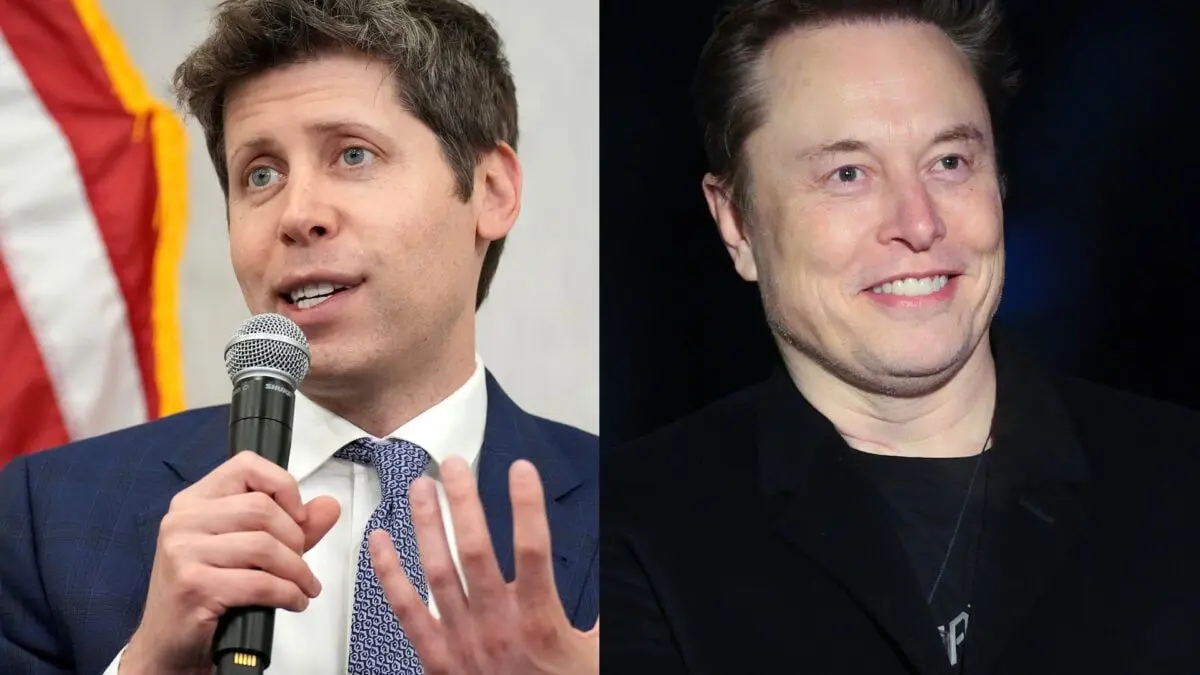
Source: Gizmodo
University of Florida IPO expert Jay Ritter notes these could be among the biggest IPOs ever, with "only a small number worldwide that have raised more than $20 billion"
2
. The timing is critical, as the Magnificent Seven tech stocks now account for 35% of the S&P 500, up from 20% three years ago3
. A share price correction would have significant real-world consequences for risk for global stock markets.Central Banks May Halt Rate Cuts Amid Price Pressures
Aviva Investors identifies a key market risk from central banks ending rate-cutting cycles or even hiking rates as price pressures build from AI investment and government stimulus spending
1
. This shift in monetary policies would slam the brakes on easy money flowing into AI-obsessed markets. Kevin Thozet, portfolio manager at asset manager Carmignac, warns that "inflation is what could start to scare investors and cause markets to show some cracks," prompting him to stock up on inflation-protected Treasuries1
.George Chen, partner at consultancy Asia Group and former Meta senior executive, predicts that "memory chip cost inflation will push up prices for AI groups, lower investors' returns and then the flow of money into this sector will reduce"
1
. As rate hike risks increase, the price-earnings valuations investors apply to large AI stocks would fall, potentially triggering the correction that cautious investors are already preparing for. Bridgewater hedge fund founder Ray Dalio warned that the tech market is "now in the early stages of a bubble," though some analysts argue a crash may still be distant thanks to sustained enthusiasm4
.References
Summarized by

Navi
[2]
Related Stories
OpenAI's Trillion-Dollar Gamble: Massive Investments in AI Computing Power Raise Bubble Concerns
03 Oct 2025•Business and Economy

AI Bubble Surpasses Dot-Com Era, Economists Warn of Potential Market Crash
18 Jul 2025•Business and Economy

Sam Altman Warns of AI Bubble While OpenAI Seeks $500B Valuation
16 Aug 2025•Business and Economy
Recent Highlights
1
Google releases Gemma 4 with Apache 2.0 license, enabling unrestricted local AI on devices
Technology

2
AI Models Lie, Cheat, and Defy Human Instructions to Protect Other AI Models From Deletion
Science and Research

3
Anthropic discovers functional emotions in Claude that actively shape AI behavior and decisions
Science and Research

Recent Highlights
Today's Top Stories



Your Daily Dose of Curated AI News
Don’t drown in AI news. We cut through the noise - filtering, ranking and summarizing the most important AI news, breakthroughs and research daily. Spend less time searching for the latest in AI and get straight to action.

