Agile Robots partners with Google DeepMind to advance AI robotics in industrial automation


2 Sources
2 Sources
[1]
Agile Robots becomes the latest robotics company to partner with Google DeepMind
Agile Robots has landed a partnership with Google DeepMind to develop robots with the artificial intelligence research lab, the latest in a string of robotics company to do so. Munich, Germany-based Agile Robots announced it entered into a strategic research partnership with Google DeepMind on Tuesday. The partnership involves Agile Robots implementing Google DeepMind's Gemini Robotics foundation models into its bots and the data being collected by the robots being used to improve the underlying Gemini AI models. The companies will work together to test, fine tune, and deploy robots that use Gemini foundation models in industrial use cases across sectors including electronics manufacturing, automotive, data centers, and logistics. "Agile Robots has already installed over 20,000 robotics solutions worldwide, proving intelligent automation at scale," Zhaopeng Chen, the co-founder and CEO of Agile Robots, said in the deal's press release. "The huge opportunity ahead lies in autonomous, intelligent production systems that can transform entire industries. Integrating Google DeepMind's Gemini Robotics models into our robotic solutions positions us at the cutting edge of this rapidly growing market." A spokesperson said the deal was longterm but declined to share further details about duration or pricing. Agile Robots was founded in 2018 and has raised more than $270 million in venture capital funding from investors including the SoftBank Vision Fund, Chinese hardware company Xiaomi, and Midas Group, among others. It's just the latest robotics hardware company to land a partnership with Google DeepMind to advance its tech. Earlier this year, Hyundai-owned Boston Dynamics, the maker of the famous dog-like Spot robot, announced that it was entering a partnership with Google DeepMind to use the company's AI foundation models to help develop its upcoming humanoid robot Atlas. Boston Dynamics was previously owned by Google from 2013 to 2017. Broadly, robotic partnerships are on the rise this year. German robotics startup Neura Robotics announced a partnership with Qualcomm in early March that involves Neura Robotics using Qualcomm's recently announced IQ10 processor series, designed for mobile robots and humanoids, as reference design for future robots. Robots are incredibly complicated on both the hardware and software side so these partnerships make a lot of sense. As companies work to develop bots that can operate autonomously, it makes sense for companies with a specific strong suit -- whether that's hardware, dexterity or software, to name a few -- to partner with other companies that have different expertise. As many in the industry, including Nvidia CEO Jensen Huang, consider physical AI to be the next frontier for the AI market, these partnerships will likely not only continue, but accelerate.
[2]
Google partners with Agile Robots, growing its AI robotics footprint
Intrinsic's flagship product, Flowstate, is a web-based platform that allows users to build robotic applications without having to write thousands of lines of code. Google is adding another robotics partnership to its belt as it leans into robotics as a key bet for artificial intelligence. Agile Robots develops intelligent, sensor-based robotic arms and humanoid robots. The company announced a partnership with Google DeepMind to integrate its Gemini Robotics foundation models with Agile Robots' hardware. "The partnership is built on a belief that applying AI in the physical world will be transformative," the Tuesday blog post states. "By bringing together Agile Robots' hardware and other AI robotic solutions developed in Germany, with Google DeepMind's Gemini Robotics foundation models, the two teams will improve performance via robot deployment, data collection, model training and iteration." The new partnership means Google will get real-world deployment data as it sees robotics as one of the large use cases for AI, competing against companies like Amazon and Tesla. It also shows the company is making several robotics partnerships as it leans into manufacturing as key use case. Munich-based Agile Robots already has more than 20,000 deployed robotic systems globally and it will integrate Google's tech in existing industrial robots at scale, the blog post says. The partnership will first focus on "high-value industrial" use cases such as manufacturing tasks. "This research partnership is an important step in bringing the impact of AI to the real world," said Carolina Parada, Senior Director and Head of Robotics, Google DeepMind, in Tuesday's blog post. She added that Agile Robots will help Google develop "more advanced AI models for the next generation of robots."
Share
Share
Copy Link
Munich-based Agile Robots has entered a strategic partnership with Google DeepMind to integrate Gemini Robotics foundation models into its robotic systems. With over 20,000 robots already deployed globally, the collaboration will focus on autonomous production systems across electronics manufacturing, automotive, data centers, and logistics sectors.
Agile Robots and Google DeepMind Join Forces on AI Robotics
Agile Robots has secured a strategic research partnership with Google DeepMind, marking another significant move in the accelerating wave of AI-robotics collaborations. The Munich-based robotics company announced Tuesday that it will integrate Gemini Robotics foundation models into its hardware platforms while contributing real-world deployment data to improve the underlying Gemini AI models
1
. This reciprocal arrangement positions both companies to advance physical AI capabilities through large-scale industrial deployment.
Source: TechCrunch
Founded in 2018, Agile Robots has already installed over 20,000 robotics solutions worldwide, providing a substantial testing ground for Google DeepMind's foundation models
2
. The company has raised more than $270 million in venture capital funding from investors including SoftBank Vision Fund, Xiaomi, and Midas Group1
.Targeting High-Value Industrial Applications
The robotics partnership will concentrate on testing, fine-tuning, and deploying industrial robots across multiple sectors including electronics manufacturing, automotive, data centers, and logistics. "Agile Robots has already installed over 20,000 robotics solutions worldwide, proving intelligent automation at scale," said Zhaopeng Chen, co-founder and CEO of Agile Robots. "The huge opportunity ahead lies in autonomous, intelligent production systems that can transform entire industries"
1
.The partnership will initially prioritize high-value manufacturing tasks where AI-powered dexterity and decision-making can deliver immediate impact. Carolina Parada, Senior Director and Head of Robotics at Google DeepMind, emphasized that Agile Robots will help develop "more advanced AI models for the next generation of robots"
2
. While the deal is long-term, specific details about duration or pricing remain undisclosed1
.Data Collection Powers Model Training Loop
The collaboration establishes a continuous improvement cycle where data collection from Agile Robots' deployed systems feeds back into model training for Google DeepMind's AI platforms. This real-world deployment data represents a critical asset as Google competes against companies like Amazon and Tesla in the robotics space
2
. The partnership underscores a belief that "applying AI in the physical world will be transformative," combining Agile Robots' hardware and AI robotic solutions developed in Germany with Google DeepMind's Gemini Robotics foundation models2
.Related Stories
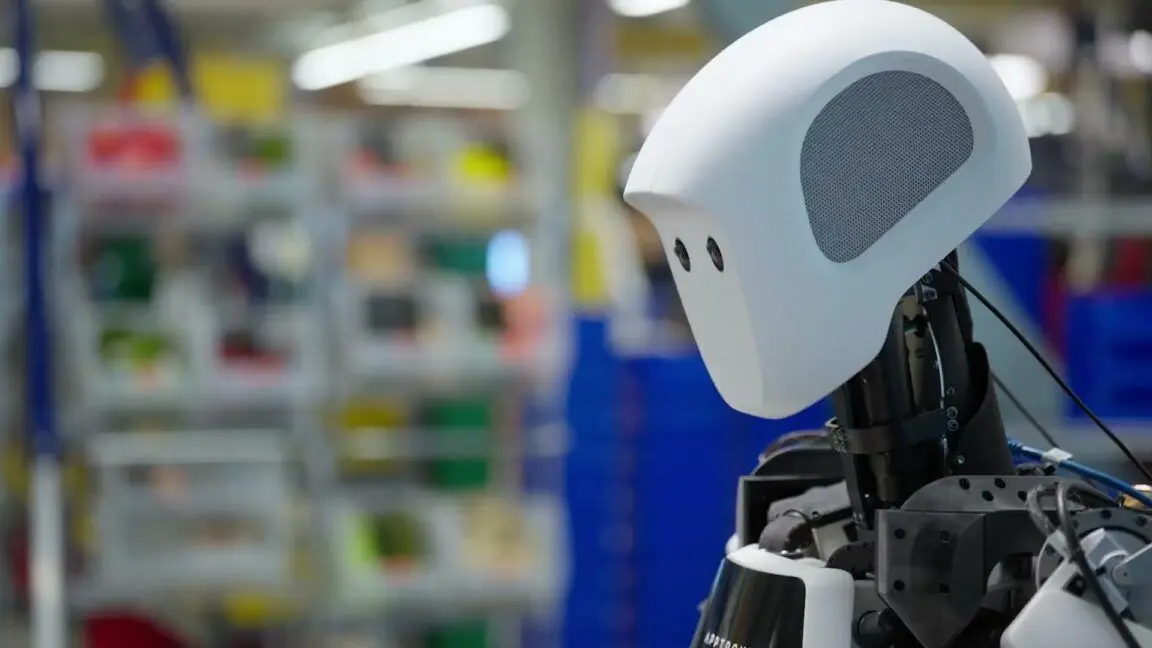
Growing Trend of AI-Robotics Collaborations
Agile Robots joins a growing roster of robotics companies partnering with Google DeepMind. Earlier this year, Hyundai-owned Boston Dynamics announced it would use Google DeepMind's AI foundation models to develop its upcoming humanoid robot Atlas
1
. Boston Dynamics was previously owned by Google from 2013 to 2017. Beyond Google's ecosystem, German startup Neura Robotics partnered with Qualcomm in early March to use the chipmaker's IQ10 processor series designed for mobile robots and humanoids .These partnerships reflect the complexity of modern robotics, where companies with expertise in hardware, software, or specific capabilities increasingly collaborate rather than build everything in-house. As Nvidia CEO Jensen Huang and many industry leaders consider physical AI the next frontier for the AI market, expect these strategic alliances to not only continue but accelerate
1
. The integration of advanced foundation models with proven hardware platforms at scale could determine which companies lead the transition toward truly autonomous production systems across global industries.References
Summarized by

Navi
Related Stories
Apptronik and Google DeepMind Join Forces to Advance AI-Powered Humanoid Robots
21 Dec 2024•Technology

Boston Dynamics partners with Google DeepMind to give Atlas humanoid robot Gemini-powered intelligence
05 Jan 2026•Technology

Google DeepMind's Gemini Robotics: A Leap Forward in AI-Powered Robotics
13 Mar 2025•Technology
Recent Highlights
1
OpenAI shuts down Sora video app after six months, ending Disney's $1 billion investment deal
Technology

2
AI-Generated Val Kilmer to Posthumously Appear in As Deep as the Grave After His Death
Entertainment and Society

3
Supermicro Co-Founder Indicted in $2.5 Billion Nvidia AI Chip Smuggling Scheme to China
Policy and Regulation
Recent Highlights
Today's Top Stories




Your Daily Dose of Curated AI News
Don’t drown in AI news. We cut through the noise - filtering, ranking and summarizing the most important AI news, breakthroughs and research daily. Spend less time searching for the latest in AI and get straight to action.

