19 Sources
19 Sources
[1]
Trump's new science panel is stuffed with high-tech billionaires
U.S. President Donald Trump today unveiled a set of scientific advisers heavily skewed toward artificial intelligence (AI) and quantum computing, topics his administration has emphasized. The roster, unlike previous iterations of the President's Council of Advisors on Science and Technology (PCAST), features some of the world's wealthiest people and several of Trump's biggest political supporters from high-tech industry -- but only one academic scientist. Today's announcement named the first 13 members of what could ultimately be a 24-member body. They include multibillionaires Larry Ellison of Oracle, Mark Zuckerberg of Meta, Jensen Huang of Nvidia, Lisa Su of AMD, Sergey Brin of Google, and Michael Dell of Dell. John Martinis of the University of California, Santa Barbara, who shared the 2025 Nobel Prize in Physics for work fundamental to quantum computing, is the only current academic. And Su and Safra Catz, former Oracle CEO and financier, are the only women in the group. In contrast, two-thirds of the 30 PCAST members under former President Joe Biden were members of the National Academies of Sciences, Engineering, and Medicine and 14 were women, including co-chairs Frances Arnold and Maria Zuber. "PCASTs typically reflect the priorities of the president who appoints them," says Deborah Stine, who staffed the committee under former President Barack Obama. "That can translate into direct access and influence at the highest levels of decision-making." In his first term, Trump's science advisers -- not named until late in his presidency -- included a mix of business figures and working scientists. Some science policy mavens worry the industrial titans on PCAST might have little appreciation for academic research. One higher education lobbyist is blunt: "The unfortunate part of these choices is that it leaves out the 'S' in 'S&T' [science and technology]." John Holdren, Obama's science adviser and former co-chair of PCAST, says, "These are very accomplished people -- strong on information technology innovation and advanced nuclear energy technology -- but the coverage of the group is far from the balance across science and technology that has characterized the most effective PCASTs in the past." To Stine, "The open question is whether this group will elevate not only industry perspectives, but also the role of sustained federal investment in fundamental research that enabled these technologies in the first place." An email from the White House Office of Science and Technology Policy explains that PCAST, co-chaired by OSTP Director Michael Kratsios and senior AI adviser David Sacks, "will focus on the opportunities and challenges that emerging technologies present to the American workforce, ensuring all Americans thrive in the Golden Age of Innovation." OSTP says more members will be announced "in the near future." Deborah Altenburg, vice president for research policy and advocacy at the Association of Public & Land-grant Universities, hopes those appointments will be different. "We would encourage the White House to include research and academic leaders in future appointments," she says.
[2]
Mark Zuckerberg and Jensen Huang are part of Trump's new 'tech panel'
Meta CEO Mark Zuckerberg, Oracle CEO Larry Ellison, Nvidia CEO Jensen Huang, and Google co-founder Sergey Brin will be the first four members of the President's Council of Advisors on Science and Technology (PCAST), according to the Wall Street Journal. The panel, which will "weigh in on AI policy," will include 13 members to start, but could grow to 24. Trump's AI and crypto czar David Sacks and White House tech advisor Michael Kratsios will co-chair the panel. According to the White House's January announcement for the panel, PCAST will "advise the President on matters involving science, technology, education, and innovation policy. The Council shall also provide the President with scientific and technical information that is needed to inform public policy relating to the American economy, the American worker, national and homeland security, and other topics." Trump appointed a similar panel during his first term, but it didn't include as many tech CEOs. The 2026 panel's first four members, especially Zuckerberg and Huang, have deep ties to the AI industry, which Trump has been pushing to block states from regulating over the past year. Zuckerberg and Ellison also have a history with the Trump administration. Meta, which is currently at the center of a legal battle over children's safety on its platforms, has previously donated to Trump. Ellison's Oracle was the backbone of Trump's deal to divest TikTok earlier this year. Zuckerberg and Sergey Brin both attended Trump's 2025 inauguration, as well.
[3]
Trump Taps Zuckerberg, Andreessen and Huang for Tech Council
The council is part of Trump's push to establish "American dominance" in AI and digital assets, and he has secured commitments from tech leaders to build out AI infrastructure and unveiled a national blueprint for regulating AI. President Donald Trump appointed industry titans including Mark Zuckerberg of Meta Platforms Inc., venture capitalist Marc Andreessen, Oracle Corp.'s Larry Ellison and Nvidia Corp.'s Jensen Huang to a new presidential technology council that will focus on artificial intelligence policy and other science-related issues. The President's Council of Advisors on Science and Technology will be be chaired by David Sacks, the venture capitalist now serving as Trump's AI and crypto czar, and White House Science and Technology Policy Director Michael Kratsios, according to the White House, which announced the panel's membership on Wednesday. The council is the latest marker of the nexus between Silicon Valley and Trump's second administration as industry leaders have embraced his push to lower regulatory and tax burdens and bolster US standing in cutting-edge fields. Other executives tapped for the council include Google co-founder Sergey Brin, Dell Technologies Inc. Chief Executive Officer Michael Dell and Safra Catz, executive vice chair of Oracle. Additional members are expected to be appointed in the near future, according to the White House. Details on when the council will meet were not immediately clear. Earlier: Big Tech Shows Off Dimon and Ties to Trump Amid Doubt on War, AI Trump has taken interest in establishing what the White House casts as "American dominance" in AI and digital assets. He's secured billions in commitments from tech leaders to build out AI infrastructure and has committed to policies aimed at unleashing domestic energy production to fuel data centers. Last week, he unveiled a national blueprint for regulating AI, a bid to lay the groundwork for Congress to create a federal standard for a rapidly developing technology. The president's outline calls for online safeguards for children, less stringent permitting requirements to reduce the costs of power-hungry data centers and preventing censorship. The AI drive, though, has emerged as a politically contentious issue ahead of November midterm elections, as voters bristle over the rapid development of data centers in their communities, energy use that's driving up utility costs, potential job losses from the technology and worries about environmental harm. Tech executives and companies are pouring money into races to elect lawmakers who will be favorable to their industry. Trump and his predecessors in the White House have created similar advisory committees in the past to weigh in on science and emerging technologies, including during the president's first term. Still, Washington has struggled to regulate rapidly developing technologies for decades, with tools evolving at a far more rapid pace than legislative action.
[4]
Trump names Jensen Huang, Mark Zuckerberg to 13-member science and tech council
March 25 (Reuters) - U.S. President Donald Trump appointed Meta Platforms (META.O), opens new tab CEO Mark Zuckerberg, Oracle (ORCL.N), opens new tab Executive Chairman Larry Ellison and Nvidia (NVDA.O), opens new tab CEO Jensen Huang to a council that will weigh in on AI policy and other issues, the White House said on Wednesday. Google (GOOGL.O), opens new tab co-founder Sergey Brin and AMD (AMD.O), opens new tab CEO Lisa Su are also part of the initial batch of 13 members from the industry named to the President's Council of Advisors on Science and Technology (PCAST). Trump has made securing U.S. leadership in artificial intelligence a central priority of his second term, framing the technology as a defining arena of strategic competition with China. Within days of taking office in January last year, he directed federal agencies to prepare an AI Action Plan aimed at reducing regulatory barriers and accelerating private-sector innovation. The council, which is expected to play a key role in shaping Washington's response to intensifying global competition in artificial intelligence, could ultimately include up to 24 members, the White House said. The latest appointments signal closer alignment between the administration and major technology companies. Additional members will be appointed to the council in the near future, the White House said. The council will be co-chaired by White House AI and crypto czar David Sacks and technology adviser Michael Kratsios. Alphabet, Nvidia, AMD and Oracle did not immediately respond to requests for comment. Artificial intelligence has emerged as a major driver of U.S. investment, with companies pledging trillions of dollars in spending over the coming years as the Trump administration pushes to accelerate the sector's growth. Reporting by Akash Sriram in Bengaluru; Editing by Sahal Muhammed Our Standards: The Thomson Reuters Trust Principles., opens new tab
[5]
Trump names Jensen Huang, Mark Zuckerberg, and Sergey Brin for tech advisory council
Serving tech enthusiasts for over 25 years. TechSpot means tech analysis and advice you can trust. What just happened? The White House is turning to Silicon Valley's top executives to help shape federal technology policy, naming Meta chief executive Mark Zuckerberg, Oracle chairman Larry Ellison, Nvidia CEO Jensen Huang, and Google co-founder Sergey Brin to President Trump's revived Council of Advisors on Science and Technology. The high-profile appointments mark a clear pivot for Trump's second-term tech strategy - one centered on aligning the private sector's most powerful figures with national goals around artificial intelligence, cryptocurrency, and emerging industrial policy. According to an executive order released in January, the 13-member President's Council of Advisors on Science and Technology, or PCAST, will ultimately expand to as many as 24 members. It will "advise the President on matters involving science, technology, education, and innovation policy," and will also provide guidance meant to bolster national security, workforce resilience, and economic growth. The administration named David Sacks, Trump's AI and crypto czar, and longtime White House technology adviser Michael Kratsios as co-chairs of the council. Both are expected to coordinate the group's policy recommendations, which could shape upcoming decisions on federal AI frameworks and state-level regulatory disputes. Huang's presence underscores the importance of artificial intelligence hardware in the administration's technology agenda. Nvidia's dominance in AI chipmaking has positioned Huang as one of Washington's most sought-after voices on industry strategy and supply chain policy. The inclusion of Brin, who has largely maintained a low public profile since stepping back from day-to-day work at Alphabet, signals a broadening of the White House's outreach to long-established tech leaders as it seeks to influence the next era of innovation policy. Trump's first-term advisory council featured fewer household names, but this iteration carries far more industry weight. The shift also reflects a thawing relationship between the tech elite and the Trump administration. Many executives who kept their distance during his first term have since aligned themselves more closely with his economic and technology initiatives. Trump has repeatedly emphasized that the US "has the opportunity to lead the world in AI," framing the administration's policies as enablers of a "Golden Age of Innovation." In its announcement, the White House said PCAST under Trump will focus on "the opportunities and challenges that emerging technologies present to the American workforce." Though past presidents, dating back to George W. Bush, have convened similar advisory bodies, the newly constituted council stands out for its concentration of active power players from the technology industry - individuals whose companies not only dominate global markets but also fund or partner with key government initiatives. Whether their private-sector ambitions align neatly with public policy goals may shape the next phase of the nation's technology trajectory.
[6]
Trump names Zuckerberg, Huang, Ellison to tech council -- but no Musk, no Altman | Fortune
President Trump is turning to some of the biggest names in Silicon Valley -- including Meta CEO Mark Zuckerberg, Oracle executive chairman Larry Ellison and Nvidia CEO Jensen Huang -- to help guide U.S. policy on AI and other key technologies through a new White House advisory council. A press release from the Office of Science and Technology Policy said the President's Council of Advisors on Science and Technology, or PCAST, "brings together the Nation's foremost luminaries in science and technology to advise the President and provide recommendations on strengthening American leadership in science and technology." It added that the council will focus on topics "related to the opportunities and challenges that emerging technologies present to the American workforce, and ensuring all Americans thrive in the Golden Age of Innovation." Each president since Franklin D. Roosevelt in 1933 has established a PCAST advisory committee of scientists, engineers, and industry leaders, the press release said. Trump established the President's Council of Advisors on Science and Technology by executive order in January, saying that "as our global competitors race to exploit these technologies, it is a national security imperative for the United States to achieve and maintain unquestioned and unchallenged global technological dominance." The council, which can include up to 24 members, will be co-chaired by White House AI and crypto czar David Sacks and senior technology adviser Michael Kratsios. The newly appointed group includes Andreessen Horowitz co-founder Marc Andreessen, Google co-founder Sergey Brin, former Oracle CEO Safra Catz, Dell Technologies founder and CEO Michael Dell, Oklo co-founder and CEO Jacob DeWitte, Coinbase co-founder Fred Ehrsam, entrepreneur and investor David Friedberg, physicist and University of California, Santa Barbara professor John Martinis, Commonwealth Fusion Systems CEO Bob Mumgaard and AMD CEO Lisa Su. Catz and Su are the only two women, while the lineup leans heavily toward industry leaders and investors shaping the commercial AI boom - Martinis is the only academic researcher.
[7]
President Trump Names Meta, Nvidia CEOs to White House Tech and Science Council - Decrypt
PCAST will advise on "opportunities and challenges that emerging technologies present to the American workforce." President Donald Trump has named tech leaders including Meta CEO Mark Zuckerberg and Nvidia CEO Jensen Huang to his President's Council of Advisors on Science and Technology (PCAST), joining a group of other prominent AI and tech industry founders and executives. The council, established by executive order and announced by the White House on Wednesday, will be co-chaired by entrepreneur David Sacks -- previously the White House AI and crypto czar -- and former U.S. Chief Technology Officer Michael Kratsios. The 13 initial appointees also include Oracle founder Larry Ellison, Google co-founder Sergey Brin, AMD CEO Lisa Su, and Dell Technologies CEO Michael Dell, along with Coinbase co-founder Fred Ehrsam and prominent crypto venture capitalist Marc Andreessen. Other members include fusion energy executives Jacob DeWitte and Bob Mumgaard, former Google quantum computing researcher John Martinis, entrepreneur David Friedberg, and Oracle CEO Safra Catz. The council can comprise up to 24 members, with additional appointments expected "in the near future along with information about the Council's first meeting," according to the White House statement. According to the White House, PCAST will focus on topics related to "the opportunities and challenges that emerging technologies present to the American workforce, and ensuring all Americans thrive in the Golden Age of Innovation." The appointment follows a historical precedent dating to President Franklin D. Roosevelt's Science Advisory Board in 1933.
[8]
Trump appoints Nvidia's Jensen Huang, AMD's Lisa Su, Meta's Mark Zuckerberg, and more to science and technology advisory committee
Comprised of 'distinguished individuals and representatives from sectors outside of the Federal Government appointed by the President.' President Trump has appointed members to a newly reestablished science and technology advisory council, the President's Council of Advisors on Science and Technology (PCAST). And there are a fair few new faces in there -- new kinds of faces, in fact, because the new board seems pretty business-heavy. In general, the members so far -- which total just 13 -- seem weighted towards science-y and certainly smart but nevertheless business-oriented people, unlike many members in previous councils, which were more academic and researcher-heavy. Such advisory councils have existed since President Roosevelt's Science Advisory Board. The previous one, reestablished by president Biden in 2021, also appointed AMD CEO Dr. Lisa Su as a member, but there are plenty of new appointments, including Meta CEO Mark Zuckerberg and Nvidia CEO Jensen Huang. Here's the list: * Marc Andreessen - venture capitalist, co-founder of Andreessen Horowitz and Netscape * Sergey Brin - Google co-founder and current AI researcher * Safra Catz - Oracle executive vice chair and ex-CEO * Michael Dell - Dell founder, chairman, and CEO * Jacob DeWitte - Oklo co-founder and CEO * Fred Ehrsam - Coinbase co-founder, Nudge co-founder and CEO * Larry Ellison - Oracle CEO * David Friedberg - The Production Board and Ohalo Genetics CEO, All-In podcast host * Jensen Huang - Nvidia CEO * John Martinis - Professor of physics, University of California * Bob Mumgaard - Commonwealth Fusion Systems CEO * Lisa Su - AMD CEO * Mark Zuckerberg - Meta CEO In the president's executive order, he explains the need for this council: "Today, a new frontier of scientific discovery lies before us, defined by transformative technologies such as artificial intelligence, quantum computing, and advanced biotechnology." "As our global competitors race to exploit these technologies, it is a national security imperative for the United States to achieve and maintain unquestioned and unchallenged global technological dominance. To secure our future, we must harness the full power of American innovation by empowering entrepreneurs, unleashing private-sector creativity, and reinvigorating our research institutions." "This order establishes the President's Council of Advisors on Science and Technology to unite the brightest minds from academia, industry, and government to guide our Nation through this critical moment by charting a path forward for American leadership in science and technology." The council can have a maximum of 24 members, and this will include the already-existing Assistant to the President for Science and Technology (APST) Michael Kratsios, and the Special Advisor for AI & Crypto David Sacks. "The remaining members", the executive order says, "shall be distinguished individuals and representatives from sectors outside of the Federal Government appointed by the President." While nominally and primarily created to advise on on science, technology, education, and innovation policy, it seems the PCAST will also advise on other areas: "The Council shall also provide the President with scientific and technical information that is needed to inform public policy relating to the American economy, the American worker, national and homeland security, and other topics." Members of the PCAST will also be able to ask heads of other agencies and departments for "information concerning scientific and technological matters" when required. Looking at discussions online, there's obvious concern over the lack of academics, scientists, researchers, and professors. The CEO-heavy list is defended by others on the grounds that CEOs of science and technology-related businesses should be better placed than the researchers they employ to cut through to what's most important for policy decisions. I'll leave all that discussion to the bigwigs. From my perspective, all I can say is it's not that surprising to see such a member list. The inclusion of Jensen Huang almost went without saying, given he's probably the world's biggest hotshot in this new AI era. And who knows? Maybe the Nvidia CEO remembers his roots and whispers something for us PC gamers in the president's ear. Wishful thinking, I know.
[9]
Meet the White House's 'Avengers' team tasked with keeping the US safe from AI
TL;DR: President Trump appointed a new PCAST council, co-chaired by David Sacks and Michael Kratsios, featuring tech leaders like Jensen Huang, Lisa Su, and Mark Zuckerberg. The council will advise on AI, climate change, health tech, semiconductors, and national security to strengthen U.S. scientific and technological leadership. President Trump has announced a list of appointees to the President's Council of Advisors on Science and Technology (PCAST). The newly formed council will have one goal: advising the President and providing recommendations on strengthening American leadership in both scientific and technological fields. The council will be co-chaired by David Sacks and Michael Kratsios. Sacks, a general partner in Craft Ventures, a venture capital fund, and Kratsios, the current Science Advisor to the President of the United States, will be at the helm of the council, which includes some extremely notable names in the technology space, particularly, NVIDIA's Jensen Huang, AMD's CEO Lisa Su, and Meta's CEO Mark Zuckerberg. Additionally, Marc Andreessen, former software engineer and venture capitalist at Andreessen Horowitz, is a named member, alongside Google co-founder Sergey Brin, Larry Ellison, co-founder of Oracle, David Friedberg, founder of Climate Corporation, and others. Notably, since the PCAST council was formed by Franklin D. Roosevelt in 1933, each President has chosen their own PCAST advisory board, which typically consists of scientists, engineers, and industry leaders at the current time. The council's primary role is to advise the POTUS on major issues such as AI, climate change, health tech, semiconductors, and national security. With this advice, POTUS can shape US policy to address big challenges in the future while also maintaining a safe level of development. It appears the council's main topic will be AI, given that many of its members are leaders in the field.
[10]
Trump taps Zuckerberg, Andreessen and Huang for tech council
Washington | President Donald Trump appointed industry titans including Mark Zuckerberg of Meta Platforms, venture capitalist Marc Andreessen, Oracle's Larry Ellison and Nvidia's Jensen Huang to a new presidential technology council that will focus on artificial intelligence policy and other science-related issues. The President's Council of Advisors on Science and Technology will be chaired by David Sacks, the venture capitalist now serving as Trump's AI and crypto czar, and White House Science and Technology Policy Director Michael Kratsios, according to the White House, which announced the panel's membership on Wednesday (Thursday AEDT).
[11]
Donald Trump names Nvidia, Meta CEOs to science and tech council
Google co-founder Sergey Brin and AMD CEO Lisa Su are also part of the initial batch of 13 members from the industry named to the President's Council of Advisors on Science and Technology (PCAST). US President Donald Trump appointed Meta Platforms CEO Mark Zuckerberg, Oracle Executive Chairman Larry Ellison and Nvidia CEO Jensen Huang to a council that will weigh in on AI policy and other issues, the White House said on Wednesday. Google co-founder Sergey Brin and AMD CEO Lisa Su are also part of the initial batch of 13 members from the industry named to the President's Council of Advisors on Science and Technology (PCAST). Trump has made securing U.S. leadership in artificial intelligence a central priority of his second term, framing the technology as a defining arena of strategic competition with China. Within days of taking office in January last year, he directed federal agencies to prepare an AI Action Plan aimed at reducing regulatory barriers and accelerating private-sector innovation. The council, which is expected to play a key role in shaping Washington's response to intensifying global competition in artificial intelligence, could ultimately include up to 24 members, the White House said. The latest appointments signal closer alignment between the administration and major technology companies. Additional members will be appointed to the council in the near future, the White House said. The council will be co-chaired by White House AI and crypto czar David Sacks and technology adviser Michael Kratsios. Zuckerberg and Nvidia said the council would help strengthen the United States' position in AI, while Oracle declined to comment. Alphabet and AMD did not immediately respond to requests for comment. Bob Mumgaard, CEO and co-founder of Commonwealth Fusion Systems, also joined the council. Mumgaard joining PCAST is a big signal of the U.S. government's support for the fusion industry, the company said. Artificial intelligence has emerged as a major driver of U.S. investment, with companies pledging trillions of dollars in spending over the coming years as the Trump administration pushes to accelerate the sector's growth.
[12]
President Trump Assembles an AI 'Dream Team' to Advise America's Future, With Jensen Huang and Lisa Su Among Them
The US administration has announced a new council, the PCAST, in which leaders of the AI industry will advise President Trump on science and technology matters. America is navigating a complex landscape in the AI industry, largely because the technology has emerged recently and reached a level that exceeds the dot-com hype. This has not only brought in new opportunities but also introduced constraints for the current administration, which is why, under an executive order, President Trump has established the President's Council of Advisors on Science and Technology (PCAST). According to the White House's press release, such a council aims to serve as an advisory body on President Trump's decisions in the areas of "science and technology". David Sacks, the AI czar, and Michael Kratsios, the Science Advisor to POTUS, co-chair the council. Interestingly, PCAST includes several mainstream leaders in the AI sector, including NVIDIA's CEO Jensen Huang, AMD's CEO Lisa Su, and Meta's CEO Mark Zuckerberg, indicating broad representation across tech sectors. Under President Trump, PCAST will focus on topics related to the opportunities and challenges that emerging technologies present to the American workforce, and ensuring all Americans thrive in the Golden Age of Innovation. PCAST may be composed of up to 24 members. Additional members will be appointed in the near future along with information about the Council's first meeting. One of the biggest hurdles the current administration faces with AI is the effort to regulate it, not just in terms of its use, but also in the process of data center buildout and the national resources it consumes. Just recently, Senator Bernie Sanders and AOC introduced a bill to halt data center construction, calling it a threat to America's energy sector and advocating for regulating the infrastructure buildout. At the same time, there are multiple elements in the political system labeled as 'China hawks' by Jensen Huang, who are in favour of curtailing US chip exports to hostile nations. Just a few months ago, under President Trump, the administration introduced the AI Action plan, which focused on various elements such as open-source models, sovereign infrastructure, AI diplomacy, and more; yet, we have seen that there are still pending regulations on key matters related to the AI industry. The PCAST council would likely allow the government to navigate the 21st-century' AI revolution', but it is interesting to see that the initial list of members doesn't include figures like Sam Altman or Elon Musk, who are also seen as the 'faces of AI'.
[13]
Trump Names Jensen Huang, Mark Zuckerberg To AI Advisory Council: What It Means For NVDA, META - Meta Platforms (NASDAQ:META)
President Donald Trump appointed 13 tech executives to a presidential council that will advise the White House on AI policy, export controls, and science strategy. Who's On The CouncilFollow The Money Meta, Google, and Nvidia each contributed $1 million to Trump's inauguration committee. Ellison's Oracle is part of the consortium that took over TikTok's U.S. operations, a deal Trump approved by executive order. Andreessen has donated to Trump-aligned super PACs. These are the companies and players that stand to benefit most from lighter AI regulation, and they're now formally advising the White House on what that regulation should look like. Lighter regulation, state law preemption, and faster data center approvals help all of these companies, but nobody stands to benefit more than Nvidia. Don't Expect The Industry To Slow Down Elon Musk has spent years warning that AI poses a "fundamental existential risk for human civilization" and called for proactive regulation before it's too late. He has since launched his own AI company, xAI, which SpaceX acquired in February. Zuckerberg publicly dismissed those warnings as "pretty irresponsible." He's now on the council. Musk is not. Neither is anyone from the AI safety research community, academia, or civil society. The roster suggests the White House views AI as an economic race with China, not a technology that might need guardrails. On Polymarket, a contract asking whether the U.S. will enact an AI safety bill before 2027 is trading at 55%. The White House released a legislative framework last week calling on Congress to preempt state AI laws in favor of a single "minimally burdensome" federal standard. NVDA is up roughly 1.4% to $177 today in a broad risk-on rally. Image: Shutterstock Market News and Data brought to you by Benzinga APIs To add Benzinga News as your preferred source on Google, click here.
[14]
US president Donald Trump names Jensen Huang, Mark Zuckerberg to 13-member tech council
President Donald Trump is set to appoint top tech executives to a new council. Meta CEO Mark Zuckerberg, Oracle Chairman Larry Ellison, and Nvidia CEO Jensen Huang are among those named. The council will advise on artificial intelligence policy. This move comes as global AI competition intensifies, particularly with China. Other industry leaders are also part of the initial group. US President Donald Trump plans to appoint Meta Platforms CEO Mark Zuckerberg, Oracle Executive Chairman Larry Ellison and Nvidia CEO Jensen Huang to a council that weighs in on AI policy and other issues, the White House said on Wednesday. The White House named an initial batch of 13 members from the industry, also including Google co-founder Sergey Brin and AMD CEO Lisa Su. Alphabet, Nvidia and Oracle did not immediately respond to Reuters requests for comment. The President's Council of Advisors on Science and Technology (PCAST) could ultimately include 24 people, according to an executive order issued in January last year. The council is expected to play a key role in shaping Washington's response to intensifying global competition in artificial intelligence, particularly with China, where state-backed firms have advanced AI capabilities.
[15]
Trump Appoints 13 Tech Leaders to Emerging Technologies Advisory Committee | PYMNTS.com
The newly appointed members of the President's Council of Advisors on Science and Technology (PCAST) include Oracle Executive Chairman and Chief Technology Officer Larry Ellison, Nvidia Founder, President and CEO Jensen Huang and Meta Founder, Chairman and CEO Mark Zuckerberg, the White House said in a Wednesday (March 25) press release. "Under President Trump, PCAST will focus on topics related to the opportunities and challenges that emerging technologies present to the American workforce, and ensuring all Americans thrive in the Golden Age of Innovation," the release said. Other newly appointed members include Andreessen Horowitz Co-founder and General Partner Marc Andreessen, Google Co-founder Sergey Brin, Oracle Executive Vice Chair Safra Catz, Dell Technologies Chairman and CEO Michael Dell, Oklo Co-founder and CEO Jacob DeWitte, Coinbase Co-founder and Board Director Fred Ehrsam, Ohalo Genetics CEO David Friedberg, University of Santa Barbara Professor Emeriti John Martinis, Commonwealth Fusion Systems CEO Bob Mumgaard and AMD Chair and CEO Lisa Su, according to the release. Additional members will be appointed to PCAST, and the advisory committee may expand to include as many as 24 members, the release said. PCAST will be co-chaired by David Sacks, White House special adviser for artificial intelligence (AI) and crypto, and Michael Kratsios, director of the White House Office of Science & Technology Policy and assistant to the President for Science & Technology, per the release. "Today, we welcome the first wave of extraordinary members to President Trump's Council of Advisors on Science and Technology (PCAST)," Kratsios wrote in a Wednesday post on X. "Rooted in the tradition FDR began in 1933, PCAST unites America's brightest minds to advise the President on the most pressing national issues in science and technology." Trump announced the establishment of PCAST in a January 2025 presidential action, highlighting the need for American dominance in transformative technologies such as AI, quantum computing and advanced biotechnology. In a fact sheet released the same day, the White House said PCAST will champion investments in innovation and the elimination of bureaucratic barriers.
[16]
Trump to Launch a 13-Member AI Panel, May Expand to 24 with Top Tech Leaders
It will focus on key areas like AI regulations, national security, and the latest technologies. The council may guide the country's AI usage in everyday life. Leaders like Jensen Huang bring deep knowledge of AI hardware, with NVIDIA playing a major role in . This makes the panel stronger in technical areas. The mix of leaders also includes business and investment experts. However, some concerns remain. Many members belong to large tech companies that risk influencing the market and leaving no space for smaller companies and public voices. Another challenge is balance. AI grows fast, but regulations and frameworks take time. The panel must protect privacy and safety while supporting innovation and growth. There has been no official comment from Meta, Oracle, or NVIDIA. The White House has also remained silent so far. However, the message is clear. The plans to involve major tech leaders in shaping the future. This step could affect global AI rules and competition. The decisions of this panel may impact industries, businesses, and everyday technology. The world will watch how this team shapes the next phase of artificial intelligence.
[17]
Trump names Jensen Huang, Mark Zuckerberg to 13-member science and tech council
U.S. President Donald Trump appointed Meta Platforms CEO Mark Zuckerberg, Oracle Executive Chairman Larry Ellison and Nvidia CEO Jensen Huang to a council that will weigh in on AI policy and other issues, the White House said on Wednesday. Google co-founder Sergey Brin and AMD CEO Lisa Su are also part of the initial batch of 13 members from the industry named to the President's Council of Advisors on Science and Technology (PCAST). Trump has made securing U.S. leadership in artificial intelligence a central priority of his second term, framing the technology as a defining arena of strategic competition with China. Within days of taking office in January last year, he directed federal agencies to prepare an AI Action Plan aimed at reducing regulatory barriers and accelerating private-sector innovation. The council, which is expected to play a key role in shaping Washington's response to intensifying global competition in artificial intelligence, could ultimately include up to 24 members, the White House said. The latest appointments signal closer alignment between the administration and major technology companies. Additional members will be appointed to the council in the near future, the White House said. The council will be co-chaired by White House AI and crypto czar David Sacks and technology adviser Michael Kratsios. Alphabet, Nvidia, AMD and Oracle did not immediately respond to requests for comment. Artificial intelligence has emerged as a major driver of U.S. investment, with companies pledging trillions of dollars in spending over the coming years as the Trump administration pushes to accelerate the sector's growth.
[18]
Trump names Mark Zuckerberg, Jensen Huang, Larry Ellison to tech council that will weigh in on AI
President Trump appointed Meta Platforms CEO Mark Zuckerberg, Oracle Executive Chairman Larry Ellison and Nvidia CEO Jensen Huang to a council that will weigh in on AI policy and other issues, the White House said Wednesday. Google co-founder Sergey Brin and AMD CEO Lisa Su are also part of the initial batch of 13 members from the industry named to the President's Council of Advisors on Science and Technology (PCAST). Trump has made securing US leadership in artificial intelligence a central priority of his second term, framing the technology as a defining arena of strategic competition with China. Within days of taking office in January last year, he directed federal agencies to prepare an AI Action Plan aimed at reducing regulatory barriers and accelerating private-sector innovation. The council, which is expected to play a key role in shaping Washington's response to intensifying global competition in artificial intelligence, could ultimately include up to 24 members, the White House said. The latest appointments signal closer alignment between the administration and major technology companies. Additional members will be appointed to the council in the near future, the White House said. The council will be co-chaired by White House AI and crypto czar David Sacks and technology adviser Michael Kratsios. Alphabet, Nvidia, AMD and Oracle did not immediately respond to requests for comment. Artificial intelligence has emerged as a major driver of US investment, with companies pledging trillions of dollars in spending over the coming years as the Trump administration pushes to accelerate the sector's growth.
[19]
Trump Appoints Tech Executives to Strategic AI Advisory Council
Donald Trump has appointed several prominent figures from the technology sector to the President's Council of Advisors on Science and Technology (PCAST), tasked with advising the executive branch on scientific and technological matters. Among the high-profile appointees are Nvidia CEO Jensen Huang, Meta chief Mark Zuckerberg and Oracle Executive Chairman Larry Ellison. Google co-founder Sergey Brin and AMD CEO Lisa Su are also included in this initial list of 13 members. The council, which could eventually have up to 24 members, will be co-chaired by David Sacks, the White House lead for artificial intelligence and cryptocurrencies, and Michael Kratsios, technology advisor. This initiative aligns with the administration's goal to solidify US leadership in AI, which is viewed as a critical strategic priority, particularly in the face of competition from China. The group's composition illustrates a deepening alignment between political leadership and major tech corporations, which are expected to play a pivotal role in shaping public policy. The companies involved have broadly welcomed the move, suggesting it could foster innovation and bolster American competitiveness in the global AI race.
Share
Share
Copy Link
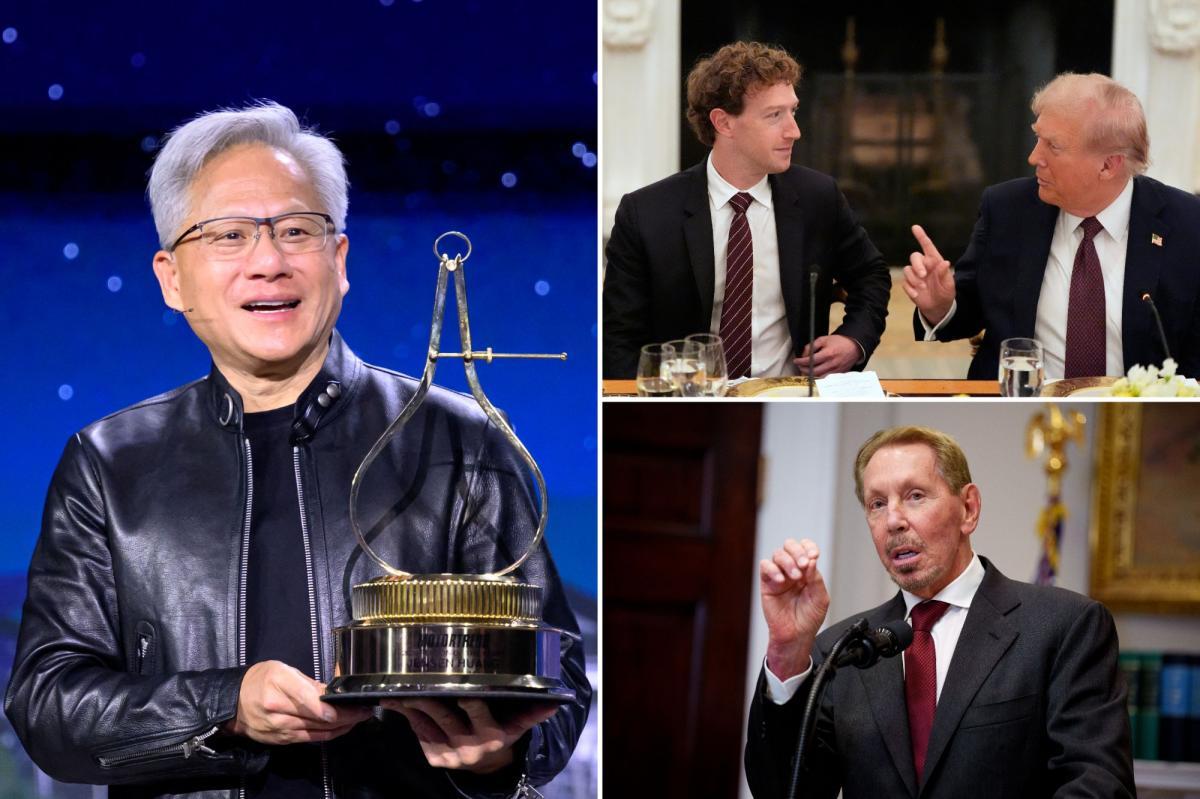
President Donald Trump unveiled a 13-member science advisory panel dominated by tech industry leaders including Meta's Mark Zuckerberg, Nvidia's Jensen Huang, and Oracle's Larry Ellison. The President's Council of Advisors on Science and Technology marks a sharp departure from previous administrations, featuring only one academic scientist while prioritizing artificial intelligence and quantum computing expertise from Silicon Valley's most powerful executives.
President Donald Trump announced the first 13 members of his President's Council of Advisors on Science and Technology on Wednesday, assembling a roster heavily weighted toward tech industry leaders and artificial intelligence expertise
1
. The lineup includes some of the world's wealthiest executives: Meta CEO Mark Zuckerberg, Oracle Executive Chairman Larry Ellison, Nvidia CEO Jensen Huang, Google co-founder Sergey Brin, AMD CEO Lisa Su, and Dell Technologies CEO Michael Dell3
. Venture capitalist Marc Andreessen and Oracle's Safra Catz round out the initial appointments, with the council potentially expanding to 24 members in the near future4
.
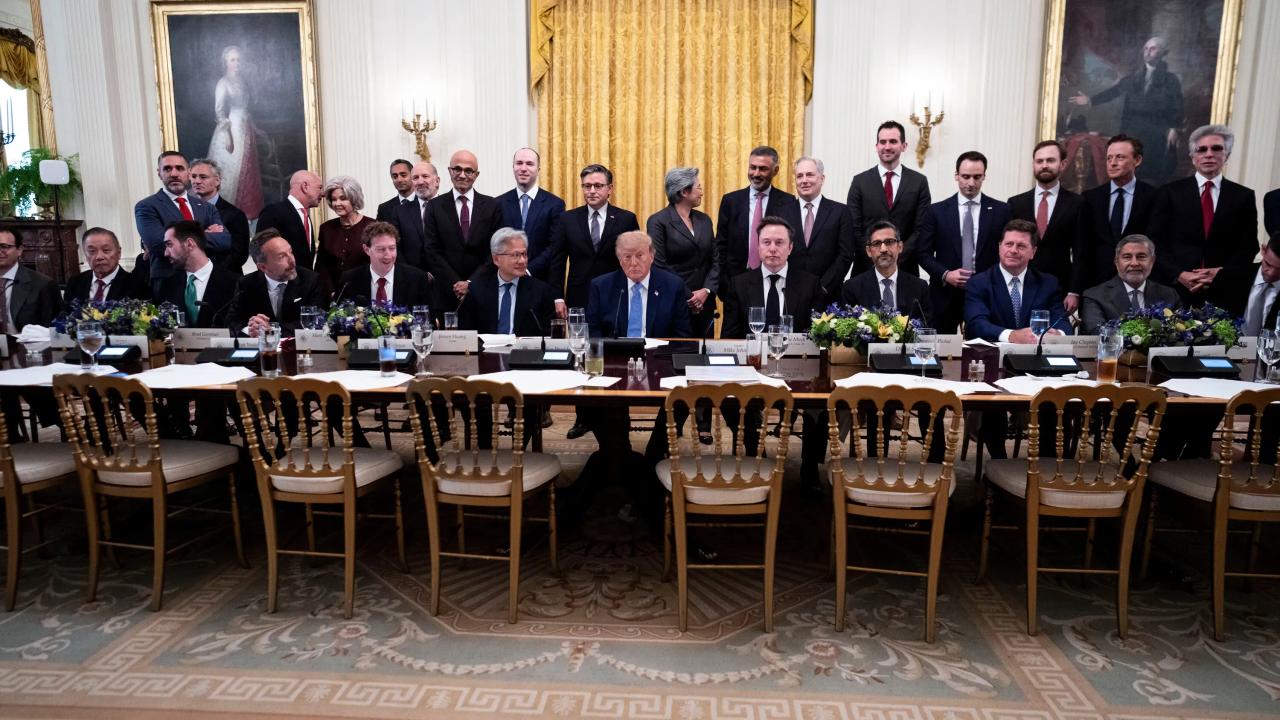
Source: New York Post
The tech council will be co-chaired by David Sacks, Trump's AI and crypto czar, alongside White House Science and Technology Policy Director Michael Kratsios
2
. According to the White House, PCAST will "advise the President on matters involving science, technology, education, and innovation policy" while providing guidance on issues affecting national security, the American workforce, and economic growth5
.This iteration of PCAST represents a dramatic shift from previous administrations. Only one current academic—John Martinis of the University of California, Santa Barbara, who shared the 2025 Nobel Prize in Physics for work fundamental to quantum computing—appears on the roster
1
. In contrast, two-thirds of the 30 PCAST members under former President Joe Biden were members of the National Academies of Sciences, Engineering, and Medicine, and 14 were women. Trump's panel includes just two women: Lisa Su and Safra Catz1
.Science policy experts have expressed concern about the composition. "The unfortunate part of these choices is that it leaves out the 'S' in 'S&T' [science and technology]," one higher education lobbyist noted
1
. John Holdren, Obama's science adviser and former PCAST co-chair, acknowledged the members are "very accomplished people—strong on information technology innovation and advanced nuclear energy technology—but the coverage of the group is far from the balance across science and technology that has characterized the most effective PCASTs in the past"1
.Trump has made securing U.S. leadership in AI a central priority of his second term, framing the technology as a defining arena of strategic competition with China
4
. Within days of taking office in January last year, he directed federal agencies to prepare an AI Action Plan aimed at reducing regulatory barriers and accelerating private-sector innovation4
. Last week, he unveiled a national blueprint for regulating AI that calls for online safeguards for children, less stringent permitting requirements to reduce costs for power-hungry data centers, and preventing censorship3
.
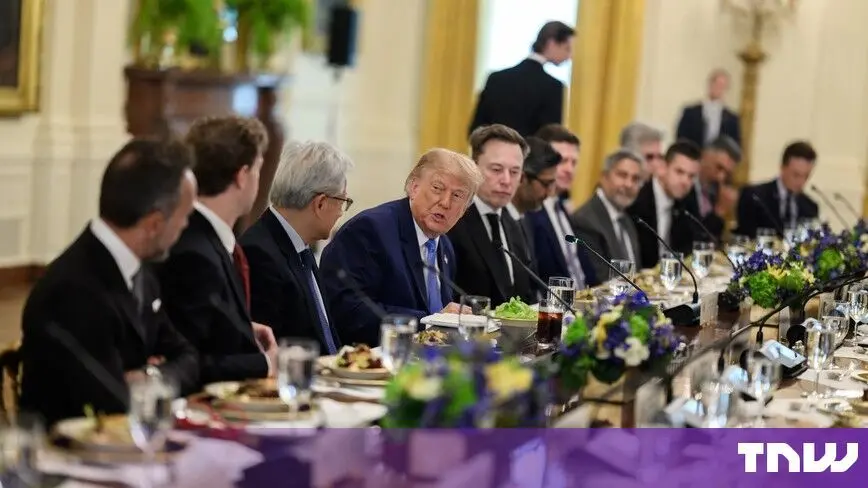
Source: Market Screener
The council will play a key role in shaping Washington's response to intensifying global competition in artificial intelligence
4
. Trump has secured billions in commitments from tech leaders to build out AI infrastructure and has committed to policies aimed at unleashing domestic energy production to fuel data centers3
. The administration frames its approach as enabling a "Golden Age of Innovation," with PCAST expected to focus on "the opportunities and challenges that emerging technologies present to the American workforce"1
.Related Stories
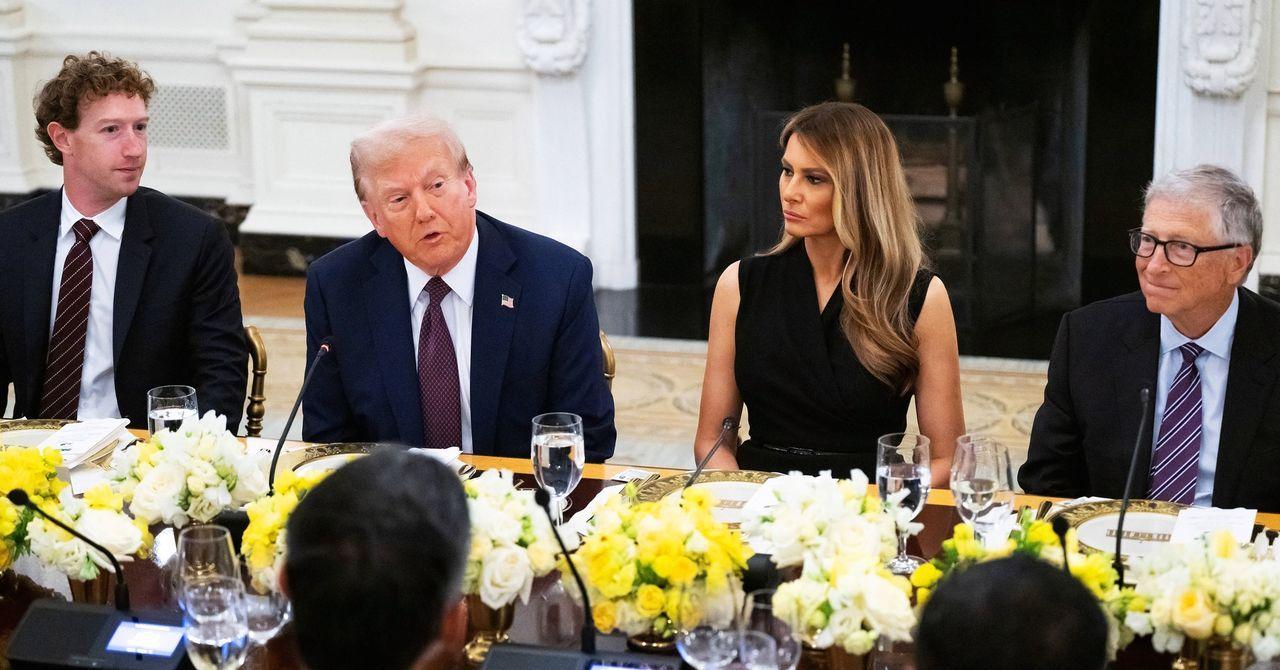
The appointments signal closer alignment between the administration and major technology companies
4
. Many executives who kept their distance during Trump's first term have since aligned themselves more closely with his economic and technology initiatives5
. Both Mark Zuckerberg and Sergey Brin attended Trump's 2025 inauguration2
. Meta has previously donated to Trump, while Larry Ellison's Oracle served as the backbone of Trump's deal to divest TikTok earlier this year2
.Source: TechSpot
Jensen Huang's presence underscores the importance of AI infrastructure in the administration's technology agenda, given Nvidia's dominance in AI chipmaking
5
. The panel will weigh in on AI policy at a time when artificial intelligence has emerged as a major driver of U.S. investment, with companies pledging trillions of dollars in spending over the coming years4
.However, the AI drive has emerged as a politically contentious issue ahead of November midterm elections, as voters bristle over rapid development of data centers in their communities, energy use driving up utility costs, potential job losses from the technology, and worries about environmental harm
3
. Deborah Stine, who staffed PCAST under President Barack Obama, notes that "PCASTs typically reflect the priorities of the president who appoints them," adding that "the open question is whether this group will elevate not only industry perspectives, but also the role of sustained federal investment in fundamental research that enabled these technologies in the first place"1
.Summarized by
Navi