DRAM Shortage Fueled by AI Boom Sends Laptop Prices Soaring Through 2028


7 Sources
7 Sources
[1]
How Will the Tech Industry Handle the DRAM Shortage?
SK Hynix's 12-layer HBM4 memory chips on display at the SK AI Summit in Seoul, South Korea, on 3 November 2025. If it feels these days as if everything in technology is about AI, that's because it is. And nowhere is that more true than in the market for computer memory. Demand, and profitability, for the type of DRAM used to feed GPUs and other accelerators in AI data centers is so huge that it's diverting away supply of memory for other uses and causing prices to skyrocket. According to Counterpoint Research, DRAM prices have risen 80-90 precent so far this quarter. The largest AI hardware companies say they have secured their chips out as far as 2028, but that leaves everybody else -- makers of PCs, consumer gizmos, and everything else that needs to temporarily store a billion bits -- scrambling to deal with scarce supply and inflated prices. How did the electronics industry get into this mess, and more importantly, how will it get out? IEEE Spectrum asked economists and memory experts to explain. They say today's situation is the result of a collision between the DRAM industry's historic boom and bust cycle and an AI hardware infrastructure build-out that's without precedent in its scale. And, barring some major collapse in the AI sector, it will take years for new capacity and new technology to bring supply in line with demand. Prices might stay high even then. To understand both ends of the tale, you need to know the main culprit in the supply and demand swing, high-bandwidth memory, or HBM. HBM is the DRAM industry's attempt to short-circuit the slowing pace of Moore's Law by using 3D chip packaging technology. Each HBM chip is made up of as many as 12 thinned-down DRAM chips called dies. Each die contains a number of vertical connections called through silicon vias (TSVs). The dies are piled atop each other and connected by arrays of microscopic solder balls aligned to the TSVs. This DRAM tower -- well, at about 750 micrometers thick, it's more of a brutalist office-block than a tower -- is then stacked atop what's called the base die, which shuttles bits between the memory dies and the processor. This complex piece of technology is then set within a millimeter of a GPU or other AI accelerator, to which it is linked by as many as 2,048 micrometer-scale connections. HBMs are attached on two sides of the processor, and the GPU and memory are packaged together as a single unit. The idea behind such a tight, highly-connected squeeze with the GPU is to knock down what's called the memory wall. That's the barrier in energy and time of bringing the terabytes per second of data needed to run large language models into the GPU. Memory bandwidth is a key limiter to how fast LLMs can run. As a technology, HBM has been around for more than 10 years, and DRAM makers have been busy boosting its capability. As the size of AI models has grown, so has HBM's importance to the GPU. But that's come at a cost. SemiAnalysis estimates that HBM generally costs three times as much as other types of memory and constitutes 50 percent or more of the cost of the packaged GPU. Memory and storage industry watchers agree that DRAM is a highly cyclical industry with huge booms and devastating busts. With new fabs costing US $15 billion or more, firms are extremely reluctant to expand and may only have the cash to do so during boom times, explains Thomas Coughlin, a storage and memory expert and president of Coughlin Associates. But building such a fab and getting it up and running can take 18 months or more, practically ensuring that new capacity arrives well past the initial surge in demand, flooding the market and depressing prices. The origins of today's cycle, says Coughlin, go all the way back to the chip supply panic surrounding the COVID-19 pandemic . To avoid supply-chain stumbles and support the rapid shift to remote work, hyperscalers -- data center giants like Amazon, Google, and Microsoft -- bought up huge inventories of memory and storage, boosting prices, he notes. But then supply became more regular and data center expansion fell off in 2022, causing memory and storage prices to plummet. This recession continued into 2023, and even resulted in big memory and storage companies such as Samsung cutting production by 50 percent to try and keep prices from going below the costs of manufacturing, says Coughlin. It was a rare and fairly desperate move, because companies typically have to run plants at full capacity just to earn back their value. After a recovery began in late 2023, "all the memory and storage companies were very wary of increasing their production capacity again," says Coughlin. "Thus there was little or no investment in new production capacity in 2024 and through most of 2025." That lack of new investment is colliding headlong with a huge boost in demand from new data centers. Globally, there are nearly 2,000 new data centers either planned or under construction right now, according to Data Center Map. If they're all built, it would represent a 20 percent jump in the global supply, which stands at around 9,000 facilities now. If the current build-out continues at pace, McKinsey predicts companies will spend $7 trillion by 2030, with the bulk of that -- $5.2 trillion -- going to AI-focused data centers. Of that chunk, $3.3 billion will go toward servers, data storage, and network equipment, the firm predicts. The biggest beneficiary so far of the AI data center boom is unquestionably GPU-maker Nvidia. Revenue for its data center business went from barely a billion in the final quarter of 2019 to $51 billion in the quarter that ended in October 2025. Over this period, its server GPUs have demanded not just more and more gigabytes of DRAM but an increasing number of DRAM chips. The recently released B300 uses eight HBM chips, each of which is a stack of 12 DRAM dies. Competitors' use of HBM has largely mirrored Nvidia's. AMD's MI350 GPU, for example, also uses eight, 12-die chips. With so much demand, an increasing fraction of the revenue for DRAM makers comes from HBM. Micron -- the number three producer behind SK Hynix and Samsung -- reported that HBM and other cloud-related memory went from being 17 percent of its DRAM revenue in 2023 to nearly 50 percent in 2025. Micron predicts the total market for HBM will grow from $35 billion in 2025 to $100 billion by 2028 -- a figure larger than the entire DRAM market in 2024, CEO Sanjay Mehrotra told analysts in December. It's reaching that figure two years earlier than Micron had previously expected. Across the industry, demand will outstrip supply "substantially... for the foreseeable future," he said. "There are two ways to address supply issues with DRAM: with innovation or with building more fabs," explains Mina Kim, an economist with the Mkecon Insights. "As DRAM scaling has become more difficult, the industry has turned to advanced packaging... which is just using more DRAM." Micron, Samsung, and SK Hynix combined make up the vast majority of the memory and storage markets, and all three have new fabs and facilities in the works. However, these are unlikely to contribute meaningfully to bringing down prices. With these expansions unable to contribute for several years, other factors will be needed to increase supply. "Relief will come from a combination of incremental capacity expansions by existing DRAM leaders, yield improvements in advanced packaging, and a broader diversification of supply chains," says Shawn DuBravac , chief economist for the Global Electronics Association (formerly the IPC). "New fabs will help at the margin, but the faster gains will come from process learning, better [DRAM] stacking efficiency, and tighter coordination between memory suppliers and AI chip designers." So, will prices come down once some of these new plants come on line? Don't bet on it. "In general, economists find that prices come down much more slowly and reluctantly than they go up. DRAM today is unlikely to be an exception to this general observation, especially given the insatiable demand for compute," says Kim. In the meantime, technologies are in the works that could make HBM an even bigger consumer of silicon. The standard for HBM4 can accommodate 16 stacked DRAM dies, even though today's chips only use 12 dies. Getting to 16 has a lot to do with the chip stacking technology. Conducting heat through the HBM "layer cake" of silicon, solder, and support material is a key limiter to going higher and in repositioning HBM inside the package to get even more bandwidth. SK Hynix claims a heat conduction advantage through a manufacturing process called advanced MR-MUF (mass reflow molded underfill). Further out, an alternative chip stacking technology called hybrid bonding could help heat conduction by reducing the die-to-die vertical distance essentially to zero. In 2024, researchers at Samsung proved they could produce a 16-high stack with hybrid bonding, and they suggested that 20 dies was not out of reach.
[2]
RAM Shortage and Higher Laptop Prices Not Expected to End This Year (or Next)
The AI boom has led to a shortage of PC memory, as AI companies gobble up RAM and storage to power the thousands of servers in their growing number of data centers. This increased demand has resulted in a sharp spike in the price of RAM as memory-chip makers shift their manufacturing toward more profitable high-bandwidth memory for AI data centers and away from consumer-grade DRAM. According to Counterpoint Research, DRAM prices have gone up 80 to 90% in just the first six weeks of 2026. Micron, in fact, will stop shipping its Crucial brand of DRAM entirely by the end of this month to "improve supply and support for our larger, strategic customers in faster-growing segments." Those larger, strategic customers are AI companies. As DRAM supply dwindles, prices rise for everything with DRAM inside it -- namely, laptops and desktops. And it could be years -- plural -- until prices start to come back down. At a Cisco conference earlier this month, Intel CEO Lip-Bu Tan said, "There's no relief until 2028." According to reports, Dell will raise prices for its computers by 15% to 20%, and Lenovo has said its prices will increase this year. You can expect the other PC vendors to follow suit. If you want to get ahead of the rising costs that are expected to hit sooner rather than later, here are two suggestions. With no relief expected until 2028, it doesn't make sense to wait. If you have money earmarked for your next laptop and can buy it now, I would make that purchase before the price goes up. The major laptop makers and retailers are constantly rotating discounts, so you can usually find a good laptop deal if you keep tabs on pricing for a few weeks and buy on the dip. Prices are generally on the rise, but that doesn't mean you can't find a price on the decline during a laptop sale. Most laptops have soldered RAM that you can't upgrade after purchase, so this is a good general rule of thumb at any point when buying a laptop. But it is even better advice (if I do say so myself) at this specific point in time, with prices set to take off. If you can pack 32GB or even 64GB of RAM into that laptop you're eyeing, I say go for it. For gaming laptops that have user-replaceable RAM not soldered to the motherboard, it might be a good idea to fill up those DIMM slots when you configure a model for purchase. Because if you plan to buy a gaming laptop with a minimum of RAM now, leaving a DIMM slot or two free to add more RAM later, you will likely find yourself paying more for it than you would now. To help you find a laptop before prices go up, here are five laptops I recommend without hesitation. Each won an Editors' Choice award, and each serves up 32GB of RAM or gives you the option to increase the base 16GB allotment to 32GB or 64GB. The HP OmniBook 5 14 and Asus Zenbook A14 are thin and light mainstream laptops with stylish, all-metal designs and beautiful OLED displays. Each offers a Qualcomm Snapdragon X series processor and exceptional battery life. The ZenBook A14 I reviewed came with 32GB of RAM, and the OmniBook 5 14 had only 16GB of RAM. But HP lets you configure the OmniBook 5 14 with 32GB of RAM while still keeping the cost at less than $1,000. For gamers, the Lenovo Legion 5i Gen 10 provides a high-resolution OLED that widens its appeal beyond just gaming. Its pricing has remained a consistent $1,569 at Newegg. There is no telling how long the price will remain, but that's a great deal for a well-rounded, midrange gaming laptop with RTX 5060 graphics. Lenovo also made the best two-in-one CNET reviewed last year in the near-perfect Lenovo Yoga 9i 2-in-1 Aura Edition. Rounding out my recommendations is my favorite MacBook, the 15-inch Air, which offers an optimal balance of screen size and system weight, along with the powerful and efficient M4 processor from Apple. I reviewed it with 16GB of RAM, however, you can expand it to 24GB or 32GB before you buy.
[3]
Ugh: Framework Needs to Raise Prices Again, Blames Memory Shortage
In a distressing sign for PC buyers, the AI-driven memory shortage is forcing Framework Computer to raise prices again, weeks after the vendor rolled out an initial set of price hikes. The upgradable laptop maker has posted new prices for its DDR5 RAM, which is now $780 for 64GB of memory, a major jump from $320 in November. The new pricing appears if you buy the DIY edition of the company's laptops. In addition, the San Francisco vendor also announced a second price increase for the Framework Desktop. The 32GB base model now starts at $1,209, up from $1,139 a month ago; it originally started at $1,099. In some good news, Framework has been able to hold pricing for its pre-built laptops and storage modules, "but we do anticipate increases in the future," CEO Nirav Patel wrote in a blog post. The CEO further warned about future pricing for the Framework Desktop, writing, "costs from our suppliers are going to continue to increase over the next few months." For the DDR RAM components, the company currently charges about $12 to $16 per GB, up from about $10 per GB back during the first December price hike. Prior to the shortage, it was about $5 per GB. To provide more details, Patel also hosted a Q&A session on YouTube on Thursday, where he indicated the shortage could last for two years since increased memory chip die production might not catch up to the demand until late 2027 and into 2028. In the meantime, Patel said: "The pricing just fluctuates massively from order to order based on who we're ordering from, what they've got their hands on, and just what the time period is. So I think the practical ramification of this is that it is still going to take a few months for the industry to settle out." Raspberry Pi is another vendor that's been forced to raise prices twice in the past months due to the memory shortage, which is due to new AI data center construction hogging chip production. The situation is so grave that research firm IDC warned "smaller brands may not survive," especially since many consumers will probably delay purchases because of the inflated pricing. Larger vendors such as Lenovo and HP have built up memory stockpiles. But even HP expects it'll need to introduce price hikes and lower memory configurations to offset the shortage.
[4]
Memory makers are set to earn $551 billion from the AI boom, twice as much as contract chip manufacturers -- forecasts suggest that 2026 revenue will skyrocket thanks to data center demand
The artificial intelligence supercycle is reshaping the semiconductor and electronics industries, as the scale of the AI infrastructure buildout strains the entire supply chain. While developers of AI accelerators like Nvidia are cashing in on the AI boom, it's memory makers that will earn the most cash, according to estimates from TrendForce. Arguably, this is a result of the different business models and expansion strategies memory makers use compared to foundries, in addition to the behavior of the commodity market. The company projects that while global foundry revenue is expected to total $218.7 billion, 3D NAND and DRAM revenue will reach $551.6 billion, which means that the total market for memory is more than twice as large as contract chip production. TrendForce attributes this to structural market changes caused by AI buildouts. The latter creates elevated demand for specific types of memory, creating shortages of all types of memory, and therefore affecting prices across the industry. As a consequence, while the AI industry does not need low-capacity commodity memory devices, they also become substantially more expensive amid tight supply. This creates the perfect conditions for memory makers to capitalize upon. Indeed, the spot price of a 16 Gb DDR5 chip at DRAMeXchange was $38 on average, with a daily high of $53 and a daily low of $25. By contrast, the very same chip used to cost $4.75 on average just one year ago ($3.70 session low, $6.60 session high). Similar changes occurred to the prices of 3D NAND memory in recent quarters. Just like some other analyst firms, TrendForce calls the AI megatrend a 'supercycle,' indicating its overwhelming ubiquity, which affects multiple industries, and its potential length. There were two periods in the last few decades when revenue of memory makers grew significantly year-over-year for two years in a row: in 2017 - 2018, when hyperscalers built their vast data centers (+62% in 2017 and +27% in 2018), and in 2020 - 2021, when people increased purchases of PCs amid the COVID-19 pandemic. In both cases, memory makers increased capacity to meet demand and maintain their market share, which caused sharp drops in revenue back in 2019 and 2022. The foundry industry -- which is much more capital-intensive than the 3D NAND or DRAM industries -- uses fabs that are harder and longer to build, and only suffered a year-over-year revenue decline in 2023. The situation today is vastly different. On the one hand, leading developers of frontier AI models need the most powerful clusters to train their models, therefore creating demand for leading-edge hardware with expensive HBM3E memory and plenty of storage. On the other hand, these companies and their clients need more powerful inference systems to use those models. Therefore, demand for CPUs, AI accelerators, memory, and storage does not decline over time. Meanwhile, buyers like cloud service providers (CSPs) tend to be less sensitive to price increases, which is why 3D NAND and DRAM suppliers are expected to raise average selling prices more aggressively than in the past cycles. 3D NAND and DRAM are commodities, so their prices behave like prices of commodities, almost immediately reacting to tightening supply, increasing demand, or sentiment among buyers. While large PC makers purchase their memory at prices agreed upon every six months, a significant portion of memory is sold on the spot market. This dynamic is reflected in TrendForce's projections that show memory revenue growth accelerating after the downturn of 2022 - 2023, including an expected 80% increase in 2024, followed by 46% growth in 2025, and a projected 134% surge in 2026. By contrast, foundries tend to operate under long-term agreements that smooth price fluctuations, which prevents sharp swings that characterize memory markets. Even during periods of strong demand, foundry pricing adjustments occur gradually, which means slower revenue growth compared to memory vendors. TrendForce models that following a 19% year-over-year revenue increase in 2024, the foundry market grew 25% in 2025 and will grow another 25% this year. As a result, boosted by the AI supercycle and not constrained by long-term agreements, memory vendors will earn more than two times more this year alone compared to producers of logic, which have to adhere to their long-term contracts. With HBM4 memory devices using four times more silicon than typical DRAM ICs, it is obvious that memory makers cannot meet all the demand that exists because of insufficient capacity, which results in price adjustments. However, the biggest question is how significantly current commodity 3D NAND and DRAM prices are influenced by insufficient supply, and how significantly they are influenced by typical commodity memory market behavior that dictates that customers buy more memory when it is getting more expensive, as it may get even more expensive in the future?
[5]
Inside RAMaggedon: Why Laptop Prices Will Continue to Surge in 2026
If you've been on the hunt for a new laptop, you may have experienced sticker shock. Over the last couple of months, I've seen prices for PC main system memory -- formally known as random-access memory, or RAM -- spiral out of control. With modules of DDR5 RAM (the latest standard) skyrocketing, and even doubling, a 64GB skit of desktop memory has quickly become more expensive than a Sony PlayStation 5. I expect these price hikes will affect every product that relies on memory or storage. Laptops are no exception. While they don't use the same memory modules as desktops, since these modules contain the same underlying memory chips, they're no safer from "RAMageddon" than any other type of computer. As one of PCMag's leading laptop experts, I can tell you: if you need a new laptop this year, it's about to get rocky. Why Is RAM So Expensive Right Now? Let's first understand why RAM prices have surged so much and why they will continue to rise. The simple answer is overwhelming demand from the AI-compute giants. Massive banks of memory are critical to peak AI performance, making memory chips essential to meeting the soaring need for AI power. The data centers that power ChatGPT and other AI tools are gobbling up a massive chunk of the available memory-manufacturing bandwidth. AI applications don't necessarily demand the exact same kinds of memory that PCs do, but the relevant memory factories, or fabs -- these days, largely concentrated among three big players, Micron, Samsung, and SK Hynix -- have only so much capacity. This year, AI-centric memory is projected to consume 70% of global memory hardware production, according to TrendForce, a Taiwan-based industry analysis and consulting company focused on the semiconductor industry. That leaves only so much capacity for consumer stuff. To meet that AI data-center hunger, major memory-chip makers are shifting some of their manufacturing capacity to stacked-design high-bandwidth memory (HBM) and server-grade DDR5, further cutting the supply of chips destined for consumers and consumer-grade machines. How big a shift is this? For example, American memory giant Micron has exited the direct-to-consumer memory market entirely, shutting down its longtime Crucial sub-brand familiar to many upgraders and home PC builders. It will still provide memory to commercial PC makers, but the crunch affects them, too. A starved supply, with no drop in demand, means prices have gone through the roof -- and they're expected to stay high for a year or more, as AI software giants such as OpenAI and AI-hardware titans such as Nvidia try to lock in supply pricing, contracting huge numbers of yet-to-be-made wafers and chips. It's Not Just the RAM: Graphics Cards, SSDs Are Under Pressure, Too The trouble is that these rising prices won't stay limited to just DDR5 RAM modules. (DDR memory is also referred to as DRAM.) We're already seeing upticks in DDR4 and DDR3, older memory standards that may not deliver the speed needed for current AI tech but do just fine for more pedestrian uses. Plus, this supply shortage is affecting other components that contain memory as part of the whole. The immediate ripple effect will hit graphics cards, which rely on dedicated memory for assisting with graphics rendering and local AI workflows. (And memory crunch aside, graphics cards themselves are also seeing huge increases in demand.) The prices of GDDR6 and GDDR7 video memory used by those cards are rising for the same reasons: The cost per gigabit has more than tripled in the last six months, and this price surge will translate directly into more expensive desktop and laptop graphics cards. As PC users feel the squeeze on memory, they're likely to turn to fast solid-state drives (SSDs) and software solutions to offset constrained RAM. But the companies making DRAM overlap with those making the NAND chips used for the SSDs that laptops and desktops rely on. And if DRAM demand is pulling manufacturing capacity away from consumer DRAM chips, it will also pull capacity away from the chips that make up SSDs. The price of NAND wafers has already climbed in lockstep with memory, jumping as much as 60% month-over-month last November, according to supply-chain analysis firm Procurement Pro. Naturally, as the price of those components rises, so does the total cost of a new laptop. Major laptop brands like Dell, HP, and Lenovo have already publicly estimated price hikes of 15% to 30%, and smaller companies like Framework have taken steps not only to raise RAM prices but also to prioritize the sale of complete systems over standalone parts to deter scalpers from scarfing up parts just for resale. Now, maybe you're not seeing the signs of this quite yet, if you're shopping for a laptop now. To some extent, current prices have been stabilized by existing inventory. Companies such as Apple have been able to stave off price increases for the moment because they still have a lot of chips on hand that were purchased at lower prices. But once those stockpiles dry up, the competition for what remains on the market will get heated. Honestly, 30% price increases sound conservative to me. The takeaway? Prices aren't just peaking, they're going to be higher for a while. And with companies buying up manufacturing capacity in advance, it could be years before things stabilize. Laptops Are Headed for Big Price Increases These price increases will be across the board: Every laptop category, from Chromebooks to gaming laptops, will get more expensive as memory remains bottlenecked by price and availability. And it's going to strike those categories in different ways. High-end laptops for gaming and media creation are already luxury items, but prices for 32GB and 64GB systems will soar further. High-memory configurations (in any category) are going to get a lot more expensive. Meanwhile, ultraportable laptops (both business and consumer models) may shift entirely to soldered memory chips -- aside from Lenovo's ThinkPad T-series and Framework's modular offerings, socketed DDR5 RAM was already hard to find in these kinds of laptops. I suspect that a protracted supply issue will snuff out most of those that are still around. (That said, mobile workstations will likely keep using memory modules; their prices are traditionally high to start with, and they're considered more investment-grade machines.) I'd expect 16GB to emerge as the new ceiling for moderately priced laptops, and 32GB models will become even more premium. Budget systems and Chromebooks may not see prices rise as high, since most already offer just 4GB or 8GB of memory to begin with. But when prices are low to start, a $500 laptop quickly becomes a $650 laptop when you factor in a 30% price increase. I'd expect the selection of machines in the under-$500 category to shrink considerably over the next year, and 4GB to re-emerge as a more common memory amount in the very cheapest machines. Google's Chromebook Plus guidelines, for one thing, mandate at least 8GB of memory, so those models may no longer start at the $399 base price we've seen from these machines in recent years. How to Buy a Laptop in the RAM-pocalypse This new pricing paradigm means a few things for laptop shoppers. The first bit of advice is similar to what I suggested back when tech tariffs were the price threat of the moment: If you know you need to buy something relatively soon, buy it now, before prices climb higher. Laptop prices will become more volatile over the next year or two, and they'll go only one way: up. Second, plan for today and tomorrow, whether that means paying more up front for extra RAM you might need, or looking for a system that lets you upgrade the RAM. With so many systems today using soldered-down memory, you're usually stuck with whatever you select at purchase. So either bite the bullet and pay for the RAM you need at checkout, or buy a system that will let you upgrade once this demand wave has passed. Finally, if you really need to save this year, don't look forward, look back. A 2025 or even 2024 laptop model might be a year behind in processor or graphics technology, but you might be able to save a bunch by buying, say, an Apple M4 MacBook or an early Intel Core Ultra model that was priced before the RAM crunch. However, move fast, because speculators may start snapping up older or used systems for the chips, or to flip the whole system later for a profit.
[6]

'Someone asked me today how long the DRAM supply shortage would last...I may need to revise that answer': analyst predicts bleak future for RAM crisis
As AI companies consume ever more RAM and memory, the knock-on effects mean companies across the tech world are, or will, struggle to get RAM for their devices. Up until now, it's been predicted that the shortages could last through 2028. That year came from interviews with the CEOs of Micron and SK Hynix, two of the largest RAM manufacturers. "We broke ground in Idaho in our ID1 facility three years ago. And that's gonna come online in mid-2027," said Micron's VP of Marketing, Mobile and Client Business Unit Christopher Moore. "But you're not really gonna see real output, meaningful output, by the time we get all the qualifications done and customers are accepting it, and you get the tools, everything up and running until 2028." However, analyst and leaker Jukan Choi posted on X that he used to agree with 2028 but now thinks it might be wrong. According to him, new data seems to reveal that AI infrastructure investment is "expanding rapidly" while DRAM production capacity will only grow at a low "annual rate of just 4.8%" through 2030. "What's more, even this incremental capacity will be concentrated on HBM, meaning supply for legacy and special-purpose DRAM will be even more constrained," Choi added. "DRAM being in short supply may become the new normal." For many companies, you may not see an immediate effect in 2026. Many manufacturers, such as Dell and Asus, have been hoarding memory in anticipation of this problem, but that stockpile will eventually run out. Even Apple is expecting the RAM crisis to have "more of an impact." Samsung's internal mobile division has reportedly been unable to secure favorable contracts from the Samsung RAM division. Companies are scrambling for solutions. Acer's EMEA Marketing Director, Manuel Linning, told Tom's Guide that the company is looking into "multiple smaller vendors" of RAM chips to bypass the big three providers. The problem is that Samsung Electronics, SK Hynic and Micron currently control 95% of the market. This means Acer is looking to tiny Chinese memory providers like CXMT and YMTC to help keep laptop prices lower. In a shocking move, HP is considering renting laptops to get around the RAM crisis. You would end up overpaying for the laptop over time and never actually get a chance to own it. RAMageddon is actively reshaping the consumer landscape, and prices may not go down anytime soon.
[7]

The three big players in computer memory are all building new factories but it probably won't help DRAM prices until 2028, if then
Micron, SK Hynix and Samsung are all tooling up, but don't expect PC memory prices to improve for years to come. The three biggest players in computer memory are all tooling up major new factories, but the main impact of that won't come until 2028 and even then it may not be enough to normalise spiralling memory prices. This analysis comes from IEEE Spectrum, which has published an overview of the current memory market and insights into how it may all play out. The publication notes that Micron is likely to be the first to get new facilities online, with a new fab in Singapore that should go into production in 2027. It's also repurposing another facility in Taiwan with plans for production in the second half of next year. The slight snag is that those facilities will be producing HBM memory as used by Nvidia's AI GPUs, not DRAM for PCs. Micron does actually have plans for a new DRAM factory in New York State, but IEEE Spectrum says that won't be in full production until 2030. Yikes. SK Hynix, meanwhile, is building a new HBM factory in Cheongju, China which should be "complete" in late 2028, and another HBM facility in Indiana slated for production in late 2028. Finally, Samsung has a new fab in in Pyeongtaek, South Korea that's due to come online in 2028. There's no specific mention of new DRAM factories from SK Hynix or Samsung. Now, you could argue that these new facilities add to overall production capacity whatever type of memory they make. So, that's a good thing for DRAM and thus PC memory prices even if they're not expressly being erected for that purpose. Perhaps it will take the pressure off existing DRAM production lines, which after all were enough to serve the PC market before the AI boom came along, and prevent them from being converted into HBM facilities. However, IEEE Spectrum notes that Economists aren't convinced that these new facilities will correct memory prices immediately. "In general, economists find that prices come down much more slowly and reluctantly than they go up. DRAM today is unlikely to be an exception to this general observation, especially given the insatiable demand for compute," it quotes Mina Kim saying, an economist with the Mkecon Insights. Underlying all this, of course, is the aforementioned AI boom. IEEE Spectrum notes a forecast from consultants McKinsey that predicts a staggering $7 trillion total investment in new data centres by 2030, $5.2 trillion of which will be blown on AI-focused data centres. With that kind of money being tossed around, it's no wonder memory prices aren't expected to go back to normal. Indeed, Micron predicts that the market for HBM, which until recently was a fairly niche technology, will grow to $100 billion annually in 2028, or about the same as the entire DRAM market in 2024. All told, this squares pretty well with our recent observations around the plans of big AI players like Meta, OpenAI, Nvidia, Amazon and Microsoft. Long story short, however bananas their investments in AI have been up to this point, that is only accelerating this year and on an epic scale. It may be a familiar refrain then, but it bears repeating and really absorbing. It really does look like this is all going to get substantially worse before it gets better. And it's likely going to take years to resolve. Sorry.
Share
Share
Copy Link
The AI boom has created a severe DRAM shortage, pushing memory prices up 80-90% in early 2026. Memory-chip makers like Micron, Samsung, and SK Hynix are shifting production to high-bandwidth memory for AI data centers, leaving consumer-grade memory scarce. Major laptop makers including Dell and Lenovo are raising prices 15-30%, with Intel's CEO warning there's no relief until 2028.
AI Data Center Demand Creates Unprecedented Memory Crisis
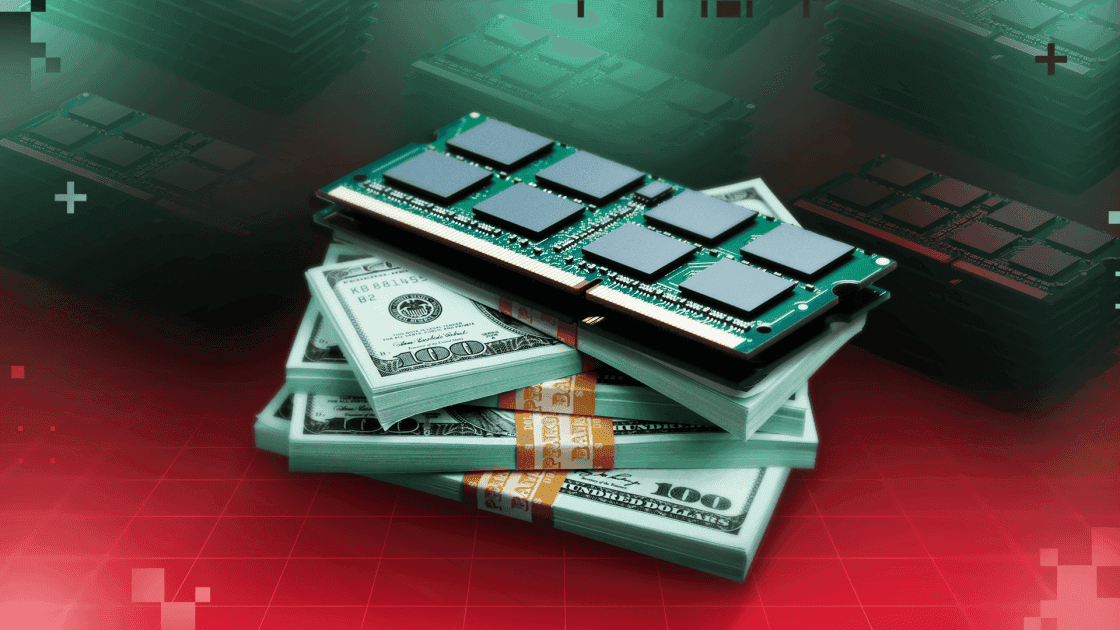
The AI boom has collided with the semiconductor industry's cyclical nature to create what some are calling "RAMageddon" — a DRAM shortage that's reshaping the entire consumer electronics landscape
5
. According to Counterpoint Research, DRAM prices have surged 80-90% in the first quarter of 2026 alone1
. The AI-driven memory shortage stems from massive infrastructure buildouts, with nearly 2,000 new data centers either planned or under construction globally1
. This unprecedented scale of AI data center demand is consuming approximately 70% of global memory hardware production this year, according to TrendForce5
. The largest AI hardware companies have secured their chips through 2028, leaving everyone else scrambling for scarce supply1
.
Source: PC Magazine
High-Bandwidth Memory Diverts Production From Consumer Markets
The primary culprit behind the supply crunch is high-bandwidth memory (HBM), a sophisticated 3D chip packaging technology that stacks as many as 12 thinned-down DRAM dies vertically
1
. Memory-chip makers including Micron, Samsung, and SK Hynix are aggressively shifting their fabs toward HBM and server-grade DDR5 production to meet AI accelerator demands5
. SemiAnalysis estimates that HBM costs three times as much as other memory types and constitutes 50% or more of packaged GPU costs1
. This shift in production capacity has devastated consumer-grade memory components availability. Micron has even stopped shipping its Crucial brand of DRAM entirely by the end of this month to "improve supply and support for our larger, strategic customers in faster-growing segments"2
. The spot price of a 16 Gb DDR5 chip now averages $38, compared to just $4.75 one year ago4
.
Source: IEEE
Laptop Prices Face Multi-Year Increases Across All Brands
Major laptop manufacturers are implementing significant price increases to offset the surge in DRAM prices. Dell will raise computer prices by 15-20%, while Lenovo has confirmed price increases for this year
2
. Framework Computer has been forced to raise prices twice in recent months, with DDR5 RAM now costing $780 for 64GB, up from $320 in November3
. The company's Framework Desktop base model now starts at $1,209, up from $1,099 originally3
. At a Cisco conference, Intel CEO Lip-Bu Tan warned, "There's no relief until 2028"2
. Framework CEO Nirav Patel echoed this timeline, indicating the shortage could persist for two years since increased memory chip die production might not catch up to demand until late 2027 and into 20283
.
Source: CNET
Related Stories

Supply Chain Constraints Extend Beyond DRAM to Graphics Cards and Storage
The memory crisis extends beyond DDR5 to affect graphics cards, SSDs, and older memory standards. Graphics cards rely on dedicated GDDR6 and GDDR7 video memory, which has seen costs per gigabit more than triple in the last six months
5
. NAND wafer prices have climbed as much as 60% month-over-month, according to Procurement Pro5
. The semiconductor industry research firm TrendForce projects that memory makers will earn $551 billion in 2026, more than twice the $218.7 billion expected for contract chip manufacturers4
. This reflects a 134% surge in memory revenue for 2026 following 80% growth in 2024 and 46% in 20254
.Industry Experts Point to Cyclical Patterns and Delayed Capacity Expansion
The current crisis represents a collision between the DRAM industry's historic boom-and-bust cycle and an AI infrastructure buildout without precedent in scale
1
. Storage and memory expert Thomas Coughlin traces the origins back to the COVID-19 pandemic, when hyperscalers bought up huge inventories, only to see prices plummet in 2022 when data center expansion fell off1
. Samsung even cut production by 50% in 2023 to prevent prices from falling below manufacturing costs1
. After the recovery began in late 2023, memory companies were wary of increasing production capacity, resulting in little to no investment in new capacity through most of 20251
. With new fabs costing $15 billion or more and taking 18 months to build, capacity additions arrive well past initial demand surges1
. Nvidia and other AI giants benefit from this dynamic, as memory constitutes a substantial portion of their product costs, but the shortage creates challenges across the entire supply chain. For consumers looking to purchase laptops now, experts recommend buying systems with maximum RAM configurations — 32GB or 64GB — since prices will only climb higher through 20282
.References
Summarized by

Navi
Related Stories
RAM Prices Explode 240% as AI Data Centers Drain Global DRAM Supply
04 Dec 2025•Business and Economy
AI Demand Drives RAM Prices to Record Highs as Memory Shortage Threatens Device Market in 2026
23 Dec 2025•Business and Economy
AI Demand Triggers Component Shortage as Dell and Lenovo Plan 15% Price Increases for Servers
03 Dec 2025•Business and Economy

Recent Highlights
1
Anthropic's Claude AI can now control your computer to complete tasks autonomously
Technology

2
Nvidia's Jensen Huang calls OpenClaw the next ChatGPT, sending Chinese AI stocks soaring
Technology

3
Elon Musk unveils $20 billion Terafab chip manufacturing project to produce terawatt of computing
Technology

Recent Highlights
Today's Top Stories




Your Daily Dose of Curated AI News
Don’t drown in AI news. We cut through the noise - filtering, ranking and summarizing the most important AI news, breakthroughs and research daily. Spend less time searching for the latest in AI and get straight to action.

