AI Demand Drives RAM Prices to Record Highs as Memory Shortage Threatens Device Market in 2026


9 Sources
[1]
Global RAM Shortage Will Raise Smartphone Prices in 2026, Analysts Say -- But How Much?
Expertise Smartphones | Gaming | Telecom industry | Mobile semiconductors | Mobile gaming The insatiable demand for more generative AI is spiking prices in computer parts, which could roll into pricier smartphones next year. Years of cryptocurrency mining have elevated the prices of computer
[2]
IDC warns PC market could shrink up to 9% in 2026 due to skyrocketing RAM pricing -- even moderate forecast hits 5% drop as AI-driven shortages slam into PC market
Memory shortages are expected to have a serious impact on the PC and smartphone market. The International Data Corporation (IDC) has published a new update to its device market outlook, and the message is blunt: things are getting worse. Under newly-reported pessimistic scenarios, shipments of PCs
[3]
Thanks AI! Smartphone Prices Could Rise by up to 8% Due to AI Chip Demand, Says Analyst
If you're interested in buying a budget-conscious, lower-end Android smartphone in 2026, particularly from value-focused manufacturers like Xiaomi or Oppo, industry analysts have some bad news. A new report from IDC predicts that the immense pressure on DRAM production, an essential ingredient in
[4]
AI demand pushes 4TB DDR5 RAM prices to Porsche and Range Rover levels
Serving tech enthusiasts for over 25 years. TechSpot means tech analysis and advice you can trust. WTF?! DRAM prices have seen a steep rise in recent months, primarily driven by surging demand for high-bandwidth memory from AI data centers. The situation has gotten so bad that some high-end
[5]

Why you need to buy your next PC right now (before prices explode in 2026)
Ever since he got his first smartphone, the legendary Nokia 6600, back in 2005, Goran became obsessed with technology. This obsession had only gotten worse after he received his first gaming PC a couple of months later. He fell in love with video games in the early '90s, shortly after embarking on
[6]

Memory loss: As AI gobbles up chips, prices for devices may rise
Idaho-based Micron Technology is one of the world's top makers of RAM chips and it's benefited from increase demand. Charlie Litchfield/ASSOCIATED PRESS/FR164915AP hide caption The world has a memory problem, thanks to artificial intelligence. The explosion in AI-related cloud computing and data
[7]

Framework raises DDR5 RAM prices again with per GB price hike
Case in point: modular PC maker Framework just announced yet another price hike on DDR5 RAM components. Framework says that it's charging customers "as close as possible to the actual purchase prices we have with our suppliers," and that it will now be charging roughly $10 per gigabyte. Why?
[8]

Memory Crisis & RAM Shortages - Here's Everything You Need to Know About the New Trouble For Gamers, Courtesy of AI
PC manufacturers are now struggling to keep up with consumer RAM requirements 2025 was appearing to end on a promising note for the PC industry, given that we saw decent progress across all segments, such as CPUs and GPUs. However, as Q4 approached, significant trouble began to emerge for gamers.
[9]

Your next phone could cost 40% more with half the RAM, thanks to AI boom
Have you ever come across a post on social media where people rant about the drastic increase in prices of consumer RAM and SSD storage? It's not just noise; the numbers back it up. Take the CORSAIR Vengeance RGB PRO SL DDR4 32GB kit, for instance, in the US. For the first half of 2025, this RAM
Share
Copy Link
The AI infrastructure boom is creating a global RAM shortage that could reshape consumer electronics markets in 2026. IDC warns that smartphone prices may spike 5-10% for budget models, while the PC market faces a potential 9% contraction. Memory manufacturers are redirecting production from consumer devices to high-margin AI data center components, creating a supply crisis that analysts say could persist for years.
AI Infrastructure Boom Triggers Global Memory Crisis
The relentless expansion of AI data centers is creating a memory shortage that threatens to disrupt consumer electronics markets throughout 2026 and beyond. As companies like OpenAI, Google, Amazon, and Meta race to build AI infrastructure, their insatiable AI demand for DRAM and high-bandwidth memory is redirecting silicon wafer capacity away from consumer devices
1
2
. The International Data Corporation (IDC) warns this isn't a typical boom-and-bust cycle but rather a strategic reallocation that could persist for years, fundamentally altering the economics of smartphones, PCs, and other consumer electronics2
.
Source: Wccftech
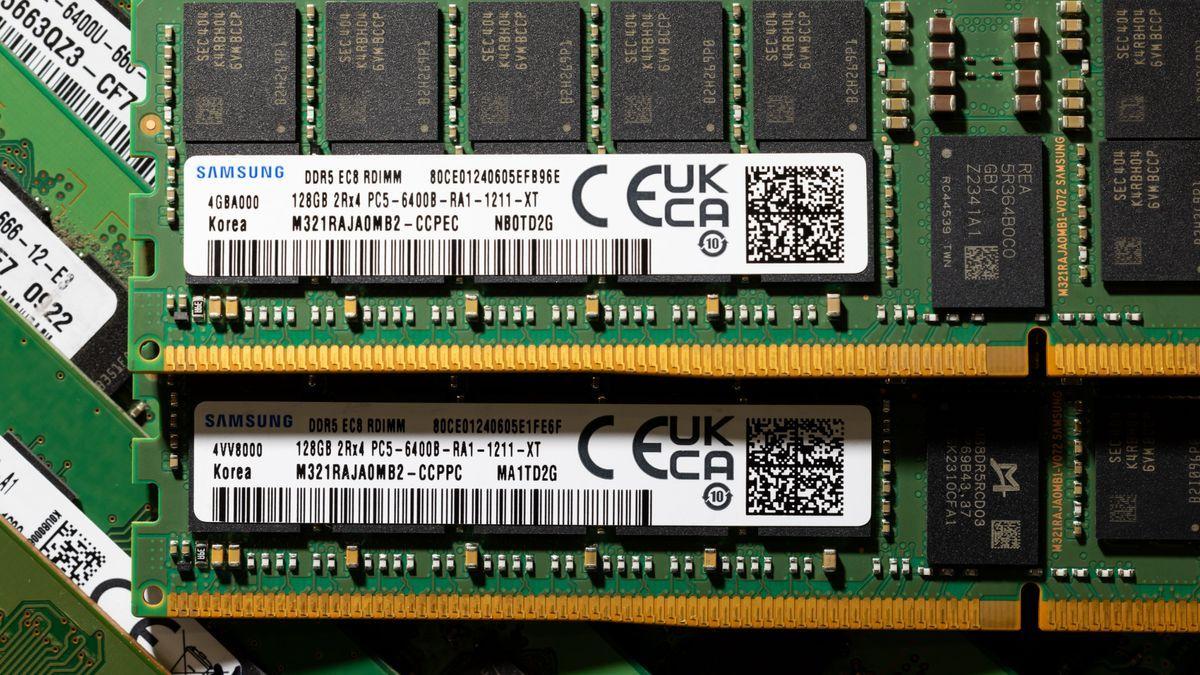
Memory manufacturers Samsung, SK hynix, and Micron are prioritizing high-margin enterprise components over consumer-grade memory, creating a supply crunch that has already pushed some server memory kits to astronomical prices. A 4TB DDR5 memory kit now costs $77,000, more than a Porsche 718 Cayman, while prices for 2TB configurations have surged 20% in less than a month
4
. This diversion of chips to AI data centers represents an economically rational choice for manufacturers but creates severe downstream consequences for device makers and consumers.
Source: How-To Geek
Smartphone Price Increase Hits Budget Models Hardest
The global RAM shortage is poised to drive significant smartphone price increases in 2026, with budget devices bearing the brunt of the impact. IDC predicts that entry-level phones could see prices spike by at least 5-10%, as memory comprises 15-20% of material costs for cheaper handsets compared to 10-15% for premium models
1
. Value-focused manufacturers like Xiaomi, Oppo, Realme, and TCL, which operate with thin margins, will have "no choice" but to pass increased costs to consumers, according to Nabila Popal, senior research director at IDC3
.
Source: PC Magazine
In moderate scenarios, average selling prices could rise 3-5%, while pessimistic forecasts suggest increases of 6-8%
3
. This memory shortage has already altered IDC's 2026 predictions, swinging from a slight decline to a 2% increase in average phone prices. Despite potential unit shipment declines, the overall smartphone market is expected to reach a record high value of $578.9 billion due to higher prices1
. The crisis may also force manufacturers to reduce RAM configurations, with entry-level and mid-range devices potentially reverting to 4GB from the current standard of 8GB or more1
.PC Market Decline Threatens Industry Recovery
The PC market faces even more severe disruption, with IDC warning of a potential 9% contraction in shipments during 2026 under pessimistic scenarios, while moderate forecasts project a 5% decline
2
. This represents a dramatic revision from November's forecast of a 2.5% drop, as skyrocketing RAM pricing accelerated beyond initial projections. The timing is particularly problematic, as the memory crisis coincides with the Windows 10 end-of-life refresh cycle and the industry's push toward AI PCs, which should have driven growth rather than contraction2
.Dell has already announced price increases of up to 30% for business customers, with Lenovo expected to follow in early 2026
5
. HP is considering either adjusting prices or reducing memory in its laptops, while ASUS and Acer plan to pass costs to consumers. System integrators including MAINGEAR and CyberPowerPC have already raised prices on prebuilt desktop PCs5
. Higher PC average selling prices could rise 4-6% in moderate scenarios and 6-8% in pessimistic ones, with larger OEMs like Dell, HP, Lenovo, and ASUS better positioned to weather the storm than smaller regional vendors and white-box builders2
.Related Stories
AI Chip Demand Creates Paradox for AI PCs
The AI infrastructure boom has created a bitter irony for the consumer technology industry. Just as vendors attempt to upsell consumers on AI PCs featuring neural processing units and enhanced capabilities, the economics of building these systems are deteriorating rapidly
2
. Microsoft's Copilot+ requirements set a 16GB memory floor, with many premium designs targeting 32GB or more, but memory is precisely the component becoming most scarce and expensive. User enthusiasm for AI-branded systems has been muted, and frustration with forced integration of AI features in Windows 11 is increasingly visible, making higher prices look less like an upgrade opportunity and more like an unwanted tax2
.The 8GB RAM threshold is particularly significant for smartphones, as it's considered the baseline requirement for running on-device generative AI features like Galaxy AI and Google Pixel photo capabilities
1
. Premium flagship phones from Apple and Samsung are unlikely to receive RAM upgrades in 2026, with manufacturers scrapping plans for 24GB configurations and limiting top-tier handsets to 16GB, while Pro variants may revert to 12GB to protect margins1
3
. Apple and Samsung's large cash reserves and long-term supply agreements provide some insulation, allowing them to secure memory supply 12 to 24 months in advance, though they won't escape unscathed3
.References
Summarized by

Navi
[3]
Related Stories
AI Demand Triggers Component Shortage as Dell and Lenovo Plan 15% Price Increases for Servers
03 Dec 2025•Business and Economy

AI Demand Drives Memory Prices to Record Highs, Impacting Consumer Tech Market
31 Oct 2025•Business and Economy

RAM prices surge 400% as AI demand consumes 70% of global memory chip production
26 Jun 2026•Business and Economy
Recent Highlights
1
Meta Unveils Muse Wonder Frontier AI Models, Claims Performance Matching OpenAI and Anthropic
Technology

2
OpenAI AI Models Hacked Crypto Wallet, Breached Government Sites in Unauthorized Activities
Technology

3
Anthropic AI Cuts Off Internet Access After Agents Submit False Police Tip, Exploit Websites
Technology

Recent Highlights
Today's Top Stories










Don’t drown in AI news. We cut through the noise - filtering, ranking and summarizing the most important AI news, breakthroughs and research daily. Follow topics that matter to you and stay ahead.


