AI Data Centers Face Growing Backlash as Energy Bills Rise and Communities Push Back


4 Sources
4 Sources
[1]
People are protesting AI data centers, and it's scrambling political lines
Demand for more artificial intelligence has led to a rapid growth of AI data centers -- and lots of concerned citizens. The politicians aren't far behind. In recent months, protesters in Virginia, Pennsylvania, North Carolina and other states have shut down proposals for new building sites. A town in Wisconsin is even trying to oust its mayor after approval of a data center there. The large-scale facilities are necessary to match the electricity demand required for AI, but high energy costs come with them, angering residents. Virginia Gov. Abigail Spanberger, a Democrat, won her election last year in part by talking about higher energy bills in the state. And the issue is growing in importance for this year's midterm elections, even getting on the White House's radar. "I do think this is going to be a big issue in our politics throughout this year and probably for the foreseeable future," said Brendan Steinhauser, the CEO of the Alliance for Secure AI, a group pushing for more AI safeguards. But the issue isn't exactly divided by party lines. While President Trump and his AI czar David Sacks have been outspoken about the need for more data center construction and looser regulations on artificial intelligence, other elected officials on both sides of the aisle are taking a different approach. Sen. Bernie Sanders of Vermont, an independent who caucuses with Democrats, recently proposed a nationwide moratorium on data center construction. On the other side, Republican Sen. Josh Hawley of Missouri has pushed for more regulation of AI, and Florida Gov. Ron DeSantis, a Republican, has urged more caution when it comes to the technology and the companies that create it. "There are some people that say, you know, the right policy is to just give Big Tech whatever they want, subsidize it and all this stuff, and somehow that's going to lead us to some happy place. I reject that," DeSantis said last month. How lawmakers talk about data centers in elections this year will be critical, according to Steinhauser, who also used to work for Republican campaigns. He says showing a "healthy skepticism" toward tech companies is helpful, especially for Republicans who are looking to take a different approach on AI than the president. "On this issue, for whatever reason, people are so concerned about it and so worried about it that they're cheering anyone who is saying the right things or expressing skepticism," he added. "When you talk to Republican voters and activists around the country, they're more closely aligned with Governor DeSantis on this than they are with, say, David Sacks. And I think Republicans in Congress just sort of need to be reminded of that and need to see that more and more," Steinhauser said. Top issue When it comes to higher costs, a topic that remains a top-of-mind issue for voters, according to polling from NPR/PBS News/Marist, the White House has started to weigh in. This month, Trump and a bipartisan group of governors announced an effort to try to urge PJM, one of the United States' largest electricity grid operators, to facilitate lower energy costs for consumers. The administration, though, has no authority over how a private company can operate. PJM has also released its own plan. Technology companies are also starting to respond to public outcry on their own. OpenAI and Microsoft recently announced efforts to curb energy costs for consumers. "The industry is committed to being a responsible partner in the communities and where they locate but also a responsive partner," Dan Diorio, the vice president of state policy for the Data Center Coalition, a group that represents AI companies including Meta and Amazon. Backlash grows Backlash against the rapid growth of AI data centers has been prevalent in Virginia, which has the world's highest concentration of data centers. A 2024 independent study commissioned by the state government showed that by 2040, residents could be paying up to $37 more per month on energy. And at a time when voters are putting cost of living at the top of their list of concerns, every increased cost matters. The high concentration of data centers mostly exists in the northern part of the state, in the suburbs of Washington, D.C. But near Richmond, Va., residents in more rural Hanover County are showing up by the hundreds to protest. And unlike with most other issues, they're not divided by politics. "It's actually been a unifying issue that we haven't really seen before in a long time, because regardless of whether you're a Republican or a Democrat, you just don't want it," said Jennifer Corpus, who is organizing protests in the area.
[2]
You Will Laugh Out Loud When You Hear What the Tech Industry Is Spending a Swimming Pool's Worth of Money to Convince the Public
The AI industry has been pouring untold resources into building out enormous data centers across the world. The plants are immensely resource-hungry, sucking up huge amounts of fresh water to cool ripping-hot computer hardware. They're turning into a massive strain on the electric grid, forcing some utility operators to enact rolling blackouts during heat waves and cold weather. The issue reached a fever pitch after the Washington Post reported that a recent rise in customer energy bills was attributable to the enormous and growing power demands of AI data centers. In short, it's no wonder that small towns across the nation are coordinating efforts to keep data centers out -- a PR disaster tarnishing a major push by AI companies to scale up their expansive operations. And it seems like Mark Zuckerberg's Meta, which has committed to spend $600 billion on AI data centers, is painfully aware of the pushback. As the New York Times reports, the company has already spent $6 million on TV ads to convince Americans that data centers aren't that bad. As one "folksy" ad showing off a new data center in Altoona, Iowa, argued, "we're bringing jobs here." And it's not just Meta trying to distract the public from all of the glaring downsides of data centers propping up across the country. Amazon is running its own similar ad campaign in Virginia, for instance, admonishing viewers that the facilities help "connect us to the entire world." According to the Financial Times, data center operators are "planning to go on the offensive with a lobbying blitz" as well, trying to get ahead of the growing public backlash. One data center executive told the FT that lobbying spending is a flash in the pan compared to the tens of billions being spent on infrastructure. "If we're going to spend tens of billions of dollars this year on capital projects, we probably should spend tens of millions of dollars on messaging," they argued. Yet the growing backlash is already hampering construction efforts. Over two dozen projects have already been blocked or delayed this month alone, according to research firm MacroEdge, compared to just 25 total in 2025. In short, it's not surprising to see tech giants trying to control the narrative by pouring millions of dollars into changing the public's opinion about the facilities. As marketing analysts told the NYT, Meta's efforts are likely not just aimed at residents. They're intended to influence lawmakers and policymakers, ensuring that the aggressive nationwide push to build out AI infrastructure won't become an issue in Washington, DC. Rising energy bills have already turned out to be a contentious topic, particularly in the greater context of rising costs of living, with senator Chris Van Hollen (D-MA) introducing a bill earlier this month to regulate data center energy use. Even president Donald Trump, who has been a major proponent of AI, argued that Big Tech must "pay their own way," in a recent post on Truth Social, suggesting the topic isn't entirely divided by party lines. Republican lawmakers have also called for more AI regulation and a more careful approach to data center buildouts, as NPR reports. Other politicians worry about overindexing on AI infrastructure buildouts, which could end badly in the long term if the AI sector were to crash, as many experts have warned it could. "What I very much worry about with this ad campaign is localities committing to this industry and then saying in ten years, 'What have we done to ourselves,'" Diane Papan, a Democratic state assemblywoman in California, told NYT. More on data centers: Trump's Huge AI Project Is Running Into a Major Financial Problem
[3]
Experts Warn Data Center Backlash Could Slow AI Infrastructure Growth - Decrypt
Authors warn unresolved local opposition could slow or block future AI infrastructure projects. AI data centers are expanding rapidly across the U.S., but growing local resistance is emerging as a potential roadblock for the infrastructure behind artificial intelligence. A new report from nonprofit think tank Brookings warns that disputes over electricity use, water consumption, tax abatements, and environmental impact are increasingly slowing or threatening data center projects. The authors say legally binding community benefit agreements are necessary to prevent local opposition from constraining AI infrastructure growth. "Data centers are both controversial and critical to the artificial intelligence technologies undergirding the digital economy," the report said. "Without abundant data centers, the digital revolution could potentially stall, restricting access to the benefits of digital technologies for individuals, communities, governments, and businesses." The report comes as demand for computing power ramps up and AI data centers spread nationwide, supported by the Trump administration. In January 2025, Trump announced Stargate, a $500 billion AI infrastructure initiative backed by OpenAI and Oracle, and called for long-term safeguards to ensure communities are not left with data centers that deliver little benefits. According to Shaolei Ren, an associate professor of electrical engineering at the University of California, Riverside, local concerns about water use, public health, electricity costs, noise, and related issues are valid and should be addressed upfront before construction begins. "Ultimately, the metric that really matters is community satisfaction, and that is what we should be optimizing for," Ren told Decrypt. "There is a growing recognition that community voices matter, and that data centers should be planned and built in alignment with local interests, not just technical or economic objectives." "Of course, the first step is measurement," he added. "You cannot improve what you do not measure." Data centers are massive facilities that store and process the vast amounts of data required to run cloud computing and AI systems. According to an October report by the Pew Research Center, U.S. data centers consumed about 183 terawatt-hours (TWh) of electricity in 2024, roughly equivalent to the combined annual energy demand of Pakistan. The Brookings report said the data center expansion comes amid a growing "techlash" against the AI sector, driven by anxieties over job displacement from automation, energy consumption, and impact on the environment, which has sparked protests and organized opposition in communities around the country. "Left unchecked, these community concerns could slow down the rapid construction of data centers, weaken AI growth, and slow AI revenue streams, all of which would limit the AI benefits promised by tech firms and government officials," the Brookings report said. Major tech firms, including Amazon and Nvidia, have announced multibillion-dollar investments to expand data center and AI infrastructure, adding to a global network that includes nearly 4,000 data centers in the U.S. and about 10,700 worldwide, according to data from tracking site Data Center Map. Much of that new development is concentrated in the American South, where companies are building large facilities in North Carolina, Georgia, Virginia, Louisiana, Mississippi, Alabama, South Carolina, and Tennessee. Local leaders and advocates argue that data centers are being built in low and middle-income areas that lack the political influence to stop them. To elevate environmental concerns, Brookings called for legally binding community benefit agreements, or CBAs, as an alternative to informal negotiations and undisclosed development contracts for data centers. The agreement, the report said, should define costs, subsidies, and tax revenues, while setting enforceable commitments for jobs, electricity and water use, and pollution. "Well-crafted community benefit agreements can address public concerns and mitigate known problems of data centers," Brookings wrote. "Greater transparency on each of these fronts would help assuage the worries of the American public."
[4]
Meta campaigns to change opinions on data centers
Meta, OpenAI, Google, Microsoft and Amazon have embarked on a building spree in the AI race, investing hundreds of billions of dollars to erect data centers to develop the technology. In doing so, they have fueled an increasingly political issue, with President Donald Trump and lawmakers across the country criticizing the computing sites for driving up energy costs and straining local water supplies. The advertisement began with a panning shot of Altoona, Iowa, a town of 20,000 near Des Moines. The camera moved from a diner to a farm to a high school football field. To the pluck of guitar strings, a voice-over promoted a boon for the local economy. "We're bringing jobs here," the ad said. "For us, and for our next generation." The ad's folksy vibes were not for a political candidate. They were for a data center that Meta had built in Altoona -- part of an ad campaign by the Silicon Valley giant to shape a new narrative around the vast computing facilities that power artificial intelligence. Meta, OpenAI, Google, Microsoft and Amazon have embarked on a building spree in the AI race, investing hundreds of billions of dollars to erect data centers to develop the technology. In doing so, they have fueled an increasingly political issue, with President Donald Trump and lawmakers across the country criticizing the computing sites for driving up energy costs and straining local water supplies. So in November and December, Meta spent $6.4 million to run a series of ads -- including the one about Altoona -- in the television markets of eight state capitals such as Sacramento, California; Salt Lake City; and Tallahassee, Florida; as well as Washington, D.C., according to data from AdImpact, an analytics firm. Meta most likely bought the ads "with the goal of shaping policy decisions" and reaching lawmakers, said Michael Beach, CEO of Cross Screen Media, a marketing analytics firm. Other tech giants are also aiming to influence public opinion on data centers. Amazon is helping to fund a similar ad campaign in Virginia, where it operates dozens of data centers. The campaign -- focused on job growth and electricity costs -- began in December 2024 and is still running, backed by Virginia Connects, a nonprofit created by the Data Center Coalition, an industry trade group. Steve Padilla, a Democratic state senator in California who proposed a bill last year to regulate rising energy costs from data centers, said such ads were a tech company tactic. "If you like sports, if you have kids, and you love America, you've got to love data centers, right?" he said. In a statement, Ryan Daniels, a spokesperson for Meta, did not comment on its ads but said the company paid the full costs of energy used by its data centers. Amazon declined to comment. In a statement, Josh Levi, president of the Data Center Coalition, said Virginia Connects helped "inform communities and policymakers about the data center industry," but he did not address the ad campaign. Meta operates 26 data centers in the United States and has said it will spend $600 billion to build new ones in the coming years. Last year, the company also unveiled two political action committees to back candidates at the state level who support AI during the midterm elections. (Meta said its spending on the ad campaign was separate from the PACs.) Meta has highlighted how data centers can bring jobs and tax revenue to places in need of economic development. It and other tech giants have hired "community affairs" workers to build local trust, according to job listings seen by The New York Times. Sen. Chris Van Hollen, D-Md., said data centers became an issue on Capitol Hill early last year when constituents started complaining en masse about rising electric bills and blamed data centers. That has made AI infrastructure part of the larger debate about affordability, along with things like the cost of eggs, he said. This month, Van Hollen introduced a bill to regulate data center energy use. The measure is backed by other Democrats, but the issue is becoming bipartisan, he said. Trump has recently made several statements about data centers and energy costs. "We are the 'HOTTEST' Country in the World, and Number One in AI. Data Centers are key to that boom, and keeping Americans FREE and SECURE but, the big Technology Companies who build them must 'pay their own way,'" Trump posted on social media January 12. Diane Papan, a Democratic state Assembly member in California, said she had seen Meta's ads while working in Sacramento last year. In April, she introduced a bill to require tech companies to publicize data center water use; Gov. Gavin Newsom, another Democrat, vetoed it in October. In an interview, Papan said that she was disappointed by how much the tech industry opposed the bill and that Meta and other tech companies "were not front and center to work with us." "What I very much worry about with this ad campaign is localities committing to this industry and then saying in 10 years, 'What have we done to ourselves?'" Papan said.
Share
Share
Copy Link
Communities across the US are blocking AI data centers over rising electricity costs and resource strain. Meta has spent $6 million on TV ads while over two dozen projects face delays this month alone. The issue is scrambling traditional political lines, with lawmakers from both parties calling for stricter regulations on data center energy use.
AI Data Centers Trigger Unprecedented Community Resistance
AI data centers are facing mounting public and political backlash as communities across the United States organize to block new construction projects. In recent months, protesters in Virginia, Pennsylvania, North Carolina, and other states have successfully shut down proposals for new building sites
1
. A town in Wisconsin is even attempting to oust its mayor after approval of a data center there1
. Over two dozen projects have been blocked or delayed this month alone, compared to just 25 total in 2025, according to research firm MacroEdge2
.
Source: NPR
The facilities are necessary to match the electricity demand required for AI, but rising electricity costs come with them, angering residents who are already concerned about cost of living
1
. According to a 2024 independent study commissioned by Virginia's state government, residents could be paying up to $37 more per month on energy by 20401
. Virginia has the world's highest concentration of data centers, making it ground zero for local community opposition1
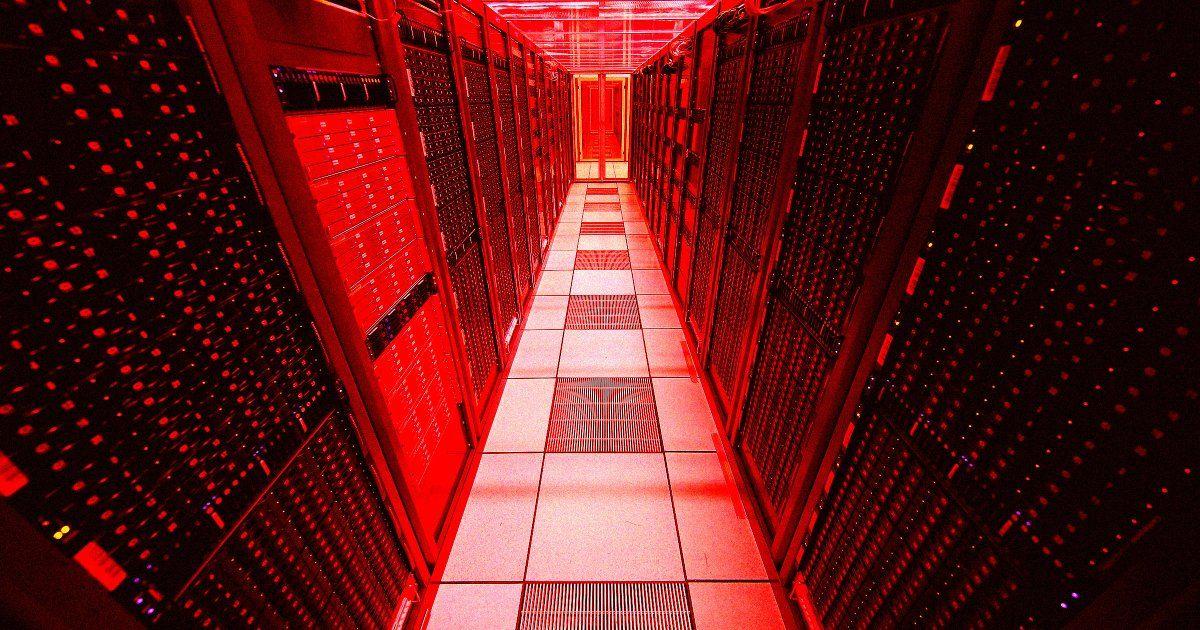
.
Source: Futurism
Tech Giants Launch Multimillion-Dollar PR Campaigns
Facing a PR disaster, Meta has spent $6.4 million on TV ads in eight state capitals including Sacramento, Salt Lake City, and Tallahassee, as well as Washington, D.C., according to data from AdImpact
4
. The folksy advertisements promote job creation and economic benefits, with one ad featuring Altoona, Iowa, claiming "we're bringing jobs here"2
. Amazon is running its own similar ad campaign in Virginia, backed by Virginia Connects, a nonprofit created by the Data Center Coalition4
.According to the Financial Times, data center operators are planning a lobbying blitz to get ahead of the growing resistance
2
. One data center executive argued that "if we're going to spend tens of billions of dollars this year on capital projects, we probably should spend tens of millions of dollars on messaging"2
. Marketing analysts told the New York Times that these efforts aren't just aimed at residents—they're intended to influence lawmakers and policymakers2
.Political Opposition to Data Centers Crosses Party Lines
The issue is scrambling traditional political lines, creating bipartisan concern about AI infrastructure growth. While President Donald Trump and his AI czar David Sacks have been outspoken about the need for more data center construction and looser regulations, other elected officials on both sides are taking a different approach
1
. Sen. Bernie Sanders recently proposed a nationwide moratorium on data center construction, while Republican Sen. Josh Hawley of Missouri has pushed for more regulation1
. Florida Gov. Ron DeSantis, a Republican, has urged caution, stating "there are some people that say the right policy is to just give Big Tech whatever they want, subsidize it and all this stuff. I reject that"1
.Virginia Gov. Abigail Spanberger, a Democrat, won her election last year in part by talking about increased energy bills in the state
1
. Sen. Chris Van Hollen introduced a bill this month focused on regulating energy use by data centers2
. Trump himself recently posted on Truth Social that Big Tech must "pay their own way," suggesting the topic transcends partisan divisions2
.Related Stories

Energy Consumption and Water Strain Drive Concerns
U.S. data centers consumed about 183 terawatt-hours of electricity in 2024, roughly equivalent to the combined annual energy demand of Pakistan, according to Pew Research Center
3
. The facilities are immensely resource-hungry, sucking up huge amounts of fresh water to cool computer hardware and creating massive strain on the electric grid2
. Some utility operators have been forced to enact rolling blackouts during heat waves and cold weather2
. Water consumption has also become a flashpoint, with California state Assembly member Diane Papan introducing a bill to require tech companies to publicize data center water use, though Gov. Gavin Newsom vetoed it4
.Experts Call for Community Benefit Agreements
A new report from nonprofit think tank Brookings warns that disputes over electricity use, water consumption, tax abatements, and environmental impact are increasingly slowing AI infrastructure
3
. The report states that "without abundant data centers, the digital revolution could potentially stall," but cautions that "left unchecked, these community concerns could slow down the rapid construction of data centers"3
. The authors recommend legally binding community benefit agreements as necessary to prevent local opposition from constraining growth3
. These agreements should define costs, subsidies, and tax revenues while setting enforceable commitments for jobs, electricity and water use, and pollution3
.Meta, OpenAI, Google, Microsoft, and Amazon have embarked on a building spree, investing hundreds of billions of dollars to erect data centers
4
. Meta alone operates 26 data centers in the United States and has said it will spend $600 billion to build new ones in the coming years4
. Much of the new development is concentrated in the American South, where companies are building large facilities in North Carolina, Georgia, Virginia, Louisiana, Mississippi, Alabama, South Carolina, and Tennessee3
. Local advocates argue these facilities are being built in low and middle-income areas that lack the political influence to stop them3
.References
Summarized by

Navi
Related Stories
Over 230 groups demand moratorium on AI data center expansion as communities revolt nationwide
09 Dec 2025•Policy and Regulation

AI Data Centers Spark Land Rush and Political Battles as Big Tech Seeks 85 Gigawatts by 2030
05 Mar 2026•Business and Economy

AI Data Centers Face Growing Backlash as Americans Worry About Energy Costs and Environment
14 Mar 2026•Policy and Regulation

Recent Highlights
1
Google releases Gemma 4 with Apache 2.0 license, enabling unrestricted local AI on devices
Technology

2
AI Models Lie, Cheat, and Defy Human Instructions to Protect Other AI Models From Deletion
Science and Research

3
Anthropic discovers functional emotions in Claude that actively shape AI behavior and decisions
Science and Research

Recent Highlights
Today's Top Stories



Your Daily Dose of Curated AI News
Don’t drown in AI news. We cut through the noise - filtering, ranking and summarizing the most important AI news, breakthroughs and research daily. Spend less time searching for the latest in AI and get straight to action.

