AI forces skills reset across workforce as job security shifts from degrees to adaptability


6 Sources
6 Sources
[1]
Job hunting? 5 ways you can stand out in 2026 - and beat AI screening tools
Focus on communication, authenticity, and networking skills. Research suggests almost two-thirds (65%) of organizations either use AI or intend to apply it to recruitment processes in the next 24 months. Meanwhile, candidates use emerging technology to polish their resumes. The result is AI-enabled confusion, with algorithms attempting to find the best talent from resumes that have been buffed up by emerging technology. In such a tech-heavy process, organizations will struggle to find the best candidates from the rest. Also: The secret to AI job security? Stop stressing and pivot at work now - here's how However, smart business leaders are developing tactics to find their next workforce. Here's what you need to know if you want to stand out from your job rivals. Richard Corbridge, CIO at property specialist Segro, said finding the right individual is increasingly about ensuring a good personal fit. "I think the appeal happens when you meet somebody," he said. "That's become more important at a time when AI uses algorithms to trawl CVs and report that certain candidates have the right skills." Corbridge told ZDNET that the prevalence of emerging technology makes it hard to uncover the best candidates in a fast-changing market. Meeting people face to face can help. Also: Nervous about the job market? 5 ways to stand out in the age of AI "AI has become a generational leveler, because there isn't a group of people that, because it's become so suddenly impactful, have been through college with all the skills. It's like we're all in this change together," he said. "So, when you're looking at prospective candidates to come in, you need to focus on how they fit, talk, and engage with the team. As a business leader, you think about the diversity you're trying to create across capability, experience, and background." Corbridge also advised professionals to take a hands-on approach to crafting their applications. "It might be unwise to say people shouldn't use AI to help smarten up their writing, but it would also be unwise to allow AI to write about you and not have any oversight or any creative input into the process," he said. Joel Hron, CTO at information services specialist Thomson Reuters, said he digs beneath the details to focus on candidates who excel in two areas. First, Hron looks for people who've demonstrated success in a variety of contexts. He said one example is someone whose resume boasts work experience at big tech companies but also time in startup organizations. "Maybe the startup was successful, maybe it was a failure, but I like people who can drop into different situations and have demonstrated that they can be successful in all environments," he said. "I think those characters are generally good leading indicators." Also: AI is disrupting the career ladder - I learned 5 ways to get to leadership anyway Second, Hron told ZDNET that he likes people who can show how they engaged with their failures and developed a learning mindset. "By no means would you expect people to have nothing but successes their whole life," he said. "But if a candidate can really dissect the times that they failed, and they can give you a thoughtful answer on what they did differently or why they failed and what they learned from that process, you can tell that this person is going to think deeply about everything they do when they come and work for you, and that's a good litmus test for success." Huy Dao, director of data and machine learning platform at Booking.com, said resumes still play an important role in the recruitment process. However, big companies are adjusting to the new AI-enabled realities to find the best talent, especially during face-to-face chats: "We must ensure we adapt to AI in terms of our interview process." Dao told ZDNET that some of the traditional components of the interview still make sense in an age of AI. For example, questions that help show someone will be a good cultural fit remain key. However, business leaders need to be sharp in other areas. "We need to assess the potential employees and consider how much we trust the skills that they highlight in their resumes, so our assessment is also evolving in that sense," he said. Also: Forget the chief AI officer -- why your business needs this 'magician' Dao said general questions about skills are long gone and have been replaced by a much more nuanced approach that considers the role of AI in the working process. "We tend to search for real experience of doing things. The questions are more involved, for example, thinking about case studies and other types of experience, such as whether the candidate can leverage AI if they want to, but also explain how the solution that they provide is not just left for AI," he said. "We want to see that they understand how the technology works. Between the two employees, one who can leverage AI and one who doesn't know how to use AI, I prefer the one who can leverage AI to get things done much quicker." Musidora Jorgensen, UK & Ireland country leader at technology specialist Freshworks, said that curious candidates will be rewarded. "When I'm building my teams and searching for really great talent, I'm looking for people who have a passion for the problem that they're trying to solve," she said. "A lot of that capability comes across with the experience of having done that work before, but also the curiosity that they have in asking questions and the authenticity that they are bringing in terms of how they engage with people during the recruitment process." Also: Climbing the career ladder? 5 secrets to building resilience from leaders who were once in your shoes Jorgensen told ZDNET that the basic lesson for job-seeking professionals is to show you're a fan of collaboration, not just automation. "So, we're looking for human qualities -- the curiosity, the authenticity, the creativity piece, and the ability to think about how they can create the impact that we're looking for when we're talking to our customers," she said. "Most people are probably using AI now. However, when I'm building my teams, I'm looking for people who are passionate about solving the problems that we want to go after to help our customers." Nick Pearson, CIO at technology specialist Ricoh Europe, said that successful candidates will show they prioritize keeping the human in the loop in an increasingly automated labor market and workplace. "What AI can't do is build you a network of people who know things and how to influence people. It can't give you the judgment and the novel nature of that effort," he said. "So really, in the age of AI, you need to think about who and what you know that's unique in a world of automation." Also: Turn AI chaos into a career opportunity by preparing for these 4 scenarios Pearson told ZDNET it's important to recognize that he's a fan of AI and remains an optimist about the role of emerging technology in the workplace. However, the talent that shines will rise above the cacophonous hype of AI and stress its human-centered proficiencies. "I think young people are increasingly saying, 'Hang on a second. Is it my CV that needs more help from AI, or is it my network that needs to grow?'" he said. "And it's that kind of pivot that I think we're going to talk increasingly about. And as a business leader, you're looking for candidates you can trust and who can create a human connection."
[2]
Time to retrain? How to future-proof your career in the AI age
These days, gen Z appears to be pivoting towards skilled trades, perhaps driven by a desire for "AI-proof" job security. Many young workers now view blue-collar careers as more stable than office jobs in the face of rapid change. It's not just the youngest workers. A growing sense of unease about AI is reshaping how many people think about work. Within younger groups, this shift is showing up in hard numbers. In the UK, hiring of gen Z workers (those born in or after 1997) in construction and trade roles rose by 16.8% in the year to January 2026. The result is what some are calling the "toolbelt generation". But elsewhere in the workforce, many professionals are taking a pragmatic approach. Instead of competing with automation, they are learning how to work alongside it. Building fluency with AI tools is increasingly seen as a form of career insurance. The goal is to move into roles designing, managing or directing AI systems. In that model, technology becomes a force multiplier (that is, it increases productivity), rather than a threat. This shift is also driven by economics. AI-related skills command a clear premium in the jobs market. Beyond pay, there are other benefits. AI systems are particularly effective at handling repetitive, process-heavy tasks. When those functions are automated, employees can redirect their energy towards strategy, creative problem-solving and higher-value decision-making. Many find that this shift not only improves productivity but also makes their work more engaging and meaningful. Importantly, entering the AI space does not always require a computer science degree. Through online learning, bootcamps or just practical experimentation, workers can gain expertise in areas such as prompt engineering, workflow automation or AI application. The barrier to entry is lower than many assume, especially for those who already understand a specific industry. Industry knowledge is, in fact, a major advantage. Organisations increasingly want people who can bridge domain expertise with technical capability. A healthcare professional who knows what patients need as well as understanding AI tools; a finance specialist who can apply machine learning to risk analysis; or a tradesperson who uses smart systems for efficiency can all bring unique value. These hybrid profiles are becoming central to how companies integrate AI, creating interdisciplinary roles that did not exist a few years ago. The flip side: risks and challenges AI is creating opportunity, but it also brings risks and trade-offs. One of the most immediate challenges is the pace of change. Keeping skills current can feel like trying to hit a moving target. Over time, constantly doing more can lead to fatigue and burnout, particularly in highly competitive environments where staying relevant is tied to job security. There is also an upfront cost. Transitioning into AI, especially into more technical or advanced positions, can require an investment of time and money before any financial return materialises. And AI is said to be contributing to a hollowing out of traditional career ladders. Many entry-level roles, once considered stepping stones into industries such as finance or marketing are being automated or cut back. As a result, entry pathways into certain professions may narrow before new ones are established. Read more: AI could mark the end of young people learning on the job - with terrible results Finally, working in AI often means grappling with complex ethical and safety questions. Workers must consider issues such as data bias, privacy, transparency and accountability. Decisions made during system design and deployment can have wide-reaching consequences. Navigating these responsibilities requires sound judgement and a clear understanding of these consequences. Looking ahead In many sectors, AI is unlikely to eliminate entire professions. Instead, it will reshape them. Tasks will be automated, workflows will evolve and job descriptions will shift. For most professionals, the practical response is not to abandon their field, but to integrate AI into it. At the same time, technical fluency alone will not be enough. As automation takes over routine and rules-based work, human skills become more important. Critical thinking, judgement, empathy, communication and complex problem-solving remain difficult to replicate with algorithms. The more advanced the technology becomes, the more valuable distinctly human strengths appear to be. There is also a widening gap across industries. AI is generating new, high-paying roles in areas such as engineering, data science and AI strategy. However, in positions where automation only partially replaces tasks, productivity may increase while wages do not. In some cases, partial automation can stifle pay or reduce opportunities for promotion. Retraining and career pivoting in the AI age is becoming a mainstream response to structural change. AI is reshaping how work is done across sectors, while opening up new roles that are centred on oversight, integration, strategy and innovation. For many professionals, the question is not whether change is coming but how proactively they choose to respond. The most resilient path forward is rarely about abandoning your field entirely. More often, it involves layering AI fluency on top of existing expertise. A finance professional who understands automation tools, for example, is better positioned than someone relying on legacy skills alone. In this sense, the objective of retraining is to move closer to the decision-making layer of work. Ultimately, the AI era is not about a binary choice between optimism and fear. It is about positioning. Retraining and career pivoting are becoming central strategies for navigating this shift with intention rather than reacting after the fact.
[3]
Venture capitalist Bill Gurley warns workers who went through the 'college conveyor belt' and chased safe jobs that they'll feel AI's disruption first | Fortune
Professionals have taught for generations that succeeding in school and attending an elite university would guarantee a rewarding six-figure career. But within a matter of years, AI has disrupted the world of work, and it's fast taking over the office roles humans were once promised. Now, venture capitalist Bill Gurley cautions workers against blindly following the career blueprint. "This is new and fast, and it's attacking jobs that haven't been attacked in the past," Gurley said recently during the On with Kara Swisher podcast. "It's creating a lot of anxiety, but I don't know that we can put it back in the bottle." The prolific tech financier, famous for his early investments in Uber and Zillow, is skeptical that the government could pass AI regulation or pull off a massive reskilling effort. So as the technology continues to automate traditionally stable and lucrative roles, like lawyers and software engineers, it's imperative that workers actually be invested in their profession -- or risk facing the chopping block. "The people that are most at risk are the ones that are sitting idly in the job and don't really have a why or a purpose for it," Gurley revealed. "A lot of the people that go through that college conveyor belt, that are chasing a safe job, that end up working as a widget or a cog in an industry they may not love -- I think they are ripe for disruption." The Benchmark Capital general partner acknowledges it's easier said than done, but the best path forward is to "craft your own career path" and tailor it to their distinct skills. For those who can't switch sectors or become self-employed, AI can act as career "jet fuel" that can make them even better at their jobs and indispensable to their employers. "If it's out of your control, I just would say understand what it's capable of in your industry and be the most AI aware person in your job," Gurley advised. "You're going to then be the last person that they want to get rid of." Gurley explores the idea that chasing a career of passion is a strategic edge, and not fluffy advice, in his new book "Runnin' Down a Dream." He's also one of several business leaders questioning the efficacy of how young professionals are trained to approach college. The investor has noticed a few worrying trends that may inhibit young professionals from following their true aspirations, hurting their career success. Gurley explained that kids today are "programmed from a time perspective" more than other generations; the budding talent start worrying about having a stacked resume from a young age, and now, some colleges require students to apply with a major in mind. These restraints don't allow them to freely explore what jobs they'd enjoy, and instead funnels them into a professional path very quickly. He believes that's part of the reason why so many people are checked out at work -- a group that's most susceptible to disruption. "There seems to me to be somewhat of a problem out there in that people aren't landing where they're passionate about what they're doing," Gurley explained. "I don't think it's anyone's fault, but I think we've turned the college matriculation process into this pressure cooker." The CEO of LinkedIn, Ryan Roslansky, echoes some of Gurley's philosophy about career success in the AI era. Workers won't be able to simply coast on a glitzy Ivy League degree -- they need to have passion for their professions and the necessary tech skills to succeed in their careers. "My guess is that the future of work belongs not anymore to the people that have the fanciest degrees or went to the best colleges," Roslansky said during a fireside chat at the platform's San Francisco office last year. Instead, he predicted talent most likely to land a job and succeed are "the people who are adaptable, forward thinking, ready to learn, and ready to embrace these tools...It really kind of opens up the playing field in a way that I think we've never seen before." Fei-Fei Li, a Stanford professor and CEO of AI startup World Labs dubbed the "Godmother of AI," says being tech-savvy on the job matters more than anything else. Now, it's essential for professionals to "superpower" themselves quickly with the tools, she advised. And Nvidia leader Jensen Huang agrees that AI-savvy workers undeniably have a leg up in the tough labor market. He said that every job will be affected by the technology immediately -- and it's on workers to ensure their future success by keeping up with the program. "You're not going to lose your job to an AI, but you're going to lose your job to someone who uses AI," Huang said at the Milken Institute's Global Conference in 2025. "I would recommend 100% of everybody take advantage of AI. Don't be that person who ignores this technology and as a result, loses your job."
[4]
For modern professionals AI is about smarter habits, not shortcuts
Experts from Accenture, BearingPoint and Workhuman discuss how AI and automation can positively impact working life. For many professionals artificial intelligence (AI) and automation have the power to transform day-to-day work. David Burke, a senior director of global talent acquisition and the employer brand at Workhuman explained that this transformation is effective not because it is 'futuristic' but because it meets the needs of an evolving workforce. "It's much more practical than that," he told SiliconRepublic.com. "We're using AI across our internal systems to reduce manual work, improve decision-making and help teams move faster. The goal isn't to replace roles, it's to remove friction. "In areas like hiring, performance enablement and cross-functional collaboration, automation is taking care of the repeatable tasks and surfacing better data. That means our teams spend less time chasing information or managing processes and more time solving problems and focusing on work that actually moves the business forward." This is a viewpoint shared by Wendy Walsh, a talent and organisation lead at Accenture, who noted that AI and automation have not only altered the tools she uses in the workplace, but have actually changed how she personally "shows up at work". She said, "On a very practical level, I use AI every single day to think better. I use it to explore ideas, challenge my own assumptions, shape early thinking and get to a stronger point of view before anything ever becomes a document. For me, it's less about productivity shortcuts and much more about cognitive support." Walsh added, "It helps me move faster to insight and clarity, not simply faster to output. The biggest difference is that my time has shifted away from preparing information and towards interpreting it." For BearingPoint's Barry Haycock, who is a senior manager of data analytics and AI, when it comes to the topic of AI and automation, one subject that has dominated the conversation is agentic AI. He explained, he has noticed in the last 12 months or so, more and more people are choosing to use AI as an augmentation tool as opposed to automation. He said, "In my personal day-to-day, I use AI to draft code I plan to write, or as a sounding board to discuss and tease out ideas before I start developing a slide deck or a document. "In many areas, people can use AI to perform a detailed search, for example of in-house documents, or to summarise their upcoming week and help them plan their goals. I find it useful too for now flagging upcoming deadlines and prioritising them for me every Monday." Amid the evolution brought about by the proliferation of advanced technologies and processes in the working ecosystem, comes the need for a modern upskilling strategy. New day, new challenges For Walsh, soft skills have grown in importance, with AI acting as a core catalyst. She said, "As AI becomes part of everyday work, the qualities that really differentiate people are human ones. Skills in AI and data are important and technological literacy will increasingly be expected of everyone. But they're not enough on their own. "Looking ahead to 2030, many of the fastest-growing core skills are deeply human. AI can analyse, generate and optimise at incredible speed. But it can't build trust. It can't create belonging. "It can't decide what matters most in a moment of uncertainty. Technology is a powerful enabler, but it still needs people to shape it, question it and use it with purpose. The organisations that thrive will be those that invest just as seriously in human capability as they do in AI." Specifically in software-development, MLOps, and AIOps roles, business analytics is becoming the most important skill, noted Haycock, who explained that, while the latest frontier AI models are excellent at coding or creating a script that a developer might need, the developer really needs to explain what's required clearly. He said, "This is traditionally considered a soft skill and in times gone by a developer might write the code to explain their thoughts. I've noticed that "explain-in-plain-language" skills are developing across many technical roles lately. "Technical skills will always matter", said Burke, "but they're increasingly learnable at speed. AI can help people acquire knowledge and capabilities faster than ever. What's harder to automate and therefore more valuable, are human skills." He noted skills such as judgement, communication, the ability to trust, context-setting, ethical decision-making and leading through ambiguity are among those that should be prioritised, especially as professionals are further expected to adopt and understand tech advancements. "As technology accelerates, the differentiator won't be who knows the most. It will be who can interpret, connect and lead. The irony is that the more advanced AI becomes, the more deeply human capability becomes alongside it. That's what ultimately drives sustained performance." Don't miss out on the knowledge you need to succeed. Sign up for the Daily Brief, Silicon Republic's digest of need-to-know sci-tech news.
[5]

Solution Providers Say AI Is Forcing A Skills Reset Across The IT Channel: 'Every Job Is Becoming An AI-Enabled Job'
'No one who wants to work in tech can just stay in their lane anymore. This is at a different level. It's about the way we work,' says Ryan Barton, chief innovation officer at New Charter Technologies. As AI transforms the way work gets done, executives at some solution providers say one disruption is a redefinition of the skills that matter in today's labor market. In collaboration with the Wharton School of the University of Pennsylvania, Accenture developed the Wharton-Accenture Skills Index, a report measuring supply and demand for skills across roles and industries as well as how AI is redistributing value. "We see a lot of labor impact right now, and there's a pretty big shift in how the market is organizing," James Crowley, global products industry practices chair at Dublin-based solution provider giant Accenture, and co-author of the Wharton-Accenture report, told CRN in an interview. "Specifically this notion and hypothesis that job titles will matter less and skills will matter more." One of the findings of the research is what Accenture, No. 1 on CRN's 2025 Solution Provider 500, called a "signaling gap," where leadership, communication and teamwork remain important, but there's a shift being seen to more execution‑oriented skills. These include "contextual judgment, validation, technical depth, scientific fluency and the ability to apply expertise within real‑world environments," skills the report suggest will become more valuable, not less, as AI takes on more work. For solution providers, this means using AI to handle routine, repeatable cognitive work and using humans for judgment, coordination compliance and execution. [Related: 10 AI Startup Companies To Watch In 2026] Not all required skills are soft skills though. Solution providers like Accenture continue to see demand in data science, software engineering and AI infrastructure roles. "If I was someone building skills this year, I'd want deep technical skill in AI infrastructure or agentic modeling, applied in an industry or functional context, and strong critical problem‑solving," Crowley said. But just as important is adaptability. "The velocity at which skills are changing is quite fast," he said. "Your ability to show that you can evolve, that you're a self‑learner...that's paramount." According to Mark Williams, the new must-have skill for hiring in an AI-native world is the ability to bridge technology and business outcomes. "That's the No. 1 requirement," Williams, senior consultant, IPED, The Channel Company, told CRN. "It's not enough to manage a network. You have to explain what the technology is going to do for the business, tied to workloads, tied to ROI. People don't just buy agents to buy agents." IPED is the channel consulting arm of CRN parent The Channel Company. "If you don't train the next generation, you won't have the next level of leaders," he said. "People aren't going away. The expectations are just changing." Internally, Accenture is re‑examining hiring, interviewing and performance management processes through a skills‑first lens and "investing heavily" in learning and development programs, according to Crowley. Leadership‑led learning also plays a role, with leadership expected to adopt AI tools in their own workflows. "We're taking this skill transition very seriously," Crowley said. "Employers are educators of the future, but you have to create space for learning. We're all running pretty fast." For Conduent, AI has moved from a capability to an expectation across the entire workforce. "You can't look at AI as a niche skill anymore," Anthony Marino, chief administrative officer at the Florham Park, N.J.-based solution provider, told CRN. "It really has to be a necessary skill for all employees." Almost every role at Conduent includes a technical component, according to Marino, and much of that technology is embedded with AI. Because of that shift, HR leaders must now rethink how they hire, assess and reskill workers, especially as the pace of change accelerates. "Heads of HR are trying to figure out, how do I reskill the workforce? How do I think about these skills when I'm selecting new candidates?" he said. For 2026, Conduent's hiring processes will emphasize digital fluency, learning agility and adaptability, not just familiarity with specific tools. "Everybody's going to have to be a self‑paced learner," said Marino (pictured above). "That means every one of us has to reinvent ourselves. If you're known as a great problem solver and you use AI as a tool to enhance that, you'll always be valuable." Another key skill is AI literacy. Both executives say the question is no longer whether employees will use AI, but how well they use it and whether they can translate that into business outcomes for customers. "Every job is becoming an AI-enabled job," Ryan Barton, chief innovation officer at Denver-based MSP New Charter Technologies, told CRN. "The question is whether you're willing to step into that next suit and use it wisely." For Barton, AI literacy now sits at the foundation of hiring. His team works at the intersection of AI automation and client delivery, and a recent employee survey showed how strongly staff felt the tools enhanced creativity. "We get to paint our jobs in new ways now," he said. He echoed both Marino and Crowley in that adaptability is a key skill he's hiring for in 2026. "It's not just, 'I want to learn the new technology.' It's, 'I'm the person who makes this outcome happen, and I'll creatively figure out how to do it,'" he said. "No one who wants to work in tech can just stay in their lane anymore. This is at a different level. It's about the way we work." At Trace3, AI literacy is also expected across the organization. But for client-facing roles, the hiring bar is even higher. "If we're looking for someone to be client facing, we're looking for a specific skillset," said Melissa Maldonado, vice president of people and talent strategy at Trace3. "On the consulting and engineering side, we want folks who have experience designing and implementing AI solutions." For traditional IT roles, AI experience may not always be mandatory, she said, but it makes candidates stand out. "If you have AI experience, it probably puts you right at the top of the candidate list," she said. "But for general IT roles, it's not always the leading necessity." Internally, the Irvine, Calif.-based solution provider has pushed for companywide AI engagement. Employees are encouraged to spend at least an hour a day working directly with AI tools. They even have interns majoring in AI. But even as technical AI expertise becomes more valuable, executives still say human judgment and people skills are growing more important. "There's always that core of humble, hungry and smart," Barton said. "People who can do the work well, be people-oriented and have good values. That's becoming even more important in the age of AI because we really need to trust people's discretion and decisions with this growing power. "The ability to guide people through change because of AI, that skillset is going to be in massive demand," he added.
[6]

Why AI may fast replace coders and not cooks, mechanics, and plumbers
While earlier reports from the World Economic Forum and Microsoft suggest blue-collar workers may weather the AI tsunami better than many white-collar roles, a new study by Anthropic reinforces the trend. Last August, a Microsoft study that analysed 200,000 conversations between users and its Copilot tool found that knowledge workers -- historians, writers, CNC tool programmers, brokerage clerks, political scientists, reporters and journalists -- faced the highest risk of disruption from AI. The researchers also noted that a college degree may not offer much protection. By contrast, roles that involve physical work, operating machinery or direct human interaction remain relatively insulated, at least for now. The World Economic Forum's Future of Jobs 2025 report, too, had underscored this shift in January 2025. It attributed the transformation of labour markets to advances in AI and information processing (86%), robotics and automation (58%), and energy technologies (41%). The WEF report forecast that while these changes could create about 170 million jobs, they would eliminate 92 million. Yet, the net gain of 78 million masks deep disruption with roughly 39% of workers' current skills likely to become outdated between 2025 and 2030. Fastest-growing jobs, 2025-2030 Source: WEF Future of Jobs 2025 Fastest-declining jobs, 2025-2030 Source: WEF Future of Jobs 2025 Clerical roles -- cashiers, ticket clerks, administrative assistants and executive secretaries -- are expected to decline the most, alongside postal clerks, bank tellers and data entry operators, as per the WEF report. By contrast, frontline roles such as farmworkers, delivery drivers and construction workers will grow the most in absolute numbers, along with care-economy jobs like nurses, social workers and personal care aides. Technology roles -- including big data specialists, fintech engineers and AI developers -- are projected to grow the fastest, alongside green-transition jobs such as renewable energy and electric-vehicle specialists. A report by Anthropic, released on 5 March, reinforces the trend. It finds that cooks, motorcycle mechanics, lifeguards, bartenders and dishwashers face the least risk from AI, while computer programmers, customer service agents and data entry operators are among the most exposed. The study combines data from the O*NET occupational database, Anthropic's Economic Index, and research by Tyna Eloundou on whether large language models can significantly accelerate workplace tasks. Source: Anthropic Share of job tasks that LLMs could theoretically perform (blue area) and Anthropic's own job coverage measure derived from usage data (red area). The takeaway is simple. As AI improves, jobs built around automatable tasks will face the greatest pressure. Key findings from the Anthropic report: * AI is far from reaching its theoretical capability: actual coverage remains a fraction of what's feasible * Occupations with higher observed exposure are projected by the BLS to grow less through 2034 * Workers in the most exposed professions are more likely to be older, female, more educated, and higher-paid * No systematic increase in unemployment for highly exposed workers since late 2022 * Suggestive evidence that hiring of younger workers has slowed in exposed occupations Source: Anthropic Why reskilling, upskilling is a given As the WEF report noted, if the global workforce were reduced to a group of 100 people, about 59 would require new training by 2030. Employers believe 29 of them could be upskilled to continue in their existing roles, while 19 could be retrained and moved to different positions within their organisations. However, around 11 workers are unlikely to receive the training they need, leaving them increasingly vulnerable in the job market But what do we train them for? If AI capabilities keep advancing rapidly, reskilling cannot simply mean training people for the next narrow technical task, because those tasks may themselves be automated soon. Hence, most economists and labour researchers argue that reskilling has to shift toward capabilities that complement AI rather than compete with it. These typically include: * Human-centric roles: Care work, healthcare, education, counselling, and social services, or jobs built around empathy, trust and human interaction. * Physical-world work: Skilled trades, repair, construction, logistics, and roles that involve operating or maintaining machines in real environments. * AI-augmented work: Roles where humans supervise, guide or integrate AI such as AI operations, auditing, prompt engineering, workflow design and domain experts working with AI tools. * Complex judgment roles: Strategy, negotiation, governance, regulation, investigative journalism, and leadership, which are areas that require accountability and contextual reasoning. In short, the real shift in the agentic AI era is from task-based skills to adaptability. The workers who remain valuable are those who can learn quickly, collaborate with AI, and operate in messy real-world contexts where automation still struggles.
Share
Share
Copy Link
AI is transforming hiring and work as nearly 65% of organizations adopt AI in recruitment processes. Workers face a skills reset where human judgment, adaptability, and AI literacy matter more than traditional credentials. Venture capitalist Bill Gurley warns that professionals in safe jobs who lack passion are most at risk from AI-driven job displacement.
AI Reshapes Workforce Demands as Skills Trump Credentials
AI is triggering a fundamental skills reset across industries, forcing workers to rethink how they build careers in an era where traditional pathways no longer guarantee job security
1
. Research shows that nearly 65% of organizations either use AI in recruitment or plan to adopt it within 24 months, creating an environment where algorithms screen resumes that candidates have polished using the same technology1
. This AI-enabled confusion makes it harder for employers to identify genuine talent, while workers struggle to stand out in an increasingly automated hiring landscape.
Source: CRN
Venture capitalist Bill Gurley warns that professionals who followed the "college conveyor belt" into safe jobs face the greatest risk from AI-driven job displacement. "The people that are most at risk are the ones that are sitting idly in the job and don't really have a why or a purpose for it," Gurley explained during the On with Kara Swisher podcast
3
. The technology investor, known for early investments in Uber and Zillow, emphasizes that workers must craft their own career paths tailored to distinct skills rather than relying on prestigious degrees alone.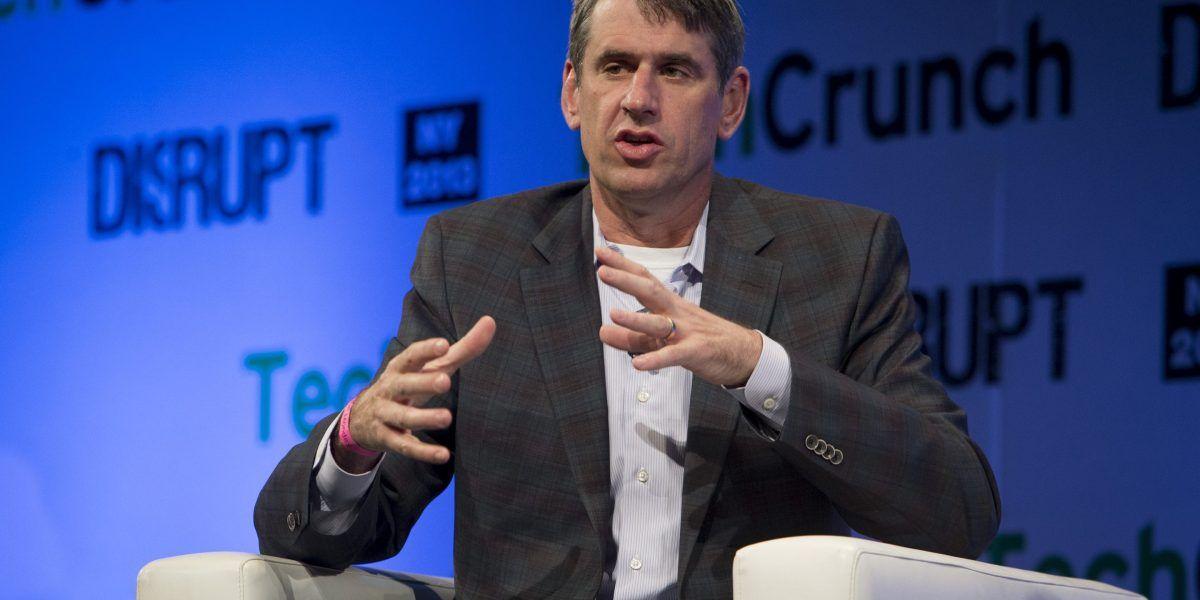
Source: Fortune
Human Skills Gain Value as Automation Handles Routine Tasks
As AI takes over repetitive, process-heavy tasks, human skills like critical thinking, empathy, communication, and human judgment are becoming more valuable, not less
2
. Wendy Walsh, talent and organization lead at Accenture, uses AI daily as "cognitive support" to explore ideas and challenge assumptions. "The biggest difference is that my time has shifted away from preparing information and towards interpreting it," Walsh noted4
.
Source: Silicon Republic
Accenture's Wharton-Accenture Skills Index reveals a "signaling gap" where execution-oriented skills—contextual judgment, validation, technical depth, and scientific fluency—are gaining importance alongside leadership and teamwork
5
. James Crowley, global products industry practices chair at Accenture, told CRN that "job titles will matter less and skills will matter more"5
.Adaptability and AI Literacy Become Non-Negotiable
Adaptability has emerged as the defining characteristic for workforce survival. "Every job is becoming an AI-enabled job," said Ryan Barton, chief innovation officer at New Charter Technologies
5
. Workers must demonstrate AI literacy and the ability to leverage technology as a productivity multiplier rather than viewing it as a threat. Nvidia leader Jensen Huang captured this shift bluntly: "You're not going to lose your job to an AI, but you're going to lose your job to someone who uses AI"3
.For professionals seeking to future-proof your career, continuous learning has become essential. The barrier to entry for AI skills is lower than many assume, with online learning, bootcamps, and practical experimentation providing pathways into areas like prompt engineering and workflow automation
2
. Industry knowledge combined with technical capability creates hybrid profiles that organizations increasingly value.Related Stories

Recruitment Processes Evolve Beyond Resume Screening
AI in recruitment is forcing both employers and candidates to adapt. Richard Corbridge, CIO at Segro, emphasizes that finding the right individual increasingly depends on personal fit discovered through face-to-face meetings. "When you're looking at prospective candidates to come in, you need to focus on how they fit, talk, and engage with the team," Corbridge explained
1
.Joel Hron, CTO at Thomson Reuters, looks for candidates who've demonstrated success across different contexts—from big tech companies to startups—and who can thoughtfully discuss their failures and learning processes
1
. Huy Dao, director of data and machine learning platform at Booking.com, noted that interview questions have evolved from general skills inquiries to involved case studies that assess whether candidates can leverage AI while understanding how solutions work beyond algorithmic outputs1
.Retraining and Upskilling Define the New Career Path
Retraining has become a mainstream response to structural change. In the UK, hiring of Gen Z workers in construction and trade roles rose 16.8% in the year to January 2026, creating what some call the "toolbelt generation" seeking AI-proof careers
2
. However, many professionals are taking a pragmatic approach by learning to work alongside automation rather than competing against it.Anthony Marino, chief administrative officer at Conduent, emphasizes that digital fluency and learning agility now define hiring criteria. "Everybody's going to have to be a self-paced learner," Marino stated. "That means every one of us has to reinvent ourselves"
5
. For workers unable to switch sectors, understanding AI's capabilities within their industry and becoming the most AI-aware person in their role provides job security, as Gurley advises: "You're going to then be the last person that they want to get rid of"3
.References
Summarized by

Navi
[2]
[4]
Related Stories
Economists Shift Stance on AI and Jobs as New Data Shows Early Signs of Workforce Disruption
02 Apr 2026•Business and Economy

Anthropic launches AI job destruction detector as white-collar workers face rising exposure
06 Mar 2026•Science and Research

AI's Impact on Entry-Level Jobs: Challenges and Opportunities for Gen Z
19 Jun 2025•Technology

Recent Highlights


Recent Highlights
Today's Top Stories





Your Daily Dose of Curated AI News
Don’t drown in AI news. We cut through the noise - filtering, ranking and summarizing the most important AI news, breakthroughs and research daily. Spend less time searching for the latest in AI and get straight to action.

