AI photo restoration tools are fabricating faces and erasing your family's real history


2 Sources
2 Sources
[1]
AI photo restoration is erasing your family's real history
My parents have discovered the wonders of ChatGPT, and have been gleefully using it for everything they can think of. I've had "the chat" with them about the reliability of LLMs, but like most people they do indulge in social media fads from time to time. Whether it's using ChatGPT to turn you into an action figure, or cartoonizing yourself, they're now well-versed in uploading photos to a chatbot as part of a prompt. Looking through their post history on Facebook recently, it seems the latest thing to do is give the AI some old family photos that are damaged, faded, or don't have much or any color, and ask it to "restore" the photo. The result is a shiny, modern-looking photo, but there's a big problem: that's not my mom and dad in the photos! Why AI photo restoration tools have exploded in popularity Grandma likes getting likes It's no surprise that using AI to "restore" a photo has become pretty popular. Photoshop is hard, and even with modern tools and a skilled artist it can take many hours to restore a photo. In contrast, the AI will spit out a new photo for you in seconds, ready to share online. Sites like Facebook, after all, trade on nostalgia, so posting shiny new versions of old photos is almost guaranteed to attract fawning likes and comments from your old classmates or extended family. Restoration vs. fabrication: Where the line actually is Just close enough to be weird There is, however, a huge issue here. Generative AI technologies don't "restore" anything; It's creating an entirely new photo using the original as an input. At first glance, and a lot of people will give it no more than that, it seems like the same photo. However, if you take a minute to examine the details, it's different in many subtle and not-so-subtle ways. Here's a historical family photo taken from the Library of Congress. To illustrate the problem, I've run it through ChatGPT with the prompt "Restore this photo to look like it was taken today." People who are doing this online are either using similar prompts, or they are using AI "restoration" tools that use a similar prompt internally, but hide it from the user. Take a good close look at the AI-generated image. Not only has the AI extended the frame to include details that were never there, it's also changed details like the poster on the wall. However, the most important issue here are the faces and poses of the people in the photo. It's like someone hired a bunch of lookalikes to sit for the same photo. These are not the same people! It can be hard to tell people apart that you don't know well, but when my dad posts a photo of himself that's been through the AI mill it's obviously (and disturbingly) not his face in the resulting image. What's even worse, when he posts photos of himself from before I was born, I can't tell which was his real face without putting the photos side-by-side, because I don't have the real-world memories of his face during that time. Adobe Photoshop Take your creativity to new places. Crop and expand images, adjust color, add and remove objects, and more with Photoshop on desktop, web, and mobile. Check plans at Adobe Expand Collapse Why the changes matter more than you think It's not just innocent fun The further back you go, the bigger the problem becomes. I never met my grandfathers in person, so photographs are the only evidence I have of what they looked like, or what my older family looked like when they were younger. These photos are a link to my personal family history. Now I see people all over the internet voluntarily replacing their family members with creepy doppelgängers in photos of places that didn't exist. If I were you, I'd destroy those AI images immediately and make safe, unaltered digital backup of my family photos on several long-term storage media. How to preserve authenticity while still improving old photos It takes effort, but it can be done When you hire a professional person to restore a photo, then, like an AI, that person can't recover information that's not present in the original photo. However, a trained restoration artist knows how to preserve a person's genuine features and won't alter anything in the image more than they have to. Subscribe for deeper coverage of AI photo restorations Explore how AI "restorations" can rewrite family images -- subscribe to the newsletter for focused coverage on photo authenticity, generative changes, and analysis of how to distinguish genuine photos from AI-generated versions. Get Updates By subscribing, you agree to receive newsletter and marketing emails, and accept our Terms of Use and Privacy Policy. You can unsubscribe anytime. Even when old photos are colorized, the color choices are informed through research to get as close to reality as possible. Your typical AI tool isn't even trying to do this. However, does that mean it's impossible to restore photos properly without the use of AI? Not quite. For example, in this guide by PIXimperfect you can see a workflow using a mix of traditional photo editing tools and tunable AI filters that let you keep the exact original facial features, and gives you a way to compare the results to the original photo to double-check that not a wrinkle or line is out of place. But, of course, most people will just take the easy route of clicking a button and seeing a new photo come out a few seconds later. Still, you have to ask yourself if it's worth potentially erasing the real faces and places that make up your family history, and perhaps making it so your own children will never know what their grandparents actually looked like. Personally, I don't think it is.
[2]
'Restoring' Old Photos With AI Is a Fundamentally Broken Concept
When I was in college, I had the opportunity to spend a semester abroad in Florence, Italy to study. There, I took a "Chemistry of Art" class that culminated in a visit to the Opificio delle Pietre Dure, where priceless works of art are on display. It is also where many are stored and maintained. The Opificio, as it was colloquially referred to, is not just a museum, but also a teaching facility that is directly tied to Florence's Ministry for Cultural and Environmental Heritage. As part of my class, we spent a day at the Opificio learning what the scientists did there as a practical example of the chemistry knowledge we spent a semester learning. As we were touring one of their laboratories, one of the scientists there said that they, and many others at the Opificio, had a strong distaste for the word "restoration" as it applies to art. While that is the most common way to refer to what they do, they as scientists and lovers of art did not think of what they did as restoration. To them, to restore was far too active of a verb. The idea of restoration carries with it the intrinsic connotation of adding or subtracting something. The word itself means to "bring back" or "reinstate." But if some part of a piece of artwork is lost to the point that it needs to be brought back, then that means someone in the present day would have to add what they believe is missing. At the very least, it means someone who is not the original artist has to put a hand on the work and adjust it. But how could they possibly do that and retain respect for what was there? The scientists argued they couldn't. They wouldn't. They much preferred to think of themselves as art conservationists. To conserve means to protect what is there, prevent further damage, and to honor it as it is. Take nothing away, add nothing back. This approach shows immense respect for the art, the artist, and the living history of the piece of work. It is why I think the idea of "restoring" old photos, as ON1 tried to showcase earlier this week, is a fundamentally broken concept. The problem is that for things like soft scans, where you are presumably trying to recover details, any restoration -- by hand or by AI -- is just adding those details. They aren't there, so they must be built and inserted. With AI's involvement, the results are only worsened. If a human cannot in good conscience restore a photo even with all of the burden of knowledge of that task, how can an unfeeling AI do anything close to a good job? It is a blunt instrument, brute forcing its way across visual history with not a single care for the damage its footfalls cause. That is why we're seeing such grotesque results and, even when they're believable (such as in the group photo example below), the identity of the people is greatly changed. After publication of our original story, ON1 emailed to apologize, saying that the team had inadvertently sent examples in the press kit that weren't meant to be in there. They further explained that the Restore AI tool was meant to be part of a broader workflow that the examples didn't include. I argue that doesn't matter, and that the fundamental problem here is due to the process, not the quality of the technology.
Share
Share
Copy Link
Popular AI photo restoration tools are creating entirely new images rather than preserving original photos, fundamentally altering the identity of the subjects. These AI-generated restorations replace family members with lookalike doppelgängers, raising concerns about photo authenticity and the preservation of family history as millions share these fabricated images on social media.
AI Photo Restoration Explodes on Social Media
AI photo restoration has surged in popularity as people discover they can transform damaged, faded family photos into pristine modern images within seconds
1
. Platforms like Facebook have become hubs for sharing these transformed images, with users posting AI-generated restorations that attract likes and comments from extended family and old classmates. The appeal is undeniable: while professional restoration requires skilled artists and many hours of work, AI tools deliver instant results ready for social media1
. Users simply upload photos to ChatGPT or dedicated AI tools, and the technology produces what appears to be a restored version of their cherished memories.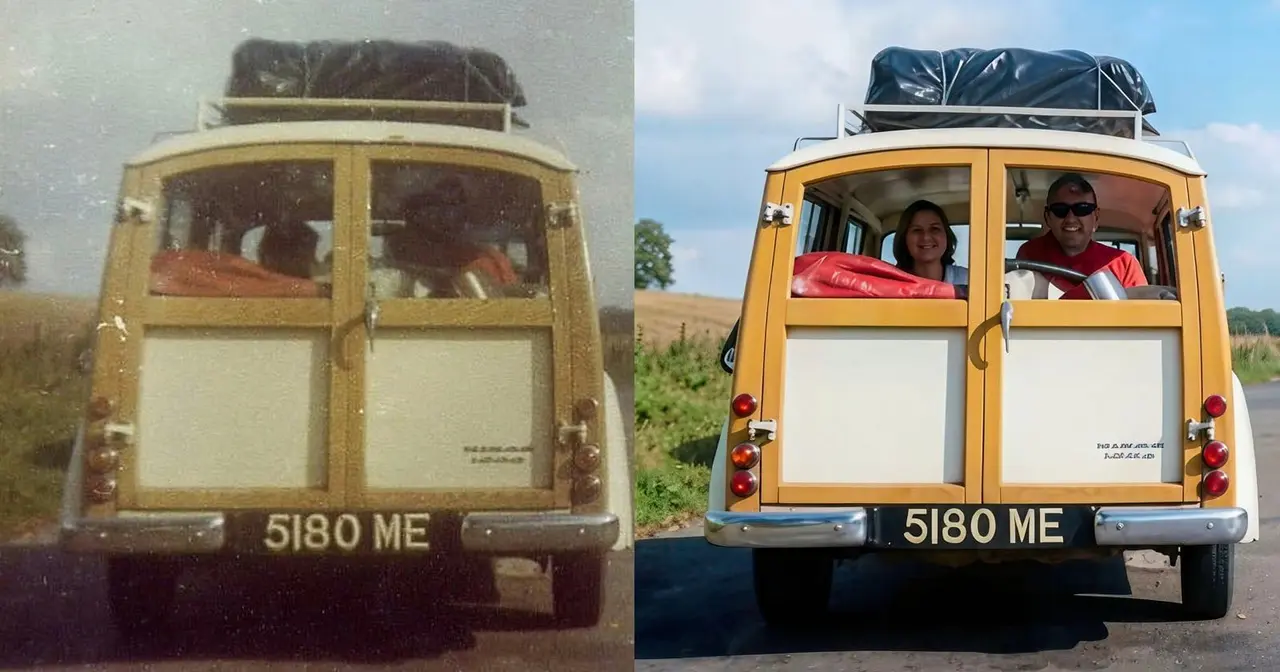
Source: PetaPixel
Restoration Versus Fabrication: The Critical Distinction
The fundamental problem with restoring old photos with AI lies in how the technology actually works. Generative AI doesn't restore anything—it creates entirely new images using the original as input
1
. At first glance, these AI-generated restorations appear similar to the original photos, but closer examination reveals numerous subtle and not-so-subtle changes. When a historical family photo from the Library of Congress was processed through ChatGPT with the prompt "Restore this photo to look like it was taken today," the AI extended the frame to include details that never existed and changed elements like posters on walls1
. Most critically, the technology can alter the identity of the subjects, transforming faces and poses so dramatically that family members become unrecognizable to those who knew them1
.
Source: How-To Geek
Why Photo Authenticity Matters for Family History
These inaccurate representations of original photos carry profound implications for preserving family history. For many people, photographs serve as the only tangible evidence of what deceased relatives looked like or how family members appeared in earlier decades
1
. When AI tools replace genuine faces with lookalike doppelgängers, they sever the authentic connection to personal history. One journalist noted that when his father posted AI-processed photos of himself, the resulting face was "obviously and disturbingly" not his real face1
. Even more troubling, photos from before the journalist was born became impossible to verify without side-by-side comparison, since he lacked real-world memories of his father's appearance during that period1
.Art Conservation Principles Expose the Fundamentally Broken Concept
The concept of AI photo restoration contradicts established principles of art conservation. Scientists at Florence's Opificio delle Pietre Dure, where priceless artworks are maintained, reject the term "restoration" because it implies adding or subtracting elements
2
. Art conservationists prefer to protect what exists, prevent further damage, and honor works as they are—taking nothing away and adding nothing back2
. This approach demonstrates respect for the artist and the living history of the work. When details are missing from soft scans, any restoration by hand or AI necessarily involves fabrication, inserting details that weren't captured2
. AI tools function as blunt instruments, forcing their way across visual history without regard for the damage caused2
.Related Stories

Professional Human Restoration Preserves Authenticity
Professional human restoration offers a fundamentally different approach that prioritizes authenticity over convenience. Trained restoration artists understand how to preserve genuine features and avoid altering images more than necessary
1
. When professionals colorize old photos, they make informed choices through research to approximate reality as closely as possible1
. Companies like Adobe offer photo editing tools that enable skilled work while maintaining control over the process. In contrast, AI tools like ON1 Restore AI don't attempt historical accuracy—they simply generate plausible-looking results2
. Even when AI-generated restorations appear believable, they significantly change the identity of people in photographs2
.What This Means for Your Family Photos
The trend of erasing family history through AI-generated restorations raises urgent questions about how we preserve personal heritage in the digital age. Experts recommend destroying AI-processed images immediately and creating safe, unaltered digital backups of family photos on multiple long-term storage media
1
. As these AI tools become more sophisticated and accessible, the risk grows that fabricated versions will replace original photos entirely, particularly as people share them widely driven by nostalgia on social media platforms1
. Watch for increased awareness campaigns about photo authenticity and potential regulatory discussions about labeling AI-generated content, as the technology's impact on historical accuracy becomes more widely recognized.References
Summarized by

Navi
[1]
Related Stories
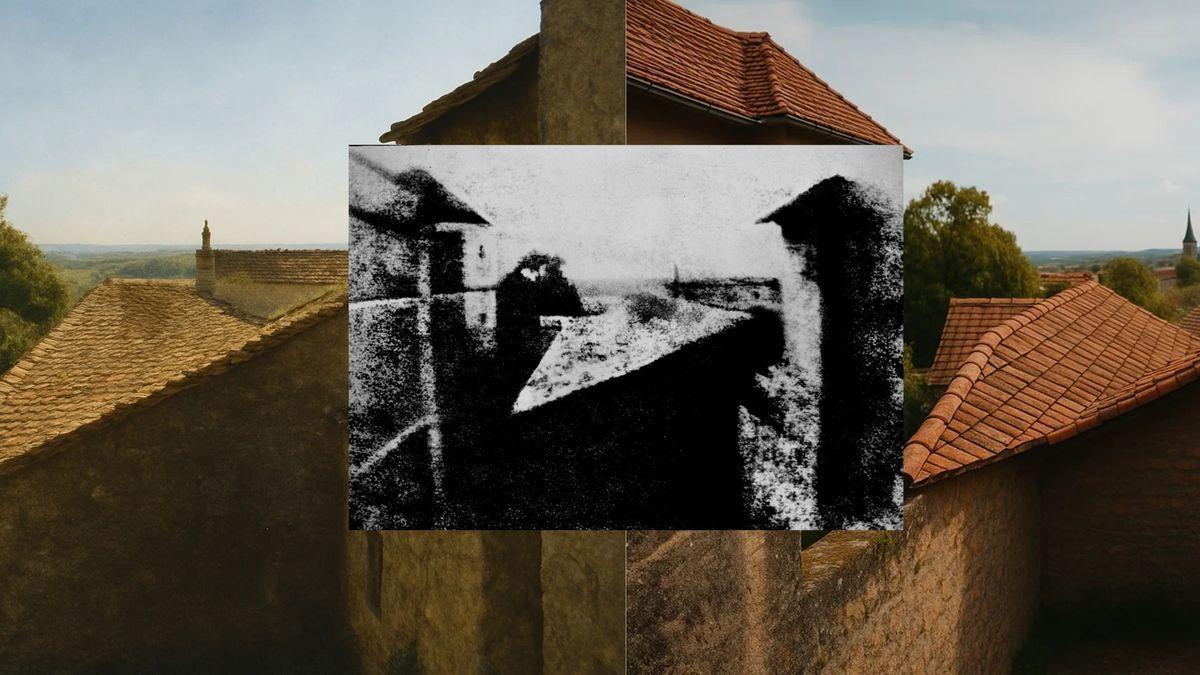
ChatGPT's Attempt to Restore World's Oldest Photograph Sparks Debate on AI Accuracy
17 Jun 2025•Technology
AI-Generated Historical Photos Raise Concerns Over Authenticity and Historical Accuracy
16 Oct 2024•Technology

Apple's Clean Up Feature: AI-Powered Photo Editing Raises Trust Concerns
11 Apr 2025•Technology

Recent Highlights
1
Apple Plans Major Siri AI Overhaul in iOS 27 With Third-Party Chatbot Integration
Technology

2
OpenAI shuts down Sora video app after six months, ending Disney's $1 billion investment deal
Technology

3
Pentagon formalizes Palantir's Maven AI as core military system with multi-year funding
Policy and Regulation
Recent Highlights
Today's Top Stories



Your Daily Dose of Curated AI News
Don’t drown in AI news. We cut through the noise - filtering, ranking and summarizing the most important AI news, breakthroughs and research daily. Spend less time searching for the latest in AI and get straight to action.

