6 Sources
6 Sources
[1]
AI's arrival complicates Big Tech climate goals, and some worry it's locking in more fossil fuels
Six years ago, Google was confident that by 2030 it would power all operations with electricity generated from clean sources, including wind and solar power, and remove as much pollution as it produced. Today it calls those goals a "moonshot." Microsoft says it's still aiming to remove more carbon than it creates by 2030 but now describes the effort as "a marathon, not a sprint." The race to deploy artificial intelligence is complicating tech companies' commitments to reduce greenhouse gas emissions, most of which come from the burning of gas, oil and coal and drive climate change. They say they must be flexible as they rush to build sprawling data centers that can consume more power than entire cities. "Even if they haven't officially revised their goals, they are starting to acknowledge that, 'Yeah, we're maybe not on track,'" said Patrick Huang, a senior analyst at Wood Mackenzie. Now, Huang said, the companies must use whatever kinds of power they can to stay competitive -- and increasingly that is natural gas, which is mostly methane, a planet-warming greenhouse gas. Tech companies bought record amounts of clean energy in 2024 and 2025, according to the Clean Energy Buyers Association. But their total emissions are going up. Over roughly the first five years of their climate commitments, for example, Google's emissions jumped nearly 50%. Amazon's rose by 33%, Microsoft's more than 23% and Meta's more than 60%. Data centers used about 4.6% of total U.S. electricity in 2024, a share that could nearly triple by 2028, according to government estimates. Some analysts predict nationwide electricity use to rise as much as 20% in the next decade, with data centers a big reason. Meanwhile, a backlog of proposed projects awaiting permission to connect to power grids and efforts by the Trump administration to sideline renewable energy may affect tech companies' climate goals -- and prolong reliance on fossil fuels, experts said. "Each of these alone could be real challenges," said Julie McNamara, associate policy director at Union of Concerned Scientists' Climate & Energy program. "Together, it's just creating a real near-term crunch on the system." Tech companies say they've made significant progress on emissions through energy-efficiency measures, buying renewable energy credits and power from sources that don't emit greenhouse gases and requiring suppliers to reduce their own emissions. Yet natural gas in 2024 accounted for more than 40% of electricity powering U.S. data centers, while coal supplied 30% globally, the International Energy Agency said. And the trend doesn't appear to be slowing. Utilities are planning natural gas plants around the country to help supply data centers, while some tech companies plan on-site gas plants built only to feed a data center. "Companies are scrambling to try to get as much power as they can as quickly as possible," said Lori Bird, director of the U.S. Energy Program at the World Resources Institute. "It's a mad rush and a lot of competition for resources." Microsoft President Brad Smith told The Associated Press that he is "confident in our ability" to meet the company's 2030 goal to remove more carbon dioxide from the atmosphere than it emits by investing in new sources of carbon-free energy, including nuclear, solar and hydropower. In Wisconsin, for example, two new natural gas plants to help power a Microsoft data center will be offset by investment in solar elsewhere in the state. Similarly, three natural gas plants will provide electricity to a massive Meta data center in rural Louisiana, while the company invests in solar elsewhere. Google says it's investing in wind, hydropower, battery storage and advanced nuclear, though it also relies on natural gas. The company plans to buy electricity from a natural gas plant to be built at the Archer Daniels Midland corn processing plant in Decatur, Illinois, where carbon dioxide emissions would be captured and stored underground. To help meet clean energy goals, tech companies count on such power purchase agreements and buying renewable energy certificates, a tradeable commodity that supports new and existing sources. But that could get more difficult under proposed changes to how greenhouse gases are reported, which would require that sources are in the same region as a company's data center and match hours of operation -- for example, solar credits could only be applied to daytime operating hours. Although some new gas plants will replace dirtier coal plants, it takes about 30 years to recover the investment. That means delaying the overall transition to clean and renewable energy at a time when the United Nations Environment Programme warns that high-emitting countries are unlikely to meet their own targets for reducing greenhouse gas emissions. AI is blamed in part for a 2.4% uptick in U.S. fossil fuel emissions last year, according to a study by the Rhodium Group, an independent research firm. And though other sectors of the economy also are electrifying, "it is only because of these data centers that these gas plants are being built," McNamara said. "There are no two ways about it." Getting enough electricity was challenging even before President Donald Trump took office last year and took aim at renewable energy. He's canceled grants and permits for solar and wind projects and tax breaks for renewable energy, which advocates say can be built less expensively and more quickly than natural gas or nuclear plants, while ordering that several coal-fired power plants slated for retirement keep running. Many companies set goals expecting federal tax credits would support wind and solar deployment, said Rich Powell, chief executive officer of the Clean Energy Buyers Association. But those were stripped away by the Republican-controlled Congress and Trump. Trump, who has called climate change a "hoax," has argued that green energy is unreliable and expensive and could harm national energy independence. Powell said his association has "been very, very clear with this Congress and this administration that all technology should be on a level playing field and that we're putting both energy affordability and energy reliability at risk if we don't do that." Josh Parker, sustainability chief for chipmaker Nvidia, said AI eventually will reduce electricity use because it's more efficient than traditional computing. He said curtailing energy development could cause the U.S. to fall behind on AI. "Our perspective is that we need an all-of-the-above approach to energy," he said. Tech companies would have been hard-pressed in 2020, when many set goals, to project current energy needs because much of the technology and equipment used to train machine-learning models -- which use most data-center electricity -- were just being introduced, said Jay Dietrich, who researches AI sustainability for the Uptime Institute and formerly led emissions goal-setting at IBM. By 2023, he said, tech companies "had a pretty good idea things were going to get a lot more exciting ... and that the numbers were going to grow quickly." He expects many will extend the timeline for emissions goals, based on a 2025 Uptime Institute survey that saw a 12% drop in the number of operators saying they'd meet a market-based 2030 carbon-neutral goal. However, even with increasing emissions, the largest companies should be able to afford enough renewable energy and offsets to meet carbon-neutral goals. McNamara said the surge in electricity demand from data centers turned a challenge into "an outright crisis." "Tech companies are allowing implicitly or explicitly an enormous increase in fossil fuel dependence under their watch and because of their actions," she said. ___ Associated Press writer Matt O'Brien contributed to this report. ___ The Associated Press' climate and environmental coverage receives financial support from multiple private foundations. AP is solely responsible for all content. Find AP's standards for working with philanthropies, a list of supporters and funded coverage areas at AP.org.
[2]
AI boom drives clash between grid power vs. energy "islands"
Why it matters: The debate is shaping power flows and multibillion-dollar investments, as data centers rival entire cities in their electricity demand. Driving the news: Chevron said this week it's working on a deal to build a natural gas plant dedicated to a Microsoft data center in Texas -- one of many signs that on-site power is gaining traction. * Roughly 30% of all planned data center power capacity is expected to be on site, according to a February report by Cleanview, a market intelligence firm -- up from almost nothing a year earlier. "A lot of people look at that 30% figure from our report and assume it will stop there," said Michael Thomas, founder of Cleanview. "But the trend line suggests to me that it could keep rising." * "I wouldn't be surprised if we see it rise to 50% of planned capacity," added Thomas. How it works: Companies building AI infrastructure say avoiding the grid -- at least initially -- can bypass years-long waits to connect to the grid, provide more control and avoid straining the electric system with massive new demand. Yes, but: Many in the power industry argue the opposite: that connecting to the grid ultimately lowers costs and improves reliability by spreading system costs across more customers and providing backup power. What they're saying: "For us, speed is the competitive currency," said Cully Cavness, president and co-founder of data center developer Crusoe, in an interview on the sidelines of the CERAWeek conference last week in Houston. "There are some aspects of islanding that are faster." Asked whether these data centers would eventually connect to the grid, Cavness said: * "I don't think you necessarily have to," Cavness said. "They can be engineered to operate for meaningful periods of times -- for years -- off grid until or unless the grid is ready and able to build that connection." Companies in the natural gas industry, which stand to benefit from this trend, see it similarly, arguing that islanding data centers could shield other electricity users. * "The secondary benefit is it doesn't hit the retail customers," said Rob Wingo, executive vice president of corporate strategic development at Williams, a major natural gas pipeline company, at an Axios dinner ahead of CERAWeek in Houston. "But it's also much faster." The other side: Others argue the opposite, that fully integrating data centers into the grid will lower costs and strengthen the system. "If we decouple the AI ecosystem from the electric grid ecosystem, I think everybody loses," said Varun Sivaram, founder of startup EmeraldAI, which aims to make data centers more flexible with their power usage. * "AI will become more expensive," said Sivaram, speaking at the same Axios dinner. "And the power sector will lose out on its largest and most lucrative potential anchor client, data centers." The intrigue: Not all tech companies are on board with the island approach. * "When you're building islands, you have to overbuild the system for the same amount of reliability," said Amanda Peterson Corio, Google's global head of data center energy, at another CERAWeek event, according to Latitude Media. Between the lines: The outcome will likely be less binary than the debate suggests. * A data center "could start as an island," said John Ketchum, CEO of NextEra Energy, one of the nation's largest power companies. "Most hyperscalers are going to want an extension cord between data centers and the grid. We should want that too." What we're watching: Federal regulators last year ordered the nation's largest grid operator to rewrite its rules for data centers pairing with power plants -- a move likely to influence policy nationwide as regulators now review those proposals. Reality check: Companies can move forward with their power "islands" regardless of policy. * "The biggest innovators in our country are the big companies that have all the capital and they need to get the generation that is necessary," Laura Swett, chairman of the Federal Energy Regulatory Commission, told Axios at a media briefing during CERAWeek. * "Whether or not they connect to the grid is a business decision, as far as I'm concerned," said Swett, whose agency oversees the nation's interstate power grid and gas systems. Mentioning the long waits to plug into the grid, Swett added that FERC is "doing whatever we can to try to solve that problem right now." The bottom line: Speed is winning.
[3]
Big tech was embracing clean energy and turning a corner on climate change. Then AI data centers arrived | Fortune
The race to deploy artificial intelligence is complicating tech companies' commitments to reduce greenhouse gas emissions, most of which come from the burning of gas, oil and coal and drive climate change. They say they must be flexible as they rush to build sprawling data centers that can consume more power than entire cities. "Even if they haven't officially revised their goals, they are starting to acknowledge that, 'Yeah, we're maybe not on track,'" said Patrick Huang, a senior analyst at Wood Mackenzie. Now, Huang said, the companies must use whatever kinds of power they can to stay competitive -- and increasingly that is natural gas, which is mostly methane, a planet-warming greenhouse gas. Tech companies bought record amounts of clean energy in 2024 and 2025, according to the Clean Energy Buyers Association. But total emissions have gone up over roughly the first five years of their climate commitments, according to companies' sustainability reports. Google's emissions jumped nearly 50%. Amazon's rose by 33%, Microsoft's more than 23% and Meta's more than 60%. Data centers used about 4.6% of total U.S. electricity in 2024, a share that could nearly triple by 2028, according to government estimates. Some analysts predict nationwide electricity use to rise as much as 20% in the next decade, with data centers a big reason. Meanwhile, a backlog of proposed projects awaiting permission to connect to power grids and efforts by the Trump administration to sideline renewable energy may affect tech companies' climate goals -- and prolong reliance on fossil fuels, experts said. "Each of these alone could be real challenges," said Julie McNamara, associate policy director at Union of Concerned Scientists' Climate & Energy program. "Together, it's just creating a real near-term crunch on the system." Tech companies say they've made significant progress on emissions through energy-efficiency measures, buying renewable energy credits and power from sources that don't emit greenhouse gases and requiring suppliers to reduce their own emissions. Yet natural gas in 2024 accounted for more than 40% of electricity powering U.S. data centers, while coal supplied 30% globally, the International Energy Agency said. And the trend doesn't appear to be slowing. Utilities are planning natural gas plants around the country to help supply data centers, while some tech companies plan on-site gas plants built only to feed a data center. "Companies are scrambling to try to get as much power as they can as quickly as possible," said Lori Bird, director of the U.S. Energy Program at the World Resources Institute. "It's a mad rush and a lot of competition for resources." Microsoft President Brad Smith told The Associated Press that he is "confident in our ability" to meet the company's 2030 goal to remove more carbon dioxide from the atmosphere than it emits by investing in new sources of carbon-free energy, including nuclear, solar and hydropower. In Wisconsin, for example, two new natural gas plants to help power a Microsoft data center will be offset by investment in solar elsewhere in the state. Similarly, three natural gas plants will provide electricity to a massive Meta data center in rural Louisiana, while the company invests in solar elsewhere. Google says it's investing in wind, hydropower, battery storage and advanced nuclear, though it also relies on natural gas. The company plans to buy electricity from a natural gas plant to be built at the Archer Daniels Midland corn processing plant in Decatur, Illinois, where carbon dioxide emissions would be captured and stored underground. To help meet clean energy goals, tech companies count on such power purchase agreements and buying renewable energy certificates, a tradeable commodity that supports new and existing sources. But that could get more difficult under proposed changes to how greenhouse gases are reported, which would require that sources are in the same region as a company's data center and match hours of operation -- for example, solar credits could only be applied to daytime operating hours. Although some new gas plants will replace dirtier coal plants, it takes about 30 years to recover the investment. That means delaying the overall transition to clean and renewable energy at a time when the United Nations Environment Programme warns that high-emitting countries are unlikely to meet their own targets for reducing greenhouse gas emissions. AI is blamed in part for a 2.4% uptick in U.S. fossil fuel emissions last year, according to a study by the Rhodium Group, an independent research firm. And though other sectors of the economy also are electrifying, "it is only because of these data centers that these gas plants are being built," McNamara said. "There are no two ways about it." Getting enough electricity was challenging even before President Donald Trump took office last year and took aim at renewable energy. He's canceled grants and permits for solar and wind projects and tax breaks for renewable energy, which advocates say can be built less expensively and more quickly than natural gas or nuclear plants, while ordering that several coal-fired power plants slated for retirement keep running. Many companies set goals expecting federal tax credits would support wind and solar deployment, said Rich Powell, chief executive officer of the Clean Energy Buyers Association. But those credits will end in July, after being eliminated by the Republican-controlled Congress and Trump. Trump, who has called climate change a "hoax," has argued that green energy is unreliable and expensive and could harm national energy independence. Powell said his association has "been very, very clear with this Congress and this administration that all technology should be on a level playing field and that we're putting both energy affordability and energy reliability at risk if we don't do that." Josh Parker, sustainability chief for chipmaker Nvidia, said AI eventually will reduce electricity use because it's more efficient than traditional computing. He said curtailing energy development could cause the U.S. to fall behind on AI. "Our perspective is that we need an all-of-the-above approach to energy," he said. Tech companies would have been hard-pressed in 2020, when many set goals, to project current energy needs because much of the technology and equipment used to train machine-learning models -- which use most data-center electricity -- were just being introduced, said Jay Dietrich, who researches AI sustainability for the Uptime Institute and formerly led emissions goal-setting at IBM. By 2023, he said, tech companies "had a pretty good idea things were going to get a lot more exciting ... and that the numbers were going to grow quickly." He expects many will extend the timeline for emissions goals, based on a 2025 Uptime Institute survey that saw a 12% drop in the number of operators saying they'd meet a market-based 2030 carbon-neutral goal. However, even with increasing emissions, the largest companies should be able to afford enough renewable energy and offsets to meet carbon-neutral goals. McNamara said the surge in electricity demand from data centers turned a challenge into "an outright crisis." "Tech companies are allowing implicitly or explicitly an enormous increase in fossil fuel dependence under their watch and because of their actions," she said. ___ Associated Press writer Matt O'Brien contributed to this report. ___ The Associated Press' climate and environmental coverage receives financial support from multiple private foundations. AP is solely responsible for all content. Find AP's standards for working with philanthropies, a list of supporters and funded coverage areas at AP.org.
[4]
At 'Davos of energy', AI looks to gas to power its rapid expansion
Houston (AFP) - Natural gas took center stage this week at the world's largest energy conference, as major market players discussed how to power the rise of artificial intelligence. In the halls of CERAWeek, where around 10,000 experts and executives converged, attendees debated the fastest way to feed the burgeoning technology's massive energy demands, despite carbon neutrality pledges. "Gas-fired power, for sure, is critical" to the development of artificial intelligence (AI), Laurent Ruseckas of S&P Global told AFP on the sidelines of the summit. Dozens of sessions were held addressing how the gas sector can help satisfy AI's insatiable thirst for electricity, or how AI-driven software can, in turn, help the sector optimize its production. The data centers on which AI -- and cloud technology more broadly -- rely consume vast amounts of electricity, which often has a large carbon footprint. Natural gas is already the third-largest energy source used by data centers globally, covering 26 percent of demand, according to International Energy Agency figures. Coal -- a fuel that emits the highest levels of greenhouse gases -- has the largest share, followed by renewable energy, according to the IEA. Since 2016, the United States has ramped up its natural gas production, and its Liquefied Natural Gas (LNG) exports have increased 30-fold in that period, according to the US Energy Information Administration (EIA). With US President Donald Trump throwing his weight behind fossil fuels -- often sidelining renewable energy -- that trend is only expected to deepen. This "surge in gas... is coincident and driven by the need to satisfy the growth in AI," said Eric Hanselman, an energy analyst at S&P Global. Charles Riedl, president of industry group the Center for Liquefied Natural Gas (CLNG), told AFP "the reliability and dispatch ability of gas is second to none." CLNG represents several US industry giants, including Cheniere Energy, Chevron, and ConocoPhillips. More than a third of US gas capacity directly powers data centers in the United States, according to a recent study by Global Energy Monitor, a think tank. - 'Not sustainable' - Some experts, however, remain skeptical about the long-term viability of this model. "Will gas play a role in the AI data center future? Yes. But I'm not so sure it's to the same degree as many predict," said Mark Brownstein, senior vice president of the Environmental Defense Fund. "My belief is that that kind of approach to project development is not sustainable," he added. The issue, he said, is that certain projects are "expensive to run," and "the pollution from them is also considerable." The primary component of natural gas is methane, which, when burned, releases CO2 -- the leading greenhouse gas responsible for global warming. Gas fields, LNG tankers, pipelines, and distribution lines also give rise to massive leaks of methane -- a gas with an even greater global warming potential than CO2. In West Virginia, a project to build a gas-fired power plant intended solely to supply a massive data center is facing opposition from many residents concerned about its health and environmental impacts. It is far from the only one. Tech giants had previously pledged to achieve carbon neutrality by 2030 or 2040. However, the explosive growth in demand for AI has led them to set these promises aside, according to S&P Global's Ruseckas. "That's gone out the window," he says. "Gas is the only quick way to get power quickly, which is what the data centers need." Another option on the table is nuclear power, which already accounts for 15 percent of global electricity consumption by data centers. The rapid growth of AI and its surging energy demand is "making nuclear really part of the solution set now," said Ho Nieh, chairman of the US Nuclear Regulatory Commission, at CERAWeek. Nuclear reactors take significantly longer to build than gas turbines, however. In January, tech giant Meta announced agreements with three US nuclear energy companies, making it one of the largest corporate buyers of such energy in the United States. The 6.6 gigawatts of power those plants would provide, however, is not expected to be fully online until 2035.
[5]
Google eyes natural gas as AI power demand rises
Why it matters: Google has earned a reputation for prioritizing clean energy in the rush to build data centers, but new findings from a market intelligence firm suggest it may also lean more on a fossil fuel. Driving the news: Google and Crusoe Energy are partnering to build a data center campus in North Texas called "Goodnight," powered largely by a massive on-site natural gas plant alongside a wind farm, according to permits, satellite images and other documents reviewed by Cleanview, a market intelligence platform. State of play: A Google representative confirmed to Michael Thomas, Cleanview's founder and report author, that it is partnering with Crusoe on the Texas data center. * But whether Google will buy power from the gas plant -- and if so, how much -- remains unresolved, according to the report. A Google spokeswoman told Axios it doesn't have a contract in place for the Texas gas plant and declined to comment on if or when it might. * In an interview last week with Axios about its overall strategy, a top Google executive pointed to the various clean-energy projects it's announced for its data center push, including geothermal, fusion, advanced nuclear reactors and batteries. * "I do think our public projects provide a good roadmap into how we're thinking about solving this challenge," Michael Terrell, Google's head of advanced energy, said in an interview last week on the sidelines of the CERAWeek energy conference in Houston. * When asked about where natural gas fits into the company's strategy, Terrell said: "We don't have anything to say on that." The big picture: The AI race is accelerating, with climate goals slipping further down the priority list as Big Tech companies scramble to secure power, Thomas said. * Microsoft just announced a gas-powered data center deal with Chevron, and Meta is planning seven natural gas plants for what would be the largest U.S. power facility. The intrigue: Google leads the tech industry in deploying clean energy for its AI ambitions, which may invite sharper scrutiny of its new consideration of natural gas. * "Many climate activists will see Google exploring natural gas as a sort of betrayal," said Thomas, whose report is one of the most comprehensive reviews of the tech giant's data center strategy to date. * "There's no doubt that it would be in tension with the company's stated 'moonshot' goal of becoming carbon-free by 2030," he added. "But it's also true that Google is voluntarily investing more in clean energy technology than almost any other entity -- public or private -- in the world." Reality check: Google is widely seen as the tech company doing the most to advance clean energy for data centers, both traditional renewable energy and also next-gen tech. * It's investing in fusion, advanced nuclear, geothermal, carbon capture on natural gas plants and energy storage -- and even working to restart a shuttered nuclear plant. What they're saying: Still, partners of Google say natural gas is the first choice today. * "It's the power source that is most scalable and available today," Cully Cavness, co-founder and president of Crusoe, said about natural gas in an interview last week at CERAWeek. * Cavness declined to comment on any natural gas projects with Google: "If we haven't announced it, we can't really comment." * A Crusoe spokesperson didn't return requests for additional comment. Between the lines: The AI boom is sharpening a core tension in the energy transition. * It's often framed as a shift from fossil fuels to clean energy. In practice, it's an addition: Clean energy is layered on top of an economy still heavily powered by fossil fuels. * Google is demonstrating that dynamic at a company scale. It's aggressively pursuing clean energy -- while also considering natural gas to meet surging demand. "It's not really the case that installing gas is displacing the others," Cavness said about clean energy sources. "It truly is all of the above that is required and maybe not even sufficient for the foreseeable future." How it works: Natural gas burns more cleanly than coal, but it still emits greenhouse gases and contributes to local air pollution. * That tension is now colliding with AI's surging power demand, reviving debate over how much gas should underpin the next wave of data centers. By the numbers: The Goodnight campus could cost nearly $30 billion, according to Cleanview. * The gas plant would approach one gigawatt (roughly the power demand of a mid-sized city) and emit about 4.5 million tons of carbon dioxide annually, more than many major U.S. cities, according to Cleanview. * The project also has a wind farm with a capacity of 265 megawatts, and space dedicated to battery storage that Cleanview estimates could reach one gigawatt. Yes, but: Google cut its data center energy emissions 12% in 2024 from the prior year -- even as its power consumption rose 27%, according to its latest environmental report released in June. The bottom line: Google's climate goals -- and a warming planet -- will be increasingly tested by the AI boom and a growing reliance on natural gas.
[6]
AI's arrival complicates Big Tech climate goals, and some worry it's locking in more fossil fuels - The Economic Times
Six years ago, Google was confident that by 2030 it would power all operations with electricity generated from clean sources, including wind and solar power, and remove as much pollution as it produced. Today it calls those goals a "moonshot." Microsoft says it's still aiming to remove more carbon than it creates by 2030 but now describes the effort as "a marathon, not a sprint." The race to deploy artificial intelligence is complicating tech companies' commitments to reduce greenhouse gas emissions, most of which come from the burning of gas, oil and coal and drive climate change. They say they must be flexible as they rush to build sprawling data centers that can consume more power than entire cities. "Even if they haven't officially revised their goals, they are starting to acknowledge that, 'Yeah, we're maybe not on track,'" said Patrick Huang, a senior analyst at Wood Mackenzie. Now, Huang said, the companies must use whatever kinds of power they can to stay competitive - and increasingly that is natural gas, which is mostly methane, a planet-warming greenhouse gas. Tech companies bought record amounts of clean energy in 2024 and 2025, according to the Clean Energy Buyers Association. But total emissions have gone up over roughly the first five years of their climate commitments, according to companies' sustainability reports. Google's emissions jumped nearly 50%. Amazon's rose by 33%, Microsoft's more than 23% and Meta's more than 60%. Data centers used about 4.6% of total U.S. electricity in 2024, a share that could nearly triple by 2028, according to government estimates. Some analysts predict nationwide electricity use to rise as much as 20% in the next decade, with data centers a big reason. Meanwhile, a backlog of proposed projects awaiting permission to connect to power grids and efforts by the Trump administration to sideline renewable energy may affect tech companies' climate goals - and prolong reliance on fossil fuels, experts said. "Each of these alone could be real challenges," said Julie McNamara, associate policy director at Union of Concerned Scientists' Climate & Energy program. "Together, it's just creating a real near-term crunch on the system." Natural gas use spikes as AI soars Tech companies say they've made significant progress on emissions through energy-efficiency measures, buying renewable energy credits and power from sources that don't emit greenhouse gases and requiring suppliers to reduce their own emissions. Yet natural gas in 2024 accounted for more than 40% of electricity powering U.S. data centers, while coal supplied 30% globally, the International Energy Agency said. And the trend doesn't appear to be slowing. Utilities are planning natural gas plants around the country to help supply data centers, while some tech companies plan on-site gas plants built only to feed a data center. "Companies are scrambling to try to get as much power as they can as quickly as possible," said Lori Bird, director of the U.S. Energy Program at the World Resources Institute. "It's a mad rush and a lot of competition for resources." Microsoft President Brad Smith told The Associated Press that he is "confident in our ability" to meet the company's 2030 goal to remove more carbon dioxide from the atmosphere than it emits by investing in new sources of carbon-free energy, including nuclear, solar and hydropower. In Wisconsin, for example, two new natural gas plants to help power a Microsoft data center will be offset by investment in solar elsewhere in the state. Similarly, three natural gas plants will provide electricity to a massive Meta data center in rural Louisiana, while the company invests in solar elsewhere. Google says it's investing in wind, hydropower, battery storage and advanced nuclear, though it also relies on natural gas. The company plans to buy electricity from a natural gas plant to be built at the Archer Daniels Midland corn processing plant in Decatur, Illinois, where carbon dioxide emissions would be captured and stored underground. To help meet clean energy goals, tech companies count on such power purchase agreements and buying renewable energy certificates, a tradeable commodity that supports new and existing sources. But that could get more difficult under proposed changes to how greenhouse gases are reported, which would require that sources are in the same region as a company's data center and match hours of operation - for example, solar credits could only be applied to daytime operating hours. Although some new gas plants will replace dirtier coal plants, it takes about 30 years to recover the investment. That means delaying the overall transition to clean and renewable energy at a time when the United Nations Environment Programme warns that high-emitting countries are unlikely to meet their own targets for reducing greenhouse gas emissions. AI is blamed in part for a 2.4% uptick in U.S. fossil fuel emissions last year, according to a study by the Rhodium Group, an independent research firm. And though other sectors of the economy also are electrifying, "it is only because of these data centers that these gas plants are being built," McNamara said. "There are no two ways about it." Trump war on renewables complicates tech goals Getting enough electricity was challenging even before President Donald Trump took office last year and took aim at renewable energy. He's canceled grants and permits for solar and wind projects and tax breaks for renewable energy, which advocates say can be built less expensively and more quickly than natural gas or nuclear plants, while ordering that several coal-fired power plants slated for retirement keep running. Many companies set goals expecting federal tax credits would support wind and solar deployment, said Rich Powell, chief executive officer of the Clean Energy Buyers Association. But those credits will end in July, after being eliminated by the Republican-controlled Congress and Trump. Trump, who has called climate change a "hoax," has argued that green energy is unreliable and expensive and could harm national energy independence. Powell said his association has "been very, very clear with this Congress and this administration that all technology should be on a level playing field and that we're putting both energy affordability and energy reliability at risk if we don't do that." Josh Parker, sustainability chief for chipmaker Nvidia, said AI eventually will reduce electricity use because it's more efficient than traditional computing. He said curtailing energy development could cause the U.S. to fall behind on AI. "Our perspective is that we need an all-of-the-above approach to energy," he said. Tech companies would have been hard-pressed in 2020, when many set goals, to project current energy needs because much of the technology and equipment used to train machine-learning models - which use most data-center electricity - were just being introduced, said Jay Dietrich, who researches AI sustainability for the Uptime Institute and formerly led emissions goal-setting at IBM. By 2023, he said, tech companies "had a pretty good idea things were going to get a lot more exciting ... and that the numbers were going to grow quickly." He expects many will extend the timeline for emissions goals, based on a 2025 Uptime Institute survey that saw a 12% drop in the number of operators saying they'd meet a market-based 2030 carbon-neutral goal. However, even with increasing emissions, the largest companies should be able to afford enough renewable energy and offsets to meet carbon-neutral goals. McNamara said the surge in electricity demand from data centers turned a challenge into "an outright crisis." "Tech companies are allowing implicitly or explicitly an enormous increase in fossil fuel dependence under their watch and because of their actions," she said.
Share
Share
Copy Link
Major tech companies are increasingly turning to natural gas to power AI infrastructure, undermining their carbon neutrality pledges. Google's emissions jumped 50%, while Microsoft and Meta are building on-site gas plants to meet surging power demands. The shift highlights a stark tension between AI ambitions and environmental goals.
The race to build AI infrastructure is forcing major technology companies to reconsider their environmental commitments, with natural gas emerging as the fuel of choice despite previous pledges to achieve carbon neutrality. Google's greenhouse gas emissions have jumped nearly 50% over roughly the first five years of its climate commitments, while Amazon's rose 33%, Microsoft's climbed more than 23%, and Meta's surged over 60%
1
. These increases come even as tech companies bought record amounts of clean energy in 2024 and 2025, according to the Clean Energy Buyers Association1
.
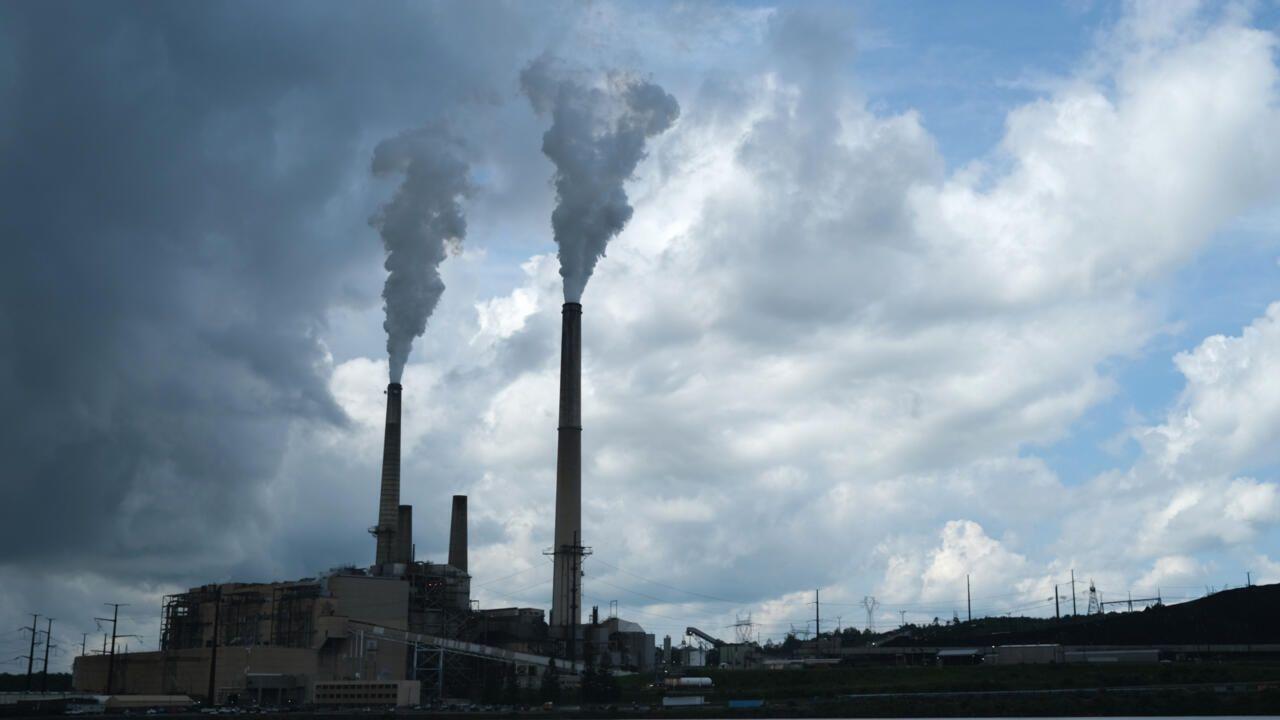
Source: France 24
Data centers used about 4.6% of total U.S. electricity in 2024, a share that could nearly triple by 2028, according to government estimates
1
. Some analysts predict nationwide electricity demand to rise as much as 20% in the next decade, with AI data centers a primary driver3
. "Even if they haven't officially revised their goals, they are starting to acknowledge that, 'Yeah, we're maybe not on track,'" said Patrick Huang, a senior analyst at Wood Mackenzie1
.Natural gas in 2024 accounted for more than 40% of electricity powering U.S. data centers, while coal supplied 30% globally, the International Energy Agency reported
1
. The trend toward fossil fuels appears to be accelerating rather than slowing. Utilities are planning natural gas plants around the country to help supply data centers, while some tech companies are building on-site power plants dedicated exclusively to feeding individual facilities3
."Companies are scrambling to try to get as much power as they can as quickly as possible," said Lori Bird, director of the U.S. Energy Program at the World Resources Institute. "It's a mad rush and a lot of competition for resources"
1
. Chevron announced this week it's working on a deal to build a natural gas plant dedicated to a Microsoft data center in Texas, exemplifying the growing trend toward on-site power generation2
.Roughly 30% of all planned data center power capacity is expected to be on-site, according to a February report by Cleanview, a market intelligence firm—up from almost nothing a year earlier
2
. "I wouldn't be surprised if we see it rise to 50% of planned capacity," said Michael Thomas, founder of Cleanview2
. Companies building AI infrastructure say avoiding power grids—at least initially—can bypass years-long waits to connect, provide more control, and avoid straining the electric system with massive new demand2
.
Source: AP
"For us, speed is the competitive currency," said Cully Cavness, president and co-founder of data center developer Crusoe, speaking at the CERAWeek conference in Houston. "There are some aspects of islanding that are faster"
2
. However, critics argue that energy islands ultimately increase costs and reduce reliability compared to grid integration. "If we decouple the AI ecosystem from the electric grid ecosystem, I think everybody loses," said Varun Sivaram, founder of startup EmeraldAI2
.Related Stories
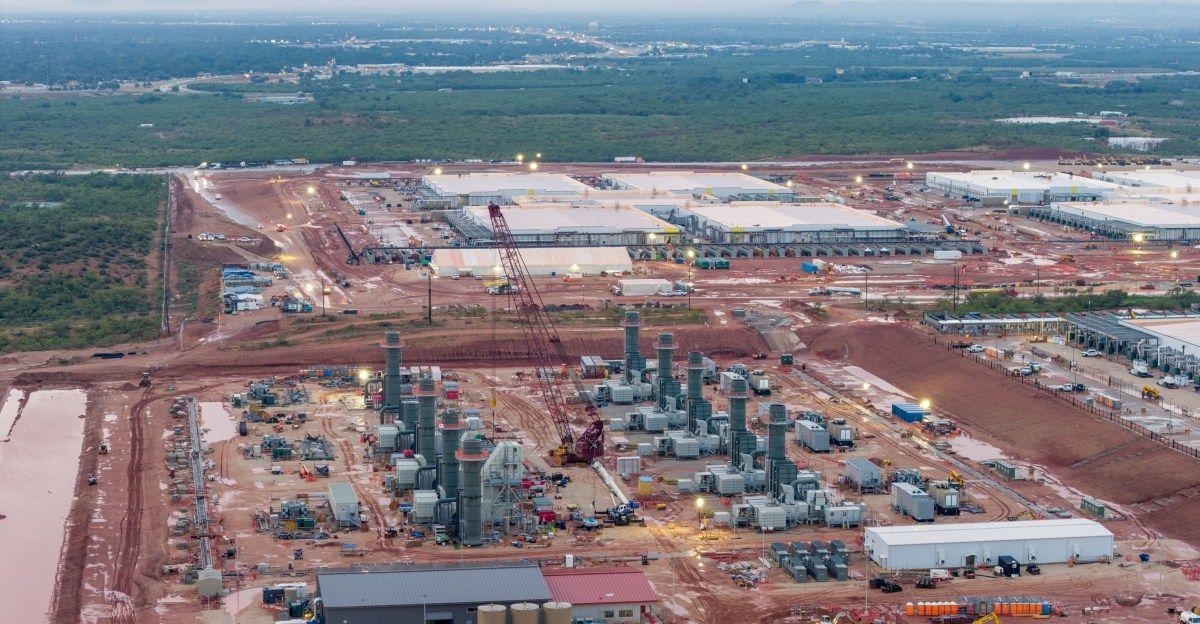
Google and Crusoe Energy are partnering to build a data center campus in North Texas called "Goodnight," powered largely by a massive on-site natural gas plant alongside a wind farm, according to permits and documents reviewed by Cleanview
5
. The gas plant would approach one gigawatt and emit about 4.5 million tons of carbon dioxide annually, more than many major U.S. cities. The project could cost nearly $30 billion5
.
Source: Axios
The development marks a potential shift for Google, which has earned a reputation for prioritizing renewable energy and investing in next-generation technologies including fusion, advanced nuclear reactors, geothermal, and batteries
5
. "Many climate activists will see Google exploring natural gas as a sort of betrayal," said Thomas. "There's no doubt that it would be in tension with the company's stated 'moonshot' goal of becoming carbon-free by 2030"5
.The shift toward natural gas—which is mostly methane, a planet-warming greenhouse gas—threatens to lock in reliance on fossil fuels for decades. Although some new gas plants will replace dirtier coal plants, it takes about 30 years to recover the investment, delaying the overall transition to clean and renewable energy
1
. AI is blamed in part for a 2.4% uptick in U.S. fossil fuel emissions last year, according to a study by the Rhodium Group3
."Gas-fired power, for sure, is critical" to the development of artificial intelligence, Laurent Ruseckas of S&P Global told AFP at CERAWeek
4
. Natural gas is already the third-largest energy source used by data centers globally, covering 26% of demand, with a carbon footprint that contributes significantly to climate change4
. A backlog of proposed projects awaiting permission to connect to power grids and efforts by the Trump administration to sideline renewable energy may further prolong dependence on fossil fuels1
.Microsoft President Brad Smith told The Associated Press that he remains "confident in our ability" to meet the company's 2030 goal to remove more carbon dioxide from the atmosphere than it emits by investing in nuclear, solar and hydropower
1
. However, Microsoft is simultaneously building two new natural gas plants in Wisconsin to help power a data center, while Meta plans three natural gas plants for a massive data center in rural Louisiana3
. Both companies say they will offset these facilities with solar investments elsewhere, though such arrangements raise questions about the effectiveness of clean energy commitments when electricity demand continues to climb.Summarized by
Navi
[1]
29 Jan 2026•Business and Economy

10 Nov 2025•Business and Economy

11 Apr 2025•Technology

1
Policy and Regulation

2
Technology

3
Policy and Regulation