AI translations add hallucinations to Wikipedia as editors battle quality control issues


2 Sources
2 Sources
[1]
Wikipedia has an 'AI' translation problem
Despite these problems, Wikipedia continues using AI translations for diverse language content while enforcing translator bans after five documented errors. Large language models, called "AI" in marketing terms, sometimes make shit up. It's a problem that anyone recognizes if they use one for even a little while -- and it's not just basic information they get wrong. Wikipedia is wrestling with just one such example as it's finding "hallucinations" in LLM-translated articles. The start of this story is positive and altruistic: a third-party, non-profit organization called the Open Knowledge Association (OKA) is paying a stipend to people who translate Wikipedia articles into other languages. Problems come from relying on large language models like Google Gemini and ChatGPT to perform the translations without human review. According to a report from 404 Media, Wikipedia editors performing routine reviews of the translated articles found basic informational mistakes that weren't in the articles of the original language, and citations that were missing, swapped, or for book pages that had nothing to do with the subject. (LLMs are particularly bad at documentation, as many lawyers have discovered to their detriment.) Previously, the system used Grok -- Elon Musk's LLM that's plugged into eX-Twitter and known for producing mass quantities of non-consensual sexual material -- but OKA has reportedly changed its policy. Wikipedia writers are almost entirely unpaid. A person can edit Wikipedia as part of their broad job, such as a PR agent, but those edits require disclosure and are subject to additional scrutiny. Adding a commercial element to large-scale edits, even in the cause of translation, may be incentivizing the workers paid by the Open Knowledge Association to go fast and make mistakes. OKA pays its workers about $400 a month for full-time translation. That's not much, but it goes a lot further in the Global South, where many of the translators live. Despite Wikipedia's broad policy against LLM-generated articles, Wikipedia editors have decided to keep using OKA's services. Since the English Wikipedia is still twice as big as the next-largest language (not counting the Cebuano Wikipedia, which seems to be almost entirely bot-generated), and languages with fewer speakers are often poorly served, translations for important articles are desperately needed. But OKA's translators are getting much harsher editorial practices than regular users: after five documented errors, an OKA translator can be banned, and their previous translations can be wiped unless a more senior editor takes ownership.
[2]
AI Translations Are Adding 'Hallucinations' to Wikipedia Articles
AI translated articles swapped sources or added unsourced sentences with no explanation, while others added paragraphs sourced from completely unrelated material. Wikipedia editors have implemented new policies and restricted a number of contributors who were paid to use AI to translate existing Wikipedia articles into other languages after they discovered these AI translations added AI "hallucinations," or errors, to the resulting article. The new restrictions show how Wikipedia editors continue to fight the flood of generative AI across the internet from diminishing the reliability of the world's largest repository of knowledge. The incident also reveals how even well-intentioned efforts to expand Wikipedia are prone to errors when they rely on generative AI, and how they're remedied by Wikipedia's open governance model. The issue in this case starts with an organization called the Open Knowledge Association (OKA), a non-profit organization dedicated to improving Wikipedia and other open platforms. "We do so by providing monthly stipends to full-time contributors and translators," OKA's site says. "We leverage AI (Large Language Models) to automate most of the work." The problem is that editors started to notice that some of these translations introduced errors to articles. For example, a draft translation for a Wikipedia article about the French royal La Bourdonnaye family cites a book and specific page number when discussing the origin of the family. A Wikipedia editor, Ilyas Lebleu, who goes by Chaotic Enby on Wikipedia, checked that source and found that the specific page of that book "doesn't talk about the La Bourdonnaye family at all." "To measure the rate of error, I actually decided to do a spot-check, during the discussion, of the first few translations that were listed, and already spotted a few errors there, so it isn't just a matter of cherry-picked cases," Lebleu told me. "Some of the articles had swapped sources or added unsourced sentences with no explanation, while 1879 French Senate election added paragraphs sourced from material completely unrelated to what was written!" As Wikipedia editors looked at more OKA-translated articles, they found more issues. "Many of the results are very problematic, with a large number of [...] editors who clearly have very poor English, don't read through their work (or are incapable of seeing problems) and don't add links and so on," a Wikipedia page discussing the OKA translation said. The same Wikipedia page also notes that in some cases the copy/paste nature of OKA translators' work breaks the formatting on some articles. Wikipedia editors investigated how OKA was operating and found that it was mostly relying on cheap labor from contractors in the Global South, and that these contractors were instructed to copy/paste articles to popular LLMs to produce translations. For example, a public spreadsheet used by OKA translators to keep track of what articles they're translating instructs them to "pick an article, copy the lead section into Gemini or chatGPT, then review if some of the suggestions are an improvement to readability. Make edits to the Wiki articles only if the suggestions are an improvement and don't change the meaning of the lead. Do not change the content unless you have checked that what Gemini says is correct!" Lebleu told me, and other editors have noted in their public on-site discussion of the issue, that these same instructions previously told OKA translators to use Grok, Elon Musk's LLM, for the same purpose. Grok, which also produces an entirely automated alternative to Wikipedia called Grokepedia, is prone to errors precisely because it does not use humans to vet its output. "The use of Grok proved controversial, notably given the reasons for which Grok has been in the news recently, and a recent in-house study showed ChatGPT and Claude perform more accurately, leading them to switch a few days ago, although they still recommend Grok as 'valuable for experienced editors handling complex, template-heavy articles,'" Lebleu told me. Ultimately the editors decided to implement restrictions against OKA translators who make multiple errors, but not block OKA translation as a rule. "OKA translators who have received, within six months, four (correctly applied) warnings about content that fails verification will be blocked without further warning if another example is found," the Wikipedia editors wrote. "Content added by an OKA translator who is subsequently blocked for failing verification may be presumptively deleted [...] unless an editor in good standing is willing to take responsibility for it." A job posting for a "Wikipedia Translator" from OKA offers $397 a month for working up to 40 hours per week. The job listing says translators are expected to publish "5-20 articles per week (depending on size)." "They leverage machine translation to accelerate the process. We have published over 1500 articles and the number grows every day," the job posting says. "Given this precarious status, I am worried that more uncertainty in the translator duties may lead to an overloading of responsibilities, which is worrying as independent contractors do not necessarily have the same protections as paid employees," Lebleu wrote in the public Wikipedia discussion about OKA. Jonathan Zimmermann, the founder and president of OKA, and who goes by 7804j on Wikipedia, told me that translators are paid hourly, not per article, and that there is no fixed article quota. "We emphasize quality over speed," Zimmerman told me in an email. "In fact, some of the problematic cases involved unusually high output relative to time spent -- which in retrospect was a warning sign. Those cases were driven by individual enthusiasm and speed rather than institutional pressure." Zimmerman told me that "errors absolutely do occur," but that OKA's process includes human review, requires translators to check their content against cited sources, and that "senior editors periodically review samples, especially from newer translators." "Following the recent discussion, we have strengthened our safeguards," Zimmerman told me. "We are now rolling out a second, independent LLM review step. Translators must run the completed draft through a separate model using a dedicated comparison prompt designed to identify potential discrepancies, omissions, or inaccuracies relative to the source text. Initial findings suggest this is highly effective at detecting potential issues." Zimmerman added that if this method proves insufficient, OKA is considering introducing formal peer review mechanisms Using AI to check the output of AI for errors is a method that is historically prone to errors. For example, we recently reported on an AI-powered private school that used AI to check AI-generated questions for students. Internal testing found it had at least a 10 percent failure rate. "I agree that using AI to check AI can absolutely fail -- and in some contexts it can fail at very high rates. We're not assuming the secondary model is reliable in isolation," Zimmerman said. "The key point is that we're not replacing human verification with automated verification. The second model is a complement to manual review, not a substitute for it." "When a coordinated project uses AI tools and operates at scale, it's going to attract attention. I understand why editors would examine that closely. Ultimately, the outcome of the discussion formalized expectations that are largely aligned with our existing internal policies," Zimmerman added. "However, these restrictions apply specifically to OKA translators. I would prefer that standards apply equally to everyone, but I also recognize that organized, funded efforts are often held to a higher bar."
Share
Share
Copy Link
Wikipedia editors discovered AI-powered translations are introducing hallucinations and factual errors into articles. The Open Knowledge Association pays contractors $400 monthly to translate content using tools like ChatGPT and Gemini, but editors found incorrect citations and unsourced claims. Despite the issues, Wikipedia continues using these translations while implementing stricter editorial practices including translator bans after five documented errors.
Wikipedia Confronts AI Translations Quality Crisis
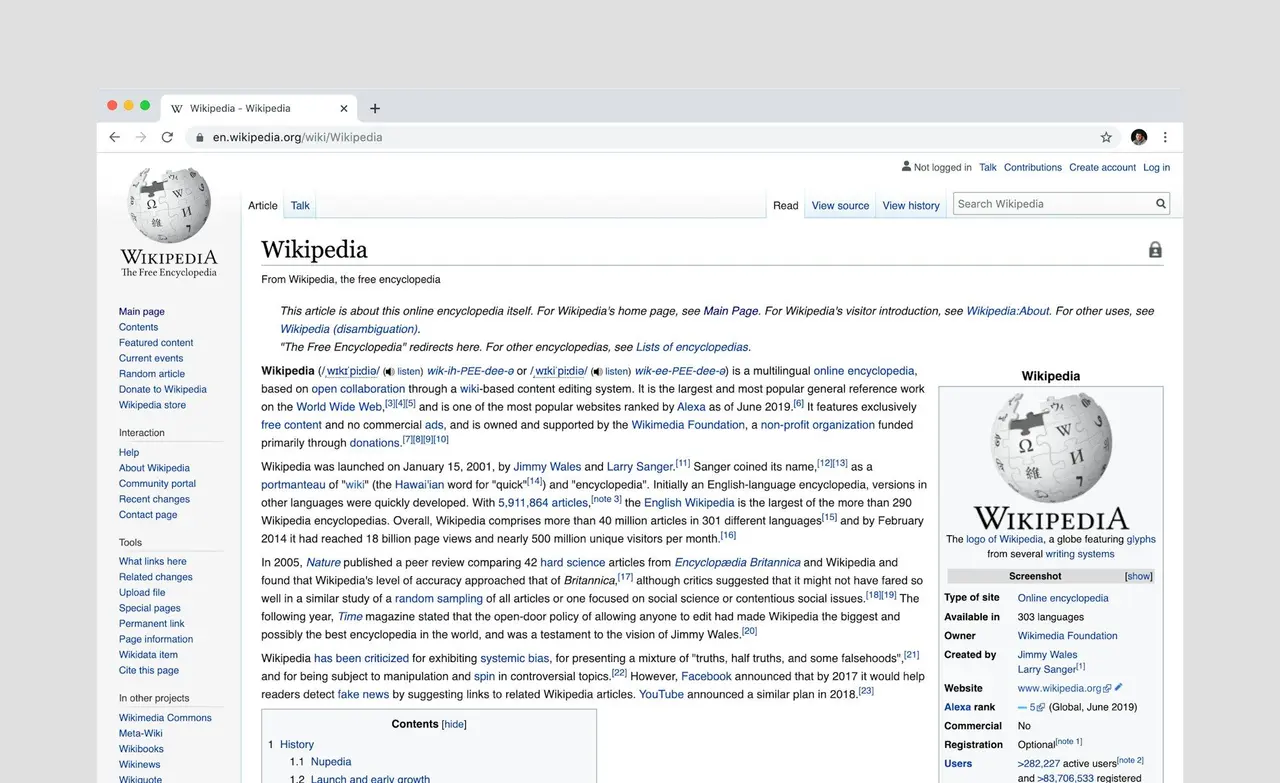
Wikipedia is grappling with a growing problem as AI translations introduce hallucinations and factual errors into its multilingual content. The issue centers on the Open Knowledge Association (OKA), a third-party non-profit that pays stipends to translators who use Large Language Models like Google Gemini and ChatGPT to convert Wikipedia articles into other languages without adequate human oversight
1
2
.
Source: 404 Media
Wikipedia editors performing routine reviews discovered basic informational mistakes that weren't present in the original language articles. The problems extended beyond simple translation errors to include incorrect citations, swapped sources, and references to book pages completely unrelated to the subject matter
1
. In one documented case, a draft translation about the French royal La Bourdonnaye family cited a specific book page that "doesn't talk about the La Bourdonnaye family at all," according to Wikipedia editor Ilyas Lebleu2
.How AI-Powered Translations Operate at Scale
OKA's approach to integrating AI translation tools relies heavily on cheap labor from contractors in the Global South, paying approximately $400 per month for full-time translation work. A job posting for "Wikipedia Translator" positions offers $397 monthly for up to 40 hours per week, expecting translators to publish 5-20 articles weekly depending on size
2
.Public spreadsheets used by OKA translators reveal their workflow: "pick an article, copy the lead section into Gemini or chatGPT, then review if some of the suggestions are an improvement to readability." The instructions warn translators to "make edits to the Wiki articles only if the suggestions are an improvement and don't change the meaning"
2
. Previously, these same instructions directed translators to use Grok, Elon Musk's LLM known for producing problematic content, though OKA has since switched to ChatGPT and Claude after internal studies showed better accuracy2
.Citation Errors and LLM-Generated Content Failures
Lebleu conducted spot-checks of early translations and found that "some of the articles had swapped sources or added unsourced sentences with no explanation, while 1879 French Senate election added paragraphs sourced from material completely unrelated to what was written"
2
. This pattern reveals a fundamental weakness in LLM-generated content: the models are particularly poor at documentation and maintaining informational accuracy, a problem many lawyers have discovered when relying on generative AI1
.The copy-paste nature of OKA translators' work also breaks formatting on some articles, and many results show evidence of translators with "very poor English" who "don't read through their work (or are incapable of seeing problems) and don't add links"
2
.Related Stories

Stricter Editorial Practices and Wikipedia's Governance Response
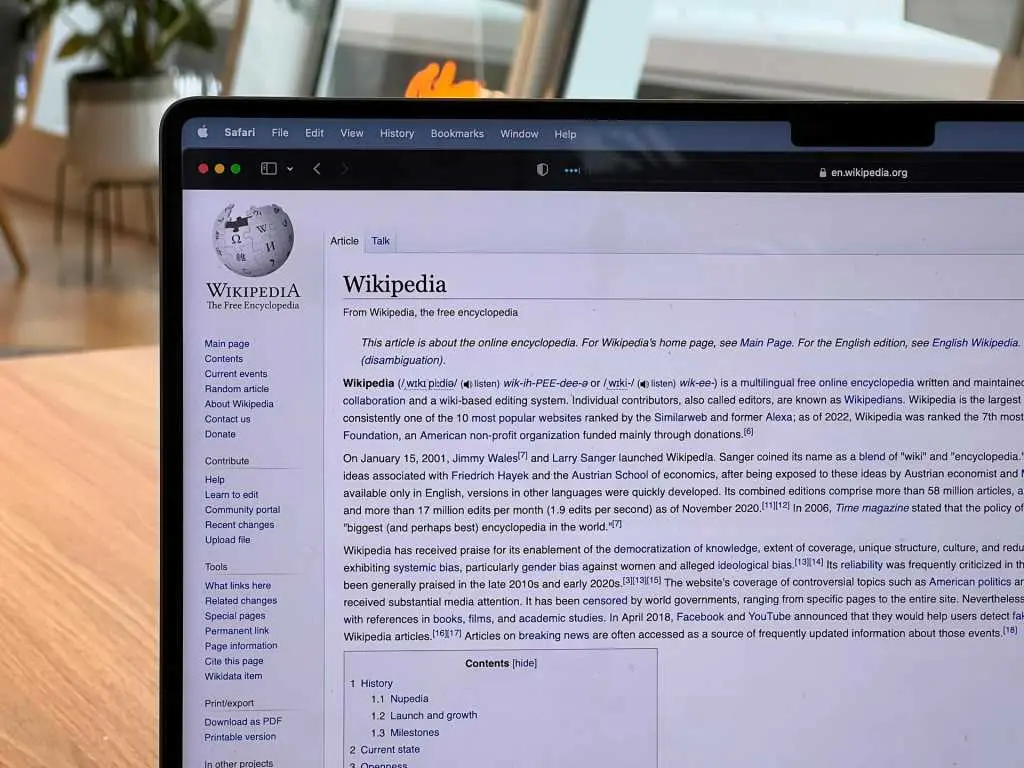
Despite Wikipedia's broad policy against LLM-generated articles, Wikipedia editors decided to continue using OKA's services rather than implement a complete ban. The decision reflects a practical reality: English Wikipedia remains twice as large as the next-largest language edition, and languages with fewer speakers desperately need translations for important articles
1
.
Source: PCWorld
However, quality control measures have become significantly harsher. Wikipedia's governance now enforces strict rules: "OKA translators who have received, within six months, four (correctly applied) warnings about content that fails verification will be blocked without further warning if another example is found"
2
. After five documented errors, translator bans take effect, and their previous translations can be wiped unless a more senior editor takes ownership1
.This represents a much harsher standard than regular Wikipedia editors face, highlighting the platform's struggle to balance the need for multilingual content expansion with maintaining reliability. The commercial element introduced by paying translators may incentivize speed over accuracy, particularly given the low compensation relative to the expected output
1
. As AI tools continue proliferating across the internet, Wikipedia's open governance model provides a critical test case for how platforms can maintain knowledge integrity while leveraging automation.🟡 untrained_model_response=🟡 The summary has been updated with the selected images based on their relevance and placement rules.References
Summarized by

Navi
[1]
Related Stories
Wikipedia's Battle Against AI-Generated Content: Editors Mobilize to Maintain Reliability
09 Aug 2025•Technology

Wikipedia bans AI-generated articles after editors vote 40-2 to protect content integrity
26 Mar 2026•Policy and Regulation

Wikipedia Editors Battle AI-Generated Content in Crowdsourced Encyclopedia
11 Oct 2024•Technology

Recent Highlights
1
Apple Plans Major Siri AI Overhaul in iOS 27 With Third-Party Chatbot Integration
Technology

2
OpenAI shuts down Sora video app after six months, ending Disney's $1 billion investment deal
Technology

3
Pentagon formalizes Palantir's Maven AI as core military system with multi-year funding
Policy and Regulation
Recent Highlights
Today's Top Stories










Your Daily Dose of Curated AI News
Don’t drown in AI news. We cut through the noise - filtering, ranking and summarizing the most important AI news, breakthroughs and research daily. Spend less time searching for the latest in AI and get straight to action.

