5 Sources
5 Sources
[1]
Elon Musk's last co-founder reportedly leaves xAI | TechCrunch
Earlier this month, it looked like all but two of Elon Musk's 11 co-founders at his AI startup xAI had departed the company. Now, according to Business Insider, the remaining two co-founders, Manuel Kroiss and Ross Nordeen, have left as well. BI said on Wednesday that Kroiss had told people that he's leaving xAI, then reported that Nordeen left the company on Friday. Musk recently claimed xAI "was not built right [the] first time around," so it's now "being rebuilt from the foundations up." The company was recently acquired by Musk's SpaceX, bringing SpaceX, xAI, and X (formerly Twitter) together under one corporate umbrella, all as SpaceX is reportedly planning to go public. Kroiss and Nordeen both reported directly to Musk, according to BI, with Kroiss leading the company's pretraining team, while Nordeen was Musk's "right-hand operator." Nordeen reportedly came to xAI from Tesla, and was involved in planning major layoffs at Twitter after Musk acquired the company in 2022.
[2]
Ahead of the SpaceX IPO, xAI Has Now Shed All 11 of Its Non-Elon Musk Founders
xAI was founded in 2023, and it’s already transforming radically. Now a key part of a bizarre conglomerate that could soon be one of the world’s biggest publicly traded companies, it feels like xAI in particular is becoming the distillation of Elon Musk’s mindset in company form. It’s perhaps not unrelated that its non-Musk creators have now all left the picture. Other than Elon Musk, none of the 12 original co-founders of xAI still work for the company as of this week, according to Business Insider. The departure of Ross Nordeen, a former Tesla manager in the “autopilot†(driver assistance) division reportedly makes Musk the last founder standing. Two weeks ago, Elon Musk wrote on X that xAIâ€"the AI company currently owned by SpaceX, and on track for an IPO intended to be the largest everâ€"“was not built right first time around, so is being rebuilt from the foundations up.†The departures of about half of the co-founders were reported within days of SpaceX’s surprise acquisition of xAI back in February. The steady drumbeat of founder departures continued until Nordeen left this past week. One could be mistaken for thinking the content of Grok’s output is the cause of this shakeup. After all, it was founded in March of 2023, which happens to have been a moment in the culture wars when right-wing fervor over the concept of wokeness was at its peak before the frenzy died down a bit, as reflected in Google Trends searches. At that time, Musk was not yet an official part of a Republican presidential administration, but he was beginning to make right-wing politics central to his personal mission, so xAI in its infancy was overtly described as a creator of right-wing alternatives to AI products like ChatGPT. Last summer, users discovered that Grok was willing to praise Hitler and advocate for Nazi ideas, as catalogued in detail by my colleague Matt Novak. xAI eventually issued a long apology and said it had tweaked Grok’s inner workings. Late last year, xAI’s signature chatbot, Grok, started being used by X users to effortlessly AI-edit images of other X users without requiring their knowledge or consent. Grok’s integration into X had made this uniquely seamless, requiring only a single post directed at Grok. Many of these images, however, involved sexualized content and near-nudity, and many of those depicted minors. The situation prompted regulators around the world to take various actions. xAI apologized for at least one image, saying it “violated ethical standards and potentially US laws on CSAM.†That apology, it should be noted, was prompted by an X user addressing Grok directly and seeking an apology. Despite all the controversies, Musk seems largely satisfied with much of the company’s output in recent months. On February 17, he posted that the latest version of Grok, version 4.20, was “BASED†and included screenshots showing that, when compared to other popular chatbots, it refuses to even entertain the idea that the U.S. is “on stolen land.†But if Musk has signaled a change of direction for xAI’s actual products, it has little to do with the political leanings or troubling behavior of its core model. Instead, the Financial Times reported earlier this month that Musk was letting co-founders go amid turmoil over xAI’s perceived failures around coding. Appearing on a video call at something called the Abundance Conference this month, Musk said he had just been in an all-hands meeting on coding that had made him late for that very call. He had been, he said, “going through all the things that need to happen to essentially catch up and exceed our competitors on coding, which I think we’ll do. We should probably get there by the middle of this year.†Starting in 2025 and into this year, Claude, the flagship large language model from xAI’s competitor Anthropic has come to be regarded as an indispensable part of AI codingâ€"particularly coding and other coding-adjacent tasks carried out via agentic AI platforms like OpenClaw. Another of xAI’s competitors, OpenAI, has hired the creator of OpenClaw, and pivoted to business and productivity applications for AI. So xAI, in conjunction with the computing division at Tesla is launching, well, something or other, and calling the venture “Macrohard.†Musk’s own descriptions of the software Macrohard will produce are overloaded with classic Musk bluster, and unusually tricky to parse for actual content. He says the product he has in mind will be “like a much more advanced and sophisticated version of turn-by-turn navigation software,†but that it will be “capable of emulating the function of entire companies.†What he seems to be gesturing at is a more competent version of OpenClaw. As a marquee part of SpaceX during its IPO, Musk clearly wants investors to think big, which is why he’s signaling plans to build a Dyson sphere and absorb greater and greater amounts of solar energy, to build AI data centers in space, and to soon surpass all combined human intelligence with AI. Most, if not all, AI company founders make huge promises, but Musk’s promises may just be the biggest.   Oddly, however, the IPO plan would seem to contradict what Musk has said in the past about running public companies: he hates it. Again and again he’s said he can’t stand the pressure put on him as CEO by shareholders expecting returns and the problems of the wider economy. This move will even make X, formerly known as Twitter, part of a public company once again, after the whole point of buying Twitter in the first place seemed to be to take it private. But xAI would need to build energy infrastructure and data centers fastâ€"and supposedly do so literally in spaceâ€"in order to secure the top spot on the AI leaderboard. To that end, one possible purpose of the SpaceX IPO comes into focus: Not just to be valued at an estimated $1.75 trillion after the IPO and all that means for Musk’s net worth, but moreover for the company itself to rake in up to $80 billion from investors in the process. Much of that potentially record-breaking amount of investment will be a war chest of spendable, liquid cash. When you’ve made bonkers promises to the world about building bonkers things, the one thing that can even give you a prayer of realizing it all is a bonkers amount of money.
[3]
All 11 xAI co-founders have now left Elon Musk's AI company
Every co-founder Elon Musk recruited to build xAI has now reportedly left the company. Manuel Kroiss, who led the pretraining team, told people this month that he was departing. Ross Nordeen, described by Business Insider as Musk's "right-hand operator," left on Friday. They were the last two of eleven co-founders, all of whom have exited a company that was valued at $250 billion when SpaceX acquired it in February and that Musk himself described two weeks ago as having been "not built right the first time around." The departures are not ordinary startup attrition. The researchers Musk assembled in 2023 were among the most accomplished in artificial intelligence. Jimmy Ba co-authored the 2014 Adam optimisation paper, the most-cited paper in AI with more than 95,000 citations. Igor Babuschkin, the chief engineer, came from Google DeepMind. Christian Szegedy came from Google. Tony Wu led the reasoning team. Greg Yang, Toby Pohlen, Zihang Dai, Guodong Zhang, and Kyle Kosic brought experience from DeepMind, Google, Microsoft, and OpenAI. That entire cohort is now gone, and the company they helped build is being, in Musk's words, "rebuilt from the foundations up." The exodus accelerated sharply in early 2026. Christian Szegedy left in February 2025, an early signal. But the cascade began in earnest when Tony Wu, one of the most operationally central co-founders, announced his departure on February 10, 2026. Jimmy Ba resigned within 24 hours, reportedly amid tensions over demands to improve model performance. By mid-March, only Kroiss and Nordeen remained. Their departures this week complete the sweep. The timing is difficult to separate from the corporate restructuring happening around xAI. On February 2, SpaceX acquired xAI in an all-stock transaction that valued SpaceX at $1 trillion and xAI at $250 billion, creating a combined entity worth $1.25 trillion, the largest corporate merger by valuation in history. The deal brought xAI, X (formerly Twitter), and SpaceX under a single corporate umbrella, with SpaceX now preparing for a potential IPO in mid-2026 that could target a $1.75 trillion valuation. Weeks earlier, in January, Tesla invested $2 billion in xAI's Series E round at an approximate $230 billion valuation. Tesla shareholders are suing Musk for breach of fiduciary duty over the investment, arguing that the company's chief executive effectively directed shareholder capital into his own private venture. The lawsuit gained additional force on March 13, when Musk publicly acknowledged that xAI's products, particularly its coding tools, were not competitive with Anthropic's Claude Code or OpenAI's Codex. Tesla had invested $2 billion in a company whose founder admitted it needed to be rebuilt from scratch. Musk's admission on March 13 was unusually candid for a chief executive whose company had just been acquired for a quarter of a trillion dollars. He said xAI's AI coding tools simply did not work, and that the underlying system needed to be rebuilt. The statement appeared to validate the co-founders' decision to leave: if the company's own leadership acknowledges that the product failed, the researchers who built it have limited incentive to stay for the rebuild, particularly when they can command extraordinary compensation at competitors. The AI talent market in 2026 is the most competitive it has ever been. Meta has reportedly offered packages worth up to $300 million over four years to retain top AI researchers. OpenAI, Google DeepMind, and Anthropic are all expanding their research teams aggressively. The eleven researchers who left xAI represent a concentration of talent that any of those companies would pay handsomely to acquire. Where they end up will say as much about the industry's future direction as their departure says about xAI's past. xAI is not without assets. The Colossus supercomputer, built with more than 200,000 NVIDIA H100 GPUs, remains one of the largest AI training clusters in the world. Grok, the company's chatbot, has a distribution channel through X's user base. And the SpaceX merger provides access to capital, infrastructure, and engineering talent at a scale that few AI companies can match. The question is whether infrastructure and distribution are sufficient when the research leadership that was supposed to make the product competitive has entirely departed. The xAI co-founder exodus follows a pattern that has repeated across Musk's companies. Twitter lost the majority of its senior leadership and roughly 80 per cent of its workforce within months of his 2022 acquisition. Tesla's senior ranks have thinned steadily as Musk's attention has divided across six companies. The common thread is a management style that produces extraordinary results in hardware engineering, where Musk's tolerance for risk and pace of iteration have built SpaceX and Tesla into industry-defining companies, but appears less effective in research-driven fields where the most valuable people have abundant alternatives and low tolerance for instability. Artificial intelligence research is, in 2026, the most competitive labour market in technology. The researchers who co-founded xAI did not need to be there. They chose to be, attracted by the resources Musk could deploy and the ambition of the project. That every one of them has now chosen to leave, during a period when the company received a $250 billion valuation and access to the resources of SpaceX, suggests that the problems at xAI are not principally financial or infrastructural. They are organisational. And no amount of capital can rebuild a research culture once the people who created it have gone.
[4]
Elon Musk's xAI Loses Last Original Co-Founder Ahead Of SpaceX IPO: Report - Tesla (NASDAQ:TSLA)
Elon Musk's last original co-founder at xAI, Ross Nordeen, has reportedly resigned. This marks the end of an era for the company, which is now undergoing a major reorganization as it prepares for a high-profile IPO. Last Original Co-Founder Departs xAI Nordeen, one of the 11 co-founders who helped launch xAI with Musk, has left the company, Business Insider reported, citing sources. The 36-year-old had experience in high-performance computing and artificial intelligence systems from his work at Tesla (NASDAQ:TSLA) and brought that knowledge to xAI. According to the report, he was a key figure at xAI, reporting directly to Musk and overseeing the company's operations. Nordeen reportedly joined Musk after working at Tesla to help launch the AI startup in 2023. He had also played a role in organizing significant layoffs at X following Musk's takeover of the company in 2022. Leadership Turnover And Scaling Challenges Nordeen joins a list of co-founders who have left the company, including Manuel Kroiss, Guodong Zhang, Zihang Dai, Toby Pohlen, Jimmy Ba, Tony Wu, and Greg Yang. Since SpaceX merged with xAI, the company has undergone major restructuring, with many leaders appointed by Musk to key projects departing. Although it is one of the best-funded players in the AI sector, xAI has struggled to scale and compete with major rivals such as OpenAI and Anthropic. Photo courtesy: Shutterstock Disclaimer: This content was partially produced with the help of AI tools and was reviewed and published by Benzinga editors. Market News and Data brought to you by Benzinga APIs To add Benzinga News as your preferred source on Google, click here.
[5]
All Eleven Co-founders on AI Startup xAI Have Jumped Ship
Ever since Elon Musk began consolidating his companies under the SpaceX umbrella and preparing for a mega IPO, a regular stream of top-level resignations continued. So much so that early in March reports said all but two of Musk's eleven co-founders on his AI startup xAI had quit. Now it seems the other two have also disappeared. The latest to jump ship is Ross Nordeen, a Michigan Tech graduate who followed Musk from Tesla to cofound the AI startup in 2023. The latest departure was reported by Business Insider, which incidentally also reported the departure of Manuel Kroiss, who quit the company last week, as did Nordeen. Of course, the immediate response from Musk and team was in the form of removing the badge on the X handles of these two members that identified them as staffers. The total revamp of the team (or should we call it desertion?) came as Musk began preparing for the blockbuster IPO of SpaceX sometime later this year. Reports said Nordeen reported directly to Musk at xAO and was considered a close association responsible for regular operations and coordinating priorities and driving execution across the company. Earlier at Tesla, he was a technical program manager on the Autopilot team and worked on building out datacentres to train the company's full self-driving system. Meanwhile, in a separate report Business Insider said Kroiss had informed the teams at xAI about his departure. Since January, eight co-founders have quit the company, mostly without ascribing any specific reason for their decision. Of course, the grapevine has it that the attrition was a result of the some outlandish ideas of Musk prior to the SpaceX IPO. The move of the xAI founding team was rather swift and quite striking, given that most of those who left did so post the SpaceX merger with xAI in February. Of course, what makes it interesting is that the deal itself had resulted in the formation of what investors consider to be one of the most valuable enterprises in stock market history going for an IPO. That this structural shift took place in parallel to Musk's preparation for an IPO is not lost. Prior to these announcements, the world's richest man went to town with ideas around orbital datacentres, which many in the tech world claimed was a pipe dream until and unless the actual cost of space travel is reduced to a tenth of what it currently is. However, Musk managed to spin the story around how his companies have the technical wherewithal of managing the task with their expertise on rocket launches, satellites and setting up of datacentres through xAI. Of course, Musk himself has spun these resignations into a story of bad hiring in the first place. "xAI was not built right the first time around, so is being rebuilt from the foundations up," he had said earlier this month.
Share
Share
Copy Link
Every co-founder Elon Musk recruited to build xAI has now departed the company. Ross Nordeen and Manuel Kroiss were the last to leave this month, completing an exodus that began accelerating after SpaceX acquired xAI for $250 billion in February. Musk says the company "was not built right the first time around" and is being rebuilt from the ground up as SpaceX prepares for what could be the largest IPO in history.
Elon Musk's AI startup xAI has lost all eleven of its original co-founders, marking a complete leadership overhaul at a company valued at $250 billion when the acquisition by SpaceX closed in February. Ross Nordeen, described by
1
as Musk's "right-hand operator," left the company on Friday, while Manuel Kroiss, who led the pretraining team, departed earlier this month1
. Their exits complete a stunning wave of xAI co-founder departures that accelerated sharply in early 2026, leaving Elon Musk as the sole remaining founder of the artificial intelligence venture he launched in 20232
.The researchers Musk assembled represented some of the most accomplished AI talent in the industry. Jimmy Ba co-authored the 2014 Adam optimization paper, the most-cited paper in AI with more than 95,000 citations
3
. Igor Babuschkin came from Google DeepMind as chief engineer, while Christian Szegedy, Tony Wu, Greg Yang, Toby Pohlen, Zihang Dai, Guodong Zhang, and Kyle Kosic brought experience from DeepMind, Google, Microsoft, and OpenAI3
. That entire cohort of AI researchers is now gone.Ross Nordeen's departure carries particular weight given his operational role at xAI. The 36-year-old joined Musk after working at Tesla, where he served as a technical program manager on the Autopilot team and worked on building datacenters to train the company's full self-driving system
4
. At xAI, Nordeen reported directly to Elon Musk and oversaw company operations, coordinating priorities and driving execution across the organization5
. He had also played a role in organizing significant layoffs at X following Musk's takeover of the company in 20221
.The exodus accelerated dramatically following corporate restructuring at xAI. Christian Szegedy left in February 2025, an early signal of trouble. But the cascade began in earnest when Tony Wu, one of the most operationally central co-founders, announced his departure on February 10, 2026
3
. Jimmy Ba resigned within 24 hours, reportedly amid tensions over demands to improve model performance3
. By mid-March, only Kroiss and Nordeen remained, and their departures this week complete the sweep of xAI co-founder departures.The timing is difficult to separate from the corporate consolidation happening around Elon Musk's AI startup. On February 2, SpaceX acquired xAI in an all-stock transaction that valued SpaceX at $1 trillion and xAI at $250 billion, creating a combined entity worth $1.25 trillion—the largest corporate merger by valuation in history
3
. The deal brought xAI, X (formerly Twitter), and SpaceX under a single corporate umbrella, with SpaceX now preparing for a potential IPO in mid-2026 that could target a $1.75 trillion valuation3
.
Source: CXOToday
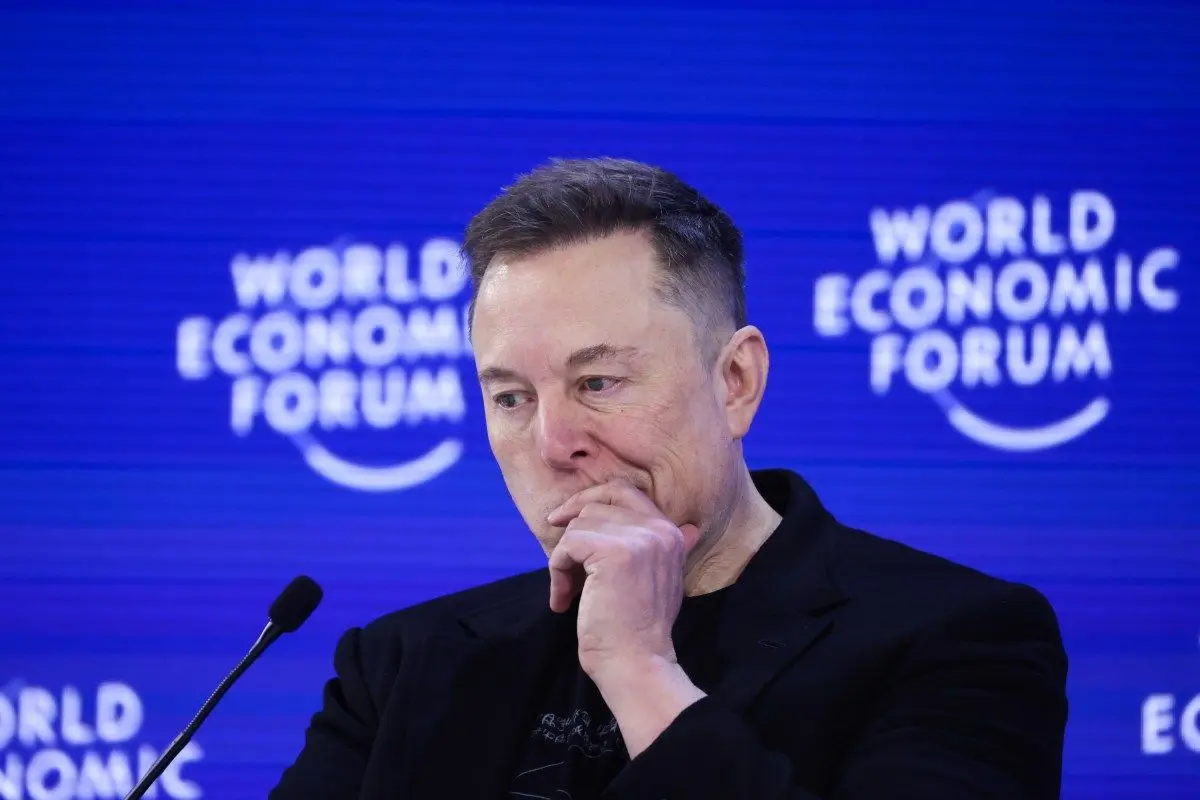
Elon Musk recently claimed xAI "was not built right [the] first time around," so it's now "being rebuilt from the foundations up"
1
. His admission on March 13 was unusually candid for a chief executive whose company had just been acquired for a quarter of a trillion dollars. He said xAI's AI coding tools simply did not work, and that the underlying system needed xAI restructuring3
. The statement appeared to validate the co-founders' decision to leave.
Source: TechCrunch
Appearing on a video call at the Abundance Conference this month, Musk said he had just been in an all-hands meeting on coding. He had been "going through all the things that need to happen to essentially catch up and exceed our competitors on coding, which I think we'll do. We should probably get there by the middle of this year"
2
. The acknowledgment came as competitors like Anthropic's Claude and OpenAI have dominated the AI coding space.Related Stories
The xAI co-founder exodus follows a pattern of leadership turnover that has repeated across Musk's companies. Twitter lost the majority of its senior leadership and roughly 80 percent of its workforce within months of his 2022 acquisition
3
. Tesla's senior ranks have thinned steadily as Musk's attention has divided across six companies3
. The common thread is a management style that produces results in hardware engineering but appears less effective in research-driven fields where AI talent has abundant options.The AI talent market in 2026 is the most competitive it has ever been. Meta has reportedly offered packages worth up to $300 million over four years to retain top AI researchers
3
. OpenAI, Google DeepMind, and Anthropic are all expanding their research teams aggressively. The eleven researchers who left xAI represent a concentration of AI talent that any of those companies would pay handsomely to acquire.Although it is one of the best-funded players in the AI sector, xAI has struggled to scale and compete with major rivals such as OpenAI and Anthropic
4
. Tesla invested $2 billion in xAI's Series E round in January at an approximate $230 billion valuation, a move that prompted Tesla shareholders to sue Musk for breach of fiduciary duty. The lawsuit gained force when Musk publicly acknowledged that xAI's products were not competitive.xAI is not without assets. The Colossus supercomputer, built with more than 200,000 NVIDIA H100 GPUs, remains one of the largest AI training clusters in the world
3
. Grok, the company's chatbot, has a distribution channel through X's user base. And the company consolidation with SpaceX provides access to capital, infrastructure, and engineering talent at a scale that few AI companies can match. The question is whether infrastructure and distribution are sufficient when the research leadership that was supposed to make the product competitive has entirely departed.
Source: Benzinga
Summarized by
Navi
[3]
[4]
10 Feb 2026•Business and Economy

13 Mar 2026•Business and Economy

04 Sept 2025•Business and Economy

1
Policy and Regulation

2
Technology

3
Policy and Regulation