Alibaba's Qwen AI chief Junyang Lin steps down, triggering task force formation and concerns


12 Sources
12 Sources
[1]
Alibaba's Qwen tech lead steps down after major AI push | TechCrunch
Alibaba's Qwen AI project has lost one of its most visible technical leaders just a day after the Chinese tech giant unveiled its new Qwen 3.5 open-weight small models. Junyang Lin, a central technical leader on Alibaba's Qwen team, said in a post on X on Tuesday that he was "stepping down" from the project, without elaborating. He joined Alibaba in July 2019 and became part of the Qwen team in April 2023, according to his LinkedIn profile. The abrupt departure, which drew strong reactions from colleagues and industry partners, comes as global competition among AI developers intensifies and companies race to build models rivaling those from OpenAI, Google, and Anthropic. Alibaba's Qwen family of models has emerged as one of China's most prominent open-weight AI efforts, with recent releases posting benchmark results that often rival systems from leading U.S. developers. The Chinese tech giant introduced the model in April 2023 and opened it to public use that September after receiving regulatory clearance. Alibaba introduced its Qwen 3.5 Small Model series on Monday, with four models spanning 0.8B, 2B, 4B, and 9B parameters. The systems, the company said, are native multimodal models designed for uses ranging from on-device AI deployment to lightweight agents. The launch drew attention from figures in the AI community, including Elon Musk, who wrote on X that the models showed "impressive intelligence density." Lin's departure came just as the Qwen team was pushing ahead with new releases, prompting unusually strong reactions from colleagues and partners who described his role in the project as central. Wenting Zhao, a research scientist on the Qwen team, described Lin's departure as "the end of an era," thanking him in a post on X for helping drive the project's advances in open-source AI and engineering. Yuchen Jin, chief technology officer of AI infrastructure startup Hyperbolic, said Lin helped connect Qwen with the global developer community, recalling late-night collaboration with the team during model launches. Tiezhen Wang, head of APAC ecosystem at Hugging Face, also described Lin's departure as "an immense loss" for the Qwen project. The circumstances surrounding Lin's departure remain unclear. Lin did not respond to a request for comment. Chen Cheng, a contributor to the Qwen project, wrote that he was "heartbroken" by the news. In his post on X, Cheng appeared to be addressing Lin directly, writing "I know leaving wasn't your choice" and said the team had been working together on model launches only hours earlier. Binyuan Hui, another member of the Qwen team, has updated his X profile to describe himself as "formerly MTS @Alibaba_Qwen." However, it is not immediately clear whether he had left the company or when the change was made. Alibaba did not respond to a request for comment on the reasons for the move or on the leadership structure of the Qwen team.
[2]
Alibaba Qwen Head Who Warned of OpenAI Gap Steps Down
The reasons behind Lin's exit remain unclear, and his departure has cast a cloud over Alibaba's AI ambitions, with at least one other Alibaba engineer announcing their departure in the wake of Lin's post. The architect of Alibaba Group Holding Ltd.'s chief AI model has quit his post, a surprise departure that's rattled the developer community and raised questions about the Chinese online leader's pivot to artificial intelligence. Junyang Lin, who also goes by Justin, announced on X he was stepping down as the tech lead for Qwen, Alibaba's main AI platform. That early morning post triggered a surge of support from the open-source community. Alibaba's shares slid as much as 5.3% in Hong Kong -- their biggest intraday loss since October -- in part because investors are unwinding AI-related trades given global uncertainty. Lin is one of the most influential figures behind Alibaba's transition to AI, an endeavor intended to drive its next phase of growth beyond online commerce. During his tenure, the Qwen series of models became the foundation for Alibaba's marquee AI app and services, and consistently ranked among the world's top-performing platforms. That placed the online company among the frontrunners of a broader effort by Chinese firms to compete with the likes of OpenAI and Anthropic PBC. Qwen's advances this week drew the attention of Elon Musk, who commented on its "impressive" density. "me stepping down. bye my beloved qwen," Lin wrote on X, without elaborating. The reasons behind Lin's exit remain unclear. The AI engineer, who last year set up a new robotics team, had been posting updates about Qwen on X just a day before. And Alibaba last month unveiled a major upgrade to that marquee platform, designed to support AI agentic tasks as well as handle text, photo and video inputs. Lin and Alibaba representatives didn't respond to messages seeking comment. Lin's revelation -- which spurred more than a thousand replies including well-wishes and questions within hours -- casts a cloud over Alibaba's AI ambitions. At least one other Alibaba engineer announced he was departing in the wake of Lin's post. MiniMax Group Inc. -- an Alibaba investee and AI pioneer -- thanked Lin for his contributions to the open-source community. Alibaba has been among the most aggressive investors in and advocates for AI since DeepSeek fired up the local tech industry. In 2025, the company better known for creating China's biggest online marketplace declared it was going all-in on AI and the pursuit of super-intelligence, while building a suite of AI services and products centered on Qwen technology. Chief Executive Officer Eddie Wu pledged more than $53 billion toward infrastructure and AI development -- an outlay he's said the company could surpass over time. Link Lin had been working on building generalist models at Alibaba since 2022 and oversaw its open-source initiatives, according to his LinkedIn profile. He holds a master's degree from Peking University. In one of his last public appearances as Qwen head, Lin told a forum in Beijing in January that Chinese companies were unlikely to leapfrog the likes of OpenAI and Anthropic with fundamental breakthroughs in AI over the next three to five years. "A massive amount of OpenAI's compute is dedicated to next-generation research, whereas we are stretched thin -- just meeting delivery demands consumes most of our resources," Lin said at the time. Read more about Alibaba's AI ambitions China AI Leaders Warn of Widening Gap With US After $1B IPO Week Alibaba Unveils Major AI Model Upgrade Ahead of DeepSeek Release Alibaba Is Said to Plan IPO for AI Chipmaking Unit T-Head Alibaba Preps Big Revamp of Flagship AI App to Rival ChatGPT What Bloomberg Intelligence Says The departure of Junyang Lin, tech lead for Alibaba's Qwen open-source model, is unlikely to impact the tech giant's AI development. Monetizing AI remains the key challenge for Alibaba, Baidu and Tencent, in a commoditized sector that's awash with largely undifferentiated, free-to-access AI apps. The rising, though minor, profit contribution from Alibaba's cloud-intelligence division won't offset pressure in its core e-commerce and food-delivery business. - Robert Lea and Jasmine Lyu, analysts Click hereBloomberg Terminal for the research. His departure follows a recent flurry of activity. Alibaba, which also operates a Netflix Inc.-like streaming service and one of China's biggest meal delivery platforms, revamped its mobile app Qwen in November as a major step into consumer-facing AI services. It plans to build the app into an all-around personal assistant by gradually integrating individual services under the Alibaba umbrella. In January, it linked its flagship online shopping and travel services to Qwen, taking its biggest step yet to build the app into a one-stop artificial intelligence platform for consumers.
[3]
Alibaba forms task force to boost AI development after Qwen chief's exit
BEIJING, March 5 (Reuters) - Alibaba Group Holding Ltd (9988.HK), opens new tab said on Thursday it would set up a new task force to accelerate foundation model development, following the resignation of its Qwen AI division head Lin Junyang. The task force will be coordinated by Alibaba Group CEO Eddie Wu, Group Chief Technology Officer Wu Zeming, and Alibaba Cloud CTO Zhou Jingren, who will mobilise group-wide resources for the initiative, the company said in a letter to staff. Zhou will continue to lead Tongyi Laboratory, Alibaba's AI research arm, and oversee its ongoing projects, according to the letter. The announcement came a day after Lin posted on X that he was stepping down from his role at Qwen, the third senior Qwen executive to leave this year. In the staff letter, which confirmed Lin's departure, Alibaba pledged to channel additional resources toward the company's AI development efforts. Reporting by Che Pan and Laurie Chen; Editing by Muralikumar Anantharaman Our Standards: The Thomson Reuters Trust Principles., opens new tab * Suggested Topics: * Asia Pacific Laurie Chen Thomson Reuters Laurie Chen is a China Correspondent at Reuters' Beijing bureau, covering politics and general news. Before joining Reuters, she reported on China for six years at Agence France-Presse and the South China Morning Post in Hong Kong. She speaks fluent Mandarin.
[4]
Alibaba's Qwen AI division head becomes latest exec to leave this year
BEIJING, March 4 (Reuters) - The head of Alibaba Group's (9988.HK), opens new tab Qwen artificial intelligence model division, Lin Junyang, said on Wednesday he would be stepping down from his role, becoming the third senior Qwen executive to depart this year. "Bye my beloved Qwen," Lin wrote in a post on X, without providing further explanation. Yu Bowen, who headed post-training for Qwen, also resigned on Wednesday, Chinese media outlet LatePost reported. That follows the departure of Hui Binyuan, a staff research scientist focused on coding, in January. The three men did not respond to requests for comment. Alibaba also did not respond to requests for comment on the departures. Alibaba's shares were down 4% in Wednesday afternoon trade, underperforming a 2.8% slide for the Hong Kong market that was swept up in a broad selloff as investors fretted over the impact of the Iran war. Lin's exit comes two days after Qwen released updated products. Monthly active users for Qwen's mobile app surged to 203 million in February from 31.05 million in January. It now ranks third globally behind OpenAI's ChatGPT and ByteDance's Doubao app, according to AICPB.com, which tracks AI products. The jump came after Chinese tech giants launched aggressive campaigns to draw more users to their apps during the Lunar New Year holidays. Alibaba has released more than 400 open-source Qwen models since 2023. The models have been downloaded over 1 billion times. Reporting by Che Pan, Laurie Chen and Brenda Goh; Editing by Edwina Gibbs Our Standards: The Thomson Reuters Trust Principles., opens new tab * Suggested Topics: * Asia Pacific Laurie Chen Thomson Reuters Laurie Chen is a China Correspondent at Reuters' Beijing bureau, covering politics and general news. Before joining Reuters, she reported on China for six years at Agence France-Presse and the South China Morning Post in Hong Kong. She speaks fluent Mandarin.
[5]
Did Alibaba just kneecap its powerful Qwen AI team? Key figures depart in wake of latest open source release
Alibaba's Qwen team of AI researchers have been among the most prolific and well-regarded by international machine learning community -- shipping dozens of powerful generalized and specialized generative models starting last summer, most of them entirely open source and free. But now, just 24 hours after shipping the open source Qwen3.5 small model series -- a release that drew public praise from Elon Musk for its "impressive intelligence density" -- the project's technical architect and several other Qwen team members have exited the company under unclear circumstances, raising questions and concerns from around the world about the future direction of the Qwen team and its focus on open source. The departure of Junyang "Justin" Lin, the technical lead who steered Qwen from a nascent lab project to a global powerhouse with over 600 million downloads, alongside two fellow colleagues -- staff research scientist Binyuan Hui and intern Kaixin Li -- marks a volatile inflection point for Alibaba Cloud and its role as an international open source AI leader. These three Qwen Team members announced their departures on X today, though they did not share the reasons or whether or not it they were voluntary. VentureBeat reached out to sources at Alibaba for more information and will update when we obtain it. Lin himself signed off with a simple post: "me stepping down. bye my beloved qwen." While the company celebrates a technical triumph, the sudden exit of its core leadership suggests a deepening rift between the researchers who built the models and a corporate hierarchy now pivoting toward aggressive monetization. The departing researchers' final gift: pocket-sized intelligence The Qwen3.5 small model series (ranging from 0.8B to 9B parameters) represents a final masterstroke in "intelligence density" from the founding team. The models employ a Gated DeltaNet hybrid architecture that allows a 9B-parameter model to rival the reasoning capabilities of much larger systems. By utilizing a 3:1 ratio of linear attention to full attention, the models maintain a massive 262,000-token context window while remaining efficient enough to run natively on standard laptops and smartphones -- even in web browsers. Lin, a PKU humanities graduate and polyglot, has long advocated for this "algorithm-hardware co-design" to bypass compute constraints -- a philosophy he detailed at the January 2026 Tsinghua AI Summit. For the developer community, Qwen3.5 wasn't just another update; it was a blueprint for the "Agentic Inflection," where models shift from being chatbots to autonomous "all-in-one AI workers" capable of navigating UIs and executing complex code. The enterprise dilemma For the 90,000+ enterprises currently deploying Qwen via DingTalk or Alibaba Cloud, the leadership vacuum creates a crisis of confidence. Many companies migrated to Qwen because it offered a "third way": the performance of a proprietary US model with the transparency of open weights. Alibaba has recently consolidated its AI efforts into the "Qwen C-end Business Group," merging its model labs with consumer hardware teams. The goal is clear: transition Qwen from a research project into the operating system for a new era of AI-integrated glasses and rings. However, the reported appointment of Hao Zhou, a veteran of Google DeepMind's Gemini team, to lead the Qwen team indicates a shift from "research-first" to "metric-driven" leadership. Industry analysts, including those cited by InfoWorld, warn that as Alibaba pushes to meet investor demands for revenue growth, the "open" in Qwen's open-weight models may become a secondary priority -- similar to what we saw with Meta after the disappointing release of its Llama 4 AI model last spring, and subsequent reorganization of its AI division, seeing the hiring of Scale AI co-founder and CEO Alexandr Wang and following departure of preeminent researcher Yann LeCun. Enterprises relying on the Apache 2.0-licensed Qwen models now face the possibility that future flagships -- such as the rumored Qwen3.5-Max -- will be locked behind paid, proprietary APIs to drive Cloud DAU (Daily Active User) metrics. The takeaway? If you value Qwen's open source efforts, download and preserve the models now, while you still can. The "Gemini-fication" of Qwen? The internal friction at Alibaba mirrors the tensions seen at OpenAI and Google: the "soul" of the machine is often at odds with the "scale" of the business. Xinyu Yang, a researcher at rival Chinese AI lab DeepSeek, captured this sentiment in a stark post on X: "Replace the excellent leader with a non-core people from Google Gemini, driven by DAU metrics. If you judge foundation model teams like consumer apps, don't be surprised when the innovation curve flattens." This "Gemini-fication" -- the shift toward a highly regulated, product-centric culture -- threatens the very agility that allowed Qwen to surpass Meta's Llama in derivative model creation. For the global AI community, the loss of Junyang Lin is symbolic. He was the primary bridge between China's deep engineering talent and the Western open-source ecosystem. Without his advocacy, there are fears that the project will retreat into a "walled garden" strategy similar to its Western rivals. 'Leaving wasn't your choice' The technical brilliance of the Qwen3.5 release has been overshadowed by the heartbreak of its creators. On social media, the sentiment among the team members who built the model is one of mourning rather than celebration: Chen Cheng, a Qwen contributor, explicitly alluded to a forced departure, writing in a post on X: "I'm truly heartbroken. I know leaving wasn't your choice... I honestly can't imagine Qwen without you." Li suggested the exit signaled the end of broader ambitions, such as a planned Singapore-based research hub: "Qwen could have had a Singapore base, all thanks to Junyang. But now that he's gone, there's no reason left to stay here." What happens to Qwen's open source AI efforts from here on out? The known facts are simple: Qwen has never been technically stronger, yet its founding core has been dismantled. As Alibaba prepares to face investors for its fiscal Q3 earnings report on March 5, the narrative will likely focus on "efficiency" and "commercial scale." For the enterprises currently excited about the 60% cost reductions promised by Qwen3.5, the immediate future is bright. But for the larger AI community, the cost of that efficiency may be the loss of the most vibrant open-source lab in the East. As Hao Zhou takes the reins, the world is watching to see if Qwen remains a "model for the world" or becomes merely a component in Alibaba's corporate bottom line.
[6]

Head of Alibaba's Qwen AI division resigns - The Economic Times
The head of Alibaba Group's Qwen AI model division, Lin Junyang, said he would step down, days after updated products were released. In a post on X, he wrote "Bye my beloved Qwen" without further explanation. The jump came after Chinese tech giants launched aggressive campaigns to draw more users to their apps during the Lunar New Year holidays.The head of Alibaba Group's Qwen artificial intelligence model division, Lin Junyang, said on Wednesday that he would be stepping down from his role - a move that comes two days after the company released updated products. "Bye my beloved Qwen," Lin wrote in a post on X, without providing further explanation. Lin and Alibaba did not immediately respond to Reuters requests for comment. Qwen's mobile application had 203 million monthly active users in February, surging from 31.05 million in January. It now ranks third globally behind OpenAI's ChatGPT and ByteDance's Doubao app, according to AICPB.com, which tracks AI products. The jump came after Chinese tech giants launched aggressive campaigns to draw more users to their apps during the Lunar New Year holidays.
[7]

Alibaba Expands Qwen AI Push, Rejects 'Collective Resignation' Claims - Alibaba Gr Hldgs (NYSE:BABA)
Alibaba Group Holding Limited (NYSE:BABA) is reshaping its artificial intelligence strategy by restructuring leadership, recruiting new talent, and accelerating the development of its Qwen large language model amid intensifying competition in China's AI market. Leadership Changes And New AI Hiring Alibaba is reshuffling leadership and increasing resources around its Qwen large language model after a key technical leader departed, amid intensifying competition among China's major technology companies in the rapidly expanding AI application market. In an internal email, CEO Eddie Wu addressed the resignation of Lin Junyang, a core leader of the Qwen model. Wu said Alibaba Cloud CTO Zhou Jingren will continue to lead the Tongyi Lab, and the company will establish a foundation model support group to coordinate resources across the organization for large-scale model development, China Daily reported on Saturday. Wu emphasized that building foundational AI models remains a long-term strategic priority, adding that Alibaba will maintain its open-source model strategy, increase investment in AI research and development, and strengthen efforts to attract top talent. Junyang announced his departure on social media, and shortly afterward, Yu Bowen, head of post-training for the Qwen model, also said he was leaving. Zhou replaces Yu Bowen. Zhou holds a PhD from the University of Wisconsin-Madison and previously contributed to several Google AI products, including Gemini 3, AI Mode, and Deep Research, according to his LinkedIn profile. Qwen Development And Team Stability Junyang, one of Alibaba's youngest P10-level technical leaders, led the development of the Qwen3-Max model with more than 1 trillion parameters and later guided the release of the Qwen3.5 series of smaller models. Alibaba said the Qwen base model team is not evaluated using commercial metrics such as daily active users, rejecting speculation that commercialization targets triggered the departures. The company said the goal of the Qwen model is to push the limits of model intelligence and ultimately move toward artificial general intelligence (AGI), adding that the team remains stable and dismissing claims of a collective resignation. BABA Price Action: Alibaba shares were up 0.47% at $131.41 at the time of publication on Monday, according to Benzinga Pro data. Photo by Poetra.RH via Shutterstock Market News and Data brought to you by Benzinga APIs To add Benzinga News as your preferred source on Google, click here.
[8]
Alibaba Shock: Qwen AI Tech Lead Junyang Lin Abruptly Steps Down - Alibaba Gr Hldgs (NYSE:BABA)
Alibaba Group Holding Ltd. (NYSE:BABA) is facing a leadership shakeup in its artificial intelligence division just as the company accelerates its push into AI models, tools, and infrastructure. Qwen AI Tech Lead Steps Down Junyang Lin, the technical leader behind Alibaba's Qwen AI model, stepped down from the project in a surprise move that sparked strong reactions from the developer community. Lin, also known as Justin, announced on X that he was leaving his role as Qwen's tech lead without providing further details. He joined Alibaba in July 2019 and joined the Qwen team in April 2023. His exit came one day after Alibaba unveiled its Qwen 3.5 open-weight small models, TechCrunch reported on Wednesday. Lin played a key role in building the Qwen model family, which Alibaba introduced in April 2023 and later opened to the public after receiving regulatory approval. Recent Qwen releases have posted benchmark results that often rival leading U.S. AI systems. AI Community Reacts To Departure Lin's departure triggered strong responses from colleagues and partners who described his role in the project as central. Wenting Zhao, a research scientist on the Qwen team, called the move "the end of an era" and thanked Lin for helping advance the project's open-source AI work. Yuchen Jin, chief technology officer of AI infrastructure startup Hyperbolic, said Lin helped connect Qwen with the global developer community. Elon Musk wrote on X that the models showed "impressive intelligence density." Alibaba Expands AI Ecosystem Alibaba continues to expand its AI ecosystem by unifying its models under the Qwen brand, building developer tools, and investing in its own AI hardware. During the Lunar New Year period, users placed nearly 200 million "one-sentence" orders through the Qwen app. The company's cloud division also launched a low-cost AI coding platform that provides developers access to several Chinese AI models, including Alibaba's Qwen 3.5, Zhipu AI, Moonshot AI, and MiniMax, allowing them to switch between models under a single subscription. Alibaba is also strengthening its infrastructure with a self-developed AI chip. Its chip unit, T-Head, introduced the Zhenwu 810E, an application-specific processor built for AI training and inference. The company said the chip delivers performance broadly comparable to Nvidia Corp.'s (NASDAQ:NVDA) H20 processor for China. BABA Price Action: Alibaba shares were down 0.14% at $135.40 during premarket trading on Wednesday, according to Benzinga Pro data. Market News and Data brought to you by Benzinga APIs To add Benzinga News as your preferred source on Google, click here.
[9]
Elon Musk Praised Alibaba's LLM. Then Its Leader Quit: 'Bye My Beloved Qwen' - Alibaba Gr Hldgs (NYSE:BABA), Alibaba Gr Hldgs (OTC:BABAF)
Lin Junyang, head of Alibaba Group's (NYSE:BABA) (NYSE:BABAF) Qwen artificial intelligence division, announced on Tuesday that he is stepping down. The announcement comes just two days after the company rolled out its updated AI products. Lin posted on X: "me stepping down. bye my beloved qwen." Two other team members followed Junyang's exit. Binyuan Hui, a research scientist at Alibaba Qwen Team, posted "bye qwen, me too." Kaixin Li, a core contributor to Qwen 3.5, also signed off, noting that Lin had been the driving force behind a potential Qwen Singapore base and writing, "Now that he's gone, there's no reason left to stay." Musk-Backed Launch Amplifies Exit Alibaba launched four Qwen 3.5 Small Models -- 0.6B, 2B, 4B, and 9B parameters -- built as native multimodal models for on-device AI and lightweight agents. The launch drew Elon Musk, who wrote on X that the models showed "impressive intelligence density." Lin responded simply: "thx elon!" -- before announcing his resignation the same day. Explosive User Growth Raises Stakes The departure also comes as Qwen's mobile app surged to 203 million monthly active users in February, up from 31.05 million in January, according to AICPB.com, which tracks AI products. A successor has not yet been named. Alibaba Market Standing Alibaba Group has a market capitalization of $323.71 billion, with a 52-week high of $192.67 and a 52-week low of $95.73. The stock of the Chinese multinational technology conglomerate has a Relative Strength Index (RSI) of 23.57. Benzinga's Edge Stock Rankings indicate BABA stock has a Value score of 86.59. Photo Courtesy: QINQIE99 on Shutterstock.com Disclaimer: This content was partially produced with the help of AI tools and was reviewed and published by Benzinga editors. Market News and Data brought to you by Benzinga APIs To add Benzinga News as your preferred source on Google, click here.
[10]

Alibaba shares slide after Qwen AI team lead unexpectedly quits By Investing.com
Investing.com-- Alibaba shares fell sharply in Hong Kong trade on Wednesday after the head of the company's Qwen AI model division abruptly said he will step down from the role. Alibaba Group (HK:9988) shares slid 5.1% to HK$127.90, and was among the biggest weights on the Hang Seng, which slid nearly 3%. Get more updates on China's top AI stocks by subscribing to InvestingPro Junyang Lin, Alibaba's tech lead for its Qwen models, announced his departure from the company in an X post. "me stepping down. bye my beloved qwen," Lin wrote on X, without elaborating. Lin's departure comes just a day after Qwen released a new line of small AI models. The reason for his leaving was not immediately clear. Just a day earlier, Lin had responded to a post from Tesla and xAI CEO Elon Musk lauding Qwen's "intelligence density." Lin's departure raises some questions over the future of Alibaba's AI efforts, as the company races to catch up with rivals such as Bytedance and DeepSeek. The company was seen heavily promoting its AI products during the recent Lunar New Year holidays.
[11]

Alibaba forms task force to boost AI development after Qwen chief's exit - VnExpress International
The task force will be coordinated by Alibaba Group CEO Eddie Wu, Group Chief Technology Officer Wu Zeming, and Alibaba Cloud CTO Zhou Jingren, who will mobilise group-wide resources for the initiative, the company said in a letter to staff on Thursday. Zhou will continue to lead Tongyi Laboratory, Alibaba's AI research arm, and oversee its ongoing projects, according to the letter. The announcement came a day after Lin posted on X that he was stepping down from his role at Qwen, the third senior Qwen executive to leave this year. In the staff letter, which confirmed Lin's departure, Alibaba pledged to channel additional resources toward the company's AI development efforts.
[12]

Head of Alibaba's Qwen AI division resigns
BEIJING, March 4 (Reuters) - The head of Alibaba Group's Qwen artificial intelligence model division, Lin Junyang, said on Wednesday that he would be stepping down from his role - a move that comes two days after the company released updated products. "Bye my beloved Qwen," Lin wrote in a post on X, without providing further explanation. Lin and Alibaba did not immediately respond to Reuters requests for comment. Qwen's mobile application had 203 million monthly active users in February, surging from 31.05 million in January. It now ranks third globally behind OpenAI's ChatGPT and ByteDance's Doubao app, according to AICPB.com, which tracks AI products. The jump came after Chinese tech giants launched aggressive campaigns to draw more users to their apps during the Lunar New Year holidays. (Reporting by Che Pan, Laurie Chen and Brenda Goh; Editing by Edwina Gibbs)
Share
Share
Copy Link
Junyang Lin, the technical architect behind Alibaba's Qwen AI platform, abruptly stepped down just one day after the company unveiled its Qwen 3.5 open-weight small models. His departure, along with at least two other key team members, has rattled the developer community and prompted CEO Eddie Wu to form a special task force to accelerate foundation model development.
Junyang Lin exits Alibaba's Qwen AI division after major model launch
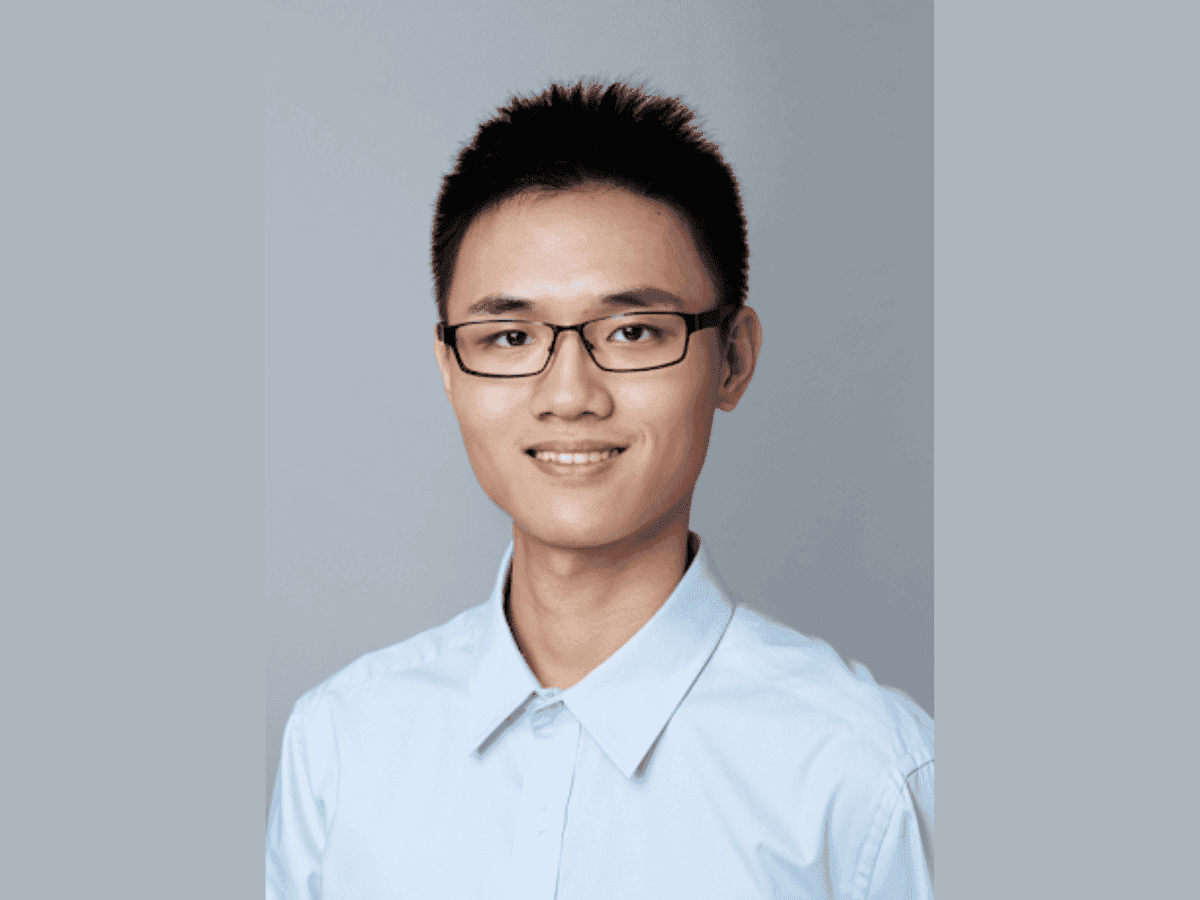
Junyang Lin, the central technical leader behind Alibaba's Qwen AI platform, announced his departure from the project in a brief post on X Tuesday, writing "me stepping down. bye my beloved qwen" without further explanation
1
2
. The announcement came just one day after Alibaba unveiled its Qwen 3.5 open-weight models, a release that drew praise from Elon Musk for its "impressive intelligence density"1
. Lin joined Alibaba in July 2019 and became part of the Qwen team in April 2023, overseeing the platform's transformation from a nascent lab project to a global powerhouse with over 600 million downloads5
. His departure triggered an immediate response from the developer community, with colleagues describing his exit as "the end of an era" and "an immense loss" for the project1
.
Source: ET
Departure of key members raises questions about Qwen's future
Lin's exit marks the third senior departure from Alibaba's Qwen AI division this year, following staff research scientist Binyuan Hui in January and Yu Bowen, who headed post-training, also on Wednesday
4
. The circumstances surrounding these departures remain unclear, though Chen Cheng, a contributor to the Qwen project, wrote he was "heartbroken" by the news and appeared to suggest Lin's leaving "wasn't your choice"1
. The timing has cast a cloud over Alibaba's AI ambitions, with Alibaba shares sliding as much as 5.3% in Hong Kong following the announcement2
. The sudden leadership structure change has created a crisis of confidence among the 90,000-plus enterprises currently deploying Qwen via DingTalk or Alibaba Cloud5
.
Source: Benzinga
Eddie Wu forms task force to accelerate foundation model development
In response to the departures, Alibaba announced Thursday it would establish a new task force to accelerate foundation model development
3
. The task force will be coordinated by Alibaba Group CEO Eddie Wu, Group Chief Technology Officer Wu Zeming, and Alibaba Cloud CTO Zhou Jingren, who will mobilize group-wide resources for the initiative3
. Zhou will continue to lead Tongyi Laboratory, Alibaba's AI research arm, and oversee its ongoing projects. In a letter to staff confirming Lin's departure, Alibaba pledged to channel additional resources toward the company's AI development efforts3
. The company has been among the most aggressive investors in AI since DeepSeek energized the local tech industry, with Eddie Wu pledging more than $53 billion toward infrastructure and AI development2
.Related Stories

Developer community concern grows amid corporate pivot
The departure has sparked significant developer community concern about Qwen's future direction and commitment to open-source AI. Wenting Zhao, a research scientist on the Qwen team, thanked Lin for helping drive the project's advances in open-source AI and engineering
1
. Tiezhen Wang, head of APAC ecosystem at Hugging Face, also described Lin's departure as an immense loss for the project1
. Industry analysts warn that as Alibaba pushes to meet investor concerns for revenue growth, the "open" in Qwen's open-weight models may become a secondary priority5
. Alibaba has recently consolidated its AI efforts into the "Qwen C-end Business Group," merging model labs with consumer hardware teams in a clear transition toward monetization5
.
Source: Market Screener
Qwen's position in global competition faces uncertainty
Qwen has emerged as one of China's most prominent open-source AI efforts, with recent releases posting benchmark results that often rival systems from OpenAI, Google, and Anthropic
1
. The platform's monthly active users surged to 203 million in February from 31.05 million in January, ranking third globally behind OpenAI's ChatGPT and ByteDance's Doubao app4
. Alibaba has released more than 400 open-source Qwen models since 2023, downloaded over 1 billion times4
. However, in one of his last public appearances, Lin warned at a Beijing forum in January that Chinese companies were unlikely to leapfrog OpenAI and Anthropic with fundamental breakthroughs over the next three to five years, noting that "a massive amount of OpenAI's compute is dedicated to next-generation research, whereas we are stretched thin"2
. The internal friction at Alibaba mirrors tensions seen at other AI leaders, where research innovation often clashes with corporate demands for scale and profitability. Enterprises relying on Apache 2.0-licensed Qwen models now face uncertainty about whether future flagship releases will remain open or shift to proprietary APIs as Alibaba intensifies its focus on cloud revenue metrics5
.References
Summarized by

Navi
Related Stories
Alibaba Links Taobao Shopping to Qwen AI App, Advancing Push Into Consumer AI Services
14 Jan 2026•Technology

Alibaba Launches Qwen2.5-Omni-7B: A New Multimodal AI Model in China's Competitive AI Landscape
28 Mar 2025•Technology
Alibaba unveils Qwen3.5 AI chatbot for agentic era but faces crushing user demand
09 Feb 2026•Technology
Recent Highlights
1
Tennessee Teens Sue Elon Musk's xAI Over Grok AI-Generated Child Abuse Images
Policy and Regulation

2
Supermicro Co-Founder Indicted in $2.5 Billion Nvidia AI Chip Smuggling Scheme to China
Policy and Regulation
3
Val Kilmer to appear posthumously in As Deep as the Grave through AI-generated performance
Entertainment and Society

Recent Highlights
Today's Top Stories







Your Daily Dose of Curated AI News
Don’t drown in AI news. We cut through the noise - filtering, ranking and summarizing the most important AI news, breakthroughs and research daily. Spend less time searching for the latest in AI and get straight to action.

