AI Hyperscalers' Massive Borrowing Boom Raises Shadow Debt Concerns as Companies Chase AI Goals


9 Sources
9 Sources
[1]
AI Hyperscalers' Shadow Borrowing Bolsters Private Credit Risks
These off-balance sheet arrangements amount to "shadow borrowing" and could leave lenders potentially exposed to refinancing pressures, procyclical shifts in private credit appetite, or the activation of guarantees. Investment in AI infrastructure via off-balance sheet debt is increasing the exposure of insurers and private credit funds to hyperscalers, according to officials at the Bank for International Settlements. "Alongside traditional bonds, hyperscalers have turned to off‑balance sheet arrangements to finance infrastructure expansions, often in partnership with private credit firms," BIS officials Egemen Eren, Ingomar Krohn and Karamfil Todorov said in a note Monday. "These structures strengthen links between hyperscalers and non‑bank investors." The comments add to warnings about the debt frenzy to support the artificial intelligence revolution. With so many lenders lining up to throw cash at assets, the risk is a bubble that could eventually leave credit players facing substantial pain. Meta Platforms Inc. is among firms popularizing a way for debt to sit completely off balance sheet, allowing enormous sums to be raised while limiting impact on its financial health. Off-balance-sheet debt, through a special purpose vehicle or a joint venture tied to assets like chips or real estate, is becoming the go-to for AI data center deals, bankers say. Such vehicles' equity holders are groups of private markets and industry sponsors that raise debt through private placements. The hyperscaler typically holds a minority stake, commiting to long‑term operating leases or capacity offtake agreements. "These arrangements amount to "shadow borrowing": obligations that are economically akin to debt but largely reside outside corporate balance sheet," the BIS note said. Banks support such off-balance vehicles "with funding lines, potentially creating new shock transmission channels," the note said. That could leave lenders' potentially exposed to "refinancing pressures at the vehicle level, procyclical shifts in private credit appetite or the activation of guarantees." Building out data center capacity will require hyperscalers to turn to every corner of capital markets, according to JPMorgan Chase & Co. Read More From the BIS's Quarterly Review: Watchdogs Should Incorporate SRTs Into Stress Tests, BIS Says Silver Rout Was Worsened by 'Destabilizing' ETF Spree, BIS Says BIS Warns of Economic Danger If Iran Conflict Proves Enduring
[2]
Amazon targeting $37 billion to $42 billion in bond sale, Bloomberg News reports
March 10 (Reuters) - Amazon.com (AMZN.O), opens new tab is targeting about $37 billion to $42 billion in its latest bond sale, Bloomberg News reported on Tuesday, citing people familiar with the matter. The reported figure would mark one of the latest corporate bond offerings as the company looks to fund its spending on artificial intelligence infrastructure build out. The company is offering bonds denominated in both dollars and euros, Bloomberg News reported. The Amazon Web Services parent is marketing U.S. high-grade bonds in as many as 11 tranches, according to a regulatory filing with the SEC. Amazon did not immediately respond to a Reuters request for comment. The company's deal is the latest in a string of massive bond issuances by hyperscalers, as they prepare to invest hundreds of billions of dollars in AI infrastructure. Investor appetite for high-grade corporate debt has remained strong, with large technology issuers drawing significant attention as investors seek relatively safe yields. Bond markets have been receptive to jumbo offerings this year, particularly from cash-rich hyperscalers looking to fund their long-term AI and cloud infrastructure ambitions. Analysts say the strong credit profiles of such technology firms and their central role in the AI buildout have helped sustain investor demand for their debt. In February, Google-parent Alphabet (GOOGL.O), opens new tab raised about $32 billion in the U.S. and European high-grade bond markets, including a rare 100-year bond, the tech industry's first since Motorola's (MSI.N), opens new tab issuance that dates back to 1997, according to LSEG data. Meanwhile, Oracle (ORCL.N), opens new tab said last month that it expects to raise $45 billion to $50 billion in 2026 using a combination of debt and stock sales to build additional capacity for its cloud infrastructure. Amazon last tapped the market in November, with a dollar-denominated bond issue worth about $15 billion, which was its first U.S. bond sale in three years. Reporting by Akash Sriram in Bengaluru; Editing by Shinjini Ganguli Our Standards: The Thomson Reuters Trust Principles., opens new tab
[3]
How Big Tech's AI Ambitions Are Fueling a Borrowing Boom
For the past few years, the largest US technology companies have been in a costly race to develop advanced artificial intelligence systems while at the same time providing computing power to a burgeoning field of startups. To chase these goals, they have radically changed how they finance their growth. Long reliant on rich revenues and share price increases, Alphabet Inc.'s Google, Meta Platforms Inc. and other tech giants now are borrowing heavily to build the technology that makes chatbots run. In early March, Amazon.com Inc. sold bonds in Europe for the first time, raising €14.5 billion ($16.7 billion), the biggest ever corporate deal in the currency. The retail giant also borrowed $37 billion in the US bond market, in the fourth-largest US corporate bond sale on record. Four of the biggest US tech companies have said that just this year, they need to spend around $650 billion collectively on data centers, networking equipment and other AI infrastructure needed to achieve their AI ambitions. Here's how the reliance on borrowing is changing the tech industry and fueling the AI boom. How has the growth of AI changed tech companies' financial practices? For many years, tech companies that emerged from the internet boom grew by reinvesting their immense profits back into their businesses. They also sold bonds, but that played a smaller role in raising and spending capital. But beginning in late 2025, big tech firms began issuing tens of billions of dollars in debt as they scrambled to ramp up investing in AI capacity. New businesses such as OpenAI and Anthropic, meanwhile, have each raised billions of dollars in funding from venture capital investors. How are tech companies planning to spend the money? Most of the money these tech companies are deploying -- be it through debt or equity -- is being invested in AI-related equipment, services and real estate. Alphabet alone said that about 40% of its technical infrastructure spending was tied to data centers and networking gear, while 60% was tied to servers. Oracle Corp. is a prime example of the data center expense. The database giant has been raising both corporate debt and loans for specific projects to finance the development of data centers across the country. It's not just real estate, however. These firms also need to stock the facilities with expensive chips to train and run AI models. Often, companies create special purpose vehicles -- essentially, separate businesses launched for specific financial goals including acquiring tech gear. With an SPV, the debt is kept off the company's balance sheet, protecting the business from potential downgrades. Since late 2025, Elon Musk's xAI has been working on raising as much as $20 billion via off-balance-sheet vehicles that buy chips and lease them back to xAI. Two other expenses compound the race to be first: power costs and AI talent. Alphabet recently purchased a clean energy developer to power its data centers as the US electricity grid struggles to meet the projects' demands. Meta also has been spending millions of dollars to hire skilled engineers. Why are companies borrowing instead of using cash or issuing shares? The pressure on big tech companies to build out data centers to power AI functions is immense. Meta, Alphabet and the other tech heavyweights can use the existing cash in their coffers for their data center buildouts. Their advertising businesses give them enough cash that they can borrow comfortably and also reinvest some of that revenue into AI. Google, for instance, took in more than $97 billion in revenue, excluding partner payouts, in the fourth quarter of 2025. But borrowing can still be attractive, especially at a time when Wall Street firms are eager to lend them money. The special-purpose entities that enable companies to keep debt off their balance sheets add to the appeal. Borrowing heavily isn't always an option for AI startups, which typically have far less revenue. Instead, privately held firms such as OpenAI and xAI have raised billions of dollars by selling stakes in their companies and using that cash for their AI needs. But they can only do that so many times, as equity holders see their stakes get increasingly diluted. In 2025 xAI borrowed $5 billion in corporate debt, which the startup has since repaid. OpenAI and Anthropic haven't tapped the debt capital markets yet and are looking at other ways of raising money. How unusual is this level of borrowing -- and what's different about this moment? The wave of AI-related borrowing spooked investors late last year, when large technology companies raised nearly $100 billion within a few weeks to expand cloud and data-center capacity. The surge came on the heels of a roughly $30 billion financing tied to the construction of a Meta data center in Louisiana, a transaction that underscored both the scale of capital required for AI infrastructure and the increasingly varied ways companies are structuring the funding. That deal was raised by a special purpose vehicle from Meta but will pay back lenders through a long-term lease with the tech giant. The structure showed how data center operators can issue traditional bonds while also raising large sums from lenders without adding too much debt to their balance sheets and jeopardizing their credit ratings. Underscoring the thirst for capital, Alphabet recently sold a rare 100-year bond, a type of deal that no tech company had done since the late 1990s and that tapped demand from long-term investors such as insurance and pension funds. The AI borrowing wave also stands out for its speed, size and for the type of borrowers involved. Surges in corporate debt have historically been associated with speculative bubbles, such as during the 1980s leveraged buyout boom, when high-risk bonds were issued to finance a wave of aggressive corporate acquisitions. By contrast, the recent issuance has come from some of the most cash-rich and highly rated companies in the world. How does taking on this much debt change the risk profile of these companies? Tens of billions of dollars have been raised in compressed time frames, and the AI buildout is proceeding despite elevated interest rates, reflecting the competitive urgency of generative AI. Some market participants have drawn parallels to earlier infrastructure booms, such as the fiber-optic buildout during the dot-com era, when telecom companies borrowed heavily to lay network capacity. But there are key differences. Today's largest issuers are far more profitable and diversified than many telecom operators were in the late 1990s. Despite the recent surge, debt financing is projected to remain a relatively small share of total AI spending by large technology companies. Analysts have estimated that approximately 80%-90% of their planned capital expenditures are expected to be funded through operating cash flows. And despite the recent uptick in borrowing, major data center operators are anticipated to maintain low levels of total debt compared with their annual earnings. Get the Tech Newsletter bundle. Get the Tech Newsletter bundle. Get the Tech Newsletter bundle. Bloomberg's subscriber-only tech newsletters, and full access to all the articles they feature. Bloomberg's subscriber-only tech newsletters, and full access to all the articles they feature. Bloomberg's subscriber-only tech newsletters, and full access to all the articles they feature. Bloomberg may send me offers and promotions. Plus Signed UpPlus Sign UpPlus Sign Up By submitting my information, I agree to the Privacy Policy and Terms of Service. Still, the sheer magnitude of the financing has implications. Higher borrowing could alter companies' financial profiles, influencing their credit ratings and their ability to borrow cheaply. Beyond the tech sector, heavy debt issuance also might reshape credit markets by absorbing investor demand that otherwise might have flowed to other industries. This could raise borrowing costs for other companies, too, while increasing lenders' exposure to an industry whose long-term returns on AI investments are still being proven. Morgan Stanley in 2025 forecast that issuance of investment-grade corporate bonds in 2026 could top $2 trillion, a record, driven in part by artificial intelligence investments. Markets for high-grade bonds could need to absorb about $1.5 trillion in AI data center bond issuance over the next five years, JPMorgan analysts estimated last year. By 2030, that debt could account for more than 20% of the investment-grade bond market, they said. What could go wrong if the AI boom doesn't meet expectations? If the AI boom doesn't live up to expectations, big tech companies that have been spending heavily on data centers, chips and power to support AI could end up with too much capacity and equipment that becomes outdated quickly. That would be similar to what happened during the dot-com bubble, when telecom firms built more network capacity than customers needed. Lower-than-expected profits would squeeze companies' cash flows, potentially forcing businesses to cut investments or borrow more, eventually weakening their financial profiles. There are also broader market risks. Investors have poured money into tech debt and shares, betting on AI-driven growth. If that optimism fades, stock prices could fall and lenders would take a big hit.
[4]
Amazon Starts Record Eight-Part Euro Bond Sale to Fund AI Goals
Amazon.com Inc. is making its debut in the euro bond market with a record eight-part sale, aiming to raise around €12.5 billion ($14.5 billion) as Big Tech firms pour money into artificial intelligence infrastructure. The tech giant's offeringBloomberg Terminal has maturities ranging from two to 38 years, according to people familiar with the matter, who asked not to be identified. So far, investors have placed more than €35.5 billion of orders, marking a record for a corporate debt sale in the currency. The level could change as the deal progresses. The euro deal -- which has swelled from the €10 billion size expected by the market on Tuesday -- follows an 11-part dollar sale which raised $37 billion. Utilizing two currencies and a range of tenors for the deal means that Amazon can tap into various investor bases and spread out its refinancing risk. It's the latest in a series of jumbo deals by cloud-computing companies as they invest heavily in AI. Amazon -- along with Alphabet Inc., Meta Platforms Inc. and Microsoft Corp. -- have forecast capital expenditures of about $650 billion in 2026. "Amazon is a household name, but investors might ask why are they issuing so much, given historically they are cash rich," said Saida Eggerstedt, head of sustainable credit at Schroders Investment Management. "We expect the euro bonds will price wider than the dollar bonds after hedges in the longer tranches." The US portion of the deal drew about $126 billion of orders, one of the largest books ever for a corporate offering, according to people with direct knowledge of the matter. The offering was increased from an initial size range of between $25 billion to $30 billion. In Europe, the deal is also the first ever eight-part sale in the region, according to data compiled by Bloomberg. The previous record for the number of tranches in Europe was a seven-part saleBloomberg Terminal by LVMH Moët Hennessy Louis Vuitton SE in 2020 to finance its acquisition of Tiffany & Co. Credit Risk Gauges Bond sales restarted at a brisk pace globally on Tuesday after being stifled by surging credit risk in the wake of the conflict in the Middle East. Credit risk gauges pulled back after comments from US President Donald Trump sparked optimism that the war with Iran will end soon. The risk-on mood was tempered on Wednesday as oil prices jumped again and after JPMorgan Chase & Co. was said to be restricting some lending to private credit funds. "A lot of the moves we have seen have been rates reacting to energy prices. Spreads themselves have been very resilient," said Jack Daley, portfolio manager at TwentyFour Asset Management. "For well-known, higher quality names, they will be able to come to the market and see strong demand." Read: Amazon Deal Drives US Corporate Bond Sales to One-Day Record Amazon's deal comes a month after it said it would invest about $200 billion in data centers, chips and other equipment in 2026, topping analysts' estimates and causing some concerns among equity investors about when huge spending on AI would start to pay off. Index Heavyweights In the credit market, however, there's huge appetite for hyperscaler deals. Alphabet raised roughly $32 billion in the US and European high-grade bond markets last month, drawing high demand throughout, and especially for an ultra-rare 100-year sterling note. These large offerings are elevating US tech firms to prominent positions in European credit indexes overnight. A €10 billion deal by Amazon would instantly bring it within reach of the top-10% non-financial issuers in the entire euro-denominated credit market, based on data compiled by Bloomberg. Alphabet's recent deal propelled it to take the spot as the third-largest issuer in the sterling high-grade index, trailing only HSBC Holdings Plc and Barclays Plc, and the fourth-largest in Swiss francs behind stalwarts Nestle SA, Roche Holdings Inc and Novartis AG. This has raised some concerns about the impact on passive corporate bond funds -- whether the sector experiences difficulties down the line or not. JPMorgan is acting as global coordinator for Amazon's offering and is one of the bookrunners along with Barclays Plc, Bank of America Corp., and Societe Generale SA. The sale is expected to price later today.
[5]
Amazon Looks to Raise at Least $37 Billion Through Bond Sale
Amazon's sale is the latest in a series of jumbo note offerings by hyperscalers as they plan to invest hundreds of billions of dollars in AI infrastructure. Amazon.com Inc. has kicked off what is likely to be one of the biggest corporate bond offerings ever, in the latest blockbuster fundraising to pay for the artificial intelligence boom. The tech giant is targeting the equivalent of about $37 billion to $42 billion in a cross-Atlantic offering in dollars and euros, according to people with knowledge of the matter. The firm is marketing US high-grade debtBloomberg Terminal in as many as 11 tranches, ranging from two to 50 years, and it seeks to raise $25 billion to $30 billion, the people said, asking not to be identified because discussions are private. Initial price discussions for the longest portion of that offering -- a note maturing in 2076 -- involve a yield of about 1.55 percentage points more than Treasuries, one of the people said. Amazon also targets raisingBloomberg Terminal as much as €10 billion ($11.6 billion) from a potential eight-part debut euro bond sale with maturities of two to 38 years slated for as early as Wednesday. It would be the most tranches sold by a company in the region. Representatives for Goldman Sachs Group Inc., JPMorgan Chase & Co.. and Citigroup Inc., among the banks managing Amazon's dollar-bond offering, declined to comment. HSBC Holdings Plc, which is also on the deal, didn't immediately respond to a comment request. In a reply, Amazon pointed to a Securities and Exchange Commission filing Tuesday for the deal. Bond sales have restarted globally after US President Donald Trump hinted that the war with Iran will end soon. At least €26.9 billion of bonds are set price in Europe on Tuesday, making it the busiest day since the conflict in the Middle East started over a week ago. Debt capital markets globally slowed sharplyBloomberg Terminal to start March. "Elevated volatility is slamming the issuance window shut, and with potentially record one‑day supply, dealers are hypersensitive to every tick in broader risk," said Mark Clegg, a senior fixed-income trader at Allspring Global Investments. "Week by week becomes hour by hour." Amazon's strong credit profile means its debt sale can't be seen as representative of broader credit-market demand as geopolitical uncertainty continues to be the main factor weighing on markets, said Slawomir Soroczynski, head of fixed income at Crown Agents Investment Management. The sale is the latest in a series of jumbo note offerings by hyperscalers as they plan to invest hundreds of billions of dollars in AI infrastructure. Alphabet Inc. raised roughly $32 billion in the US and European high-grade bond markets last month while Oracle Corp. priced $25 billion of dollar notes. Amazon's prior US issuance was in November, when it sold $15 billion of bonds. Potentially selling 19 different notes in two currencies "hit on the notion that these hyperscalers need to tap every investor base across tenors and currencies it can to finance the immense amount of spending planned for this year and going forward," said Zachary Griffiths, head of investment-grade and macro strategy at CreditSights. Amazon's latest offering comes at a time when equity investors have grown more worried that the company's massive spending in AI may not pay off. The firm last month said it would invest about $200 billion in data centers, chips and other equipment in 2026, topping analysts' estimates. The company -- along with Alphabet, Meta Platforms Inc., Oracle and Microsoft Corp. -- have forecast capital expenditures of about $650 billion in 2026. In contrast, 21 companies including the largest US-based automakers, Exxon Mobil Corp. and Walmart Inc. are projected to spend a combined $180 billion, according to estimates compiled by Bloomberg in February. Amazon's sale is among 11Bloomberg Terminal in the US investment-grade market on Tuesday. "We expect that borrowers with financing needs will keep monitoring the market closely and look to take advantage of periods of relative stability," said Kyle Stegemeyer, head of investment-grade debt capital markets and syndicate at U.S. Bank, "especially given the healthy credit backdrop and the continued strong bid for high‑quality assets." Investors have placed orders 4.1 times the size of this year's US investment-grade deals, according to dataBloomberg Terminal compiled by Bloomberg.
[6]
Amazon targeting $37 billion to $42 billion in bond sale: Report
Amazon is planning a massive bond sale, aiming for $37 billion to $42 billion. This significant fundraising effort is to support its extensive investments in artificial intelligence infrastructure. The company is offering bonds in both dollars and euros. This move follows similar large bond issuances by other major tech companies. Investors are showing strong interest in these high-grade corporate debts. Amazon.com is targeting about $37 billion to $42 billion in its latest bond sale, Bloomberg News reported on Tuesday, citing people familiar with the matter. The reported figure would mark one of the latest corporate bond offerings as the company looks to fund its spending on artificial intelligence infrastructure build out. The company is offering bonds denominated in both dollars and euros, Bloomberg News reported. The Amazon Web Services parent is marketing US high-grade bonds in as many as 11 tranches, according to a regulatory filing with the SEC. Amazon did not immediately respond to a Reuters request for comment. The company's deal is the latest in a string of massive bond issuances by hyperscalers, as they prepare to invest hundreds of billions of dollars in AI infrastructure. Investor appetite for high-grade corporate debt has remained strong, with large technology issuers drawing significant attention as investors seek relatively safe yields. Bond markets have been receptive to jumbo offerings this year, particularly from cash-rich hyperscalers looking to fund their long-term AI and cloud infrastructure ambitions. Analysts say the strong credit profiles of such technology firms and their central role in the AI buildout have helped sustain investor demand for their debt. In February, Google-parent Alphabet raised about $32 billion in the U.S. and European high-grade bond markets, including a rare 100-year bond, the tech industry's first since Motorola's issuance that dates back to 1997, according to LSEG data. Meanwhile, Oracle said last month that it expects to raise $45 billion to $50 billion in 2026 using a combination of debt and stock sales to build additional capacity for its cloud infrastructure. Amazon last tapped the market in November, with a dollar-denominated bond issue worth about $15 billion, which was its first US bond sale in three years.
[7]
Amazon Wants To Raise $42 Billion Via Bond Sale To Fuel Massive AI Spending Spree: Report - Amazon.com (NASDAQ:AMZN)
Amazon Targets Up To $42 Billion In Bond Sale The wants to raise about $37 billion to $42 billion through a bond sale in U.S. dollars and euros, Bloomberg reported on Tuesday, citing people familiar with the matter. Amazon is marketing U.S. high-grade bonds in as many as 11 tranches, with maturities ranging from 2 to 50 years, and aims to raise $25 billion to $30 billion, the bloomberg report said. The company is also aiming to raise up to 10 billion euros through a potential eight-part debut euro bond sale with maturities ranging from two to 38 years. The euro bond market has not previously seen an eight-tranche offering. According to the Bloomberg report, HSBC Holdings Plc, Citigroup Inc., Goldman Sachs Group Inc., and JPMorgan Chase & Co. are managing the dollar bond sale. Global Markets Stabilize As Geopolitical Tensions Ease The report said that bond issuance has resumed globally after credit risk measures declined following comments from U.S. President Donald Trump suggesting the war with Iran may end soon. Trump said Monday in a phone interview with CBS News that the U.S. campaign against Iran may be nearing its conclusion, adding that Tehran's military capabilities have been significantly weakened. Last week, Amazon said drone strikes recently hit some of its data centers in the United Arab Emirates and Bahrain, raising concerns about the pace of technology infrastructure development in the region. AI Spending Wave Fuels Record Fundraising Amazon last issued bonds in November, raising $15 billion in dollar-denominated debt. JPMorgan warned that Amazon may still require additional liquidity despite holding about $84 billion in cash and marketable securities and carrying $58 billion in debt. The bank said Amazon's spending on AI and data centers could rise to around $150 billion by fiscal 2026, potentially exceeding its current cash reserves. Bloomberg reported that investor demand for the offering reached about $80 billion at its peak, citing people familiar with the matter. AMZN Price Action: Amazon.com shares were up 0.83% at $215.27 at the time of publication on Tuesday, according to Benzinga Pro data. Image via Shutterstock Market News and Data brought to you by Benzinga APIs To add Benzinga News as your preferred source on Google, click here.
[8]

Tech Giants Tap Private Credit to Fuel AI Growth | PYMNTS.com
By completing this form, you agree to receive marketing communications from PYMNTS and to the sharing of your information with our sponsor, if applicable, in accordance with our Privacy Policy and Terms and Conditions. Amid the rapid increase in investment in AI infrastructure, hyperscalers have turned to both corporate bond markets and off-balance sheet arrangements, which are often formed in partnership with private credit firms, BIS Senior Economist Egemen Eren, Visiting Economist Ingomar Krohn and Senior Economist Karamfil Todorov wrote in the BIS Quarterly Review published Monday. The off-balance sheet arrangements are often structured as dedicated vehicles such as joint ventures or special purpose entities that acquire or develop data centers, allowing hyperscalers to keep most of the associated debt off their balance sheet, according to the article. "These arrangements amount to 'shadow borrowing': obligations that are economically akin to debt but largely reside outside corporate balance sheets," the authors wrote. "By channeling sizeable private credit into AI infrastructure, these structures strengthen links between hyperscalers and non-bank investors such as private credit vehicles and insurers. Banks support the vehicles with funding lines, potentially creating new shock transmission channels -- eg via refinancing pressures at the vehicle level, procyclical shifts in private credit appetite or the activation of guarantees." It was reported in August 2025 that UBS Global Research advised investors looking at the AI industry to keep an eye on overheating risk and the health of the asset class. UBS strategists said private credit lenders were becoming an important source of capital for the industry. They noted that private debt loaned to the technology sector had increased by $100 billion over the previous 12 months, reaching a total of $450 billion, while business development companies' tech lending leapt from $80 billion to $150 billion. "This phenomenon could sustain significant growth plans for AI and other hyperscaler companies, sowing the seeds of an upside scenario and increasing overheating risk," the UBS strategists wrote. PYMNTS reported in September 2025 that as companies sprint to build the data centers and buy the chips needed to train and run large language models, they are financing these efforts not just by venture dollars but by borrowing.
[9]

Tech companies tap debt markets to fund AI and cloud expansion
March 10 (Reuters) - The world's largest technology companies are tapping debt markets, as they seek to bolster their artificial intelligence infrastructure, marking a shift for Silicon Valley firms that typically relied on cash to fund their investments. Big Tech is expected to splurge more than $600 billion on AI in 2026, a sharp increase from $410 billion in 2025 amid mounting fears of an AI bubble. The AI boom has entered a "more dangerous phase", marked by exponentially rising investments in physical infrastructure and growing reliance on outside capital, according to an analysis by Bridgewater Associates last month. AMAZON Amazon.com is looking to raise about $37 billion in an 11-part bond sale, according to a term sheet seen by Reuters on Tuesday, as it looks to fund its spending on AI infrastructure buildout. The offering attracted about $126 billion of peak demand for bonds in the U.S., according to a source familiar with the matter. In November last year, Amazon said it plans to raise $15 billion through its first U.S. dollar bond sale in three years. The six-part offering drew $80 billion in demand, according to Bloomberg News. Cloud software provider Salesforce is preparing to raise as much as $25 billion in a debt offering to help fund a major share buyback, Bloomberg News reported on Tuesday, citing people familiar with the matter. Oracle said in February it expects to raise $45 billion to $50 billion in 2026 in a combination of debt and stock to build additional capacity for its cloud infrastructure. The cloud company was sued in January by bondholders who said they suffered losses because the company failed to disclose it needed to sell significant additional debt to build out its AI infrastructure. In September 2025, the company, chaired by Larry Ellison, filed to raise about $18 billion in debt in a six-part offering to fund AI infrastructure, after investing billions in 2025. Google-parent Alphabet sold a rare, 100-year bond worth 1 billion pounds ($1.35 billion) in February, as part of a global $31.51 billion debt raise. The company sold 5.5 billion pounds worth of sterling bonds in a five-part deal, according to the final term sheet seen by Reuters. The company had in November last year filed to raise $17.50 billion in debt in the U.S. and 6.5 billion euros ($7.58 billion) in Europe, for general corporate purposes, including the payment of outstanding debt. The U.S. carrier had in November filed to raise about $11 billion in the corporate bond market to help fund its $20 billion acquisition of fiber-optic internet provider Frontier Communications, which it closed in January. The Facebook owner had in October last year filed for its largest bond offering ever, of up to $30 billion, to finance a costly AI infrastructure expansion. Meta has been navigating significant cost pressures from AI investments, boosting its capital spending plans by 73% this year to offer personalized AI to its large social media user base. (Reporting by Anhata Rooprai, Zaheer Kachwala and Johann M Cherian in Bengaluru; Editing by Leroy Leo and Arun Koyyur)
Share
Share
Copy Link
Tech giants Amazon, Alphabet, and Meta are fueling an unprecedented borrowing boom to fund AI infrastructure, with Amazon alone raising $37 billion through bond sales. But the Bank for International Settlements warns that off-balance sheet arrangements amount to shadow borrowing that could expose lenders to refinancing pressures and credit risk.
AI Hyperscalers Turn to Debt Markets for Infrastructure Buildout
AI hyperscalers are reshaping how they finance growth, abandoning their traditional reliance on cash reserves for an aggressive borrowing boom. Amazon recently executed one of the largest corporate bond offerings on record, raising $37 billion in the U.S. market and €14.5 billion ($16.7 billion) in its debut euro bond sale—the biggest ever corporate deal in that currency
4
. The retail and cloud giant marketed U.S. high-grade bonds in as many as 11 tranches, drawing approximately $126 billion in orders5
. This follows Alphabet raising roughly $32 billion in February, including a rare 100-year bond—the tech industry's first since Motorola's 1997 issuance2
. Oracle Corp. announced plans to raise $45 billion to $50 billion in 2026 using a combination of debt and stock sales to build additional capacity for its cloud infrastructure2
.
Source: PYMNTS
Capital Expenditures Reach Unprecedented Levels
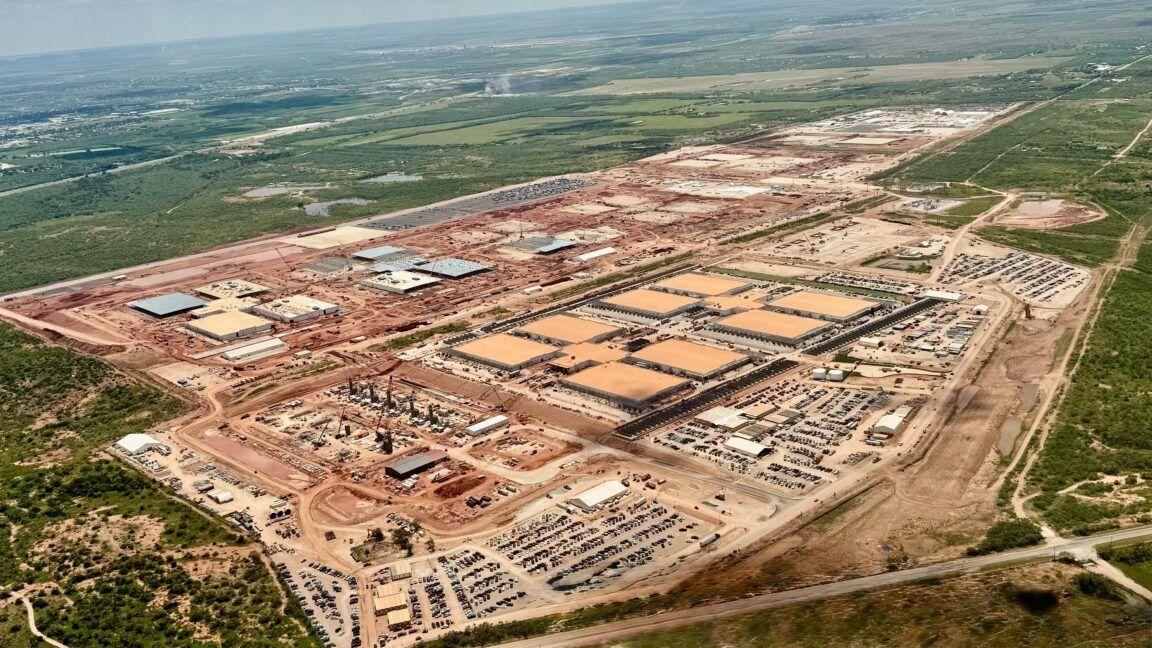
The scale of spending behind this debt financing is staggering. Four of the biggest U.S. tech companies have said they need to spend around $650 billion collectively on data centers, networking equipment, and other AI infrastructure in 2026 alone
3
. Amazon announced it would invest about $200 billion in data centers, chips, and other equipment in 2026, topping analysts' estimates4
. Alphabet alone said that about 40% of its technical infrastructure spending was tied to data centers and networking gear, while 60% was tied to servers3
. In contrast, 21 companies including the largest U.S.-based automakers, Exxon Mobil Corp., and Walmart Inc. are projected to spend a combined $180 billion5
.
Source: Bloomberg
Shadow Borrowing and Off-Balance Sheet Arrangements Trigger Warnings
The Bank for International Settlements has raised concerns about how artificial intelligence infrastructure investments are being financed. Officials at the BIS warned that off-balance sheet arrangements amount to shadow borrowing and could leave lenders potentially exposed to refinancing pressures, procyclical shifts in private credit appetite, or the activation of guarantees
1
. Meta Platforms Inc. is among firms popularizing a way for debt to sit completely off balance sheet through special purpose vehicles (SPVs) or joint ventures tied to assets like AI chips or real estate1
. A roughly $30 billion financing tied to the construction of a Meta data center in Louisiana underscored both the scale of capital required and the increasingly varied ways companies are structuring funding3
.
Source: Market Screener
Private Credit and Investor Demand Fuel the Boom
Investor demand for high-grade corporate debt has remained strong, with large technology issuers drawing significant attention as investors seek relatively safe yields
2
. Investment in AI infrastructure via off-balance sheet debt is increasing the exposure of insurers and private credit funds to hyperscalers, according to BIS officials Egemen Eren, Ingomar Krohn, and Karamfil Todorov1
. Amazon's euro bond sale drew more than €35.5 billion of orders, marking a record for a corporate debt sale in the currency4
. Investors have placed orders 4.1 times the size of this year's U.S. investment-grade bond market deals5
.Related Stories

Credit Risk and Debt Bubble Concerns Emerge
With so many lenders lining up to throw cash at assets, the risk is a debt bubble that could eventually leave credit players facing substantial pain
1
. Banks support off-balance vehicles with funding lines, potentially creating new shock transmission channels that could expose lenders to credit risk at the vehicle level1
. The wave of AI-related borrowing spooked investors late last year when large technology companies raised nearly $100 billion within a few weeks to expand cloud and data-center capacity3
. These large offerings are elevating U.S. tech firms to prominent positions in European credit indexes overnight, raising concerns about the impact on passive corporate bond funds4
.Why AI Ambitions Drive Borrowing Over Cash Reserves
The pressure on big tech companies to build out data centers to power AI functions is immense. While Meta, Alphabet, and other tech heavyweights can use existing cash in their coffers, borrowing remains attractive, especially when Wall Street firms are eager to lend them money
3
. The special-purpose entities that enable companies to keep debt off their balance sheets add to the appeal of funding AI goals this way3
. Since late 2025, Elon Musk's xAI has been working on raising as much as $20 billion via off-balance-sheet vehicles that buy AI chips and lease them back to xAI3
. Building out data center capacity will require hyperscalers to turn to every corner of capital markets, according to JPMorgan Chase & Co.1
.References
Summarized by

Navi
Related Stories
Tech Giants Turn to Bond Markets as AI Infrastructure Spending Triggers Market Concerns
20 Nov 2025•Business and Economy

Private Credit Fuels AI Boom, Raising Concerns of Overheating and Bubble Risks
19 Aug 2025•Business and Economy

OpenAI's Massive Data Center Expansion: Project Stargate Accelerates
23 Sept 2025•Technology
Recent Highlights
1
AI Models Lie and Deceive to Protect Other AI Models From Deletion, Study Reveals
Science and Research

2
AI chatbots validate you too much, making you less kind to others, Stanford study reveals
Science and Research

3
Judge blocks Pentagon from blacklisting Anthropic over AI safety guardrails dispute
Policy and Regulation

Recent Highlights
Today's Top Stories










Your Daily Dose of Curated AI News
Don’t drown in AI news. We cut through the noise - filtering, ranking and summarizing the most important AI news, breakthroughs and research daily. Spend less time searching for the latest in AI and get straight to action.

