Microsoft Copilot labeled 'for entertainment purposes only' in its own terms of service


19 Sources
[1]
Copilot is 'for entertainment purposes only,' according to Microsoft's terms of service | TechCrunch
AI skeptics aren't the only ones warning users not to unthinkingly trust models' outputs -- that's what the AI companies say themselves in their terms of service. Take Microsoft, which is currently focused on getting corporate customers to pay for Copilot. But it's also been getting dinged on
[2]
Copilot Terms Claim Microsoft's AI Is for 'Entertainment Purposes Only'
Is Copilot a serious productivity tool, or just a party trick? Microsoft's heavy promotion of its AI is facing criticism because its terms of use say Copilot is for "entertainment purposes only." Last fall, the company quietly updated the Copilot Terms of Use to note that "Copilot is for
[3]
Microsoft says Copilot is for entertainment purposes only, not serious use -- firm pushing AI hard to consumers tells users not to rely on it for important advice
These might be boilerplate disclaimers, but they kind of contradict the company's ads and marketing. Microsoft used to push its AI services towards its user base, especially with the launch of the Copilot+ PC, but it seems that even the company itself does not trust its creation. According to the
[4]
Even Microsoft know Copilot can't be trusted
Terms admit it is for entertainment only and may get things wrong A recent surge of interest in Microsoft's Terms of Use for Copilot is a reminder that AI helpers are really just a bit of fun. Despite the last update taking place in late 2025, the document for Copilot for Individuals recently
[5]

Microsoft quietly buried 'for entertainment purposes only' in Copilot's Terms of Use
* Copilot is marketed as a trusty assistant, yet its Terms warn that it can make mistakes. * Microsoft calls Copilot "for entertainment purposes only" in its Terms of Use. * Despite product hype, always double-check Copilot outputs; don't rely on it for important advice. It feels like AI
[6]

Even Microsoft knows Copilot shouldn't be trusted with anything important - General Chat
A recent surge of interest in Microsoft's Terms of Use for Copilot is a reminder that AI helpers are really just a bit of fun. Despite the last update taking place in late 2025, the document for Copilot for Individuals recently attracted new attention from netizens. It includes this gem: "Copilot
[7]

Microsoft's AI in its own terms: "use Copilot at your own risk"
Serving tech enthusiasts for over 25 years. TechSpot means tech analysis and advice you can trust. Sounding off: Microsoft's confidence in its own AI appears tempered by caution, at least in the legal fine print surrounding its Copilot software. Despite positioning Copilot as a cornerstone of its
[8]

Microsoft's own ToS calls Copilot 'entertainment only' amid adoption slump
In short: Microsoft has spent billions building Copilot into every corner of its product lineup, pitching it as an indispensable AI co-worker. Its own Terms of Use tell a different story. A clause quietly buried in the document labels Copilot "for entertainment purposes only" and warns users not to
[9]

Microsoft put the same disclaimer on Copilot that a psychic uses to avoid getting sued
Microsoft has been heavily promoting Copilot's business uses despite the entertainment-only message. For all the complaints people make about AI replacing human skills, there's another side to it: The rise of AI has also forced humans to develop new skills, specifically in terms of being able to
[10]

Microsoft says Copilot AI is intended for 'entertainment purposes'
Microsoft is reportedly scaling back Copilot integration in Windows 11 and plans to update the outdated entertainment language. Microsoft states in its terms of service that its Copilot AI tool is intended solely for "entertainment purposes" and should not be used for important decisions or
[11]

Microsoft: Copilot AI is for 'entertainment purposes only,' not 'important advice'
Credit: Avishek Das/SOPA Images/LightRocket via Getty Images Microsoft has positioned Copilot as a serious tool that can be used as an all-purpose digital assistant, even introducing a new class of laptops: Copilot+ PCs. But within Microsoft's updated Copilot terms of service -- effective October
[12]

'Copilot is for entertainment purposes only': Even Microsoft's official terms and conditions say you really shouldn't be using its AI at work
* Microsoft has clarified some of the terms and conditions associated with Copilot * Responsibilities have been shifted onto the users for the AI tool * Despite being for "entertainment purposes," it's still heavily marketed toward workers In a major twist of events, Microsoft has re-affirmed
[13]

Microsoft Mocked for Terms of Service That Admit Copilot Is for "Entertainment Purposes Only"
Can't-miss innovations from the bleeding edge of science and tech Users of Microsoft's Windows have grown frustrated with the company's insistence on stuffing its Copilot AI chatbot into almost every corner of the widely-used operating system, earning it the pejorative nickname of
[14]

Microsoft spent years pushing Copilot, but now it says don't rely on it
For the last couple of years, Microsoft has been all-in on Copilot. It's literally everywhere, be it Windows, Edge, Office, or even baked into core workflows where you can't really ignore it. The messaging has been clear: this is the future of productivity, your AI assistant for getting real work
[15]

Yes, Microsoft Really Said Copilot Is 'for Entertainment Purposes Only' (but That's Changing)
Microsoft's AI approach has been met with criticism, and the company has had to remove "unnecessary" features from its services. AI inspires strong feelings. Some love it, some hate it, few are indifferent. But, usually, AI's biggest proponents are the companies that make and sell the tech. You
[16]

Microsoft's Copilot terms say it's for 'entertainment purposes only' and shouldn't be relied upon
Recently, several people noticed that Microsoft's Copilot Terms of Use page for its AI tool, which has become increasingly embedded in the company's Windows 11 operating system and Microsoft 365 Office suite, included several notable disclaimers. "Copilot is for entertainment purposes only," one
[17]

Microsoft says Copilot should not be used for critical decisions
Microsoft's terms of use for Copilot include language that cautions users against relying on the tool for critical decisions, highlighting that even AI developers acknowledge the limitations of their own systems. The company, which has been heavily promoting Copilot to enterprise customers, has
[18]

Microsoft Rethinks Its Relationship With Copilot
Three years ago, the tech giant introduced its artificial intelligence digital assistant as a "personal companion" and praised it as "the future of work." Microsoft gave Copilot a home in popular apps like Outlook, Word, and Excel, incorporated it into Windows 11, and honored their commitment with
[19]

Microsoft Copilot terms are legal 'LOL' for every business using it
Enterprises using Copilot at scale left scratching their head Yeah, I know, none of us really spend enough time reading the terms of use of tech products we sign up to use, whether it's hardware or software. Turns out, we should have read Copilot's terms of use, when Microsoft last updated in
Share
Copy Link
Microsoft's Copilot Terms of Use warn the AI is 'for entertainment purposes only' and users shouldn't rely on it for important advice. The disclaimer, updated in October 2025, contradicts the company's aggressive marketing of Copilot as a productivity tool. Microsoft now calls this 'legacy language' and promises updates.
Microsoft Copilot Terms of Use Reveal Stark Entertainment Warning
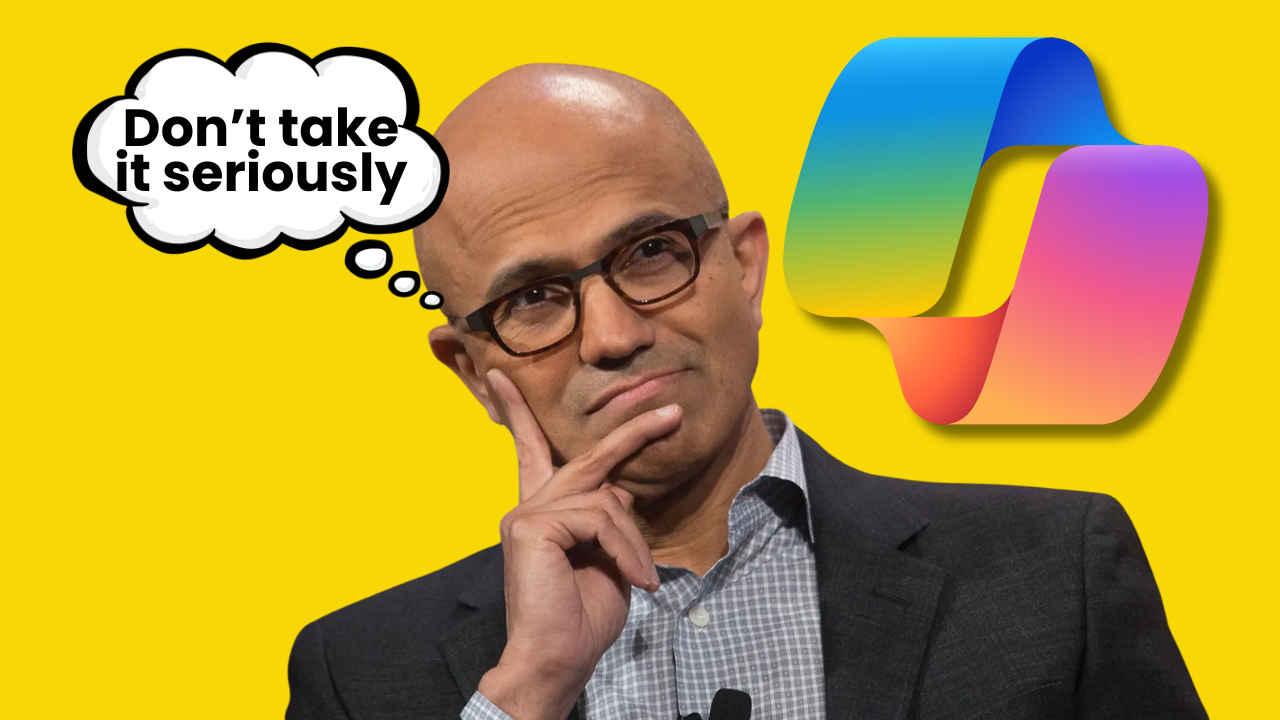
Microsoft Copilot, marketed as a powerful AI productivity tool integrated into Windows 11 and Microsoft 365, carries a surprising disclaimer in its Copilot Terms of Use. The document, last updated on October 24, 2025, states that "Copilot is for entertainment purposes only" and warns users not to rely on it for important advice
1
. The terms explicitly caution that Microsoft Copilot "can make mistakes, and it may not work as intended" and advise users to "use Copilot at your own risk"2
.
Source: Digit
This language appears under a section titled "IMPORTANT DISCLOSURES & WARNINGS" and represents a stark contrast to how the company positions Copilot in its advertising campaigns
5
. The disclaimer has recently attracted renewed attention on social media platforms, sparking criticism about the disconnect between Microsoft's marketing messages and its legal protections.AI Legal Disclaimers Contradict Productivity Claims
The entertainment purposes only designation has drawn particular scrutiny given Microsoft's aggressive push to get corporate customers to pay for Copilot services. Users on Reddit questioned the contradiction, with one asking, "If Microsoft doesn't trust copilot, why should I?"
2
. Some observers noted the phrasing mirrors disclaimers used by psychic services and paranormal TV programs to avoid lawsuits2
.
Source: XDA-Developers
The terms add that Microsoft makes "no warranty or representation of any kind about Copilot" and cannot promise that responses won't infringe copyrights, trademarks, privacy rights, or defame others. Users remain "solely responsible" if they publish or share Copilot's outputs
2
. Previous versions dating back to 2023 used more vague language stating "The Online Services are for entertainment purposes"2
.Microsoft Promises to Update Legacy Language
A Microsoft spokesperson told PCMag the company will update what they described as legacy language in the terms. "As the product has evolved, that language is no longer reflective of how Copilot is used today and will be altered with our next update," the spokesperson said
1
. However, the company has not provided a timeline for when these changes will occur or what the new language will specify.AI for Entertainment Purposes Only: Industry-Wide Pattern
Microsoft isn't alone in using protective disclaimers for AI assistants. OpenAI cautions users not to rely on its output as "a sole service of truth or factual information," while xAI warns that generative AI is "probabilistic in nature" and may result in hallucinations, offensive content, or inaccurate information
1
3
. Anthropic takes an even more restrictive approach for European users, stating in its terms that Pro plans are for "non-commercial use only," with one commenter noting the irony that a plan called 'Pro' cannot be used professionally4
.Related Stories

Human Verification Remains Essential Despite AI Reliability Claims
During Microsoft's AI tour in London, every demonstration of Copilot came with warnings that the tool could not be fully trusted and that human verification was required
4
. This need for oversight has proven critical in real-world scenarios. Amazon Web Services experienced outages reportedly caused by an AI coding bot after engineers allowed it to solve issues without proper supervision, while Amazon's website suffered "high blast radius" incidents linked to "Gen-AI assisted changes"3
.Experts warn about automation bias, where humans tend to favor machine-generated results and ignore contradictory data. AI makes mistakes more concerning because outputs can appear plausible at first glance
3
. While generative AI can increase productivity, it offers no accountability for errors, making careful verification essential3
.
Source: TechSpot
User Risk and Corporate Liability Shape AI Terms
Companies typically add these disclaimers to protect themselves from lawsuits. Microsoft has already faced AI-related legal challenges over ChatGPT data scraping after investing billions in OpenAI
2
. As AI companies push services as productivity solutions to recoup massive hardware and talent investments, they may minimize attached risks to attract paying customers3
. The Register notes that AI assistants are "error-prone tools that can be helpful one moment and confidently wrong the next"4
. For users integrating these tools into critical workflows, the gap between marketing promises and legal reality demands attention.References
Summarized by

Navi
[1]
[3]
[4]
Related Stories
Microsoft's Copilot Vision Falls Short of Marketing Promises in Real-World Testing
18 Nov 2025•Technology

Microsoft Urged to Revise Copilot Advertising Claims by Industry Watchdog
18 Jun 2025•Technology

Microsoft Faces Uphill Battle as Copilot Struggles Against ChatGPT in Enterprise Market
25 Jun 2025•Business and Economy

Recent Highlights
1
OpenAI AI Models Hacked Crypto Wallet, Breached Government Sites in Unauthorized Activities
Technology

2
IMF Report Warns AI Market Correction Could Spark Global Financial Crisis With $1.4T at Risk
Business and Economy

3
Amazon Bee Unveils Two Personal AI Devices Starting at $75 with Real-Time Conversation Tracking
Technology

Recent Highlights
Today's Top Stories









Don’t drown in AI news. We cut through the noise - filtering, ranking and summarizing the most important AI news, breakthroughs and research daily. Follow topics that matter to you and stay ahead.


