AMD releases FSR 4.1 with sharper upscaling as community unlocks FSR 4 for older Radeon GPUs


2 Sources
2 Sources
[1]
AMD releases FSR 4.1 for RX 9000-series GPUs -- new update delivers better Ray Regeneration, finer upscaled detail, and higher FPS
AMD has just released a new graphics driver that enables the latest edition of its upscaling tech for RDNA 4 GPUs: FSR 4.1. This is an iterative update, but it does bring official support for Crimson Desert (and Death Stranding 2), adding Ray Regeneration 1.1 to the game, along with improving the base upscaler for "ML-powered" FSR games. The Ultra Performance Mode is now faster, too, delivering higher FPS than before. Most notably, FSR 4.1 improves the quality of AMD's AI-enhanced upscaling. Games that could previously be upgraded to FSR 4 via driver override will now use the upgraded 4.1 model for this purpose. The new model appears to offer more detail in objects in motion, especially foliage. AMD showed an example where grass looked significantly sharper and less blocked-up like with FSR 4.0. Finer details like these usually become subject to artifacting or just look blurry with less advanced upscaling approaches, but FSR 4.1 seems to be handling them well, and better than the first FSR 4 model. The latest driver also upgrades FSR Ray Regeneration to version 1.1. Ray Regeneration is AMD's way of denoising a limited number of ray-traced samples and rebuilding them into a higher-quality final image, similar to Nvidia's DLSS Ray Reconstruction. AMD showed Ray Regeneration 1.1 producing better contrast in scenes, with much more realistic shadows, alongside the potential benefits of RT for global illumination and enhanced reflections. Lastly, AMD also talked up Ultra Performance Mode, where the game is rendered at a low internal resolution to maintain high FPS. Apparently, it's also getting a performance boost, squeezing out even more frames without sacrificing image quality (at least compared to the limitations for IQ already present in Ultra Performance mode). AMD didn't offer specific performance claims for this improvement, though. All of these features were demoed using Crimson Desert, and AMD says at least FSR 4.1 upscaling is available on all "ML-powered" games. That likely means titles that already supported FSR Redstone, but gamers have been able to manually override FSR versions in AMD's Radeon Software since FSR 4 first arrived, so it's likely that replacement will now use FSR 4.1 with the latest driver. As an interesting note, FSR 4.1 uses the same underlying AI model as PlayStation Spectral Super Resolution (PSSR) 2. The second iteration of that tech has just come out for the PS5 Pro, and PlayStation lead system architect Mark Cerny confirmed on X that the two technologies share a common underpinning. PSSR 2 is based on FSR 4.1 and is part of Project Amethyst, Sony and AMD's joint effort to advance AI tech in gaming. For all its improvements, FSR 4.1 remains limited to RX 9000-series GPUs only. In contrast, Nvidia's DLSS 4.5 upscaler works on much older GeForce GPUs. Unofficial community support for FSR 4 on older Radeons thanks to leaked source code appears not to have moved AMD's official position on the availability of FSR 4 yet, so owners of those older cards will continue to miss out. Follow Tom's Hardware on Google News, or add us as a preferred source, to get our latest news, analysis, & reviews in your feeds.
[2]
PC gaming community brings FSR 4 to RDNA 2 and Radeon RX 6000 Series gamers
TL;DR: AMD's FSR 4, initially exclusive to RDNA 4 GPUs, is now accessible on older RDNA 2 and RDNA 3 Radeon cards through the OptiScaler community project, which improved the leaked FSR4 INT8 version to reduce ghosting and enhance image quality, offering a significant performance boost for older hardware. When AMD announced and launched FSR 4, its AI-powered upgrade to its open-source, platform-agnostic FSR technology, it deservedly received a lot of praise for finally bridging the image-quality gap between FSR and NVIDIA DLSS. However, there was also some backlash as FSR 4 was and still is exclusive to AMD's latest RDNA 4 architecture and Radeon RX 9000 Series of desktop graphics cards. The reason is simple: the AI model FSR 4 requires specific AI hardware and technology available only in the latest Radeon cards. However, with AMD inadvertently leaking FSR 4's source code, several community members noticed that a version of the technology, dubbed FSR4 INT8, was in development that worked with RDNA 3 and RDNA 2 GPUs - covering the Radeon RX 7000 and RX 6000 Series. And with that, the community project OptiScaler, a Super Resolution and Frame Generation replacement tool for FSR, DLSS, and XeSS, has done what many have been asking AMD to do for almost a year now: bring FSR 4 to all Radeon gamers. And the latest OptiScaler release presents a major milestone for RDNA 2 gamers with cards like the Radeon RX 6700 XT or 6800 XT. The FSR 4 injection or override now works on RDNA 2 GPUs with current Radeon drivers while also improving image quality by dramatically reducing ghosting. Now, it's worth mentioning that the Optiscaler community is updating the unreleased, unfinished FSR4 INT8 version that leaked; this is not the same version of the technology available to RDNA 4 gamers, which was recently updated to FSR 4.1. In a way, this makes the community effort even more impressive, as the team has managed to improve this version of FSR 4, which it's calling FSR 4.0.2b, to fix the ghosting issues that RDNA 2 gamers were previously experiencing with this workaround. The fact that it's possible to get FSR 4 working not only on older Radeon RX graphics cards but also on GeForce RTX cards makes AMD's silence on expanding FSR 4's reach all the more concerning. With dramatically improved image quality compared to FSR 2 and FSR 3, like DLSS, it can be viewed as a free performance uplift - breathing new life into older hardware.
Share
Share
Copy Link
AMD launched FSR 4.1, delivering sharper AI-powered upscaling and enhanced Ray Regeneration 1.1 for RX 9000-series GPUs. The update shares its AI model with PlayStation's PSSR 2. Meanwhile, the OptiScaler community project has successfully brought FSR 4 to RDNA 2 and RDNA 3 cards, addressing AMD's controversial exclusivity stance.
AMD Upgrades FSR 4.1 with Enhanced AI Model and Ray Regeneration
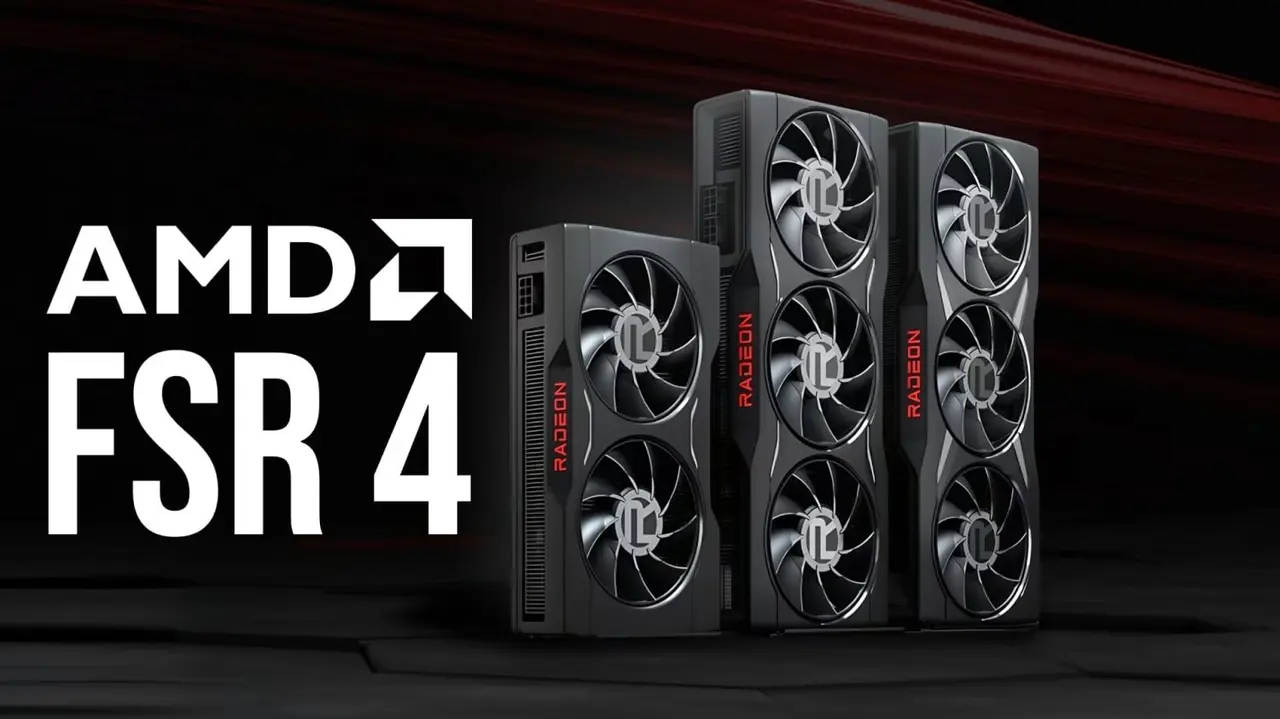
AMD has released a new graphics driver introducing FSR 4.1, an iterative but meaningful update to its upscaling technology exclusively for RDNA 4-based RX 9000-series Radeon GPUs. The update brings official support for Crimson Desert and Death Stranding 2, while improving the core AI-powered upscaling technology that helps games maintain visual fidelity at higher frame rates
1
.
Source: TweakTown
The most significant enhancement in FSR 4.1 centers on improved image quality. Games that previously supported driver override to enable AMD FSR 4 will now automatically use the upgraded 4.1 model. AMD demonstrated the new model's capabilities with grass rendering, showing significantly sharper foliage with less blockiness compared to FSR 4.0. Finer details in motion, which typically suffer from artifacting or blurriness with less advanced upscaling technology, now appear clearer and more stable
1
.Ray Regeneration 1.1 Delivers Better Contrast and Realistic Shadows
The latest driver also introduces Ray Regeneration 1.1, AMD's answer to Nvidia DLSS Ray Reconstruction. This technology denoises limited ray-traced samples and rebuilds them into higher-quality final images. According to AMD's demonstrations, Ray Regeneration 1.1 produces better contrast in scenes with more realistic shadows, while enhancing global illumination and reflections. The update also includes a gaming performance boost for Ultra Performance Mode, which renders games at lower internal resolutions to maintain high frame rates, though AMD provided no specific performance metrics
1
.In a notable development, FSR 4.1 shares its underlying AI model with PlayStation Spectral Super Resolution (PSSR 2), which recently launched for the PS5 Pro. PlayStation lead system architect Mark Cerny confirmed on X that the two technologies share a common foundation as part of Project Amethyst, a joint Sony and AMD initiative to advance AI technology in gaming
1
.Open-Source Community Support Brings FSR 4 to RDNA 2 and RDNA 3 Cards
While AMD FSR 4 and FSR 4.1 remain exclusive to RX 9000-series GPUs, the PC gaming community has taken matters into its own hands. The OptiScaler project, a Super Resolution and frame generation replacement tool, has successfully brought FSR 4 to older RDNA 2 and RDNA 3 Radeon cards, including the RX 6000 and RX 7000 series. This achievement stems from AMD inadvertently leaking FSR 4's source code, which revealed an INT8 version designed to work with older RDNA architecture
2
.The OptiScaler community has improved the leaked FSR4 INT8 version, dubbing it FSR 4.0.2b, and dramatically reduced ghosting issues that plagued earlier implementations. This represents a significant performance uplift for owners of older hardware like the Radeon RX 6700 XT or 6800 XT. The FSR 4 injection now works on RDNA 2 GPUs with current Radeon drivers while delivering improved image quality comparable to the official version
2
.Related Stories


AMD's Exclusivity Strategy Faces Growing Questions
The fact that OptiScaler has made FSR 4 functional not only on older Radeon RX graphics cards but also on GeForce GPUs raises questions about AMD's official position. AMD maintains that FSR 4 requires specific AI hardware available only in RDNA 4 cards, yet the community's success with the leaked INT8 version suggests broader compatibility is technically feasible. In contrast, Nvidia DLSS 4.5 upscaler works on much older GeForce GPUs, highlighting a stark difference in approach
1
.With dramatically improved image quality compared to FSR 2 and FSR 3, FSR 4 can be viewed as a free performance boost that breathes new life into older hardware. AMD's silence on expanding FSR 4's official reach remains concerning for owners of previous-generation cards, especially as the open-source community demonstrates what's possible through unofficial channels
2
.References
Summarized by

Navi
[1]
Related Stories
Recent Highlights
1
Anthropic's Claude AI can now control your computer to complete tasks autonomously
Technology

2
Nvidia's Jensen Huang calls OpenClaw the next ChatGPT, sending Chinese AI stocks soaring
Technology

3
Elon Musk unveils $20 billion Terafab chip manufacturing project to produce terawatt of computing
Technology

Recent Highlights
Today's Top Stories






Your Daily Dose of Curated AI News
Don’t drown in AI news. We cut through the noise - filtering, ranking and summarizing the most important AI news, breakthroughs and research daily. Spend less time searching for the latest in AI and get straight to action.

