Anthropic pledges to cover electricity costs driven by its AI data centers


16 Sources
16 Sources
[1]
Anthropic says it'll try to keep its data centers from raising electricity costs
Rising electricity rates have become a top election priority in the US, and local opposition to the construction of new energy-intensive data centers has led to projects across the country being canceled or delayed. Now we're seeing companies including Microsoft and Meta making commitments to at least partially cover the costs stemming from new energy infrastructure built to accommodate their data centers. As part of its pledge, Anthropic says it'll support efforts to get new power sources online to meet growing electricity demand from AI. It also claims it'll be willing to cut its power consumption during demand peaks, a step that could help relieve pressure on power grids during a heatwave or cold snap. Recent winter storms have already raised concerns about how data centers might further stress power grids and increase energy costs during extreme weather.
[2]
Anthropic promises to pay for electricity price increases due to it's AI data centers -- firm to pay 100% of its grid infrastructure costs, produce new power sources as sector predicted to hit 50 GW in coming years
Anthropic says that it will do its part, but the government needs to step in, too. Anthropic is following in the footsteps of Microsoft and OpenAI, promising that it will "pay 100% of grid upgrade costs, work to bring new power online, and invest in systems to reduce grid strain." The company made this announcement in its blog, saying that even though the US AI sector would need at least 50 gigawatts in the coming years, it "shouldn't leave American ratepayers to pick up the tab." The AI infrastructure build-out has hit the average American hard, especially as the data centers' demand for more and more power has caused wholesale electricity prices to go up by 267% in just five years in some places. Aside from the spike in demand pushing up prices, this increase is also driven by the need of power and distribution companies to upgrade the grid to accommodate the additional demand put on it by AI servers. These institutions then pass on their capital costs to the consumer, resulting in massively increased electricity costs. It has gotten so bad that politicians from both sides of the aisle have started to take notice. Three Democratic U.S. senators have sent demand letters to Amazon, Google, Meta, and other AI hyperscalers, asking for an explanation on the situation. President Donald Trump also said that these companies should "pay their own way" in electricity consumption. On the same day as Trump's announcement, Microsoft released a statement promising to "be a good neighbor" to the communities near its data centers and releasing its "Community-First AI Infrastructure" framework to reassure the people that it will leave a long-lasting positive impact on the people surrounding them. OpenAI followed suit a little over a week later, saying that it will fund grid upgrades and have flexible loads to reduce the stress on the energy supply. Power is the biggest constraint that many AI companies are facing in the U.S. right now. Unlike China, which has an abundance of power for the numerous AI data centers being built within its borders, the U.S. is already near or at capacity. This means that data centers cannot get the electricity needed to run their power-hungry chips, with Microsoft CEO Satya Nadella even saying that it does not have enough electricity to run all the AI GPUs in its inventory. Many AI companies are looking at other power sources to solve this problem, but the solution seems to be several years away. These include small modular reactors, with Amazon, Meta, Microsoft, Oracle, and more investing billions of dollars into the research and development of this technology. Microsoft is even looking at superconductors to reduce energy loss during transmission, while Elon Musk is envisioning an orbiting AI data center. The billionaire has even started to make his move on this, merging SpaceX with xAI and formalizing his plan for the million-satellite Orbital Data Center System with the FCC. But even as Anthropic promises that it won't burden the American consumer for its electricity demands, it also said that the government needs to do its part. It said that affordable power requires "systemic change" and that permitting, transmission development, and grid interconnection need to be faster and cheaper "to bring new energy online for everyone."
[3]
Anthropic says its datacenters won't spike your leccy bill
Compute it leases from Amazon, MIcrosoft, and Google... that's another story Model-maker and SaaS-y AI outfit Anthropic has committed to covering any increases in energy prices paid by consumers caused by its power-hungry datacenters. "Building AI responsibly can't stop at the technology -- it has to extend to the infrastructure behind it. We've been clear that the US needs to build AI infrastructure at scale to stay competitive, but the costs of powering our models should fall on Anthropic, not everyday Americans," Anthropic CEO Dario Amodei said in a statement provided to The Register. "We look forward to working with communities, local governments, and the Administration to get this right." To address this, Anthropic says it will fully offset the cost of grid upgrades needed to interconnect its datacenters by paying more for the energy it consumes. Power plants, transmission lines, and substations are costly to build and maintain. Utilities also depreciate assets. Those factors contribute to the price of electricity, while dynamic pricing that fluctuates with demand also impacts bills. The company is also investigating "curtailment systems" to reduce its power draw during periods of peak demand, and adopting technologies like liquid cooling that reduce its needs. These steps are welcome, but won't make much of a dent as they applu only to Anthropic's own datacenters, which make up a small part of the US bit barn armada. A growing body of evidence suggests those facilities are driving up the price of electricity across America. Back in November 2025, Anthropic announced a $50 billion investment in American compute architecture in partnership with bit barn builder FluidStack. "Those data centers - which are located in Mitchell County, Texas and Niagara County, New York, are examples of data center communities where these commitments apply. We also have a data center in southeast Louisiana," an Anthropic spokesperson told El Reg. Anthropic's commitment doesn't apply to leased capacity, though the company says where it does lease compute, it is "exploring further ways to address our own workload's effects on prices." And Anthropic leases a lot of datacenter capacity. The company has signed with Google and Microsoft to access massive numbers of AI accelerators, and the Microsoft deal will support the software giant's implementation of an additional gigawatt of datacenter capacity. Anthropic also called for help from Washington, DC. "Company-level action isn't enough. Keeping electricity affordable requires systemic change. We support federal policies, including permitting reform and efforts to speed up transmission development and grid interconnection - that make it faster and cheaper to bring new energy online," Anthropic stated. Anthropic's call for help may already have worked. Amid growing opposition to datacenter build-outs, the Trump administration is reportedly pressuring major bit barn operators to take steps to prevent their operations from spiking residents' power or water bills. Microsoft has already committed to ensuring its datacenter doesn't end up driving up utility bills for regular consumers. ®
[4]
Anthropic to shoulder some costs as data center expansions threaten to raise power bills
Feb 11 (Reuters) - Artificial intelligence company Anthropic on Wednesday announced initiatives to limit the impact of data centers on consumer energy prices amid increased investment in power-hungry infrastructure necessary for AI tech. Anthropic will cover all grid upgrade costs needed to connect its data centers by increasing its monthly electricity charges, thereby preventing them from being passed on to consumers, the company said. While Big Tech and political leaders across the U.S. are urging a rapid expansion of data-center capacity and new power production to keep the country competitive in AI, local communities are voicing concerns. Americans are worried about how these power-hungry facilities might impact their utility bills and the use of land, water and other natural resources in the region. Anthropic said it will bring new power generation and add grid capacity to meet its data centers' electricity needs, rather than buying credits or contracting for existing capacity. Where new power generation isn't online, the company will work with utilities and external experts to estimate and offset demand-driven price effects from its data centers, Anthropic added. These measures are similar to Microsoft's efforts introduced last month, when the cloud giant said it would pay utility rates high enough to cover its power costs and work with local utilities to expand supply when needed for its data centers. Anthropic said on Wednesday it is also investing in research catered to reducing its data centers' power usage as well as grid optimization tools. The company will also work with local leaders on measures such as supporting education programs and working with small businesses. Reporting by Arsheeya Bajwa in Bengaluru and Max A. Cherney in San Francisco; Editing by Vijay Kishore Our Standards: The Thomson Reuters Trust Principles., opens new tab
[5]

'AI companies shouldn't leave American ratepayers to pick up the tab': Anthropic says it will cover electricity price increases caused by its data centers
CEO Dario Amodei promises to be a "responsible neighbor" and work with communities and governments Anthropic has boldly offered to cover electricity price increased caused by its own data centers, with CEO Dario Amodei stating the power of powering its AI models should fall on the company, not consumers. This, of course, follows a recent request by President Trump for Big Tech companies to "pay their own way", and not let US citizens face higher electricity bills as a result of their operations. Back in January 2026, when Trump posted this request to Truth Social, he confirmed Microsoft had already shown willingness to comply with this, promising "major changes." Though it may be near-impossible to quantify the exact effects that Anthropic has on local and national grids, Amodei did offer some suggestions: it would pay 100% of grid upgrade costs needed to connect its data centers and it would procure net-new power generation where possible to match its consumption. Where that's not possible, Anthropic is offering to cover the estimated demand-driven price increases. Besides covering those extra bills, the company also covered its commitment to improving energy efficiency in the first place, including deploying liquid cooling. Anthropic also stressed that it's been a "responsible neighbor," and that it's set to create "hundreds of permanent jobs and thousands of construction jobs" per its existing project pipelines. "These commitments are the beginning of our efforts to address data centers' impact on energy costs," the post reads. "We look forward to working with communities, local governments, and the Administration to get this right," Amodei added (via The Register).
[6]

Politicians scramble on data centers after putting their voters on the hook for Big Tech's job-killing AI efforts | Fortune
As outrage spreads over energy-hungry data centers, politicians from President Donald Trump to local lawmakers have found rare bipartisan agreement over insisting that tech companies -- and not regular people -- must foot the bill for the exorbitant amount of electricity required for artificial intelligence. The price of powering data centers has become deeply intertwined with concerns over the cost of living, a dominant issue in the upcoming midterm elections that will determine control of Congress and governors' offices. Some efforts to address the challenge may be coming too late, with energy costs on the rise. And even though tech giants are pledging to pay their "fair share," there's little consensus on what that means. "'Fair share' is a pretty squishy term, and so it's something that the industry likes to say because 'fair' can mean different things to different people," said Ari Peskoe, who directs the Electricity Law Initiative at Harvard University. It's a shift from last year, when states worked to woo massive data center projects and Trump directed his administration to do everything it could to get them electricity. Now there's a backlash as towns fight data center projects and some utilities' electricity bills have risen quickly. Anger over the issue has already had electoral consequences, with Democrats ousting two Republicans from Georgia's utility regulatory commission in November. "Voters are already connecting the experience of these facilities with their electricity costs and they're going to increasingly want to know how government is going to navigate that," said Christopher Borick, a pollster and director of the Muhlenberg College Institute of Public Opinion. Data centers are sprouting across the U.S., as tech giants scramble to meet worldwide demand for chatbots and other generative AI products that require large amounts of computing power to train and operate. The buildings look like giant warehouses, some dwarfing the footprints of factories and stadiums. Some need more power than a small city, more than any utility has ever supplied to a single user, setting off a race to build more power plants. The demand for electricity can have a ripple effect that raises prices for everyone else. For example, if utilities build more power plants or transmission lines to serve them, the cost can be spread across all ratepayers. Concerns have dovetailed with broader questions about the cost of living, as well as fears about the powerful influence of tech companies and the impact of artificial intelligence. Trump continues to embrace artificial intelligence as a top economic and national security priority, although he seemed to acknowledge the backlash last month by posting on social media that data centers "must 'pay their own way.'" At other times, he has brushed concerns aside, declaring that tech giants are building their own power plants, and Energy Secretary Chris Wright contends that data centers don't inflate electricity bills -- disputing what consumer advocates and independent analysts say. Some states and utilities have started to identify ways to get data centers to pay for their costs. They've required tech companies to buy electricity in long-term contracts, pay for the power plants and transmission upgrades they need and make big down payments in case they go belly-up or decide later they don't need as much electricity. But it might be more complicated than that. Those rules can't fix the short-term problem of ravenous demand for electricity that is outpacing the speed of power plant construction, analysts say. "What do you do when Big Tech, because of the very profitable nature of these data centers, can simply outbid grandma for power in the short run?" Abe Silverman, a former utility regulatory lawyer and an energy researcher at Johns Hopkins University. "That is, I think, going to be the real challenge." Some consumer advocates say tech companies' fair share should also include the rising cost of electricity, grid equipment or natural gas that's driven by their demand. In Oregon, which passed a law to protect smaller ratepayers from data centers' power costs, a consumer advocacy group is jousting with the state's largest utility, Portland General Electric, over its plan on how to do that. Meanwhile, consumer advocates in various states -- including Indiana, Georgia and Missouri -- are warning that utilities could foist the cost of data center-driven buildouts onto regular ratepayers there. Utilities have pledged to ensure electric rates are fair. But in some places it may be too late. For instance, in the mid-Atlantic grid territory from New Jersey to Illinois, consumer advocates and analysts have pegged billions of dollars in rate increases hitting the bills of regular Americans on data center demand. Legislation, meanwhile, is flooding into Congress and statehouses to regulate data centers. Democrats' bills in Congress await Republican cosponsors, while lawmakers in a number of states are floating moratoriums on new data centers, drafting rules for regulators to shield regular ratepayers and targeting data center tax breaks and utility profits. Governors -- including some who worked to recruit data centers to their states -- are increasingly talking tough. Arizona Gov. Katie Hobbs, a Democrat running for reelection this year, wants to impose a penny-a-gallon water fee on data centers and get rid of the sales tax exemption there that most states offer data centers. She called it a $38 million "corporate handout." "It's time we make the booming data center industry work for the people of our state, rather than the other way around," she said in her state-of-the-state address. Energy costs are projected to keep rising in 2026. Republicans in Washington are pointing the finger at liberal state energy policies that favor renewable energy, suggesting they have driven up transmission costs and frayed supply by blocking fossil fuels. "Americans are not paying higher prices because of data centers. There's a perception there, and I get the perception, but it's not actually true," said Wright, Trump's energy secretary, at a news conference earlier this month. The struggle to assign blame was on display last week at a four-hour U.S. House subcommittee hearing with members of the Federal Energy Regulatory Commission. Republicans encouraged FERC members to speed up natural gas pipeline construction while Democrats defended renewable energy and urged FERC to limit utility profits and protect residential ratepayers from data center costs. FERC's chair, Laura Swett, told Rep. Greg Landsman, D-Ohio, that she believes data center operators are willing to cover their costs and understand that it's important to have community support. "That's not been our experience," Landsman responded, saying projects in his district are getting tax breaks, sidestepping community opposition and costing people money. "Ultimately, I think we have to get to a place where they pay everything."
[7]

Anthropic to cover costs of electricity price increases from its data centers
Artificial intelligence company Anthropic announced Wednesday that it will ensure consumer electricity costs remain steady as it expands its data center footprint. Anthropic said it would work with utility companies to "estimate and cover costs of" consumer electricity price increases in places where it is not able to sufficiently generate new power and pay for 100% of the infrastructure upgrades required to connect its data centers to the electrical grid. In a statement to NBC News, Anthropic CEO Dario Amodei said: "building AI responsibly can't stop at the technology -- it has to extend to the infrastructure behind it." "We've been clear that the U.S. needs to build AI infrastructure at scale to stay competitive, but the costs of powering our models should fall on Anthropic, not everyday Americans," he said. "We look forward to working with communities, local governments, and the Administration to get this right." As one of America's leading AI companies, Anthropic is poised to spend tens of billions of dollars building data centers to train and run its AI systems. These data centers require vast amounts of energy to power computing chips, cooling equipment and other IT systems. In many locations, the price charged for electricity increases for everyone if new demand outpaces the development of new power supply. Electricity rates appear to have skyrocketed in regions with intense data-center activity over the past year, though recent industry-sponsored analyses find more mixed impacts of data centers on electricity prices. Upgrading electrical grids to compensate for new electricity production and delivery is also time-consuming and expensive. Intricate planning studies and new hardware, like transmission lines and substations, are required to ensure existing grids can effectively handle and allocate the gigawatts of electricity required by the data-center surge. "The country needs to build new data centers quickly to maintain its competitiveness on AI and national security, but AI companies shouldn't leave American ratepayers to pick up the tab," Anthropic wrote in a blog post announcing the commitment. Anthropic also announced Wednesday that it would invest in new power generation capacity and systems that limit data centers' energy usage during periods of highest electricity demands, which would help rates remain low for consumers. With this announcement, Anthropic joins rivals OpenAI and Microsoft in pledging to reduce the cost impacts of its data centers amid mounting political pressure on AI companies and data center operators. On Friday, state senators in New York introduced a new bill that would pause issuing permits for new data centers and require a state commission to minimize the impact of data centers on electricity and gas rates. In mid-January, Sen. Chris Van Hollen, D-Md., and several other Democrats introduced a bill that would require AI corporations to pay for the electricity costs of data-center expansion and relevant grid infrastructure. Also last month, the White House appealed directly to power grid operators in the data-center-dense Mid-Atlantic region to slow the rise of electricity prices for consumers. The Trump administration is reportedly drafting a voluntary agreement that would commit America's largest AI companies to offset spikes in household electricity prices. According to a 2024 report from the Lawrence Berkeley National Laboratory, data centers used roughly 4.4% of America's electrical power, but that could surge to 12% by 2028. Experts from Carnegie Mellon University and North Carolina State University found this surge in demand could increase electricity generation prices by roughly 25% in certain markets with many data centers by 2030.
[8]

Anthropic has vowed to pay for electricity price hikes from its data centers. Its plan is short on details
If you live near an AI data center, you may already be seeing higher electricity bills. But if that data center is for Anthropic, the AI company now says it will cover the price hikes consumers face. The data center boom unfolding across the country is driving up electricity costs and adding more stress to the power grid. That added demand means the grid needs serious upgrades, or even new sources of power. In many places, those rising costs are being passed directly onto community members. But more and more legislators and even tech executives are raising the idea that the companies behind the data centers should foot the bill. Anthropic, which created the Claude AI chatbot, is the latest company to join that mindset.
[9]

Anthropic vows to protect consumers from rising electricity costs - SiliconANGLE
Anthropic vows to protect consumers from rising electricity costs Anthropic PBC has become the latest artificial intelligence model maker to pledge that its vast energy consumption will not drive up the cost of electricity for regular citizens. The company said today that it's going to work with utilities providers to "estimate and cover" the likely price increases that will result from its data centers' massive consumption. The pledge applies specifically to facilities located in areas where it cannot generate enough new energy on its own. It will also foot the bill for the infrastructure upgrades that electricity providers need to make to connect its energy-intensive data centers to the power grid. In a blog post, the company pointed out that the country needs to build new data centers quickly in order for it to remain competitive in the AI race. "The U.S. AI sector will need at least 50 gigawatts of capacity over the next several years," the company said. "But AI companies shouldn't leave American ratepayers to pick up the tab." Because AI data centers consume such enormous amounts of energy, there's a very real risk that demand will outstrip available capacity, and if that happens, then the cost of electricity will increase. That's because of the expensive infrastructure that must be put in place to support this increased demand. Expanding the grid requires intricate planning studies and the purchase and installation of new hardware such as transmission lines and substations, and this all costs money. Traditionally, when electricity providers need to expand capacity, they increase their rates to fund these efforts. But in the case of AI, the expansion is going to be so fast, that it isn't fair to leave regular Americans to foot the bill, Anthropic says. "We will pay for 100% of the grid upgrades needed to interconnect our data centers, paid through increases to our monthly electricity charges," the company said. "This includes the shares of these costs that would otherwise be passed onto consumers." In addition, Anthropic promised to try and procure new power sources to match its electricity needs, so it's not putting additional strain on the grid. This includes investing in "curtailment systems" that will optimize its data centers' energy usage during periods of high demand, in order to minimize the impact of its consumption. Finally, it said it will invest in local communities wherever it builds new data centers, while striving to address any environmental impact its facilities might have. While Anthropic's pledge is commendable, it's likely that the company felt pressured to do so, given that rivals including OpenAI Group PBC and Microsoft Corp. have made similar commitments to reduce the cost impact of their data centers. AI companies are facing heavy political pressure to take action. Last week, New York senators introduced a new bill that would temporarily halt any new permits for data centers in the state. It also calls for a new state commission to be set up to look at ways to minimize the impact of data centers on electricity and gas rates. Last month, Sen. Chris Van Hollen, D-Md., and a number of other Democrats proposed a bill that would oblige AI companies to foot the bill for any increases in electricity prices and also pay for the infrastructure if required to add capacity to existing grids. It's not just Democrats who are taking issue with electricity costs. The White House last month appealed directly to electricity providers in the Mid-Atlantic region to stop the rising costs of electricity for consumers. It's said that the Trump administration is drafting a voluntary agreement that would compel AI firms to offset any increases in household electricity costs. Data centers used approximately 4.4% of all electricity generated in the U.S. in 2024, according to research by the Lawrence Berkeley National Laboratory. However, that number is expected to rise to 12% by 2028. A later report by Carnegie Mellon University and North Carolina State University said this demand increase could lead to a 25% increase in consumer electricity costs by 2030.
[10]
Middle-class Americans are paying for the data center and AI boom with higher electric bills and even food costs, Goldman Sachs warns | Fortune
In a note to clients on Wednesday, Goldman Sachs analysts Manuel Abecasis and Hongcen Wei forecasted that consumer electricity inflation would jump 6% from 2026 to 2027 before decelerating to 3% the following year due to lower natural gas prices. But larger electric bills for businesses like hospitals and restaurants means more costs being passed down to consumers, Goldman Sachs warned -- it's called inflation. "Higher power prices will also put upward pressure on core inflation by raising business production costs," Abecasis and Wei wrote. Electricity prices have already swelled nearly 7% through December 2025, far above the headline 2.9% inflation rate, the bank noted. Moreover, utilities requested a record-high $31 billion in increased rates in 2025, more than twice the rate of 2024, according to data from nonprofit PowerLines. While an aging grid, extreme weather, and increased natural gas prices has contributed to more than 25 years of ballooning electricity prices, now data centers are gobbling up resources. And with Alphabet, Microsoft, Meta and Amazon -- considered the four major hyperscalers -- projected to spend an eye-watering $700 billion on AI build-outs in 2026, these prices are unlikely to decrease anytime soon. Moreover, the individuals likely to pay for the exorbitant electricity to power these centers are more likely to be small businesses and working and middle-class Americans, analysts indicated. "The income and spending drags will likely be larger for lower-income households because electricity accounts for a greater share of their spending, as well as for households in areas with higher concentrations of data centers where regional power markets will tighten more," the note said. The bank predicts higher electricity prices will boost core inflation by 0.1% in both 2026 and 2027, and by 0.05% in 2028, with the greatest fraction of that uptick coming from medical and food services. New vehicles and clothing will also see higher prices as an indirect result of higher utility bills, according to the note. Though the impact may seem small, Goldman Sachs saw a ripple effect on consumer spending and U.S. GDP, with greater electricity prices causing a 0.2% drag on consumer spending growth because of lowered disposable income, and, by extension, a 0.1% drag on GDP growth in 2026 to 2027. Goldman Sachs estimated the productivity gains from AI would effectively wipe out any hit to GDP growth related to the effects of greater electricity costs. Customers' electric bills go up as a result of capital investments from new grid infrastructure that result in rate increases, as well as data centers tightening electricity supply, driving up the price of electricity. Following the approval of these contracts, construction begins swiftly, increasing demand for not just electricity, but raw materials and labor. With supply stretched, these resources become more precious, and more expensive, for other businesses in the areas surrounding data center construction, according to Fordham University economics professor Marc Conte. "The urgency with which they're trying to engage in this massive expansion, that also is going to be inflationary," Conte told Fortune, "Because they're willing to pay well above current price to get something done sooner, and so that can trickle down." Addressing rising costs associated with data center construction has become a hot button election issue. On Wednesday, Sens. Josh Hawley and Richard Blumenthal introduced the Guaranteeing Rate Insulation from Data Centers (GRID) Act that would prevent data center-related price increases to consumers' utility bills, and prioritize grid access to electric consumers outside of data centers. Anthropic announced the same day intentions to cover the increases in electricity prices from its data centers, but did not share details on the deals with electricity companies. Conte likens the rapid data center expansion to a city's decision to build a new sports stadium. While the payoff potential could be an economic boon, the sacrifices needed to finance the undertaking are not without risk to an area's millions of residents. "We're putting a lot of trust into these companies," Conte said. "We're allowing them to do things that they are admitting are going to be incredibly disruptive, with disproportionate burdens falling across [households]."
[11]

New Anthropic policy ensures ratepayers do not fund AI infrastructure
Anthropic announced that it will cover consumer electricity price increases caused by its data centers as it expands American AI infrastructure. Training a single frontier AI model will soon require gigawatts of power, and the United States AI sector will need at least 50 gigawatts of new capacity over the next several years; the country must build new data centers quickly to preserve competitiveness in AI and national security, while preventing ratepayers from bearing the cost. Data centers can raise consumer electricity prices in two principal ways: first, connecting them to the grid often necessitates costly new or upgraded infrastructure such as transmission lines or substations; second, the added demand tightens the market, pushing prices upward. Anthropic commits to pay 100 % of the grid upgrades required to interconnect its data centers, financing these upgrades through increases to its own monthly electricity charges, thereby absorbing cost portions that would otherwise be transferred to consumers. The company will procure net‑new electricity generation to match its data centers' power needs; where new generation is not yet online, it will collaborate with utilities and external experts to estimate and cover demand‑driven price effects attributable to its operations. Anthropic will invest in curtailment systems that reduce data‑center electricity usage during peak demand periods and will deploy grid‑optimization tools designed to keep rates lower for ratepayers. The firm's current data‑center projects are projected to create hundreds of permanent jobs and thousands of construction jobs; it also plans to address environmental impacts by deploying water‑efficient cooling technologies and partnering with local leaders to broaden AI benefits. Anthropic makes these commitments directly when constructing data centers with partners for its own workloads; when leasing capacity from existing facilities, it is exploring additional methods to mitigate price impacts from its workloads. The company supports federal policies that aim to accelerate permitting reform, speed transmission development, and streamline grid interconnection, arguing that such systemic changes are necessary to keep electricity affordable for all users. Anthropic states that, when executed properly, AI infrastructure can act as a catalyst for broader energy investment, that these commitments represent the beginning of its efforts to address data‑center impacts on energy costs, and that it will share updates as the work develops.
[12]

As Electricity Costs Rise, Everyone Wants Data Centers to Pick up Their Tab. but How?
HARRISBURG, Pa. (AP) -- As outrage spreads over energy-hungry data centers, politicians from President Donald Trump to local lawmakers have found rare bipartisan agreement over insisting that tech companies -- and not regular people -- must foot the bill for the exorbitant amount of electricity required for artificial intelligence. But that might be where the agreement ends. The price of powering data centers has become deeply intertwined with concerns over the cost of living, a dominant issue in the upcoming midterm elections that will determine control of Congress and governors' offices. Some efforts to address the challenge may be coming too late, with energy costs on the rise. And even though tech giants are pledging to pay their "fair share," there's little consensus on what that means. "'Fair share' is a pretty squishy term, and so it's something that the industry likes to say because 'fair' can mean different things to different people," said Ari Peskoe, who directs the Electricity Law Initiative at Harvard University. It's a shift from last year, when states worked to woo massive data center projects and Trump directed his administration to do everything it could to get them electricity. Now there's a backlash as towns fight data center projects and some utilities' electricity bills have risen quickly. Anger over the issue has already had electoral consequences, with Democrats ousting two Republicans from Georgia's utility regulatory commission in November. "Voters are already connecting the experience of these facilities with their electricity costs and they're going to increasingly want to know how government is going to navigate that," said Christopher Borick, a pollster and director of the Muhlenberg College Institute of Public Opinion. Energy race stokes concerns Data centers are sprouting across the U.S., as tech giants scramble to meet worldwide demand for chatbots and other generative AI products that require large amounts of computing power to train and operate. The buildings look like giant warehouses, some dwarfing the footprints of factories and stadiums. Some need more power than a small city, more than any utility has ever supplied to a single user, setting off a race to build more power plants. The demand for electricity can have a ripple effect that raises prices for everyone else. For example, if utilities build more power plants or transmission lines to serve them, the cost can be spread across all ratepayers. Concerns have dovetailed with broader questions about the cost of living, as well as fears about the powerful influence of tech companies and the impact of artificial intelligence. Trump continues to embrace artificial intelligence as a top economic and national security priority, although he seemed to acknowledge the backlash last month by posting on social media that data centers "must 'pay their own way.'" At other times, he has brushed concerns aside, declaring that tech giants are building their own power plants, and Energy Secretary Chris Wright contends that data centers don't inflate electricity bills -- disputing what consumer advocates and independent analysts say. States moving to regulate Some states and utilities have started to identify ways to get data centers to pay for their costs. They've required tech companies to buy electricity in long-term contracts, pay for the power plants and transmission upgrades they need and make big down payments in case they go belly-up or decide later they don't need as much electricity. But it might be more complicated than that. Those rules can't fix the short-term problem of ravenous demand for electricity that is outpacing the speed of power plant construction, analysts say. "What do you do when Big Tech, because of the very profitable nature of these data centers, can simply outbid grandma for power in the short run?" Abe Silverman, a former utility regulatory lawyer and an energy researcher at Johns Hopkins University. "That is, I think, going to be the real challenge." Some consumer advocates say tech companies' fair share should also include the rising cost of electricity, grid equipment or natural gas that's driven by their demand. In Oregon, which passed a law to protect smaller ratepayers from data centers' power costs, a consumer advocacy group is jousting with the state's largest utility, Portland General Electric, over its plan on how to do that. Meanwhile, consumer advocates in various states -- including Indiana, Georgia and Missouri -- are warning that utilities could foist the cost of data center-driven buildouts onto regular ratepayers there. Pushback from lawmakers, governors Utilities have pledged to ensure electric rates are fair. But in some places it may be too late. For instance, in the mid-Atlantic grid territory from New Jersey to Illinois, consumer advocates and analysts have pegged billions of dollars in rate increases hitting the bills of regular Americans on data center demand. Legislation, meanwhile, is flooding into Congress and statehouses to regulate data centers. Democrats' bills in Congress await Republican cosponsors, while lawmakers in a number of states are floating moratoriums on new data centers, drafting rules for regulators to shield regular ratepayers and targeting data center tax breaks and utility profits. Governors -- including some who worked to recruit data centers to their states -- are increasingly talking tough. Arizona Gov. Katie Hobbs, a Democrat running for reelection this year, wants to impose a penny-a-gallon water fee on data centers and get rid of the sales tax exemption there that most states offer data centers. She called it a $38 million "corporate handout." "It's time we make the booming data center industry work for the people of our state, rather than the other way around," she said in her state-of-the-state address. Blame for rising energy costs Energy costs are projected to keep rising in 2026. Republicans in Washington are pointing the finger at liberal state energy policies that favor renewable energy, suggesting they have driven up transmission costs and frayed supply by blocking fossil fuels. "Americans are not paying higher prices because of data centers. There's a perception there, and I get the perception, but it's not actually true," said Wright, Trump's energy secretary, at a news conference earlier this month. The struggle to assign blame was on display last week at a four-hour U.S. House subcommittee hearing with members of the Federal Energy Regulatory Commission. Republicans encouraged FERC members to speed up natural gas pipeline construction while Democrats defended renewable energy and urged FERC to limit utility profits and protect residential ratepayers from data center costs. FERC's chair, Laura Swett, told Rep. Greg Landsman, D-Ohio, that she believes data center operators are willing to cover their costs and understand that it's important to have community support. "That's not been our experience," Landsman responded, saying projects in his district are getting tax breaks, sidestepping community opposition and costing people money. "Ultimately, I think we have to get to a place where they pay everything." ___ Follow Marc Levy on X at: https://x.com/timelywriter
[13]

Anthropic says it will cover electricity price hikes caused by its data centers
Anthropic said Wednesday that it will cover increases in consumer electricity prices that result from its data centers, becoming the latest company to make commitments in the face of growing pushback to the AI infrastructure. The company behind Claude pledged to pay for grid infrastructure upgrades required to connect its data centers, which it noted is a key factor in driving up electricity costs. Anthropic also said it would aim to bring new power generation online to match the needs of its data centers, while working with utilities to cover demand-driven cost increases. It committed to reducing its data centers' strain on the grid and investing in local communities as well. "The country needs to build new data centers quickly to maintain its competitiveness on AI and national security -- but AI companies shouldn't leave American ratepayers to pick up the tab," the company wrote in a press release Wednesday. "Where we work with partners to develop data centers for handling our own workloads, we make these commitments directly," it added. "Where we lease capacity from existing data centers, we're exploring further ways to address our own workloads' effects on prices." The AI firm joins Microsoft and OpenAI, which have made similar commitments over the past month to cover the costs of their data center buildouts. The announcements come as local communities increasingly push back on new data center construction over concerns about electricity prices, water usage and other environmental impacts. The Trump administration, which has largely embraced the data center push, also appears keen to address these frustrations, especially in a midterm election year in which rising electricity prices could be politically costly. Trump officials joined forces with a bipartisan group of governors last month to announce an effort to pressure the nation's largest regional grid operator, PJM, to tackle rising costs and force data center operators to pay more for new power sources. PJM, in turn, has offered an incentive-based approach, in which data center operators can secure faster grid interconnections if they bring their own generation.
[14]

Anthropic to shoulder some costs as data center expansions threaten to raise power bills - The Economic Times
Anthropic on Wednesday announced initiatives to limit the impact of data centers on consumer energy prices amid increased investment in power-hungry infrastructure necessary for AI tech.Artificial intelligence company Anthropic on Wednesday announced initiatives to limit the impact of data centers on consumer energy prices amid increased investment in power-hungry infrastructure necessary for AI tech. Anthropic will cover all grid upgrade costs needed to connect its data centers by increasing its monthly electricity charges, thereby preventing them from being passed on to consumers, the company said. While Big Tech and political leaders across the U.S. are urging a rapid expansion of data-center capacity and new power production to keep the country competitive in AI, local communities are voicing concerns. Americans are worried about how these power-hungry facilities might impact their utility bills and the use of land, water and other natural resources in the region. Anthropic said it will bring new power generation and add grid capacity to meet its data centers' electricity needs, rather than buying credits or contracting for existing capacity. Where new power generation isn't online, the company will work with utilities and external experts to estimate and offset demand-driven price effects from its data centers, Anthropic added. These measures are similar to Microsoft's efforts introduced last month, when the cloud giant said it would pay utility rates high enough to cover its power costs and work with local utilities to expand supply when needed for its data centers. Anthropic said on Wednesday it is also investing in research catered to reducing its data centers' power usage as well as grid optimization tools. The company will also work with local leaders on measures such as supporting education programs and working with small businesses.
[15]

Anthropic Vows To Pay Full Power Bill For Its AI Data Centers, Says Americans Won't Foot The Bill - Apple (NASDAQ:AAPL), Meta Platforms (NASDAQ:META)
Artificial intelligence startup Anthropic said Wednesday it will shoulder the full cost of electricity price increases linked to its growing network of U.S. data centers, pledging that households won't be left paying for AI's expanding energy footprint. "We will pay for 100% of the grid upgrades needed to interconnect our data centers," the company wrote in a blog post, adding that it will absorb expenses that might otherwise be passed along to ratepayers. The commitment comes as artificial intelligence infrastructure drives surging power demand across the country. Securing Supply, Limiting Grid Strain Beyond covering interconnection expenses, Anthropic said it plans to procure additional electricity generation to avoid tightening local supply and inflating prices. The company also intends to deploy grid optimization tools to ease peak demand and maintain stable rates. "The country needs to build new data centers quickly to maintain its competitiveness on AI and national security," Anthropic wrote. "But AI companies shouldn't leave American ratepayers to pick up the tab." $50 Billion US Infrastructure Push Underway The announcement follows Anthropic's earlier commitment to invest $50 billion in U.S. AI infrastructure, beginning with new data centers in Texas and New York. The buildout reflects a broader industry sprint to expand computing capacity as demand for generative AI services accelerates. The scale of these commitments has intensified debate over who bears the cost of powering the AI boom. Utility Rate Hikes Spark Political Pressure President Donald Trump has publicly urged technology companies to ensure their facilities do not translate into higher monthly bills for consumers. Image via Shutterstock Market News and Data brought to you by Benzinga APIs To add Benzinga News as your preferred source on Google, click here.
[16]

Anthropic to shoulder some costs as data center expansions threaten to raise power bills
Feb 11 (Reuters) - Artificial intelligence company Anthropic on Wednesday announced initiatives to limit the impact of data centers on consumer energy prices amid increased investment in power-hungry infrastructure necessary for AI tech. Anthropic will cover all grid upgrade costs needed to connect its data centers by increasing its monthly electricity charges, thereby preventing them from being passed on to consumers, the company said. While Big Tech and political leaders across the U.S. are urging a rapid expansion of data-center capacity and new power production to keep the country competitive in AI, local communities are voicing concerns. Americans are worried about how these power-hungry facilities might impact their utility bills and the use of land, water and other natural resources in the region. Anthropic said it will bring new power generation and add grid capacity to meet its data centers' electricity needs, rather than buying credits or contracting for existing capacity. Where new power generation isn't online, the company will work with utilities and external experts to estimate and offset demand-driven price effects from its data centers, Anthropic added. These measures are similar to Microsoft's efforts introduced last month, when the cloud giant said it would pay utility rates high enough to cover its power costs and work with local utilities to expand supply when needed for its data centers. Anthropic said on Wednesday it is also investing in research catered to reducing its data centers' power usage as well as grid optimization tools. The company will also work with local leaders on measures such as supporting education programs and working with small businesses. (Reporting by Arsheeya Bajwa in Bengaluru and Max A. Cherney in San Francisco; Editing by Vijay Kishore)
Share
Share
Copy Link
Anthropic CEO Dario Amodei announced the company will pay 100% of grid upgrade costs and cover electricity price increases caused by its data centers. The move follows growing concerns about rising electricity costs linked to energy-intensive data centers, with wholesale prices jumping 267% in five years in some areas. The pledge addresses mounting pressure from both political leaders and local communities worried about AI infrastructure's impact on utility bills.
Anthropic Commits to Absorbing Infrastructure Costs
Anthropic has announced a comprehensive pledge to prevent its AI data centers from driving up electricity costs for American consumers, marking a significant shift in how tech companies address the energy burden of artificial intelligence infrastructure. CEO Dario Amodei stated that "the costs of powering our models should fall on Anthropic, not everyday Americans," positioning the company as a direct responder to mounting public and political pressure
3
. The commitment includes paying 100% of grid upgrade costs needed to connect its facilities by accepting higher monthly electricity charges, thereby ensuring these expenses are not passed on to ratepayers4
.Rising Electricity Costs Spark Political Action
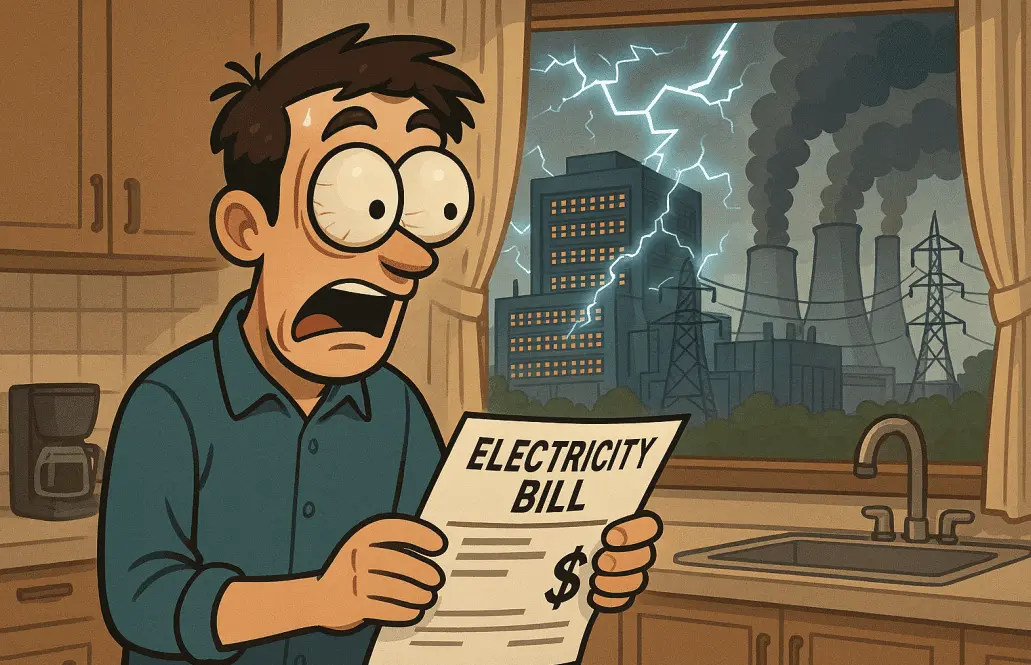
The announcement comes amid a crisis that has seen wholesale electricity prices surge by 267% over five years in some regions, driven largely by the explosive growth of energy-intensive data centers
2
. Rising electricity rates have become a top election priority in the US, with local opposition leading to projects being canceled or delayed across the country1
. President Trump publicly demanded that tech companies "pay their own way" in electricity consumption, while three Democratic senators sent demand letters to Amazon, Google, Meta, and other AI hyperscalers seeking explanations2
.
Source: SiliconANGLE
New Power Sources and Grid Strain Solutions
Anthropic's strategy extends beyond simply covering costs. The company pledges to support efforts to bring new power sources online rather than purchasing credits or contracting existing capacity, directly addressing the projected need for at least 50 gigawatts of power for the US AI sector in coming years
2
. The company is also investigating curtailment systems to reduce power consumption during peak demand periods, a critical measure that could help relieve pressure on power grids during extreme weather events like heatwaves or winter storms1
. Additionally, Anthropic is adopting technologies like liquid cooling to reduce overall energy needs3
.
Source: Fast Company
Related Stories
Limited Scope Raises Questions About Leased Capacity
While Anthropic's commitment applies to its own facilities—including data centers in Mitchell County, Texas, Niagara County, New York, and southeast Louisiana—it doesn't extend to the substantial compute capacity the company leases from major providers
3
. The company has signed massive deals with Google and Microsoft to access AI accelerators, with the Microsoft agreement alone supporting an additional gigawatt of datacenter capacity3
. Anthropic acknowledges it is "exploring further ways to address our own workload's effects on prices" in leased facilities, but hasn't made concrete commitments3
.Industry-Wide Movement and Government Role
Anthropic joins Microsoft and OpenAI in making similar pledges, with Microsoft releasing its "Community-First AI Infrastructure" framework and OpenAI promising to fund grid upgrades with flexible loads
2
. However, Dario Amodei emphasized that company-level action isn't sufficient, calling for "systemic change" including faster and cheaper permitting, transmission development, and grid interconnection to bring new energy online for everyone2
. The company also highlighted its economic contributions, stating its existing project pipeline will create hundreds of permanent jobs and thousands of construction jobs5
. Where new power generation isn't immediately available, Anthropic will work with utilities and external experts to estimate and offset demand-driven price effects, though quantifying exact impacts on local and national power grids remains challenging4
.
Source: Tom's Hardware
References
Summarized by

Navi
[3]
Related Stories
Senators probe tech giants as AI data centers drive electricity costs up, communities fight back
16 Dec 2025•Policy and Regulation
AI Data Center Boom Sparks Electricity Grid Crisis and Consumer Cost Concerns
15 Nov 2025•Business and Economy

AI Data Centers Reshape U.S. Electricity Market, Raising Concerns Over Rising Consumer Bills
09 Aug 2025•Business and Economy
Recent Highlights
1
Apple Plans Major Siri AI Overhaul in iOS 27 With Third-Party Chatbot Integration
Technology

2
OpenAI shuts down Sora after six months, ending Disney's $1 billion licensing partnership
Technology

3
AI chatbots validate you too much, making you less kind to others, Stanford study reveals
Science and Research

Recent Highlights
Today's Top Stories







Your Daily Dose of Curated AI News
Don’t drown in AI news. We cut through the noise - filtering, ranking and summarizing the most important AI news, breakthroughs and research daily. Spend less time searching for the latest in AI and get straight to action.

