Americans rank AI among least-liked topics, worse than ICE and Trump, NBC poll reveals


5 Sources
5 Sources
[1]
AI Is One of the Least-Liked Things in America, According to New NBC Poll
Macy has been working for CNET for coming on 2 years. Prior to CNET, Macy received a North Carolina College Media Association award in sports writing. Artificial intelligence has rapidly become embedded in everything from phones to schoolwork to war plans. And that means everyone is likely to have an opinion about the technology. A new national survey conducted for NBC News highlights a striking disconnect between the spread of AI tools and Americans' views on them. The poll, which ran from Feb. 27 to March 3, asked 1,000 registered voters about their views on topics ranging from border security to the new pope. Only 26% of voters said they view AI positively, 46% view it negatively, and 28% said they feel unsure or have no opinion, leaving AI with a net favorability of -20. In the study, AI ranked less favorably than US Immigration and Customs Enforcement, President Donald Trump, former Vice President Kamala Harris, the Republican Party and The Late Show host Stephen Colbert. (Pope Leo XIV was by far the most popular person respondents were asked about.) Among the rankings, AI is one of the least popular topics in the survey -- ranking only slightly more positively than Iran and the Democratic Party. There is a notable disconnect between the industry's ongoing push for AI adoption and how Americans feel about it. Tech companies are currently investing millions of dollars into developing generative AI tools and physical AI. In the last week alone, OpenAI released its latest GPT 5.4 model and AI companies made moves to work with the US Department of Defense. At the same time, Americans are growing increasingly wary of the technology. The mismatch between adoption and public sentiment seems to be driven by concerns about AI's broader impact, such as job displacement, privacy issues, the spread of misinformation and the undermining of human-made work. For companies and policymakers going all in on AI, the biggest challenge will be less about developing the next slew of innovative chatbot models or AI devices and more about persuading the public that the technology can be trusted.
[2]
People Hate AI Even More Than They Hate ICE, Poll Finds
People really hate artificial intelligence, according to the latest NBC poll. NBC surveyed a group of registered voters and found that the concept of artificial intelligence was so unpopular that 46% of respondents said they hold negative feelings towards the concept, and only 26% reported positive connotations, while 27% were neutral. Even the Immigration and Customs Enforcement agency, which has been the subject of nationwide protests spanning months, was viewed more favorably, as was President Donald Trump, whose current net approval rating is -19. In fact, the only topics viewed more negatively than AI were Iran and the Democratic Party. The risks that come with artificial intelligence proliferation have been a major topic of public discussion for the past year as the technology further entrenches itself in modern society. Experts have argued that widespread AI adoption in the business world will bring about a white-collar unemployment catastrophe. Some say AI is already impacting the labor market negatively, with a clear hit suffered by early-career workers in vulnerable sectors, even though the actual returns on productivity are still highly contested. AI addiction has quickly become a phrase we are all too familiar with, despite repeated warnings against the mental health concerns that come with an overreliance on chatbots and numerous studies linking increased reliance on AI with less cognitive ability. AI chatbots have also been repeatedly accused of inciting violence and promoting self-harm, and numerous grieving families are suing major chatbot providers like OpenAI and Character.AI. The complicity of AI companies in widely unpopular government actions worldwide has also contributed to the bad reputation AI is building for itself. AI has turbocharged surveillance efforts and increased fatality in war zones around the world. Calls for a boycott have increased as Palantir signed agreements to supply the AI technology aiding the massive anti-immigrant crackdown led by ICE, and OpenAI has stood firmly behind its controversial decision to lease its technology to the Pentagon. Also attracting controversy is the intense energy demand posed by increased AI usage. The United States is in the midst of an unprecedented data center buildout, but the locals living near these centers have repeatedly complained about water shortages, rising utility bills, and worsening air quality. People are so fed up that data center project cancellations quadrupled in 2025 due to local resistance. In response, a growing number of states and other localities have begun to consider implementing moratoriums on new AI data centers. But there is some cognitive dissonance among the general public. Fifty-seven percent of the respondents to the survey said that the risks of AI outweigh the benefits. Despite that, the respondents who admit to using AI platforms like ChatGPT rose from 48% in December 2025 to 56% in March. The poll comes as artificial intelligence has become a major battleground in the upcoming midterm elections. Despite the considerable real estate that AI holds in political discourse, the technology is still incredibly underregulated, and a lot of the major names in the industry would like it to stay that way. Big tech is spending exorbitant amounts of money to back politically aligned candidates and undermine the AI hawks running for election in November 2026, while said candidates are making AI a core issue in their campaigns. Even though the Trump-led Republican Party has been very protective of the AI industry and sees it as crucial to national security, AI critics and champions have come from both sides of the aisle. In the NBC poll, the majority of voters surveyed said that neither party is adequately dealing with the threat of artificial intelligence.
[3]
People really hate AI but not as much as Iran -- or Democrats | Fortune
Artificial intelligence has permeated nearly every part of daily American life. It's being adopted across the professional sphere, and threatening to replace large swaths of workers. It's appeared in classrooms, doctor's offices, and in Hollywood. And AI-generated content has penetrated your Facebook, Instagram, and TikTok feeds. But even as AI weaves its way into the everyday, it's failed to win over most Americans. That's according to a new NBC News poll. The survey of 1,000 registered voters between Feb. 27 and March 3 found that just 26% had a positive view of AI, while 46% had a negative view. Those dismal numbers are third worst, trailing only the Democratic Party, which had a 22-point net negative rating, and Iran, with a 53-point net negative. That low favorability comes as about 56% of Americans today say they use AI tools, according to a Brookings survey. And big tech companies are piling billions of dollars into the AI buildout, contributing up to $700 billion in capital expenditures, investments which rival the GDP of some developed countries. While the technology has the potential to radically transform society, with some leaders viewing it as a cure-all that could boost productivity, bolster innovation, and even cure cancer, the very scale of that transformation has also made many Americans wary of its potential. At the same time, the rush of data center construction to support increased AI use has been met with a "not in my backyard" backlash, and AI's increased electricity demand has spiked Americans' utility bills. Still, AI's numbers are better than the Democratic Party's. A 52% majority of those surveyed have a negative view of Democrats, with just 30% saying they have a favorable view. The party has faced a reckoning since its disappointing defeat in the 2024 presidential election, triggering internal conflict and constant finger-pointing. Political post-mortem after post-mortem has deepened a cold war between progressives and moderates, fueling ongoing debates over President Joe Biden's handling of the Gaza war, inflation, and the cost of living. The Republican Party has similarly bleak numbers, with 51% of respondents expressing an unfavorable view. But more respondents, 37%, said they had a positive view of the party, compared to just 30% saying the same for the Democratic Party. That puts Republicans at a 14-point net-negative view. And even as 56% of Americans oppose the war in Iran according to a Marist poll, 61% have a negative view of the country. Just 8% say they have a positive view. Still, Americans like AI less than even some of the most controversial organizations and political figures, including Immigration and Customs Enforcement and President Donald Trump. ICE, which is enforcing Trump's wide-spanning deportation operation, has an 18-point net negative view among registered voters. Thirty-eight percent have a favorable view of the agency, while 56% have a negative view. Just 41% have a positive view of Trump, with 53% holding a negative view. That's a 12-point net negative view. The only two figures with favorability numbers above water are Pope Leo XIV, with a 34-point net positive favorability, and comedian Stephen Colbert, with a 10-point net favorability. AI has faced pushback across industries. In 2023, Hollywood screenwriters and actors staged one of the longest strikes in history out of fears that AI would one day replace them. A year later, California nurses went on strike to protest "untested" AI as hospitals and health care professionals moved to adopt the technology. A wave of predictions on the technology's impact on the job market has given Americans fresh reason to criticize its development. A recent Anthropic economic report found AI is already theoretically capable of replacing a majority of tasks associated with business, finance, coding, and law. Such warnings have contributed to widespread angst amongst Americans. A February poll from research firm Verasight found 56% remain anxious about AI's rise. "Until companies and institutions building AI systems can address fundamental concerns about trustworthiness, privacy, and social responsibility," the poll's authors wrote, "Americans will remain trapped between enthusiasm and anxiety, using AI while quietly wondering if they should."
[4]
Americans Use AI Every Day -- But Most Still Don't Like It, New Poll Shows - Decrypt
A majority of respondents, 57%, said the risks of artificial intelligence outweigh its benefits, reflecting broader concerns about privacy, economic disruption and trust in the technology. More than half of Americans said they had used an artificial-intelligence platform in the past two to three months, according to a new poll. Yet when respondents were asked to rate their feelings toward the technology, AI ranked near the bottom of the list. The survey of 1,000 registered voters was conducted by NBC News in partnership with Hart Research Associates and Public Opinion Strategies, from February 27 through March 3. Just 26% of registered voters view AI positively, while 46% say they view it negatively, yielding a net favorability score of minus 20 points. AI's net favorability trailed Immigration and Customs Enforcement at -18, the Republican Party at -14, President Trump at -12, Kamala Harris at -17, and California Gov. Gavin Newsom at -18. Only the Democratic Party, at -22, and Iran, at -53, ranked lower. Usage figures, however, point to a different trend. Some 56% of respondents said they had used an AI platform such as ChatGPT, Microsoft Copilot, or Google Gemini in the past few months, up from 53% in August 2025 and 48% in December 2024. The data indicate Americans are adopting the tools even as their views of the technology remain lukewarm. The poll also asked whether the benefits of artificial intelligence outweigh the risks. A majority of respondents, 57%, said the risks outweigh the benefits, while 34% said the opposite. The results align with a Pew Research Center survey from last September, which found that 50% of U.S. adults were more concerned than excited about AI, up from 37% four years earlier. Other surveys paint a similar picture. A December 2025 YouGov poll found that 35% of Americans use AI at least once a week, yet only 5% say they deeply trust it. Trust is lowest in healthcare and finance, sectors where AI is also expanding fastest. A Quinnipiac University survey from April 2025 found that just 4% of Americans think they can trust AI-generated information almost all the time, and nearly three-quarters said the government should intervene to prevent AI-caused job losses. The NBC data also show a sharp partisan gap in how the question about AI governance is framed: Democrats trust the U.S. to regulate AI at lower rates than Republicans, while Democrats are more likely to trust the EU with the task -- a reversal of the usual pattern on foreign institutions. Overall, most Americans think neither party is good at handling AI policies, with 33% saying both are bad, 4% unsure, and 24% saying they do a similar job. But despite that perception, politicians have not slowed down their interest in AI. President Trump is pushing for tighter controls on AI hardware, while lawmakers are exploring ways to expand domestic AI industries without alienating voters. The debate is unfolding amid persistent concerns about privacy and the technology's economic impact. At the same time, the White House is advancing AI infrastructure projects, including the controversial Stargate Project, even as the technology holds a net favorability rating worse than most politicians.
[5]

Close to half in new poll have negative view of AI
Almost half of American voters have a negative view of artificial intelligence (AI), according to a new poll. In the NBC News poll released Tuesday, 46 percent of respondents said they had a "somewhat negative" or "very negative" view of AI. Twenty-seven percent said they were "neutral" towards the technology and 26 percent said they had a "very positive" or "somewhat positive" view of it. As AI has advanced in recent years, there have been questions about how it will affect the job market, the value of human work, its environmental effects and the safety parameters of the technology. AI company Anthropic recently filed a lawsuit against the Trump administration going against a decision from the Pentagon to label the company and its products as a "supply chain risk" following negotiations about safety guardrails falling through in early March. Anthropic and the U.S. government had been fighting for weeks before the suit because of Anthropic's AI policy preventing its model Claude from being used for mass surveillance or creating lethal autonomous weapons. The NBC News poll took place from Feb. 27 to March 3, featured 1,000 registered voters and had a margin of error of 3.1 percentage points.
Share
Share
Copy Link
A new NBC poll shows artificial intelligence ranks among the least popular topics in America, with 46% of voters holding negative views. The technology scored worse than Immigration and Customs Enforcement, President Trump, and both major political parties, trailing only Iran and the Democratic Party. Despite 56% of Americans using AI tools like ChatGPT, public apprehension continues to grow over job displacement, privacy issues, and environmental concerns.
Artificial Intelligence Faces Historic Public Rejection
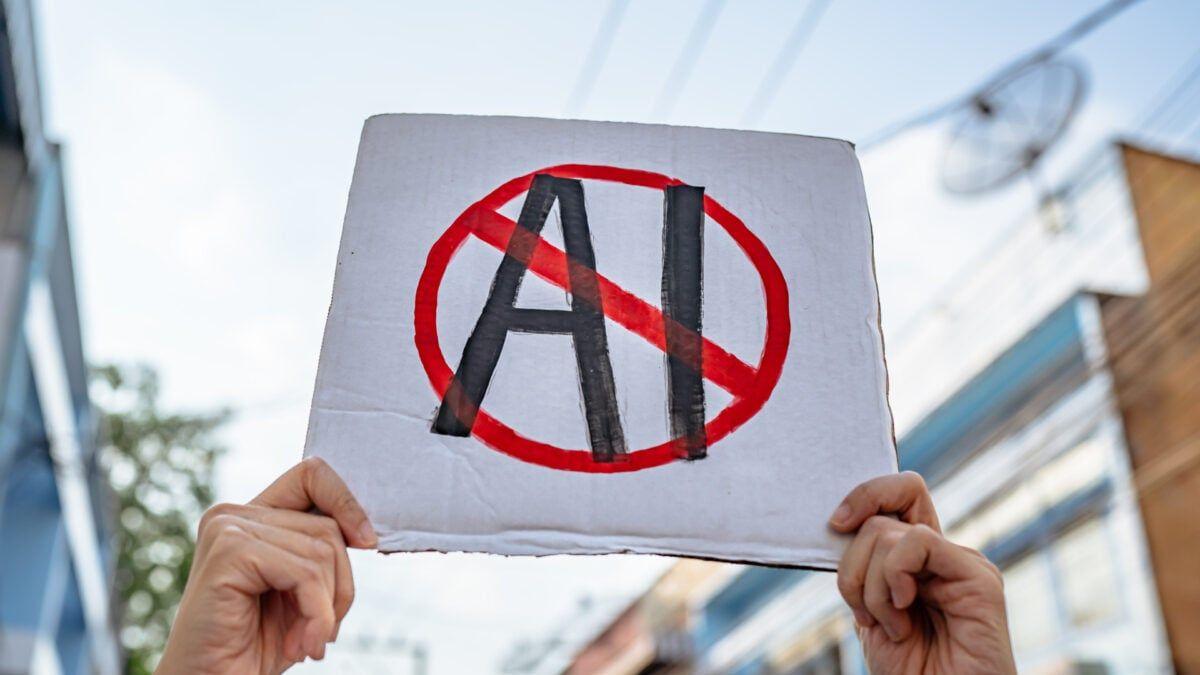
Artificial intelligence has earned the dubious distinction of being one of the least-liked topics in America, according to a striking NBC poll that surveyed 1,000 registered voters between Feb. 27 and March 3
1
. The results paint a sobering picture for an industry that has poured billions into development: only 26% of voters view AI positively, while 46% hold a negative view of AI, resulting in a net favorability of -202
. This places the technology in company with some of the most controversial entities in American discourse, ranking more unfavorably than Immigration and Customs Enforcement, President Donald Trump, and both the Republican Party and Democratic Party3
.
Source: Gizmodo
Public Sentiment Reveals Deep Disconnect With Industry Investment
The negative public sentiment toward AI stands in sharp contrast to the tech industry's massive financial commitment to the technology. Companies are investing up to $700 billion in capital expenditures for AI infrastructure, investments that rival the GDP of some developed countries
3
. OpenAI recently released its latest GPT 5.4 model, while AI companies have moved to work with the US Department of Defense1
. Yet this aggressive push for AI adoption appears disconnected from how Americans actually feel about the technology. The NBC poll reveals that 57% of respondents believe the risks of artificial intelligence outweigh its benefits, a sentiment that has remained consistent across multiple surveys4
.Widespread Usage Despite Growing Fears of Job Displacement
A paradox emerges from the data: despite unfavorable views toward AI, usage continues to climb. Some 56% of respondents admitted to using AI platforms like ChatGPT, Microsoft Copilot, or Google Gemini in recent months, up from 48% in December 2024
2
. This cognitive dissonance suggests Americans are adopting AI tools out of necessity or convenience while harboring deep reservations about their broader impact.
Source: The Hill
Experts have warned that widespread AI adoption in the business world will bring about significant white-collar unemployment, with fears of job displacement ranking among the primary drivers of public apprehension
2
. A recent Anthropic economic report found AI is already theoretically capable of replacing a majority of tasks associated with business, finance, coding, and law3
.
Source: Decrypt
AI Privacy Issues and Surveillance Fuel Public Distrust
Public trust in AI remains alarmingly low across critical sectors. A December 2025 YouGov poll found that only 5% of Americans say they deeply trust AI, with trust lowest in healthcare and finance—ironically, the sectors where AI is expanding fastest
4
. AI privacy issues have intensified as the technology has turbocharged surveillance efforts globally2
. The complicity of AI companies in controversial government actions has further damaged the industry's reputation. Palantir signed agreements to supply AI technology aiding ICE's anti-immigrant crackdown, while OpenAI stood firmly behind its decision to lease technology to the Pentagon2
. AI company Anthropic recently filed a lawsuit against the Trump administration after being labeled a "supply chain risk" following failed negotiations about safety guardrails, particularly around preventing its model Claude from being used for mass surveillance or creating lethal autonomous weapons5
.Related Stories
Environmental Issues and Data Centers Spark Local Resistance
The intense energy demand posed by increased AI usage has emerged as a flashpoint for AI adoption concerns. The United States is experiencing an unprecedented data centers buildout, but locals living near these facilities have repeatedly complained about water shortages, rising utility bills, and worsening air quality
2
. The backlash has been so severe that data center project cancellations quadrupled in 2025 due to local resistance, prompting a growing number of states and localities to consider implementing moratoriums on new AI infrastructure2
. These environmental issues compound existing concerns about misinformation, with AI chatbots repeatedly accused of inciting violence and promoting self-harm, leading grieving families to sue major providers like OpenAI and Character.AI2
.AI Regulation Becomes Political Battleground Ahead of Midterms
Artificial intelligence has become a major battleground in upcoming midterm elections, despite the technology remaining incredibly underregulated
2
. Big tech is spending significant amounts to back politically aligned candidates and undermine AI hawks running for election in November 2026, while those candidates make AI a core campaign issue2
. The NBC poll reveals a sharp partisan gap in AI regulation preferences: Democrats trust the U.S. to regulate AI at lower rates than Republicans, while Democrats are more likely to trust the EU with the task4
. However, most Americans think neither party adequately handles AI policies, with 33% saying both are bad at it4
. President Trump is pushing for tighter controls on AI hardware while advancing infrastructure projects like the controversial Stargate Project, even as the technology holds a net favorability rating worse than most politicians4
. For companies and policymakers investing heavily in AI, the biggest challenge will be less about developing innovative chatbots or AI devices and more about persuading the public that the technology can be trusted1
.References
Summarized by

Navi
Related Stories
Americans Divided on AI's Impact: New Poll Reveals Split Opinions on Technology's Future Role
19 Jun 2025•Technology

Americans Express Concerns Over AI's Impact on Personal Lives and Human Abilities
18 Sept 2025•Technology

Americans Express Deep Concerns Over AI's Impact on Jobs, Politics, and Society
19 Aug 2025•Technology

Recent Highlights
1
Google releases Gemma 4 with Apache 2.0 license, enabling unrestricted local AI on devices
Technology

2
AI Models Lie and Deceive to Protect Other AI Models From Deletion, Study Reveals
Science and Research

3
OpenAI closes $122 billion funding round amid fierce AI competition and profitability questions
Startups

Recent Highlights
Today's Top Stories







Your Daily Dose of Curated AI News
Don’t drown in AI news. We cut through the noise - filtering, ranking and summarizing the most important AI news, breakthroughs and research daily. Spend less time searching for the latest in AI and get straight to action.

