Americans Divided on AI's Impact: New Poll Reveals Split Opinions on Technology's Future Role


3 Sources
[1]
Poll: As Americans form views on AI, they're divided on its role in school and everyday life
Among U.S. adults, 44% said they think AI will make life better, while 42% think AI will make life worse. But most respondents don't hold strong feelings on the issue. Americans are almost evenly split on several questions measuring their views on artificial intelligence, with no meaningful
[2]
American attitudes about AI today mirror poll answers about the rise of the internet in the '90s
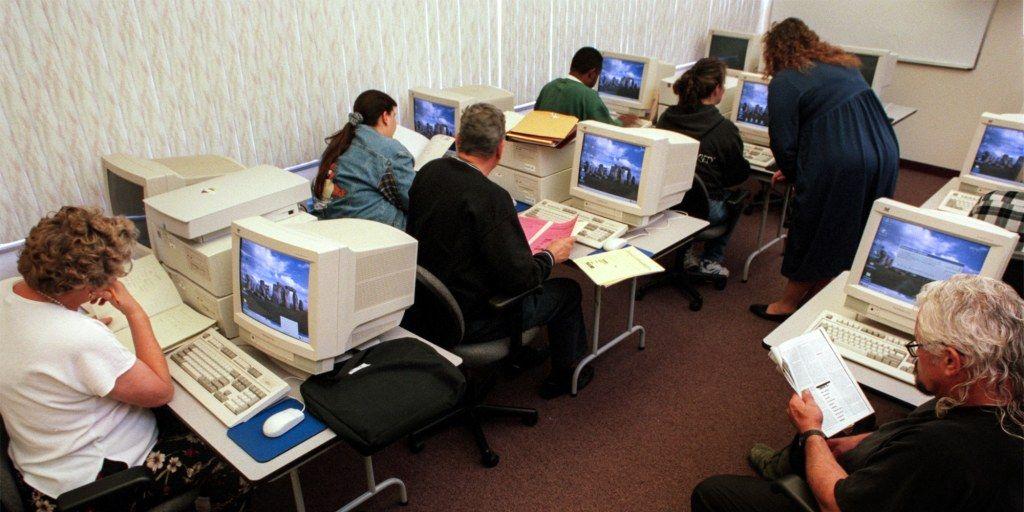
A class in the Computer Training Center at Conejo Valley Adult School in Thousand Oaks, Calif., in 1997.Anne Cusack / Los Angeles Times via Getty Images file Artificial intelligence chat tools like OpenAI's ChatGPT, Google's Gemini and Microsoft's Copilot have achieved significant public adoption,
[3]
Americans split on whether AI will make life better or worse: Survey
Americans are split on whether artificial intelligence (AI) will make life better or worse, according to an NBC News Decision Desk Poll released Wednesday. Asked about AI's impact on "the life of you and your family" overall, 7 percent of respondents said lives will be "much better," 37 percent
Share
Copy Link
A recent NBC News Decision Desk Poll shows Americans are almost evenly split on their views about artificial intelligence's impact on everyday life, education, and the future, with no significant differences based on age or political affiliation.
Americans Divided on AI's Impact
A recent NBC News Decision Desk Poll has revealed that Americans are almost evenly split in their views on artificial intelligence (AI) and its potential impact on various aspects of life. The survey, which gathered responses from 19,410 people between May 30 and June 10, shows a nation grappling with the implications of this rapidly advancing technology
1
.AI's Influence on Daily Life
When asked about AI's impact on their lives and those of their families, 44% of respondents believed it would make life "much better" or "somewhat better," while 42% thought it would make life "somewhat worse" or "much worse"
1
. Interestingly, only 7% felt AI would make life "much better," indicating a general sense of caution among the public3
.AI Tool Usage and Adoption
Source: The Hill
The poll revealed that 44% of U.S. adults use AI tools like ChatGPT, Google Gemini, or Microsoft Copilot "sometimes" or "very often," while 56% use them "rarely" or "never"
1
. This level of adoption is reminiscent of internet usage rates in the late 1990s and early 2000s, suggesting that AI might be following a similar trajectory of public acceptance2
.Political Perspectives on AI
Surprisingly, the survey found no significant differences in AI views based on political affiliation. Republicans, Democrats, and independent voters showed similar patterns in their usage of AI tools and expectations for AI's impact on the future
1
. This lack of partisan divide suggests that AI is currently viewed as a non-political issue by the general public.AI in Education
The poll also explored opinions on AI's role in education, revealing another close split. 53% of respondents believed that integrating AI tools in classrooms would better prepare students for the future, while 47% thought prohibiting such tools would be more beneficial
1
. This division reflects the ongoing debate among educators about how to approach AI in academic settings.Related Stories

Generational Perspectives
Contrary to what some might expect, the survey found little variation in views on AI across different age groups. Even among adults aged 18 to 29, opinions were evenly split on whether schools should incorporate or prohibit AI use in classrooms
1
.Historical Context
Source: NBC
The current attitudes towards AI mirror those seen during the rise of the internet in the 1990s. A 1998 Newsweek poll showed that 38% of respondents used the internet once a week or more, while a 2000 NBC News/Wall Street Journal Poll found that 71% of adults had internet access
2
. This historical parallel suggests that AI adoption might follow a similar pattern of gradual acceptance and integration into daily life.Future Implications

Source: NBC
As AI continues to evolve and permeate various sectors, including education and the job market, public opinion will likely play a crucial role in shaping policies and regulations. President Trump's recent announcement of a $500 billion investment in AI infrastructure development, involving companies like SoftBank, OpenAI, and Oracle, underscores the growing importance of AI in national strategy
3
.The divided opinions revealed by this poll highlight the need for ongoing public discourse and education about AI's potential benefits and risks. As AI technology advances, it will be crucial for policymakers, educators, and industry leaders to address public concerns and work towards responsible AI development and implementation.
References
Summarized by

Navi
[2]
Related Stories
Americans rank AI among least-liked topics, worse than ICE and Trump, NBC poll reveals
09 Mar 2026•Entertainment and Society

Only 16% of Americans see AI positively, yet half now use chatbots, Pew Research study reveals
17 Jun 2026•Entertainment and Society

AI Adoption in America: Generational Divide and Emerging Trends
29 Jul 2025•Technology

Recent Highlights



Recent Highlights
Today's Top Stories



Don’t drown in AI news. We cut through the noise - filtering, ranking and summarizing the most important AI news, breakthroughs and research daily. Follow topics that matter to you and stay ahead.


