Zhipu AI becomes first China AI tiger to go public, vows to export brutal price war globally


10 Sources
10 Sources
[1]
China's Zhipu Says AI Price War Will Spread Internationally
Zhipu co-founder and chairman Liu Debing expects US artificial intelligence developers to succumb to the same price-based competition that has forced Chinese companies to forgo profits. One of China's earliest OpenAI rivals expects US artificial intelligence developers to succumb to the same price-based competition that has forced Chinese companies to forgo profits. Beijing-based Zhipu AI is today set to become China's first AI software maker to go public. While it disclosed sales of just $27 million in the first half of 2025 and deepening expenses, the company is still likely to find a receptive audience among Hong Kong investors keen for a foothold in the AI sector. Operating a ChatGPT-like AI service on the web dubbed Z.ai, Zhipu is now accelerating its push for exposure and users abroad. "Once the market matures through full competition, more people will understand the capabilities, performance and pricing of these models, reaching a state of equilibrium," Zhipu co-founder and chairman Liu Debing, 49, said in an interview with Bloomberg TV. Zhipu, under the business name of Knowledge Atlas Technology JSC Ltd., raisedBloomberg Terminal more than $500 million in a public market debut that's ahead of San Francisco-based competitors OpenAI and Anthropic PBC. Rival MiniMax is set to begin trading Friday after launching a share sale for about the same amount to investors including Alibaba Group Holding Ltd. and Abu Dhabi's sovereign wealth fund. Get the Tech Newsletter bundle. Get the Tech Newsletter bundle. Get the Tech Newsletter bundle. Bloomberg's subscriber-only tech newsletters, and full access to all the articles they feature. Bloomberg's subscriber-only tech newsletters, and full access to all the articles they feature. Bloomberg's subscriber-only tech newsletters, and full access to all the articles they feature. Bloomberg may send me offers and promotions. Plus Signed UpPlus Sign UpPlus Sign Up By submitting my information, I agree to the Privacy Policy and Terms of Service. Both Chinese startups operate with a fraction of the cash, computing resources and staff available to Silicon Valley AI developers. But they are closing the gap with constant upgrades and pitching coders and corporate customers with comparable performance at a much lower price. Zhipu, for its part, charges as little as 20 yuan (less than $3) per month for its AI coder - roughly one seventh the cost of Anthropic's Claude. "The Chinese market is hyper-competitive, which naturally drags prices down to these levels," Liu said. "But as we compete globally, international users will undoubtedly recognize the value. If we can consistently maintain a price point at one-seventh of our rivals, we will possess a distinct advantage that the global market is bound to embrace." Finding a path to profitability isn't Zhipu's priority, but proliferating its tech is, Liu said. The company's commercial operations would be breaking even were it not for the massive capital requirements of developing frontier foundation models, he added. Research and development expenses surged to 1.59 billion yuan ($228 million) in the first half of 2025 - roughly eight times the company's revenue for the same period. Despite the heavy spend, Zhipu bolstered its cash position to 2.55 billion yuan by the end of June, providing a buffer for its ongoing expansion. Founded in 2019 by Tsinghua University researchers, Zhipu is backed by Alibaba, Tencent Holdings Ltd. and a long list of government funds from places like Beijing, Shanghai and Hangzhou. That support helped it win contracts with state-owned enterprises, which prefer building customized AI infrastructure rather than tapping public solutions. Read more about the twin Chinese AI debuts China's OpenAI Rivals Unveil Sales Details Ahead of Stock Debuts Alibaba, Abu Dhabi Back MiniMax IPO in Landmark China AI Moment Zhipu Grows Revenue and Users on Path to China's First AI IPO MiniMax Plans to Price IPO at the Top in Sign of China AI Fervor Yet Zhipu, on a US blacklist that prevents American suppliers from selling vital gear to the company without a license, is seeking to offer more scalable software services to broad swaths of clients as it grows its model-as-a-service platform. For the first half of 2025, revenue more than quadrupled to 190.9 million yuan from 44.9 million yuan, aided by that push. Zhipu's MaaS platform now has 2.9 million users, with 15% paying, Liu said. He expects revenue from such standardized product sales to grow over 50% in the next three years. A former senior engineer at Tsinghua, Liu is Zhipu's biggest individual shareholder with a roughly 14% stake. He has nearly 18 years of experience in the computing technology industry. -- Annabelle Droulers, Zheping Huang
[2]
China's AI firms tread treacherous path to profit
HONG KONG, Jan 8 (Reuters Breakingviews) - Spare a thought for China's artificial intelligence upstarts. The industry may be booming, but large language model specialists like Zhipu and MiniMax (0100.HK), opens new tab are bleeding red ink, squeezed by high research and development costs, Darwinian price wars against deep-pocketed giants and immature business models. With venture capital funding hit by Sino-American tensions, both are tapping public markets unusually early. That piles hard to compute risks on investors. Zhipu, formally known as Knowledge Atlas Technology (2513.HK), opens new tab, debuted in Hong Kong on Thursday after raising $552 million at a $6.6 billion valuation. The six-year-old company focuses on offering large-model services for Chinese enterprises, a market expected to grow to 90 billion yuan, or $13 billion, by 2030, up from less than 9 billion yuan last year, per research cited in Zhipu's prospectus. Yet revenue lags far behind the sky-rocketing costs of training and launching cutting-edge models. In the first half of 2025, Zhipu's research and development bill surged 86% year-on-year, to $228 million - more than 8 times its top line. With an expected monthly cash burn of 327 million yuan, Zhipu had just over two years of runway before its funds ran dry. Its Hong Kong share sale stretches that to a little over three years. The problem is raising prices looks unfeasible given intensifying competition from giants Baidu, Alibaba (9988.HK), opens new tab, DeepSeek and others. Zhipu's stock opened up 3% on Thursday morning. The profit and loss statement is similarly grim at MiniMax, whose shares are set to debut in Hong Kong on Friday. The company, known for consumer apps, including an AI agent, video creator and audio generator, might eventually be able to compete with Western giants overseas in new segments like AI coding. But that's a long way off: revenue was just $53.4 million in the nine months to end-September, less than a third of its R&D expenses for the period. To compare, annualised 2025 revenue for OpenAI and Anthropic is expected to be more than $13 billion, opens new tab and $9 billion respectively. In the past, deeply unprofitable companies like MiniMax and Zhipu would have been considered too-early stage for public markets. However, raising private capital is increasingly difficult against a sharp decline in foreign direct investment into the People's Republic, especially from U.S. investors, once a key support for startups. Government funding, meanwhile, is being channeled toward "hard tech" like semiconductors and aerospace. For public investors, as for venture capitalists, the odds remain heavily stacked against them. Follow Robyn Mak on X, opens new tab. Context News* Chinese artificial intelligence firm Knowledge Atlas Technology, also known as Zhipu AI, opened 3.3% higher than its initial public offering price on its first-day trading in Hong Kong on January 8. The company raised HK$4.3 billion at a valuation of about $6.6 billion. * Zhipu made a net loss of 2.4 billion yuan in the first-half of 2025 on 190 million yuan of revenue. * Rival MiniMax is expected to raise HK$4.2 billion in its Hong Kong initial public offering, Reuters reported on January 5, citing sources. The company is set to price its shares, due to start trading on January 9, at the top of the marketing range, at HK$165 per share. That would value MiniMax at about $6.5 billion. * MiniMax made a net loss of $512 million in the nine months to end-September 2025 on $53.4 million of revenue. Editing by Una Galani; Production by Aditya Srivastav * Suggested Topics: * Breakingviews Breakingviews Reuters Breakingviews is the world's leading source of agenda-setting financial insight. As the Reuters brand for financial commentary, we dissect the big business and economic stories as they break around the world every day. A global team of about 30 correspondents in New York, London, Hong Kong and other major cities provides expert analysis in real time. Sign up for a free trial of our full service at https://www.breakingviews.com/trial and follow us on Twitter @Breakingviews and at www.breakingviews.com. All opinions expressed are those of the authors. Robyn Mak Thomson Reuters Robyn Mak joined Reuters Breakingviews in 2013. Previously, she was a Research Associate for the Global Policy Programs at the Asia Society in New York. She has also worked at the Carnegie Endowment for International Peace in Washington DC and interned at several consulting firms, including the Albright Stonebridge Group. She holds a masters degree in international economics and international relations from the Johns Hopkins School of Advanced International Studies and is a magna cum laude graduate of New York University.
[3]
China's first 'AI tiger' goes public as Zhipu climbs in Hong Kong debut
The Zhipu AI logo is seen displayed on a smartphone screen. Sopa Images | Lightrocket | Getty Images Shares of Knowledge Atlas Technology JSC, better known as Zhipu, edged higher on their Hong Kong debut, following a $558 million initial public offering that made it the first of China's "AI tigers" to go public. The stock rose around 10% above its offer price of 116.20 Hong Kong Dollars ($15) on Thursday, with around 37.4 million shares on offer by the Beijing-based startup. The IPO valued Zhipu at around HK$4.3 billion, making it one of the larger AI flotations in recent years. Founded in 2019 by researchers from a top Chinese university, Zhipu represents the country's first major large language model company to go public through an IPO. The listing marks another key milestone for China's broader artificial intelligence sector following a wave of recent listings by AI chipmakers. The firm, strongly backed by Beijing, is also considered one of China's so-called "AI tigers" -- startups building large language models to rival the likes of OpenAI and Anthropic. Other notable firms in the group include Deepseek, which famously rattled markets early last year with the release of one of its LLM models. While not as well known globally as Deepseek, Zhipu gained attention last year when American AI juggernaut OpenAI highlighted its notable progress as a competitor on the "front line" of China's race to lead in AI. The firm reportedly has offices in the United Kingdom, Singapore, Malaysia, and across the Middle East. It also operates joint "innovation centers" projects across Southeast Asia, including in Indonesia and Vietnam. Zhipu's progress has come despite being placed on the US Commerce Department's Entity List in January last year, after U.S. officials said it was working with China's military. The firm's ability to train its AI models has also been constrained by U.S. restrictions on access to advanced semiconductor technology and expertise. According to Zhipu's prospectus, it plans to use 70% of the IPO proceeds toward research and development of its general-purpose large AI models. The firm reported revenue of 312.4 million yuan in 2024. Rival Chinese AI start-up MiniMax is expected to launch its own offering on Friday, following a confidential filing last year.
[4]
China's OpenAI Rival Zhipu Debuts in HK After $558 Million IPO
The company plans to use 70% of the IPO proceeds toward research and development of its general-purpose large AI models, according to its prospectus. Knowledge Atlas Technology JSC Ltd. will start trading in Hong Kong on Thursday after a $558 million initial public offering, becoming the first major Chinese generative-AI startup to list. The company, better known as Zhipu, offeredBloomberg Terminal 37.4 million shares at HK$116.20 ($14.9) apiece to investors last week. Its shares allocated to retail investors were subscribedBloomberg Terminal by more than 1,159 times. Shares roseBloomberg Terminal as much as 35% in the gray market ahead of its debut. Zhipu is the first of China's "AI tigers," which are startups building large language models to rival OpenAI Inc. and Anthropic PBC, to go public. Their ambitions are curbed by US export controls restricting access to advanced chips from firms like Nvidia Corp. The listing offers an early test of whether markets view these companies as credible challengers to US peers. "We have a positive view of this IPO," analyst Douglas Kim wrote in a note on Smartkarma, estimating the shares to trade at nearly double the issue price. Many investors are willing to pay for such high valuations mainly due to Zhipu's position as one of the leaders in the segment, he said. Zhipu's listing comes as Chinese semiconductor firms -- a key component in the AI supply chain -- are rushing to raise funds. GraphicsBloomberg Terminal processing units maker Shanghai Iluvatar CoreX Semiconductor Co. will also debut on Thursday. Zhipu's local rival MiniMax Group Inc. is set to list Friday after a $619 millionBloomberg Terminal IPO. Chip designer Shanghai Biren Technology Co. made a strong debut last week, marking the best first-day performance since 2021 among major Hong Kong listings. Moore Threads Technology Co. and MetaX Integrated Circuits Shanghai Co. also soared on their listing day in Shanghai last month. "This reflects robust investor interest as China continues to strengthen domestic AI capabilities and broader technology leadership," said Minyue Liu, associate investment director at Fidelity International. Still, "investor enthusiasm has been accompanied by an ongoing debate around the risk of an AI-related market bubble." Zhipu's market capitalization of $6.6 billion based on the issue price values the company lower than chipmakers Biren, Moore Threads and MetaX. Zhipu, founded in 2019 by researchers from China's Tsinghua University, is celebrated as a pioneer in the nation's AI industry. It is backed by Alibaba Group Holding Ltd., Tencent Holdings Ltd. and several local government funds. That support helped the company win contracts from state-owned enterprises, which prefer building customized AI infrastructure rather than tapping public cloud services. Zhipu mainly serves domestic institutions. The Beijing-based company reported revenue of 312.4 million yuan in 2024. Zhipu plans to use 70% of the IPO proceeds toward research and development of its general-purpose large AI models, according to its prospectus. "China AI was the new narrative in 2025 and will likely be even stronger in 2026," Sanford C. Bernstein's analysts led by Qingyuan Lin wrote in a note. The market has begun "to recognize that China's AI development is only months behind global leaders."
[5]
Chinese tech companies, led by Zhipu AI, climb in Hong Kong debut
SINGAPORE, Jan 8 (Reuters) - Three Chinese technology firms debuted higher on Thursday after raising a combined HK$9.3 billion ($1.19 billion), setting the tone for what investors hope will be a busier year for new listings in Hong Kong. All of the debutants traded above their offer prices. Artificial intelligence company Zhipu AI, also known as Knowledge Atlas Technology (2513.HK), opens new tab, opened 3.3% higher than its offer price of HK$116.20 apiece and traded around HK$116.40. Shanghai Iluvatar CoreX (9903.HK), opens new tab, a semiconductor firm, started 31.6% higher than the offer price of HK$144.60, and changed hands at around HK$169.40. Surgical robotics company Shenzhen Edge Medical (2675.HK), opens new tab jumped 36.4% above the HK$43.24 offer price, and traded at around HK$ 55.50. The debuts come as Chinese authorities fast-track AI and chip listings to strengthen domestic alternatives to advanced U.S. technology, a backdrop that has drawn issuers across the tech sectors. Huawei's AI server spin-off xFusion has hired Citic Securities in preparation for a mainland IPO, while memory chipmaker ChangXin Memory Technologies and Baidu's AI chip arm Kunlunxin are planning listings too, Reuters has reported. Zhipu AI, spun out of Tsinghua University, raised HK$4.35 billion at HK$116.20, giving it a valuation near HK$51 billion. It plans to use the bulk of proceeds for research and development. Cornerstone investors included JSC International Investment Fund and JinYi Capital Multi-Strategy Fund, among others. Shanghai Iluvatar CoreX (9903.HK), opens new tab, a designer of general-purpose GPUs, raised HK$3.48 billion. Its offer price gave it a market capitalisation near HK$36.8 billion. It earmarked the bulk of its proceeds for R&D across chips, accelerators and software. Shenzhen Edge Medical raised about HK$1.12 billion, which will fund its R&D, commercialization, manufacturing capacity and strategic acquisitions, among others. Its cornerstone investors include Abu Dhabi Investment Authority, OrbiMed, UBS AM Singapore and Tencent's Huang River. The trio's performance on Thursday will also help gauge whether Hong Kong can extend last year's IPO resurgence, with $37.2 billion raised from 115 new listings, the strongest since 2021, according to LSEG data as of January 5. The debut pipeline is growing, with MiniMax Group (0100.HK), opens new tab, another Chinese AI firm, and chipmaker OmniVision Integrated Circuits, due to start trading on Friday. Reporting by Yantoultra Ngui in Singapore; Additional reporting by Shen Yiming in Shanghai; Editing by Christopher Cushing Our Standards: The Thomson Reuters Trust Principles., opens new tab * Suggested Topics: * Asia Pacific Yantoultra Ngui Thomson Reuters Yantoultra Ngui is the Southeast Asia Deals Correspondent of Reuters in Singapore, covering M&A and capital market activities in a region that is fast emerging as one of the world's biggest economies. He previously was a reporter at Bloomberg and The Wall Street Journal (WSJ). Notably, he was part of WSJ's team that covered the financial scandal at Malaysian state fund 1MDB, and that won SOPA Excellence in Breaking News award for the coverage of the assassination of Kim Jong Nam, the half-brother of North Korea's leader Kim Jong Un, in Malaysia in 2018. Yantoultra graduated with an MBA in Finance from Universiti Putra Malaysia (UPM) in 2010.
[6]
AI Chip Designer Biren to Debut After $717 Million Hong Kong IPO
Shanghai Biren Technology Co., an artificial intelligence chip designer, was set to begin trading in Hong Kong on Friday after its initial public offering raised $717 million in one of the market's hottest sectors. The firm's shares surgedBloomberg Terminal in Hong Kong's gray market on Wednesday ahead of the official debut. Demand for the IPO was strong, with the stock priced at HK$19.6 -- the top of an indicative range, according to a filing. The retail portion was subscribed more than 2,300 times. The developer of graphics processing units used to train and run AI models makes its debut amid a wave of blockbuster listings in the sector, thanks to a global boom. A push Bloomberg Terminalby Beijing to support homegrown technology has further boosted sentiment. As the first GPU-focused stock to list in Hong Kong, Biren Technology "enjoys scarcity value and high market attention," according to Kenny Ng, a strategist at China Everbright Securities International Co. "The industry is in a flourishing stage, with many firms striving for breakthroughs and significant growth potential." Last month, MetaX Integrated Circuits Shanghai Co. soared 693% on its first day of trading, tracking Moore Threads Technology Co.'s stellar debut earlier. The firms, including Biren, are part of China's "Four Little Dragons" in the GPU space -- seen as contenders to pick up market share left by Nvidia Corp.'s retreat. Founded in 2019 by Zhang Wen, former president of SenseTime Group Inc., Biren has been gaining traction among major Chinese firms. In 2022, it claimedBloomberg Terminal "setting a new record in global computing power" with its first general-purpose GPU. A major setback came just a year later when the firm was added to a US trade restriction list requiring exporters obtain a government license before shipping to Biren. Washington argued its chip curbs are necessary to keep advanced technology out of China's military hands. China's ambitions to grow its at-home chips sector have accelerated this year as Beijing resolves to reduce its reliance on foreign players given increasing trade tensions. Officials are now considering a package of incentives worth as much as $70 billion to bankroll the sector. In its prospectus, Biren said that proceeds from the offering will be used toward research and development of its computing solutions. The Shanghai-based company posted a 1.6 billion yuan ($228.9 million) net loss in the first six months of the year.
[7]
China AI chipmaker Biren soars over 100% on Hong Kong debut as IPO wave builds
SINGAPORE/HONG KONG, Jan 2 (Reuters) - Shares of Chinese AI chip designer Shanghai Biren Technology (6082.HK), opens new tab more than doubled on their Hong Kong debut on Friday, kicking off the financial hub's first listing of 2026 with a bang. Biren shares opened at HK$35.70 each, above the offer price of HK$19.60, and rose as much as 119% to HK$42.88. The strong debut follows a blockbuster year for Hong Kong's equity market in 2025 and heralds a wave of chip and AI offerings this year as China accelerates efforts to strengthen domestic alternatives in response to U.S. curbs on technology exports. "Chinese AI startups are going public faster than U.S. giants thanks to supportive domestic policy, clear paths to revenues from enterprise customers, and most importantly, a valuation small enough for the current IPO market," said Winston Ma, an adjunct professor at NYU School of Law and former head of North America for CIC, China's sovereign wealth fund. "The successful trading (so far) of AI startups illustrate a distinct AI development tracks: rapid public deployment in China focused on integration with industries, versus slower, highly controlled private development in the US focused on foundational breakthroughs." Biren raised HK$5.58 billion ($717 million) by selling 284.8 million H shares at HK$19.60 each, the top of a marketed range. Institutional demand was nearly 26 times the shares on offer, while the retail tranche was oversubscribed about 2,348 times, exchange filings showed. At the offer price, Biren's market capitalisation stood at HK$46.9 billion, based on 2.396 billion shares outstanding. Founded in 2019, Biren develops general-purpose graphics processing units (GPUs) and intelligent computing systems for artificial intelligence and high-performance computing. Its co-founders include Zhang Wen, a former president at SenseTime (0200.HK), opens new tab, and Jiao Guofang, who previously worked at Qualcomm (QCOM.O), opens new tab and Huawei (HWT.UL). The company first drew attention in 2022 with its BR100 chip, touted as a domestic rival to advanced processors from U.S. AI leader Nvidia (NVDA.O), opens new tab. Biren will spend most of the IPO proceeds on research and development and commercialisation, its IPO prospectus showed. The prospectus flagged risk from U.S. export controls after the group was added to Washington's Entity List in October 2023, which limits its access to certain technology. It also cited competition and highlighted opportunities from China's push for tech self-sufficiency and policy support. Cornerstone investors include 3W Fund, Qiming Venture Partners and Ping An Life Insurance, the prospectus showed. CHINESE AI, TECH PIPELINE As much as $36.5 billion was raised in Hong Kong from 114 new listings in 2025, the city's highest since 2021 and more than triple the previous year, showed LSEG data at year-end. A wave of AI and semiconductor IPOs powered the comeback and is widely expected to propel deal flow in 2026. Seven companies submitted A1 applications on January 1, HKEX filings showed. One was xTool Innovate which filed an application for a main board listing and appointed Morgan Stanley and Huatai Financial Holdings as overall coordinators. Separately, Chinese internet search leader Baidu (9888.HK), opens new tab said on Friday its AI chip unit Kunlunxin has filed a Hong Kong IPO application, confirming a Reuters report in early December. Hong Kong's IPO pipeline includes AI startups and chipmakers, with Zhipu AI and Iluvatar CoreX to debut next on January 8. "Is the HK AI IPO boom sustainable? It depends on whether global IPO investors, such as Middle East sovereign wealth funds, would buy in a shift of global AI dominance, prioritising immediate enterprise integration over long-term AGI research," Ma said. Reporting by Yantoultra Ngui in Singapore and Donny Kwok; Additional reporting by Kane Wu; Editing by Christopher Cushing Our Standards: The Thomson Reuters Trust Principles., opens new tab * Suggested Topics: * Asia Pacific Yantoultra Ngui Thomson Reuters Yantoultra Ngui is the Southeast Asia Deals Correspondent of Reuters in Singapore, covering M&A and capital market activities in a region that is fast emerging as one of the world's biggest economies. He previously was a reporter at Bloomberg and The Wall Street Journal (WSJ). Notably, he was part of WSJ's team that covered the financial scandal at Malaysian state fund 1MDB, and that won SOPA Excellence in Breaking News award for the coverage of the assassination of Kim Jong Nam, the half-brother of North Korea's leader Kim Jong Un, in Malaysia in 2018. Yantoultra graduated with an MBA in Finance from Universiti Putra Malaysia (UPM) in 2010.
[8]
AI chip designer Biren's shares surge 76% on debut in Hong Kong | Fortune
Shares of Shanghai Biren Technology Co. jumped almost 76% in their trading debut on Friday, marking the best first-day performance since early 2021 among Hong Kong listings that raised at least $700 million. The artificial intelligence chip designer's stock finished at 34.46 Hong Kong dollars after an initial public offering that was priced at 19.60 Hong Kong dollars, the top of an indicative range. Strong investor demand helped the company raise $717 million through the IPO, with its retail portion subscribed more than 2,300 times. The developer of graphics processing units used to train and run AI models made its debut amid a wave of blockbuster Chinese listings in the sector, which has emerged as one of hottest themes in global equity markets. Apart from the surging investor interest in all things AI, China's push to support homegrown technology has also boosted sentiment. Shanghai Biren's strong start will likely augur well for two other AI-related stocks -- MiniMax Group Inc. and Knowledge Atlas Technology JSC Ltd., better known as Zhipu -- that are set to list in the Asian financial hub next week. Separately, Baidu Inc.'s AI chip unit confidentially filed for a Hong Kong IPO on Friday. As the first GPU-focused stock to list in Hong Kong, Shanghai Biren "enjoys scarcity value and high market attention," according to Kenny Ng, a strategist at China Everbright Securities International Co. "The industry is in a flourishing stage, with many firms striving for breakthroughs and significant growth potential." Shanghai Biren's stock soared nearly 119% intraday before paring gains. Even so, the first-day performance at close was the best since Kuaishou Technology's shares surged 161% in their trading debut in early 2021. That's taking into account Hong Kong listings that raised $700 million or more. Broadly, listings of this size in the financial hub between 2020 to 2025 generated a weighted-average gain of nearly 23% on their first day, according to data compiled by Bloomberg. Meanwhile, debuts by Chinese chipmakers this year on the mainland have been far more impressive. Last month in Shanghai, MetaX Integrated Circuits Shanghai Co. soared 693% on its first day of trading, tracking Moore Threads Technology Co.'s stellar debut earlier. The firms, including Shanghai Biren, are part of China's "Four Little Dragons" in the GPU space -- seen as contenders to pick up market share left by Nvidia Corp.'s retreat. Founded in 2019 by Zhang Wen, former president of SenseTime Group Inc., Shanghai Biren has been gaining traction among major Chinese firms. In 2022, it claimed "setting a new record in global computing power" with its first general-purpose GPU. A major setback came just a year later when the firm was added to a U.S. trade restriction list requiring exporters obtain a government license before shipping to Biren. Washington argued its chip curbs are necessary to keep advanced technology out of China's military hands. In its prospectus, Shanghai Biren said that proceeds from the offering will be used toward research and development of its computing solutions. The company posted a 1.6 billion yuan ($228.9 million) net loss in the first six months of the year. China's ambitions to grow its at-home chips sector have accelerated this year in a bid to reduce its reliance on foreign players given increasing trade tensions. Officials are now considering a package of incentives worth as much as $70 billion to bankroll the sector. DeepSeek, a Hangzhou-based startup that stunned the industry with its R1 reasoning model a year ago, this week published a paper outlining a more efficient approach to developing AI, illustrating Chinese efforts to compete with the likes of OpenAI despite a lack of free access to Nvidia chips. Such publications from DeepSeek have foreshadowed the release of major models in the past.
[9]

Startups go public in litmus test for Chinese AI
Hong Kong (AFP) - Leading Chinese artificial intelligence startup Zhipu AI soared as it went public in Hong Kong on Thursday, a day before rival MiniMax also makes its market debut in a litmus test for the country's rapidly developing sector. Shares in Zhipu AI, which runs the Z.ai tool, rallied as much as 11.8 percent in early trade after its oversubscribed initial public offering raised HK$4.35 billion (US$558 million). This week's flotations come before any IPO announcements from top US startups OpenAI, the maker of ChatGPT, and Anthropic, known for its Claude chatbot. But analysts said profits were unlikely any time soon from either company -- the first two IPOs among China's so-called "six tigers", generative AI providers competing with tech giants such as Alibaba and ByteDance. "Zhipu is honoured to stand at this historic juncture as a representative of China's large model sector," company chairman Liu Debing said at Thursday's listing ceremony. Zhipu AI was founded in 2019 and is a major provider of large language model (LLM) services to businesses and government clients in the world's second-largest economy. Proceeds from the IPO will go towards developing general-purpose large AI models, including key algorithms and system infrastructure, the firm said. MiniMax, established in 2022, targets the consumer market, particularly outside China, with its generative AI tools for speech, music and video, as well as text. China tech analyst Poe Zhao, founder of the Hello China Tech newsletter, told AFP that the two IPOs "demonstrate both the revenue potential and the fundamental challenges facing this new generation of LLM companies". "The high demand definitely reflects broader optimism about Chinese AI," he said. An AI boom has helped push tech stocks to record highs in recent months, but they are also volatile as global investors watch intently for any signs of a bubble. "Do I think there's a bubble? Yes. But I want to distinguish between 'bubble' and 'bubble risk'. These companies need capital intensity," Zhao said. Disney lawsuit The LLM market in China is estimated to grow to 101.1 billion yuan (US$14.5 billion) by 2030, according to consultancy Frost and Sullivan. In January 2025, Chinese startup DeepSeek shook the tech world with a low-cost, high-performance reasoning model that upended assumptions of US dominance in the sensitive sector. A year ago, Washington put Zhipu, backed by conglomerate Tencent, on its export control blacklist over national security concerns. And Disney along with other US entertainment outfits including Universal is suing MiniMax for copyright infringement. Zhao said he did not expect Zhipu or MiniMax to be profitable "any time soon". "That depends on two industry-wide shifts: significantly lower computing costs and much larger AI demand to spread those costs across," he explained. Beijing has reportedly been encouraging tech firms to use homegrown microchips owing to Washington's on-and-off restrictions on top-end Nvidia chips, used to train and run AI systems. Investor faith in the potential of China's chip industry to challenge US powerhouse Nvidia last month sent shares in semiconductor companies Moore Threads and MetaX skyrocketing on their market debuts. Earlier this month, Baidu, the operator of China's top search engine, said its AI chip unit Kunlunxin has filed a listing application in Hong Kong. For chatbot providers, the picture is nuanced, said Shengyun Lu, founder of LSY Consulting. "To run a foundational model company, it costs a lot and takes a lot of time," he cautioned. "IPOs allow the companies to raise money for financing their future research activities, but on the other hand, the initial investors are seeking an exit."
[10]

China AI chipmaker Biren soars in Hong Kong debut as IPO wave builds
Shares of Chinese AI chip designer Shanghai Biren Technology closed up 76% in their Hong Kong debut on Friday, the financial hub's first listing of 2026. The company's shares opened at HK$35.70, hit an intraday high of HK$42.88 and closed at HK$34.46, up 76% from the offer price of HK$19.60. That compared to a 2.8% rise for the benchmark Hang Seng Index. Biren was also the third most actively traded stock by turnover on the Hong Kong bourse, with 150.7 million shares worth HK$5.52 billion ($707.7 million) changing hands. The strong debut follows a blockbuster year for Hong Kong's equity market in 2025 and heralds a wave of chip and AI offerings this year as China accelerates efforts to strengthen domestic alternatives in response to U.S. curbs on technology exports. "Chinese AI startups are going public faster than U.S. giants thanks to supportive domestic policy, clear paths to revenues from enterprise customers, and most importantly, a valuation small enough for the current IPO market," said Winston Ma, an adjunct professor at NYU School of Law and former head of North America for CIC, China's sovereign wealth fund. Li He, a partner at law firm Davis Polk who has worked on several AI IPOs including Biren's, said this rush of AI offerings reflected investor conviction and issuer necessity. "AI is fundamentally transformative, driving keen investor appetite," Li said. Biren raised HK$5.58 billion by selling 284.8 million H shares at HK$19.60 each, the top of a marketed range. Institutional demand was nearly 26 times the shares on offer, while the retail tranche was oversubscribed about 2,348 times, exchange filings showed. At the offer price, Biren's market capitalisation stood at HK$46.9 billion, based on 2.396 billion shares outstanding. Founded in 2019, Biren develops general-purpose graphics processing units (GPUs) and intelligent computing systems for artificial intelligence and high-performance computing. Its cofounders include Zhang Wen, a former president at SenseTime, and Jiao Guofang, who previously worked at Qualcomm and Huawei. The company first drew attention in 2022 with its BR100 chip, touted as a domestic rival to advanced processors from U.S. AI leader Nvidia. Biren will spend most of the IPO proceeds on research and development and commercialisation, its IPO prospectus showed. The prospectus flagged risk from U.S. export controls after the group was added to Washington's Entity List in October 2023, which limits its access to certain technology. It also cited competition and highlighted opportunities from China's push for tech self-sufficiency and policy support. Cornerstone investors include 3W Fund, Qiming Venture Partners and Ping An Life Insurance, the prospectus showed. "Its successful listing not only marks a key phase in the company's growth, but also demonstrates the evolution of China's tech entrepreneurship towards a new stage centered on original innovation," said Alex Zhou, managing partner of Qiming Venture Partners, in a statement on Friday. Chinese AI, tech pipeline As much as $36.5 billion was raised in Hong Kong from 114 new listings in 2025, the city's highest since 2021 and more than triple the previous year, showed LSEG data at year-end. A wave of AI and semiconductor IPOs powered the comeback and is widely expected to propel deal flow in 2026. Seven companies submitted A1 applications on January 1, HKEX filings showed. One was xTool Innovate which filed an application for a main board listing and appointed Morgan Stanley and Huatai Financial Holdings as overall coordinators. Separately, Chinese internet search leader Baidu said on Friday its AI chip unit Kunlunxin has filed a Hong Kong IPO application, confirming a Reuters report in early December. Hong Kong's IPO pipeline includes AI startups and chipmakers, with Zhipu AI and Iluvatar CoreX to debut next on January 8. "Is the Hong Kong AI IPO boom sustainable? It depends on whether global IPO investors, such as Middle East sovereign wealth funds, would buy in a shift of global AI dominance, prioritising immediate enterprise integration over long-term AGI research," Ma said.
Share
Share
Copy Link
Beijing-based Zhipu AI raised $558 million in its Hong Kong IPO, becoming the first major Chinese generative AI startup to go public. Despite reporting just $27 million in sales and deepening losses, the company's co-founder predicts US AI developers will face the same price-based competition that has forced Chinese firms to forgo profits, with Zhipu charging one-seventh the cost of rivals like Anthropic.
Zhipu AI Makes History with Hong Kong Debut
Beijing-based Zhipu AI, formally known as Knowledge Atlas Technology JSC Ltd., has become the first of China's "AI tigers" to go public, raising $558 million in its Hong Kong IPO at a valuation of $6.6 billion
1
. The company's shares opened 3.3% higher than the offer price of HK$116.20 on Thursday, with retail investors oversubscribing by more than 1,159 times4
. This milestone positions Zhipu ahead of San Francisco-based competitors OpenAI and Anthropic, marking a significant moment for China AI development in the global race for artificial intelligence dominance.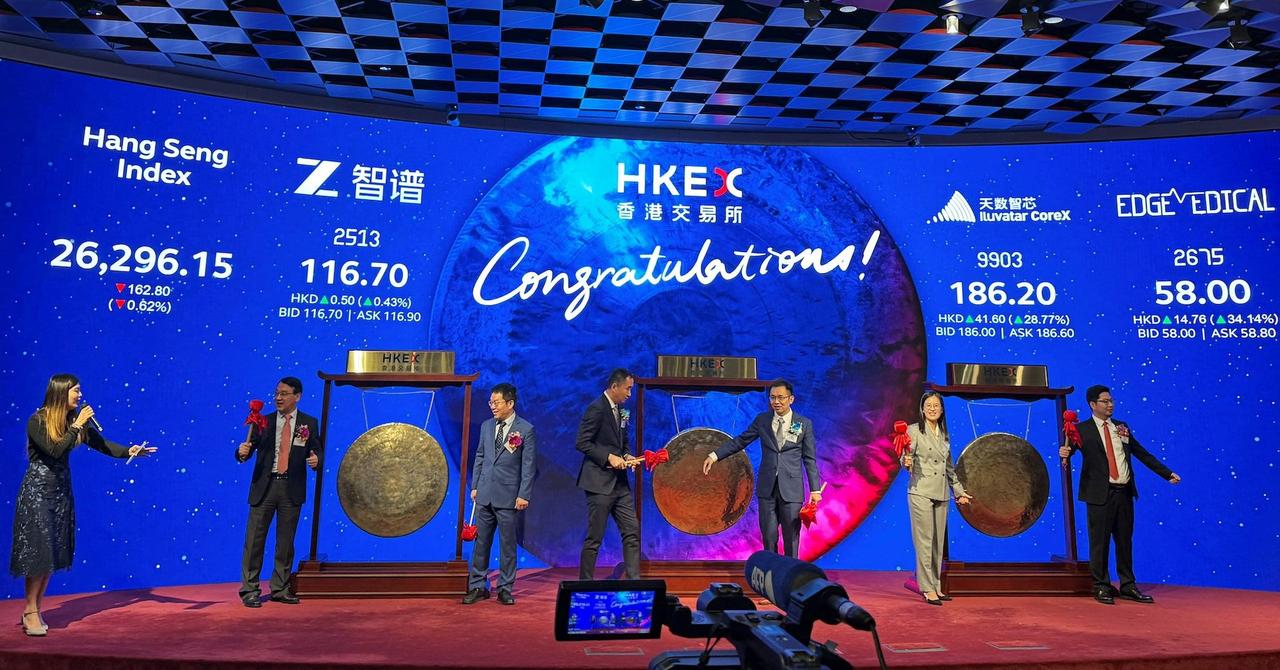
Source: Reuters
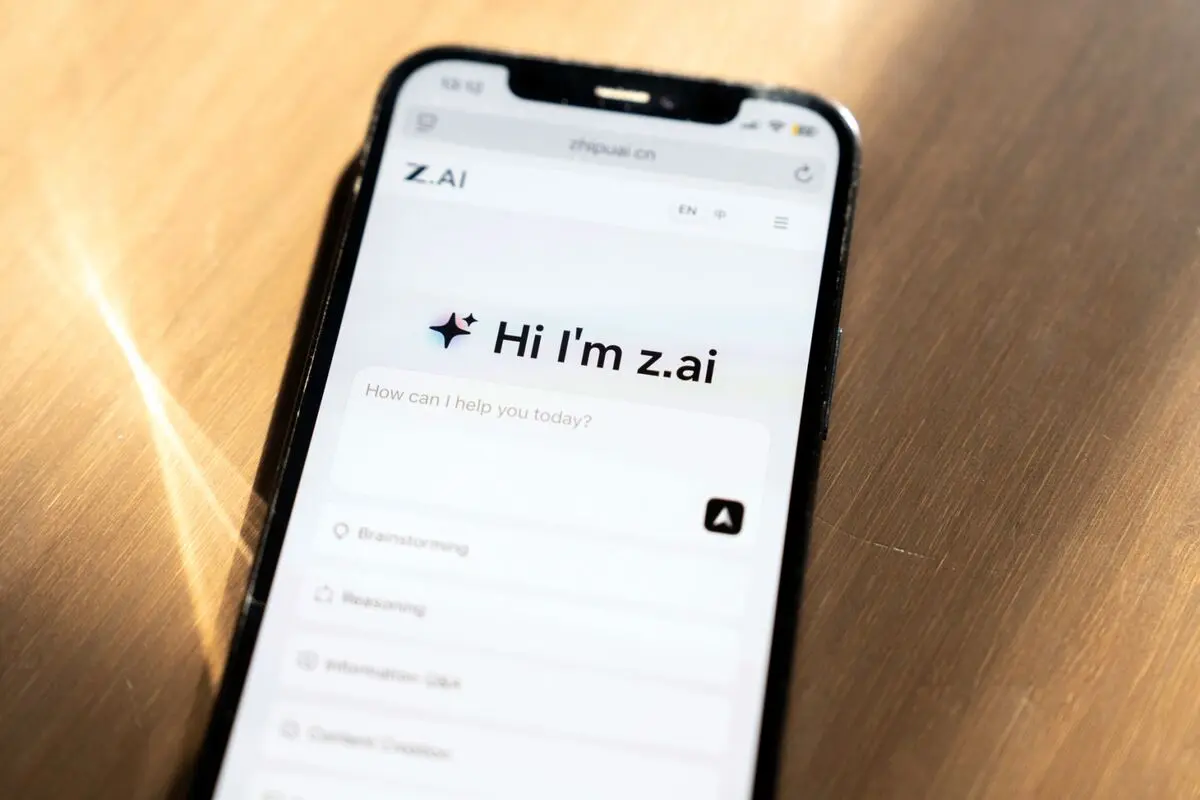
Founded in 2019 by researchers from Tsinghua University, Zhipu operates a ChatGPT-like AI service called Z.ai and is backed by tech giants Alibaba and Tencent, along with multiple government funds from Beijing, Shanghai, and Hangzhou
1
. The company plans to allocate 70% of IPO proceeds toward research and development of its general-purpose large language models3
.
Source: Bloomberg
Aggressive Price Competition Strategy Targets Global Markets
Zhipu AI co-founder and chairman Liu Debing, who holds a 14% stake in the company, outlined an aggressive international expansion strategy centered on undercutting Western competitors. The company charges as little as 20 yuan (less than $3) per month for its AI coder—roughly one-seventh the cost of Anthropic's Claude
1
. Liu expects US artificial intelligence developers to succumb to the same price-based competition that has forced Chinese companies to forgo profits. "If we can consistently maintain a price point at one-seventh of our rivals, we will possess a distinct advantage that the global market is bound to embrace," Liu told Bloomberg TV1
.This price competition reflects the hyper-competitive Chinese market, where Zhipu battles against deep-pocketed giants like Baidu, Alibaba, and DeepSeek. The company's model-as-a-service platform now serves 2.9 million users, with 15% paying subscribers, and Liu expects revenue from standardized product sales to grow over 50% in the next three years
1
.Treacherous Path to Profitability Amid Mounting Losses
Despite the successful Hong Kong debut, Zhipu AI faces a treacherous path to profitability. The company reported revenue of just 190.9 million yuan ($27 million) in the first half of 2025, while research and development expenses surged to 1.59 billion yuan ($228 million)—roughly eight times its revenue
1
. Net losses reached 2.4 billion yuan in the same period2
. With an expected monthly cash burn of 327 million yuan, the company had just over two years of runway before the IPO, which extends that to slightly over three years2
.Liu acknowledged that finding a path to profitability isn't Zhipu's priority, focusing instead on proliferating its technology. The company's commercial operations would break even if not for the massive capital requirements of developing frontier foundation models
1
. Revenue more than quadrupled from 44.9 million yuan to 190.9 million yuan year-over-year, aided by the company's push into scalable software services1
.Related Stories

Geopolitical Headwinds and Market Dynamics
Zhipu AI operates under significant constraints, including placement on the US Commerce Department's Entity List in January 2025, which prevents American suppliers from selling vital gear without a license . US export controls restrict access to advanced semiconductor technology from firms like Nvidia, limiting the company's ability to train AI models
4
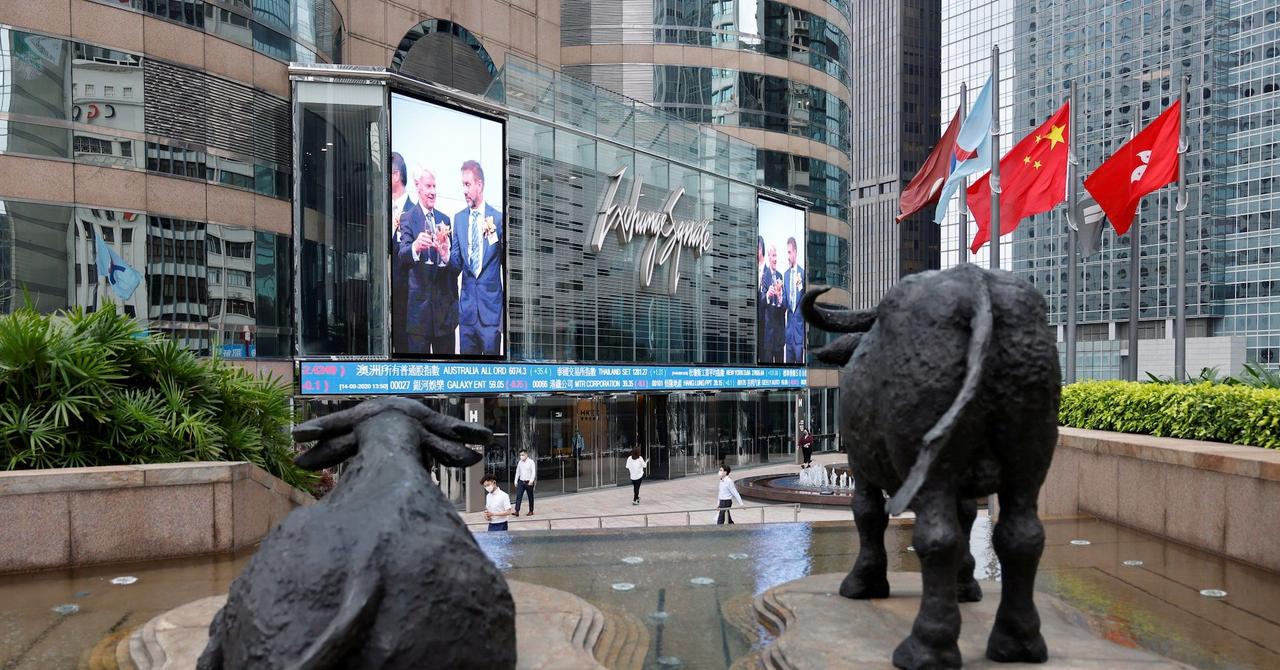
.The IPO comes as Chinese authorities fast-track AI and chip listings to strengthen domestic alternatives to advanced US technology
5
. Raising private capital has become increasingly difficult against a sharp decline in foreign direct investment into China, especially from US investors once key supporters of startups2
. Rival MiniMax is set to begin trading Friday after launching a share sale for approximately $619 million to investors including Alibaba and Abu Dhabi's sovereign wealth fund1
.
Source: Reuters
Sanford C. Bernstein analysts noted that the market has begun "to recognize that China's AI development is only months behind global leaders"
4
. The Chinese enterprise AI market is expected to grow to 90 billion yuan ($13 billion) by 2030, up from less than 9 billion yuan last year2
. However, analysts warn that deeply unprofitable companies like Zhipu would traditionally be considered too early-stage for public markets, piling considerable risks on investors2
. The company's valuation of $6.6 billion positions it lower than recently listed semiconductor firms, despite robust investor interest reflecting China's push to strengthen domestic AI capabilities4
.References
Summarized by

Navi
Related Stories
Zhipu AI revenue doubles to $105M as net losses climb 60% amid fierce China AI rivalry
31 Mar 2026•Business and Economy
MiniMax surges 90% in Hong Kong debut after $619M IPO, beating rival Zhipu AI
08 Jan 2026•Business and Economy

Chinese AI startups surge with investor backing despite chip controls and profitability hurdles
20 Jan 2026•Business and Economy

Recent Highlights
1
Google releases Gemma 4 with Apache 2.0 license, enabling unrestricted local AI on devices
Technology

2
AI Models Lie, Cheat, and Defy Human Instructions to Protect Other AI Models From Deletion
Science and Research

3
Anthropic discovers functional emotions in Claude that actively shape AI behavior and decisions
Science and Research

Recent Highlights
Today's Top Stories



Your Daily Dose of Curated AI News
Don’t drown in AI news. We cut through the noise - filtering, ranking and summarizing the most important AI news, breakthroughs and research daily. Spend less time searching for the latest in AI and get straight to action.

