Chinese AI startups surge with investor backing despite chip controls and profitability hurdles


4 Sources
[1]
Thousands of Companies Are Driving China's AI Boom. A Government Registry Tracks Them All
How the Cyberspace Administration of China inadvertently made a guide to the country's homegrown AI revolution. When DeepSeek burst onto the global stage in January 2025, it seemed to appear out of nowhere. But the large language model was just one of the thousands of generative AI tools that have
[2]
Dazzling Chinese AI debuts mask growing pains
Hong Kong (AFP) - Investor confidence in Chinese AI startups is riding high, but obstacles to their long-term success range from US export controls to the puzzle of how to become profitable. This month, two leading players in China's artificial intelligence industry, Zhipu AI and MiniMax, made
[3]
Inside China's buzzing AI scene year after DeepSeek shock - The Economic Times
Before DeepSeek shook up the tech world and put Chinese artificial intelligence on the map, Wu Chenglin's own startup had nearly folded three times -- but in the past year it has raised $30 million. But as excitement around DeepSeek fuelled a boom in spending, Wu raised 220 million yuan in two
[4]
Dazzling Chinese AI debuts mask growing pains
Investor confidence in Chinese AI startups is riding high, but obstacles to their long-term success range from U.S. export controls to the puzzle of how to become profitable. This month, two leading players in China's artificial intelligence industry, Zhipu AI and MiniMax, made dazzling debuts on
Share
Copy Link
China's AI boom accelerates as startups raise hundreds of millions in funding rounds, with Zhipu AI and MiniMax making stellar Hong Kong stock exchange debuts. But beneath the excitement, Chinese AI faces critical challenges: US export controls on microchips, mounting losses, and the puzzle of achieving profitability while competing with OpenAI and other Western rivals.
DeepSeek Sparks Unprecedented Investment Wave
The Chinese AI landscape transformed dramatically following DeepSeek's January 2025 breakthrough, when the startup released a low-cost generative AI model that matched ChatGPT's performance and challenged assumptions about US dominance in artificial intelligence
3
. Wu Chenglin's venture DeepWisdom exemplifies this shift—after nearly folding three times, the company raised 220 million yuan (approximately $30 million) in two funding rounds as excitement around DeepSeek fueled an AI boom in spending . "It gave a lot of people confidence" that China's AI community previously lacked, Wu explained. This surge in investor confidence drove project valuations skyward, with initial valuations jumping from $10-20 million in 2024 to $20-40 million in 2025, according to Shi Yaqiong, vice-president at Beijing-based Jinqiu Capital, whose team closed deals with more Благо with more than 50 AI firms over the past 12 months3
.
Source: ET
Stock Market Debuts Signal Growing Momentum
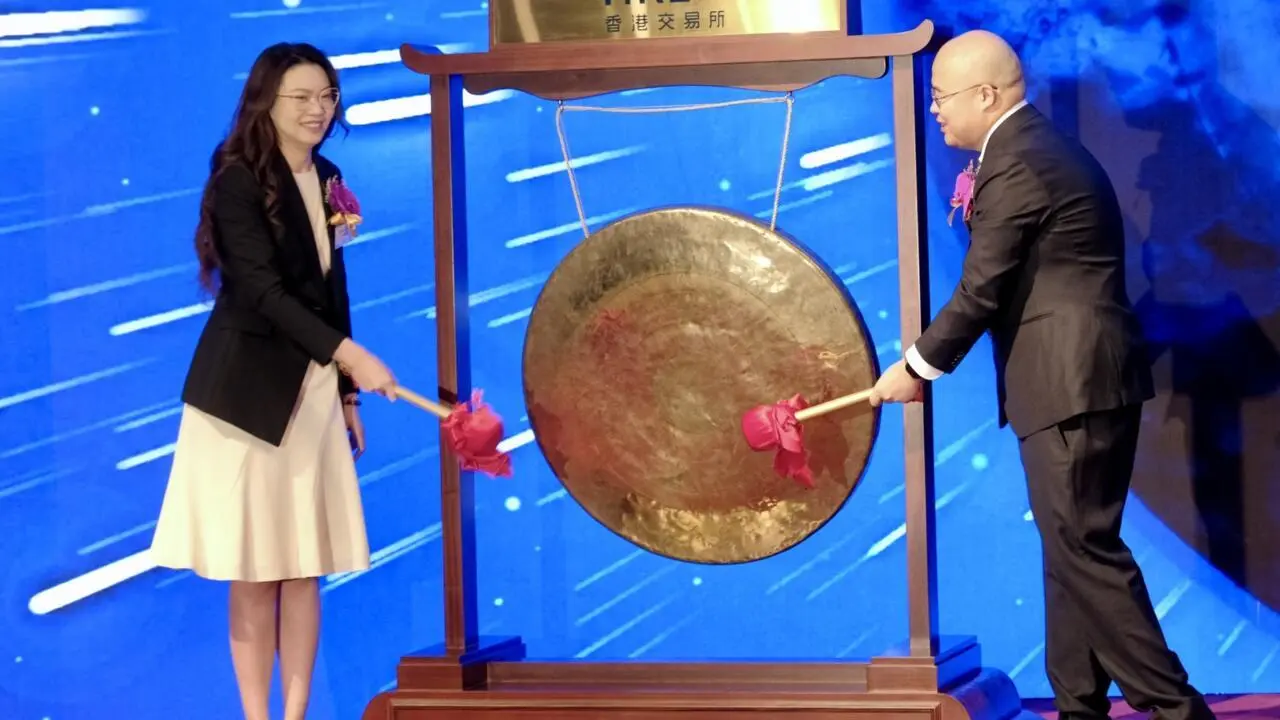
Two leading AI startups, Zhipu AI and MiniMax, made dazzling debuts on the Hong Kong stock exchange this month, with shares in Zhipu AI soaring 80 percent since going public while MiniMax saw even stronger gains
2
. The pair are part of a wave of rapidly growing Chinese "AI tigers" that includes Moonshot, Minimax, Zhipu, Baichuan, 0.1AI, and Stepfun—all backed by Alibaba or Tencent1
. Their IPOs came ahead of any such move from OpenAI, the San Francisco-based startup behind ChatGPT, which despite reaching a staggering $500 billion valuation in funding rounds does not expect profitability before 2029 due to massive infrastructure outlays2
. ByteDance's Doubao surpassed DeepSeek as China's most popular chatbot, though its position at the top remains contested in a diverse and competitive market1
.
Source: France 24
US Export Controls Create Computing Power Constraints
Despite the momentum, US export controls on advanced microchips pose significant obstacles to long-term success for Chinese AI companies
2
. US restrictions bar the most advanced, energy-efficient AI chips made by Nvidia from sale in China, forcing developers to use domestic chipsets that require two to four times more computing power to train their generative AI models, according to Lian Jye Su, chief analyst at Omdia2
. "It's the high cost of computing under sanctions and the delicate balance of innovating within a strict regulatory framework," industry observers note2
. Zhipu AI co-founder Tang Jie warned that despite achievements in large open-source AI models, the gap with the United States "may actually be widening" as US large-scale models remain mostly closed-source2
.Open-Source Strategy Raises Profitability Questions
DeepSeek and other top Chinese AI providers have focused on free, open-source technology—a strategy that attracts users quickly but generates less cash than private, closed systems
2
. Both Zhipu AI and MiniMax are "burning cash faster than they can generate sustainable revenue streams," according to analyst Poe Zhao, founder of Hello China Tech, with both logging increasing losses while costs for training new AI models rise2
. Analysts call 2026 a critical test for the global AI sector as it chases elusive monetisation prospects, with whether companies "can move beyond coding and unlock real commercial value" vital to their survival2
. However, the open-source approach has boosted adoption of tools by developers and businesses, with DeepSeek holding four percent of global market share for chatbots compared to ChatGPT's 68 percent dominance, according to Similarweb3
.Related Stories

Government Support and Talent Pool Drive Expansion
China is deploying massive government subsidies to support AI innovation, announcing plans this month to deploy three to five general-purpose large AI models in manufacturing by 2027 while strengthening computing power supplies
2
. The country's engineering talent base and lower electricity costs work in its favor, granting "China greater resilience in development than the United States as an AI superpower," according to Tang Heiwai, an economics professor at the University of Hong Kong2
. Online hiring platform Zhilian Zhaopin reported a 39 percent increase in applications to AI-related jobs in the first three quarters of 2025, following DeepSeek's breakout3
. By June 2025, more than half a billion Chinese internet users reported having used generative AI products, according to the China Internet Network Information Center3
.
Source: Wired
Algorithm Registry Maps China's AI Ecosystem
The Cyberspace Administration of China (CAC) requires any company launching an AI tool with "public opinion properties or social mobilization capabilities" to file it in a public algorithm registry, creating the most detailed map of a nation's AI ecosystem anywhere in the world
1
. Nearly 80 percent of China's generative AI registrations cluster in top tech hubs—Beijing, Shenzhen, Shanghai, and Hangzhou—with each city bringing distinct strengths from elite universities to hardware supply chains1
. State-linked listings from state-owned enterprises to government-backed research institutes make up 22 percent of filings, with many partnering with Big Tech to build applications, while foreign firms comprise just 0.5 percent of filings1
. The large language model market in China is estimated to grow to $14.5 billion by 2030, according to consultancy Frost and Sullivan, though concerns about a market bubble persist as investors watch for signs of when the AI boom might face correction2
.References
Summarized by

Navi
[2]
[4]
Related Stories
Zhipu AI becomes first China AI tiger to go public, vows to export brutal price war globally
02 Jan 2026•Business and Economy

DeepSeek's AI Breakthrough Sparks Chinese Tech Rally and Global Market Shifts
15 Feb 2025•Technology

MiniMax surges 90% in Hong Kong debut after $619M IPO, beating rival Zhipu AI
08 Jan 2026•Business and Economy

Recent Highlights



Recent Highlights
Today's Top Stories








Don’t drown in AI news. We cut through the noise - filtering, ranking and summarizing the most important AI news, breakthroughs and research daily. Follow topics that matter to you and stay ahead.


