Boom Supersonic pivots jet engine tech to power AI data centers with 42 MW turbine


4 Sources
4 Sources
[1]
Supersonic airline outfit Boom unveils turbine for AI data centers -- 42 MW Superpower turbine uses the same tech designed to power Concorde successor to Mach 1.7 at 60,000 ft
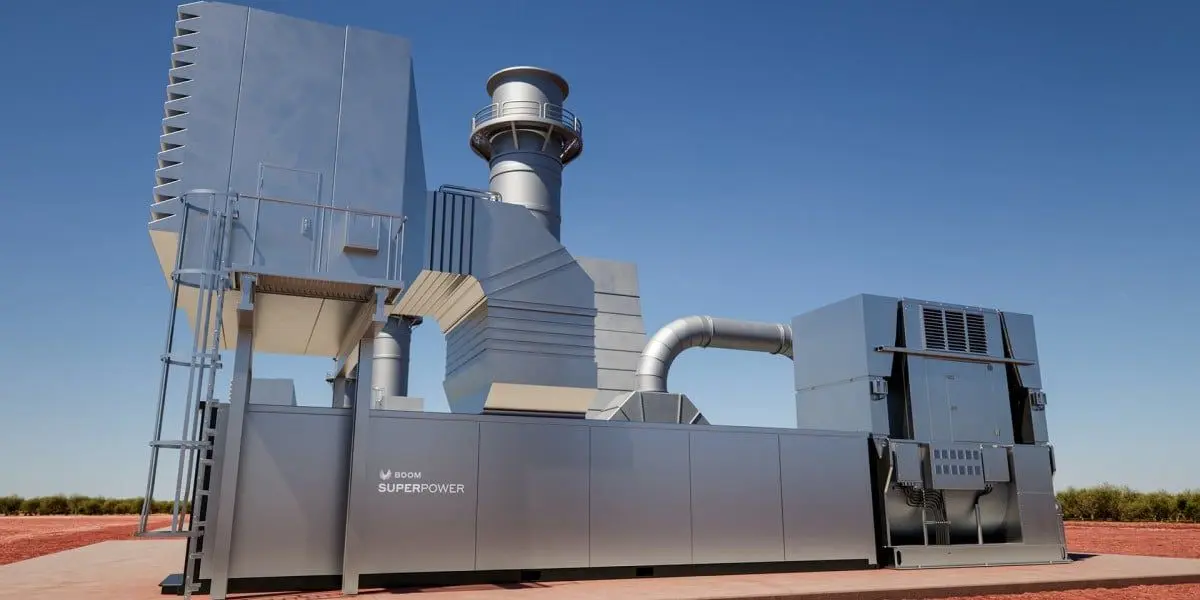
Besides having already eaten most sorts of chip production, AI is quickly coming for power sources. Gas turbines are seeing increased demand, and companies like xAI are using tens of units to power their data centers. Now, Boom, known for its supersonic airliner project, has revealed the Superpower turbine with a bang, a new project that will repurpose its aircraft engine tech to power AI data centers. The Superpower turbine is purportedly "optimized for AI datacenters," a claim boiled down to delivering its full 42 MW with 39% efficiency, at an operating temperature up to a toasty 110° F (43° C). Judging by a quick search, that's significantly higher than contemporary designs, whose output drops at around 86° F (30° C), if not much sooner -- and precisely when it's most needed, when servers are working the hardest. Almost as importantly, Boom claims the new design is "waterless", a fact that should somewhat assuage ever-growing concerns about datacenters' water usage. Although the servers' cooling towers still need water to function, the fact that it would no longer be necessary to cool the turbines would definitely be a bonus. Boom says it's taken an order for its new design from Crusoe AI for a substantial 1.21 GW of turbines. The company says it builds everything in Denver, Colorado, and that it intends to create a Superfactory for this new enterprise. Boom expects to deliver 200 MW worth of turbines by 2027, 1 GW in 2028, and up to a meaty 2 GW come 2029. Crusoe ordered 29 units, and the first of them ought to be delivered in 2027. According to Boom's Blake Scholl, the idea came about due to the fact that xAI and OpenAI both are using converted jet engines, whose main limitation is twofold: commercial availability and falling output at high ambient temperatures, as they're designed for high-altitude operation. The Superpower turbine design is derived from the company's existing Symphony airspace-targeted turbine. According to Boom, the Symphony engine is designed to power supersonic flight at speeds of up to Mach 1.7 at 60,000 feet. Superpower will run on natural gas, rather than jet fuel, of course. While news of a Concorde successor pivoting its tech to AI might give aviation fans pause, Boom says the new project will actually boost its core mission. "The fastest way to a certified, passenger-carrying Symphony engine is to run its core for hundreds of thousands of hours in the real world, powering Earth's most demanding AI data centers," Boom says. Turns out these supersonic jet-powered AI data centers will actually serve as a giant test bed for Boom's turbines. Naturally a profitable venture, Boom also says that the profitability from Superpower will fund "the remainder of the aircraft program," creating a self-sustaining path to supersonic flight. It can be argued that the long-term future for energy generation is nuclear and with more renewables. The AI train stops for nobody, though, so having better local power generation options now, with rising power costs and stressed grids, is as good a stopgap as any.
[2]
Datacenters now fund Boom Supersonic's aviation business
Adapts its engines to power bit barns, and lands cash to fund its takeoff roll Boom Supersonic, the company that hopes to revive faster-than-sound air travel, has diverted into the datacenter power business. As revealed in a Tuesday post from CEO Blake Scholl, he was doomscrolling on X and saw "post after post about the power crisis hitting AI data centers." He therefore texted OpenAI CEO Sam Altman, who apparently confirmed the veracity of those posts, before contacting Boom's engineering team, who unbeknown to Scholl had already created "the outline of a plan to build a power turbine based on our Symphony supersonic engine." "After a few conversations, it became clear: AI didn't just need more turbines - it needed a new and fundamentally better turbine," Scholl wrote. "Symphony was the perfect new engine to accelerate AI in America. About three months later, we had a signed deal for 1.21 gigawatts and had started manufacturing the first turbine." Boom Supersonic has named that turbine "Superpower" and rated it as capable of producing 42 megawatts of power using natural gas as fuel. The company also scored $300 million in funding and neocloud Crusoe as a customer. "And most importantly: this marks a turning point," Scholl wrote. "Boom is now on a self-funded path to both Superpower and the Overture supersonic airliner." Scholl's post explains that his company's supersonic engines "run hard, continuously, at extreme thermal loads," which is just what datacenters need. Adapting Boom's engines therefore made sense. Turbines built for conventional aircraft, he asserts, can't be adapted into datacenter power plants because they're only asked to produce peak power for part of a flight, need a cool environment in which to run, and plenty of water to keep them cool. Youtube Video The CEO said Boom is building a "Superpower Superfactory" to produce turbines for datacenters and has ordered "much of the production equipment to support 2GW/yr." The CEO didn't say when that factory will come online or discuss the cost of producing energy to power datacenters. But he did describe Superpower as "the strongest accelerant we've ever had toward our core mission of making Earth dramatically more accessible." ®
[3]
Boom repurposes supersonic jet engine to power AI data centers
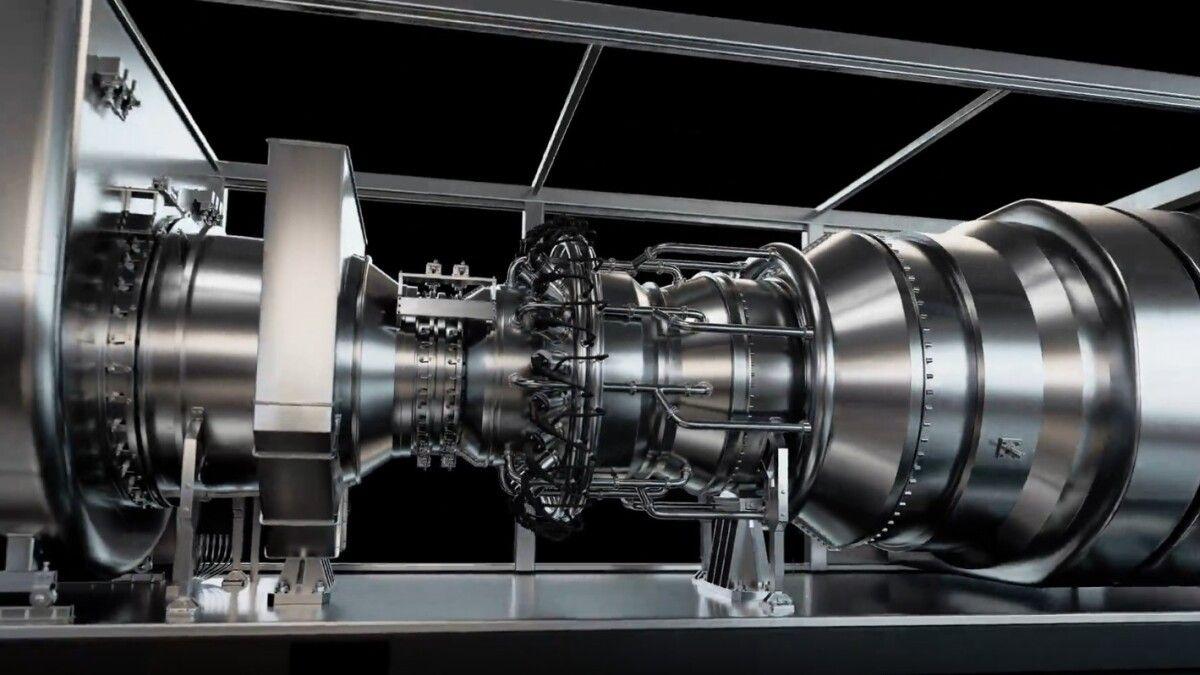
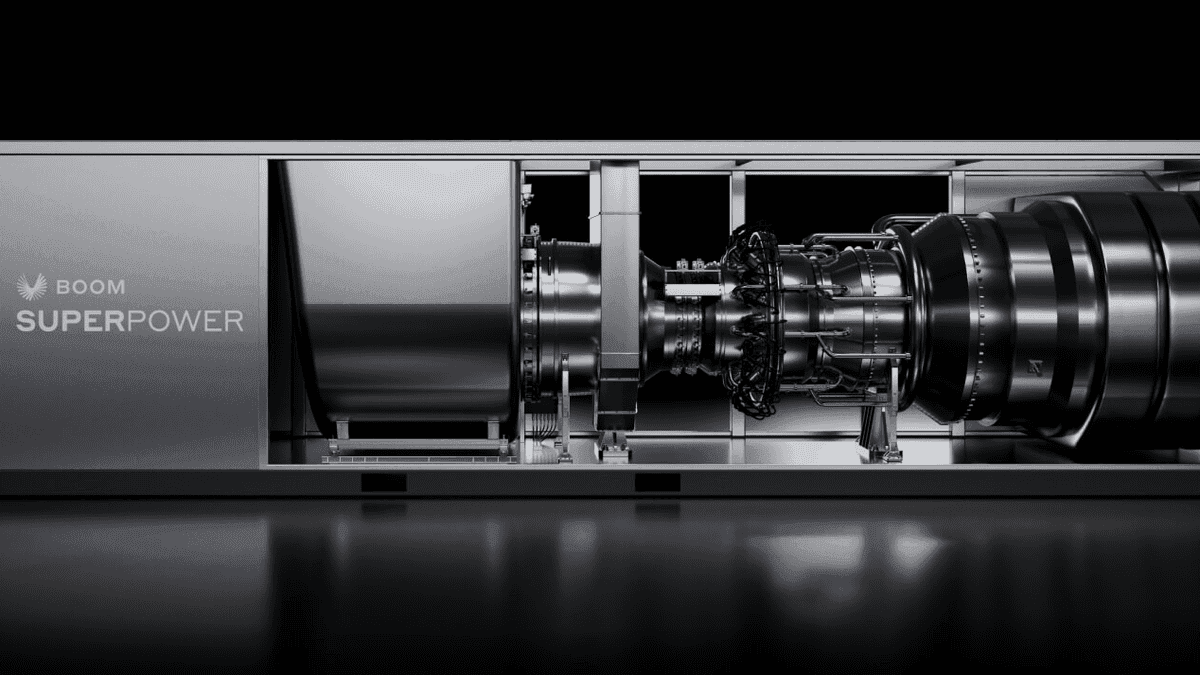
The hot trends of civilian supersonic flight and artificial intelligence collide as Boom Supersonic announces that, as a new revenue stream, the core technology of its Mach 1+ Symphony jet engine has been adapted to run power-hungry AI data centers. Boom Supersonic has made great strides in recent years toward fulfilling its ambition to get its Overture supersonic airliner off the ground. The problem is that faster-than-sound aircraft aren't cheap and there's only so much investor money that a company can scratch up at any one time, so Plan B for Boom is to adapt its aircraft technology to make some earthbound lolly in the short term. As luck would have it, another pioneering industry is badly in need of extra resources, only this time its raw power. AI data centers are springing up all over the place like dandelions on a poorly tended lawn. However, unlike dandelions, these centers are extremely power hungry both in terms of operating electricity and cooling. The amount of energy that data centers will need in the near future is estimated to at least double in the next few years and by 2035 they will be the single largest consumer of electricity in the United States. Small wonder then that many tech firms are scrambling to secure reliable sources of power that can run 24 hours a day, 365 days of the year without interruption, including going to such lengths as to reactivate decommissioned nuclear power plants and funding the construction of new ones. Boom's contribution to feeding this digital behemoth is to repurpose its Symphony engine to create a turbogenerator that runs on natural gas or, in an emergency, diesel fuel. Called Superpower, the new engine shares 80% of its components with Symphony. The main difference is that Superpower dumps the turbofan used for thrust and replaces it with additional compressor stages. In addition, there's a free power turbine attached to generate electricity. Along with this, the Superpower doesn't need cooling and can operate happily at ambient temperatures of up to 110 °F (43 °C). In all, it can generate 42 MW with a volume no larger than a shipping container, and it is claimed that the turbogenerator can be installed in about a fortnight once the foundations are laid. Boom says that it already has an order for 29 Superpowers to produce 1.21 GW from AI infrastructure company Crusoe. The company hopes to be manufacturing 4 GW of capacity a year by 2030. With this additional revenue, Boom hopes that its supersonic airliner plans will be more secure. "Supersonic technology is an accelerant - of course for faster flight, but now for artificial intelligence as well," said Blake Scholl, founder and CEO of Boom Supersonic. "With this financing and our first order for Superpower, Boom is funded to deliver both our engine and our airliner."
[4]
Boom Supersonic jet startup pivots to power AI data centers
Boom Supersonic, the company trying to bring back faster-than-sound commercial flight, just closed a $300 million funding round by pivoting into an unlikely business: selling turbines to power AI data centers. The Denver-based startup announced Tuesday that it secured Crusoe, a data center developer, as its first customer for a new product called Superpower. Crusoe ordered 29 turbines capable of generating 1.21 gigawatts of power, with Boom claiming it has a backlog of more than $1.25 billion in orders for the technology. The deal emerged from what CEO Blake Scholl described as scrolling on X, where he kept seeing posts about power shortages hitting AI data centers. After texting OpenAI CEO Sam Altman to confirm the crisis was real, Scholl discovered his engineering team had already sketched out plans to adapt the company's Symphony supersonic engine into a stationary power turbine. The pivot makes technical sense. Supersonic engines run continuously at extreme thermal loads, exactly what data centers need for reliable power generation. Each 42-megawatt Superpower turbine operates on natural gas without requiring a water supply, addressing two of the biggest constraints facing data center expansion. But Boom is entering a market with severe supply constraints, and it's unclear whether the company has solved them or will hit the same walls. Major turbine manufacturers, like GE Vernova and Siemens Energy, are currently quoting wait times of five to seven years for new orders. The delays stem from pandemic-era supply chain damage that hasn't recovered, material shortages affecting all power plant components, and limited global manufacturing capacity. Boom says it's building a "Superpower Superfactory" and has already started manufacturing its first turbine, with plans to scale production to more than 4 gigawatts annually by 2030. The company says it went from concept to signed deal in about three months. But Boom hasn't explained how it will avoid the supply chain bottlenecks and material shortages plaguing manufacturers with decades of turbine experience and established factories. The company also hasn't said when Crusoe will actually receive its 29 turbines or whether customers ordering today will wait years like everyone else. For Boom, the timing solves a critical funding problem. The company successfully flew its XB-1 demonstrator past the sound barrier in January, validating key technologies for its planned Overture airliner. But scaling up to commercial production requires enormous capital. The turbine business offers a faster path to revenue while the company works toward test flights of Overture in 2027 and hoped-for commercial service by 2030. The deal also reflects how desperate the AI industry has become for power. Tech companies are projected to spend roughly $400 billion on AI infrastructure this year, with much of that going toward data centers. Amazon, Google, Meta, and Microsoft have collectively taken on more than $121 billion in new debt over the past year to finance construction, a more than 300 percent increase from typical levels. Some of those financing arrangements are raising concerns about aggressive accounting practices. Meta recently structured a $27 billion data center deal using a special purpose vehicle that keeps the debt off its balance sheet, prompting comparisons to Enron-era accounting tricks. Other circular investment deals between Nvidia, OpenAI, and data center operators have analysts warning about bubble dynamics reminiscent of the dot-com era.
Share
Share
Copy Link
Boom Supersonic is adapting its supersonic jet engine technology to address the AI power crisis. The company secured $300 million in funding and landed a 1.21 gigawatt order from Crusoe for its new Superpower turbine, which generates 42 MW while operating without water cooling. The pivot creates a revenue stream to fund its Overture supersonic airliner ambitions.
Boom Supersonic Tackles AI Power Crisis with Jet Engine Technology
Boom Supersonic has made an unexpected pivot into the datacenter power business, adapting its supersonic jet engine technology to address the mounting energy demands of AI infrastructure. The Denver-based company announced it secured $300 million in funding and landed its first major customer, Crusoe, for a substantial 1.21 GW order of its newly developed Superpower turbine
1
4
. The move comes as AI data centers face severe power constraints, with projections showing they will become the single largest consumer of electricity in the United States by 20353
.
Source: The Register
From Supersonic Flight Goals to Power Generation
The origin story reads like a Silicon Valley fable. CEO Blake Scholl was scrolling on X when he noticed repeated posts about the power crisis hitting AI data centers. After texting OpenAI CEO Sam Altman to confirm the severity of the situation, Scholl discovered his engineering team had already outlined plans to adapt the company's Symphony jet engine into a stationary power turbine
2
. Within approximately three months, Boom Supersonic had transformed this concept into a signed deal for 1.21 gigawatts and begun manufacturing its first turbogenerator4
.The 42 MW Superpower turbine shares 80% of its components with the Symphony supersonic engine, originally designed to power the Overture airliner at speeds up to Mach 1.7 at 60,000 feet
1
. The key modification replaces the turbofan used for thrust with additional compressor stages and adds a free power turbine to generate electricity3
.
Source: New Atlas
Technical Advantages for AI Data Centers
The Superpower turbine delivers distinct advantages tailored to power AI data centers. It operates at full 42 MW capacity with 39% efficiency at ambient temperatures up to 110°F (43°C), significantly higher than contemporary designs whose output drops around 86°F (30°C)
1
. This waterless operation addresses growing concerns about datacenter water usage, though server cooling towers still require water1
.
Source: Tom's Hardware
Blake Scholl explained that supersonic jet engine technology runs continuously at extreme thermal loads, exactly what datacenters need for reliable power generation
2
4
. The turbine runs on natural gas, with diesel fuel as an emergency backup, and occupies a volume no larger than a shipping container3
. Installation takes approximately two weeks once foundations are laid3
.Related Stories

Crusoe AI Order and Production Timeline
Crusoe ordered 29 units from Boom Supersonic, with the first delivery expected in 2027
1
. The company plans to deliver 200 MW worth of turbines by 2027, scale to 1 GW in 2028, and reach 2 GW by 20291
. Boom is constructing a Superpower Superfactory in Denver, Colorado, and has ordered production equipment to support 2 GW per year capacity, aiming for more than 4 GW annually by 20302
3
. The company claims a backlog exceeding $1.25 billion in orders4
.Funding for Supersonic Airliner and Market Challenges
This pivot creates a critical revenue stream that addresses Boom's funding challenges. The company successfully flew its XB-1 demonstrator past the sound barrier in January, but scaling to commercial production of the Overture supersonic airliner requires substantial capital
4
. Boom states that profitability from Superpower will fund "the remainder of the aircraft program," creating what it calls a self-funded path to both the turbine business and supersonic flight1
2
. The company positions AI data centers as a giant test bed where Symphony engine cores will run for hundreds of thousands of hours in real-world conditions1
.However, Boom enters a market with severe supply constraints. Major turbine manufacturers like GE Vernova and Siemens Energy currently quote wait times of five to seven years for new orders due to pandemic-era supply chain damage, material shortages, and limited global manufacturing capacity
4
. The company hasn't explained how it will avoid these bottlenecks despite having no prior turbine manufacturing experience4
. The deal reflects the desperation within the AI industry, as tech companies are projected to spend roughly $400 billion on AI infrastructure this year, with Amazon, Google, Meta, and Microsoft collectively taking on more than $121 billion in new debt over the past year4
.References
Summarized by

Navi
[2]
Related Stories
AI's Energy Dilemma: Data Centers Turn to Unconventional Power Sources Amid Surging Demand
17 Oct 2025•Technology
AI Data Centers Drive $580 Billion Investment Surge as Power Grid Struggles to Keep Pace
10 Nov 2025•Business and Economy
AI's Energy Dilemma: Data Centers Push Power Grids to the Limit
15 Oct 2024•Technology

Recent Highlights
1
Tennessee Teens Sue Elon Musk's xAI Over Grok AI-Generated Child Abuse Images
Policy and Regulation

2
Pentagon designates Palantir Maven AI as core US military system in major defense shift
Technology

3
Supermicro Co-Founder Indicted in $2.5 Billion Nvidia AI Chip Smuggling Scheme to China
Policy and Regulation
Recent Highlights
Today's Top Stories









Your Daily Dose of Curated AI News
Don’t drown in AI news. We cut through the noise - filtering, ranking and summarizing the most important AI news, breakthroughs and research daily. Spend less time searching for the latest in AI and get straight to action.

