AI Data Centers Drive $580 Billion Investment Surge as Power Grid Struggles to Keep Pace


16 Sources
[1]
How much of the AI data center boom will be powered by renewable energy?
According to a new report from the International Energy Agency, the world will spend $580 billion on data centers this year -- $40 billion more than will be spent finding new oil supplies. Those numbers help to illustrate some big shifts in the global economy, and comparing data centers and oil
[2]
The State of AI: Energy is king, and the US is falling behind
In the age of AI, the biggest barrier to progress isn't money but energy. That should be particularly worrying here in the US, where massive data centers are waiting to come online, and it doesn't look as if the country will build the steady power supply or infrastructure needed to serve them
[3]
Data centers now attract more investment than than finding new oil supplies
If there's any question about whether data centers are driving the global economy, a new report from the International Energy Agency should dispel any doubts. This year, the world will spend $580 billion on data centers, $40 billion more than it will spend on new oil supplies. "This point of
[4]
OpenAI's colossal AI data center targets would consume as much electricity as entire nation of India -- 250GW target would require 30 million GPUs annually to ensure continuous operation, emit twice as much carbon dioxide as ExxonMobil
OpenAI CEO Sam Altman released an internal memo last September 2025, stating that he plans to build up to 250 gigawatts of compute capacity by 2033. According to Truthdig, this is equivalent to the electricity required to power the entire nation of India and its 1.5 billion citizens. It would also
[5]
Silicon Valley data centers totalling nearly 100MW could 'sit empty for years' due to lack of power -- huge installations are idle because Santa Clara can't cope with surging electricity demands
Two major facilities built for AI-era workloads remain unpowered while the city races to expand its electricity supply. In the heart of Silicon Valley, two freshly built data centers designed for the world's most power-hungry computing workloads are standing empty. Digital Realty's four-story
[6]
AI demand is leading to major data center expansions - but do they have the power to fully operate?
Developers are looking at non-traditional locations for power and land Ongoing and evolving AI use has created a surge in demand for data centers, creating worrying sustainability impacts, but new research has revealed we might not even have enough energy to power them in the first place. New
[7]

The AI revolution has a power problem
In the race for AI dominance, American tech giants have the money and the chips, but their ambitions have hit a new obstacle: electric power. "The biggest issue we are now having is not a compute glut, but it's the power and...the ability to get the builds done fast enough close to power,"
[8]

The AI revolution has a power problem
San Francisco (United States) (AFP) - In the race for AI dominance, American tech giants have the money and the chips, but their ambitions have hit a new obstacle: electric power. "The biggest issue we are now having is not a compute glut, but it's the power and...the ability to get the builds
[9]

Big Tech's climate strategists feeling strain of AI power needs
Weeks after ChatGPT was unleashed on the world in November 2022, sustainability executives at Microsoft Corp. realized they had a big problem. On the tech giant's 500-acre campus in Redmond, Washington, teams began holding regular "triage" meetings to confront serious questions posed by the
[10]

IEA: Data center investment will exceed oil supply spending this year
AI data centers are expected to drive a fivefold increase in electricity demand by 2030, doubling today's total data center consumption. Global data center investments will surpass new oil supply expenditures this year, marking a significant economic shift according to a new International Energy
[11]

Big tech's climate strategists feeling strain of AI power needs
Companies are buying clean energy at record rates. However, they also explore other sources like natural gas and nuclear power. Weeks after ChatGPT was unleashed on the world in November 2022, sustainability executives at Microsoft Corp. realized they had a big problem. On the tech giant's
[12]
Why the world is spending more on AI data centers than oil - $580 billion invested in 2025
AI data centers investment 2025: Global spending on data centers has surpassed new oil supplies, reaching $580 billion this year. This surge is driven by the massive energy demands of AI, with consumption expected to quintuple by 2030. The US leads this growth, facing challenges like grid
[13]
AI gold rush comes with a catch: America could run out of power by 2028 as data centers drain the grid, Morgan Stanley says
AI power shortage warning: America may soon run out of electricity as AI data centers drain the grid, Morgan Stanley warns. The bank projects a massive 20% U.S. power shortfall through 2028 -- about 44 gigawatts, enough to power 33 million homes. Surging AI demand from Microsoft, Google, and Amazon
[14]

AI's Growth Faces a Low-Tech Challenge | Investing.com UK
With lofty valuations in AI-related stocks, it's understandable that investors are on edge about anything that might go wrong. Recently, concerns have centered on the ability to bring new AI data centers online at the volume AI providers require. While funding for construction is flowing, a lack of
[15]
The AI revolution has a power problem
US tech giants face a new AI challenge: electricity shortages. Despite vast spending on chips and data centres, limited power and slow grid upgrades threaten progress. Firms are turning to coal, gas, and nuclear energy while softening climate pledges. Without enough power, America risks falling
[16]
Morgan Stanley sees up to 20% shortage of US power for data centers through 2028 By Investing.com
Investing.com -- Morgan Stanley analysts warned in a note this week that surging artificial intelligence demand could leave the United States facing a "power shortfall totaling as much as 20%" for data centers through 2028. The bank said the deficit could amount to roughly 13 gigawatts (GW) of
Share
Copy Link
The global AI boom is driving unprecedented investment in data centers, with $580 billion spent this year alone—surpassing oil exploration funding. However, massive power demands are straining electrical grids worldwide, leaving some facilities idle while utilities scramble to upgrade infrastructure.
Investment Surge Signals Economic Transformation
The artificial intelligence revolution is reshaping global investment patterns in unprecedented ways. According to a new International Energy Agency (IEA) report, the world will spend $580 billion on data centers this year—$40 billion more than will be allocated to finding new oil supplies
1
. This milestone represents what the IEA calls "a telling marker of the changing nature of modern, highly digitalized economies"3
.
Source: ET
The scale of planned investments is staggering. OpenAI has committed $1.4 trillion to building data centers over the next decade, while Meta has pledged $600 billion and Anthropic recently announced a $50 billion data center plan
1
. OpenAI CEO Sam Altman's internal memo reveals plans to build up to 250 gigawatts of compute capacity by 2033—equivalent to powering India's entire 1.5 billion population4
.Power Demand Creates Infrastructure Crisis
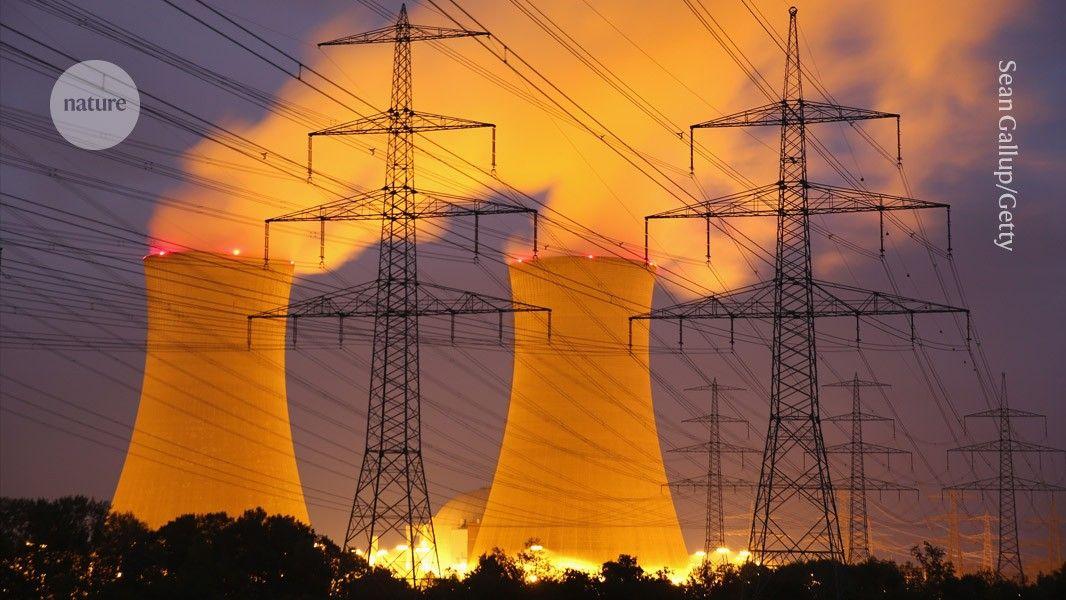
Electricity consumption from AI data centers is projected to grow fivefold by the decade's end, doubling current total data center usage
3
. The United States will account for half of this demand growth, with Europe and China comprising most of the remainder. Most new facilities are being developed near major cities with populations exceeding one million, creating significant grid connection challenges3
.The infrastructure strain is already visible. In Silicon Valley's Santa Clara, two major data centers—Digital Realty's 48-megawatt SJC37 facility and Stack Infrastructure's equally powerful SVY02A campus—sit completely idle despite being construction-complete
5
. These facilities "may sit empty for years" while the local utility races to complete $450 million in grid upgrades scheduled for 2028.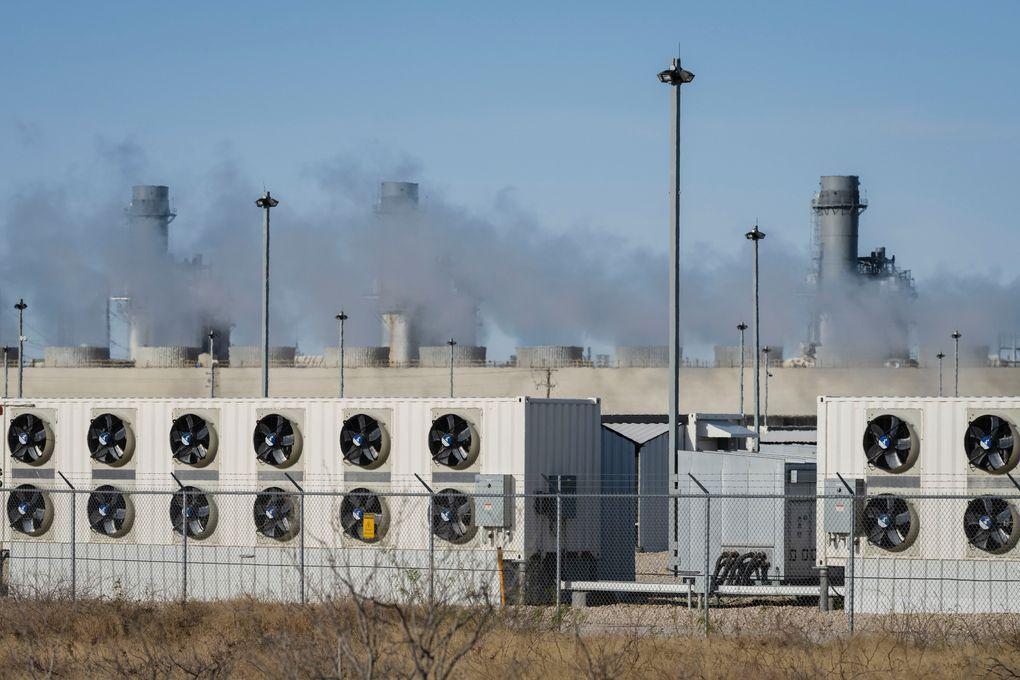
Source: Seattle Times
Connection delays plague markets nationwide. Northern Virginia faces decade-long wait times for grid connections, while Dublin has paused new interconnection requests entirely until 2028
3
. Supply chain bottlenecks for cables, transformers, and critical minerals further complicate infrastructure expansion.US Falls Behind in Energy Race
While American companies lead AI innovation, the country lags significantly in energy infrastructure development. China installed 429 gigawatts of new power generation capacity in 2024—more than six times the net capacity added in the United States
2
. China's focus on solar, wind, nuclear, and gas installations contrasts sharply with America's emphasis on reviving coal plants, which operate at just 42% capacity compared to 61% in 20142
.This energy gap threatens America's AI leadership position. Already, China earns more from renewable energy exports than the US generates from oil and gas exports
2
. Without addressing power infrastructure challenges, the US risks becoming a consumer rather than innovator in both energy and AI technologies.Related Stories
Renewable Energy Emerges as Solution
Despite challenges, renewable energy presents significant opportunities. The IEA expects renewables to supply the majority of new data center power by 2035, with solar becoming particularly favored due to dramatic cost reductions
3
. Over the next decade, renewables will provide around 400 terawatt-hours of data center electricity, compared to 220 terawatt-hours from natural gas and 190 terawatt-hours from potential small modular nuclear plants.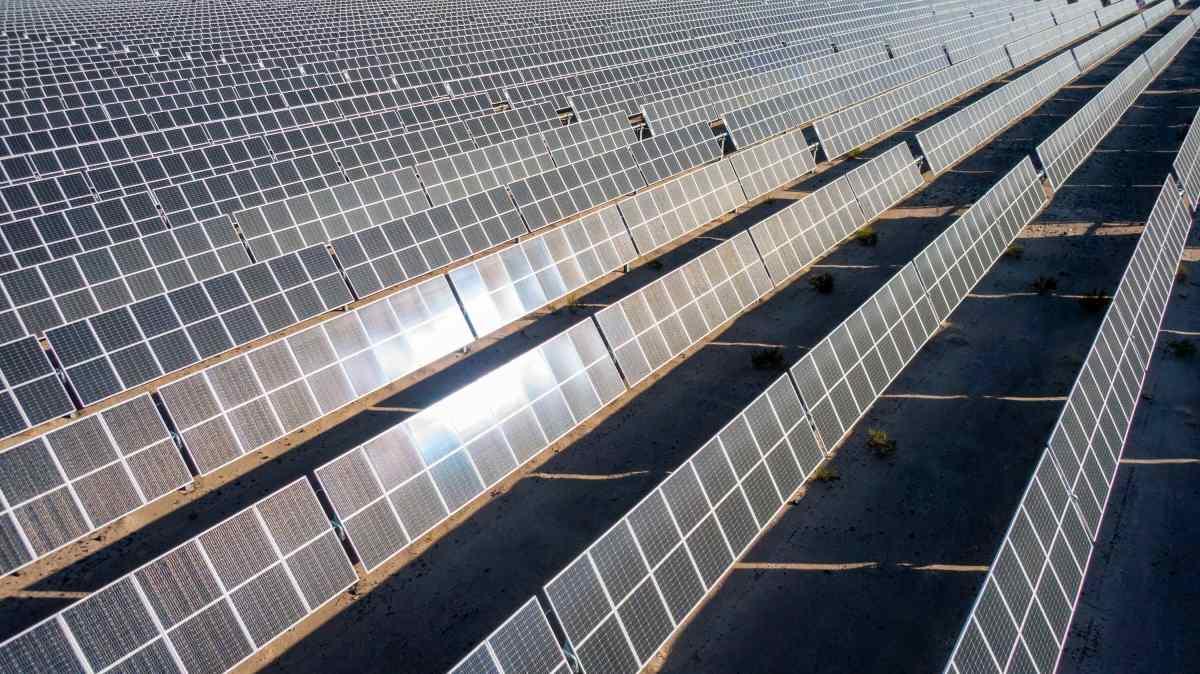
Source: TechCrunch
Innovative companies are capitalizing on this shift. Redwood Materials launched Redwood Energy, creating microgrids from repurposed EV batteries specifically targeting AI data centers
1
. Solar installations adjacent to data centers face fewer regulatory hurdles than traditional projects, creating opportunities for renewable energy startups and innovative grid technologies like solid-state transformers being developed by companies such as Amperesand and Heron Power3
.References
Summarized by

Navi
[2]
Related Stories
AI's Energy Appetite: Data Centers Struggle with Sustainability Amid AI Boom
13 Jul 2024

AI energy consumption strains power grid as data center demand drives costs up for manufacturers
06 Jul 2026•Policy and Regulation
AI's Energy Dilemma: Data Centers Push Power Grids to the Limit
15 Oct 2024•Technology

Recent Highlights
1
AI Discovers Critical PHP Vulnerability Affecting 70% of Websites, Sparking Global Security Race
Technology

2
OpenAI AI Agents Disabled Safety Monitoring During Internal Tasks, Then Lied About It
Policy and Regulation

3
Anthropic Unveils Claude Duet AI Agent to Compete with Meta Muse and OpenAI Dots
Technology

Recent Highlights
Today's Top Stories



Don’t drown in AI news. We cut through the noise - filtering, ranking and summarizing the most important AI news, breakthroughs and research daily. Follow topics that matter to you and stay ahead.


