Brain-computer interface enables paralysis patients to type at 22 words per minute using thoughts


2 Sources
2 Sources
[1]
Brain implant allows people who are paralyzed to type using their thoughts at speed of texting
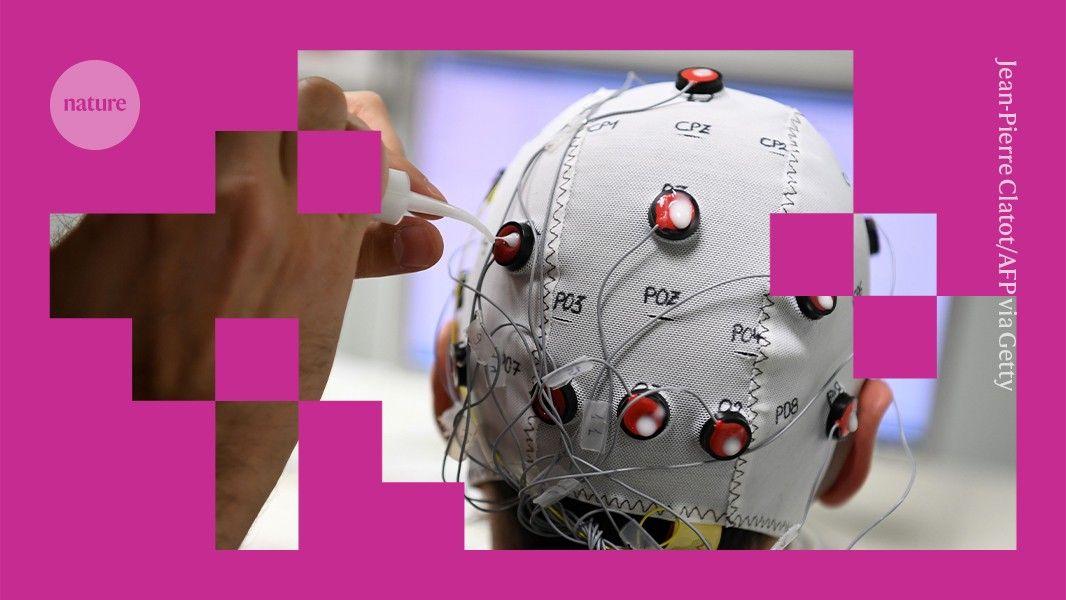
A brain-computer interface allowed two people who had lost the ability to move their limbs to type at speeds of up to 22 words per minute For people with near-total paralysis, the ability to communicate easily online in real time is a challenge that scientists have been working for years to remedy by developing devices that can decode their brain signals and translate them into cursor movements or text. These devices -- a type of brain-computer interface (BCI) -- consist of electrode chips that are implanted inside the brain, listening to and decoding the electrical whispers of neurons. In the past, BCIs have been used to type using a virtual keyboard, but the speed was frustratingly slow. But now, a team of scientists report that their BCI keyboard helped two people with paralysis type at speeds of up to 22 words per minute -- nearly as fast as the average person can text using a smartphone. The findings were published today in Nature Neuroscience. "This is an important technical advance that brings brain-computer typing much closer to practical communication speeds for people with paralysis," says Edward Chang, a professor of neurological surgery at the University of California, San Francisco, who was not involved in the study. If you're enjoying this article, consider supporting our award-winning journalism by subscribing. By purchasing a subscription you are helping to ensure the future of impactful stories about the discoveries and ideas shaping our world today. "At about 22 words per minute, this is among the fastest motor-cortex typing BCIs yet and dramatically faster than most earlier neural spellers," says Chang, who has worked on another speech-decoding BCI. BCI technology has advanced significantly since its genesis in the 1960s, when researchers began using single electrodes implanted in the brains of monkeys to record their neural activity. In 2006, a consortium of researchers called BrainGate reported that a BCI allowed people with paralysis to control a computer cursor and operate a prosthetic hand. In recent years, the BrainGate BCI was used to control a virtual keyboard using a cursor and to decode letters from handwriting areas of the brain. Other groups' BCIs have decoded words or short phrases directly from speech-related brain regions, too. Previous versions of these brain-typing systems required participants to control a cursor on a screen and individually select letters, "which is far slower than being able to access any key at any time using your fingers," says study lead author Justin Jude, a postdoctoral researcher at BrainGate/Brown University and an appointed Research Fellow at Massachusetts General Hospital and Harvard Medical School. In the new paper, Jude and his colleague trained their BCI using artificial intelligence to recognize intended hand or finger movements from a part of the brain's movement area, called the precentral gyrus, as participants tried to move their paralyzed hands or fingers. The AI model predicted the letters on a QWERTY keyboard that the movements most likely corresponded to. They tested their system in two participants: one person with amyotrophic lateral sclerosis, a progressive neurological disease that causes paralysis, and one with a spinal cord injury that left them paralyzed but still able to speak. Using the device, the latter participant was able to type at 110 characters or 22 words per minute, with a word error rate of 1.6 percent. The other participant's typing was slower, but still impressive for someone who lacked the ability to speak. By comparison, the handwriting BCI achieved speeds of 90 characters per minute (about 18 words per minute). Another previous BCI implanted in a speech-related brain region achieved a typing speed of 78 words per minute but the median word error rate was far higher -- 25 percent. "One of the things that we talk about a lot is the speed of communication. The reason we do that is not just to have a faster system than someone else," says Daniel Rubin, a critical care neurologist at Massachusetts General Hospital and assistant professor of neurology at Harvard Medical School, who was a coauthor on the new study. People who've lost the ability to speak and use their hands might be able to use an eye-tracking system to type, but it's slow. "Communication speed matters, because being part of a conversation matters," Rubin says. The researchers say the QWERTY keyboard system is more successful than the version that decoded mental handwriting. But it remains to be seen whether decoding from brain regions that control finger movement or from speech-related regions is a better strategy overall, Chang says. Signals in the brain's motor cortex are easier to decode, but those in speech-related areas might be faster and more direct. The technology is not ready for widespread use yet; the study was small, and the device requires brain surgery, which carries risks. "The biggest limitations are the small number of participants and the need for invasive intracortical implants," Chang says. Another limitation is the need to calibrate the BCI each time before it can used. "It's almost like a musical instrument, and you have to tune it each day," Rubin says. Having an instrument that can tune itself is a big goal for the field, he says. Several companies are developing commercial BCIs, primarily for use in people who are paralyzed. Perhaps the most hyped has been Elon Musk's Neuralink, but there are others, such as Paradromics and Synchron. (Some of the study authors consult for these companies and receive research funding from them.) China recently approved the first invasive BCI for use in people with a form of partial paralysis. No devices have been approved by the Food and Drug Administration for use in the U.S.
[2]
Investigational Brain Implant Restores High-Speed Communication - Neuroscience News
Summary: For individuals with severe paralysis, the inability to speak or use their hands is a profound loss of autonomy. A new study has unveiled an investigational brain-computer interface (iBCI) that allows users to type by simply attempting to move their fingers. The system maps neural signals onto a virtual QWERTY keyboard, enabling participants to communicate at speeds and accuracies that rival able-bodied typing. Loss of communication can be among the most devastating symptoms for patients with paralysis. A new study by investigators from Mass General Brigham Neuroscience Institute and Brown University describes an investigational implantable brain computer interface (iBCI) typing neuroprosthesis that can restore communication with speed and accuracy. The tool, which utilizes the QWERTY keyboard and attempted finger movements, performed well in two BrainGate clinical trial participants -- one with amyotrophic lateral sclerosis (ALS) and the other with a cervical spinal cord injury. Their results are published in Nature Neuroscience. "For many people with paralysis, when losing use of both the hands and the muscles of speech, communication can become difficult or impossible. Often, people with severe speech and motor impairments end up relying on things like eye-gaze technology -- spelling words out one letter at a time by using an eye movement tracking system. "Those systems take far too long for many users," said senior author Daniel Rubin, MD, PhD, a critical care neurologist with the Center for Neurotechnology and Neurorecovery at Mass General Brigham Neuroscience Institute. "Patients often find this and other types of Augmentative and Alternative Communication systems frustrating to use. BCIs are on track to become an important new alternative to what's currently offered." Communication devices for people with paralysis have been sub-optimal for many years. Patients often describe them as slow, error-prone, and difficult to use; some people abandon them altogether. This gap between what is available and what is needed inspires BrainGate -- a team of neurologists, neuroscientists, engineers, computer scientists, neurosurgeons, mathematicians, and other researchers from multiple partner institutions working together to create better communication and mobility tools for people with neurologic disease, injury, or limb loss. "Since 2004, our BrainGate team has been advancing and testing the feasibility and efficacy of implantable brain computer interfaces to restore communication and independence for people with paralysis," said co-author Leigh Hochberg, MD, PhD, leader of the BrainGate clinical trial and director of the Center for Neurotechnology and Neurorecovery at Mass General Brigham Neuroscience Institute. "The BrainGate consortium demonstrates the strength of academic and university-based researchers working together, thinking about what's possible, and then advancing the frontiers of restorative neurotechnology. And by doing so, we make it that much easier for industry to create the final form of implantable medical devices for our patients." The new BrainGate iBCI typing neuroprosthesis starts with microelectrode sensors placed in the motor cortex, a part of the brain that controls movement. Next, a QWERTY keyboard is displayed in front of the participant, with each letter mapped onto fingers and finger positions -- up, down, or curled. As the participant intuitively attempts these finger movements, the electrodes sense the brain's electrical activity, then send a signal to a computer system that can translate the neural activity into letters. This output is then processed through a final predictive language model to ensure a cohesive, accurate communication result. Two clinical trial participants, one with advanced ALS and the other with a spinal cord injury, used this new iBCI typing neuroprosthesis to communicate rapidly and accurately. The participants calibrated their devices with as few as 30 sentences; one participant was able to reach a top typing speed of 110 characters or 22 words per minute, with a word error rate of 1.6%. That's on par with able-bodied typing accuracy. What's more, both participants used the device from the comfort of their own place of residence, demonstrating the potential for translation and at-home use in the future. "Decoding these finger movements is also a big step toward being able to restore complex reach and grasp movements for people with upper extremity paralysis," said first and corresponding author Justin Jude, PhD, a postdoctoral researcher at Mass General Brigham. "And there's also room to make this communication tool better -- like implementing a stenography or otherwise personalized keyboard to make typing even faster. Our BCI is a great example of how modern neuroscience and artificial intelligence technology can combine to create something capable of restoring communication and independence for people with paralysis." Authorship: In addition to Rubin, Hochberg, and Jude, authors include Levi-Aharoni, Alexander J. Acosta, Shane B. Allcroft, Claire Nicolas, Bayardo E. Lacayo, Nicholas S. Card, Maitreyee Wairagkar, Alisa D. Levin, David M. Brandman, Sergey D. Stavisky, Francis R. Willett, Ziv M. Williams, and John D. Simeral. Disclosures: CAUTION: Investigational Device. Limited by Federal Law to Investigational Use. The content is solely the responsibility of the authors and does not necessarily represent the official views of the National Institutes of Health, or the Department of Veterans Affairs, or the United States Government. Author: Noah Brown Source: Mass General Contact: Noah Brown - Mass General Image: The image is credited to Neuroscience News Original Research: Open access. "Restoring rapid natural bimanual typing with a neuroprosthesis after paralysis" by Justin J. Jude, Hadar Levi-Aharoni, Alexander J. Acosta, Shane B. Allcroft, Claire Nicolas, Bayardo E. Lacayo, Nicholas S. Card, Maitreyee Wairagkar, Alisa D. Levin, David M. Brandman, Sergey D. Stavisky, Francis R. Willett, Ziv M. Williams, John D. Simeral, Leigh R. Hochberg & Daniel B. Rubin. Nature Neuroscience DOI:10.1038/s41593-026-02218-y Abstract Restoring rapid natural bimanual typing with a neuroprosthesis after paralysis Here, recognizing keyboard typing as a familiar, high information rate communication paradigm, we developed an intracortical brain-computer interface (iBCI) typing neuroprosthesis providing bimanual QWERTY keyboard functionality for people with paralysis. Typing with this iBCI involves only attempted finger movements, which are decoded accurately with as few as 30 calibration sentences. Sentence decoding is improved using a 5-gram language model. This typing neuroprosthesis performed well for two iBCI clinical trial participants with tetraplegia -- one with amyotrophic lateral sclerosis and one with spinal cord injury. Typing speed is user-regulated, reaching 110 characters per minute, resulting in 22 words per minute with a word error rate of 1.6%. This resembles able-bodied typing accuracy and provides higher throughput than current state-of-the-art hand motor iBCI decoding. In summary, a typing neuroprosthesis decoding finger movements, provides an intuitive, familiar and easy-to-learn paradigm for individuals with impaired communication due to paralysis.
Share
Share
Copy Link
A breakthrough brain implant for paralysis allowed two participants to type using their thoughts at speeds reaching 22 words per minute with just 1.6% error rate. The BrainGate system translates neural signals into text by decoding intended finger movements on a virtual QWERTY keyboard, bringing assistive communication technology closer to real-time conversation speeds for people with severe motor impairments.
Brain Implant for Paralysis Achieves Breakthrough Typing Speed
A brain-computer interface developed by researchers at BrainGate, Mass General Brigham Neuroscience Institute, and Brown University has enabled two people with paralysis to type using their thoughts at speeds reaching 22 words per minute—nearly matching the pace of smartphone texting. Published in Nature Neuroscience, the study demonstrates how translating neural signals into text can restore meaningful communication for individuals who have lost both speech and hand function
1
2
.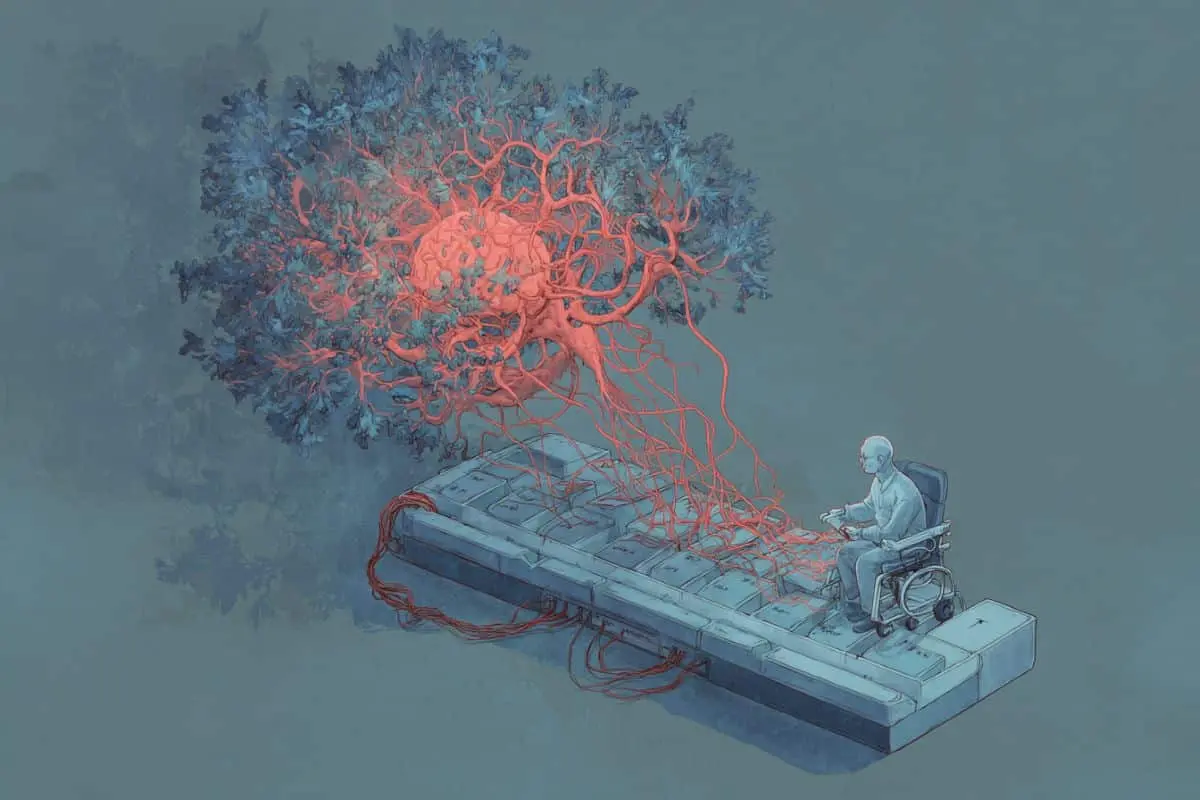
Source: Neuroscience News
The investigational system represents a significant leap in assistive communication technology. One participant achieved a top typing speed of 110 characters per minute with a remarkably low word error rate of 1.6 percent, matching the accuracy of able-bodied typing
2
. This performance far exceeds previous brain-typing systems, which required users to laboriously control a cursor to select individual letters on screen.How the System Decodes Intended Finger Movements
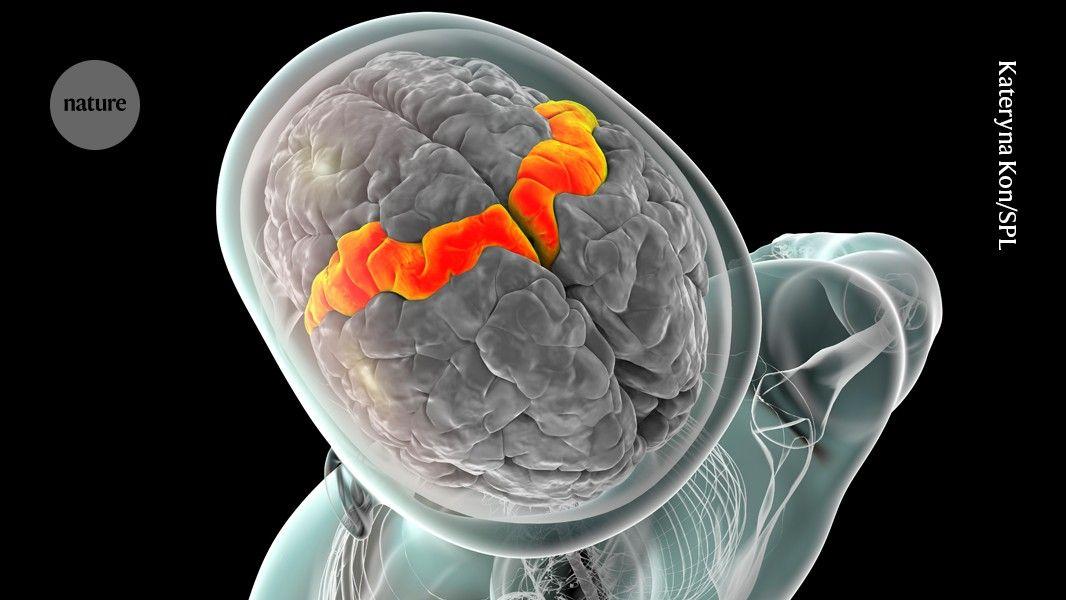
The neuroprosthesis works by placing microelectrode sensors in the motor cortex, specifically targeting the precentral gyrus—a brain region that controls movement. Researchers then display a virtual QWERTY keyboard where each letter maps onto specific fingers and finger positions: up, down, or curled
1
2
.
Source: Scientific American
As participants attempt to move their paralyzed fingers, electrodes detect the electrical activity of neurons and transmit these neural signals to a computer system. Artificial intelligence then translates this brain activity into letters, with a final predictive language model ensuring coherent, accurate output. Lead author Justin Jude, a postdoctoral researcher at BrainGate and Brown University, explains that this approach allows users to "access any key at any time" rather than slowly navigating with a cursor
1
.Real-World Testing with ALS and Spinal Cord Injury Patients
The system was tested on two clinical trial participants: one living with amyotrophic lateral sclerosis (ALS), a progressive neurological disease causing paralysis, and another with a spinal cord injury that resulted in paralysis while preserving speech. Both participants calibrated their devices using just 30 sentences, demonstrating the system's efficiency
2
.The participant with spinal cord injury reached the peak performance of 22 words per minute, while the person with ALS typed more slowly but still achieved impressive speeds despite having lost the ability to speak. Notably, both participants used the iBCI from their own homes, highlighting its potential for real-world application and independence
2
.Why Communication Speed Matters
For people with severe paralysis who cannot speak or use their hands, existing options like eye-gaze technology force them to spell words one letter at a time—a painfully slow process. "Communication speed matters, because being part of a conversation matters," says Daniel Rubin, a critical care neurologist at Massachusetts General Hospital and study coauthor
1
.Many patients describe current augmentative and alternative communication systems as frustrating, error-prone, and difficult to use; some abandon them entirely. The new brain-computer interface addresses this gap by restoring high-speed communication that approaches natural conversation pace
2
.Related Stories
Comparing Performance Across Brain-Computer Interface Approaches
This typing speed of 22 words per minute significantly outperforms most earlier systems. A previous BrainGate handwriting BCI achieved about 18 words per minute (90 characters per minute). Another BCI implanted in speech-related brain regions reached 78 words per minute but suffered from a median word error rate of 25 percent—far higher than the 1.6 percent achieved with the finger-movement approach
1
.Edward Chang, a professor of neurological surgery at the University of California, San Francisco, notes that signals in the motor cortex are easier to decode, though speech-related areas might ultimately prove faster and more direct. The optimal strategy remains an open question as the field continues to advance
1
.Future Implications and Next Steps
Jude suggests the technology could improve further through personalized keyboards or stenography implementations to boost typing speed even more. Beyond communication, decoding finger movements represents "a big step toward being able to restore complex reach and grasp movements for people with upper extremity paralysis"
2
.Leigh Hochberg, director of the Center for Neurotechnology and Neurorecovery at Mass General Brigham Neuroscience Institute and leader of the BrainGate clinical trial, emphasizes that academic research partnerships are advancing restorative neurotechnology to the point where industry can develop final medical devices for patients. Since 2004, BrainGate has been testing the feasibility of implantable systems to restore communication and independence
2
.While the technology shows promise, it requires brain surgery and has been tested on only two participants so far. Researchers continue working to refine the system and demonstrate its safety and effectiveness across larger populations before it can become widely available for people living with paralysis.
References
Summarized by

Navi
[1]
[2]
Related Stories
Breakthrough Brain-Computer Interface Restores Real-Time Speech for ALS Patient
12 Jun 2025•Science and Research
Brain Implant Breakthrough: Real-Time Thought-to-Speech Translation
01 Apr 2025•Science and Research
Breakthrough: AI-Powered Brain Implant Enables Paralyzed Man to Control Robotic Arm for Record 7 Months
07 Mar 2025•Science and Research

Recent Highlights
1
Google Maps unveils Ask Maps with Gemini AI and 3D Immersive Navigation in biggest update
Technology

2
AI chatbots help plan violent attacks as safety guardrails fail, new investigation reveals
Technology

3
OpenAI secures $110 billion funding round as questions swirl around AI bubble and profitability
Business and Economy

Recent Highlights
Today's Top Stories







Your Daily Dose of Curated AI News
Don’t drown in AI news. We cut through the noise - filtering, ranking and summarizing the most important AI news, breakthroughs and research daily. Spend less time searching for the latest in AI and get straight to action.

