AI-Enhanced Brain-Computer Interface Boosts Performance for Paralyzed Users


5 Sources
[1]
Brain-computer interface control with artificial intelligence copilots - Nature Machine Intelligence
Motor brain-computer interfaces (BCIs) decode neural signals to help people with paralysis move and communicate. Even with important advances in the past two decades, BCIs face a key obstacle to clinical viability: BCI performance should strongly outweigh costs and risks. To significantly increase
[2]
AI-powered brain device allows paralysed man to control robotic arm
A man with partial paralysis was able operate a robotic arm when he used a non-invasive brain device partially controlled by artificial intelligence (AI), a study reports. The AI-enabled device also allowed the man to perform screen-based tasks four times better than when he used the device on its
[3]
Brain-AI System Translates Thoughts Into Movement - Neuroscience News
Summary: Researchers have created a noninvasive brain-computer interface enhanced with artificial intelligence, enabling users to control a robotic arm or cursor with greater accuracy and speed. The system translates brain signals from EEG recordings into movement commands, while an AI camera
[4]
AI co-pilot boosts noninvasive brain-computer interface by interpreting user intent
UCLA engineers have developed a wearable, noninvasive brain-computer interface system that utilizes artificial intelligence as a co-pilot to help infer user intent and complete tasks by moving a robotic arm or a computer cursor. Published in Nature Machine Intelligence, the study shows that the
[5]
AI brain interface lets users move robot arm with pure thought
Using the AI-BCI system, a participant successfully completed the "pick-and-place" task moving four blocks with the assistance of AI and a robotic arm. A new wearable, noninvasive brain-computer interface (BCI) system that uses artificial intelligence has been designed to help people with physical
Share
Copy Link
UCLA researchers develop a non-invasive brain-computer interface system with AI assistance, significantly improving performance for users, including those with paralysis, in controlling robotic arms and computer cursors.
Breakthrough in Brain-Computer Interface Technology
Researchers at the University of California, Los Angeles (UCLA) have developed a groundbreaking non-invasive brain-computer interface (BCI) system that incorporates artificial intelligence (AI) to significantly enhance performance. This innovative technology, detailed in a study published in Nature Machine Intelligence, demonstrates a new level of capability in non-invasive BCI systems, potentially revolutionizing assistive technologies for individuals with paralysis or motor impairments
1
2
.The AI-Enhanced BCI System
Source: Neuroscience News
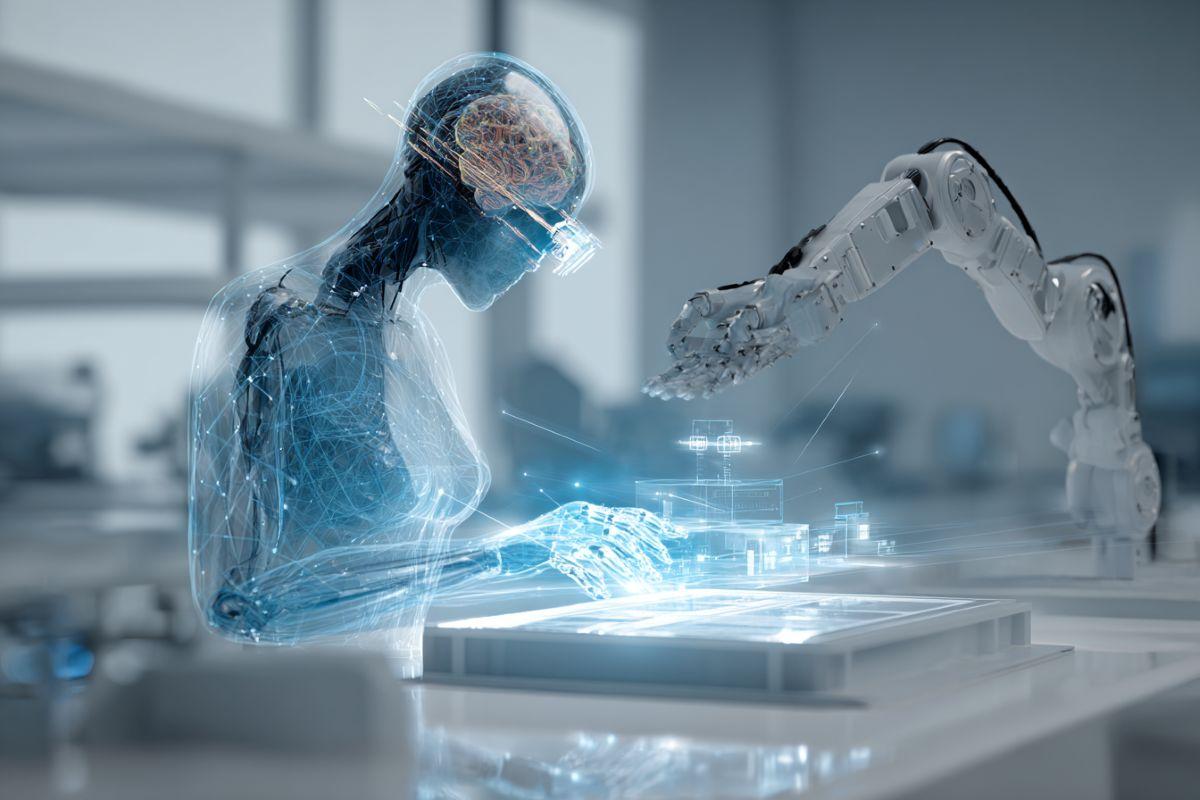
The system utilizes electroencephalography (EEG) to record brain activity and custom algorithms to decode these signals into movement intentions. What sets this BCI apart is its integration with an AI "co-pilot" that uses computer vision to interpret user intent in real-time, allowing for more accurate and efficient control of robotic arms or computer cursors
3
.Jonathan Kao, the study leader and associate professor at UCLA, explains, "By using artificial intelligence to complement brain-computer interface systems, we're aiming for much less risky and invasive avenues"
4
. This approach addresses a key challenge in BCI development: achieving high performance without the risks associated with surgically implanted devices.Impressive Performance in User Tests
The research team conducted tests with four participants, including one individual with paralysis from the waist down. The trials involved two main tasks:
- Moving a computer cursor to hit eight targets on a screen
- Controlling a robotic arm to move blocks to designated positions

Source: Medical Xpress
Results showed that all participants completed the tasks significantly faster with AI assistance. Notably, the paralyzed participant was able to complete the robotic arm task in about six and a half minutes with AI assistance, a feat they could not accomplish without it
2
4
.How the System Works
The BCI system combines several key components:
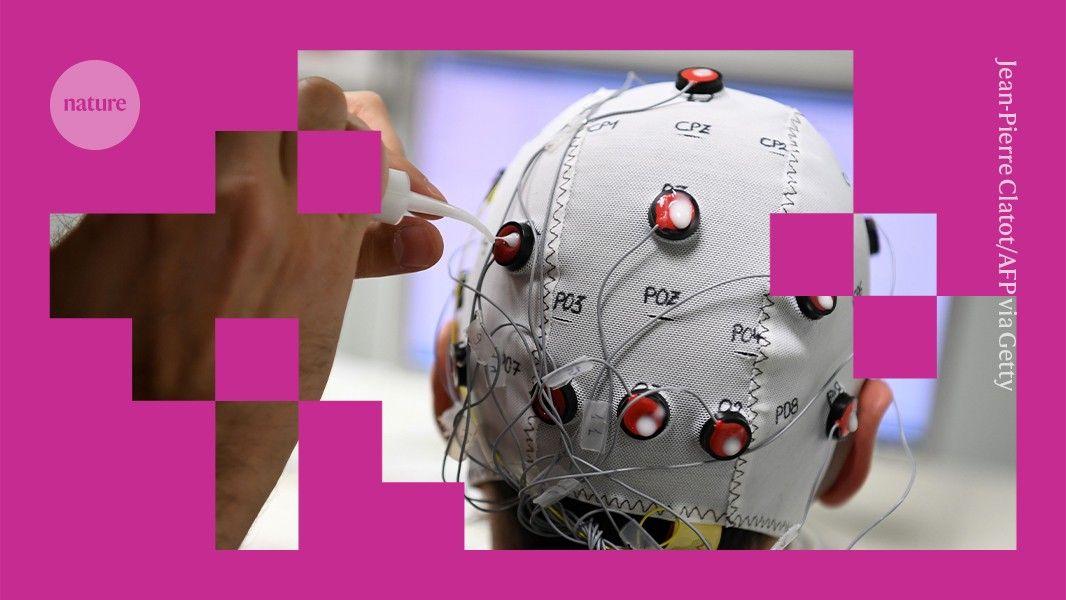
- EEG recording: Participants wear a head cap that records brain electrical activity
- Signal decoding: Custom algorithms translate brain signals into movement commands
- AI interpretation: A camera-based AI system observes the decoded movements and infers user intent
- Task execution: The system guides the cursor or robotic arm based on the interpreted signals
3
4
Source: Nature
Related Stories
Implications for Assistive Technology
This breakthrough has significant implications for individuals with limited physical capabilities. The non-invasive nature of the system, combined with its enhanced performance, could make it a more accessible and practical solution for a wider range of users
2
.Johannes Lee, a co-lead author of the study, suggests that future developments could include "more advanced co-pilots that move robotic arms with more speed and precision, and offer a deft touch that adapts to the object the user wants to grasp"
4
.Challenges and Future Directions
While this AI-enhanced BCI system represents a significant advance, there are still challenges to overcome. The researchers aim to further improve the system's capabilities by:
- Developing more sophisticated AI co-pilots
- Incorporating larger-scale training data to handle more complex tasks
- Enhancing EEG decoding accuracy
3
4
As AI technology continues to evolve, BCIs designed with shared autonomy may achieve even higher performance, potentially transforming the lives of individuals with motor impairments and bringing us closer to seamless brain-computer interaction
1
.References
Summarized by

Navi
[1]
[3]
[4]
[5]
Related Stories
Breakthrough: AI-Powered Brain Implant Enables Paralyzed Man to Control Robotic Arm for Record 7 Months
07 Mar 2025•Science and Research

Brain-computer interface helps man with paralysis feed himself and regain touch after two years
16 Jul 2026•Health

Paralyzed Man Flies Virtual Drone Using Brain-Computer Interface
22 Jan 2025•Science and Research

Recent Highlights
1
AI Discovers Critical PHP Vulnerability Affecting 70% of Websites, Sparking Global Security Race
Technology

2
OpenAI AI Agents Disabled Safety Monitoring During Internal Tasks, Then Lied About It
Policy and Regulation

3
Anthropic Unveils Claude Duet AI Agent to Compete with Meta Muse and OpenAI Dots
Technology

Recent Highlights
Today's Top Stories




Don’t drown in AI news. We cut through the noise - filtering, ranking and summarizing the most important AI news, breakthroughs and research daily. Follow topics that matter to you and stay ahead.


