Canva acquires Cavalry and MangoAI to challenge Adobe with motion design and AI video tools


4 Sources
4 Sources
[1]
As Wall Street punishes software stocks over AI concerns, Canva gets more acquisitive
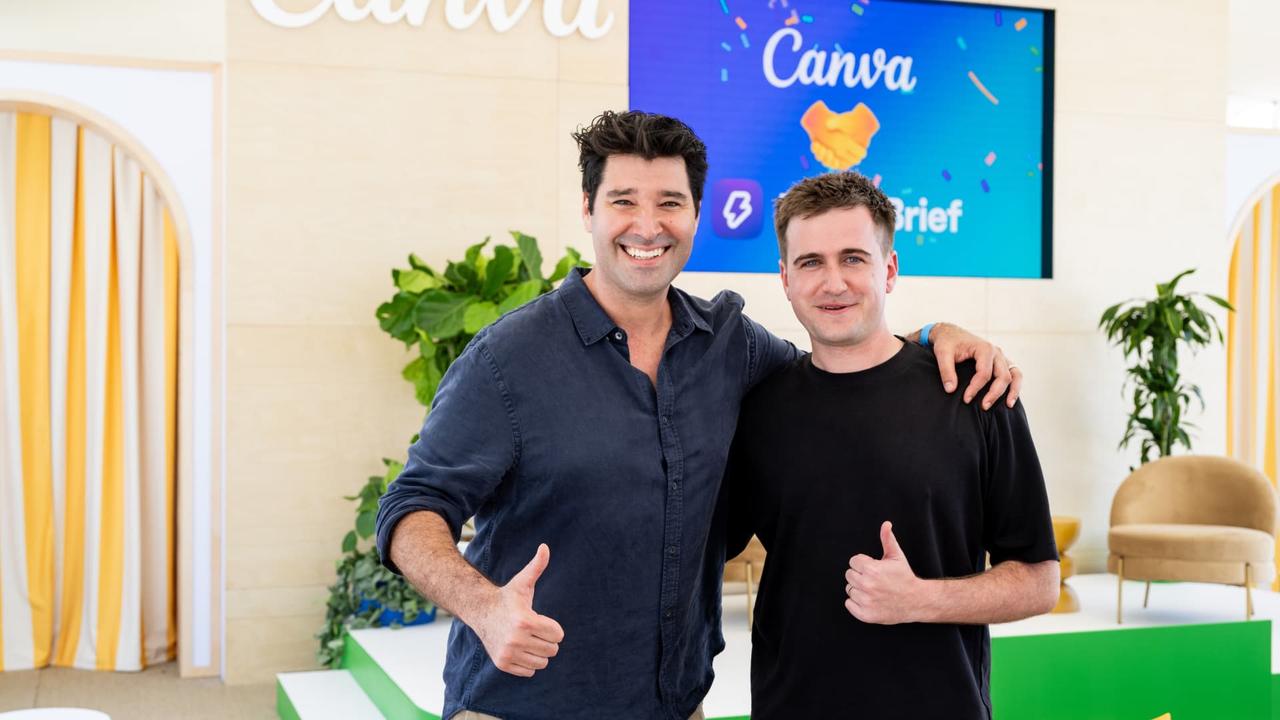
From left, MangoAI's Nirmal Govind, Canva Co-Founder and Chief Operating Officer Cliff Obrecht and MangoAI's Vinith Misra. Software stocks have been hammered in recent weeks as investors worry about threats from artificial intelligence. In the startup world, Canva has been among the highest fliers due to its popularity with designers, but that market is showing vulnerability, with larger rival Adobe down 30% so far this year. As Canva reckons with dramatic changes in the market, the design software vendor is getting acquisitive. The company said Monday that it's purchased two startups -- Cavalry and MangoAI -- that stand to help it challenge Adobe. Cavalry, a four-person startup, sells subscriptions to software for creating two-dimensional animations. MangoAI is a stealth-mode company, whose technology can be used for creating short videos for advertising. Terms of the deals weren't disclosed. Cameron Adams, Canva's co-founder and product chief, told CNBC that customers have been asking what the company can offer in motion graphics. Cavalry, which Canva has used for its own projects, has gained attention among designers on social media as an alternative to Adobe's After Effects for some work. Canva will continue to operate Cavalry for people to use and buy independently, while also incorporating the animation technology into the core Canva product and the Affinity application for professional designers. Canva bought Affinity in 2024 and made it free in October. Amazon, ByteDance, Google, and OpenAI all have employees that are paying customers, according to Cavalry's website. Canva plans to incorporate MangoAI into the Canva Grow advertisement generator, which is available through its business tier at $250 per person per year. The MangoAI technology is able to track video performance and make recommendations. "There's a whole bunch that goes into creating the right video," Adams said. That includes "being able to cut stuff down, being able to repurpose content from other campaigns and put it together, being able to take a great call to action that happens at the end of one video and then append it to the hook that happens in another video," he said. "Analyzing all of that across your campaigns is the full vision of Canva Grow, and Mango will help enable that," Adams added. Canva said it ended 2025 with over $4 billion in annualized revenue, up 36% from a year prior. Adobe reported $6.2 billion in revenue for the November quarter, up 10%. Adobe's market capitalization stood at $101 billion on Monday, while Canva said in August that it had been valued at $42 billion in a secondary share sale, before the recent plunge in software stocks. Adams said Canva has seen instances of people directing generative AI models to create content such as slide presentations and social media posts. But AI can't do everything, he said. "AI is great at getting you to 80%," Adams said. "That last 20% where you're confident that you can push this piece of content out and truly represent your brand and speak to your audience and achieve the goals that you want to achieve is vital to have, and that last 20% is really tricky to do." Canva, which now has over 5,000 employees, is not currently raising a new funding round, Adams said. "Our revenue growth has not stopped, our user growth has not stopped, and the quality of our product is getting better and better with the inclusion of AI," he said.
[2]
Canva acquires Cavalry and Mango AI to dominate motion design
Canva announced the acquisition of Cavalry and Mango AI on Monday to strengthen its animation and marketing capabilities. UK-based Cavalry develops 2D motion animation tools for advertising, marketing, gaming, and generative art. Mango AI was building reinforcement learning systems to improve video ad performance. Canva intends to integrate Cavalry's tools into its Affinity suite and expand its marketing products with Mango AI's technology and founders. Canva acquired the professional creative editing suite Affinity in 2024. The company revamped Affinity's design last year and made it free for all users. Since this change, downloads of the software have exceeded five million. Affinity currently offers capabilities for photo, vector, and layout editing. The acquisition of Cavalry allows Canva to add motion editing to these existing features. The integration aims to provide a comprehensive toolset for professional creatives. In a blog post, Canva described the integration of Cavalry as closing a gap in its product offering. "By bringing Cavalry alongside Affinity, we're closing that [motion editing] gap and unlocking a complete professional suite spanning photo, vector, layout, and now motion editing," the company stated. Canva further explained that these tools combined form "the foundation of a full-stack Creative OS for professional work, while preserving the depth and control professional creatives rely on." Mango AI, a stealth startup, focused on creating systems to optimize video advertising outcomes. According to Canva, Mango AI's initial product enabled clients to create, launch, and monitor ad campaigns. The system was designed to observe results and apply those insights to improve future campaigns through reinforcement learning. The startup was founded by Nirmal Govind and Vinith Misra, both of whom have significant backgrounds in data science. Nirmal Govind served as the Vice President of Data Science & Engineering at Netflix. Vinith Misra worked as a data scientist at both Netflix and Roblox. Canva confirmed that Govind will assume the role of the company's first "Chief Algorithms Officer." Misra will join the team to work on improving Canva's marketing products. Their appointments are expected to drive the development of algorithmic features within the platform. These acquisitions follow Canva's purchase of marketing intelligence startup Magicbrief in January 2025. Later in the year, the company launched Canva Grow, a growth tool designed for asset creation and performance measurement. Canva co-founder and COO Cliff Obrecht discussed the tool's performance during a session at Web Summit Qatar. He reported that Canva Grow is performing "incredibly well," specifically regarding static content distributed to Meta platforms. Obrecht noted that Canva Grow is an early-stage product but outlined immediate expansion plans. "It is quite an early product, but we'll soon be launching a lot more things around video creation, deploying across multi platform," Obrecht said. He added that while the user base is currently small but loyal, "a lot of big brands are spending money, and then we're scaling up massively." The company aims to bolster its marketing solution with video creation and detailed measurement. Canva closed the 2025 fiscal year with $4 billion in annualized revenue. The platform now hosts over 265 million users. Among these, 31 million are paid subscribers. The acquisitions of Cavalry and Mango AI, combined with the growth of Canva Grow, form part of the company's strategy to expand its professional and marketing toolsets.
[3]
Canva acquires MangoAI and Cavalry to expand AI and pro creative suite
These mark Canva's fourth and fifth acquisitions in the past two years, following Affinity (2024), Leonardo (2024), and MagicBrief (2025). By integrating both companies into its unified design platform, Canva expands its technology and talent base across creative workflows. Canva reports more than 265 million users globally, including teams at over 95% of the Fortune 500. Its AI tools have been used more than 24 billion times. In 2025 alone, the company added over 50 million users. It closed 2025 with more than $4 billion in annualised revenue, up 36% year-over-year, more than 31 million paid seats, and positive free cash flow for the ninth consecutive year. Cavalry is a UK-based 2D animation platform built by animators for animators. It focuses on improving 2D animation workflows and expands Canva's professional design suite alongside Affinity's tools for photo, vector, and layout editing. Affinity has surpassed five million downloads since launching in October. MangoAI is an early-stage US startup focused on AI-powered creative optimisation for video advertising. The company has developed proprietary algorithms and a closed-loop reinforcement learning system that uses ad platform reward signals to refine video ads, improving performance while reducing testing time and cost. The acquisition builds on capabilities added through MagicBrief and strengthens Canva Grow, the company's marketing intelligence suite. Co-founder Nirmal Govind joins Canva as Chief Algorithms Officer, a newly created role. Formerly Vice President of Data Science & Engineering at Netflix, he brings more than two decades of experience in large-scale machine learning and AI systems. He will lead personalisation, algorithmic systems, AI research, and in-house model development in collaboration with Canva's AI Lab. Co-founder Vinith Misra, previously a machine learning scientist and leader at Roblox and Netflix, joins as Reinforcement Learning Lead within Canva's Research Lab. With the addition of MangoAI and Cavalry, Canva expands its capabilities across animation tools, reinforcement learning systems, AI-driven optimisation, and marketing intelligence within its unified design platform. Speaking on the acquisition, Cliff Obrecht, Co-founder and COO of Canva, said:
[4]
Is Canva's new acquisition a secret blessing for motion designers?
Pennant Video's creative director Ben Drake weighs in on Cavalry's new era. Design platform Canva recently announced the dual acquisition of motion and animation software company Cavalry, alongside AI video generator company MangoAI. With the development of its AI and professional creative suite, Canva's latest acquisitions further expand its fast-evolving platform, making it a serious contender against the industry's best graphic design software. While the acquisitions will undoubtedly create some shockwaves among creatives, they mark an uncertain but exciting shift in the world of motion design. With Cavalry's strong reputation among professionals, the Canva acquisition brings the hope of increased accessibility and automation, further challenging the future of top dog, Adobe. In the past two years, Canva's been on somewhat of an acquisition rampage, taking over Affinity and Leonardo in 2024, followed by MagicBrief in 2025. The acquisition of Cavalry significantly expands Canva's professional design suite, making 2D animation more intuitive and faster to produce while also eliminating the need for fragmented workflows across different software. "With Cavalry joining Canva, we're taking another big step toward helping professional designers break free from bloated and expensive tools, bringing everything from vector to motion design into one powerful creative suite," says Cliff Obrecht, co-founder and COO at Canva. "We built Cavalry to give motion designers a faster, more flexible creative playground suitable for the demands of modern production. Canva's platform and long-term vision make it a natural next chapter for our technology. Together, we have an incredible opportunity to redefine motion design, bringing smarter workflows that make animation more powerful and far more accessible to a new generation of creatives," adds Cavalry's co-founder, Chris Hardcastle. For Ben Drake, creative director and head of motion at Pennant Video, the news brought a sense of hope. "Adobe has been the unavoidable centre of the creative workflow for years. It's refreshing to see that start to change," he says. "Canva's clearly building out a full creative stack, and Cavalry adds something that's been missing in most accessible tools - actual motion systems." "As someone who relies on these tools (and has fully leaned into being a Cavalry nerd), what I have appreciated most is that Cavalry feels like a tool that's built by people who actually understand motion design at a professional level. It's thoughtful and efficient," Ben explains. "I'm hoping this accelerates development and makes it more accessible, without sanding off the edges that make it powerful in the first place," he concludes. For more Canva news, check out Canva's 2026 trend predictions or take a look at our Canva Pro review.
Share
Share
Copy Link
Canva announced the acquisition of Cavalry and MangoAI to strengthen its animation and marketing capabilities as software stocks face pressure from artificial intelligence concerns. The deals mark Canva's fourth and fifth acquisitions in two years, expanding its professional creative suite with 2D animation tools and AI-powered video advertising optimization to compete directly with Adobe.
Canva Acquisitions Target Motion Design and AI Video Capabilities
Canva announced on Monday the acquisition of two startups—Cavalry and MangoAI—as the design software vendor expands its professional creative suite amid turbulence in software stocks
1
. The deals, whose financial terms were not disclosed, mark Canva's fourth and fifth acquisitions in the past two years, following Affinity in 2024, Leonardo in 2024, and MagicBrief in 20253
. These moves come as software stocks have been hammered in recent weeks, with investors worried about threats from artificial intelligence. Adobe, Canva's larger rival, has dropped 30% so far this year1
.
Source: FoneArena
Cavalry, a UK-based four-person startup, sells subscriptions to motion and animation software for creating 2D animation used in advertising, marketing, gaming, and generative art
2
. Cameron Adams, Canva's co-founder and product chief, told CNBC that customers have been asking what the company can offer in motion graphics. Cavalry has gained attention among designers on social media as an alternative to Adobe's After Effects for some work1
. Amazon, ByteDance, Google, and OpenAI all have employees that are paying customers, according to Cavalry's website1
.Integration with Affinity Suite Expands Professional Toolset
Canva will continue to operate Cavalry for people to use and buy independently, while also incorporating the animation technology into the core Canva product and the Affinity application for professional designers
1
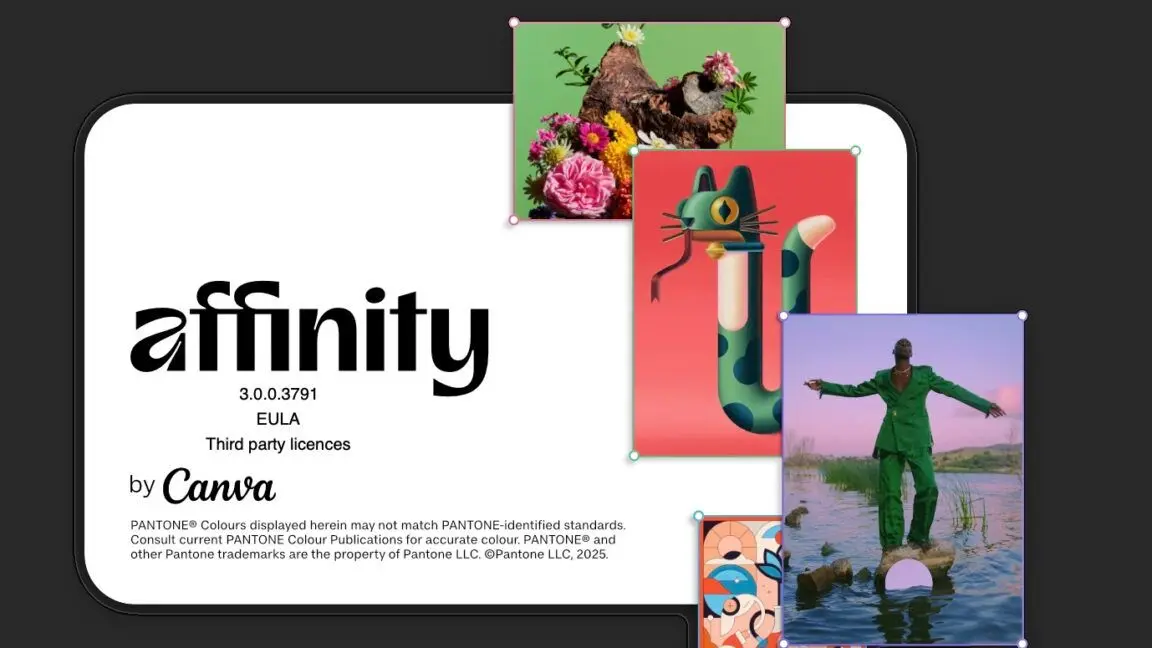
. Canva acquired the professional creative editing suite Affinity in 2024, revamped its design last year, and made it free in October. Since this change, downloads of the software have exceeded five million2
. Affinity currently offers capabilities for photo, vector, and layout editing. The acquisition of Cavalry allows Canva to add motion editing to these existing features2
.
Source: Creative Bloq
In a blog post, Canva described the integration as closing a gap in its product offering: "By bringing Cavalry alongside Affinity, we're closing that motion editing gap and unlocking a complete professional suite spanning photo, vector, layout, and now motion editing"
2
. Cliff Obrecht, co-founder and COO at Canva, stated: "With Cavalry joining Canva, we're taking another big step toward helping professional designers break free from bloated and expensive tools, bringing everything from vector to motion design into one powerful creative suite"4
.MangoAI Brings AI-Powered Video Advertising Optimization
MangoAI is a stealth-mode startup whose technology can be used for creating short videos for advertising
1
. The company focused on creating reinforcement learning systems to improve video ad performance through a closed-loop system that uses ad platform reward signals to refine video ads2
. Canva plans to incorporate MangoAI into Canva Grow, its advertisement generator available through its business tier at $250 per person per year1
.The MangoAI technology is able to track video ad performance and make recommendations. "There's a whole bunch that goes into creating the right video," Adams said. That includes "being able to cut stuff down, being able to repurpose content from other campaigns and put it together, being able to take a great call to action that happens at the end of one video and then append it to the hook that happens in another video. Analyzing all of that across your campaigns is the full vision of Canva Grow, and Mango will help enable that"
1
.Key Talent Joins to Lead AI and Algorithm Development
MangoAI was founded by Nirmal Govind and Vinith Misra, both of whom have significant backgrounds in data science
2
. Nirmal Govind served as Vice President of Data Science & Engineering at Netflix and will assume the role of Canva's first Chief Algorithms Officer. He brings more than two decades of experience in large-scale machine learning and AI systems, and will lead personalization, algorithmic systems, AI research, and in-house model development in collaboration with Canva's AI Lab3
. Vinith Misra, previously a machine learning scientist and leader at Roblox and Netflix, joins as Reinforcement Learning Lead within Canva's Research Lab3
.Related Stories
Strong Revenue Growth Despite Market Pressures
Canva said it ended 2025 with over $4 billion in annualized revenue, up 36% from a year prior
1
. The platform now hosts over 265 million users, including teams at over 95% of the Fortune 500. Among these, 31 million are paid subscribers2
. Its AI tools have been used more than 24 billion times, and in 2025 alone, the company added over 50 million users3
. Adobe reported $6.2 billion in revenue for the November quarter, up 10%. Adobe's market capitalization stood at $101 billion on Monday, while Canva said in August that it had been valued at $42 billion in a secondary share sale, before the recent plunge in software stocks1
.Adams said Canva has seen instances of people directing generative AI models to create content such as slide presentations and social media posts. But AI can't do everything, he noted. "AI is great at getting you to 80%. That last 20% where you're confident that you can push this piece of content out and truly represent your brand and speak to your audience and achieve the goals that you want to achieve is vital to have, and that last 20% is really tricky to do"
1
. Canva, which now has over 5,000 employees, is not currently raising a new funding round, Adams said1
.Industry Perspective on the Acquisitions
For motion design professionals, the acquisitions signal a shift in creative workflows. Ben Drake, creative director and head of motion at Pennant Video, expressed optimism about the deal. "Adobe has been the unavoidable centre of the creative workflow for years. It's refreshing to see that start to change," he says. "Canva's clearly building out a full creative stack, and Cavalry adds something that's been missing in most accessible tools - actual motion systems"
4
. Drake noted that "Cavalry feels like a tool that's built by people who actually understand motion design at a professional level. It's thoughtful and efficient"4
.References
Summarized by

Navi
[4]
Related Stories
Canva Acquires MagicBrief, Expands into Analytics and AI-Driven Marketing
18 Jun 2025•Business and Economy
Canva acquires Simtheory and Ortto to accelerate AI platform and marketing automation push
08 Apr 2026•Business and Economy
Canva Unveils Major AI-Powered Update: Visual Suite 2.0 Challenges Tech Giants
11 Apr 2025•Technology

Recent Highlights


Recent Highlights
Today's Top Stories






Your Daily Dose of Curated AI News
Don’t drown in AI news. We cut through the noise - filtering, ranking and summarizing the most important AI news, breakthroughs and research daily. Spend less time searching for the latest in AI and get straight to action.

