China blocks Manus founders from leaving after $2 billion Meta acquisition sparks regulatory review


2 Sources
2 Sources
[1]
The least surprising chapter of the Manus story is what's happening right now | TechCrunch
Okay, so the U.S. and China are locked in an all-out race to build the most powerful AI on the planet. Beijing is throwing billions at homegrown models, tightening its grip on the tech sector, and watching nervously as its best AI talent gravitates to U.S. companies. A Carnegie Endowment study published late last year found that 87 of the 100 top Chinese AI researchers at U.S. institutions in 2019 are still there. Yet Manus -- one of China's most buzzed-about AI startups -- quietly relocated to Singapore and sold itself to Meta for $2 billion. Did anyone think there would not be a reckoning over this tie-up? As industry watchers know, Manus burst onto the scene in the spring of last year with a demo video showing an AI agent screening job candidates, planning vacations, and analyzing stock portfolios, and it cheekily claimed it outperformed OpenAI's Deep Research. Within weeks, Benchmark -- the consummate Silicon Valley venture firm -- led a $75 million funding round at a $500 million valuation. That was surprising. (Senator John Cornyn had thoughts, tweeting at the time, "Who thinks it is a good idea for American investors to subsidize our biggest adversary in AI, only to have the CCP use that technology to challenge us economically and militarily? Not me.") By December, Manus had millions of users and was pulling in over $100 million in annual recurring revenue. Then Meta came calling, and Mark Zuckerberg, who has staked the company's future on AI, snapped it up for $2 billion. It's worth noting that Manus didn't just sell itself to an American buyer; it spent the better part of last year actively trying to operate outside China's orbit. The company relocated its headquarters and core team from Beijing to Singapore, restructured its ownership, and after the Meta deal was announced, Meta pledged to cut all ties with Manus's Chinese investors and shut down its operations in China entirely. By every measure, Manus was trying to make itself a Singapore company. But if that string of events raised eyebrows in Washington, you can only imagine that in Beijing, they were apoplectic. China has a phrase for all of this: "selling young crops" -- homegrown AI companies that move abroad and sell themselves to foreign buyers before they've fully matured, taking their intellectual property and talent with them. Beijing hates it and has spent years establishing that no company operates outside its reach. Surely, we all remember that time Jack Ma gave a speech in 2020, mildly criticizing Chinese regulators, after which he disappeared from public life for months, Ant Group's blockbuster IPO was killed overnight, and Alibaba was handed a $2.8 billion fine. China then spent the next two years methodically dismantling its own booming tech sector, wiping out hundreds of billions in market value. Chinese leaders are many things, but subtle is not one of them. Which is why it wasn't entirely surprising when, on Tuesday, the Financial Times reported that Manus co-founders Xiao Hong and Ji Yichao were summoned to a meeting this month with China's National Development and Reform Commission and told that they wouldn't be leaving the country for a while. No formal charges have been filed -- just an inquiry into whether the Meta deal violated Beijing's foreign investment rules. Beijing is calling it a routine regulatory review. At some point, someone at Manus probably thought they'd gotten away with it, and maybe they still will. But given the stakes of the AI race, that was always a big gamble. Now Beijing wants answers; Manus's founders are apparently not going anywhere until it gets them.
[2]
China bans Manus founders from leaving country after Meta acquisition
Manus was dubbed as China's next DeepSeek and said its AI agent could buy property, program video games, analyse stocks, and plan travel itineraries. China has blocked the boss of an artificial intelligence startup from leaving the country after the company was acquired by Meta, according to a media report. The chief executive of Manus Xiao Hong and chief scientist Ji Yichao were told they could not leave China while regulators review the acquisition, the Financial Times reported. Meta said in December it would acquire Manus to boost its AI development. Manus catapulted onto the tech sphere when it unveiled what it called the "world's first fully autonomous AI". The company was dubbed as China's next DeepSeek and said its AI agent could buy property, program video games, analyse stocks, and plan travel itineraries. Manus' creator said in a video last year that it is more than "just another chatbot or workflow... It's a completely autonomous agent". Shortly after the acquisition was announced in December, China's commerce ministry said it would investigate whether the deal complied with local laws and regulations. Hong said the move would allow the company to "build on a stronger, more sustainable foundation without changing how Manus works or how decisions are made".
Share
Share
Copy Link
China has barred Manus co-founders Xiao Hong and Ji Yichao from leaving the country while regulators investigate Meta's $2 billion acquisition of the AI startup. The move highlights Beijing's crackdown on Chinese AI companies relocating abroad and selling to foreign buyers, a practice China calls "selling young crops" that threatens its position in the global AI race.
China Bans Manus Founders After Meta's $2 Billion Deal
China has blocked Manus co-founders Xiao Hong and Ji Yichao from leaving the country while regulators review the company's $2 billion Meta acquisition, according to a Financial Times report
1
. The founders barred from leaving country were summoned to a meeting with China's National Development and Reform Commission and told they wouldn't be departing while Beijing investigates whether the deal violated foreign investment rules1
. China's commerce ministry announced the review shortly after the acquisition was announced in December2
. No formal charges have been filed, with Beijing calling it a routine regulatory review1
.
Source: Euronews
The Rise of a Fully Autonomous AI Agent
Manus burst onto the scene in spring 2025 with a demo video showcasing its fully autonomous AI agent screening job candidates, planning vacations, and analyzing stock portfolios
1
. The company claimed its AI agent could buy property, program video games, analyze stocks, and plan travel itineraries, positioning itself as more than "just another chatbot"2
. Within weeks, Silicon Valley venture firm Benchmark led a $75 million funding round at a $500 million valuation1
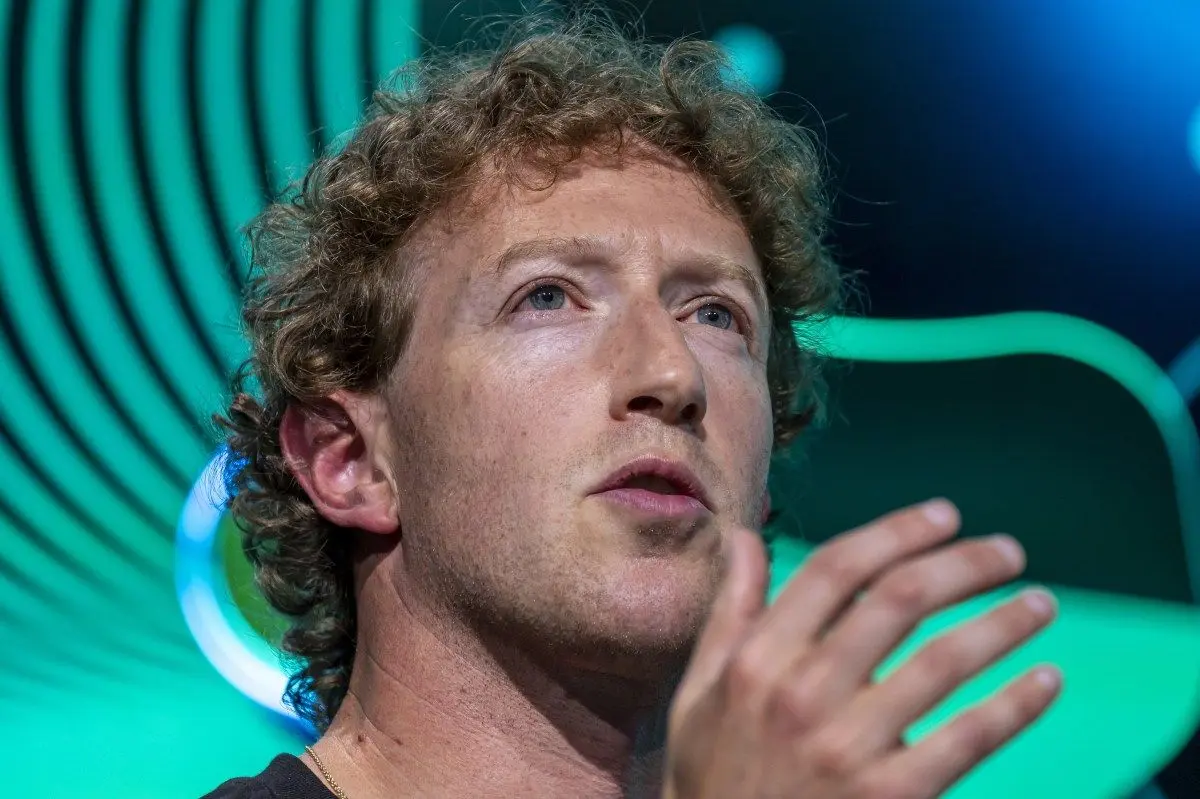
. By December, Manus had attracted millions of users and was generating over $100 million in annual recurring revenue before Mark Zuckerberg snapped it up for $2 billion1
.
Source: TechCrunch
Escaping Beijing's Orbit
Manus spent much of last year actively distancing itself from China AI operations. The company relocated its headquarters and core team from Beijing to Singapore, restructured its ownership, and after the Meta acquisition was announced, Meta pledged to cut all ties with Manus's Chinese investors and shut down its operations in China entirely
1
. The acquisition of Chinese AI startup represented what Beijing calls "selling young crops" — homegrown AI companies that move abroad and sell to foreign buyers before maturing, taking their intellectual property and talent with them1
.Related Stories
The US-China Race for AI Dominance Intensifies
The crackdown comes as the US-China race for AI dominance accelerates. Beijing is investing billions in homegrown models while watching its top AI talent gravitate to U.S. institutions. A Carnegie Endowment study found that 87 of the 100 top Chinese AI researchers at U.S. institutions in 2019 remain there
1
. The deal raised concerns in Washington, with Senator John Cornyn questioning whether American investors should "subsidize our biggest adversary in AI, only to have the CCP use that technology to challenge us economically and militarily"1
.Beijing's Track Record on Tech Sector Control
Beijing has established a clear pattern of asserting control over its tech sector. After Jack Ma criticized Chinese regulators in 2020, he disappeared from public life for months, Ant Group's IPO was killed, and Alibaba was handed a $2.8 billion fine
1
. China then spent two years dismantling its booming tech sector, wiping out hundreds of billions in market value1
. The message is clear: no company operates outside Beijing's reach, regardless of where they relocate or who acquires them. The Manus situation signals that China will aggressively scrutinize any attempt to transfer intellectual property to foreign competitors, particularly as AI becomes central to geopolitical competition.References
Summarized by

Navi
[1]
Related Stories
China launches probe into Meta's $2 billion Manus acquisition over technology export concerns
07 Jan 2026•Policy and Regulation

Meta acquires Manus for $2 billion, adding revenue-generating AI agents to its platforms
30 Dec 2025•Business and Economy

China deepens review of Meta's $2 billion Manus acquisition over tech export concerns
23 Jan 2026•Policy and Regulation

Recent Highlights
1
OpenAI shuts down Sora video app after six months, ending Disney's $1 billion investment deal
Technology

2
Apple plans major Siri AI overhaul in iOS 27 with standalone app and third-party chatbot support
Technology

3
Claude AI can now control your computer to complete tasks, but security risks remain
Technology

Recent Highlights
Today's Top Stories









Your Daily Dose of Curated AI News
Don’t drown in AI news. We cut through the noise - filtering, ranking and summarizing the most important AI news, breakthroughs and research daily. Spend less time searching for the latest in AI and get straight to action.

