China declares itself world leader in AI R&D, pledges to accelerate tech self-reliance


3 Sources
3 Sources
[1]
China says it is the world leader in R&D for AI, vows to boost tech self-reliance
BEIJING, March 5 (Reuters) - China declared on Thursday that it was now the world leader in research and development for artificial intelligence as well as other key fields such as quantum technology, and vowed to accelerate efforts to achieve greater tech self-reliance. That claim was made in one of the government reports issued at the opening session of the National People's Congress, China's rubber-stamp parliament. "China now leads the world in research and development and application in fields such as AI, biomedicine, robotics and quantum technology, and new breakthroughs were made in the independent R&D of chips," according to a report by the National Development and Reform Commission. The government highlighted its commitment to technology - an area it calls "new quality productive forces" - in the opening paragraphs of the main government work report presented by Premier Li Qiang. That was far more prominent than last year's report. New quality productive forces are set to account for a majority of projects in the yet-to-be-released five year plan for 2026-2030, the report said. China is locked in a fierce battle with the United States for supremacy in key technologies. That has led to intense trade friction with both sides placing export controls on some key products and resources - advanced chips most notably in the case of Washington and rare earths and critical minerals in the case of Beijing. Weaning itself off reliance on Western tech such as chips and planes has been a major theme for Beijing, as has getting ahead in newer industries such as AI. HUMANOID ROBOTS AND DATA CENTRES The main government work report outlined how the country plans to increase investment in some areas at the cutting-edge of science, like machine-brain interfaces. China is also doubling down on industries it leads, such as quantum technology, embodied AI - the tech that powers humanoid robots - and 6G. "Beijing is making AI and especially embodied AI a major area of focus," said Kyle Chan, fellow in Chinese technology at the Brookings Institution think tank. "Beijing's goal is to use AI and robotics to boost productivity and performance in a wide range of sectors, from manufacturing and logistics to education and healthcare." Across the broader AI industry, an area where China is seeking to challenge the lead of U.S. tech giants and startups, Beijing promised to build out "hyper-scale" computing clusters supported by cheap and abundant electricity and also support the building of AI open-source communities. "Open source wasn't mentioned in previous reports, and this is also a key difference between the Chinese and American AI approaches," said Tilly Zhang, technology and industrial policy analyst at Gavekal Dragonomics. "I believe China has studied this very carefully and decided to make open-source AI a flagship strategy and a competitive advantage against the United States." State-owned enterprises, which dominate the list of the largest companies, were also urged to take steps to create demand for made-in-China technology like chips, biomedicine and drones. "This year, there's much more focus on how to make money from technology. This is a very interesting shift. What they're really talking about is tech commercialization -- the idea that investments in technology can truly become economic drivers. This is a very significant and practical change," Zhang said. Reporting by Laurie Chen and Eduardo Baptista; Additional reporting by Liam Mo, Che Pan and Kevin Krolicki; Editing by Edwina Gibbs Our Standards: The Thomson Reuters Trust Principles., opens new tab * Suggested Topics: * Asia Pacific * ADAS, AV & Safety * Software-Defined Vehicle * Sustainable & EV Supply Chain Laurie Chen Thomson Reuters Laurie Chen is a China Correspondent at Reuters' Beijing bureau, covering politics and general news. Before joining Reuters, she reported on China for six years at Agence France-Presse and the South China Morning Post in Hong Kong. She speaks fluent Mandarin. Eduardo Baptista Thomson Reuters Eduardo Baptista is a Senior Correspondent for Reuters based in Beijing, covering China's technology, space, and automotive industries. He has led enterprise and investigative reporting on China's military-linked companies, artificial intelligence and semiconductor supply chains, as well as macroeconomic and industrial policy. Baptista has reported from China for nearly a decade and holds a BA in History from the University of Cambridge.
[2]
China says it is the world leader in R&D for AI, vows to boost tech self-reliance
BEIJING, March 5 (Reuters) - China declared on Thursday that it was now the world leader in research and development for artificial intelligence as well as other key fields such as quantum technology, and vowed to accelerate efforts to achieve greater tech self-reliance. That claim was made in one of the government reports issued at the opening session of the National People's Congress, China's rubber-stamp parliament. "China now leads the world in research and development and application in fields such as AI, biomedicine, robotics and quantum technology, and new breakthroughs were made in the independent R&D of chips," according to a report by the National Development and Reform Commission. China and the United States are dueling fiercely for supremacy in key technologies. The battle has led to intense trade friction with both sides placing export controls on key products and resources - advanced chips in the case of Washington and rare earths in the case of Beijing. HUMANOID ROBOTS AND DATA CENTRES The report also said China leads the world in terms of open-source AI models, and that the country has emerged as the largest producer of industrial robots and unmanned aerial vehicles. It said China would nurture future industries such as quantum technology, embodied AI - the tech that powers humanoid robots - and 6G, and promote the commercial and large-scale application of AI in key sectors. China plans to launch new data centre projects and will coordinate the distribution of computing capacity across the country. It also plans to establish a system for AI security risk prevention and control. "Beijing is making AI and especially embodied AI a major area of focus," said Kyle Chan, fellow in Chinese technology at the Brookings Institution think tank. "Beijing's goal is to use AI and robotics to boost productivity and performance in a wide range of sectors, from manufacturing and logistics to education and healthcare." The report also said that China's supply of high-quality industry AI datasets had continuously expanded. By the end of 2025, the average daily queries of large AI models had increased 30-fold compared to the beginning of the year, with the number of users exceeding 600 million, it said. China also pledged to boost still young domestic industries such as semiconductors and aerospace. Although U.S. tech firms have much more funds to invest than their Chinese competitors, Beijing is counting on its world-leading supply chains, low-cost manufacturing and fast R&D cycles to scale quickly. There may be limits to that growth though. U.S. research group Rhodium said in a January report that China's emerging industries would not generate enough investment to replace traditional industries in a way that would sustain 5% GDP growth over the coming years. (Reporting by Laurie Chen and Eduardo Baptista; Additional reporting by Liam Mo and Che Pan; Editing by Edwina Gibbs)
[3]
China vows to accelerate technological self-reliance, AI push
BEIJING, March 5 (Reuters) - China vowed on Thursday to accelerate efforts to achieve greater technological reliance, pledging to boost still young domestic industries such as semiconductors, aerospace and artificial intelligence. It will also nurture unicorn enterprises in future industries such as quantum technology, embodied AI - the tech that powers humanoid robots - and 6G, as well as promote the commercial and large-scale application of AI in key sectors, according to copies of the reports seen by Reuters. China plans to launch new data centre projects and coordinate the distribution of computing capacity across the country. It also plans to establish a system for AI security risk prevention and control. "Beijing is making AI and especially embodied AI a major area of focus," said Kyle Chan, fellow in Chinese technology at the Brookings Institution think tank. "Beijing's goal is to use AI and robotics to boost productivity and performance in a wide range of sectors, from manufacturing and logistics to education and healthcare." Although U.S. tech firms have much more funds to invest than their Chinese competitors, Beijing is counting on its world-leading supply chains, low-cost manufacturing and fast R&D cycles to scale quickly. There may be limits to that growth though. U.S. research group Rhodium said in a January report that China's emerging industries would not generate enough investment to replace traditional industries in a way that would sustain 5% GDP growth over the coming years. (Reporting by Laurie Chen, Eduardo Baptista, Liam Mo and Che Pan; Editing by Edwina Gibbs)
Share
Share
Copy Link
China announced at the National People's Congress that it now leads the world in AI research and development, along with quantum technology and robotics. The declaration signals Beijing's intensified push for technological independence as it competes with the United States for supremacy in emerging technologies, with plans to expand embodied AI, humanoid robots, and open-source AI communities.
China Declares Global Leadership in AI Research and Development
China made a bold declaration at the opening session of the National People's Congress on Thursday, claiming it now stands as the world leader in R&D for AI, quantum technology, robotics, and biomedicine
1
. The announcement came through a report by the National Development and Reform Commission, which also highlighted "new breakthroughs" in the independent R&D of semiconductors1
. This claim marks a significant moment in the ongoing technology rivalry between China and the United States, with Beijing positioning itself to accelerate technological self-reliance across critical industries.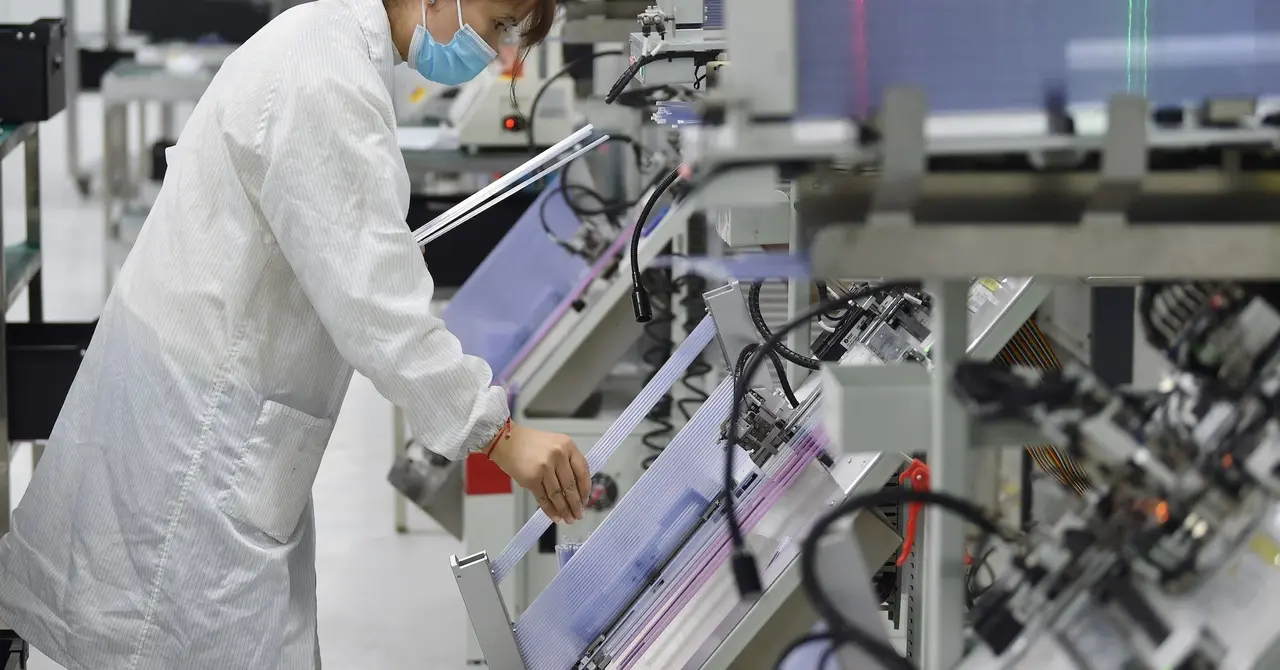
Source: Reuters
The government's main work report, presented by Premier Li Qiang, placed technology—referred to as "new quality productive forces"—far more prominently than in previous years
1
. These productive forces are expected to account for a majority of projects in the upcoming five-year plan for 2026-2030, signaling a strategic shift toward tech commercialization and making technology investments true economic drivers1
.Embodied AI and Humanoid Robots Take Center Stage
Beijing's strategy focuses heavily on embodied AI, the technology that powers humanoid robots, alongside quantum technology and 6G development
2
. The government plans to nurture unicorn enterprises in these future industries while promoting commercial and large-scale application of AI in key sectors3
. According to Kyle Chan, fellow in Chinese technology at the Brookings Institution, "Beijing's goal is to use AI and robotics to boost productivity and performance in a wide range of sectors, from manufacturing and logistics to education and healthcare"1
.The report revealed that China leads the world as the largest producer of industrial robots and unmanned aerial vehicles
2
. By the end of 2025, average daily queries of large AI models had increased 30-fold compared to the beginning of the year, with the number of users exceeding 600 million2
. The government also plans to increase investment in cutting-edge areas like machine-brain interfaces1
.Open-Source AI Strategy Emerges as Competitive Advantage
In a notable strategic shift, China emphasized building open-source AI communities and claimed leadership in open-source AI models
2
. Tilly Zhang, technology and industrial policy analyst at Gavekal Dragonomics, noted that "open source wasn't mentioned in previous reports, and this is also a key difference between the Chinese and American AI approaches"1
. Zhang believes China has "studied this very carefully and decided to make open-source AI a flagship strategy and a competitive advantage against the United States"1
.Beijing promised to build "hyper-scale" computing clusters supported by cheap and abundant electricity, launch new data centers, and coordinate the distribution of computing capacity across the country
1
3
. The government also plans to establish a system for AI security risk prevention and control3
.Related Stories

Trade Tensions and the Push for Independence
The announcements come amid fierce competition between China and the United States for supremacy in key technologies, leading to intense trade friction with both sides placing export controls on critical products
1
. Washington has restricted advanced chips, while Beijing has controlled rare earths and critical minerals1
. Weaning itself off reliance on Western technology, particularly semiconductors and aerospace products, has become a major theme for Beijing1
.State-owned enterprises were urged to create demand for made-in-China technology like chips, biomedicine, and drones
1
. While U.S. tech firms have significantly more funds to invest than their Chinese competitors, Beijing is counting on its world-leading supply chains, low-cost manufacturing, and fast R&D cycles to scale quickly3
. However, U.S. research group Rhodium warned in a January report that China's emerging industries would not generate enough investment to replace traditional industries in a way that would sustain 5% GDP growth over the coming years3
.References
Summarized by

Navi
[2]
[3]
Related Stories
Mistral CEO calls China's AI lag a 'fairy tale' as debate intensifies over US-China AI race
23 Jan 2026•Policy and Regulation

China Proposes Global AI Cooperation Organization, Challenging US Dominance
26 Jul 2025•Policy and Regulation

China's Xi Jinping Calls for AI Self-Reliance Amid US Rivalry
26 Apr 2025•Policy and Regulation
Recent Highlights
1
Anthropic's Claude AI can now control your computer to complete tasks autonomously
Technology
2
Nvidia's Jensen Huang calls OpenClaw the next ChatGPT, sending Chinese AI stocks soaring
Technology

3
Elon Musk unveils $20 billion Terafab chip manufacturing project to produce terawatt of computing
Technology

Recent Highlights
Today's Top Stories







Your Daily Dose of Curated AI News
Don’t drown in AI news. We cut through the noise - filtering, ranking and summarizing the most important AI news, breakthroughs and research daily. Spend less time searching for the latest in AI and get straight to action.

