SpaceX files to launch 1 million satellites as orbital data centers for AI computing power


30 Sources
30 Sources
[1]
SpaceX seeks federal approval to launch 1 million solar-powered satellite data centers | TechCrunch
SpaceX has filed a request with the Federal Communications Commission to launch a constellation of up to 1 million solar-powered satellites that it said will serve as data centers for artificial intelligence. The company's filing lays out a grandiose vision, not just describing these planned satellites as "the most efficient way to meet the accelerating demand for AI computing power" but also framing them as "a first step towards becoming a Kardashev II-level civilization -- one that can harness the Sun's full power" while also "ensuring humanity's multi-planetary future amongst the stars." The Verge argued that the 1 million satellite number is unlikely to be approved outright and is probably meant as a starting point for negotiations. The FCC recently gave SpaceX permission to launch an additional 7,500 Starlink satellites, but said it would "defer authorization on the remaining 14,988" proposed satellites. There are currently arond man-made 15,000 satellites orbiting the Earth, according to the European Space Agency, and they're already creating issues with pollution and debris. The filing also comes as Amazon -- citing a lack of rockets -- is seeking an extension on an FCC deadline to have more than 1,600 satellites in orbit. Meanwhile, SpaceX is reportedly considering a merger with two of Elon Musk's other companies, Tesla and xAI (which already merged with X), ahead of going public.
[2]
SpaceX plans to launch one million satellites to power orbital AI data center
I agree my information will be processed in accordance with the Scientific American and Springer Nature Limited Privacy Policy. We leverage third party services to both verify and deliver email. By providing your email address, you also consent to having the email address shared with third parties for those purposes. Elon Musk's SpaceX has filed plans with U.S. regulators to launch up to one million satellites into low-Earth orbit that together will act as an orbital data center to power artificial intelligence. SpaceX currently operates more than 9,600 of the 15,000 or so satellites orbiting Earth; those SpaceX satellites provide its Starlink internet service to millions of customers worldwide. The scale of the new proposal is far and away the largest of any planned satellite constellation. If the proposed systems launch, an estimated 1.7 million satellites would be in orbit around the planet by TK, according to astronomer Jonathan McDowell, who tracks satellite constellations via his blog. SpaceX offers few details about the satellites, such as their size, specific orbits, or even cost. But the company does say it plans to stick the satellites in "largely unused orbital altitudes" within an altitude range of between 500 and 2,000 kilometers. If you're enjoying this article, consider supporting our award-winning journalism by subscribing. By purchasing a subscription you are helping to ensure the future of impactful stories about the discoveries and ideas shaping our world today. The spacecraft would be positioned to maximize time in the sun so that they can run on solar power. That's a major argument in favor of orbital data centers frequently cited by AI leaders, including Musk, who also owns xAI, the startup behind the chatbot Grok. The build-out could also boost SpaceX's plan to go public later this year -- and potentially merge with xAI. "Freed from the constraints of terrestrial deployment, within a few years the lowest cost to generate AI compute will be in space," SpaceX writes in the filing. SpaceX did not immediately respond to a request for comment. Despite SpaceX's bullishness on the potential for AI, the proposal has been met with concern by some in the astronomy community. Peter Plavchan, a professor of astronomy at George Mason University, wrote in a social media post that whoever can produce most of the usable orbits around Earth first would effectively prevent any other company or nation from hosting satellites in those orbits. "It's the ultimate first-mover territorial claim strategy in lieu of off-world space regulations," Plavchan wrote.
[3]
SpaceX wants to put 1 million solar-powered data centers into orbit
Even if just a small fraction of those 1 million satellites wind up in orbit, it would mark a significant increase in the number of man-made objects in space. The European Space Agency estimates there are around 15,000 satellites orbiting the Earth at the moment, and the majority are Starlink. (Over 11,000 of them, according to Johnathan's Space Report.) When experts are already concerned about the abundance of space junk and potential for orbital collisions, such an explosion of objects in orbit would seem ill-advised. But SpaceX argues that the orbital data centers would be a cheaper and more environmentally friendly alternative to land-based centers that form the backbone of the growing AI industry. Instead of syphoning water from communities, polluting groundwater, and driving up electricity bills, orbital data centers would be able to radiate heat into the vacuum of space and rely almost exclusively on real-time solar power and limited batteries.
[4]
SpaceX formalizes plan to build 1 million satellite Orbital Data Center System -- FCC filing sketches out plans, but over-packed orbits could be limiting factor
A recent Russian satellite impact fragmentation event rekindles concerns about Kessler Syndrome. A SpaceX FCC filing said that it plans to put a million satellites in orbit to build an Orbital Data Center system. The company said in the document that these will support AI, machine learning, and edge computing applications, taking advantage of the sun's energy without interference from the Earth's atmosphere. "Launching a constellation of a million satellites that operate as orbital data centers is a first step towards becoming a Kardashev II-level civilization -- one that can harness the Sun's full power -- while supporting AI-driven application for billions of people today and ensuring humanity's multi-planetary future amongst the stars," the company wrote in its filing. The filing went on to explain, "To deliver the compute capacity required for large-scale AI inference and data center applications serving billions of users globally, SpaceX aims to deploy a system of up to one million satellites to operate within narrow orbiting shells spanning up to 50 km (over 31 miles) each (leaving sufficient room to deconflict against other systems with comparable ambitions). This system will operate between 500 km and 2,000 km (310 miles and nearly 1,250 miles) altitude and 30 degrees and sun-synchronous orbit inclinations." SpaceX claimed that a million tonnes of satellites generating 100kW of compute per tonne would deliver 100 gigawatts of AI compute capacity without all the limitations of ground-based deployments, making orbiting data centers far more cost-efficient than their terrestrial counterparts. The Kardashev scale measures the advancement of a particular civilization based on how it harvests energy. A Type I civilization uses all available energy on its own planet, which barely puts humanity and its current technology just below this level. On the other hand, a Type II civilization directly harvests energy from its nearby star, while Type III captures all the energy produced inside its galaxy. While Elon Musk's plans to launch a million satellites into orbit come into view, a former Russian geostationary satellite has reportedly broken up in space. According to Space.com, the Luch/Olympic satellite, which the Russians use to observe other satellites in orbit, has recently been decommissioned and brought up to a graveyard orbit above its former geostationary altitude of more than 35,000 km or nearly 22,000 miles. However, ground observers noticed the unit has fragmented, likely due to an external impact (see time-lapse video, embedded above). This incident produced more debris that is now orbiting the earth, which could collide with other satellites, further exacerbating the space junk problem. Many experts are concerned about an event wherein multiple space collisions would produce so much debris that it would make it impossible to launch satellites or even keep them operating in orbit. SpaceX's current fleet of 9,000 satellites already has experts concerned, especially as its competitors are also considering launching their own constellations. Musk's plan to launch a million satellites is likely a nightmare scenario for many scientists, as this would put the risk of a Kessler Syndrome event several magnitudes more plausible. Moreover, under such a cascade of space debris, humanity could effectively become trapped on Earth for generations, dashing the billionaire's dream of landing astronauts on Mars.
[5]

SpaceX Eyes 1 Million Satellites For Orbital Data Center Push
SpaceX is requesting to launch up to one million satellites to create a network of orbiting data centers around Earth. Late on Friday, the company filed the request with the Federal Communications Commission, describing the project as a "constellation of satellites with unprecedented computing capacity to power advanced artificial intelligence ('AI') models and the applications that rely on them." The plan is shocking in its scope, dwarfing the existing Starlink constellation, which currently spans over 9,600 satellites in Earth's orbit. In one 8-page document, SpaceX describes the company's proposed "Orbital Data Center system." "To deliver the compute capacity required for large scale AI inference and data center applications serving billions of users globally, SpaceX aims to deploy a system of up to one million satellites to operate within narrow orbital shells spanning up to 50 km each (leaving sufficient room to deconflict against other systems with comparable ambitions)," the company wrote. The same satellites would harness the sun's energy, orbiting at "between 500 km and 2,000 km altitude and 30 degrees and sun-synchronous orbit inclinations," the company adds. The orbiting data centers would also use "optical links" or lasers to connect with Starlink, using the existing satellite internet system to route traffic to users below. "Orbital data centers are the most efficient way to meet the accelerating demand for AI computing power," the filing adds in bold, pointing to the growing energy costs of AI data centers on Earth. The company is also betting it can launch the space-based data centers at a rapid clip using SpaceX's more powerful Starship vehicle, which is also crucial to upgrading Starlink with next-generation satellites. The company filed the request as SpaceX is preparing an initial public offering reportedly to help fund the orbital data center push. SpaceX CEO Elon Musk has previously indicated his Starlink technology has already created a foundation to build out the network of orbiting data centers. However, the 1 million satellite request appears to be unprecedented and will likely face intense scrutiny from the FCC, along with potential critics. Earlier this month, the Commission cleared a SpaceX request to operate another 7,500 satellites for the second-generation Starlink constellation, including at lower orbits. But the regulator stopped short of granting permission for the full 22,488. Details about SpaceX's orbiting data centers, including their mass, were left vague. In the filing, SpaceX merely says that it "plans to design and operate different versions of satellite hardware to optimize operations across orbital shells."
[6]

SpaceX Seeks FCC Nod to Build Data Center Constellation in Space
The satellites will use laser links to communicate with each other and will be launched into an orbit that provides near constant access to the sun, between an altitude of 500 km and 2,000 km. SpaceX is requesting permission to launch as many as 1 million satellites into the Earth's orbit in order to pull off Elon Musk's latest grand vision of putting data centers in space to do complex computing for artificial intelligence. In a filing with the Federal Communications Commission made late Friday, SpaceX said it's creating the solar-powered network in order to "accommodate the explosive growth of data demands driven by AI." "Launching a constellation of a million satellites that operate as orbital data centers is a first step towards becoming a Kardashev II-level civilization -- one that can harness the Sun's full power -- while supporting AI-driven applications for billions of people today and ensuring humanity's multi-planetary future amongst the stars," SpaceX wrote in the filing. The system, which could be launched via the company's reusable Starship rocket, would serve as a lower-cost and more environmentally friendly alternative to land-based data centers, the filing states. Instead of requiring cooling systems that use large volumes of water like those on land, the network would rely on radiative cooling that occurs in space, which allows for the dissipation of heat. It would also reduce the need to rely on batteries, since it would acquire energy from the sun, according to the filing. Musk responded to reports of the filing on X early Saturday morning, stating "I thought we'd start small and work our way up." The satellites, which will use laser links to communicate with each other, will be launched between an altitude of 500 km (310.69 miles) and 2,000 km in an orbit that would provide them near constant access to the sun, according to the filing. The FCC request comes as SpaceX, which is eyeing an IPO later this year, is exploring a potential merger with Musk's xAI, a tie-up that would consolidate cash flow while bringing together capabilities in artificial intelligence, satellite production and rocket launches, Bloomberg has reported. SpaceX is also considering an alternative combination with Tesla Inc. Musk has publicly spoken about the need for orbital data centers and his companies' ambitions to pioneer the technology, most recently at the World Economic Forum in Davos, Switzerland. "It's a no-brainer for building AI data centers in space," Musk said at the forum. "The lowest cost place to put AI will be space, and that'll be true within two years, maybe three at the latest."
[7]

Amazon's AWS CEO calls orbital data centers 'pretty far' from reality
SAN FRANCISCO, Feb 3 (Reuters) - Amazon's (AMZN.O), opens new tab top cloud computing executive said space-based data centers are "pretty far" from being a reality, even as a number of startups and the company's own founder, Jeff Bezos, have pursued the idea. The explosive growth of artificial intelligence requires vast amounts of computing power and cooling, straining the capacity of land-based data centers. That has pushed cloud computing firms to consider alternatives, such as sending the equipment to space where terrestrial concerns are lessened. However, Amazon Web Services CEO Matt Garman, at the Cisco AI Summit in San Francisco, said the difficulties of sending servers, satellites and other equipment into orbit make the realities of the idea extremely difficult. "There are not enough rockets to launch a million satellites yet, so we're, like, pretty far from that," he said when asked about the idea. "If you think about the cost of getting a payload in space today, it's massive." "It is just not economical," he said. A number of startups are working to design data centers in space that they say could eliminate some of the complexities of land-based data centers, such as overheating. Blue Origin, the rocket company Bezos founded, is exploring the concept, according to reports. The merger of Elon Musk's SpaceX and xAI this week is also meant to help facilitate data centers in outer space. Musk said in a memo that such data centers will be critical as "global electricity demand for AI simply cannot be met with terrestrial solutions." Alphabet's (GOOGL.O), opens new tab Google in November announced Project Suncatcher, an orbital data center project that the company said could have test launches as soon as next year. Reporting by Greg Bensinger; Editing by Lisa Shumaker Our Standards: The Thomson Reuters Trust Principles., opens new tab * Suggested Topics: * Artificial Intelligence Greg Bensinger Thomson Reuters Greg Bensinger joined Reuters as a technology correspondent in 2022 focusing on the world's largest technology companies. He was previously a member of The New York Times editorial board and a technology beat reporter for The Washington Post and The Wall Street Journal. He also worked for Bloomberg News writing about the auto and telecommunications industries. He studied English literature at The University of Virginia and graduate journalism at Columbia University. Greg lives in San Francisco with his wife and two children.
[8]

SpaceX wants to launch a constellation of a million satellites to power AI needs
Elon Musk and his aerospace company have requested to build a network that's 100 times the number of satellites that are currently in orbit. On Friday, SpaceX filed an application with the Federal Communications Commission (FCC) to launch a million satellites meant to create an "orbital data center." This isn't the first time we're hearing of Musk's plans to build an orbital data center, as it was mentioned by company insiders following the news that the CEO was reportedly preparing to take SpaceX public. According to the filing spotted by PCMag, this data center would run off solar power and deliver computing capacity for artificial intelligence needs. SpaceX is requesting to "deploy a system of up to one million satellites to operate within narrow orbital shells spanning up to 50 km each," as detailed in the filing. According to SpaceX's filing, "orbital data centers are the most efficient way to meet the accelerating demand for AI computing power" since they use "solar power with little operating and maintenance costs." To give some scale of the astronomical number of satellites SpaceX is asking for, the company recently hit a milestone of the 11,000th Starlink satellite launched. There aren't as many in orbit since the satellites can run into issues, but an unofficial website that tracks Starlink stats claims there are more than 9,600 satellites in orbit as of January 30, 2026. The FCC is likely to whittle down the amount that SpaceX is asking for in its filing, as the federal agency has done in the past. Earlier this month, the FCC approved SpaceX's request to deploy 7,500 more Starlink satellites, following another 7,500 launched in 2022. However, it's much less than the nearly 30,000 amount that SpaceX first asked for in 2020.
[9]

Elon Musk's SpaceX applies to launch 1m satellites into orbit
Elon Musk's SpaceX has applied to launch one million satellites into Earth's orbit to power artificial intelligence (AI). The application claims that "orbital data centres" are the most cost and energy-efficient way to meet the growing demand for AI computing power. Traditionally, such centres are large warehouses full of powerful computers which process and store data. But Musk's aerospace firm claims processing needs due to the expanding use of AI are already outpacing "terrestrial capabilities". They would join its Starlink network in orbit, which provides high-speed internet via thousands of small satellites - and which have been accused of creating congestion in space, something Musk denies. The new network could comprise up to one million solar-powered satellites, according to the application filed on Friday with the Federal Communications Commission - which does not specify a timeline for the plan. SpaceX claims the system would deliver the computer capacity required to serve "billions of users globally". It also says it would be the first step towards "becoming a Kardashev II-level civilisation - one that can harness the Sun's full power", referencing a scale of hypothetical alien societies proposed by an astronomer in the 1960s. Musk wrote on his social media site X: "The satellites will actually be so far apart that it will be hard to see from one to another. Space is so vast as to be beyond comprehension." Like the Starlink satellites, they would operate in low-Earth orbit at altitudes from 500-2,000km (310-1,242 miles). SpaceX claims "orbital data centres" - a concept also being explored by other firms - would be a greener alternative to traditional centres, which require enormous amounts of power and water for cooling. An expert previously told the BBC that launching hardware into orbit remains expensive and that the infrastructure to protect, cool and power them can be complex - while a growing quantity of space debris puts the physical hardware at risk. Separately, another cautioned that the growing number of low-orbit craft increases the possibility of crashes between objects - which could damage machines or send materials falling back to earth. Meanwhile, astronomers complained in 2024 that radio waves from the Starlink network were "blinding" their telescopes and hindering their research. Musk has previously rejected claims that his satellites were taking up too much room and crowding out competitors.
[10]

Elon Musk Is Convinced He Can Turn Low-Earth Orbit Into a Gigantic Data Center
Orbital data centers are the latest big tech craze, promising to provide near-limitless power and capacity to support the AI boom without draining Earth’s resources. The industry’s biggest players are racing to deliver on that promise, and Elon Musk’s SpaceX is going all-in. SpaceX’s Starlink is already the largest satellite constellation in orbit, but on Friday, the company filed an FCC application to launch an orbital data center constellation of up to 1 million Starlinks. These satellites would operate across a range of altitudes in low-Earth orbit (LEO), SpaceNews reports. The idea raises immediate concerns about overcrowding in Earth orbit, which already contains more than 32,000 satellites and pieces of debrisâ€"with the vast majority in LEO. That’s according to retired Harvard astrophysicist Jonathan McDowell, whose blog tracks the number of objects in orbit. Musk claims, however, that SpaceX’s orbital data center constellation would not increase the risk of in-orbit collisions. “The satellites will actually be so far apart that it will be hard to see from one to another,†Musk said of the plans on Saturday in a post on X. “Space is so vast as to be beyond comprehension.†While the scale of SpaceX’s proposal is jaw-dropping, the FCC filing itself does not come as a surprise. Musk has been teasing the idea of a Starlink-powered data center for months now. Last October, he suggested SpaceX could build one by “simply scaling up Starlink V3 satellites, which have [high-speed] laser links.†“SpaceX will be doing this,†Musk added. The company plans to launch the first batch of its third-generation Starlinks in the first half of 2026. These new satellites are designed to provide over a terabit per second of downlink capacity and over 200 gigabits per second of uplink capacity. That’s more than 10 times the downlink and 24 times the uplink capacity of second-generation Starlinks, according to SpaceX. In December, Musk confirmed plans for a SpaceX IPO this year, with reports suggesting he made the decision in part to raise capital to support an orbital data center venture. The latest reports claim the company is targeting a mid-June IPO that will seek to raise up to $50 billion at a valuation of roughly $1.5 trillion, making it the largest in history. SpaceX will certainly need the cash if it plans to launch up to 1 million V3 Starlinks. The company has already spent many billions of dollars building its current constellation of roughly 9,500 satellites. The next generation of Starshipâ€"tentatively scheduled to launch for the first time in early Marchâ€"is designed to enable mass deployment of Starlink V3. But with the rocket’s launch manifest still uncertainâ€"not to mention the unprecedented technical and regulatory hurdles of putting a million more satellites into LEOâ€"it's unclear how SpaceX could deliver its orbital data center in a timely manner. The filing did not include a deployment schedule or cost estimate, but SpaceX did request a waiver of FCC milestone requirements that typically require half of a constellation to be deployed within six years and full deployment within nine years, according to SpaceNews. Amid growing interest in orbital data centers, experts have raised concerns about the risks of overpopulating LEO with satellites. The more objects we put in orbit, the greater the risk of collisions. A recent study warned that if satellite operators suddenly lost their ability to perform collision-avoidance maneuvers, there would be a catastrophic crash in less than 3 days. Such a collision could set off a major debris-generating event that would lead to even more collisions, potentially initiating the first stage of Kessler syndrome. This is a theoretical scenario in which LEO becomes so congested that collisions trigger a chain reaction, creating exponentially more debris. This would weaken the satellite networks we depend on and render some orbits useless for new satellites and space missions. Musk is confident that the arrangement of his orbital data center would eliminate such risks. The application states that these Starlinks would operate in orbital shells ranging from 310 to 1,240 miles (500 to 2,000 kilometers) above Earth, and at 30-degree and sun-synchronous angles to maximize sunlight exposure for solar power generation, SpaceNews reports. Beyond this, the filing reportedly offers few technical details, with specifics about satellite size, mass, and orbital parameters all absent. However, SpaceX did say it plans to put the satellites in "largely unused orbital altitudes." Numerous questions about the timeline, cost, and risks of deployment remain unanswered, but that clearly isn’t stopping SpaceX from trying to get ahead in the orbital data center race.
[11]

SpaceX seeks go-ahead from the FCC to put up to a million data center satellites in orbit
SpaceX founder Elon Musk wasn't kidding about his plans to go big with orbital data centers: The company is asking the Federal Communications Commission to approve a plan to put up to a million satellites in orbit to process data for artificial intelligence applications. "Launching a constellation of a million satellites that operate as orbital data centers is a first step towards becoming a Kardashev II-level civilization -- one that can harness the sun's full power -- while supporting AI-driven applications for billions of people today and ensuring humanity's multiplanetary future amongst the stars," SpaceX said in an application filed with the FCC on Friday. If realized, the plan could pose a challenge to AI titans including Microsoft, Amazon, Google and OpenAI -- and to Seattle-area space companies such as Starcloud, Sophia Space and Jeff Bezos' Blue Origin space venture, all of which are aiming to serve the emerging data center market. On the other hand, it could be a boon for SpaceX's manufacturing facility in Redmond, Wash., which produces the satellites for SpaceX's Starlink broadband constellation; and for Musk's xAI company, which has been the focus of merger talks as SpaceX considers an initial public offering. The Wall Street Journal quoted unidentified sources as saying that Musk decided to take SpaceX public in part to raise more capital to build orbital data centers and to help xAI. AI companies have been considering the idea of using solar-powered data center satellites to get around the limiting factors for ground-based facilities, such as rapidly growing requirements for electrical power as well as the availability of water for cooling systems. SpaceX's application plays up the advantages of off-Earth data processing: "By directly harnessing near-constant solar power with little operating or maintenance costs, these satellites will achieve transformative cost and energy efficiency while significantly reducing the environmental impact associated with terrestrial data centers," it says. Musk made the job sound simple when he discussed the prospects for orbital data centers on his X social-media platform last October: "Simply scaling up Starlink V3 satellites, which have high-speed laser links, would work," he wrote. "SpaceX will be doing this." But SpaceX's application lays out a relatively complex arrangement: Thousands of satellites would be arranged in orbital shells ranging from 500 to 2,000 kilometers (310 to 1,242 miles) above Earth, with each shell spanning up to 50 kilometers (31 miles) in altitude. Each satellite would be equipped with radiator panels to dissipate heat in the vacuum of space. SpaceX says it can manage the safe disposal of satellites when they reach the end of their operating life. The company insists that its control systems would be able to head off collisions between satellites, and that most data transmissions would be beamed via laser light -- which it says would reduce the risk of interference with other companies' satellites. However, the satellites would also use Ka-band radio transmissions as a backup. The new constellation's satellite-to-satellite laser links "may connect among or between those satellites and satellites in SpaceX's first- and second-generation Starlink system," SpaceX says. To accelerate the development of the constellation, SpaceX is asking the FCC to issue waivers that would exempt the project from several regulatory hurdles, including a processing round that would give other satellite operators an opportunity to weigh in on the plan. The application doesn't explain in detail what SpaceX would do to mitigate the effect on astronomical observations or views of the night sky -- an issue that has sparked controversy in the context of Starlink. Last September, a study led by Dutch astronomers found that interference from Starlink was blinding the work of the research community. As you'd expect, SpaceX paints a brighter picture: "SpaceX will continue its long track record of successful collaboration and innovation with the scientific and astronomy community to preserve their critical missions, including by developing industry-leading brightness mitigation," the application says. "Furthermore, SpaceX will explore with the scientific community ways to use the powerful AI tools enabled by this constellation to accelerate their research and enhance space exploration." In a post to X, Musk argued that even a million more satellites won't make much of an impact. "The satellites will actually be so far apart that it will be hard to see from one to another," he wrote. "Space is so vast as to be beyond comprehension."
[12]
SpaceX seeks FCC nod for solar-powered satellite data centers for AI
WASHINGTON, Jan 31 - Elon Musk's SpaceX wants to launch a constellation of 1 million satellites that will orbit Earth and harness the sun to power AI data centers, according to a filing at the Federal Communications Commission. The filing on Friday was posted a day after Reuters exclusively reported SpaceX and Musk's xAI are in discussions to merge ahead of a blockbuster public offering planned this year. A merger would give fresh momentum to SpaceX's effort to launch data centers into orbit as Musk battles for supremacy in the rapidly escalating AI race against tech companies Google, Meta and OpenAI. Data centers are the physical backbone of artificial intelligence, requiring massive amounts of power. "By directly harnessing near-constant solar power with little operating or maintenance costs, these satellites will achieve transformative cost and energy efficiency while significantly reducing the environmental impact associated with terrestrial data centers," the FCC filing said. Musk would need the telecom regulator's approval to move forward. While it is unlikely SpaceX will put 1 million satellites in space, where only 15,000 satellites exist currently, satellite operators sometimes request approval for higher numbers of satellites than they intend to deploy to buy design flexibility; SpaceX sought approval for 42,000 Starlink satellites before it began deployment of the system. The growing network currently has roughly 9,500 satellites in space. SpaceX's request bets heavily on reduced costs of Starship, the company's next-generation reusable rocket under development. "Fortunately, the development of fully reusable launch vehicles like Starship that can deploy millions of tons of mass per year to orbit when launching at rate, means on-orbit processing capacity can reach unprecedented scale and speed compared to terrestrial buildouts, with significantly reduced environmental impact," SpaceX said. Starship has test-launched 11 times since 2023. Musk expects the rocket, which is crucial for expanding Starlink with more powerful satellites, to put its first payloads into orbit this year. Reporting by Joey Roulette and Chris Sanders Editing by Rod Nickel Our Standards: The Thomson Reuters Trust Principles., opens new tab
[13]

SpaceX seeks approval for solar-powered orbital data centers for AI
The entire orbital data center project hinges on the radical economics of Starship. After 11 test flights, the vehicle is expected to begin carrying operational payloads this year. It is designed to carry "millions of tons" to orbit annually. Without Starship's lower costs, the idea of an orbital data center is a multi-billion-dollar fantasy. With it, Musk claims space will be the "lowest-cost place to put AI" in the years to come. In space, there are no local power grids to strain and no land-use permits to fight -- only the FCC stands in the way. SpaceX also described the project as a first step toward becoming a "Kardashev Type II civilization." This is a theoretical milestone for a species capable of harnessing the total energy output of its star. Critics are less convinced. Astronomers warn that a million satellites could blind Earth-based telescopes. Safety experts worry about the "Kessler Syndrome" -- a chain reaction of orbital collisions that could trap humanity on Earth forever.
[14]

Orbiting data centers could ease AI's strain on climate systems
A new peer-reviewed analysis says orbiting data centers can run with lower emissions than most facilities on Earth. By tapping steady sunlight and shedding waste heat into space, the approach could ease land, water, and power crunches. Keeping artificial intelligence growth from overwhelming Earth pushed researchers to treat off-planet computing as an engineering problem, not a slogan. That push took shape at Nanyang Technological University in Singapore(NTU Singapore), where researchers modeled carbon-neutral data centers in space. The NTU Singapore team described orbital facilities that draw solar power and reject heat through radiators emitting infrared light. Their blueprint suggested orbit can remove major bottlenecks, but it also brings new limits in launch, repair, and governance. Electricity demand strains grids, and an International Energy Agency report put data centers at about 1.5 percent of global electricity use. That same forecast projected use could more than double by 2030 as artificial intelligence and servers multiply. Those servers turn power into heat, and cooling systems then pull even more electricity to keep AI chips within safe temperatures. Slow permits and grid upgrades leave developers waiting years, which can push them toward dirtier backup generation. Outside the atmosphere, solar panels receive steadier light, so orbit hardware can draw power without weather swings. Higher solar intensity matters because air does not absorb it, which leaves more photons reaching each panel surface. Continuous generation can cut the need for diesel generators, yet satellites still face eclipse periods and must store energy. Large arrays also have to unfold and survive for years, so durability becomes as important as raw output. On Earth, the hardest part often involves moving heat away from chips, and some facilities burn water doing that. In orbit, engineers can rely on radiative cooling - shedding heat as infrared light into space - instead of evaporating water. A 2021 analysis estimated that a 40 megawatt cluster can consume 270 million gallons of water a year for cooling. That water demand scales fast, so off-planet cooling could protect stressed watersheds if the launch footprint stays controlled. Data centers in orbit need to send data down, and a European Space Agency study treated communications limits as a design constraint. Radio waves and light beams carry those bits, so operators manage line-of-sight and weather at each ground station. Because orbit adds delay and occasional dropouts, engineers favor tasks that tolerate waiting, like training runs and large image analysis. Real-time services can stay on the ground, while orbit servers handle work where the energy savings outweigh slower feedback. Scaling beyond a few satellites depends on modular hardware, since designers want to add compute without rebuilding the platform. Compute containers can dock to a shared backbone that routes power and coolant, which keeps each module replaceable. Technicians could swap failed boxes and launch upgrades, so the system evolves without dragging every chip through re-entry. That promise depends on robotics, standardized docks, and careful testing, or maintenance costs could erase any energy advantage. Builders target low Earth orbit, an region a few hundred miles up, yet fast debris and radiation still threaten electronics. A paint-chip-sized fragment can punch holes at orbital speeds, which can leak coolant and cripple radiators and arrays. Charged particles also flip memory bits and damage circuits, so operators add shielding, error checking, and extra spares. Every layer of protection adds mass and cost, and a careless buildout could worsen the debris problem for everyone. Clean-looking power in orbit can hide life-cycle emissions - pollution from building and launching hardware - before computation begins. A recent paper from NTU Singapore argued for counting carbon across factories, rockets, and ground stations, not just electricity bills. When sunlight powers the servers, most remaining emissions come upfront, so reuse, repair, and long lifetimes matter more. Companies will need transparent accounting and outside audits, or customers will struggle to judge real climate benefits. A Starcloud satellite ran a text-generating AI model in orbit, turning a concept into a live experiment. The craft carried an Nvidia H100 graphics processing unit, a chip for parallel math, and it generated answers on-board. "We can query it, and it will respond in the same way that when you query a chat from a database on Earth, it will give you a very sophisticated response," said Philip Johnston, co-founder and chief executive officer of Starcloud. Even so, one satellite does not solve scale, and developers must launch and assemble far larger systems. Orbit computing could pair with smarter Earth data centers, cutting emissions through clean power, water savings, and better accounting. Decision-makers now face choices about debris rules, data security, and who benefits, while engineers prove designs beyond small demonstrations. Like what you read? Subscribe to our newsletter for engaging articles, exclusive content, and the latest updates.
[15]

SpaceX has applied to launch another million satellites into orbit - all to power AI
Elon Musk's SpaceX has applied to launch another one million satellites into Earth's orbit, with these "orbital data centers" intended to meet the growing need for infrastructure supporting the world's artificial intelligence demands. As reported by the BBC, in a filing logged with the Federal Communications Commission (FCC), SpaceX says that the "terrestrial capabilities" of data centers are quickly becoming exhausted, necessitating some space-based expansion. There's no timeframe set on these launches - should they be approved - but it would be a gigantic increase in the number of SpaceX satellites orbiting Earth. Over the next few years, SpaceX satellite numbers will grow to 15,000. This constellation of flying data centers is going to be powered by solar power, and SpaceX says the setup won't require much in the way of operating and maintenance costs - potentially making it more efficient than current options for powering AI. "These satellites will achieve transformative cost and energy efficiency while significantly reducing the environmental impact associated with terrestrial data centers," the SpaceX filing submitted to the FCC reads, according to Reuters. As the Reuters report goes on to point out, SpaceX might not actually deploy the full one million satellites, if it gets the go ahead. Earth's orbit is already a crowded place, and plenty of work will need to be done to keep this safe and viable. It's by no means a new idea: numerous tech companies have previously proposed the idea of putting satellite data centers in space, and both Google and Amazon have looked into the possibility of this kind of infrastructure - without going as far as SpaceX, as yet. Another of Elon Musk's companies, xAI, has also talked about pushing AI data centers beyond our planet's atmosphere. The race is now on in earnest to see which companies can make this a reality first.
[16]
Why does Elon Musk want to put AI data centers in space?
WASHINGTON, Jan 29 (Reuters) - A proposed merger between Elon Musk's SpaceX and xAI, reported exclusively by Reuters on Thursday, could give fresh momentum to Musk's plan to launch satellite data centers into orbit as he battles for supremacy in the rapidly escalating AI race against tech giants like Alphabet's (GOOGL.O), opens new tab Google, Meta (META.O), opens new tab and OpenAI. Here is what we know about space-based AI computing: WHAT ARE SPACE-BASED AI DATA CENTERS? Space‑based data centers - still an early‑stage concept - would likely rely on hundreds of solar‑powered satellites networked in orbit to handle the enormous computing demands of AI systems like xAI's Grok or OpenAI's ChatGPT, at a time when energy‑hungry Earth‑based facilities are becoming increasingly costly to run. Advocates say operating above the atmosphere offers nearly constant solar power and eliminates the cooling burdens that dominate ground‑based data‑center costs, potentially making AI processing far more efficient. But engineers and space specialists caution that commercial viability remains years away, citing major risks from space debris, defending hardware against cosmic radiation, limited options for in-person maintenance, and launch costs. Deutsche Bank expects the first small‑scale orbital data‑center deployments in 2027-28 to test both the technology and the economics, with wider constellations -- potentially scaling into the hundreds or thousands -- emerging only in the 2030s if those early missions work. WHY DOES MUSK WANT TO DO THIS? SpaceX is the most successful rocket-maker in history and has successfully launched thousands of satellites into orbit as part of its Starlink internet service. If space-based AI computing is the future, SpaceX is the most ideally placed to operate AI-ready satellite clusters or facilitate the setting up of on-orbit computing. "It's a no-brainer building solar-power data centers in space ... the lowest-cost place to put AI will be space, and that will be true within two years, three at the latest," Musk said at the World Economic Forum in Davos earlier this month. SpaceX is considering an initial public offering this year that could value the rocket and satellite company at over $1 trillion, Reuters has reported. Part of the proceeds would go to funding the development of AI data center satellites, sources say. WHAT ARE MUSK'S COMPETITORS DOING? Jeff Bezos' Blue Origin has been working on technology for AI data centers in space, building on the Amazon (AMZN.O), opens new tab founder's prediction that "giant gigawatt data centers" in orbit could beat the cost of their Earth-bound peers within 10 to 20 years by tapping uninterrupted solar power and radiating heat directly into space. Nvidia (NVDA.O), opens new tab‑backed Starcloud has already offered a glimpse of that future: its Starcloud‑1 satellite, launched on a Falcon 9 last month, carries an Nvidia H100 - the most powerful AI chip ever placed in orbit - and is training and running Google's open‑source Gemma model as a proof of concept. The company ultimately envisions a modular "hypercluster" of satellites providing about five gigawatts of computing power, comparable to several hyperscale data centers combined. Google is pushing the space-based data center idea with Project Suncatcher, a research effort to network solar-powered satellites equipped with its Tensor Processing Units into an orbital AI cloud. The company plans an initial prototype launch with partner Planet Labs around 2027. China also plans to create a "Space Cloud" by launching space‑based artificial intelligence data centers over the next five years, state media reported on Thursday. China's main space contractor, China Aerospace Science and Technology Corporation, vowed to "construct gigawatt-class space digital-intelligence infrastructure," according to a five-year development plan. Reporting by Joey Roulette in Washington; Additional reporting by Akash Sriram in Bengaluru; Editing by Joe Brock and Matthew Lewis Our Standards: The Thomson Reuters Trust Principles., opens new tab * Suggested Topics: * Artificial Intelligence * Grid & Infrastructure * Solar * Clean Energy Joey Roulette Thomson Reuters Joey Roulette is a space reporter for Reuters covering the business and politics of the global space industry, often focusing on space power competition and how commercial interests intersect with international relations. He was part of a team that won the 2024 Pulitzer Prize in national reporting for Reuters' coverage of Elon Musk's business empire. On the space beat for roughly a decade, Joey previously worked for the New York Times, the Verge, and various publications in Florida.
[17]

Amazon AWS CEO Matt Garman pushes back against Elon Musk's space data centers plan | Fortune
Amazon has more than 900 data centers spread across the planet. And if you ask Matt Garman, the CEO of Amazon Web Services, that is exactly where they'll stay for the foreseeable future. Speaking at a tech conference in San Francisco on Tuesday, Garman threw some cold water on the notion of space-based data centers, which have been touted by Elon Musk and others as the future of AI. While putting AI data centers in space has obvious benefits, including the ability to harness energy directly from the sun and the ability to cool the heat-generating equipment in the cold atmosphere of space, Garman said there are also some big obstacles to putting data centers in space or on other planets. Chief among them is the cost of transporting equipment. "I don't know if you've seen a rack of servers lately: They're heavy," Garman said in an interview at the Cisco AI Summit in answer to a question about the viability of space-based data centers. "And last I checked, humanity has yet to build a permanent structure in space. So ... maybe." The comments come one day after Musk announced the merger of SpaceX, his rocket company, with his AI company, xAI, in a deal that reportedly values the combined companies at a staggering $1.25 billion. "The capabilities we unlock by making space-based data centers a reality will fund and enable self-growing bases on the Moon, an entire civilization on Mars, and ultimately expansion to the Universe," Musk wrote in a blog post Monday announcing the deal. The modern data centers that power AI services, including chatbots like OpenAI's ChatGPT and xAI's Grok, are massive behemoths that can span millions of square feet and are packed with so much hardware that they have to be built on top of reinforced concrete slabs. Musk's SpaceX has a successful track record of launching thousands of its internet-beaming Starlink satellites into orbit on its Falcon rockets, and Musk has floated ambitious plans to use its Starship rocket to launch as many as 1 million satellites into space -- an amount that's far greater than the total number of objects launched into space in history. The blizzard of Starlink launches would lead to improvements in SpaceX's rockets that will make space based data centers a reality, Musk wrote on Monday, though he did not provide a timeline for when he expected it to happen. Amazon has plans to create a constellation of internet beaming satellites, dubbed Leo, to compete with SpaceX's Starlink. The company has earmarked $10 billion for the project, according to CNBC, but progress has been slow, with Amazon recently asking the U.S. FCC to extend the timeline to launch 1,600 Leo satellites. Garman cited Musk's 1-million-satellite plan during the Tuesday talk, and acknowledged that improvements in fuel and other aspects will make transportation into space less expensive. But for now, he stressed, the costs are a major bottleneck.
[18]
SpaceX seeks FCC nod to build data center constellation in space | Fortune
In a filing with the Federal Communications Commission made late Friday, SpaceX said it's creating the solar-powered network in order to "accommodate the explosive growth of data demands driven by AI." "Launching a constellation of a million satellites that operate as orbital data centers is a first step towards becoming a Kardashev II-level civilization -- one that can harness the Sun's full power -- while supporting AI-driven applications for billions of people today and ensuring humanity's multi-planetary future amongst the stars," SpaceX wrote in the filing. The system, which could be launched via the company's reusable Starship rocket, would serve as a lower-cost and more environmentally friendly alternative to land-based data centers, the filing states. Instead of requiring cooling systems that use large volumes of water like those on land, the network would rely on radiative cooling that occurs in space, which allows for the dissipation of heat. It would also reduce the need to rely on batteries, since it would acquire energy from the sun, according to the filing. Musk responded to reports of the filing on X early Saturday morning, stating "I thought we'd start small and work our way up." The satellites, which will use laser links to communicate with each other, will be launched between an altitude of 500 km (310.69 miles) and 2,000 km in an orbit that would provide them near constant access to the sun, according to the filing. The FCC request comes as SpaceX, which is eyeing an IPO later this year, is exploring a potential merger with Musk's xAI, a tie-up that would consolidate cash flow while bringing together capabilities in artificial intelligence, satellite production and rocket launches, Bloomberg has reported. SpaceX is also considering an alternative combination with Tesla Inc. Read more: Musk's AI Funding Hunt Reshapes His Empire, From Tesla to SpaceX Musk has publicly spoken about the need for orbital data centers and his companies' ambitions to pioneer the technology, most recently at the World Economic Forum in Davos, Switzerland. "It's a no-brainer for building AI data centers in space," Musk said at the forum. "The lowest cost place to put AI will be space, and that'll be true within two years, maybe three at the latest."
[19]
China plans space‑based AI data centres, challenging Musk's SpaceX ambitions
BEIJING, Jan 29 (Reuters) - China plans to launch space‑based artificial intelligence data centres over the next five years, state media reported on Thursday, a challenge to Elon Musk's plan to deploy SpaceX data centres to the heavens. China's main space contractor, China Aerospace Science and Technology Corporation (CASC), vowed to "construct gigawatt-class space digital-intelligence infrastructure," according to a five-year development plan that was cited by state broadcaster CCTV. The new space data centres will "integrate cloud, edge and terminal (device) capabilities" and achieve the "deep integration of computing power, storage capacity and transmission bandwidth," enabling data from Earth to be processed in space, the report said. U.S. firm SpaceX expects to use funds from its planned $25 billion blockbuster IPO this year to develop orbital AI data centres in response to terrestrial energy constraints. SpaceX plans to launch solar‑powered AI data center satellites within the next two to three years, Musk said at the World Economic Forum in Davos, Switzerland, last week. "It's a no-brainer building solar-power data centers in space ... the lowest-cost place to put AI will be space and that will be true within two years, three at the latest," Musk said. He said solar generation in orbit can produce five times more power than panels on the ground. China also plans to shift the energy-intensive burden of AI processing into orbit, utilising "gigawatt-class" solar-powered hubs to create an industrial-scale "Space Cloud" by 2030, according to a December CASC policy document. The document identifies the integration of space-based solar power with AI computing as a core pillar of the upcoming 15th Five Year Plan, China's economic development roadmap. The CASC plan also vowed to "achieve the flight operation of suborbital space tourism and gradually develop orbital space tourism" in the next five years, CCTV reported. China and the U.S. are competing as they look to turn space exploration into a commercially viable business similar to civil aviation, as well as becoming the first to exploit the military and strategic advantages of space dominance. CASC has vowed to transform China into a "world-leading space power" by 2045. But Beijing's key bottleneck so far is its failure to complete a reusable rocket test. U.S. rival SpaceX's Falcon 9 reusable rocket has allowed its subsidiary Starlink to achieve a near-monopoly on low Earth orbit (LEO) satellites and it is also used for orbital space tourism. Reusability is crucial to lowering the costs of rocket launches and making it cheaper to send satellites into space. China achieved a record 93 space launches last year, according to official announcements, buoyed by its rapidly maturing commercial spaceflight startups. CASC's plans were announced after China inaugurated its first School of Interstellar Navigation housed in the Chinese Academy of Sciences on Tuesday, aiming to foster the next generation of space talent in frontier fields including interstellar propulsion and deep space navigation. The new institution signals China's ambitions to strategically transition from near-Earth orbit operations to deep space exploration. "The next 10 to 20 years will be a window for leapfrog development in China's interstellar navigation field. Original innovation in basic research and technological breakthroughs will reshape the pattern of deep space exploration," Xinhua wrote on the inauguration. The U.S. faces intense competition this decade from China in its effort to return astronauts to the moon, where no humans have gone since the final U.S. Apollo mission in 1972. Reporting by Laurie Chen; Editing by Jamie Freed and Thomas Derpinghaus Our Standards: The Thomson Reuters Trust Principles., opens new tab * Suggested Topics: * Science Laurie Chen Thomson Reuters Laurie Chen is a China Correspondent at Reuters' Beijing bureau, covering politics and general news. Before joining Reuters, she reported on China for six years at Agence France-Presse and the South China Morning Post in Hong Kong. She speaks fluent Mandarin.
[20]

Garman vs. Musk: AWS CEO counters SpaceX-xAI space data center vision
Amazon Web Services CEO Matt Garman dismissed the feasibility of space-based data centers at the Cisco AI Summit in San Francisco on Tuesday, citing the weight of server racks and the lack of permanent space structures as key barriers. Garman addressed the concept during an interview at the event, responding to questions about placing AI data centers in space or on other planets. He highlighted transportation challenges as a primary obstacle. Amazon operates more than 900 data centers worldwide, and Garman stated they will remain on Earth for the foreseeable future. Server racks, essential components of these facilities, weigh heavily, complicating launch efforts. Garman remarked, "I don't know if you've seen a rack of servers lately: They're heavy." He added, "And last I checked, humanity has yet to build a permanent structure in space. So ... maybe." These points underscore the practical difficulties despite potential advantages, such as direct solar energy capture and cooling from space's cold environment. Garman's statements followed Elon Musk's announcement of a merger between SpaceX and xAI one day earlier. The deal values the combined companies at $1.25 billion. Musk detailed the strategic rationale in a blog post published Monday. He wrote, "The capabilities we unlock by making space-based data centers a reality will fund and enable self-growing bases on the Moon, an entire civilization on Mars, and ultimately expansion to the Universe." This merger positions the companies to pursue ambitious space infrastructure goals, integrating rocket technology with AI computing needs. Contemporary AI data centers that support services like OpenAI's ChatGPT and xAI's Grok occupy vast areas, often spanning millions of square feet. These facilities house extensive hardware arrays, requiring construction on reinforced concrete slabs to bear the immense loads. Such scale demands robust terrestrial foundations, amplifying the engineering hurdles for orbital deployment. SpaceX has demonstrated launch capabilities through thousands of Starlink satellites placed in orbit using Falcon rockets. These internet-beaming satellites form a growing constellation. Musk outlined plans to escalate this with the Starship rocket, targeting up to 1 million satellites. This figure surpasses the total number of objects ever launched into space throughout history. The intensive launch cadence, described as a blizzard of deployments, will refine SpaceX's rocket performance incrementally. Musk asserted that these repeated launches would enhance rocket efficiency sufficiently to enable space-based data centers. He made this claim in the Monday blog post without specifying a timeline for achievement. Improvements in areas like fuel efficiency and other propulsion elements could reduce per-launch expenses over time. Amazon counters SpaceX's dominance with its own satellite initiative, Project Leo, designed as a competing internet constellation. The company allocated $10 billion for development, as reported by CNBC. Deployment has proceeded deliberately, prompting Amazon to request a timeline extension from the U.S. Federal Communications Commission for launching 1,600 Leo satellites. During his Tuesday remarks, Garman directly referenced Musk's 1-million-satellite ambition. He recognized prospective cost reductions from fuel optimizations and related advancements. Nevertheless, Garman emphasized that current transportation expenses constitute a major bottleneck, sustaining Earth-bound operations as the practical choice.
[21]

SpaceX Seeks FCC Nod for Solar-Powered Satellite Data Centers for AI
WASHINGTON, Jan 31 - Elon Musk's SpaceX wants to launch a constellation of 1 million satellites that will orbit Earth and harness the sun to power AI data centers, according to a filing at the Federal Communications Commission. The filing on Friday was posted a day after Reuters exclusively reported SpaceX and Musk's xAI are in discussions to merge ahead of a blockbuster public offering planned this year. A merger would give fresh momentum to SpaceX's effort to launch data centers into orbit as Musk battles for supremacy in the rapidly escalating AI race against tech companies Google, Meta and OpenAI. Data centers are the physical backbone of artificial intelligence, requiring massive amounts of power. "By directly harnessing near-constant solar power with little operating or maintenance costs, these satellites will achieve transformative cost and energy efficiency while significantly reducing the environmental impact associated with terrestrial data centers," the FCC filing said. Musk would need the telecom regulator's approval to move forward. While it is unlikely SpaceX will put 1 million satellites in space, where only 15,000 satellites exist currently, satellite operators sometimes request approval for higher numbers of satellites than they intend to deploy to buy design flexibility; SpaceX sought approval for 42,000 Starlink satellites before it began deployment of the system. The growing network currently has roughly 9,500 satellites in space. SpaceX's request bets heavily on reduced costs of Starship, the company's next-generation reusable rocket under development. "Fortunately, the development of fully reusable launch vehicles like Starship that can deploy millions of tons of mass per year to orbit when launching at rate, means on-orbit processing capacity can reach unprecedented scale and speed compared to terrestrial buildouts, with significantly reduced environmental impact," SpaceX said. Starship has test-launched 11 times since 2023. Musk expects the rocket, which is crucial for expanding Starlink with more powerful satellites, to put its first payloads into orbit this year. (Reporting by Joey Roulette and Chris SandersEditing by Rod Nickel)
[22]
SpaceX seeks FCC approval for 1 million AI data center satellites
SpaceX filed a request with the Federal Communications Commission to launch up to 1 million solar-powered satellites designed to function as data centers for artificial intelligence. The company's filing details a plan for these satellites to address growing computational needs in AI development. SpaceX states that the satellites represent "the most efficient way to meet the accelerating demand for AI computing power." The document further positions the project within a broader cosmic ambition, describing it as "a first step towards becoming a Kardashev II-level civilization -- one that can harness the Sun's full power" and as a measure for "ensuring humanity's multi-planetary future amongst the stars." This Kardashev scale reference denotes a civilization capable of utilizing the total energy output of its host star. The Verge reports that the figure of 1 million satellites faces low prospects for full approval and likely serves as an initial proposal for regulatory discussions. In a related decision, the FCC recently authorized SpaceX to deploy an additional 7,500 Starlink satellites while deferring approval on the remaining 14,988 satellites in that proposal. The European Space Agency records approximately 15,000 man-made satellites currently in Earth orbit. These objects contribute to challenges including orbital pollution and space debris accumulation. SpaceX's submission arrives alongside Amazon's application for an extension of an FCC deadline. Amazon cites insufficient rocket availability as the reason for delaying the placement of more than 1,600 satellites into orbit. Separately, SpaceX explores a potential merger with Tesla and xAI, the latter of which has already combined with X. These discussions precede considerations of a public offering for SpaceX.
[23]

SpaceX seeks FCC nod for solar-powered satellite data centres for AI - The Economic Times
SpaceX has asked US regulators for permission to deploy up to one million satellites to power space-based AI data centres using solar energy. The plan follows talks between SpaceX and Elon Musk's xAI about a possible merger ahead of a major public listing. The proposal relies on Starship to cut launch costs.Elon Musk's SpaceX wants to launch a constellation of one million satellites that will orbit Earth and harness the sun to power AI data centres, according to a filing at the Federal Communications Commission. The filing on Friday was posted a day after exclusively reported SpaceX and Musk's xAI are in discussions to merge ahead of a blockbuster public offering planned this year. A merger would give fresh momentum to SpaceX's effort to launch data centres into orbit as Musk battles for supremacy in the rapidly escalating AI race against tech companies Google, Meta and OpenAI. Data centres are the physical backbone of artificial intelligence, requiring massive amounts of power. "By directly harnessing near-constant solar power with little operating or maintenance costs, these satellites will achieve transformative cost and energy efficiency while significantly reducing the environmental impact associated with terrestrial data centres," the FCC filing said. Musk would need the telecom regulator's approval to move forward. While it is unlikely SpaceX will put 1 million satellites in space, where only 15,000 satellites exist currently, satellite operators sometimes request approval for higher numbers of satellites than they intend to deploy to buy design flexibility; SpaceX sought approval for 42,000 Starlink satellites before it began deployment of the system. The growing network currently has roughly 9,500 satellites in space. SpaceX's request bets heavily on reduced costs of Starship, the company's next-generation reusable rocket under development. "Fortunately, the development of fully reusable launch vehicles like Starship that can deploy millions of tons of mass per year to orbit when launching at rate, means on-orbit processing capacity can reach unprecedented scale and speed compared to terrestrial buildouts, with significantly reduced environmental impact," SpaceX said. Starship has test-launched 11 times since 2023. Musk expects the rocket, which is crucial for expanding Starlink with more powerful satellites, to put its first payloads into orbit this year.
[24]

Amazon Web Services CEO Says Space-Based Data Centers 'Not Economical' Despite Jeff Bezos Pursuing The Idea - Amazon.com (NASDAQ:AMZN), Alphabet (NASDAQ:GOOG)
On Tuesday, Amazon.com, Inc. (NASDAQ:AMZN) Web Services CEO Matt Garman said the idea of putting data centers in space remains impractical and uneconomical. AI Boom Is Pushing Limits Of Earth-Based Data Centers The rapid expansion of artificial intelligence is driving unprecedented demand for computing power, electricity and cooling, pushing cloud providers to the limits of traditional, land-based data centers. Those pressures have sparked interest across the tech industry in unconventional alternatives, including deploying data centers in orbit, where solar energy is abundant and cooling challenges could be reduced. However, the AWS CEO made it clear that such ideas remain firmly in the realm of long-term speculation. Speaking at the Cisco AI Summit in San Francisco, Garman said the physical and economic realities of building infrastructure in space make the concept far from viable today. 'There Are Not Enough Rockets,' Says AWS CEO Garman acknowledged the theoretical appeal of space-based data centers, citing advantages like continuous solar power and easier cooling. However, he stressed that the logistics of getting heavy equipment into orbit are a major obstacle. "If you think about the cost of getting a payload into space today, it's massive," Garman said. "It is just not economical." He noted that server racks can weigh around a thousand pounds and pointed out that humanity has yet to build permanent, large-scale structures in space. "There are not enough rockets to launch a million satellites yet," he added, calling space data centers "pretty far" from becoming reality. Transport Costs Are The Biggest Bottleneck According to Garman, the core constraint is not computing technology but transportation. The limited availability and high cost of rocket launches make scaling any kind of orbital data center infeasible for now. "That is the bottleneck today," he said, referring to the challenge of simply getting hardware into space. Industry Split On Space-Based AI Infrastructure Price Action: Amazon shares closed Tuesday at $238.62, down 1.79% with the stock slipping another 0.071% to $238.45 in after-hours trading, according to Benzinga Pro. Amazon shares rank highly for Quality in Benzinga's Edge Stock Rankings and show a favorable price trend across the short, medium and long term. Disclaimer: This content was partially produced with the help of AI tools and was reviewed and published by Benzinga editors. : Market News and Data brought to you by Benzinga APIs
[25]
Why does Elon Musk want to put AI data centers in space?
Space-based data centers - still an early-stage concept - would likely rely on hundreds of solar-powered satellites networked in orbit to handle the enormous computing demands of AI systems like xAI's Grok or OpenAI's ChatGPT, at a time when energy-hungry Earth-based facilities are becoming increasingly costly to run. A proposed merger between Elon Musk's SpaceX and xAI, reported exclusively by Reuters on Thursday, could give fresh momentum to Musk's plan to launch satellite data centers into orbit as he battles for supremacy in the rapidly escalating AI race against tech giants like Alphabet's Google, Meta and OpenAI. Here is what we know about space-based AI computing: What are space-based AI data centres? Space-based data centers - still an early-stage concept - would likely rely on hundreds of solar-powered satellites networked in orbit to handle the enormous computing demands of AI systems like xAI's Grok or OpenAI's ChatGPT, at a time when energy-hungry Earth-based facilities are becoming increasingly costly to run. Advocates say operating above the atmosphere offers nearly constant solar power and eliminates the cooling burdens that dominate ground-based data-center costs, potentially making AI processing far more efficient. But engineers and space specialists caution that commercial viability remains years away, citing major risks from space debris, defending hardware against cosmic radiation, limited options for in-person maintenance, and launch costs. Deutsche Bank expects the first small-scale orbital data-center deployments in 2027-28 to test both the technology and the economics, with wider constellations - potentially scaling into the hundreds or thousands- emerging only in the 2030s if those early missions work. Why does Musk want to do this? SpaceX is the most successful rocket-maker in history and has successfully launched thousands of satellites into orbit as part of its Starlink internet service. If space-based AI computing is the future, SpaceX is the most ideally placed to operate AI-ready satellite clusters or facilitate the setting up of on-orbit computing. "It's a no-brainer building solar-power data centers in space ... the lowest-cost place to put AI will be space, and that will be true within two years, three at the latest," Musk said at the World Economic Forum in Davos earlier this month. SpaceX is considering an initial public offering this year that could value the rocket and satellite company at over $1 trillion, Reuters has reported. Part of the proceeds would go to funding the development of AI data center satellites, sources say. What are Musk's competitors doing? Jeff Bezos' Blue Origin has been working on technology for AI data centers in space, building on the Amazon founder's prediction that "giant gigawatt data centers" in orbit could beat the cost of their Earth-bound peers within 10 to 20 years by tapping uninterrupted solar power and radiating heat directly into space. Nvidia-backed Starcloud has already offered a glimpse of that future: its Starcloud-1 satellite, launched on a Falcon 9 last month, carries an Nvidia H100 - the most powerful AI chip ever placed in orbit - and is training and running Google's open-source Gemma model as a proof of concept. The company ultimately envisions a modular "hypercluster" of satellites providing about five gigawatts of computing power, comparable to several hyperscale data centers combined. Google is pushing the space-based data center idea with Project Suncatcher, a research effort to network solar-powered satellites equipped with its Tensor Processing Units into an orbital AI cloud. The company plans an initial prototype launch with partner Planet Labs around 2027. China also plans to create a "Space Cloud" by launching space-based artificial intelligence data centers over the next five years, state media reported on Thursday. China's main space contractor, China Aerospace Science and Technology Corporation, vowed to "construct gigawatt-class space digital-intelligence infrastructure," according to a five-year development plan.
[26]

SpaceX Aims for Data Centers in Orbit as AI Strains Infrastructure | PYMNTS.com
By completing this form, you agree to receive marketing communications from PYMNTS and to the sharing of your information with our sponsor, if applicable, in accordance with our Privacy Policy and Terms and Conditions. The proposal, disclosed in filings with the Federal Communications Commission, would place computing infrastructure in low Earth orbit, drawing near-continuous solar energy and connecting directly to satellite networks rather than terrestrial fiber and power lines. Reuters reported that the plan is framed as a response to the rapid growth of artificial intelligence (AI) workloads, which are pushing conventional data centers toward energy, land and cooling constraints. While the filing is early and highly ambitious, it is drawing attention because it reframes space as a potential extension of cloud infrastructure itself. SpaceX's application describes a constellation of satellites equipped with onboard computing and powered primarily by solar energy. According to Data Center Dynamics, the satellites would process data in orbit and relay results back to Earth or to other satellites, reducing the need to move large volumes of raw data across terrestrial networks. The idea builds on SpaceX's existing Starlink network, which already operates thousands of satellites providing broadband connectivity. What is new is the shift from transmission to computation. Instead of satellites acting mainly as relays, the proposal envisions them performing energy-intensive tasks such as AI inference, real-time analytics and data filtering before information ever touches the ground. Axios reported earlier this year that SpaceX executives see orbital data centers as a way to bypass bottlenecks that are slowing new facilities on Earth, including community opposition, long interconnection queues and limits on water use for cooling. While the scale described by SpaceX is unprecedented, the underlying concept has been circulating for several years. Forbes said that advances in launch economics, satellite miniaturization and AI-specific hardware have made space-based computing less speculative than it once was, even if commercial deployment remains uncertain. The case for orbital data centers rests on a mix of physics, economics and regulation. In orbit, solar panels can generate power for most of the day without weather disruptions, eliminating fuel costs and reducing reliance on fossil-heavy grids. Space also removes local land-use battles and water constraints that increasingly shape where data centers can be built. There is also a networking argument. Proximity to satellite constellations could support low-latency processing for applications such as Earth observation, defense, logistics tracking and global communications. Instead of transmitting massive datasets back to Earth for analysis, systems could process information in space and send down only the results. The counterarguments are equally significant. Launching and maintaining hardware in orbit remains expensive. Repairs are difficult, and debris management is a growing concern. Regulators and astronomers have already raised alarms about the impact of large constellations on orbital congestion and night-sky visibility. Any move from thousands of satellites to hundreds of thousands or more would intensify those debates. SpaceX's filing does not mean space-based data centers are imminent. Approval from the FCC would cover spectrum use, not fully operational clearance, and the company has not disclosed timelines, customers or detailed technical specifications. Still, the proposal is forcing policymakers and the cloud industry to grapple with a question that until recently sounded theoretical: whether space could become a meaningful part of global computing infrastructure. If AI continues to drive exponential growth in compute demand, the pressure on terrestrial energy systems is unlikely to ease. Whether orbital data centers become a niche supplement or a core layer of the cloud will depend on economics, regulation and technology that are still evolving.
[27]

SpaceX to build data center comprising 1M satellites (SPACE)
Elon Musk's space exploration company SpaceX (SPACE) has sought U.S. approval for a constellation of a million satellites that could function as orbital data centers without the environmental impact typically associated with ground-based data centers. In a filing with the SpaceX claims the satellite data centers would harness near-constant solar power with low maintenance, potentially reducing the environmental impact compared to terrestrial data centers. The project aims to provide unprecedented computing capacity supporting advanced AI applications, positioning SpaceX for a role in powering global AI infrastructure and supporting a multiplanetary future. Analysts suggest the plan could justify merging SpaceX with xAI to raise capital through a substantial IPO, as xAI needs funding to compete with other AI firms.
[28]

AWS CEO Matt German Questions Elon Musk's Claims on Datacentres in Space
The AWS boss believes that for all the recent bluster from Elon Musk, datacentres in space is a pipe dream, or at least a distant one When it comes to technological prowess around datacentres, whom would you rather believe? One who leads the business with over 900 terrestrial datacentres across the earth or one that borrows an idea from this man's boss and spins a yarn around how the future resides in open space. Physics be damned! When Matt Garman, CEO of Amazon Web Services (AWS), rose to speak at a tech conference in San Francisco over 24 hours ago, he acknowledged the obvious advantage of the proposed datacentre move into outer space. However, what about the massive costs involved in transporting all the equipment out there, he asked. "I don't know if you've seen a rack of servers lately: They're heavy," Garman told the Cisco AI Summit when asked about the viability of space-based datacentres. The last I checked, humanity has yet to build a permanent structure in space. So ... maybe," the AWS CEO said amidst a few guffaws and some oohs and aahs. You can watch the entire Cisco AI Summit event in this video. Garman's portion comes around the two hours and fifty-nine minutes timestamp. Garman's comments come barely hours after Elon Musk's rocket company SpaceX had acquired Musk's AI company xAI in a deal that claims to be worth a whopping $1.25 trillion. In a note, he wrote: "The capabilities we unlock by making space-based data centres a reality will fund and enable self-growing bases on the Moon, an entire civilization on Mars, and ultimately expansion to the universe." What he didn't tell us is that the modern-day datacentres powering AI services that includes chatbots, are massive structures that span millions of square-feet and gets packed with so much of hardware that Musk would have to either find reinforced concrete on the Moon and Mars or beginning exporting it from down here. The world's richest man is hoping that a successful effort at launching thousands of internet-beaming Starlink satellites into space on SpaceX Falcon rockets would be proof enough of his ability to fulfil the moon datacentre dream. He then shared plans of using the Starship rocket to launch a million satellites - which is way more than the number of earth-made objects floating around currently in space. German subtly reminds us that Elon Musk does not have a million of his rockets lying around in the shed, at least not right now. While Starlink efforts would lead to better quality rockets, the AWS CEO pooh-poohed the idea that translating this into a floating datacentre might not happen in the near future. In his mind, terrestrial is the way datacentres would go for several years. If construction of concrete facilities is a challenge, Garman believes that latency issues would be a bigger one as signal transmission between earth and space creates inherent delays that earth-bound infrastructure avoids via proximity and optimised routing. For now, cloud computing response times are way superior to space-based facilities due to the physical constraints of data traveling through orbital distances. There is also the steepling costs that Musk would have to bear for launching hardware into space and then maintaining them on a 24-hour basis and ensuring zero downtime. This could mean having a crew out there in space at all time or technological nous to fix things remotely from his kitchen. Both sound highly unlikely at this moment in time. The moot point is this: Given the amplified costs involved in merely setting up such infrastructure, the question of how much customers would be willing to pay? Comparing Starlink prices with terrestrial internet costs is a good way of understanding whether the idea would fructify, which is what Musk hopes to convince his prospective IPO investors. Musk and his coterie of "yay-sayers" believe that reduced launch costs along would make orbital computing economically viable within this decade. What they do not reflect on is the signal propagation challenges across orbital distances. Once again, this can be verified by comparing broadband quality with Starlink quality across locations. Back in June 2025, CNET had pointed out how Musk's satellite internet service adds a "congestion charge" of between $100 and $500 because they do not have enough satellites to service the area. "Our intention is to no longer charge this fee to new customers as soon as network capacity improves." You can enter your email to be notified when the charge is removed," the company says in an attempt to placate customers. The report nails it: "Starlink is an exciting and much-needed addition to rural internet's long-limited landscape", it isn't replacing your fibre, cable or even fixed wireless connections just yet, or possibly ever." Now juxtapose this bit of information against existing terrestrial cloud infrastructure providers such as AWS, Azure and Google Cloud and what do you get? Higher latency at a much higher cost, at least initially so. Which possibly explains Garman's grounded stance on this topic (no pun intended!) The economic and technical hurdles far outweighs the benefits at this juncture though he does accept that the idea is "conceptually intriguing". That Garman's scepticism comes in spite of his boss and Amazon founder Jeff Bezos talking of a space race via Blue Origin weeks before Elon Musk picked it up, is indeed intriguing. For long, AWS has focused on edge computing strategies, placing services closer to users through its facilities that are positioned for optimal performance. Applications requiring real-time responsiveness relies on millisecond-level performance, which according to Garman, is a far cry from what orbital concepts can deliver. Alongside Bezos' Blue Origin project, Google too has announced its space plans via project Suncatcher. Be that as it may, it appears as if Garman is intent on being grounded with his policy of 'Terra Firma' first.
[29]

SpaceX seeks FCC nod for solar-powered satellite data centers for AI
WASHINGTON, Jan 31 - Elon Musk's SpaceX wants to launch a constellation of 1 million satellites that will orbit Earth and harness the sun to power AI data centers, according to a filing at the Federal Communications Commission. The filing on Friday was posted a day after Reuters exclusively reported SpaceX and Musk's xAI are in discussions to merge ahead of a blockbuster public offering planned this year. A merger would give ?fresh momentum to SpaceX's effort to launch data centers into orbit as Musk battles for supremacy in the rapidly escalating AI race against tech companies Google, Meta and OpenAI. Data centers are the physical backbone of artificial intelligence, requiring massive amounts of power. "By directly harnessing near-constant solar power with little operating or maintenance costs, these satellites will achieve transformative cost and energy efficiency while significantly reducing the environmental impact associated with terrestrial data centers," the FCC filing said. Musk would need the telecom regulator's approval to move forward. While it is unlikely SpaceX will put 1 million satellites in space, where only 15,000 satellites exist currently, satellite operators sometimes request approval for higher numbers of satellites than they intend to deploy to buy design flexibility; SpaceX sought approval for 42,000 Starlink satellites before it began deployment of the system. The growing network currently has roughly 9,500 satellites in space. SpaceX's request bets heavily on reduced costs of Starship, the company's next-generation reusable rocket under development. "Fortunately, the development of fully reusable launch vehicles like Starship that can deploy millions of tons of mass per year to orbit when launching at rate, means on-orbit processing capacity can reach unprecedented scale and speed compared to terrestrial buildouts, with significantly reduced environmental impact," SpaceX said. Starship has test-launched 11 times since 2023. Musk expects the rocket, which is crucial for expanding Starlink with more powerful satellites, to put its first payloads into orbit this year. (Reporting by Joey Roulette and Chris SandersEditing by Rod Nickel)
[30]
Why does Elon Musk want to put AI data centers in space?
WASHINGTON, Jan 29 (Reuters) - A proposed merger between Elon Musk's SpaceX and xAI, reported exclusively by Reuters on Thursday, could give fresh momentum to Musk's plan to launch satellite data centers into orbit as he battles for supremacy in the rapidly escalating AI race against tech giants like Alphabet's Google, Meta and OpenAI. Here is what we know about space-based AI computing: WHAT ARE SPACE-BASED AI DATA CENTERS? Space-based data centers - still an early-stage concept - would likely rely on hundreds of solar-powered satellites networked in orbit to handle the enormous computing demands of AI systems like xAI's Grok or OpenAI's ChatGPT, at a time when energy-hungry Earth-based facilities are becoming increasingly costly to run. Advocates say operating above the atmosphere offers nearly constant solar power and eliminates the cooling burdens that dominate ground-based data-center costs, potentially making AI processing far more efficient. But engineers and space specialists caution that commercial viability remains years away, citing major risks from space debris, defending hardware against cosmic radiation, limited options for in-person maintenance, and launch costs. Deutsche Bank expects the first small-scale orbital data-center deployments in 2027-28 to test both the technology and the economics, with wider constellations -- potentially scaling into the hundreds or thousands-- emerging only in the 2030s if those early missions work. WHY DOES MUSK WANT TO DO THIS? SpaceX is the most successful rocket-maker in history and has successfully launched thousands of satellites into orbit as part of its Starlink internet service. If space-based AI computing is the future, SpaceX is the most ideally placed to operate AI-ready satellite clusters or facilitate the setting up of on-orbit computing. "It's a no-brainer building solar-power data centers in space ... the lowest-cost place to put AI will be space, and that will be true within two years, three at the latest," Musk said at the World Economic Forum in Davos earlier this month. SpaceX is considering an initial public offering this year that could value the rocket and satellite company at over $1 trillion, Reuters has reported. Part of the proceeds would go to funding the development of AI data center satellites, sources say. WHAT ARE MUSK'S COMPETITORS DOING? Jeff Bezos' Blue Origin has been working on technology for AI data centers in space, building on the Amazon founder's prediction that "giant gigawatt data centers" in orbit could beat the cost of their Earth-bound peers within 10 to 20 years by tapping uninterrupted solar power and radiating heat directly into space. Nvidia-backed Starcloud has already offered a glimpse of that future: its Starcloud-1 satellite, launched on a Falcon 9 last month, carries an Nvidia H100 - the most powerful AI chip ever placed in orbit - and is training and running Google's open-source Gemma model as a proof of concept. The company ultimately envisions a modular "hypercluster" of satellites providing about five gigawatts of computing power, comparable to several hyperscale data centers combined. Google is pushing the space-based data center idea with Project Suncatcher, a research effort to network solar-powered satellites equipped with its Tensor Processing Units into an orbital AI cloud. The company plans an initial prototype launch with partner Planet Labs around 2027. China also plans to create a "Space Cloud" by launching space-based artificial intelligence data centers over the next five years, state media reported on Thursday. China's main space contractor, China Aerospace Science and Technology Corporation, vowed to "construct gigawatt-class space digital-intelligence infrastructure," according to a five-year development plan. (Reporting by Joey Roulette in Washington; Additional reporting by Akash Sriram in Bengaluru; Editing by Joe Brock and Matthew Lewis)
Share
Share
Copy Link
SpaceX has submitted an FCC filing requesting approval to launch up to one million solar-powered satellites that would function as orbital data centers for artificial intelligence. The proposal dwarfs the company's existing Starlink constellation of over 9,600 satellites and would dramatically increase the roughly 15,000 satellites currently orbiting Earth, raising concerns about space debris and orbital monopolization.
SpaceX Files Unprecedented Request to Launch One Million Satellites
SpaceX has filed a request with the Federal Communications Commission seeking approval to launch a constellation of up to one million satellites designed to operate as solar-powered satellite data centers for artificial intelligence applications
1
. The FCC filing describes the project as a system with "unprecedented computing capacity to power advanced artificial intelligence models and the applications that rely on them"5
. This ambitious proposal represents the largest satellite constellation ever planned, dwarfing SpaceX's existing Starlink constellation, which currently spans over 9,600 satellites in Earth's orbit.Orbital Data Center Vision for AI Computing Power
The proposed orbital data center system would operate between 500 kilometers and 2,000 kilometers altitude, positioned to maximize time in the sun for solar power generation
2
. SpaceX claims that a million tonnes of satellites generating 100kW of compute per tonne would deliver 100 gigawatts of AI compute capacity4
. The filing boldly states that "orbital data centers are the most efficient way to meet the accelerating demand for AI computing power" and describes them as "freed from the constraints of terrestrial deployment"2
. The satellites would use optical links or lasers to connect with the existing Starlink constellation, routing traffic to users below5
.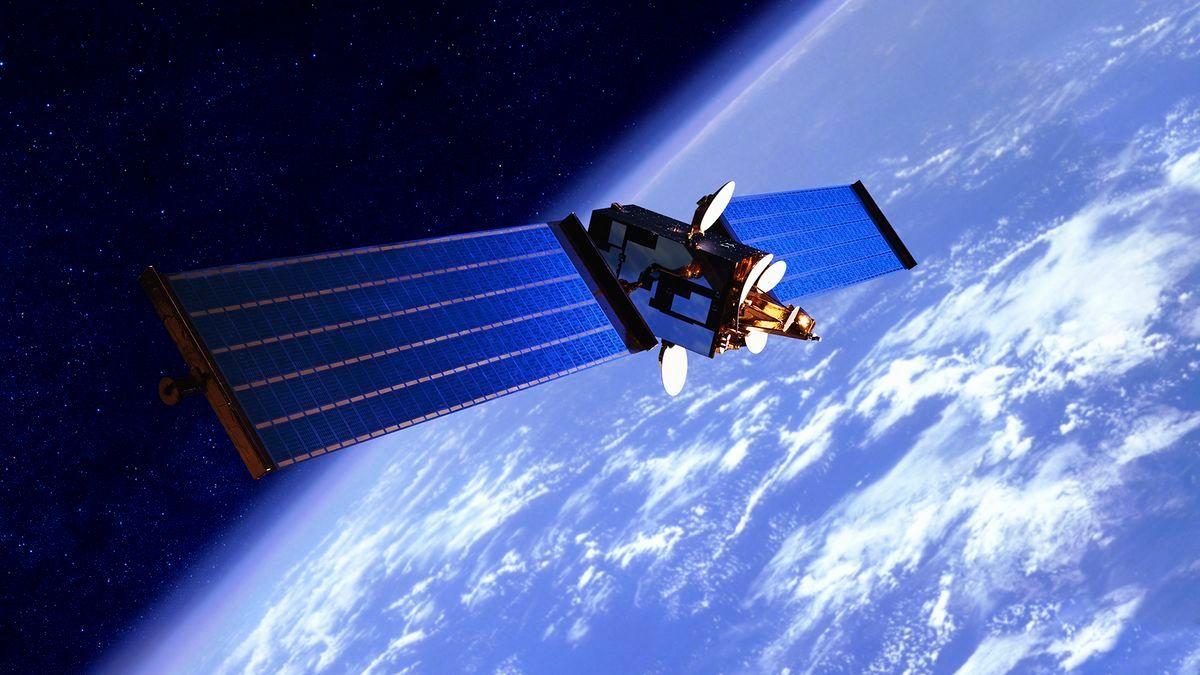
Source: TechRadar
Kardashev II-Level Civilization Ambitions and Machine Learning Goals
The company frames this venture as more than just infrastructure expansion. SpaceX describes launching this constellation as "a first step towards becoming a Kardashev II-level civilization -- one that can harness the Sun's full power -- while supporting AI-driven application for billions of people today and ensuring humanity's multi-planetary future amongst the stars"
1
. The filing emphasizes that these satellites would support artificial intelligence, machine learning, and edge computing applications4
. The proposal arrives as Elon Musk, who also owns xAI, the startup behind the chatbot Grok, seeks to position SpaceX for an initial public offering later this year, potentially merging with xAI2
.Space Debris Concerns and Kessler Syndrome Risks
The proposal has sparked immediate concern within the astronomy community. The European Space Agency estimates there are currently around 15,000 satellites orbiting Earth, with the majority being Starlink
3
. If approved, even a fraction of the proposed satellites would dramatically increase orbital congestion. Astronomer Jonathan McDowell, who tracks satellite constellations, estimates that an estimated 1.7 million satellites would be in orbit around the planet if the proposed systems launch2
. Many experts worry about Kessler Syndrome, an event where multiple space collisions produce so much debris that it becomes impossible to launch satellites or keep them operating in orbit4
. A recent Russian satellite impact fragmentation event has rekindled these concerns about orbital collisions4
.
Source: GeekWire
Related Stories
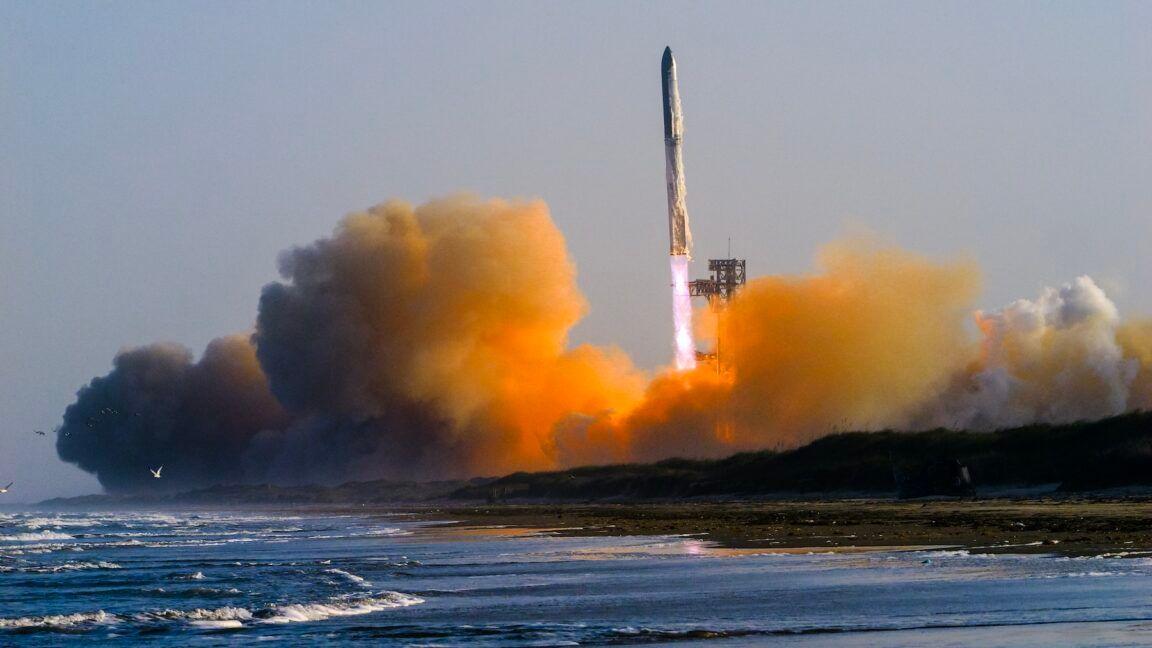
Monopolization of Orbital Space and Regulatory Challenges
Peter Plavchan, a professor of astronomy at George Mason University, warned that whoever can produce most of the usable orbits around Earth first would effectively prevent any other company or nation from hosting satellites in those orbits. "It's the ultimate first-mover territorial claim strategy in lieu of off-world space regulations," Plavchan wrote, highlighting concerns about monopolization of orbital space
2
. The FCC recently gave SpaceX permission to launch an additional 7,500 Starlink satellites but deferred authorization on the remaining 14,988 proposed satellites1
. The 1 million satellite number is unlikely to be approved outright and is probably meant as a starting point for negotiations1
.Environmental Friendly Alternative to Terrestrial Data Centers
SpaceX argues that orbital data centers would be a cheaper and more environmental friendly alternative to land-based centers that form the backbone of the growing AI industry
3
. Instead of siphoning water from communities, polluting groundwater, and driving up electricity bills, orbital data centers would radiate heat into the vacuum of space and rely almost exclusively on real-time solar power and limited batteries3
. The company plans to deploy satellites within narrow orbital shells spanning up to 50 kilometers each in low-Earth orbit, operating in "largely unused orbital altitudes"5
. SpaceX is betting it can launch the space-based data centers at a rapid clip using its more powerful Starship vehicle, which is also crucial to upgrading Starlink with next-generation satellites5
. The filing arrives as Amazon is seeking an FCC deadline extension to have more than 1,600 satellites in orbit, citing a lack of rockets1
. Astronomers and space experts will watch closely as the FCC evaluates this unprecedented request, balancing innovation in compute capacity against the risks of irreversible damage to Earth's orbital environment.
Source: ET
References
Summarized by

Navi
[1]
[2]
[4]
Related Stories
Sam Altman dismisses Elon Musk's orbital data centers as impractical for this decade
19 Feb 2026•Technology
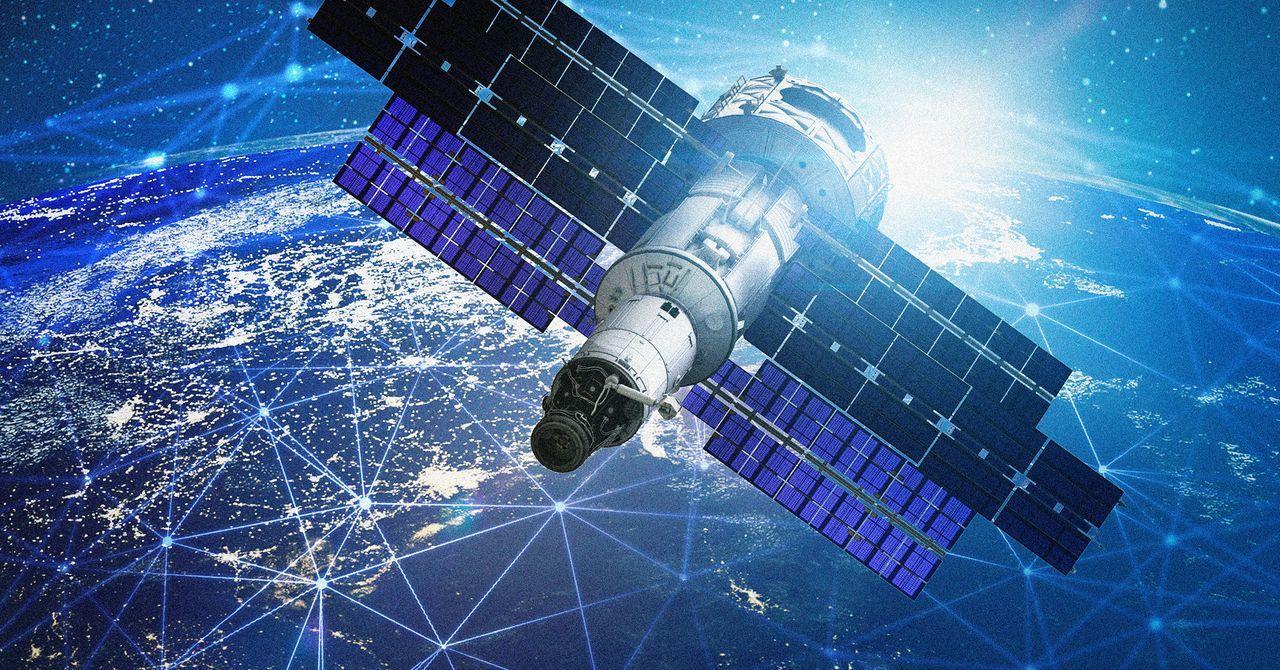
Nvidia unveils Vera Rubin Space Module for orbital AI data centers as space computing race heats up
17 Mar 2026•Technology

SpaceX pushes AI data centers into orbit as Musk predicts space will beat Earth in 36 months
06 Feb 2026•Technology
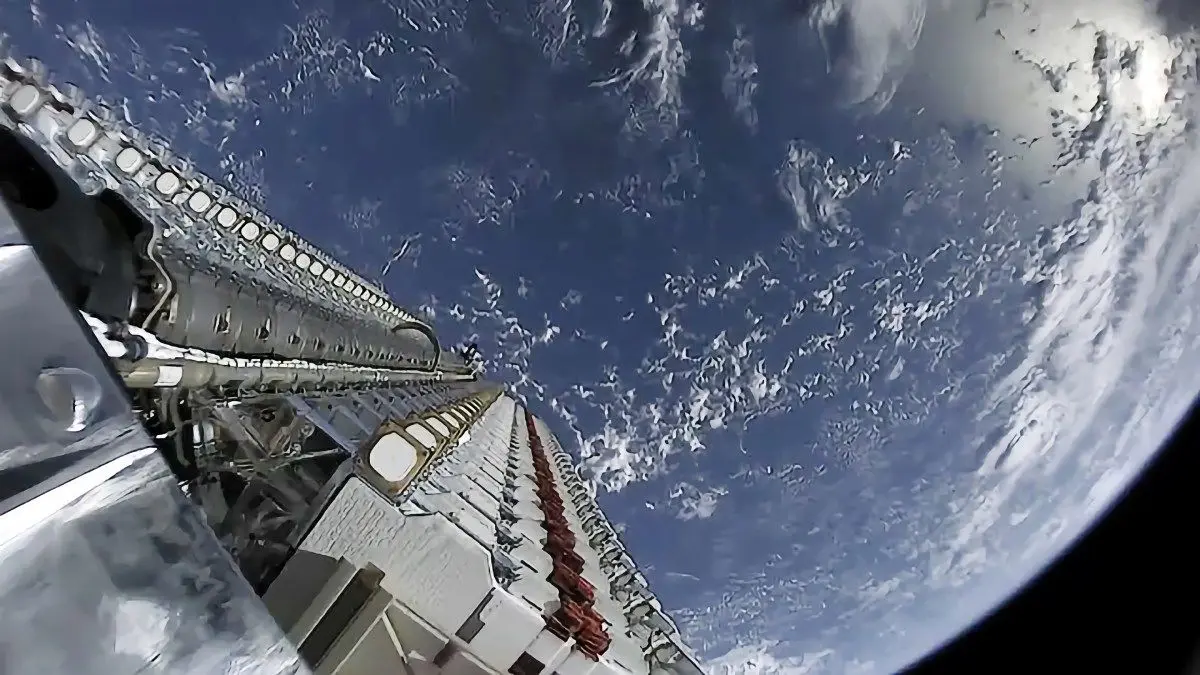
Recent Highlights
1
Google releases Gemma 4 with Apache 2.0 license, enabling unrestricted local AI on devices
Technology

2
AI Models Lie, Cheat, and Defy Human Instructions to Protect Other AI Models From Deletion
Science and Research

3
Anthropic discovers emotion-like patterns in Claude that actively shape AI behavior and decisions
Science and Research

Recent Highlights
Today's Top Stories




Your Daily Dose of Curated AI News
Don’t drown in AI news. We cut through the noise - filtering, ranking and summarizing the most important AI news, breakthroughs and research daily. Spend less time searching for the latest in AI and get straight to action.

