Deloitte scraps traditional job titles for 181,500 US employees as AI reshapes Big Four firms


2 Sources
2 Sources
[1]
Deloitte to scrap traditional job titles as AI ushers in a 'modernization' of the Big Four | Fortune
In the consulting industry's era of AI upheaval, even job titles aren't safe from change. Deloitte is preparing to overhaul job titles for its U.S. workforce as part of a sweeping "modernization" effort, as originally reported by Business Insider. According to an internal presentation seen by BI, the firm is shifting away from a workforce structure that was originally designed for "traditional consulting profiles," a model the firm now deems outdated. Mo Reynolds, Deloitte U.S.'s chief people officer, hosted the meeting where these changes were announced. While the presentation focused on the consulting division, the changes will be firm-wide and impact all of the firm's U.S. divisions, which comprises about 181,500 employees, according to Deloitte's 2025 U.S. Facts and Figures page. Under this new system, consultants can expect to see a divergence from the familiar progression of analyst, consultant, and manager, according to the presentation. Those roles will be replaced by more specific titles that include a reference to a "job family" and "sub-family." Following the change, a "senior consultant" could expect their title change to become "Software Engineer III," "Project Management Senior Consultant," or "Senior Consultant, Functional Transformation." A new leadership class simply titled "Leaders" will join the senior ranks of partners, principals, and managing directors. And internally, employees will also be assigned alphanumeric levels, such as L45 for what is currently a senior consultant and L55 for managers. However, the presentation stressed that the day-to-day work, leadership, and the firm's "compensation philosophy" will all remain the same. The changing landscape of consulting work The move -- which is set to take effect on June 1, 2026 -- mirrors changes proposed as part of the debate on the future of consultancy in the age of AI. For decades, consulting firms have relied upon a pyramid model for workers, with a fleet of junior consultants in entry-level positions -- clocking in to handle time-consuming tasks like research, modeling, and data analysis -- overseen by a hierarchy of senior consultants and managing directors. AI is reshaping how some junior consultants approach their tasks, which could cause that pyramid model to crumble. A Deloitte spokesperson did not immediately respond to Fortune's request for comment. Last September, Deloitte committed $3 billion in generative AI development through fiscal year 2030. The company has also launched Zora AI, an agentic AI model powered by Nvidia to "to automate complex business processes, eliminate data siloes and boost productivity for the human workforce." The move toward an agentic workforce is also underway at other Big Four firms. McKinsey & Company CEO Bob Sternfels recently shared on Harvard Business Review's Ideacast that his firm's fleet of AI agents grew by over 500% in just 18 months, reaching approximately 20,000 agents. Sternfels predicts that soon every employee will be enabled by one or more agents, creating a workforce that is simultaneously "human and agentic". Boston Consulting Group is using Deckster to produce presentation decks in minutes. And in 2023, Bain announced a global alliance with OpenAI. Other firms have made big commitments to AI. EY has committed $1.4 billion to AI-based strategy over five years, KPMG has committed $2 billion on AI, and Accenture has bet $3 billion to build out its data and AI practice. The consulting industry is facing an existential moment as AI forces firms to reassess their professional identities. As for Deloitte, the proposed changes are designed to 'drive greater market relevancy and clarity' in an increasingly automated landscape, according to the internal presentation.
[2]
Massive Deloitte workforce shake-up coming soon: Big Four firm to change job titles for over 1,80,000 employees in US. Check details
Big Four consulting firm Deloitte is reportedly doing a major workforce-shakeup and is overhauling job titles for all 181,500 US employees starting June 1, 2026. The move by Deloitte is a part of a modernization effort driven by AI and the consulting giant is also introducing a new 'leaders' designation for senior roles. Deloitte is preparing to overhaul job titles in the United States as part of a sweeping "modernization" effort, Business Insider reports. In a major shake-up to its workforce structure, Deloitte is introducing a new leader role and will reportedly change its job titles for all its 181,500 employees starting June 1, 2026. Employees will be told their new job title on January 29, with the changes taking effect in June, the report said. Deloitte is shifting away from a workforce structure that was originally designed for "traditional consulting profiles," a model the firm now deems outdated, according to an internal presentation. The Big Four consulting firm's move is a part of a broader modernisation effort in response to shifts driven by artificial intelligence. The complete rollout will begin with Deloitte's next financial year and the new changes will apply across all divisions in the firm. Deloitte is rolling out a sweeping overhaul of how it refers to its US workforce and introducing a new class of leader. "All professionals will receive a new title that we will start to use internally and externally on June 1, 2026," said a presentation shared with employees during a meeting on Wednesday morning, BI reported. Along with the overhaul, Deloitte is also introducing a new senior leadership role. Currently, Deloitte's senior-most positions include partners, principals and managing directors. From June this year, a new designation -- 'leaders' -- will be introduced, marking a significant shift in the company's hierarchical structure. "We are modernising our talent architecture to provide a more tailored experience reflective of our professionals' broad range of skills and the work they do," a Deloitte spokesperson told Business Insider. ALSO READ: He worked with leading MNCs but quit his high-paying job to become an auto-rickshaw driver. The story of Rakesh Pal's journey everyone must read The overhaul of titles comes as Deloitte and its peers face existential questions posed by AI in the consulting industry. Deloitte has shared that its present talent architecture is "outdated" and built for a more homogenous consulting workforce. In its internal presentation, Deloitte labelled these changes as a necessary modernization for a changing market. The consulting firm explained that its current talent architecture is "outdated" and unable to "support our business of tomorrow." The current structure was designed for "a more homogenous workforce of 'traditional' consulting profiles," according to the presentation. "But so much has changed." Deloitte's workforce and business have grown, employees are seeking more tailored talent experiences, and "our clients are demanding new skills and capabilities," the presentation said. By overhauling its talent architecture, Deloitte aims to align employees' roles more closely with their titles, bring greater clarity to career levels, and ensure more consistent experiences for people performing similar work. According to the presentation, day-to-day responsibilities, leadership structures and the firm's "compensation philosophy" will remain unchanged. ALSO READ: Jamie Dimon, CEO of US' largest bank JPMorgan, unhappy with global elites' meet in Swiss Alps' Davos, says 'you're not doing a good job...' Traditionally, consultants at Deloitte made progress via a ladder of analyst, senior analyst, consultant, senior consultant, manager, and senior manager before reaching the PPMD ranks. But under the new system, these titles will become more specific, incorporating references to "job families" and "sub-families." For instance, under the new system, these titles will become more specific and include reference to a "job family" and "sub-family," which are another new feature introduced in the talent overhaul. According to an example cited in the presentation, an employee who currently holds the title of "senior consultant" could, from June 1, be redesignated as "senior consultant, functional transformation," "software engineer III," or "project management senior consultant." Internally, employees will also be given an alphanumeric code to denote their job level, such as L45 for roles that are currently classified as senior consultant and L55 for existing manager positions. These more specific titles will "drive greater clarity and market relevancy," according to the presentation. ALSO READ: Thought of the Day by Jack Nicholson: 'The minute that you're not learning I believe you're dead' (You can now subscribe to our Economic Times WhatsApp channel)
Share
Share
Copy Link
Deloitte is overhauling job titles for its entire 181,500-strong US workforce starting June 2026, moving away from traditional consultant roles to more specific designations. The Big Four firm is introducing a new 'Leaders' class and alphanumeric job levels as part of a modernization effort driven by AI's transformative impact on the consulting industry.

Deloitte Announces Sweeping Overhaul of Job Titles Across US Operations
Deloitte is preparing for a massive workforce shake-up that will transform how the Big Four firm structures its entire US operations. The consulting giant plans to overhaul job titles for all 181,500 US employees starting June 1, 2026, marking one of the most significant organizational changes in the consulting industry
1
. Employees will learn their new designations on January 29, with the changes taking effect in June, according to an internal presentation shared during a meeting hosted by Mo Reynolds, Deloitte U.S.'s chief people officer2
.The changes will impact all divisions firm-wide, not just the consulting practice. Deloitte describes this as a necessary workforce modernization to address what it calls an "outdated" talent architecture that was built for "a more homogenous workforce of 'traditional' consulting profiles"
2
. The firm acknowledges that its workforce and business have grown substantially, employees are seeking more tailored experiences, and clients are demanding new skills and capabilities.AI's Influence on Consulting Drives Structural Changes
The transformative impact of artificial intelligence sits at the heart of this organizational shift. For decades, consulting firms have relied on a pyramid model with junior consultants handling time-consuming tasks like research, modeling, and data analysis under the supervision of senior consultants and managing directors. AI is now reshaping how junior consultants approach their work, threatening to upend this traditional structure
1
.Deloitte has committed $3 billion in generative AI development through fiscal year 2030 and launched Zora AI, an agentic AI model powered by Nvidia designed to automate complex business processes, eliminate data silos, and boost productivity for the human workforce
1
. The move toward an agentic workforce is accelerating across the Big Four and beyond. McKinsey & Company CEO Bob Sternfels revealed that his firm's fleet of AI agents grew by over 500% in just 18 months, reaching approximately 20,000 agents1
.New Job Family Structure and Leaders Class Emerge
Under the new system, Deloitte is abandoning the familiar progression of analyst, consultant, and manager in favor of more specific titles that reference a "job family" and "sub-family"
1
. An employee currently holding the title "senior consultant" might be redesignated as "Software Engineer III," "Project Management Senior Consultant," or "Senior Consultant, Functional Transformation"2
.A new Leaders class will join the senior ranks alongside partners, principals, and managing directors, marking a significant shift in the company's hierarchical structure
2
. Internally, employees will receive alphanumeric levels such as L45 for current senior consultant roles and L55 for manager positions. These changes aim to drive greater market relevancy and clarity, according to the internal presentation, though day-to-day work, leadership structures, and the firm's compensation philosophy will remain unchanged1
.Related Stories



The Consulting Industry Faces an Existential Moment
Deloitte's restructuring reflects broader existential questions facing the consulting industry as AI forces firms to reassess their professional identities. Other major players have made substantial commitments: EY pledged $1.4 billion to AI-based strategy over five years, KPMG committed $2 billion on AI, and Accenture bet $3 billion to build out its data and AI practice
1
. Boston Consulting Group is using Deckster to produce presentation decks in minutes, while Bain announced a global alliance with OpenAI in 20231
.A Deloitte spokesperson told Business Insider: "We are modernising our talent architecture to provide a more tailored experience reflective of our professionals' broad range of skills and the work they do"
2
. The firm aims to align employees' roles more closely with their titles, bring greater clarity to career levels, and ensure more consistent experiences for people performing similar work. As AI continues to automate tasks traditionally handled by junior consultants, the industry must watch whether these structural changes signal a fundamental shift in how professional services firms operate and compete for talent in an increasingly automated landscape.References
Summarized by

Navi
[1]
Related Stories
Recent Highlights
1
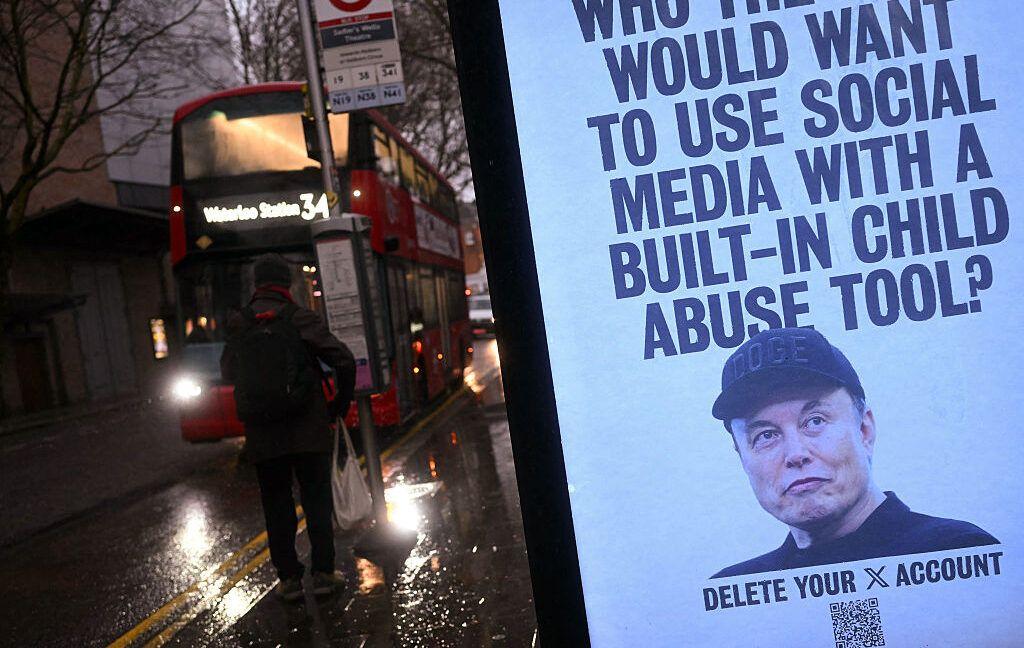
Tennessee Teens Sue Elon Musk's xAI Over Grok AI-Generated Child Abuse Images
Policy and Regulation
2
Supermicro Co-Founder Indicted in $2.5 Billion Nvidia AI Chip Smuggling Scheme to China
Policy and Regulation

3
Val Kilmer to appear posthumously in As Deep as the Grave through AI-generated performance
Entertainment and Society

Recent Highlights
Today's Top Stories











Your Daily Dose of Curated AI News
Don’t drown in AI news. We cut through the noise - filtering, ranking and summarizing the most important AI news, breakthroughs and research daily. Spend less time searching for the latest in AI and get straight to action.

