AI Demand Triggers Global Memory Shortage as RAM Prices Surge Up to 70% in 2026


19 Sources
[1]
High RAM prices mean record-setting profits for Samsung and other memory makers
Supply shortages and big price increases for RAM and storage have been a major drag for enthusiasts and PC builders in recent months. And while we haven't yet seen large, widespread price increases for memory-dependent products like pre-built laptop PCs, smartphones, and graphics cards, most companies expect that to change this year if shortages continue. In the meantime, memory manufacturers are riding high demand and high prices to record profits. In revenue guidance released this week, Samsung Electronics predicts it will make between 19.9 and 20.1 trillion Korean won in operating profit (roughly $13.8 billion USD) in Q4 2025, compared to just 6.49 trillion won in Q4 of 2024. Samsung is way more than just a memory business, of course, but its fortunes often rise and fall along with its memory division; Samsung's profits were dropping dramatically in 2023 partly because of an oversupply of memory that made its memory division lose billions of dollars. Less-diversified companies that primarily make memory are also raking in money lately. SK Hynix posted its "highest-ever quarterly performance" in Q3 of 2025 with 11.38 trillion Korean won (about $7.8 billion) in operating profit, up from 7.03 trillion in Q3 of 2024, and an operating margin that increased from 40 percent to 47 percent. SK Hynix credits "expanding investments in AI infrastructure" and "surging demand for AI servers" for its performance. Micron -- which recently decided to exit the consumer RAM and storage markets but is still selling its products to other businesses -- also reported a big boost to net income year over year, from $1.87 billion in Q1 2025 to $5.24 billion in Q1 2026. This has generated the company's "highest ever free cash flow." "Total company revenue, DRAM and NAND revenue, as well as HBM and data center revenue and revenue in each of our business units, also reached new records [in fiscal Q1]," wrote Micron CEO Sanjay Mehrotra. Why is RAM so expensive right now? Reading these upbeat earnings reports and forecasts will be cold comfort to people trying to build or upgrade a PC, who have seen the price of a 32GB kit of DDR5-6000 increase from $80 in August 2025 to $340 today. And if the current AI boom continues, it's not likely to get better in the near term. This is a problem with a lot of causes -- including scalpers who are capitalizing on the shortages by buying up kits just to resell them -- but the two biggest ones can be attributed to generative AI companies, and each problem compounds the other. The first is just that consumers and PC manufacturers get to compete with OpenAI and its ilk for the standard DRAM used for traditional servers and consumer devices. By some estimates, OpenAI's "Stargate" could use as much as 40 percent of the world's DRAM output all by itself (though that figure uses production numbers as of 2024 and 2025 and doesn't take production increases into account). The second is that the HBM (high-bandwidth memory) used for Nvidia's AI data center GPUs uses about three times as much space on a silicon wafer as the same amount of standard DDR5. So when memory manufacturers shift their production capacity to HBM instead of DRAM, it disproportionately reduces the amount of DRAM that they can make. Either of these problems would drive up the prices of RAM a bit, but dealing with increased demand and reduced supply at the same time is what has kicked memory prices into the stratosphere. As things currently stand, the AI industry's gargantuan demand for these chips will keep memory prices elevated, possibly for years. According to Bank of America analysts cited by SK Hynix, the average selling price for DRAM will increase by as much as 33 percent in 2026, and the market for just HBM in 2028 could be larger than the entire RAM market was in 2024. Micron's CEO expects both increased demand and constrained supply "to persist beyond calendar 2026," suggesting that we could be waiting years and not months for the current crunch to end. Of course, all of these companies' forecasts rely on the continued demand for RAM in AI data centers. If there's an AI bubble and it bursts or deflates, memory manufacturers could find themselves back where Samsung was in 2023 -- sitting on such big piles of unsold chips that they have to reduce prices to move all the inventory.
[2]
The Daring Attempt to End the Memory Shortage Crisis
The supply shortage of the RAM needed to build phones and PCs isn't going away. But a few companies have a plan to solve it. A supply shortage is the last thing tech companies want to talk about at CES. The annual trade show is their chance to promote new products and drum up excitement for what's coming, not discuss the one thing that could make selling new products in 2026 an uphill battle. But I've read the reports. I've seen the RAM kits selling for thousands of dollars. I've heard the statements from laptop suppliers and part manufacturers warning investors about what's coming. You probably have too. The memory chip shortage is already dire for companies and for individuals who build their own PCs. But don't think because you only use a laptop and a phone you're going to get out of this so easy. While the situation remains grim, I met two companies who have engineered ways out. Their plans aren't guaranteed to work, and they won't be easy to pull off. But they just might be our only hope. "We're waiting for the AI bubble to pop," a spokesperson from a small PC manufacturer who wished to remain anonymous told me when asked about how they were handling the memory shortage. None of the big laptop manufacturers or PC builders would say something quite that direct, but actions speak louder than words. While happily selling "AI PCs," Lenovo, Dell, Asus, and HP have all stated that they'll be doing everything in their power to secure their supply of DRAM for the foreseeable future. DRAM, or dynamic random-access memory, is the kind of memory used in laptops and phones, and it's what the three main memory manufacturers are now turning their backs on in favor of high-bandwidth memory for AI data centers. Lack of memory is the main reason you can't run ChatGPT on your PC and have to outsource every prompt to the cloud. I spoke to Dell COO Jeff Clarke in December about what his company was doing to remedy the situation. "Our focus has been to secure the supply. That has always been the number one rule of our supply chain -- to never run out of parts. We've been at this for a while. This just didn't show up. So we've been out there for a while securing our supply." It's a sentiment similar to what competitors like HP and Asus have told shareholders. But hoarding memory will only have two effects: It will raise prices even more or further tighten supply. Rumors of higher prices on electronics have begun to flood the internet. On the last day of 2025, Asus went first, officially announcing that it would be raising prices and tweaking configuration options on existing products. This was the follow-up to a leaked internal document from Dell stating that prices could rise by as much as 30 percent in 2026.
[3]
The PC market braces for an AI-driven storm
The personal computer has remained surprisingly resilient to change over the past 15 years. Apple promised a "post-PC" era with the iPad in 2010 and failed to deliver one. Smartphones even overtook laptops as the most popular device to connect to the internet a decade ago, but millions of people still kept buying PCs every year. But this PC resiliency is going to be tested even further this year. RAM and NAND / SSD prices have surged in recent months due to shortages created by AI data center demand. Some stores have had to sell memory like it's lobster, prebuilt PC costs have risen, and some assemblers are even selling PCs without RAM. Now, we're about to see how the shortage hits regular laptops and PCs from the likes of Lenovo, Dell, HP, Asus, and Acer. TrendForce predicts that memory prices are projected to "rise sharply again in the first quarter of 2026." More price rises will only put further pressure on laptop and PC pricing, and we're seeing early signs that PC makers are adjusting prices at CES this week. Asus announced to its channel partners this week that it's implementing price hikes across its products as a result of the memory market conditions. Dell also adjusted the launch pricing of its XPS 14 and XPS 16 just hours before they were announced this week, in a sign that laptop pricing is going to become increasingly fluid. Lenovo has been stockpiling PC memory to try and weather the storm throughout 2026, and HP has warned it will have to increase prices and offer lower RAM configurations later this year. Like Lenovo, HP also has a stockpile of memory, but it expects the continued rise in costs will begin eating into PC product margins by May. There's no quick fix for PC makers, either. Offering less RAM on laptops will be difficult for manufacturers, particularly below the 8GB threshold. Windows 11 has a minimum RAM requirement of 4GB, but it doesn't run particularly well in those conditions. While TrendForce predicts some smartphones are likely to return to just 4GB this year, "for budget notebooks, DRAM cannot be reduced quickly due to processor pairing needs and operating system limitations." The timing of this memory shortage couldn't be any worse for Microsoft and its PC partners. Windows 10 just hit end of life in October, and many businesses are in the process of migrating to Windows 11. That often involves a PC refresh cycle, and there were strong signs throughout 2025 that PC shipments were accelerating thanks to a refresh of the existing install base. That momentum could be derailed later this year once RAM stockpiles are depleted. Timing isn't the only problem for the PC market, as the increased prices of RAM and SSDs could be permanent instead of a temporary supply constraint. "This is not just a cyclical shortage driven by a mismatch in supply and demand, but a potentially permanent, strategic reallocation of the world's silicon wafer capacity," warns IDC. "For decades, the production of DRAM and NAND Flash for smartphones and PCs was the primary driver for production. Today, that dynamic has inverted." The demand from hyperscalers like Microsoft, Google, Meta, and Amazon has pushed Samsung, SK Hynix, and Micron to pivot toward building high-bandwidth (HBM) and high-capacity DDR5 memory. "Every wafer allocated to an HBM stack for an Nvidia GPU is a wafer denied to the LPDDR5X module of a mid-range smartphone or the SSD of a consumer laptop," says IDC. This is going to have a big impact on the DIY market and PC gaming, too. "PC gaming is thriving at a time when overall consumer PC shipments have declined by 14 percent in the last five years... annual gaming PC shipments are up 50 percent," said Henry Lin, director of product management at Nvidia, in a briefing with The Verge last week. The popularity of PC gaming has allowed smaller assemblers to offer custom prebuilt systems at competitive prices. These smaller builders can't stockpile RAM or SSDs, and "will bear the greatest burden of the shortage," warns IDC. "That in turn represents an opportunity for large OEMs to gain share from smaller assemblers in the gaming space by positioning prebuilt systems as offering higher value." Demand for memory looks set to impact GPU prices too. Rumors have suggested that Nvidia could force GPU partners to adjust pricing to factor in increased memory costs. "The demand for memory in the market is at record levels, and this does mean supply will be tight," admitted Ben Berraondo, director of global PR for Nvidia GeForce, in a briefing with The Verge last week. "There have been no major changes in how we manage memory with our customers. There are no major supply chain changes to GeForce," says Berraondo. Despite a lack of major memory changes to GeForce, pricing is already starting to increase. Newegg has started listing a variety of RTX 5090 cards at well above $4,000. It's becoming increasingly difficult to find an RTX 5090 for under $3,000, after prices were close to the $1,999 retail price in September. Berraondo didn't comment directly on the rumors of $5,000 pricing for the RTX 5090, but he did point to Nvidia's Founders Edition model still being listed at $1,999 at Best Buy. That's great, but it's constantly out of stock so it's not representative of the true retail pricing of the RTX 5090. If the costs of building a gaming PC don't stabilize in 2026, Microsoft will also feel increased pressure on its next-gen Xbox plans. Microsoft is aggressively pivoting toward PC for the future of Xbox consoles, with the handheld Xbox Ally devices just the beginning of its plans. Component costs could force the price of the next-gen Xbox even higher and also impact Sony's plans with the PS6 and Valve's upcoming Steam Machine. The memory shortage also threatens to impact Microsoft's AI PC push. Microsoft set a surprising minimum of 16GB of RAM for its Copilot Plus PCs, in order to handle local small language models. Qualcomm has been pushing to bring Windows on Arm (Copilot Plus PCs) down to the $600 price range, but that effort looks set to reverse due to memory costs. It increasingly feels like we're witnessing a battle over the future of the PC, where component prices and AI features are having a big impact on computing. If AI demand wins the battle then more traditional computing tasks will increasingly be performed in the cloud. That could force businesses to increasingly move to virtual machines instead of refreshing laptops and gamers to look at cloud streaming services instead of buying an expensive gaming PC. I don't think this battle means the end of the PC anytime soon. It just feels like another step in Big Tech marching us toward an unproven AI future. I have faith the PC will survive and evolve and prove once again how important it truly is. I'm always keen to hear from readers, so please drop a comment here, or you can reach me at [email protected] if you want to discuss anything else. If you've heard about any of Microsoft's secret projects, you can reach me via email at [email protected] or speak to me confidentially on the Signal messaging app, where I'm tomwarren.01. I'm also tomwarren on Telegram, if you'd prefer to chat there. Thanks for subscribing to Notepad.
[4]
AI chip frenzy to wallop DRAM prices with 70% hike
Samsung and SK hynix readying another gouge as server silicon squeeze leaves PCs and phones out in the cold Memory prices are set to spike again as chipmakers prioritize AI server production over consumer devices, with analysts warning of a high double-digit jump in Q1 2026 alone as demand outpaces supply. Samsung Electronics and SK hynix are reportedly planning to raise server memory prices by up to 70 percent this quarter, according to Korea Economic Daily. Combined with 50 percent increases in 2025, this could nearly double prices by mid-2026. The two Korean giants, alongside US-based Micron, dominate global memory production. All three are reallocating advanced manufacturing capacity to high-margin server DRAM and HBM chips for AI infrastructure, squeezing supply for PCs and smartphones. Financial analysts have raised their earnings forecasts for the firms in response, as they look to benefit from the AI infrastructure boom that is driving up prices for everyone else. Taiwan-based market watcher TrendForce reports that conventional DRAM prices already jumped 55-60 percent in a single quarter. Yet despite the focus on server chips, supply of these components continues to be strained too, with supplier inventories falling and shipment growth reliant on wafer output increases, according to TrendForce. As a result, it forecasts that server DRAM prices will jump by more than 60 percent in the first quarter of 2026. Prior to Christmas, analyst IDC noted the "unprecedented" memory chip shortage and warned this would have knock-on effects for both hardware makers and end users that may persist well into 2027. "The memory market is at an inflexion point, with demand materially outpacing supply," IDC stated, claiming that while the memory industry has long been characterized by boom-and-bust cycles, this one is different. This crunch stems from AI's voracious appetite for memory - hyperscalers like Microsoft, Google, and Amazon are driving demand that's permanently reshaping silicon wafer allocation away from consumer products (phones and PCs). This restricts the supply of general-purpose memory modules and pushes up prices across the board. IDC expects DRAM and NAND supply growth to lag at just 16 and 17 percent respectively this year, well below historical norms. According to Reuters, shares in the big memory chip makers are rising in response, as investors rub their hands at the prospect of further price increases. Shares in Micron surged 240 percent last year, while Samsung more than doubled and SK Hynix's market cap nearly quadrupled. Samsung's calendar Q4 operating profit is forecast to be up 160 percent, with SK hynix and Micron also expected to double profits in their next earnings disclosures. Economists this week warned that AI infrastructure investment could fuel broader inflation as these price hikes ripple through the economy.
[5]

AI memory is sold out, causing an unprecedented surge in prices
All computing devices require a part called memory, or RAM, for short-term data storage, but this year, there won't be enough of these essential components to meet worldwide demand. That's because companies like Nvidia, Advanced Micro Devices and Google need so much RAM for their artificial intelligence chips, and those companies are the first ones in line for the components. Three primary memory vendors -- Micron, SK Hynix and Samsung Electronics -- make up nearly the entire RAM market, and their businesses are benefitting from the surge in demand. "We have seen a very sharp, significant surge in demand for memory, and it has far outpaced our ability to supply that memory and, in our estimation, the supply capability of the whole memory industry," Micron business chief Sumit Sadana told CNBC this week at the CES trade show in Las Vegas. Micron's stock is up 247% over the past year year, and the company reported that net income nearly tripled in the most recent quarter. Samsung this week said that it expects its December quarter operating profit to nearly triple as well. Meanwhile, SK Hynix is considering a U.S. listing as its stock price in South Korea surges, and in October, the company said it had secured demand for its entire 2026 RAM production capacity. Now, prices for memory are rising. TrendForce, a Taipei-based researcher that closely covers the memory market, this week said it expects average DRAM memory prices to rise between 50% and 55% this quarter versus the fourth quarter of 2025. TrendForce analyst Tom Hsu told CNBC that type of increase for memory prices was "unprecedented."
[6]

Samsung and SK Hynix are jacking up DRAM prices by as much as 70 percent
Serving tech enthusiasts for over 25 years. TechSpot means tech analysis and advice you can trust. Editor's take: Companies with advanced chipmaking capabilities are currently raking in enormous profits. Unsurprisingly, two of the world's largest memory manufacturers are focused on sustaining and even inflating this unprecedented demand for as long as possible. According to Korean sources, Samsung and SK Hynix are more than willing to raise memory chip prices while the AI-driven financial bubble continues. Both companies are reportedly notifying their high-profile customers that server DRAM prices could increase by as much as 60 - 70 percent compared to the fourth quarter of last year. The price hike is hitting Big Tech particularly hard, with Microsoft and Google reportedly purchasing as many DRAM chips as possible. Outside the data center market, consumer products such as PCs and smartphones are expected to see similar manufacturing cost increases. Eventually, Asus and other consumer brands are likely to pass these higher costs on to end customers. Additionally, the two Korean foundries are asking customers to agree to new quarterly contracts. Long-term agreements are now the exception rather than the rule, as chip manufacturers anticipate further price increases over the coming months and into 2027. In December, Micron announced it had already secured agreements for memory supply covering all of 2026, and the company has discontinued its consumer-oriented Crucial brand to better focus on enterprise customers. Sources said the recent cost increases are largely driven by a surge in orders for HBM3E memory products. Companies building new AI data center capabilities require powerful AI accelerators with large amounts of high-performance memory. HBM3E is used by Nvidia's H200 chips, which were recently cleared by the US government for export to China. Broadcom is also ramping up HBM3E orders for Google's TPUs and other custom AI accelerators, adding further pressure on the DRAM supply chain. Microsoft, Amazon, and other IT giants are reportedly sending procurement teams to Korea to secure a stable memory supply. As a result, business hotels around Seoul have been booked for extended stays by US corporations. TrendForce predicts that the DRAM boom will continue for some time, with prices for conventional contracts expected to rise up to 60 percent in the first quarter of 2026. NAND Flash prices are also projected to increase, though more modestly, with a maximum rise of around 38 percent. Demand is expected to far exceed the availability of new chips, and customers will likely accept the higher costs if they want to remain competitive.
[7]

Micron says it's 'helping' consumers -- by not selling RAM to consumers
While Micron claims it still serves consumers through PC manufacturers, new manufacturing facilities are years away from completion, suggesting high prices will persist. Micron -- one of the "big three" companies that manufacture the vast majority of memory on the planet -- is shutting down its Crucial brand. This is the arm of the company that sells RAM and storage products directly to consumers. Instead, Micron is shifting its focus to the "AI" boom... the same situation that's making memory explode in price all over the world. Consumers are, to use a technical term, pissed. In a recent interview, a Micron vice president tried to downplay the situation, explaining that Micron is still technically supplying RAM and other memory products to consumers... by selling it to PC manufacturers. "Our viewpoint is that we are trying to help consumers around the world," said Christopher Moore, VP of Micron's Marketing, Mobile and Client Business Unit, in an interview with Wccftech. "We're just doing it through different channels. We still have a very sizable business in the client and mobile markets." He continued: "We are also, of course, servicing our data center customers." The notion that Micron hasn't completely abandoned consumers because it's still supplying at least some PC manufacturers was one I heard at CES last week. It was similarly unconvincing there, too, as company after company refused to commit to pricing for forthcoming products, for fear of rising memory prices erasing their profit margins before release. Those data center customers are the reason why RAM prices are skyrocketing: rapid, massive buildup for the "AI" industry is gobbling up most of the current and projected chip supply. Put aside the debate on whether LLM-powered businesses are in a bubble. Truth is, good old fashioned supply and demand is still in play, raising prices considerably on finished laptops and desktops and making DDR5 memory for consumers triple or even quadruple in price. Micron -- now making hay while the sun shines -- is shuttering its Crucial brand at the end of January. This ends nearly 30 years of selling to consumers for PC building, repairs, and upgrades. "This is not a Micron issue, it's an industry issue... and there's just not enough supply to go around," said Moore to Wccftech. It's an echo of the statement Micron made in its announcement (e.g., it's following the money). That's certainly true, but I hasten to note that neither of Micron's competition -- Samsung and SK Hynix -- have yet shuttered their direct-to-consumer memory and storage product lines. (That sound you hear is me knocking on the wood of my desk.) If the first question asked at CES was "What are we going to do about the memory crunch?" and the answer was a big, disappointing shrug, then the next question was "When is it going to end?" I've heard estimates all over the place, ranging from 2027 up to 2032, as today's developing data centers will still be sucking up chip supply into the next decade. Moore is a little more optimistic than that, citing a new Micron manufacturing facility that will be finalized in 2027, according to an interview with PCWorld's Mark Hachman. In just a few days, Micron is planning to break ground on a New York facility that'll be the biggest semiconductor factory in the US. But with 3 to 4 years of construction and fitting required for a new fabrication plant (on the low end), it's still going to be a long, long time before expanded manufacturing capacity can start chipping away at the current supply crunch. That's assuming the macroeconomic AI bubble doesn't burst, of course. But if that happens, we'll all have more problems than merely trying to afford a gaming desktop upgrade.
[8]

'There's just not enough supply to go around': Micron believes RAM shortage won't improve until 2028, 'at least until the AI demand starts to fade away'
Micron states 'DRAM shortages could persist for quite some time' The RAM crisis is already hitting the tech industry hard, with prices skyrocketing on DRAM, SSDs, laptops, desktops and more -- and it's all thanks to a continued push to satisfy the need for AI data centers. Recently, we've seen customizable PC manufacturer Framework raise the price of its Framework Desktop, and memory sticks cost more than a PS5. Now, according to Micron, we can expect to see these prices last until 2028, or "at least until the AI demand starts to fade away." Micron, one of the largest memory manufacturers in the world, opted to kill its Crucial consumer RAM brand in favor of AI data centers at the end of 2025, but we now have more insight into the company's production capabilities and how it's dealing with the ongoing memory shortage. In an interview with Wccftech, Micron VP of Marketing, Mobile and Client Business Unit, Christopher Moore, chats about the ongoing memory shortage and how the company is set to service the consumer market despite high AI demand. One of the most important topics surrounding the RAM crisis is just how long it will last. Many have shown differing opinions, with the U.K.-based Scan Computers CEO stating, "it's just another market cycle," while SK Hynix, one of the biggest manufacturers of RAM, claiming it will last until 2028. According to Moore in the interview, Micron also believes the memory shortage won't improve until 2028, and this is due to how long it takes to see "meaningful output" for the consumer. "In order to dramatically increase the number of bits, we need more clean room space. And that takes a lot of time," Moore states. "So we broke ground in Idaho in our ID1 facility three years ago. And that's gonna come online in mid-2027. But you're not really gonna see real output, meaningful output, by the time we get all the qualifications done and customers are accepting it and you get the tools, everything up and running until 2028. "Memory manufacturers are scrambling in to build newer production lines, yet constraints of the process eventually forces them to push the timelines ahead by several quarters, which means that for the average consumer, the DRAM shortages could persist for quite some time now, or at least until the AI demand starts to fade away." As stated, it takes time for memory to be manufactured despite the push to get started on a whole new production line in mid-2027. Right now, this is happening for High Bandwidth Memory (HBM) for AI data centers instead. So, why is Micron shifting gears to AI? Well, Micron is a business, after all, and Moore chats about how the total addressable market (TAM) has expanded so fast that it's hard for major manufacturers like Micron to ignore. "What's going on right now is that the TAM and data center is growing just absolutely tremendously. And we want to make sure that, as a company, we help fulfill that TAM as well. "What's happening now is that all these data center build-outs are going on, and the TAM of the enterprise or data center business is growing what used to be 30, 35%, and then to 40%, and now to 50% and 60% of the overall market is requiring more bits than what used to happen," Moore states. "And the entire industry is short. So I think that's something for people to understand. "This is not a Micron issue, it's an industry issue, where us and our peers or our competitors are all rushing to service these segments as much as we can, and there's just not enough supply to go around. "It's a really unfortunate situation. But I think it's really important for people to understand we are still servicing the consumer market." While Micron is clearly looking to help consumers on the current DRAM shortages, it will take a long time until we see these results. There's more of a focus on AI data centers now, and until we see AI demand "fade out" or facilities cater to the demand of memory, it's looking increasingly likely that 2028 will be the year when prices may go back to normal. Take that from one of the "big three" manufacturers around. Besides, it's not like Micron can simply add a machine, with Moore explaining: "if you've got a fab running with a bunch of different machines for one piece of silicon, and then you have to stop those machines and get it to run on another piece of silicon, you're gonna get less output." By just how much will we see smartphones, laptops, consoles and more rise in 2026? We've heard Valve's upcoming Steam Machine may be pricier than first thought, and even Meta Quest headsets may see a cost bump this year. It will still take some time, though, but here's hoping the latest tech we've seen at CES 2026 won't be ridiculously priced.
[9]

The RAM shortage driving up tech prices won't end any time soon, Micron says
The AI arms race is driving up component costs for tech devices, and one major memory manufacturer believes it won't end this year. That manufacturer would be Micron, a major player in the semiconductor space and the only American-based producer of computer memory components. In an interview with Wccftech, a Micron VP of marketing named Christopher Moore delved into the ongoing RAM shortage that has caused companies like Framework to increase device prices and PlayStation to potentially push its next gaming console into the a delayed launch. You can read the full interview for all the nitty-gritty technical and business details behind Micron's process if you'd like, but the main thing to know is that existing production lines are all being used for AI data center components because that's where the money is, and it will take at least a year or two for new facilities Micron is building to reach full output. Hopefully, from there, the memory shortage can end and regular customers can start getting components at somewhat reasonable prices again. "In order to dramatically increase the number of bits we need more clean room space. And that takes a lot of time. So we broke ground in Idaho in our ID1 facility three years ago. And that's gonna come online in mid-2027," Moore said. "But you're not really gonna see real output, meaningful output by the time we get all the qualification done and customers are accepting it and you get the tools, everything up and running until 2028." So, in other words, this shortage could last in 2028 as far as Micron is concerned. Moore also left open the possibility that the AI demand could fade at some point, but if it doesn't, you might want to wait until a couple of years from now to build that beastly gaming PC you've been yearning for.
[10]

Micron says the memory shortage crisis is here to stay
AI data centers are soaking up the world's memory supply, and Micron says even massive fab expansions won't fix the imbalance anytime soon, leaving consumers caught in the middle. The consumer tech industry is facing an ongoing memory crisis. Due to rising demand from enterprise customers (for building AI data centers), memory makers are directing much of their inventory to these clients, leaving little for consumer-centric product manufacturers. This has led to a rise in price (or a reduction in the total memory) on PCs and smartphones. In the near future, the memory shortage is also said to impact television sets, tablets, smartwatches, and pretty much every other device that uses RAM. Recommended Videos The situation, according to Micron's VP of Marketing, Mobile and Client Business Unit, Christopher Moore, might not ease before 2028 (via an exclusive interview by wccftech.com). Micron's exit from the consumer market signals a strategic shift In December 2025, Micron shut its consumer-focused RAM and SSD brand, Crucial, to focus on enterprise and AI markets. This led to a backlash against the company, as it showed a clear inclination toward the rapidly rising demands of the AI sector rather than those of the end consumer. However, Micron has clarified that a "large portion" of its market share still comes from LPDDR5 RAM modules supplied directly to OEMs such as Dell and ASUS. Under the OEM model, the company still controls a large share of the consumer supply chain. "Our viewpoint is that we're trying to help consumers around the world," says Moore, adding that the company remains connected with "every single" PC maker out there. The executive explains how the exponential rise in the total addressable market (TAM) for DRAM, driven by the rising demand of AI data centers, is now at 40% (up from 30 to 35%). He also mentions how "50 to 60% of the overall market is requiring more bits" than before. The company is still serving consumers, but on new terms While the rise in demand due to the surge in AI applications and data centers is too significant for the company to ignore (i.e., it needs to cater to the market as it's a good business opportunity), the company "is still servicing the consumer market." Even as the company ramps up production, the memory shortage isn't going away anytime soon, at least not until 2028. Moore confirms that Micron's massive fab expansion won't bring any significant relief until 2028. The company is working closely with PC and smartphone manufacturers to limit RAM configurations, as multiple memory sizes hurt the production yields, but that would only stabilize the supply in the short term. In the end, this means one thing: the memory crisis is here to stay, and it might trouble end-consumers for a couple of years.
[11]

Micron says it's not to blame for its high memory prices: 'There's just not enough supply to go around'
Another day, another reminder that we're in the midst of a memory crisis, this time from Micron. This time, though, the company is responding directly to the idea that memory manufacturers like itself are to blame for rising consumer memory prices. Tech publication Wccftech asked Micron's VP of Marketing, Mobile and Client Business Unit, Christopher Moore, about this. Moore said: "Our viewpoint is that we are trying to help consumers around the world. We're just doing it through different channels ... What's going on right now is that the TAM [total addressable market] and data center is growing just absolutely tremendously. And we want to make sure that, as a company, we help fulfill that TAM as well." "This is not a Micron issue, it's an industry issue, where us and our peers or our competitors are all rushing to service these segments as much as we can, and there's just not enough supply to go around ... Memory manufacturers are scrambling to build newer production lines, yet constraints of the process eventually forces them to push the timelines ahead by several quarters, which means that for the average consumer, the DRAM shortages could persist for quite some time now, or at least until the AI demand starts to fade away." In other words, there's just more demand right now because of AI, so what do we expect? And to be honest, I tend to agree. While I'm not ruling out memory manufacturers capitalising on the high demand, the problem, ultimately, comes down to that demand existing and ballooning for the promise of an uncertain future reward. In case you've been living under a blissfully unaware rock -- and honestly, can I join you? -- we're in an AI-induced memory shortage right now. The seemingly ever-inflating and money-juggling bubble that is the market of AI hardware, software, and ecosystems requires a heck of a lot of memory, so memory makers like Micron have started to churn out DRAM for all those AI datacentres. For consumers such as PC gamers, the main effect we've seen so far is rapidly climbing prices of RAM and any systems or devices that contain memory. It's hardly a secret, of course, nor is the fact that it looks to continue for quite some time. In December, RAM manufacturer G.Skill explicitly blamed "high demand from the AI industry", and Goldman Sachs research led industry analyst Jukan to say that "some suppliers see potential for conventional DRAM prices to rise by double-digit percentages (%) quarter-over-quarter (QoQ) throughout every quarter of 2026." Just last week, Samsung recently pointed out that seeing some impacts across different device segments is "inevitable". Micron has also previously commented on the shortage, too, saying in December that "sustained and strong industry demand, along with supply constraints, are contributing to tight market conditions and we expect these conditions to persist beyond calendar 2026". So really, I'm not sure I agree with the sentiment behind the line of questioning, or those who are laying the blame solely on memory manufacturers. Although there will be some exceptions, I think most PC hardware consumers know that rising memory prices are due to AI demand, and that, rather than memory manufacturers, is exactly what we're annoyed about. Saying that, though, there would certainly be precedent for such blame, given historical collusion between memory makers and somewhat more recent accusations of the same. For the most part, though, I haven't got the impression that most consumers are blaming memory companies. In other words, we're annoyed that the demand is there, given how little consumers seem to want what all the copious amounts of spending, energy, and hardware are being put towards. Of course, one could argue that such annoyance is short-sighted and down to a failure of imagination for all the promises the future holds regarding AI. Which would be in line with what probably every utopian worldly vision has argued about its detractors. But I'm getting all riled up again, and catastrophising might not help, either. In fact, it could do more harm than good, all things considered, so I suppose I'll just keep schtum. Frowny-face.
[12]

AI gobbling up memory chips essential to gadget makers
Las Vegas (AFP) - As devices from toys to cars get smarter at the Consumer Electronics Show, gadget makers are grappling with a shortage of memory and storage needed for them to work. Dwindling supplies and soaring costs of Dynamic Random Access Memory (DRAM) that provides space for computers, smartphones, and game consoles to run applications or multitask was a hot topic behind the scenes at the annual gadget extravaganza in Las Vegas. Once cheap and plentiful, DRAM -- along with memory chips to simply store data -- are in short supply because demand spiked by AI in everything from data centers to wearable devices. "Everybody is screaming for more supply...they just can't find enough," Sangyeun Cho, who is responsible for Samsung Electronics' semiconductor business in the US, told AFP. "And AI demand is still mounting." DRAM and memory chip makers have shifted manufacturing capacity to cater to AI data centers. Meanwhile, AI features being added to all kinds of products have increased the need for DRAM and memory in devices from laptops to smart rings. The global semiconductor ecosystem is facing an unprecedented memory chip shortage that could persist well into next year, according to market tracker IDC. "What began as an AI infrastructure boom has now rippled outward, with tightening memory supply, inflating prices, and reshaping product and pricing strategies across both consumer and enterprise devices," IDC analysts said in a blog post. "For consumers and enterprises alike, this signals the end of an era of cheap, abundant memory and storage." Costs of computers, drives and memory cards have already risen for consumers, according to Other World Computing founder and chief Larry O'Connor. Sniff not bark Gadget makers are adapting to the shortage by either paying premiums for DRAM and memory, redesigning their products, or foregoing some features, according to Michal Siwinski of Arteris, which specializes in providing connectivity inside chips. "Maybe the (robotic) dog you'll get will sniff around and roll over, but it's not going to bark a serenade because it doesn't have enough memory," Siwinski said. The shortage is already forcing efficiencies such as engineers writing tighter code to provide performance using less memory, according to O'Connor. "These aren't bad things; they should have already happened," O'Connor said. "The entire industry has been built around cheap software that has become very bloated over the last 20 years." However, gadget makers must avoid their products underperforming due to memory compromises or pushing prices up too high by paying dearly for components, warned Techsponential analyst Avi Greengart. "Here at CES we're still seeing the usual claims that our thing is the best and damn the RAM cost," Greengart said on the show floor. "However, if you spend time in suites talking to (device makers), retailers and component manufacturers you get a very different story." That story is that modifications will be made to keep prices in line with consumer expectations, according to Greengart. AI silicon next? The shortage vexing memory chips is being watched warily by other sectors, particularly companies that rely on semiconductors needed to power AI. These powerful semiconductors and analog parts have "nothing to do" with DRAM, but companies are vigilant for any spillover effects, Infineon Technologies chief executive Jochen Hanebeck told AFP. German semiconductor titan Infineon specializes in powering AI, a market where the amount of computing taking place is expected to continue rocketing. "Customers are asking about capacities, and I think they have seen the lessons learned on DRAM, and that's why they are very mindful," said Hanebeck. "There is a good chance for a shortage; it is a real challenge to manage that supply chain."
[13]

Another Major DRAM and NAND Price Surge in Q1 2026 Predicted
According to a report, contract prices for general-purpose DRAM are expected to rise by 55 to 60 percent quarter-on-quarter, while NAND flash memory contract prices are projected to increase by 33 to 38 percent. The figures apply to standard memory products and exclude high-bandwidth memory. The report identifies AI server demand as the dominant force behind the current price surge. Large-scale AI deployments continue to consume significant volumes of DRAM and NAND, reducing supply availability for other market segments. This imbalance is being reinforced by ongoing DRAM process upgrades and deliberate capacity control on the NAND side, both of which limit near-term production growth. TrendForce further estimates that server DRAM shipment prices will rise by more than 60 percent quarter-on-quarter in Q1 2026, reflecting intense competition for memory in the data center space. Within the NAND market, client-side SSDs are expected to experience the strongest price increases, with contract prices climbing by at least 40 percent. This makes cSSDs the fastest-growing category among NAND flash products in the current quarter. The firm also highlights a broader structural change in memory demand. For the first time, enterprise SSD usage of NAND flash is expected to surpass smartphone-related consumption in 2026. This shift underlines the growing influence of enterprise and AI-driven infrastructure on the global storage market and suggests that elevated pricing pressure could persist beyond the first quarter. 4Q25 1Q26E Total DRAM Conventional DRAM: up 45-50% HBM Blended: up 50-55% Conventional DRAM: up 55-60% HBM Blended: up 50-55% Total NAND Flash up 33-38% up 33-38% Source: IT Home, TrendForce, January 2026
[14]

Micron VP says memory shortages will NOT improve before 2028, the (DRAM) storm is upon us
TL;DR: Micron warns that DRAM memory shortages will persist until at least 2028 due to lengthy fab expansions and stringent AI technology demands. Despite significant investments, meaningful production increases won't materialize before 2028, potentially extending the crisis until 2031, impacting consumer electronics and AI sectors. Micron says that the DRAM memory shortages will NOT be improving before 2028, even with billions of dollars being invested right now. I had a chat with one of my industry sources on the floors of CES 2026 who told me the DRAM crisis would be here until 2031... which is even worse. In an exclusive chat with our friends at Wccftech, Micron's VP of Marketing, Mobile and Client Business Unit, Christopher Moore, talked about the DRAM shortage. The chat with Moore centered on how much Micron is expanding its production capacity, and what impact this will have on consumers and the AI segment in the future. Moore said that Micron's semiconductor fab expansion plans won't have any meaningful effects until 2028, with the buildout and customer certifications needing a lot of time, and that AI customers require perfection in terms of technology and yield rates, meaning setting up new fabs has become a much more extensive (and much more expensive) process. Micron VP of Marketing, Mobile and Client Business Unit, Christopher Moore, explained: "You're right. They are coming out. But your question is incredibly insightful because in order to dramatically increase the number of bits we need more clean room space. And that takes a lot of time. So we broke ground in Idaho in our ID1 facility three years ago. And that's going to come online in mid-2027". He continued:"We pulled that, it was end of 2027. We pulled it into mid-2027. But you're not really going to see real output, meaningful output by the time we get all the qualification done and customers are accepting it and you get the tools, everything up and running until 2028". Moore added: "Memory manufacturers are scrambling in to build newer production lines, yet constraints of the process eventually forces them to push the timelines ahead by several quarters, which means that for the average consumer, the DRAM shortages could persist for quite some time now, or at least until the AI demand starts to fade away". You can read the full interview here.
[15]

Global memory chip shortage to drive up tech prices in 2026
A major shortage of memory chips is driving global prices to record heights, leading industry experts to forecast that hardware like laptops and smartphones will become significantly more expensive throughout 2026. This trend is largely due to the massive expansion of artificial intelligence infrastructure, which is monopolizing current manufacturing capabilities. Samsung Electronics, the top global memory producer, recently indicated that these supply constraints will likely force price hikes across the entire tech sector. Despite these challenges for consumers, the company reported a massive surge in quarterly profits, exceeding 20 trillion won. Both Samsung and SK Hynix have signaled their intent to increase server-grade memory costs by as much as 60-70% in the early months of 2026. "In 2026, there's going to be issues around semiconductor supplies, and it's going to affect everyone," Wonjin Lee, Samsung's president and head of global marketing, told Bloomberg at CES 2026. "We're going to be at a point where we have to actually consider repricing our products." The current crisis is fueled by manufacturers prioritizing high-bandwidth memory (HBM) for AI data centers over standard consumer chips. Because HBM requires three times the production capacity of regular DRAM, supply for personal devices has been severely restricted. Companies like Micron have even pulled out of the consumer market to focus on enterprise clients, while others report their 2026 capacity is already completely booked. By the end of 2025, contract prices for standard DRAM had already risen by nearly 60%, and experts predict further double-digit growth. Leading PC brands like Dell and HP are warning of potential 15-30% price increases for their hardware later this year. Similarly, smartphone costs are expected to rise, potentially causing a slight dip in global sales as higher price tags impact consumer demand. "Demand is significantly outpacing supply, mainly driven by AI and infrastructure needs," said Jeff Clarke, Dell's COO, in December. "This is the worst shortage I have ever witnessed". Analysts believe this imbalance will last well beyond 2026. Because tech giants like Amazon and Google are securing the majority of available silicon for their cloud networks, supply growth for the general public remains stagnant. Real relief is not anticipated until at least 2027, when new manufacturing plants are expected to finally begin operations.
[16]

Memory Prices Expected to Surge Further in 2026
Smartphone prices in 2026 are expected to rise due to memory shortages The insatiable demand for artificial intelligence (AI) and server capacity continues to wreak havoc in the memory market. According to a market research and consulting firm, the ongoing DRAM shortage caused memory prices to surge by up to 50 percent in 2025. It is also anticipated to soar by another 50 percent in the first quarter (Q1) of 2026, significantly impacting not just the hardware manufacturers, but also the end user, as the cost of devices increases along with the Bill of Materials (BoM). Memory Prices to Surge Further According to Counterpoint Research's Memory Price Tracker for January 2026, memory prices increased by 40 to 50 percent in Q4 2025. A stick of 64GB RDIMM RAM surged from $255 (roughly Rs. 23,000) in Q3 2025 to $450 (roughly Rs. 40,500) in the fourth quarter, translating into a price hike of about 75 percent. The market intelligence firm suggests that the price for the RAM may reach $700 (roughly Rs. 63,000) by March 2026. Analysts say it would not come as a surprise if memory prices surpass the $1,000 (roughly Rs. 90,000) mark. It could reach as high as $1.95 (roughly Rs. 175) per GB, which is said to be almost double the 2018 high, when it was recorded at $1 (roughly Rs. 90) per GB. Per Counterpoint, the surge in DRAM and NAND prices is bringing a structural shift in the BOM costs for hardware manufacturers. For example, the memory components are said to have accounted for more than 10 percent of the BOM of the iPhone 17 Pro Max. This number could be even higher for top-of-the-line variants. If the current price hikes continue, smartphones featuring 16-24GB LPDDR5X RAM and 512GB-1TB UFS 4.0 onboard storage may see 20 percent or more, of the total BOM, account for just the memory components. This suggests a substantial increase compared to five years ago, when it accounted for about 8 percent of the BoM for the iPhone 12 Pro Max. This, however, is impacting consumers too. Amid the ongoing Consumer Electronics Show (CES) 2026, Samsung's President and Chief Marketing Officer, Won-Jin Lee, reportedly stated that the ongoing memory chip shortage is worsening, and it may prompt the company to reprice its devices in the coming days. In a recent conversation with Gadgets 360, Francis Wong, Chief Marketing Officer at Realme India, stated that smartphones launching in 2026 will be more expensive than those with similar specifications in 2025. "This trend is unstoppable and will continue till H2 2027," the official added.
[17]

AI gobbling up memory chips essential to gadget makers
At the Consumer Electronics Show, gadget makers warned of a global DRAM shortage driven by booming AI demand. Memory prices are soaring, boosting revenues at Samsung Electronics and Micron Technology. IDC says shortages may last into next year, forcing higher prices and fewer device features. As devices from toys to cars get smarter at the Consumer Electronics Show, gadget makers are grappling with a shortage of memory needed for them to work. Dwindling supplies and soaring costs of Dynamic Random Access Memory (DRAM) that provides space for computers, smartphones, and game consoles to run applications or multitask was a hot topic behind the scenes at the annual gadget extravaganza in Las Vegas. Once cheap and plentiful, DRAM -- along with memory chips to simply store data -- are in short supply because of the demand spikes from AI in everything from data centers to wearable devices. Samsung Electronics on Thursday put out word that it expects sales revenue in the final quarter of last year to surge to 93 trillion Korean won as prices of memory chips surge along with demand. US-based Micron Technology, which makes advanced semiconductor memory and storage products, reported record revenue of $13.6 billion in its last fiscal quarter, compared with $8.7 billion in the same period a year earlier. The revenue surge is fueld by an unprecedented memory chip shortage which, according to market tracker IDC, could persist well into next year. The reason for the shortfall cited by experts is that DRAM and memory chip makers have shifted manufacturing capacity to cater to AI data centers. Meanwhile, AI features being added to all kinds of products have increased the need for DRAM and memory in devices from laptops to smart rings. "An AI infrastructure boom has now rippled outward," IDC analysts said in a blog post. "For consumers and enterprises alike, this signals the end of an era of cheap, abundant memory and storage." Costs of computers, drives and memory cards have already risen for consumers, according to Other World Computing founder and chief Larry O'Connor. Sniff not bark Gadget makers are adapting to the shortage by either paying premiums for DRAM and memory, redesigning their products, or foregoing some features, according to Michal Siwinski of Arteris, which specializes in providing connectivity inside chips. "Maybe the (robotic) dog you'll get will sniff around and roll over, but it's not going to bark a serenade because it doesn't have enough memory," Siwinski said. The shortage is already forcing efficiencies such as engineers writing tighter code to use less memory, according to O'Connor. "These aren't bad things; they should have already happened," O'Connor said. "The entire industry has been built around cheap software that has become very bloated over the last 20 years." However, gadget makers must avoid their products underperforming due to memory compromises or pushing prices up too high by paying dearly for components, warned Techsponential analyst Avi Greengart. "Here at CES we're still seeing the usual claims that our thing is the best and damn the cost (of memory)," Greengart said on the show floor. "However, if you spend time in suites talking to (device makers), retailers and component manufacturers" it's clear features will be sacrificed to keep memory costs lower, according to Greengart. AI silicon next? The shortage is being watched warily by other sectors, particularly companies that rely on semiconductors needed to power AI. These powerful semiconductors have "nothing to do" with DRAM, but companies are vigilant for any spillover effects, Infineon Technologies chief executive Jochen Hanebeck told AFP. The German semiconductor titan specializes in powering AI, a market where the computing needs are expected to skyrocket. "Customers are asking about capacities, and I think they have seen the lessons learned on DRAM, and that's why they are very mindful," said Hanebeck. "There is a good chance for a shortage; it is a real challenge to manage that supply chain."
[18]

Memory Packaging & Testing Companies Have Now Raised Prices By 30% & This is Only The Beginning
Memory prices continue to rise due to shortages, and now, packaging & testing companies have announced a price hike of up to 30%. Not Just DRAM Suppliers, Memory Packaging & Testing Companies Have Also Announced A 30% Price Hike With Even More Bumps Expected Throughout 2026 As price hikes continue to grip the memory segment, the market continues to remain tight from a supply perspective, and everyone is currently facing the brunt of it. As per the most recent report coming out of UDN, memory packaging and testing companies such as Powertech, Walton, and ChipMOS are all set to further raise prices by up to 30%. All three companies, Powertech, Walton, and ChipMOS, are responsible for memory packaging and testing. While Samsung, Hynix, and Micron are responsible for producing the DRAM used in memory products such as DDR4, DDR5, and HBM, it's those three we mentioned above that supply the respective memory modules for testing and validation. These three vendors also package the DRAM modules before sending them out to customers. Powertech is a key packaging and testing partner of Micron, while Walton belongs to the Walsin Lihwa Group and mainly handles orders from Winbond, also within the same group. With strong shipments of memory chips from Micron and Winbond, demand for back-end packaging and testing has surged, leading to a boom for Powertech and Walton in the Year of the Horse. Additionally, Formosa Plastics, which handles orders from Nanya Technology, also benefits. Taking Powertech as an example, in recent years, as Micron has adjusted its product and capacity configuration, some of its internal packaging and testing capacity has been released, including high-end memory products such as Mobile Graphics and DDR5. Powertech has taken on related orders, increasing the proportion of high-end products and maintaining a high capacity utilization rate. via UDN But due to a massive influx of orders, mainly coming from AI customers, these packaging and testing companies have now bumped up their costs by 30%, and there's a second wave of price hikes being planned already which means that memory prices are aiming for the high skies throughout 2026, and given our recent interview with Micron, it looks like things aren't going to get better anytime soon. Currently, the three major memory packaging and testing companies, Powertech, ChipMOS, & Walton, are based in Taiwan with their customers primarily being major international memory manufacturers. It's not just these three, Chinese-based, East China, which is responsible for packaging and testing niche memory, has also seen "above-normal" demand, and their utilization rate has increased significantly. As per every memory vendor right now, the industry is going through a super-cycle, which is mainly due to the unprecedented demand from the AI segment. This cycle is expected to last several years (up to 2028). For now, we can only expect memory prices to continue to increase, not only for data centers but also for regular consumers. The memory crisis has already disrupted the PC segment, with component prices seeing major hikes across the board, even items that aren't associated with memory but use key components, and materials that can be used by the data center segment, such as Aluminum, Copper, etc. Follow Wccftech on Google to get more of our news coverage in your feeds.
[19]

Computer memory DRAM prices surge faster than gold
Driven by the AI boom, global computer memory prices have entered a record growth cycle, with DRAM increases outpacing gold and making 100-unit purchases more valuable than some Shanghai properties. The rapid expansion of AI infrastructure and workloads is placing unprecedented strain on the global memory market, pushing DRAM prices to historic highs. DRAM, or Dynamic Random Access Memory, refers to the physical memory chips installed inside computers, phones, and servers that store data temporarily while a system is running. Taiwan-based market watcher TrendForce reported that DRAM contract prices in the third quarter of 2025 jumped 171.8% year on year. TechSpot noted that the increase exceeded gains in gold prices over the same period. Industry insider Wu Shen said memory prices are "almost changing daily," according to China's United Daily News. A single 256GB DDR5 server memory module now costs more than 40,000 yuan (US$5,716). Buying 100 units at once would total 4 million yuan, he said, "which is already more valuable than quite a few Shanghai properties." Chen, a small trader at SEG Electronics Market, one of China's largest hubs for computer components in Shenzhen said a memory card in her shop costed just over $14 at the beginning of September last year, but it has now tripled. "In decades of doing business, I have never seen anything this extreme," Chen said, as quoted by Znews. The AI infrastructure boom is tightening global memory supply as manufacturers shift production away from consumer electronics toward higher-margin memory used in data centers, according to market intelligence firm International Data Corporation. Instead of producing conventional DRAM and NAND for smartphones and PCs, major memory makers are prioritizing advanced products such as high-bandwidth memory and DDR5 for AI servers, which require far more memory per system. This shift has reduced supply for consumer devices and pushed prices higher as suppliers prioritize orders from hyperscalers and AI server builders. TrendForce forecasts that DRAM prices will continue rising as chipmakers favor AI server production. In December 2025, U.S. memory maker Micron announced it would discontinue its Crucial consumer memory and storage brand after 29 years to focus more on large AI clients. South Korea's Samsung Electronics and SK hynix are reportedly planning to raise server memory prices by up to 70% in the first quarter of this year, The Register reported. TrendForce projected that conventional DRAM contract prices in the first quarter of 2026 will rise 55-60% quarter on quarter, while server DRAM prices are expected to surge by more than 60%. IDC warned that the "unprecedented" global memory chip shortage is likely to have knock-on effects for hardware makers and end users that could persist well into 2027.
Share
Copy Link
An unprecedented memory chip shortage is reshaping the tech industry as Samsung, SK Hynix, and Micron prioritize AI data centers over consumer devices. DRAM prices are jumping 50-70% in Q1 2026 alone, driving record profits for memory makers while PC manufacturers and consumers face sharp price increases. The shift from consumer to AI-focused production could permanently alter the memory market landscape.
Memory Shortage Reaches Critical Levels as AI Demand Reshapes Industry
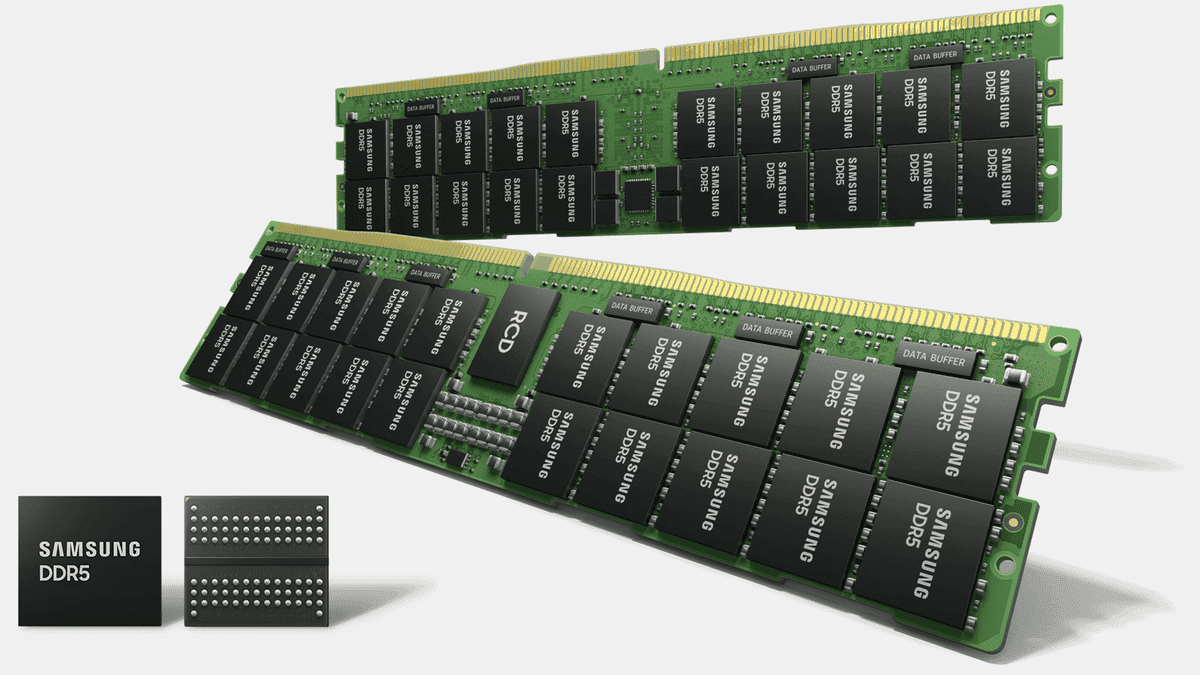
The global memory shortage has intensified dramatically as the world's three dominant memory manufacturers—Samsung, SK Hynix, and Micron—redirect production capacity toward AI data centers, leaving consumer devices and PC manufacturers scrambling for supply
1
. This unprecedented memory chip shortage stems from soaring demand for memory components driven by companies like Nvidia, Google, and Advanced Micro Devices, which require massive quantities of specialized chips for artificial intelligence infrastructure5
. The crisis has already pushed the price of a 32GB DDR5-6000 kit from $80 in August 2025 to $340 today, with analysts warning that price increases will accelerate throughout 20261
.
Source: VnExpress
High RAM Prices Drive Record Profits for Memory Makers
Memory manufacturers are experiencing windfall gains from the supply crunch. Samsung Electronics projects operating profits between 19.9 and 20.1 trillion Korean won (approximately $13.8 billion USD) in Q4 2025, nearly triple the 6.49 trillion won recorded in Q4 2024
1
. SK Hynix posted its highest-ever quarterly performance in Q3 2025 with 11.38 trillion Korean won (about $7.8 billion) in operating profit, while its operating margin expanded from 40 percent to 47 percent1
. Micron reported net income surging from $1.87 billion in Q1 2025 to $5.24 billion in Q1 2026, generating the company's highest-ever free cash flow1
. These record profits for memory makers come as investor sentiment pushes stock prices higher—Micron's shares surged 240 percent last year, Samsung more than doubled, and SK Hynix's market cap nearly quadrupled4
.
Source: Guru3D
Shift in Production Capacity Creates Permanent Market Changes
The current crisis represents more than a cyclical supply-demand mismatch. High-bandwidth memory (HBM) used in Nvidia's AI data center GPUs requires approximately three times as much space on a silicon wafer as the same amount of standard DDR5 DRAM
1
. When memory manufacturers shift production capacity to HBM instead of DRAM, it disproportionately reduces the amount of consumer memory they can produce. IDC warns this is "not just a cyclical shortage driven by a mismatch in supply and demand, but a potentially permanent, strategic reallocation of the world's silicon wafer capacity"3
. Every wafer allocated to an HBM stack for an Nvidia GPU denies resources to consumer devices like smartphones and laptops. Bank of America analysts predict the average selling price for DRAM will increase by as much as 33 percent in 2026, and the market for just HBM in 2028 could exceed the entire RAM market size of 20241
.
Source: TechSpot
PC Market Faces Mounting Pressure from Supply Chain Constraints
Major PC manufacturers including Dell, Lenovo, HP, and Asus are implementing emergency measures to secure memory supplies. Dell COO Jeff Clarke emphasized that "our focus has been to secure the supply. That has always been the number one rule of our supply chain—to never run out of parts"
2
. However, stockpiling strategies only exacerbate market tensions by further tightening supply and driving prices higher. Asus officially announced price hikes across its product lineup this week, while a leaked internal Dell document suggests prices could rise by as much as 30 percent in 20262
. HP warned it will need to increase prices and offer lower RAM configurations later this year, with continued cost rises expected to eat into product margins by May3
. TrendForce predicts memory prices are projected to "rise sharply again in the first quarter of 2026," with conventional DRAM prices already jumping 55-60 percent in a single quarter4
.AI Data Centers Consume Unprecedented Memory Volumes
The scale of AI demand is staggering. By some estimates, OpenAI's "Stargate" project could consume as much as 40 percent of the world's DRAM output by itself, though this figure uses 2024-2025 production numbers and doesn't account for capacity increases
1
. Micron business chief Sumit Sadana told CNBC that "we have seen a very sharp, significant surge in demand for memory, and it has far outpaced our ability to supply that memory and, in our estimation, the supply capability of the whole memory industry"5
. SK Hynix has already secured demand for its entire 2026 production capacity, while hyperscalers like Microsoft, Google, Meta, and Amazon continue expanding AI infrastructure investments4
5
. SK Hynix credits "expanding investments in AI infrastructure" and "surging demand for AI servers" for its record performance1
.Related Stories

Consumer Devices and Gaming Systems Face Uncertain Future
The memory crunch threatens to derail PC refresh cycles just as Windows 10 reached end of life in October, with many businesses migrating to Windows 11
3
. While TrendForce predicts some smartphones may return to just 4GB of RAM this year, budget notebooks face constraints because DRAM cannot be reduced quickly due to processor pairing needs and operating system limitations3
. The gaming sector, which has seen annual PC shipments increase 50 percent even as overall consumer PC shipments declined 14 percent over five years, faces particular vulnerability3
. Smaller assemblers who cannot stockpile components "will bear the greatest burden of the shortage," according to IDC, creating opportunities for large OEMs to gain market share3
. GPU prices are also climbing, with Newegg listing RTX 5090 cards well above $4,000, making it increasingly difficult to find units under $3,000 after launch prices near $1,9993
.Industry Outlook Suggests Extended Crisis Period
Micron CEO Sanjay Mehrotra expects both increased demand and constrained supply "to persist beyond calendar 2026," suggesting consumers and manufacturers could wait years rather than months for relief
1
. TrendForce analyst Tom Hsu characterized the 50-55 percent quarterly price increase as "unprecedented"5
. Samsung and SK Hynix are reportedly planning to raise server memory prices by up to 70 percent in Q1 2026 alone, which combined with 50 percent increases in 2025 could nearly double prices by mid-20264
. IDC expects DRAM and NAND supply growth to lag at just 16 and 17 percent respectively this year, well below historical norms4
. The only potential relief would come if AI demand falters—if the AI bubble bursts or deflates, memory manufacturers could find themselves with excess inventory like Samsung experienced in 2023, when oversupply forced the company to lose billions of dollars1
. Until then, watch for continued price volatility, reduced memory configurations in consumer devices, and potential delays in PC refresh cycles as the industry adapts to this fundamental shift in memory allocation priorities.References
Summarized by

Navi
[3]
[4]
Related Stories
RAM and Storage Prices Surge 500% as AI Demand Triggers Global Memory Crisis
26 Nov 2025•Business and Economy
AI Demand Triggers Component Shortage as Dell and Lenovo Plan 15% Price Increases for Servers
03 Dec 2025•Business and Economy

Memory shortage forces PC makers to raise prices up to 30% as AI demand drains supply
17 Mar 2026•Business and Economy

Recent Highlights
1
Over 200 Economists Warn AI Economic Impact Could Eclipse Industrial Revolution in Just Years
Policy and Regulation
2
Xi Jinping positions China as global AI partner while challenging US tech dominance
Policy and Regulation

3
EU Orders Google to Open Android to AI Rivals and Share Search Data Under Digital Markets Act
Policy and Regulation

Recent Highlights
Today's Top Stories










Don’t drown in AI news. We cut through the noise - filtering, ranking and summarizing the most important AI news, breakthroughs and research daily. Follow topics that matter to you and stay ahead.


