Iran Conflict Threatens Gulf's $300 Billion AI Infrastructure Dreams as Drone Strikes Hit AWS


7 Sources
7 Sources
[1]
How the Iran war could impact hyperscalers' massive AI buildout in the Middle East
There are still big draws for companies looking to build AI infrastructure in the Middle East. "The region remains attractive to companies in terms of capital from sovereign wealth funds, government buy-in, available energy and its role as a gateway to markets in the global south," Tess deBlanc-Knowles, senior director at think tank Atlantic Council, told CNBC. Governments in the Middle East will also likely be racing to reassure U.S. companies and encourage them to maintain commitments in the region. "The UAE sees AI buildout as critical to their future and is betting heavily on the technology," said Mehta. "It is investing many billions of dollars to support the AI transition and has also played a central role in facilitating many of the big AI infrastructure partnerships." Given the huge costs invested in already operational facilities, alongside the power contracts, land agreements and fiber connectivity, it's unlikely AI hyperscalers will look to relocate built capacity. "Data centers typically need to be located close to their customers to ensure low latency and reliable service," Tancrede Fulop, senior equity analyst at Morningstar, told CNBC. "Relocating or closing facilities could therefore lead to service-level agreement breaches and reputational risk." But scenario planning around the Iran war and its impact on the wider Middle East region will be weighing on investment committees and boards. Rather than exiting the region, companies could take steps to "hedge their investments," by slowing new capital deployments or pausing planned partnerships, deBlanc-Knowles said. Should the conflict persist or escalate, those hedges may transition into an "evaluation of alternative regional hubs to reduce exposure to sustained disruptions from a wider regional conflict," she added. The Iran war could cause digital infrastructure developer Pure Data Centre Group -- which has operational data centers in Riyadh and Abu Dhabi, and is planning further expansion in the Middle East -- to "slow down" in the region, Gary Wojtaszek, chairman and interim chief executive officer at the company, told CNBC. Pointing to the energy and capital available in the Middle East, Wojtaszek said: "Up until the prior week, I would have been like, 'Hey this is awesome, right?' And now it's like, okay, well, maybe we'll slow down here." "But I do think that eventually the hostilities are going to settle down," he said, adding that "there's going to be a lot more focus on doing development there" in the future. Companies could start cost-benefit calculations to guide their future investment plans, said Mehta. "They'll be asking questions like: How long might this war last? How much will new hardening measures cost? Are there any viable alternative sites for data center buildouts? How much delay would shifting to an alternative location cause?" Google and Microsoft declined to comment on how the Iran war was impacting its data center and AI infrastructure projects in the region. AWS, G42, Humain and OpenAI did not respond to a request for comment by the time of publication.
[2]
'It means missile defence on data centres': drone strikes raises doubts over Gulf as AI superpower
Iran's targeting of commercial datacentres in the UAE and Bahrain signals a new frontier in asymmetric warfare It is believed to be a first: the deliberate targeting of a commercial datacentre by the armed forces of a country at war. At 4.30am on Sunday morning, an Iranian Shahed 136 drone struck an Amazon Web Services datacentre in the United Arab Emirates, setting off a devastating fire and forcing a shutdown of the power supply. Further damage was inflicted as attempts were made to suppress the flames with water. Soon after, a second data centre owned by the US tech company was hit. Then a third was said to be in trouble, this time in Bahrain, after an Iranian suicide drone turned to fireball on striking land nearby. Iranian state TV has claimed that Iran's Islamic Revolutionary Guard Corps launched the attack "to identify the role of these centres in supporting the enemy's military and intelligence activities". The network built by Jeff Bezos's company could withstand one of its regional centres being taken out of action but not a second, let alone a third of their huge warehouses of technology. The coordinated strike had an immediate impact. Millions of people in Dubai and Abu Dhabi woke up on Monday unable to pay for a taxi, order a food delivery, or check their bank balance on their mobile apps. Whether there was a military impact is unclear - but the strikes swiftly brought the war directly into the lives of 11 million people in the UAE, nine out of 10 of whom are foreign nationals. Amazon has advised its clients to secure their data away from the region. Perhaps more significantly, the strikes on this 'next generation' war target are now raising questions about the prospects of the UAE building on its plans, and many billions of pounds worth of US and other foreign investment, to exploit what they hope will be the 'new oil': artificial intelligence (AI). "The UAE really wants to be a major AI player," said Chris McGuire, an AI and technology competition expert who served as a White House national security council official in Joe Biden's administration. "Their government has very strong conviction about this technology, probably stronger than any other government in the world, and if there's going to start to be security questions around that, then they're going to have to resolve those very quickly, somehow." A datacentre is a facility designed to store, manage, and operate digital data. The growing demand by businesses for artificial intelligence (AI) and cloud computing - where firms have a pay-as-you-go relationship with the providers of servers, storage and software - is driving the need for centres that have significantly more computational power. It requires a ready and consistent supply of very cheap electricity. The UAE, as it seeks to diversify away from fossil fuels, has been able to point out that it has this in spades, along with a huge sovereign wealth fund ready to invest and subsidise projects. According to Turner & Townsend's Global Data Centre Index, the overall global cost increase of datacentre construction increased in 2025 by 5.5% - but the UAE ranks 44th in the league table of most expensive unit cost per watt out of 52. The UAE's geography also makes it a critical subsea cable landing point, providing access between Europe and Asia. Then there are the geo-politics, with the US keen to keep the Gulf states away from Chinese technology. A four-day tour by Donald Trump of Saudi Arabia, Qatar, and the UAE last May coincided with the announcement of the construction of a vast new AI campus - a partnership between the UAE and the US - for the purpose of training powerful AI models. As part of the deal, the Trump administration eased restrictions on advanced chips sales to the Gulf. OpenAI has said the planned UAE campus could eventually serve half the world's population. McGuire said that this week's events could be pivotal. "If we're going to have large scale datacentres built out in the Middle East, we're going have to get pretty serious about how we protect them," he said. 'We think about how to protect it right now, and we're saying, 'Oh, it means you have guards and good cybersecurity'. "If you're actually going to double down the Middle East, maybe it means missile defence on datacentres." Sean Gorman, the chief executive of Zephr.xyz, a technology firm that is a contractor to the US air force, said that the Gulf states' ambitions would have likely been in the thoughts of military planners in Tehran. He said: "I believe the Iranians are building on tactics they've seen be effective in the Ukraine conflict. Asymmetric warfare that can target critical infrastructure creates pressure on adversaries by disrupting public safety and economic activity. "UAE and Bahrain have both been positioning themselves as global AI hubs by investing heavily in datacentres and fibre infrastructure to connect them to the rest of the world. "If they can disrupt that infrastructure, it puts their strategic position under risk while also disrupting operations that are important to the economy. In addition, there could be an adjacent impact of defence operations, but that would likely be more luck than the primary objective." Gorman said the UAE had a "long track record of managing regional instability without becoming party to it" but that there were a range of risks apart from that from the air. He said: "The UAE also has one of the most diversified submarine-cable landing environments in the Middle East, but the diversity is geographically uneven. "There are multiple landing stations and cable systems, but many of them concentrate on the east coast at Fujairah, which creates a partial geographic chokepoint. "In addition, there is a specific risk from Iranian cyber operations targeting US-aligned digital infrastructure in the Gulf, which presents a more concrete near-term threat to datacentre and cloud operations than geography in the traditional sense." Gorman said the concern would be if Iran demonstrated any further capability to target Gulf digital infrastructure as part of its retaliation. He said: "The UAE will need to show partners that its infrastructure is defensible. This is the question investors should be asking, not whether the broader AI ambition survives." Vili Lehdonvirta, senior fellow at the Oxford Internet Institute, University of Oxford, said there were significant costs to such defences but that the danger was real. The former chair of the US National Security Commission on AI, Eric Schmidt, suggested last year that a country falling behind in an AI arms race could bomb their adversary's datacentres. Lehdonvirta said he suspected that no one actually believed that datacentres "would get bombed despite such scenarios being openly floated for some time". "If that's the case then from now on we might perhaps see operators of prominent datacentres like AWS [Amazon Web Services] investing in air defence, similar to how shipping operators armed up against pirates," he said. Where might Iran fruitfully strike next? "The Iranians will be well aware that the fibreoptic cables that connect these datacentres to the United States and to the rest of the world run through the strait of Hormuz," Lehdonvirta said, "although they'll be closely watched by the US and allied forces."
[3]
Iran conflict threatens Gulf data center boom as attacks mount
The widening conflict involving Iran is beginning to ripple through the global AI industry, raising new questions about the security of Gulf-backed data center projects and the resilience of regional cloud infrastructure. Gulf states are expected to invest more than US$300 billion in data centers, chips, and other AI infrastructure, but recent drone strikes on Amazon Web Services (AWS) facilities have highlighted the vulnerability of these projects, according to reports by The Information and The Guardian. Drone strikes disrupt regional cloud services The attacks underscore how digital infrastructure tied to AI is becoming increasingly entangled with geopolitical tensions. A drone believed to be an Iranian Shahed-136 struck an AWS data center in the United Arab Emirates (UAE) early on March 8, triggering a fire and forcing a shutdown of the power supply. A second AWS facility was also hit, while a third site in Bahrain was affected after a nearby strike. Disruptions at the three Amazon facilities affected several AWS services in the region and heightened concerns about the security of Gulf-based AI projects. The outages also disrupted everyday services in parts of the UAE, leaving residents unable to access banking, food-delivery, and ride-hailing applications. The Gulf has emerged as an increasingly important center for AI investment. Saudi Arabia, the United Arab Emirates, Kuwait, and Qatar have invested heavily in land, electricity, chips, and the development of AI models in local dialects, with Nvidia GPUs among the most expensive components. Saudi Crown Prince Mohammed bin Salman recently outlined plans for US$50 billion in semiconductor investment in the near term, while the UAE could spend more than US$30 billion purchasing Nvidia chips through next year based on current market prices. However, the viability of these investments depends on governments' ability to continue funding and protecting the data centers required to deploy them. Large-scale infrastructure plans face security questions The UAE is developing what is expected to be the region's largest AI infrastructure project: a 10-square-mile data center campus designed to consume as much as 5 gigawatts of power. As part of the Stargate project, OpenAI and Oracle are expected to operate about 1 gigawatt of chip capacity at the site. Saudi Arabia, meanwhile, plans to build data centers consuming up to 6.6 gigawatts of power by 2034, while Elon Musk's xAI is working with Humain to develop a facility expected to use roughly 500 megawatts. Humain CEO Tareq Amin has said the company has secured more than 200 plots of land across Saudi Arabia and is relying on geographic diversity and multiple fiber-optic routes to reduce the risk of service disruptions. Even so, analysts say the conflict could prompt governments and investors to reassess infrastructure strategy. IDC analyst Stephen Minton said Gulf AI spending is likely to continue in the near term but warned that a conflict lasting several months could lead to a "disruptive pause" in some investments. Security experts have also suggested that large-scale AI data centers in the region may eventually require additional defensive measures, potentially including missile defense systems. AI increasingly shapes modern warfare At the same time, AI is playing a growing role in the conflict itself. The Wall Street Journal reported that the US and Israel are using AI tools to help gather intelligence, identify targets, plan bombing missions, and assess battle damage more quickly than in the past. The technology is also being applied to non-combat functions such as intelligence analysis, logistics, and mission planning. Israeli intelligence agencies are increasingly relying on AI to analyze large volumes of surveillance footage and communications data. The Pentagon is also expanding the use of specialized AI systems for military applications. Retired Air Force Lt. Gen. Jack Shanahan, the Pentagon's first AI chief, said building military-grade AI remains challenging because much of the available training data is outdated or incomplete. Still, the efficiency gains can be significant. Emelia Probasco, a senior fellow at Georgetown University's Center for Security and Emerging Technology, said the US Army's 18th Airborne Corps used Palantir software to conduct a targeting operation with just 20 personnel, compared with more than 2,000 staff involved in similar operations during the Iraq war. Together, the developments highlight how AI is increasingly shaping both modern warfare and the infrastructure supporting the global AI industry, placing the Gulf's ambitions to become a major AI hub alongside rising geopolitical risks.
[4]
Iranian drone attacks on Amazon's Gulf data centers a harbinger of new tactics in future conflicts, experts say | Fortune
The U.S. military also uses AWS to run some of its workloads, including running Anthropic's AI model Claude for some intelligence functions, and Iran's Fars News Agency said on Telegram that the Bahrain facility had been deliberately targeted "to identify the role of these centers in supporting the enemy's military and intelligence activities." AWS has declined to comment on the Iranian claim and it is not known whether the attacks impacted U.S. military computing workloads. Still, the attack is believed to be the first time data centers have been deliberately targeted for air strikes in a conflict. Experts say it almost certainly won't be the last. Data centers are rapidly emerging as vital strategic assets -- and vulnerable targets. The boundary between commercial cloud computing and military operations has largely vanished. The Pentagon's Joint Warfighting Cloud Capability and its Joint All Domain Command and Control networks run on the same commercial infrastructure that serves banks and ride-hailing apps. Meanwhile, several news organizations have reported that the U.S. military used Anthropic's AI model Claude -- which runs on AWS -- for intelligence assessments, target identification, and battle simulations during the Iran strikes. That dual-use reality means that attacks on commercial data centers can have immediate military consequences -- and vice versa. "If data centers become critical hubs for transiting military information, we can expect them to be increasingly targeted by both cyber and physical attacks," Zachary Kallenborn, a PhD researcher at King's College London, told Fortune. Kallenborn recently co-authored a study in the journal Risk Analysis on "globally critical infrastructure" -- including data centers and subsea cables -- that can be important "choke points" for adversaries seeking to disrupt either civilian economies or military operations. He said that in researching the study he held numerous conversations with senior officials around the world and found that "basically no one is thinking about these risks in a systematic way." Data centers have long made some efforts at physical security. But most of these security measures -- high fences topped with barbed wire, carefully controlled access, and security cameras -- were aimed at preventing espionage or sabotage by a person on the ground, not aerial attacks. Data centers are sprawling, visible complexes dependent on exposed infrastructure -- such as cooling units, diesel generators, and gas turbines -- that can be disabled without a direct hit on the server halls themselves. "If you knock out some of the chillers you can take them fully offline," Sam Winter-Levy, a fellow at the Carnegie Endowment for International Peace, told the Financial Times. Chris McGuire, an AI and technology competition expert who worked on technology policy at the National Security Council under the Biden administration, told The Guardian that data centers built in the Middle East might need to consider measures to guard against aerial attacks. "If you're actually going to double down the Middle East, maybe it means missile defence on datacentres," he said. Kallenborn previously told Fortune that as wars are increasingly fought with drones and other robotic systems, it is possible that even local conflicts could become much more regional or even global, as adversaries seek to strike the remote command centers and data center infrastructure needed to control those unmanned systems. And the problem extends beyond the data centers themselves. Seventeen submarine cables pass through the Red Sea, carrying the majority of data traffic between Europe, Asia, and Africa. With Iran's closure of the Strait of Hormuz and renewed Houthi threats in the Red Sea, both critical data chokepoints are now in active conflict zones simultaneously. "Closing both choke points simultaneously would be a globally disruptive event," Doug Madory, director of internet analysis at the network intelligence firm Kentik, told the publication Rest of World. "I'm not aware of that ever happening." The strikes on the UAE and Bahrain data centers land at a particularly fraught moment for the Gulf's ambitions to become a global hub for artificial intelligence. U.S. President Donald Trump's tour of the region last May generated more than $2 trillion in investment pledges, including the planned Stargate UAE campus in Abu Dhabi -- what would be the largest AI facility outside the United States. Amazon committed $5 billion to an AI hub in Saudi Arabia. For now, the structural advantages that drew tech companies to the Gulf -- cheap energy, abundant funding, and a strategic location -- remain intact. But Winter-Levy warned that most recent attacks are unlikely to be the last. Physical attacks on data centers "are only going to become more common moving forward as AI becomes more and more significant," he told Rest of World. Speaking to the Financial Times, he called the strikes "a harbinger of what's to come" and warned that such attacks would not be limited to the Middle East.
[5]

Big Tech's uncertain future in the Persian gulf
Gulf nations like the UAE and Bahrain attracted US tech firms and capital for AI infrastructure. These investments, crucial for diversifying economies away from oil, now face severe risks. Attacks on data centres and undersea cables highlight the new dangers. The conflict has shaken investor confidence and raised concerns about the future of trillions of dollars in the region. For years, Persian Gulf monarchies like the United Arab Emirates, Bahrain and Qatar have lured US tech companies and Wall Street capital to team up on projects, dangling friendly investment terms and opulent office hubs with luxury towers, cappuccino bars and bikini-friendly beach clubs. Deploying their giant sovereign wealth funds, the governments of these countries have moved aggressively to break their overwhelming dependence on oil and gas revenues. And investors, seeking lucrative new markets, have rushed to oblige. Silicon Valley, in particular, has bought into the Persian Gulf. Tech giants including Nvidia, Microsoft and Oracle all poured money into large-scale facilities across the region, including data centers to power their enormous and growing bets on artificial intelligence. But the war with Iran suddenly threatens to undermine that cozy business relationship. The scope of the conflict has stunned the Gulf nations and their Western business partners over the past week, and raised serious questions for both about the future of these investments -- with trillions of dollars hanging in the balance. After the United States and Israel launched coordinated strikes against Iran last weekend, the Iranians' response included attacks against nonmilitary targets in countries across the region. Iranian drones hit two Amazon Web Service data centers in the UAE and damaged one in Bahrain earlier in the week. Schools and offices have gone remote. The United States shut its embassies in Kuwait, Lebanon and Saudi Arabia. On Thursday, a billionaire businessman in Dubai lashed out at President Donald Trump on social media for starting the war. The Financial Times reported on Friday that a handful of Gulf states were considering whether to pull back on overseas investments because of the financial impact of the conflict. Anxiety is "through the roof," Mona Yacoubian, Middle East program director at Washington's Center for Strategic and International Studies, said, describing the mood at an iftar dinner in Washington this week. Trillions of Dollars in Play For Western investors, the stakes have been rising as AI spending surges in the Persian Gulf. Stargate UAE, operated by OpenAI and Oracle and powered by top-line Nvidia chips, started in May with a splashy ceremony in Abu Dhabi, featuring OpenAI's Sam Altman and Nvidia CEO, Jensen Huang. It is set to be the world's biggest data center outside the United States. In December, the State Department unveiled "Pax Silica," a declaration signed by 11 countries, including Israel, the UAE and Qatar, pledging to coordinate development of AI infrastructure. Gulf countries could be an important part of the build-out, given their prized advantages: Wedged between Asia, Africa and the Middle East, and a middle distance from Europe, the region has plentiful land, cheap electricity and willing populations. Data centers have already proliferated across the Persian Gulf, with 61 in Saudi Arabia and 57 in the Emirates, according to DataCenter Map, an industry intelligence tool. All that makes the Gulf "an emerging epicenter of AI infrastructure globally," Yacoubian said. But risks that seemed remote a week ago now look far more real -- with the potential to spread beyond the region. "The vulnerability is no longer hypothetical," said Kristian Alexander, senior fellow and lead researcher at the Rabdan Security & Defense Institute in Abu Dhabi. Undersea Cables Are Sitting Ducks Among the highest risk factors could be the fiber-optic cables that snake under the Strait of Hormuz and the Red Sea -- the region's two choke points, not only for oil shipments but for data, too. Among the world's most concentrated digital corridors, they are crucial to keeping parts of Europe and Asia connected to the internet, and experts fear they could be sabotaged, or entangled or dislodged amid chaotic fighting. Such an event has already occurred. In 2024, four major Red Sea undersea cables were damaged when Houthi rebels struck a ship, disrupting about a quarter of the data traffic linking Europe and Asia, including the Middle East. Although data was quickly rerouted, it took months to fully restore the cables. "It shows how quickly connectivity can be degraded, rather than fully go dark," Alexander said. Land-based infrastructure could also be at risk. On Tuesday, debris from intercepted Iranian drones fell into an oil storage area in Fujairah, a UAE port city that is also the site of a major cable hub. That underscored the twin threats that the tech and AI ecosystem now faces: cyberattacks that can be launched remotely, and wartime strikes that can hit directly. "The threat picture is now blended," Alexander said. A Reality Check Until a week ago, the violent risks seemed far-fetched. "Before Feb. 28, the assumption was that a cyber risk was constant but kinetic risk was low probability," Alexander said. Indeed, for years, investors in the Persian Gulf have felt worlds removed from the Middle East's political strife. But to some observers, that feeling of safety seemed to be an illusion. In 2023, two weeks before Hamas waged a massacre on Israelis, setting off the Gaza war, Matt Gertken, chief geopolitical analyst for BCA Research, traveled to the Gulf to meet with hedge funds and other Western investors. He offered a dire warning, telling them that the Israelis appeared set to bomb Iran's nuclear facilities at some point, and that the United States was likely to join them. That could lead to a widening regional war, he told them, potentially threatening their business -- perhaps even their Gulf lifestyle. Investors were deeply skeptical. "I do geopolitical forecasting for a living," Gertken said. "But I was sensitive to the fact that I was in Dubai saying: 'You know, things are going to get bad for a while. It is not what people wanted to hear. It was very contrarian." This week has shifted the calculus. Alexander said Gulf officials were considering how to harden defenses of their data centers and tech networks, including possibly engineering new infrastructure to withstand missile strikes rather than just cyberattacks, which were regarded as the main vulnerability until now. "The risk was understood in strategic circles," Alexander said. "But many mitigation efforts were still oriented towards cybersecurity." In just one week, the war has greatly expanded the risks. This article originally appeared in The New York Times.
[6]
When clouds get hit by drones: As data centres become target of strikes, there is one more critical infrastructure to protect
Recent drone strikes during the Iran-US-Israel conflict reportedly damaged cloud data centres operated by Amazon Web Services in the UAE and Bahrain, raising concerns that the physical infrastructure of the internet could become targets in warfare. Traditionally seen as remote digital utilities, these facilities are critical hubs powering governments, banking systems and AI services. Cloud is a rather soft, non-techie word for what it really is -- server farms that are the digital backbone of the world. But that fluffy idea of data residing far away, ready to turn up at your command has suddenly been shattered. Geopolitics happened. Drones turned up. Last week, right after Israel and US attacked Iran, Tehran retaliated. And by design or by accident, cloud computing facilities operated by Amazon Web Services in the United Arab Emirates and Bahrain were damaged in drone strikes. Then news emerged that Microsoft Azure's data centres might have also been targeted. And just like that, those dark, windowless warehouses, which guzzle electricity and water while powering everything from government to global banking to AI algorithms, were no longer just peripheral backend utilities. They had become the front-end of traditional war. It wasn't that clouds were immune to geopolitical machinations earlier, but that risk was primarily cyber. What happened in UAE and Bahrain was among the first known instances of the physical location of a data centre coming in the line of fire in a war. This has major implications. The likes of Goldman Sachs, JLL and PwC project that the total cumulative investment in data centres will exceed $3 trillion by 2030, with that figure potentially doubling by 2035. There is big money at stake. More importantly, with every facet of life being disrupted by data and AI, a data centre going offline has real-life implications on everything from hospitals to traffic management to water treatment. The possibility of civilian harm, beyond the concrete and the silicon of data centres, is very real. PROTECTING DATA First things first, it has yet to be ascertained if the Iranians really targeted the facilities, or if they were struck by accident. As strategic analyst KP Nayar points out, "Iran is using missiles which are not very sophisticated." He is of the opinion that Iran may have been targeting large facilities randomly. Even if these strikes were accidental, future ones may not be. That makes this a significant moment, one that should make decision-makers, in government, military and private sector, sit up and take notice. The world runs on data almost as much as it does on oil, and while the reliance on the latter may eventually wane, the centrality of the former to the modern way of life is just beginning. If attacks on data centres this time were acts of randomness, it might not remain that way for longer. New York-based Soufan Center, a nonprofit that researches security challenges, recently warned that the physical infrastructure of AI could become a target. In a research note, it said "we must also recognize that these assets could become targets for domestic actors and that possible synergies between extremists and foreign adversaries could amplify the threat". Data centres are the oil refineries of the 21st century, and undersea internet cables that connect continents are the oil tankers. There have been several instances in the recent past of the latter being cut during geopolitical events. Multiple telecom and power cables in the Baltic were damaged between 2023 and 2024, with suspicions from the Scandinavian countries pointing to heightened tensions with Russia, after the latter attacked Ukraine. A similar story had played out in the Black Sea during the Russian annexation of Crimea in 2014, and in the Red Sea during the 2024 tensions in West Asia. There have also been reports of Taiwan fearing that China would cut internet cables to the island nation. In a manner of speaking, attacking information channels used to happen earlier too, with the British cutting German telegraph cables during World War I. If cutting cables affected only transmission, it is the storage of data, which underpins modern commerce and economy, that is now under threat. India, like countries in the West, does classify data centres as national critical infrastructure especially if they host government data. In fact, it does fall under the purview of the National Critical Information Infrastructure Protection Centre (NCIIPC). But this again is from a cyber resilience point of view, and less from physical warfare. In many parts of the world, there would also be a very real threat of terrorism, and it is also important to ask if that is taken into account when putting up multibilliondollar data centres. REDESIGNING THE CLOUD While it may not be possible to install missile shields in data centres, there are steps that need to be taken to mitigate risks, especially from the point of view of cloud architecture. How should countries -- and companies -- save their data? While it is good to have backup in multiple data centres, should they be in the same region? For years, redundancy planning focused on natural disasters. For example, traditionally, two seismic zones were chosen to save data in, but if they are both in the same country both become a target to be taken out if an enemy so chooses. That would then necessitate a slight rethink of the concept of data residency legislations that restrict data storage and processing of that data to geographical boundaries. It is more food for thought for a generation of CIOs and CEOs. Would it be a good idea to locate data centres in less conflict-ridden countries? For example, would these attacks force a rethink among cloud companies to locate their data centres away from West Asia, which has for long been mired in conflict? A paper by Ian Saunders, visiting fellow at Cranfield University, UK, poses another critical question: "should there be a minimum resilience security standard for physical critical infrastructure?" GLOBAL NORMS Here is a larger question. Are data centres, especially those used by the government torun AI models for war, fair targets? Last month, The Wall Street Journal had reported that the US military had used Claude, an AI model from Anthropic, in its operation to kidnap Nicolas Maduro from Venezuela. Going by the keenness of the US Department of Defense (or War, per Donald Trump) and their recent tugof-war with Anthropic for the usage of Claude, it is clear the use of AI during war is here to stay. In that context, equations become a little more complicated. If ports, roads and railway lines used by the military are fair game, why not data centres? This certainly would be the point of view of the aggressor. The international order has rules that govern the targeting of civilians and civilian infrastructure, and those need to be upheld. The UN norms of responsible state behaviour in cyberspace already says, "A State should not conduct or knowingly support ICT (Information and Communication Technologies) activity contrary to its obligations under international law that intentionally damages critical infrastructure or otherwise impairs the use and operation of critical infrastructure to provide services to the public." At the moment, this might be restricted to ICT activities -- read hacking -- but there is clearly scope to make this stronger, and bring physical attacks too into the purview. What is required then are multilateral dialogues that look at the broad contours of harms that digital infrastructure could sustain in the context of conflict, including attacks on power sources, and build consensus on what constitutes legitimate military targeting and what doesn't.
[7]

Could the Iran conflict be AI's Black Swan Moment?
Continuing conflict in the West Asia has the potential to upend the AI boom, if it stretches for long The continuing war of attrition between the US and Israel on one hand and Iran on the other has clearly roiled the world economy. Expectantly, with the Straits of Hormuz closed, oil prices have spiked and spiked again. What was once settling into a $ 70-80 range is now testing $ 130 and Iran has recently even said that it could spike to $ 200. All that rhetoric about data being the New Oil has evaporated to the grim reality that oil, after all, is the New Oil. Even the US Energy secretary acknowledged that there will be 'short-term pain'. Desert storm of a different kind Clearly, West Asia is going to hurt. IDC estimates that if the conflict persists for over 3 months, around One percentage point will be shaved off from the growth forecasts. Additionally, there will be lasting impact on the future of IT infrastructure in the region and projects like Open AI's Stargate campus in the UAE and others will see a cost escalation due to heightened security spends, even to the extent of 'hardening' the security by using traditional military techniques - anti drone et al. There will be ripple effects. Companies could re-evaluate their strategies for West Asia. While the governments will double down on reassuring investors about the continued attraction of the region, the current conflict will cast its shadow on many corporate investment plans. In fact, CNBC quotes Gary Wojtazek, Chairman and Interim CEO at Pure Data Center group to 'slow down' further expansion in the region. A logical conclusion to the above challenge will be relocating the infrastructure in other regions such as Europe, Southeast Asia or India. Beyond the Sands But that is in the region. However, the bigger question lying unanswered, is the impact of rising oil prices, and consequently, the rise in energy costs, on the AI sector. Whether it is for chips or datacentres, high(er) oil prices ought to be a Red Flag, given the amount of capex that individual companies have committed. Any disruption in this, and the cost of these inputs shoot up sharply. More worrisome, is the fact that, even at higher costs, the sheer availability of these input raw materials will become challenging. Take Helium for instance. It is a by-product of LNG production and is used as a heat-sink in chip production. If there is a hit on LNG production, which has come true already, availability of Helium will become a challenge. This in turn, will affect the chip manufacturers and thus impact the gargantuan hunger for chips in the AI sector. The second, and possibly more critical issue, is the sheer cost of energy. All the datacentres, by their own admission, are one of the biggest consumers of energy. Just imagine an increase of just 10% on their energy costs - the entire P&L goes out of whack! Given that most of them are sharing the energy availability with the municipal bodies, governments will then have to resort to rationing and deciding who gets what. While the datacentre may still be able to pay for it, this will mean that the general public's needs will have to be 'managed' - something that will be a political minefield in energy-starved societies- such as India. Thirdly, cost of support services will go up. Insurance will be the first, followed by cost of manpower, which will demand a premium to shift to 'riskier' geos. The hunt of alternatives to key input raw materials might well succeed, but this will come with potentially higher costs. Another factor that will become critical will be the submarine cables in the region through which an estimated 80% of data traffic flows between Asia and Europe. All the above may not happen. The conflict may end this month itself. However, the sobering thought that one might want to have would be around what happens if it doesn't? Already global companies are drawing up business continuity plans to reflect a longer conflict. While the AI boom is still in its infancy with already lingering questions about its efficacy, RoI, ethics and role in replacing human capital, the sheer monies lying committed, and the valuation of these companies will come under threat if US-Iran war persists. If it does, then this could be the first Black Swan moment for the AI sector with impact that will probably drive some hard truths and sift out some of the hype from the narrative.
Share
Share
Copy Link
Iranian drone strikes on Amazon Web Services data centers in the UAE and Bahrain mark the first deliberate military targeting of commercial digital infrastructure. The attacks disrupted cloud services across the region and raised urgent questions about the security of over $300 billion in planned AI infrastructure investments. Tech giants including Microsoft, OpenAI, and Nvidia now face difficult decisions about their massive AI infrastructure buildout in a region suddenly transformed into an active conflict zone.
Drone Strikes on Data Centers Mark New Era in Digital Warfare
The Iran conflict has introduced a troubling precedent in modern warfare: the deliberate targeting of commercial data centers. Early on March 8, an Iranian Shahed-136 drone struck an AWS (Amazon Web Services) facility in the United Arab Emirates, triggering a devastating fire and forcing a complete power shutdown
2
. A second AWS facility was hit shortly after, while a third site in Bahrain sustained damage when a drone struck nearby3
. Iranian state television claimed the Islamic Revolutionary Guard Corps launched the attacks "to identify the role of these centres in supporting the enemy's military and intelligence activities"2
.
Source: ET
The drone attacks on data centers disrupted everyday life for millions across the Gulf. Residents in Dubai and Abu Dhabi found themselves unable to access banking apps, order food deliveries, or pay for taxi rides
2
. The strikes exposed the vulnerability of digital assets that underpin both civilian services and military operations, as the boundary between commercial cloud computing and defense infrastructure has essentially vanished4
.Gulf's Massive AI Infrastructure Buildout Faces Uncertain Future
Gulf states are expected to invest more than $300 billion in data centers, chips, and other AI infrastructure
3
. Saudi Arabia's Crown Prince Mohammed bin Salman recently outlined plans for $50 billion in semiconductor investment in the near term, while the UAE could spend more than $30 billion purchasing Nvidia chips through next year based on current market prices3
. The UAE is developing what would be the region's largest AI infrastructure project: a 10-square-mile data center campus designed to consume as much as 5 gigawatts of power3
. As part of the Stargate project, OpenAI and Oracle are expected to operate about 1 gigawatt of chip capacity at the site3
.
Source: DIGITIMES
Saudi Arabia plans to build Gulf data centers consuming up to 6.6 gigawatts of power by 2034, while Elon Musk's xAI is working with Humain to develop a facility expected to use roughly 500 megawatts
3
. The region's appeal stems from multiple factors: capital from sovereign wealth funds, government buy-in, available energy, and its role as a gateway to markets in the global south1
. According to Turner & Townsend's Global Data Centre Index, the UAE ranks 44th in the league table of most expensive unit cost per watt out of 52 locations globally2
.Tech Giants Must Reassess Investment Strategies Amid Geopolitical Instability
Companies are now conducting scenario planning around the Iran conflict and its impact on their Gulf operations. Rather than exiting the region entirely, companies could take steps to "hedge their investments" by slowing new capital deployments or pausing planned partnerships, according to Tess deBlanc-Knowles, senior director at think tank Atlantic Council
1
. Should the conflict persist or escalate, those hedges may transition into an "evaluation of alternative regional hubs to reduce exposure to sustained disruptions from a wider regional conflict"1
.Gary Wojtaszek, chairman and interim CEO at Pure Data Centre Group, which has operational facilities in Riyadh and Abu Dhabi, told CNBC the Iran conflict could cause the company to "slow down" in the region
1
. Companies will be asking critical questions: How long might this war last? How much will new hardening measures cost? Are there any viable alternative sites for data center buildouts? How much delay would shifting to an alternative location cause?1
. IDC analyst Stephen Minton warned that a conflict lasting several months could lead to a "disruptive pause" in some investments3
.Missile Defence and New Security Measures Under Consideration
Chris McGuire, an AI and technology competition expert who served as a White House national security council official in the Biden administration, told The Guardian that protecting large-scale data centers in the Middle East may require unprecedented measures. "If you're actually going to double down the Middle East, maybe it means missile defence on datacentres"
2
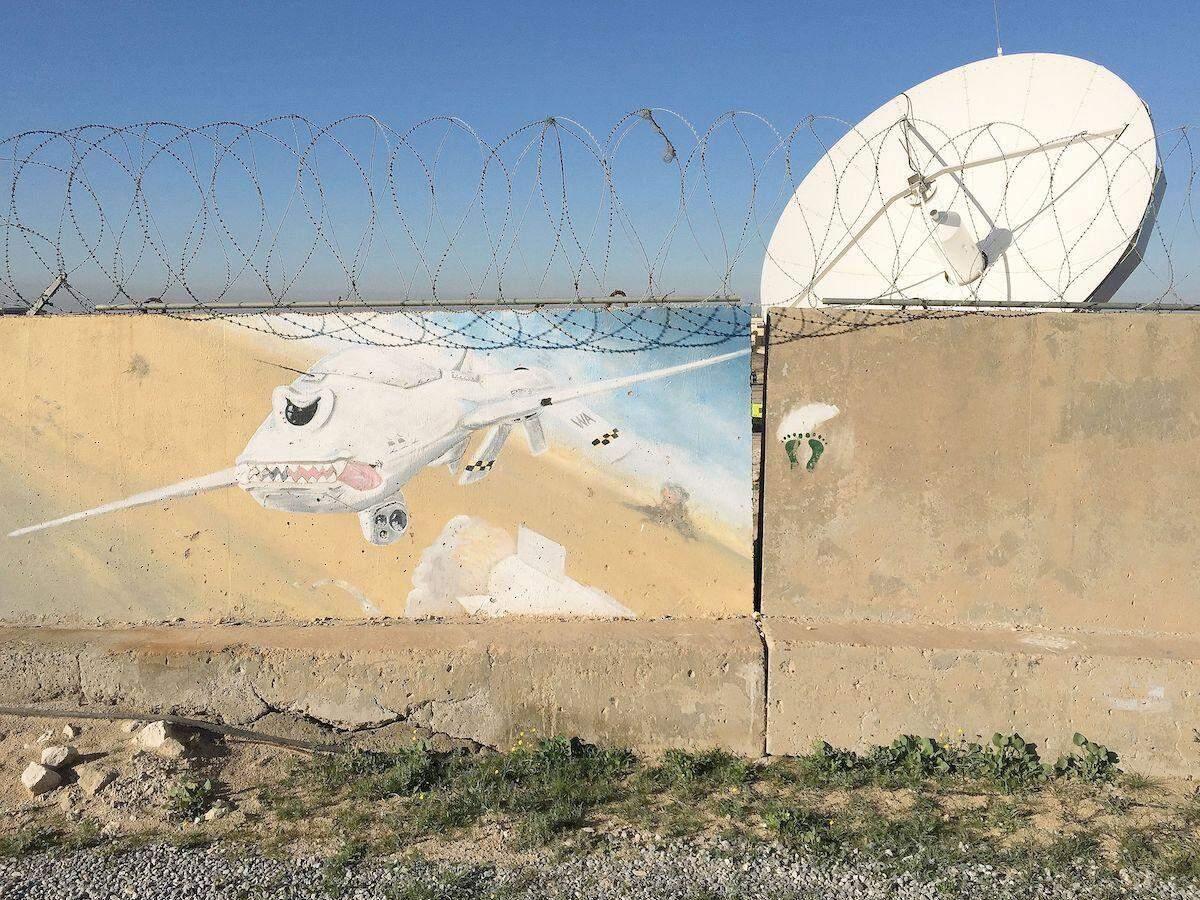
. Data centers are sprawling, visible complexes dependent on exposed infrastructure such as cooling units, diesel generators, and gas turbines that can be disabled without a direct hit on the server halls themselves4
.
Source: ET
Sean Gorman, CEO of Zephr.xyz, a technology firm that contracts with the US Air Force, believes the Iranians are building on tactics seen in the Ukraine conflict. "Asymmetric warfare that can target critical infrastructure creates pressure on adversaries by disrupting public safety and economic activity"
2
. Zachary Kallenborn, a PhD researcher at King's College London, noted that in researching globally critical infrastructure, "basically no one is thinking about these risks in a systematic way"4
.Related Stories

Threats to Undersea Cables Add Another Layer of Risk
Beyond the direct drone attacks on data centers, the conflict poses severe threats to undersea cables that transit the Strait of Hormuz and Red Sea. Seventeen submarine cables pass through the Red Sea, carrying the majority of data traffic between Europe, Asia, and Africa
4
. With Iran's closure of the Strait of Hormuz and renewed Houthi threats in the Red Sea, both critical data chokepoints are now in active conflict zones simultaneously. Doug Madory, director of internet analysis at Kentik, warned that "closing both choke points simultaneously would be a globally disruptive event"4
.In 2024, four major Red Sea undersea cables were damaged when Houthi rebels struck a ship, disrupting about a quarter of the data traffic linking Europe and Asia
5
. On Tuesday, debris from intercepted Iranian drones fell into an oil storage area in Fujairah, a UAE port city that is also the site of a major cable hub, underscoring the twin threats the tech ecosystem now faces5
.AI's Role in Modern Warfare Intensifies Strategic Importance
The conflict has also highlighted AI's role in modern warfare, making data centers even more strategic. The Wall Street Journal reported that the US and Israel are using AI tools to help gather intelligence, identify targets, plan bombing missions, and assess battle damage more quickly than in the past
3
. The US military uses AWS to run some workloads, including running Anthropic's AI model Claude for intelligence functions4
. Retired Air Force Lt. Gen. Jack Shanahan noted that building military-grade AI remains challenging because much of the available training data is outdated or incomplete3
.Emelia Probasco, a senior fellow at Georgetown University's Center for Security and Emerging Technology, said the US Army's 18th Airborne Corps used Palantir software to conduct a targeting operation with just 20 personnel, compared with more than 2,000 staff involved in similar operations during the Iraq war
3
. This dual-use reality means that attacks on commercial data centers can have immediate military consequences, making them increasingly attractive targets. Sam Winter-Levy, a fellow at the Carnegie Endowment for International Peace, warned that physical attacks on data centers "are only going to become more common moving forward as AI becomes more and more significant"4
. Microsoft and Google declined to comment on how the Iran conflict was impacting their data center projects in the region1
.References
Summarized by

Navi
[2]
Related Stories
Iran Conflict Disrupts AI Industry as Supply Chain Vulnerabilities and Energy Costs Threaten Growth
26 Mar 2026•Business and Economy

Iran war exposes AI technology as new weapon in cyber warfare against U.S. and Israel
11 Mar 2026•Technology

Traders Turn to Artificial Intelligence to Navigate War in Iran and Surging Energy Markets
21 Mar 2026•Business and Economy

Recent Highlights



Recent Highlights
Today's Top Stories









Your Daily Dose of Curated AI News
Don’t drown in AI news. We cut through the noise - filtering, ranking and summarizing the most important AI news, breakthroughs and research daily. Spend less time searching for the latest in AI and get straight to action.

