China Blocks Manus Founders After Meta's $2 Billion Deal Exposes AI Talent Exodus


3 Sources
[1]
The least surprising chapter of the Manus story is what's happening right now | TechCrunch
Okay, so the U.S. and China are locked in an all-out race to build the most powerful AI on the planet. Beijing is throwing billions at homegrown models, tightening its grip on the tech sector, and watching nervously as its best AI talent gravitates to U.S. companies. A Carnegie Endowment study
[2]
Beijing's surprise intervention on Meta's Manus rattles tech founders, VCs eyeing 'China shedding'
Tech circles from Silicon Valley to Shenzhen buzzed when Meta acquired Manus, a Singaporean AI startup with Chinese roots, for $2 billion late last year. For Chinese founders striving to build products that could rival American peers, the deal felt like a validation that an intricate offshore
[3]
China bans Manus founders from leaving country after Meta acquisition
Manus was dubbed as China's next DeepSeek and said its AI agent could buy property, program video games, analyse stocks, and plan travel itineraries. China has blocked the boss of an artificial intelligence startup from leaving the country after the company was acquired by Meta, according to a
Share
Copy Link
Beijing has barred Manus co-founders Xiao Hong and Ji Yichao from leaving China while reviewing whether Meta's $2 billion acquisition violated foreign investment rules. The intervention signals a crackdown on Chinese AI startups relocating offshore and highlights intensifying tensions in the US-China tech rivalry over AI dominance.
China Intervenes in Meta Acquisition of AI Startup
China has blocked Manus co-founders Xiao Hong and Ji Yichao from leaving the country as regulators review whether the Chinese AI startup's $2 billion sale to Meta violated technology export laws and foreign investment rules
1
2
. The Manus founders were summoned this month to a meeting with China's National Development and Reform Commission and told they wouldn't be leaving for Singapore while Beijing conducts what it calls a routine regulatory review1
. No formal charges have been filed, but the commerce ministry announced in December it would investigate whether the deal complied with local laws and regulations3
.
Source: Euronews
Beijing's Intervention Rattles Singapore Washing Strategy
Manus burst onto the scene in spring 2025 with a demo video showing an AI agent screening job candidates, planning vacations, and analyzing stock portfolios, claiming it outperformed OpenAI's Deep Research
1
. Within weeks, Benchmark led a $75 million funding round at a $500 million valuation1
. The company relocated its headquarters and core teams from Beijing to Singapore last year, allowing access to deeper capital pools from foreign investors and venture capitalists2
. This offshore structure, known as "Singapore washing," was embraced by tech founders hoping to circumvent scrutiny from both Beijing and Washington2
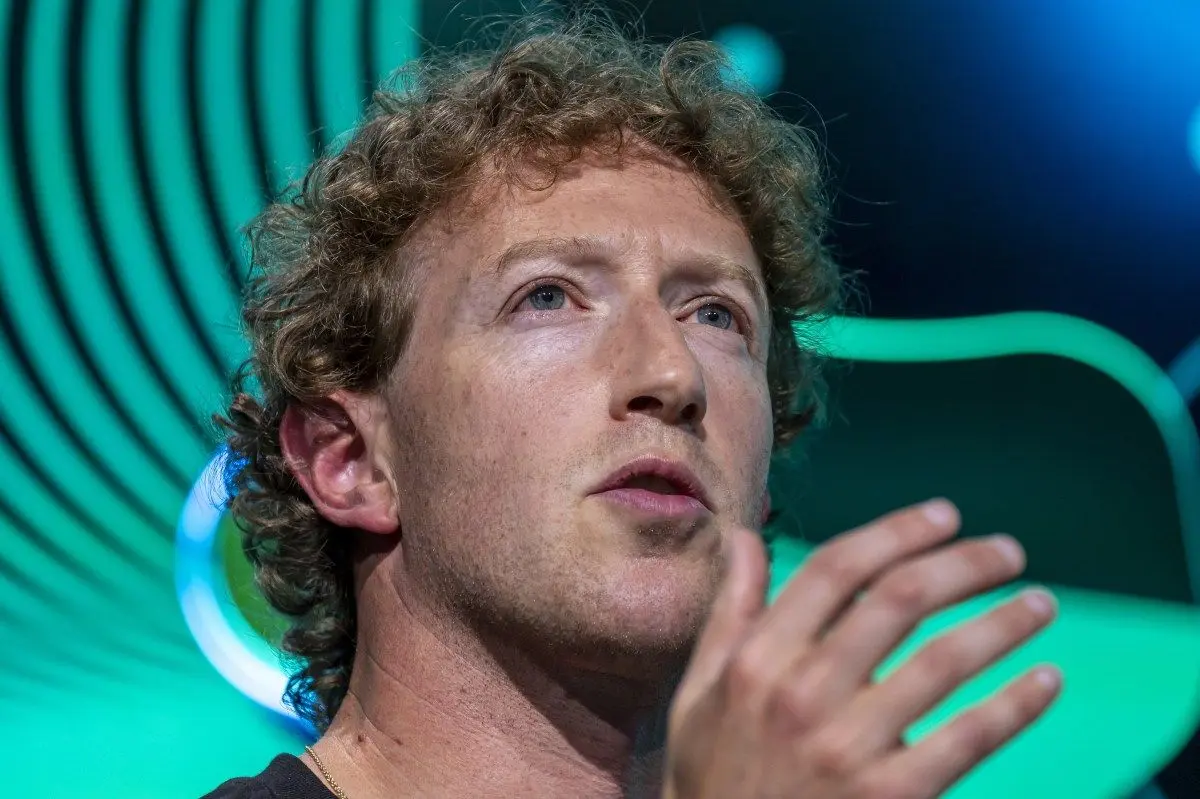
. By December, Manus had millions of users and was pulling in over $100 million in annual recurring revenue before Mark Zuckerberg snapped it up for $2 billion1
.
Source: TechCrunch
US-China Tech Rivalry Intensifies Over AI Talent
The Meta acquisition reflects deeper tensions in the US-China tech rivalry over AI dominance. A Carnegie Endowment study found that 87 of the 100 top Chinese AI researchers at U.S. institutions in 2019 are still there, highlighting how AI talent gravitates to American companies despite Beijing throwing billions at homegrown models
1
. The investment drew fire from U.S. lawmakers in mid-2025 who have prohibited American investors from backing Chinese AI companies directly2
. Senator John Cornyn tweeted at the time: "Who thinks it is a good idea for American investors to subsidize our biggest adversary in AI, only to have the CCP use that technology to challenge us economically and militarily? Not me."1
Related Stories

Beijing Targets "Selling Young Crops" Phenomenon
Beijing refers to this pattern as "selling young crops" -- homegrown AI companies that move abroad and sell themselves to foreign buyers before they've fully matured, taking their intellectual property and talent with them
1
. Manus restructured its ownership, and after the Meta acquisition was announced, Meta pledged to cut all ties with Manus's Chinese investors and shut down its operations in China entirely1
. The broadening review by the Chinese government fueled concerns and confusion among a generation of Chinese tech founders and venture capitalists that had quietly embraced the offshore model, forcing a reckoning as geopolitical tensions deepen2
. The company was dubbed as China's next DeepSeek and said its AI agent could buy property, program video games, analyze stocks, and plan travel itineraries3
. Xiao Hong said the move would allow the company to "build on a stronger, more sustainable foundation,"3
but Beijing's response demonstrates that outbound investment in AI remains tightly controlled, regardless of corporate restructuring attempts.References
Summarized by

Navi
[1]
[2]
Related Stories
China blocks Meta's $2 billion Manus acquisition as US-China AI rivalry intensifies
27 Apr 2026•Policy and Regulation
China deepens review of Meta's $2 billion Manus acquisition over tech export concerns
23 Jan 2026•Policy and Regulation

China launches probe into Meta's $2 billion Manus acquisition over technology export concerns
07 Jan 2026•Policy and Regulation

Recent Highlights



Recent Highlights
Today's Top Stories






Don’t drown in AI news. We cut through the noise - filtering, ranking and summarizing the most important AI news, breakthroughs and research daily. Follow topics that matter to you and stay ahead.


