AI in recruitment transforms job interviews as candidate fraud and deepfakes break hiring systems


3 Sources
[1]
Why recruiters are making interviews 'AI-free zones'
As soon as Michael Kienle becomes accustomed to one use of AI, jobseekers think up improbable new ways to sneak it into the application process. "We know they're using it to write their CVs, their application letters," says Kienle, global vice-president for talent acquisition at L'Oréal. But
[2]
Gen Z is using AI in job interviews as graduate unemployment climbs
The class of 2025 graduated into the worst entry-level job market in five years. Now a growing number of them are using AI tools during live job interviews, and a cottage industry of startups is rushing to sell them the means to do it. Whether that constitutes cheating or common sense depends on
[3]
The Deepfake candidate: How AI Is breaking the hiring process
Organisations that rushed to adopt automated, AI-led hiring are discovering that the very technology that speeded up recruitment and made it more scalable is now making it easier to game the HR system. Advances in generative AI and deepfake tools have turned candidate impersonation from a fringe
Share
Copy Link
Companies are declaring job interviews as AI-free zones after discovering candidates using generative AI to answer questions in real-time. From deepfake candidate impersonation to AI-generated submissions overwhelming recruiters, the technology is forcing employers to rethink hiring. L'Oréal now trains 200 recruiters for two years to spot AI-assisted fraud, while Gartner warns one in four candidate profiles will be fake by 2028.
Companies Turn Job Interviews Into AI-Free Zones
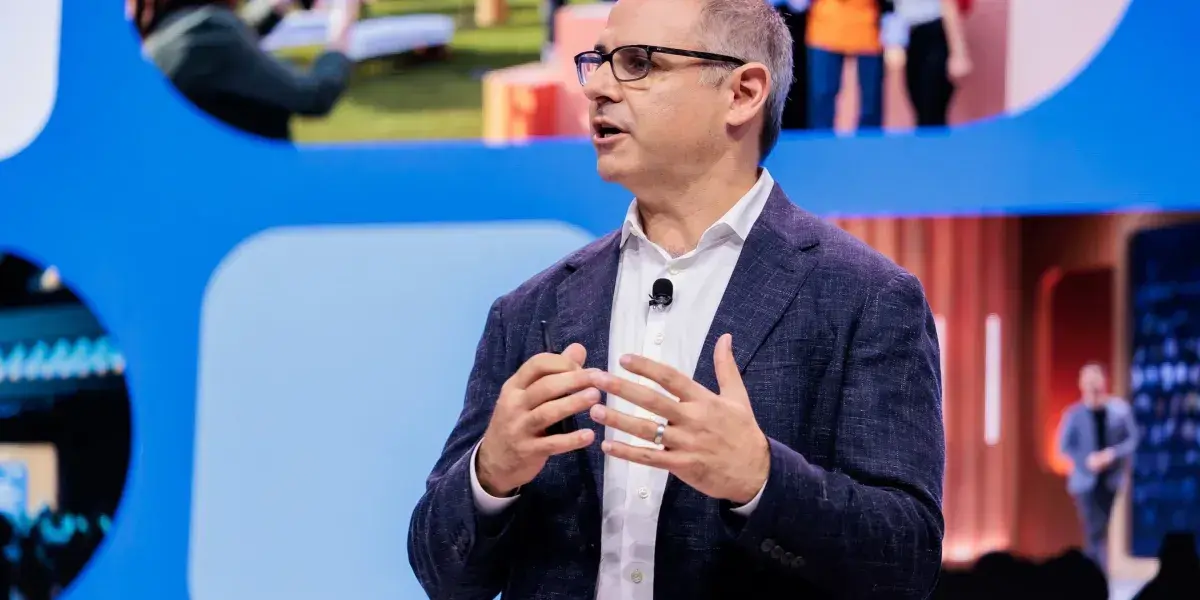
AI in recruitment has reached a tipping point. Michael Kienle, global vice-president for talent acquisition at L'Oréal, recently discovered a candidate simply repeating AI-generated answers during a video interview
1
. The deception was spotted because "the answers didn't come naturally," but the incident reflects a broader crisis in hiring. Companies are now establishing AI-free zones during job interviews, prioritizing human interaction and authenticity over efficiency as candidate fraud reaches alarming levels.L'Oréal has implemented a two-principle approach: no AI tools beyond basic transcription during interviews, and at least one face-to-face interview before any hire starts
1
. Kienle meets each of his 200-person team of recruiters and puts them through two years of recruiter training focused on detecting AI-assisted fraud. "If you have good recruiters, experienced recruiters, they do not ask the typical questions," he explains, emphasizing that authenticity matters more than polished responses.
Source: The Next Web
Deepfake Candidate Impersonation Becomes Systemic Risk
The problem extends far beyond candidates reading scripted answers. On March 24, Bengaluru-based InCruiter uncovered a sophisticated deepfake candidate attempt during a fintech hiring process
3
. An AI-generated avatar mimicked a real candidate's appearance and voice to bypass automated evaluation. InCruiter's deepfake detection system flagged subtle visual anomalies and behavioral inconsistencies, generating timestamped evidence that allowed the client to reject the application before it advanced further.A July 2025 Gartner survey of 3,000 job candidates found 6 per cent admitted to participating in interview fraud, either posing as someone else or having someone else pose as them
2
3
. Gartner warns that one in four candidate profiles worldwide will be fake by 2028. InCruiter reports that IT and tech account for roughly 60 per cent of deepfake fraud cases, followed by BFSI at 15 per cent, with fraudulent activity detected in 25-30 per cent of suspicious sessions3
.Gen Z Embraces AI Tools in Job Interviews Amid Dire Market
The class of 2025 graduated into the worst entry-level job market in five years. Unemployment among recent college graduates aged 22 to 27 climbed to 5.7 per cent by the end of 2025, according to the Federal Reserve Bank of New York, well above the 4.2 per cent national rate
2
. Underemployment hit 42.5 per cent, its highest level since 2020. The tech sector shed roughly 245,000 jobs in 2025, with another 59,000 lost in the first three months of 2026.Gen Z candidates are turning to startups like LockedIn AI and Final Round AI, which sell services combining real-time AI transcription with live human coaches who provide strategic guidance during virtual interviews
2
. The ethical debate centers on a specific inconsistency: Google's CEO Sundar Pichai disclosed that more than 30 per cent of the company's new code is now generated with AI assistance, yet candidates are expected to avoid AI tools in job interviews2
. For graduates told that AI fluency would define their careers, the restriction feels like a test of compliance rather than competence.Related Stories

Employers Struggle With Assessing True Skills
February data from Deel, an HR platform, showed more than 40 per cent of employers had extended probation periods as they were finding it harder to assess people's true skills during the application process
1
. Around three-quarters of surveyed senior HR leaders had noticed a steep rise in AI-generated submissions, and a similar proportion deemed CVs and cover letters less reliable than two years ago. "AI has widened the gap between how candidates present themselves and how they perform," says Matt Monette, UK&I lead at Deel.Accounting firm EY has trained more than 20,000 interviewers to "stress-test candidates' thinking," spotting answers that may have been prepared by generative AI without independent thought
1
. Irmgard Naudin ten Cate, global head of talent acquisition at EY, explains that recruiters can identify AI answers if they "probe correctly" by asking how candidates think, make decisions, and handle conflicts rather than what they've done. In-person interviews rose from 24 per cent in 2022 to 38 per cent in 2025, with 72 per cent of recruiting leaders now conducting at least one in-person stage specifically to combat AI-assisted fraud2
.Screening Tools and Identity Verification Under Pressure
The rise of automated screening tools and applicant tracking systems has created a vicious circle. Many candidates say they turned to AI partly in response to recruiters using it, as automated systems quickly reject applications with minimal human interaction
1
. This prompts jobseekers to send even more AI-generated submissions, overwhelming employers but providing little meaningful information to identify promising hires. Fifty-nine per cent of hiring managers suspect candidates of using AI to misrepresent themselves2
.
Source: CXOToday
The Association of Chartered Certified Accountants, the world's largest accounting body, announced it would require candidates to sit assessments in person, ending online exams that have run since the pandemic, as generative AI has made it harder to combat cheating
1
. Meanwhile, consultancy McKinsey is running a pilot that asks candidates to use its AI tool Lilli to analyze case studies, testing aptitude and judgment while embracing the technology1
. The distrust and complexity signal a fundamental shift: hiring systems optimized for efficiency are colliding with technologies optimized for imitation, forcing companies to choose between speed and authenticity in skills assessment.References
Summarized by

Navi
Related Stories
AI in Hiring Sparks Arms Race as Job Applications Surge 30% and Recruiters Struggle to Find Talent
30 Sept 2026•Business and Economy
Job seekers are walking away from AI interviews as transparency issues fuel candidate pushback
01 May 2026•Technology

The AI Revolution in Recruitment: Promises and Pitfalls
22 Sept 2025•Technology
Recent Highlights
1
Meta Unveils Muse Wonder Frontier AI Models, Claims Performance Matching OpenAI and Anthropic
Technology

2
IMF Report Warns AI Market Correction Could Spark Global Financial Crisis With $1.4T at Risk
Business and Economy

3
OpenAI Releases 722 AI-Generated Math Solutions, Triggering Existential Crisis in Mathematics
Technology

Recent Highlights
Today's Top Stories







Don’t drown in AI news. We cut through the noise - filtering, ranking and summarizing the most important AI news, breakthroughs and research daily. Follow topics that matter to you and stay ahead.


