Elon Musk claims Tesla will develop AGI first as sales drop 9% and skepticism mounts


5 Sources
5 Sources
[1]
Musk claims Tesla will 'make AGI' after years of wrong AI predictions
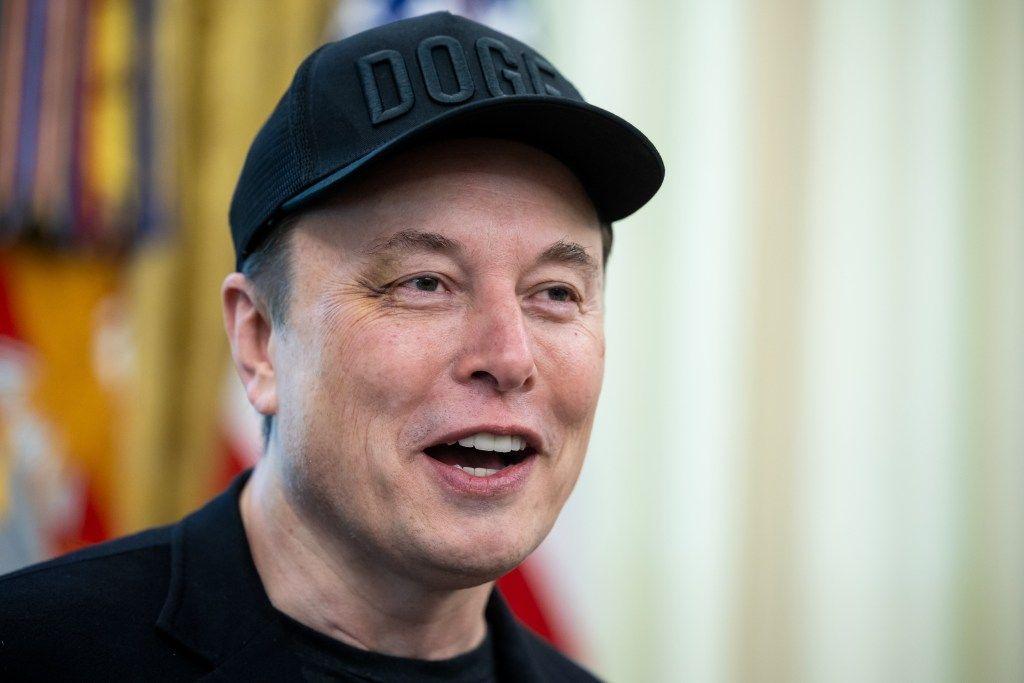
Elon Musk declared today that Tesla will be "one of the companies to make AGI" and "probably the first to make it in humanoid/atom-shaping form." It's the latest in a long string of grand AI predictions from the Tesla CEO. The problem is that Musk has been making similar claims about AI breakthroughs for years, and he has been wrong every single time. Now, with Tesla's sales declining for a second consecutive year and earnings crashing, this looks like yet another attempt to attach Tesla to the AI hype cycle. Musk's relationship with AI timelines follows a predictable pattern: make a bold prediction, miss it, then quietly push the goalpost forward. In 2023, Musk claimed that Tesla cars had "a mind" and that the company had figured out "some aspects of AGI." In 2024, he predicted AGI would arrive by 2025. When 2025 came and went without AGI, he pushed the timeline to 2026. Earlier this year, he declared that "we have entered the Singularity" and that "2026 is the year of the Singularity." Now, he's claiming Tesla specifically will be among the first companies to develop AGI -- in "humanoid/atom-shaping form" through its Optimus robot program. This is the same playbook Musk has used with Tesla's self-driving promises. He first announced in 2016 that all Tesla vehicles had the hardware necessary for full self-driving. From 2019 through 2025, he claimed every single year that Tesla would deliver the capability by year's end. It never happened. As we documented in our year-end review, Musk's top 5 Tesla predictions for 2025 didn't happen. Tesla's "Robotaxi" fleet in Austin still consists of roughly 30 vehicles, most of which aren't in operation most of the time and still require safety monitors inside the cars. Even on hardware, the promises don't hold up. In November 2025, Musk was hyping Tesla's 8th generation AI chip while he still hadn't delivered on the self-driving promises made for the 3rd generation chip. In January 2026, he said the AI5 chip design was "almost done" -- six months after claiming it was "finished". While Musk talks about AGI and the Singularity, Tesla's actual business is deteriorating. Tesla delivered 1.63 million vehicles in 2025, a 9% decline from 2024 -- marking the second consecutive year of falling deliveries. Revenue declined roughly 3% to $94.8 billion, the first year-over-year revenue drop in the company's history. Earnings per share fell an estimated 33% from the prior year. In Q1 2025, Tesla missed big on already terrible expectations, with profits dropping 71%. In Q2, earnings were down 23%. By the end of 2025, the decline in sales was confirmed to be accelerating. Meanwhile, BYD delivered 2.26 million EVs in 2025, overtaking Tesla as the world's largest EV maker. Tesla's market share is eroding in Europe -- with sales plunging 48% in Germany and 40% in France -- and in China, where domestic competitors continue to gain ground. Despite all of this, Tesla's stock still trades at a massive premium over every other automaker, with a market capitalization of roughly $1.5 trillion. That valuation is entirely predicated on the idea that Tesla is not a car company but an AI and robotics company. It's the narrative Musk needs to maintain at all costs. The AGI claim is also complicated by Musk's own actions. For years, he sold Tesla investors on the promise that the automaker would be the world's leading real-world AI company. But then he founded xAI, a private AI company he controls, and began shifting AI resources and talent away from Tesla. Tesla investors sued Musk for breach of fiduciary duty, alleging he used Tesla's resources and reputation to build xAI's infrastructure. As we reported, xAI has told its own investors it will build the AI for Tesla's Optimus robot -- meaning the AI that is supposed to justify Tesla's premium valuation may not even be developed in-house. Just yesterday, we covered how Musk's xAI data center is undoing Tesla's climate work -- all in the name of AI. It's a tangled web of conflicts. This is Elon Musk's desperate attempt to attach Tesla to the AI bubble -- a bubble that Tesla shareholders haven't really enjoyed, given that the stock has mostly traded sideways over the past three years when you account for the volatility. We've been tracking Musk's AI and self-driving promises for years, and the pattern is unmistakable. He makes a bold prediction, the deadline passes, and he moves on to the next thing. In 2023, it was "Tesla cars have a mind." In 2024, it was "AGI by 2025." In 2025, it was the Singularity. Now it's Tesla making AGI in "atom-shaping form" -- whatever that means. As Tesla's sales decline, revenue drops for the first time ever, and earnings crash, Musk is always looking for the next shiny object for investors to focus on. Robotaxis didn't materialize. Optimus can't reliably serve popcorn. The vague AI promises in Master Plan Part 4 haven't translated into products. So now it's AGI. The uncomfortable truth is that there is no consensus in the AI research community on when, or even if, AGI will be achieved in the near term. There's not even a clear, agreed-upon definition of what AGI means. But Musk keeps making these declarations with unearned certainty, and the financial media keeps amplifying them, because it's good for clicks and good for Tesla's stock price, at least temporarily. Tesla shareholders would be better served if Musk focused on reversing the company's sales decline and building competitive vehicles instead of posting about the Singularity on X.
[2]
Elon Musk says Tesla will be the first to develop AGI - The Economic Times
Elon Musk has claimed that his electric vehicle firm Tesla will be among the first to build artificial general intelligence (AGI), and "probably the first to make it in humanoid / atom-shaping form," in a new post on X. Musk deems Tesla's work on its Optimus humanoid robot and manufacturing systems as a way not just to advanced automation, but to physically embodied AGI that can manipulate the real world with high precision. AGI refers to AI systems that can perform a wide range of intellectual tasks at or beyond human level, rather than being limited to specific, narrow applications such as chatbots or image generators. This has become a major battle between big AI labs such as OpenAI, Google DeepMind, Anthropic, and xAI, who are jostling for supremacy in more general-purpose machine intelligence. Meta is seeking to reach something more personal, which it calls "Super Intelligence", where the technology uniquely knows the user. Many frontier LLMs and agents today demonstrate impressive performance in different aspects. However, several experts and academic reviews still consider AGI hypothetical or a future possibility as these systems lack robust autonomy, grounded understanding of the physical world, consistent long‑term planning, and reliable self‑improvement without human oversight. Top industry leaders have offered differing views on when AGI might arrive. OpenAI chief executive Sam Altman has said he expects AGI to be developed within the current US presidential term. He has also said AGI is "a very sloppy term", warning that powerful systems need strong governance. At the India AI Impact Summit in February, DeepMind CEO Demis Hassabis said AGI could be here in five to seven years. He said it could have "ten times the impact of the Industrial Revolution, probably at ten times the speed of anything else". However, he added, "it's still to be written how we can make that beneficial for the whole world".
[3]
Elon Musk: Tesla's Robots Could Be The First 'Atom-Shaping' AGI - Tesla (NASDAQ:TSLA)
Tesla, Inc. (NASDAQ:TSLA) CEO Elon Musk continues to raise the stakes on his AI vision, arguing that Tesla could be among the first companies to create artificial general intelligence -- and to embody it in humanoid robots. Elon Musk's Claim In an early morning post on X, he said Tesla will be one of the firms to make AGI and "probably the first to make it in humanoid/atom-shaping form," expressing his view of the company as a front‑runner in the race for human‑level AI. AGI, or artificial general intelligence, refers to systems that can perform most intellectual tasks a human can, across domains like reasoning, planning and learning, instead of being confined to a narrow use case such as driving or language. Musk's claim puts Tesla in the same competitive arena as dedicated AI labs like OpenAI and Google DeepMind, despite Tesla's public image as an EV automaker. He has pointed to the company's massive real‑world data from Autopilot and its Dojo supercomputer as strategic assets on the path to AGI. Tesla's Edge Rather than imagining AGI as a purely cloud‑based digital mind, Musk envisions embodied intelligence: robots and advanced manufacturing platforms that can "shape atoms" by assembling, welding or handling objects with human‑like dexterity, and eventually, finer‑grained control. Musk continues to promote Tesla not only as an EV and energy company, but as a platform for general‑purpose humanoid robots and AI systems that act directly on the physical world. Photo: Shutterstock This content was partially produced with the help of AI tools and was reviewed and published by Benzinga editors. Market News and Data brought to you by Benzinga APIs To add Benzinga News as your preferred source on Google, click here.
[4]
Elon Musk Says Tesla's Robots Could One Day Reach AGI-Level Intelligence | PYMNTS.com
By completing this form, you agree to receive marketing communications from PYMNTS and to the sharing of your information with our sponsor, if applicable, in accordance with our Privacy Policy and Terms and Conditions. Musk on X said that Tesla will be one of the companies to develop AGI, and "probably the first to make it in humanoid/atom-shaping form." AGI is generally defined as a form of AI capable of performing most intellectual tasks at human-level or beyond. Musk's comments come as Tesla continues developing its Optimus humanoid robot program, which the company is framing as part of its broader AI strategy. Tesla is expected to introduce Optimus Gen 3 in the first quarter of 2026. The upcoming model is designed as the first version intended for large-scale manufacturing rather than demonstration purposes, according to the Seeking Alpha report. The robot is expected to perform industrial and household tasks using software derived from Tesla's full self-driving AI stack. Early deployments will likely occur inside Tesla factories, where the company can collect operational data and refine both hardware and machine-learning systems in a controlled environment. Morgan Stanley analyst Adam Jonas said the next-generation Optimus could differ substantially from earlier prototypes and may even be simpler than expected as Tesla prioritizes manufacturability and reliability. Musk has previously suggested that if the technology matures, production of the humanoid robot could scale quickly, potentially reaching about 1 million units per year. Humanoid robotics remains an emerging sector despite increasing investment from technology companies and manufacturers seeking to combine advances in AI models with physical automation. Tesla has positioned Optimus as part of a broader effort to expand beyond electric vehicles into AI, autonomy and robotics. The company has argued that combining large-scale machine learning systems with robotics hardware could eventually produce machines capable of performing a wide range of physical tasks. Still, significant technical hurdles remain across the robotics industry, including improving dexterity, reliability and real-world efficiency. As PYMNTS reported, many humanoid robots still struggle to deliver consistent productivity gains in workplace environments, highlighting the gap between technological ambition and practical deployment. Workers attitudes toward robotics and automation also remain mixed. PYMNTS Intelligence research found that workers in sectors such as logistics and manufacturing are often less concerned about robots replacing their jobs than office professionals, suggesting perceptions of automation risk vary widely across industries. Musk has nevertheless emphasized that humanoid robots and autonomous vehicles could become key drivers of the company's future growth.
[5]
Elon Musk Says Tesla Will Be One Of The Companies To Develop AGI, Reaffirms Humanoid Robot Ambitions: 'Probably The First To...' - Tesla (NASDAQ:TSLA)
Tesla Inc. (NASDAQ:TSLA) CEO Elon Musk has shared bullish sentiments on the automaker's AI and robotics efforts, predicting that it will be one of the companies to develop Artificial General Intelligence (AGI). In a post on the social media platform X on Wednesday, the billionaire shared that he was confident in Tesla's AI efforts. "Tesla will be one of the companies to make AGI and probably the first to make it in humanoid/atom-shaping form," Musk said in the post. Google's AI Leader Bullish On AGI "It's going to be something like ten times the impact of the Industrial Revolution, but happening at ten times the speed," Hassabis said at the India AI Impact Summit 2026. Tesla's Robotics Push The prediction follows the CEO expressing his belief that the company's Optimus Humanoid Robot can become the first-ever von Neumann probe and help humanity colonize other planets. Tesla will instead utilize the Fremont, California, facility, where the premium models were produced, for Optimus production, targeting 1 million units per year for the robot. Musk has also touted developing an "Optimus Academy" to train the robot using Tesla's reality generator used to train the company's Full Self-Driving (FSD) system used in its vehicles. Tesla's In-House Chip A clean room is a highly-controlled environment in chip foundries that lets in ultra-low amounts of airborne particles, humidity, or other things that can potentially contaminate chipsets. Benzinga Edge Rankings show that Tesla scores well on the Momentum metric and offers a favorable price trend in the Long Term. Price Action: TSLA slipped 2.98% to $392.43 at market close on Tuesday, but gained 1.20% to $397.15 during pre-market trading on Wednesday. Check out more of Benzinga's Future Of Mobility coverage by following this link. Image via Shutterstock Market News and Data brought to you by Benzinga APIs To add Benzinga News as your preferred source on Google, click here.
Share
Share
Copy Link
Elon Musk declared Tesla will be among the first to create Artificial General Intelligence in humanoid form through its Optimus robot program. The bold prediction comes as Tesla faces its second consecutive year of declining deliveries and mounting scrutiny over Musk's history of missed AI timelines, from self-driving promises to AGI forecasts that repeatedly shift forward.
Elon Musk Positions Tesla as AGI Frontrunner
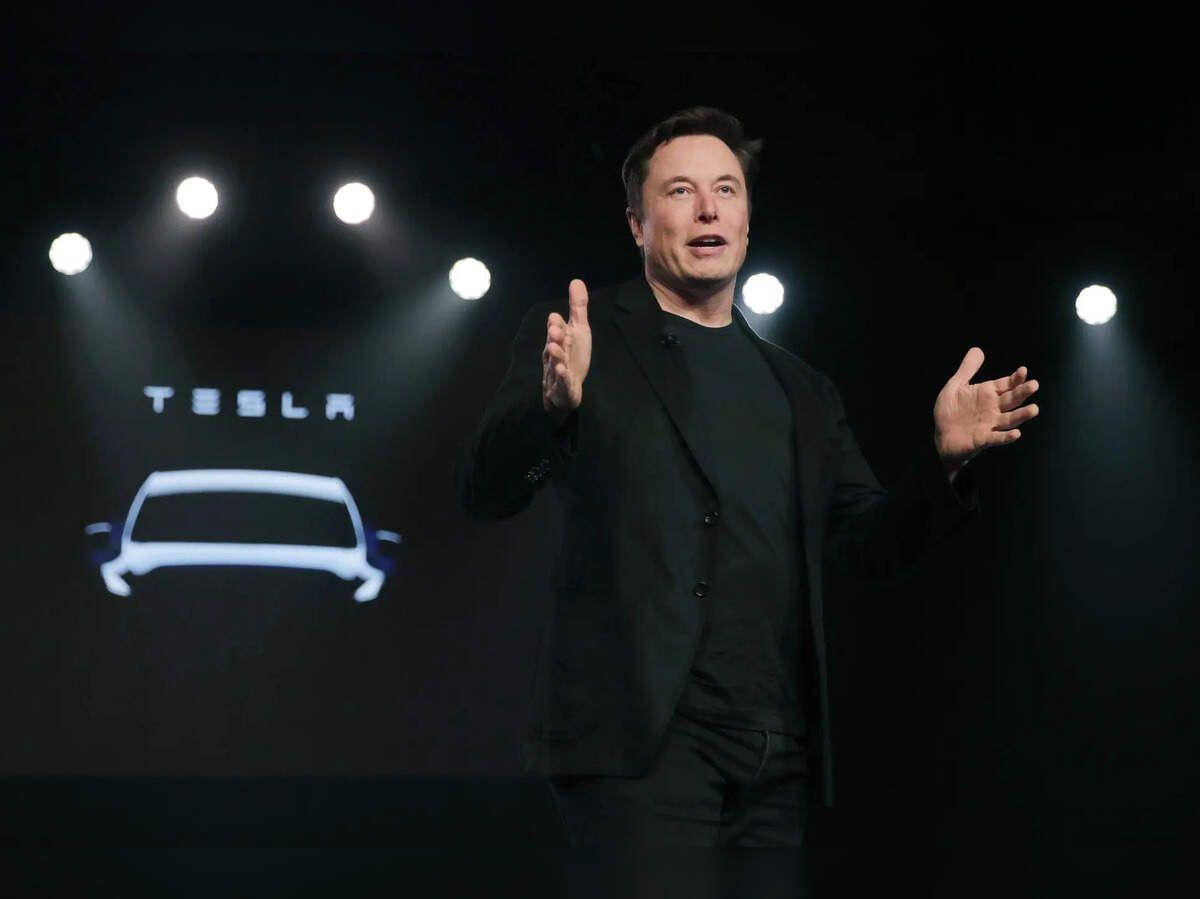
Elon Musk declared that Tesla will be "one of the companies to make AGI" and "probably the first to make it in humanoid/atom-shaping form" in a post on X
1
. The claim positions the electric vehicle maker directly against dedicated AI labs like OpenAI, Google DeepMind, and Anthropic in the race toward Artificial General Intelligence—AI systems capable of performing most intellectual tasks at or beyond human level . Musk's vision centers on embodied intelligence through Tesla's Optimus robot program and advanced manufacturing systems that can manipulate the physical world with precision3
.
Source: ET
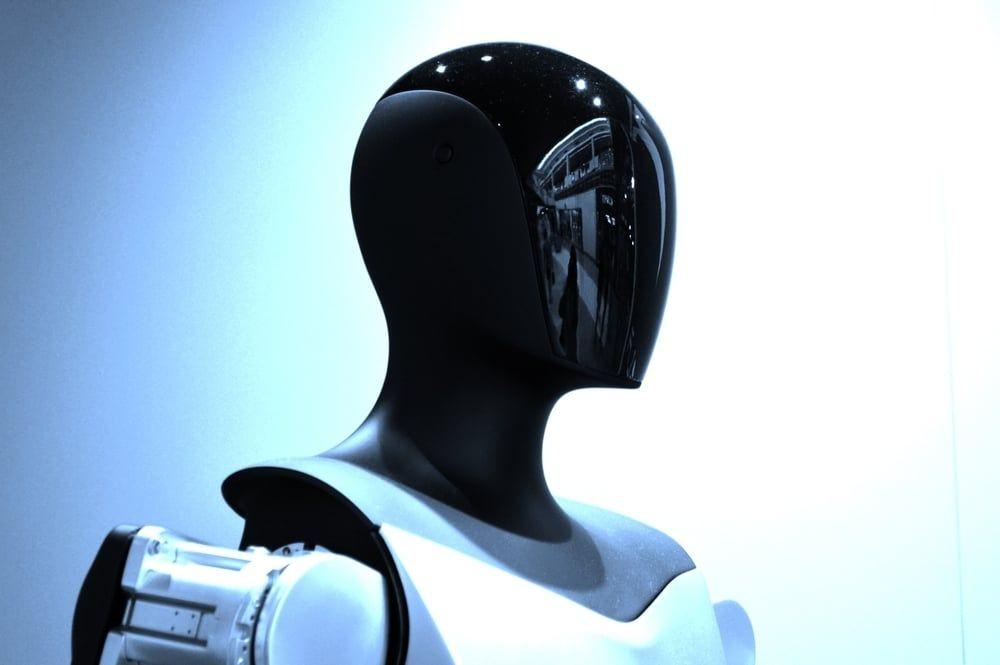
Rather than imagining AGI as purely cloud-based machine intelligence, Musk envisions atom-shaping AGI: robots that can assemble, weld, or handle objects with human-like dexterity and eventually achieve finer-grained control
3
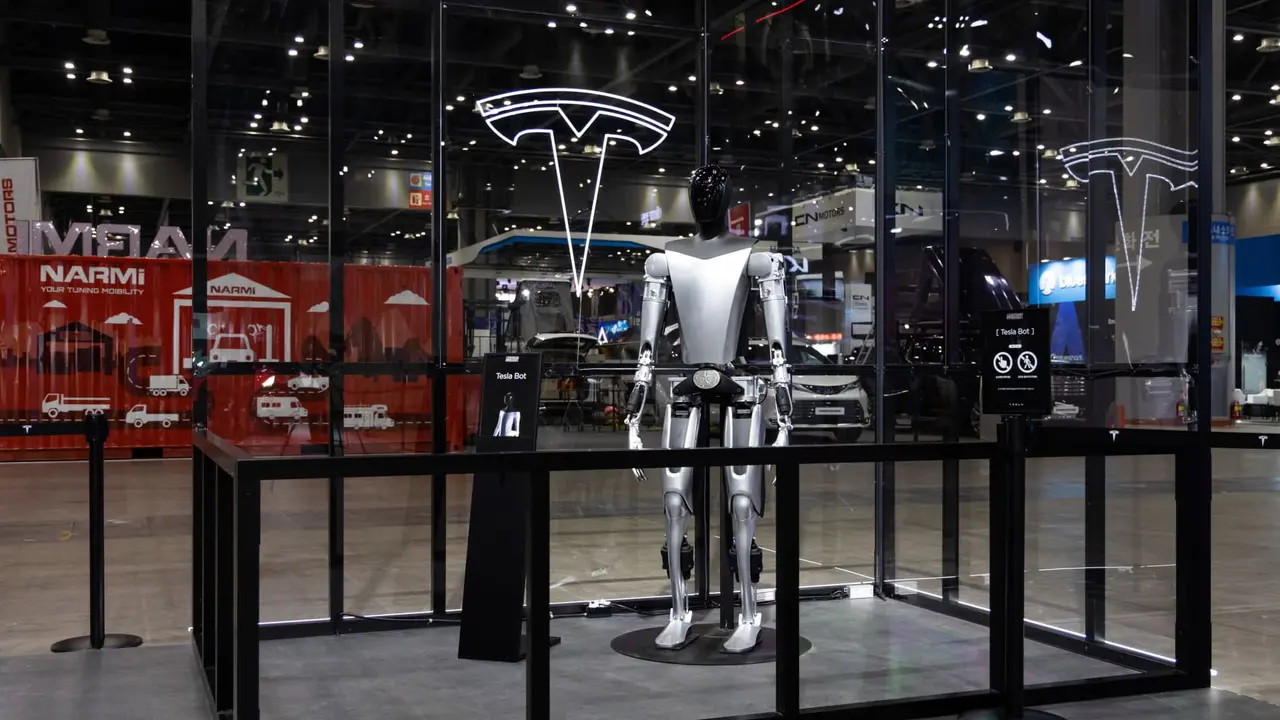
. Tesla is expected to introduce Optimus Gen 3 in the first quarter of 2026, designed as the first version intended for large-scale manufacturing rather than demonstration purposes4
. The humanoid robot will perform industrial and household tasks using software derived from Tesla's Full Self-Driving (FSD) AI stack, with early deployments likely inside Tesla factories where the company can collect operational data4
.
Source: Benzinga
Pattern of Missed Predictions Raises Questions
Musk's AI predictions follow a predictable pattern: bold claims followed by missed deadlines and quietly shifted goalposts
1
. In 2023, Musk claimed Tesla cars had "a mind" and that the company had figured out "some aspects of AGI." In 2024, he predicted AGI would arrive by 2025. When 2025 passed without AGI, he pushed the timeline to 2026 and declared "we have entered the Singularity"1
. This mirrors his self-driving AI promises: he announced in 2016 that all Tesla vehicles had the hardware necessary for full autonomy, then claimed every year from 2019 through 2025 that the capability would arrive by year's end1
.Tesla's Robotaxi fleet in Austin still consists of roughly 30 vehicles, most not in operation most of the time and still requiring safety monitors inside the cars
1
. Even on hardware, Musk was hyping Tesla's 8th generation AI chip in November 2025 while still not delivering on self-driving promises made for the 3rd generation chip. In January 2026, he said the AI5 chip design was "almost done"—six months after claiming it was "finished"1
.Tesla's Business Faces Mounting Pressure
While Musk discusses AGI and general-purpose robotics, Tesla's core business shows signs of strain. Tesla delivered 1.63 million vehicles in 2025, a 9% decline from 2024—marking the second consecutive year of falling deliveries
1
. Revenue declined roughly 3% to $94.8 billion, the first year-over-year revenue drop in the company's history. Earnings per share fell an estimated 33% from the prior year1
. In Q1 2025, profits dropped 71%, while Q2 saw earnings down 23%1
.BYD delivered 2.26 million EVs in 2025, overtaking Tesla as the world's largest EV maker
1
. Tesla's market share eroded in Europe—with sales plunging 48% in Germany and 40% in France—and in China, where domestic competitors continue gaining ground1
. Despite this, Tesla maintains a market capitalization of roughly $1.5 trillion, a premium valuation entirely predicated on the idea that Tesla is an AI and robotics company rather than an automaker1
.xAI Complicates Tesla's AI Narrative
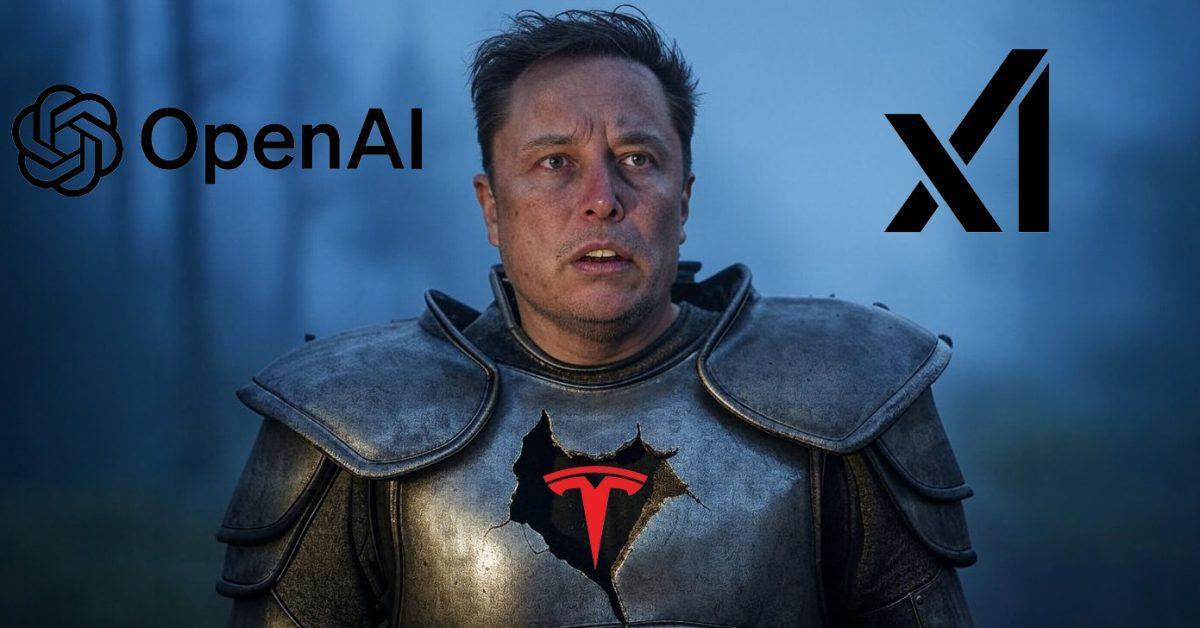
Musk's AGI claim is complicated by his actions with xAI, a private AI company he controls
1
. Tesla investors sued Musk for breach of fiduciary duty, alleging he used Tesla's resources and reputation to build xAI's infrastructure. xAI has told its own investors it will build the AI for Tesla's Optimus robot—meaning the AI that is supposed to justify Tesla's premium valuation may not even be developed in-house1
.
Source: Electrek
Related Stories


Industry Leaders Offer Varying AGI Timelines
OpenAI chief executive Sam Altman expects AGI to be developed within the current US presidential term, though he called AGI "a very sloppy term" and warned that powerful systems need strong governance . At the India AI Impact Summit in February, DeepMind CEO Demis Hassabis said AGI could arrive in five to seven years and could have "ten times the impact of the Industrial Revolution, probably at ten times the speed" . However, several experts and academic reviews still consider AGI hypothetical as current systems lack robust autonomy, grounded understanding of the physical world, consistent long-term planning, and reliable self-improvement without human oversight .
Robotics Challenges Remain Significant
Musk has suggested that if the technology matures, production of the humanoid robot could scale quickly, potentially reaching about 1 million units per year
4
. Tesla plans to utilize its Fremont, California facility for Optimus production, targeting this ambitious output5
. Musk has touted developing an "Optimus Academy" to train the robot using Tesla's reality generator used to train the company's FSD system5
.Yet significant technical hurdles remain across the robotics industry, including improving dexterity, reliability, and real-world efficiency
4
. Many humanoid robots still struggle to deliver consistent productivity gains in workplace environments, highlighting the gap between technological ambition and practical deployment4
. Morgan Stanley analyst Adam Jonas suggested the next-generation Optimus could differ substantially from earlier prototypes and may even be simpler than expected as Tesla prioritizes manufacturability and reliability4
. Musk has pointed to the company's massive real-world data from Autopilot and its Dojo supercomputer as strategic assets on the path to AGI3
. The CEO has also expressed belief that the Optimus robot can become the first-ever von Neumann probe and help humanity colonize other planets5
.References
Summarized by

Navi
Related Stories
Recent Highlights


Recent Highlights
Today's Top Stories








Your Daily Dose of Curated AI News
Don’t drown in AI news. We cut through the noise - filtering, ranking and summarizing the most important AI news, breakthroughs and research daily. Spend less time searching for the latest in AI and get straight to action.

