Federal Reserve struggles to predict AI's impact on jobs and inflation as divide emerges


4 Sources
4 Sources
[1]
Fed races to adapt to AI promises and pitfalls for jobs, inflation
WASHINGTON, March 2 (Reuters) - U.S. Federal Reserve officials who have largely accepted that artificial intelligence will lead to dramatic shifts in the economy are now struggling to understand the pace and extent of what's to come, with a divide emerging over its potential to impact the labor market and prices. The announcement by tech firm Block on Thursday that it would shed 40% of its workers, roughly 4,000 people, because "something has changed" in how it uses labor due to AI, highlighted the stakes. Rising layoffs would traditionally lean central bankers towards looser monetary policy. The AI transition, though, has raised a different response, with officials saying higher unemployment rates may be par for the course ahead, with displaced workers taking longer to find new jobs and the higher capital returns and wages for those still working keeping upward pressure on inflation. "We're in the part of the cycle where this is a positive, real shock, but most of it is in the form of positive real income and very little disinflation," with stock gains padding some households' wealth, and massive capital investment straining electricity and building costs in some areas, Adam Posen, president of the Peterson Institute for International Economics,said in a discussion about inflation, opens new tab, estimating U.S. price pressures would build from here. Those seeing AI as a near-term disinflationary force "have got it exactly wrong." WARSH READY TO BANK ON AI DISINFLATION? That group includes Fed chair nominee Kevin Warsh, who feels interest rates should fall in part to account for AI-driven productivity gains holding down inflation. Warsh, who must still be formally nominated and confirmed by the Senate, argued in a November Wall Street Journal op-ed that AI is "a significant disinflationary force, increasing productivity and bolstering American competitiveness," and could be best accommodated by the Fed with lower rates. Warsh's narrative, which he casts as a forward-looking stance similar to former Fed Chair Alan Greenspan's in the mid-1990s, has been met by growing caution among Fed policymakers about how fast AI will translate into staffing practices and whether the historical rule of thumb will hold that new technologies displace jobs but ultimately create even more. Citrini Research's thought exercise last week, opens new tab, warning of a jobs apocalypse, triggered a brief but significant stock selloff, a sign of how unsettled investors and perhaps the wider public have become about AI. The announcement by Block, owner of fintech services Square and Cash App, seemed to show its disruptive potential: Unlike prior automation developments that mostly impacted blue-collar production jobs, AI may be suited to do white-collar tasks like coding or data analysis. Coding assistants might well improve employee productivity, but Block CEO Jack Dorsey said AI "paired with smaller and flatter teams, are enabling a new way of working which fundamentally changes what it means to build and run a company. And that's accelerating rapidly." A growing body of research has consistently concluded that AI can perform a wide variety of tasks, including many in the knowledge sectors that have been a focus for high schools, colleges and local chambers of commerce wanting to future-proof the labor force. A 2024 paper by Brookings Institution analysts found more than 30% of U.S. workers, opens new tab could see half of their job tasks "disrupted," percentages that have likely grown. FED EFFORTS GATHERING STEAM The Fed is trying to keep pace. An AI-driven count of Fed research articles and policymaker speeches about AI, machine learning and related topics shows few before ChatGPT's release in late 2022. That rose to five in 2023, around 17 last year, and 14 already this year, a much faster pace. Minutes of the Fed's January meeting showed a fulsome discussion of productivity and AI, including what it might mean for monetary policy, and at least five policymakers spoke on the topic last month. As a group, they are far from banking on AI as a reason to cut rates anytime soon. They agree productivity seems to be moving higher, but aren't ready to credit AI as opposed to more mundane efficiencies achieved during pandemic-era labor shortages. Even if the "baton" of productivity is now being passed, policymakers seem to be leaning toward a view that AI will cause structurally higher unemployment, not easily offset by lowering rates without risking higher inflation. Underpinning the Fed's framework is a long-run "natural" unemployment rate, currently thought to be around 4.2%, below which inflation pressures build. "If AI continues to raise productivity, economic growth could remain strong, even as churn in the labor market leads to an increase in unemployment. In a productivity boom such as this, a rise in unemployment may not indicate increased slack. As such, our normal demand-side monetary policy may not be able to ameliorate an AI-caused unemployment spell without also increasing inflationary pressure," Fed Governor Lisa Cook said last month, opens new tab, remarks echoed by several colleagues. The issue is hardly settled. Evercore ISI Vice Chair Krishna Guha sees a loss of worker bargaining power as a reason why the natural unemployment rate will fall as employees become willing to stay in jobs and accept lower wage increases, putting downward pressure on inflation - an argument that reaches conclusions similar to those of Warsh in terms of cutting interest rates but for somewhat different reasons. But the public comments from Fed officials have painted a more complex picture: jobs under pressure for some workers, new productive potential for others, wealth gains fueling consumption in some households, resource constraints during the AI buildout, and high expected investment returns likely to raise underlying interest rates. "There are lots of forecasts about both the rollout of AI, the effectiveness of AI, the energy efficiency of AI, the labor market implications of AI, and the only thing you know for sure is those forecasts are going to be wrong," Richmond Fed President Tom Barkin said last week. "Whether they are going to be too optimistic or too pessimistic you'll have to sort out as you go." Reporting by Howard Schneider; Editing by Dan Burns and Andrea Ricci Our Standards: The Thomson Reuters Trust Principles., opens new tab * Suggested Topics: * Artificial Intelligence Howard Schneider Thomson Reuters Covers the U.S. Federal Reserve, monetary policy and the economy, a graduate of the University of Maryland and Johns Hopkins University with previous experience as a foreign correspondent, economics reporter and on the local staff of the Washington Post.
[2]
Fed's Waller says central bank deploying AI tech cautiously
Feb 24 (Reuters) - Federal Reserve Governor Christopher Waller said Tuesday the U.S. central bank is carefully moving to adopt artificial intelligence technology in a system-wide approach. "We cannot approach AI casually," and "as a central bank, we hold ourselves to a high standard" when using the technology, Waller said at a conference held by the Federal Reserve Bank of Boston. For the Fed and AI usage, "that means clear guardrails on how and where it's used, strong information-security controls, rigorous model validation, human accountability for decisions, and ongoing evaluation as the technology evolves," with innovation and risk management standing together as complementary priorities, the Fed official said. Waller did not comment on the economic and monetary policy outlook in his prepared remarks. Waller said that despite the Fed being a highly decentralized organization, it is taking a more unified approach to implementing AI technology. "We're moving as one system, with shared direction and alignment," Waller said. And in terms of deciding what to deploy the technology for, "we start with the problem to be solved and the business need, then apply the right capability" from the suite of available AI technology. Reporting by Michael S. Derby; Editing by Chizu Nomiyama Our Standards: The Thomson Reuters Trust Principles., opens new tab
[3]
Federal Reserve Powers Internal Operations With New General-Purpose AI | PYMNTS.com
By completing this form, you agree to receive marketing communications from PYMNTS and to the sharing of your information with our sponsor, if applicable, in accordance with our Privacy Policy and Terms and Conditions. In a speech delivered at the Federal Reserve Bank of Boston 2026 Technology-Enabled Disruption Conference in Boston, Waller said the Fed built an "innovation practice" that encompasses the entire Federal Reserve System so that technologies can be tested and implemented more efficiently than if that work were to be done at each of its banks. In the case of AI, the Fed developed a general-purpose AI platform to be used by all Reserve bank employees. "Our approach is intentionally business-led and AI-enabled," Waller said. "We start with the problem to be solved and the business need, then apply the right capability from across the AI stack. That discipline helps us deliver real business value while avoiding unnecessary complexity and cost." With the general-purpose AI for all employees, the Fed aims to provide a digital assistant that can do things such as drafting, summarizing and analyzing information so employees can focus on higher value activities. In practice, Fed staff use this tool for tasks such as generating key themes from background materials ahead of a meeting and summarizing and prioritizing emails and documents that arrived while they were on vacation. "In both cases, the tool handles the volume and the first pass," Waller said. "The human makes the decisions." Another key focus of the Fed's deployment of AI is in software development. Coding assistants accelerate many of the tasks involved in software development, enabling developers to focus on the security and quality that are critical for an institution like the Federal Reserve. "At the Fed, we're already seeing strong early uptake -- with hundreds of developers adopting these tools quickly -- which tells us this capability is meeting a real need," Waller said. The third focus of the Fed's initiative is embedding AI into existing platforms rather than asking teams to adopt entirely new tools. This enables the Fed to make improvements without creating fragmented solutions. "Given how quickly the technology is evolving, consuming AI through vendor platforms allows us to benefit from ongoing improvements, rather than building and maintaining tools that can become costly and stable," Waller said. Waller delivered his remarks on the same day Federal Reserve Governor Lisa Cook said in a speech that rapid advances in AI could pose new challenges for the central bank's traditional tools as it fundamentally reshapes the U.S. economy. The PYMNTS Intelligence report "Agentic AI Breaks Out of the Sandbox" found that among chief product officers at U.S. enterprise level firms, as of November, 11.7% are already using agentic AI and another 11.7% are piloting/testing the technology. Three months earlier, in August, those figures stood at 1.7%.
[4]
Fed races to adapt to AI promises and pitfalls for jobs, inflation
WASHINGTON, March 2 (Reuters) - U.S. Federal Reserve officials who have largely accepted that artificial intelligence will lead to dramatic shifts in the economy are now struggling to understand the pace and extent of what's to come, with a divide emerging over its potential to impact the labor market and prices. The announcement by tech firm Block on Thursday that it would shed 40% of its workers, roughly 4,000 people, because "something has changed" in how it uses labor due to AI, highlighted the stakes. Rising layoffs would traditionally lean central bankers towards looser monetary policy. The AI transition, though, has raised a different response, with officials saying higher unemployment rates may be par for the course ahead, with displaced workers taking longer to find new jobs and the higher capital returns and wages for those still working keeping upward pressure on inflation. "We're in the part of the cycle where this is a positive, real shock, but most of it is in the form of positive real income and very little disinflation," with stock gains padding some households' wealth, and massive capital investment straining electricity and building costs in some areas, Adam Posen, president of the Peterson Institute for International Economics, said in a discussion about inflation, estimating U.S. price pressures would build from here. Those seeing AI as a near-term disinflationary force "have got it exactly wrong." WARSH READY TO BANK ON AI DISINFLATION? That group includes Fed chair nominee Kevin Warsh, who feels interest rates should fall in part to account for AI-driven productivity gains holding down inflation. Warsh, who must still be formally nominated and confirmed by the Senate, argued in a November Wall Street Journal op-ed that AI is "a significant disinflationary force, increasing productivity and bolstering American competitiveness," and could be best accommodated by the Fed with lower rates. Warsh's narrative, which he casts as a forward-looking stance similar to former Fed Chair Alan Greenspan's in the mid-1990s, has been met by growing caution among Fed policymakers about how fast AI will translate into staffing practices and whether the historical rule of thumb will hold that new technologies displace jobs but ultimately create even more. Citrini Research's thought exercise last week, warning of a jobs apocalypse, triggered a brief but significant stock selloff, a sign of how unsettled investors and perhaps the wider public have become about AI. The announcement by Block, owner of fintech services Square and Cash App, seemed to show its disruptive potential: Unlike prior automation developments that mostly impacted blue-collar production jobs, AI may be suited to do white-collar tasks like coding or data analysis. Coding assistants might well improve employee productivity, but Block CEO Jack Dorsey said AI "paired with smaller and flatter teams, are enabling a new way of working which fundamentally changes what it means to build and run a company. And that's accelerating rapidly." A growing body of research has consistently concluded that AI can perform a wide variety of tasks, including many in the knowledge sectors that have been a focus for high schools, colleges and local chambers of commerce wanting to future-proof the labor force. A 2024 paper by Brookings Institution analysts found more than 30% of U.S. workers could see half of their job tasks "disrupted," percentages that have likely grown. FED EFFORTS GATHERING STEAM The Fed is trying to keep pace. An AI-driven count of Fed research articles and policymaker speeches about AI, machine learning and related topics shows few before ChatGPT's release in late 2022. That rose to five in 2023, around 17 last year, and 14 already this year, a much faster pace. Minutes of the Fed's January meeting showed a fulsome discussion of productivity and AI, including what it might mean for monetary policy, and at least five policymakers spoke on the topic last month. As a group, they are far from banking on AI as a reason to cut rates anytime soon. They agree productivity seems to be moving higher, but aren't ready to credit AI as opposed to more mundane efficiencies achieved during pandemic-era labor shortages. Even if the "baton" of productivity is now being passed, policymakers seem to be leaning toward a view that AI will cause structurally higher unemployment, not easily offset by lowering rates without risking higher inflation. Underpinning the Fed's framework is a long-run "natural" unemployment rate, currently thought to be around 4.2%, below which inflation pressures build. "If AI continues to raise productivity, economic growth could remain strong, even as churn in the labor market leads to an increase in unemployment. In a productivity boom such as this, a rise in unemployment may not indicate increased slack. As such, our normal demand-side monetary policy may not be able to ameliorate an AI-caused unemployment spell without also increasing inflationary pressure," Fed Governor Lisa Cook said last month, remarks echoed by several colleagues. The issue is hardly settled. Evercore ISI Vice Chair Krishna Guha sees a loss of worker bargaining power as a reason why the natural unemployment rate will fall as employees become willing to stay in jobs and accept lower wage increases, putting downward pressure on inflation - an argument that reaches conclusions similar to those of Warsh in terms of cutting interest rates but for somewhat different reasons. But the public comments from Fed officials have painted a more complex picture: jobs under pressure for some workers, new productive potential for others, wealth gains fueling consumption in some households, resource constraints during the AI buildout, and high expected investment returns likely to raise underlying interest rates. "There are lots of forecasts about both the rollout of AI, the effectiveness of AI, the energy efficiency of AI, the labor market implications of AI, and the only thing you know for sure is those forecasts are going to be wrong," Richmond Fed President Tom Barkin said last week. "Whether they are going to be too optimistic or too pessimistic you'll have to sort out as you go." (Reporting by Howard Schneider; Editing by Dan Burns and Andrea Ricci )
Share
Share
Copy Link
Federal Reserve officials face mounting uncertainty over artificial intelligence's economic effects as Block announces 4,000 job cuts due to AI. While Fed chair nominee Kevin Warsh advocates for lower rates based on AI-driven productivity gains, other policymakers warn of structurally higher unemployment and inflation pressures. Meanwhile, the central bank cautiously deploys AI technology internally with strict guardrails.
Federal Reserve Confronts Uncertainty Over AI's Economic Impact
The Federal Reserve finds itself racing to understand artificial intelligence's sweeping effects on the economy, with officials increasingly divided over how the technology will reshape the labor market and prices
1
. The stakes became clearer when tech firm Block announced it would shed 40% of its workforce—roughly 4,000 people—because "something has changed" in how it uses labor due to AI1
. This announcement highlighted the urgent challenge facing policymakers who must balance traditional monetary policy tools against a technological shift that defies historical patterns.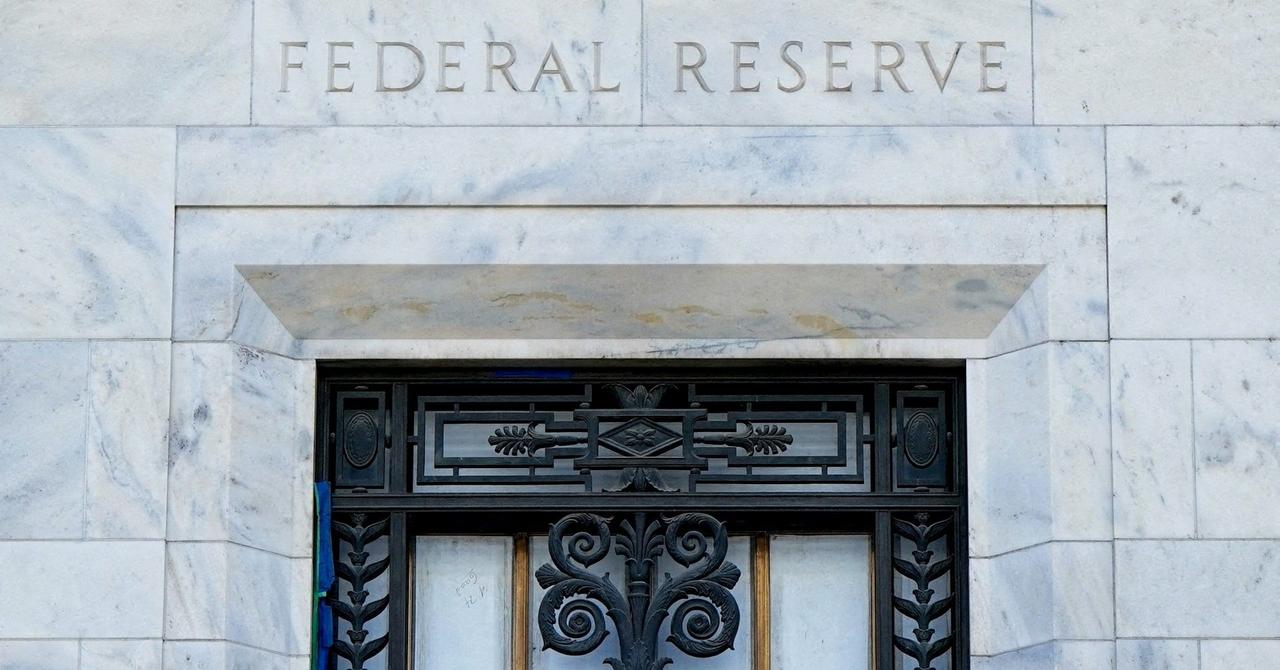
Source: Reuters
Unlike previous automation waves that primarily affected blue-collar production jobs, AI demonstrates capability to handle white-collar tasks like coding and data analysis
1
. Block CEO Jack Dorsey explained that AI "paired with smaller and flatter teams, are enabling a new way of working which fundamentally changes what it means to build and run a company. And that's accelerating rapidly"1
. A 2024 paper by Brookings Institution analysts found more than 30% of U.S. workers could see half of their job tasks "disrupted," percentages that have likely grown1
.Warsh and Posen Clash Over AI's Effect on Jobs and Inflation
Fed chair nominee Kevin Warsh believes interest rates should fall partly to account for AI-driven productivity gains holding down inflation
1
. In a November Wall Street Journal op-ed, Warsh argued that AI is "a significant disinflationary force, increasing productivity and bolstering American competitiveness," and could be best accommodated by the Federal Reserve with lower rates1
. He casts this as a forward-looking stance similar to former Fed Chair Alan Greenspan's approach in the mid-1990s.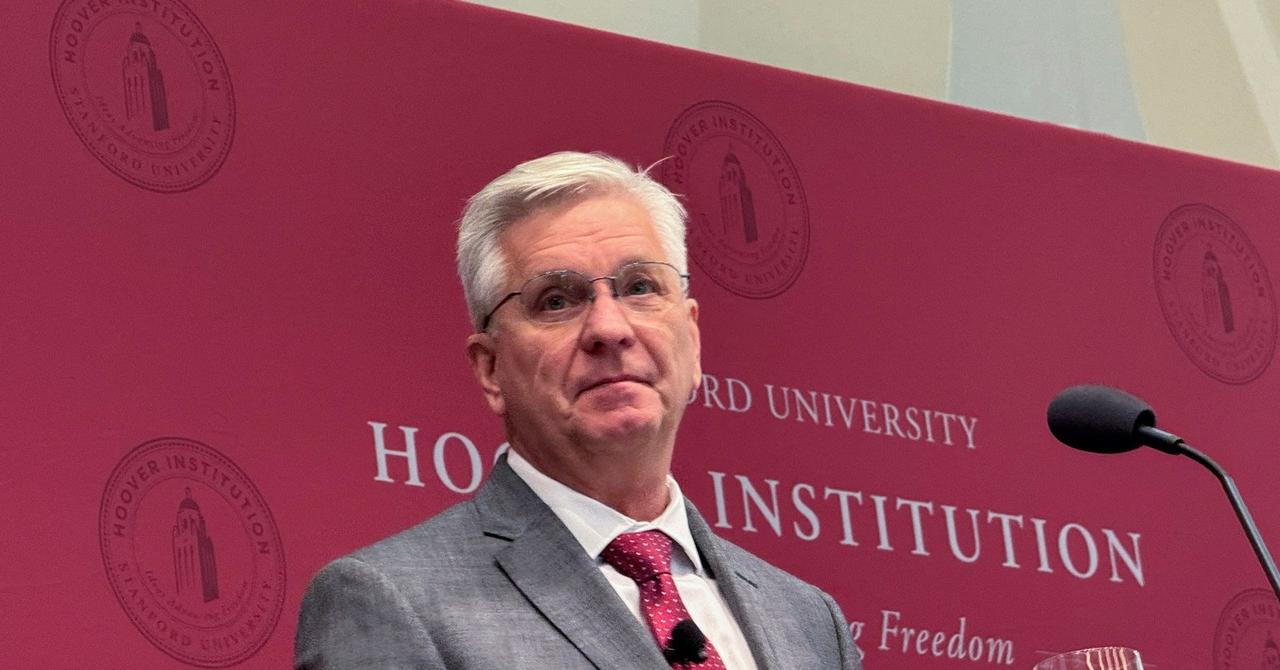
Source: Reuters
However, Adam Posen, president of the Peterson Institute for International Economics, directly challenges this view. "We're in the part of the cycle where this is a positive, real shock, but most of it is in the form of positive real income and very little disinflation," Posen said, noting that stock gains pad household wealth while massive capital investment strains electricity and building costs
1
. Those seeing AI as a near-term disinflationary force "have got it exactly wrong," he warned, estimating U.S. price pressures would build from here.Central Bank's Approach to AI Reveals Growing Caution on Monetary Policy
Fed policymakers are increasingly leaning toward a view that AI will cause structurally higher unemployment, not easily offset by lowering rates without risking higher inflation
1
. The economic impact of AI presents a unique challenge: rising layoffs would traditionally push central bankers toward looser monetary policy, but the AI transition has raised a different response. Officials suggest higher unemployment rates may be par for the course ahead, with displaced workers taking longer to find new jobs while higher capital returns and wages for those still working keep upward pressure on inflation1
.Underpinning the Fed's framework is a long-run "natural" unemployment rate, currently thought to be around 4.2%, below which inflation pressures build
1
. Minutes of the Fed's January meeting showed extensive discussion of productivity gains from AI and what it might mean for monetary policy, with at least five policymakers speaking on the topic in February alone1
. As a group, they remain far from banking on AI as a reason to cut rates anytime soon, though they agree productivity seems to be moving higher.Federal Reserve Implements Cautious AI Adoption With Strict Guardrails
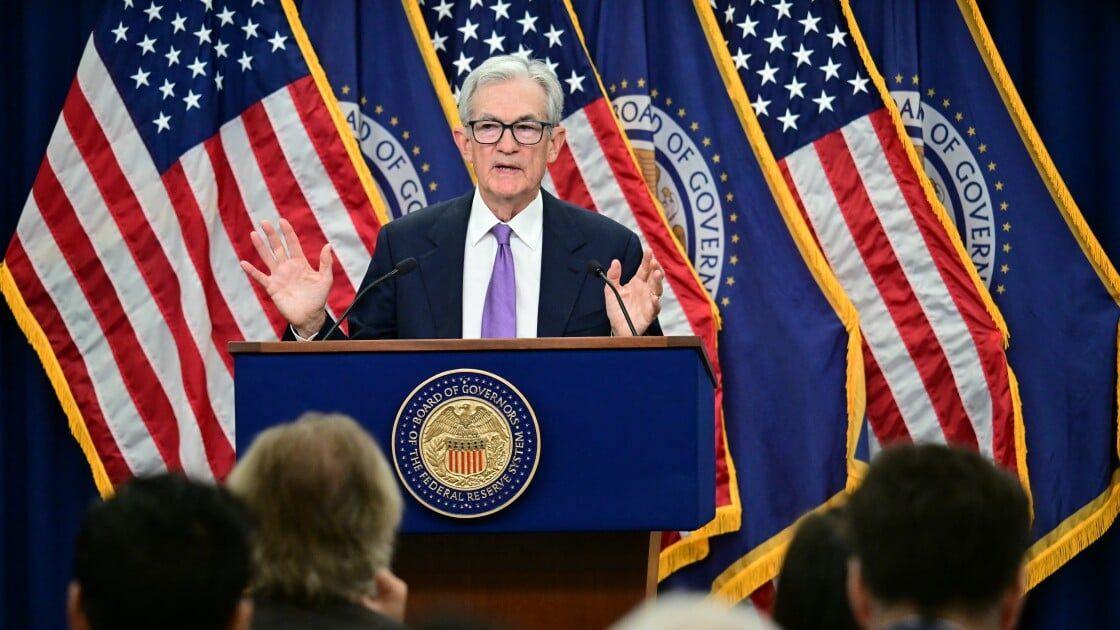
While grappling with AI's macroeconomic implications, the Federal Reserve is simultaneously deploying AI technology in internal operations with careful oversight. Federal Reserve Governor Christopher Waller emphasized that "we cannot approach AI casually" and "as a central bank, we hold ourselves to a high standard" when using the technology
2
. Speaking at the Federal Reserve Bank of Boston 2026 Technology-Enabled Disruption Conference, Waller outlined the central bank's commitment to risk management alongside innovation2
.
Source: PYMNTS
For the Fed and AI usage, "that means clear guardrails on how and where it's used, strong information-security controls, rigorous model validation, human accountability for decisions, and ongoing evaluation as the technology evolves," Waller said
2
. Despite being a highly decentralized organization, the central bank is taking a unified approach to AI technology deployment. "We're moving as one system, with shared direction and alignment," Waller explained2
.General-Purpose AI Platform Supports Federal Reserve Internal Operations
The Fed developed a general-purpose AI platform to be used by all Reserve bank employees, taking an intentionally business-led approach
3
. "We start with the problem to be solved and the business need, then apply the right capability from across the AI stack," Waller said3
. This discipline helps deliver real business value while avoiding unnecessary complexity and cost.The general-purpose AI serves as a digital assistant capable of drafting, summarizing and analyzing information so employees can focus on higher value activities
3
. Fed staff use this tool for generating key themes from background materials ahead of meetings and summarizing emails and documents that arrived during vacation. "In both cases, the tool handles the volume and the first pass. The human makes the decisions," Waller noted3
.Related Stories

Software Development and Embedded AI Drive Federal Reserve Innovation
Another key focus of AI technology deployment involves software development, where coding assistants accelerate many tasks and enable developers to focus on security and quality critical for an institution like the Federal Reserve
3
. "At the Fed, we're already seeing strong early uptake—with hundreds of developers adopting these tools quickly—which tells us this capability is meeting a real need," Waller said3
.The third focus involves embedding AI into existing platforms rather than asking teams to adopt entirely new tools, allowing improvements without creating fragmented solutions
3
. "Given how quickly the technology is evolving, consuming AI through vendor platforms allows us to benefit from ongoing improvements, rather than building and maintaining tools that can become costly and stable," Waller explained3
. Federal Reserve Governor Lisa Cook also warned that rapid advances in AI could pose new challenges for the central bank's traditional tools as it fundamentally reshapes the U.S. economy3
.Fed Research on AI Accelerates as Economic Growth Questions Mount
The Federal Reserve's research efforts have accelerated dramatically since ChatGPT's release in late 2022. An AI-driven count of Fed research articles and policymaker speeches about AI, machine learning and related topics shows few before late 2022, rising to five in 2023, around 17 last year, and 14 already this year at a much faster pace
1
. This surge reflects growing recognition that AI risks and pitfalls demand careful analysis alongside potential benefits.Citrini Research's recent thought exercise warning of a jobs apocalypse triggered a brief but significant stock selloff, signaling how unsettled investors and the wider public have become about AI
1
. Policymakers must now watch whether AI-driven unemployment proves temporary or structural, how quickly productivity gains materialize across sectors, and whether inflation pressures from capital investment and higher wages for remaining workers outweigh any disinflationary effects. The jobs and labor market dynamics will prove critical as the Fed navigates this uncharted territory where traditional demand-side tools may prove insufficient.References
Summarized by

Navi
[4]
Related Stories
Federal Reserve governors warn AI could trigger unemployment spike that monetary policy can't fix
18 Feb 2026•Policy and Regulation

Fed Chair Powell Distinguishes AI Boom from Dot-Com Bubble as Tech Giants Pour Trillions into Infrastructure
29 Oct 2025•Business and Economy
AI Simulation Reveals Political Pressure's Impact on Federal Reserve Decision-Making
11 Sept 2025•Science and Research
Recent Highlights



Recent Highlights
Today's Top Stories










Your Daily Dose of Curated AI News
Don’t drown in AI news. We cut through the noise - filtering, ranking and summarizing the most important AI news, breakthroughs and research daily. Spend less time searching for the latest in AI and get straight to action.

