Figure AI founder Brett Adcock unveils Hark, a new AI interface backed by $100 million


4 Sources
4 Sources
[1]
Meet the former Apple designer building a new AI interface at Hark | TechCrunch
A secretive AI lab founded by serial entrepreneur Brett Adcock shared new details about what it believes is a novel marriage of model-building and hardware design that will change how humans interact with intelligent software. The company said in a statement it would design multi-modal end-to-end models, their hardware, and their interfaces in tandem to deliver a "seamless end-to-end personal intelligence product." The system will have a persistent memory of your life and can listen, see, and interact with the world in real time. How that will be executed remains unclear outside the company, but Hark's ambition is representative of Silicon Valley's ongoing hunt for the killer app that will make AI a desired consumer product, not features kludged dubiously into existing digital platforms. "My view is simple: today's AI models aren't nearly intelligent enough, they feel quite dumb, and the devices we use to access them are fundamentally pre-AI," Adcock wrote in a January internal memo shared with TechCrunch. "We're moving toward a world that looks more like sci-fi characters Jarvis or Her, with systems that anticipate, adapt, and genuinely care about the people using them." Details are intentionally sparse, but Hark points to Director of Design Abidur Chowdhury as a key hire. Previously an industrial designer at Apple credited with leading the design team behind the iPhone Air and other recent models, London-born Chowdhury left last fall after meeting with Adcock and buying into his vision for updating the way humans automate their lives. In an exclusive interview with TechCrunch, Chowdhury declined repeated invitations to spill the beans on Hark's roadmap, only saying that the public can anticipate a first release of the company's AI models this summer. Asked about different approaches to working and living alongside AI, the designer did offer a few clues. "What was very clear for me at the time is that the world is clearly changing, but we're using the same devices...everything's been designed around these existing platforms," Chowdhury told. "Very few people are really going after what the future is. There's so much that we could be doing if intelligence was at the base layer of everything we touched instead of becoming an app or a website at that upper layer." Chowdhury points to the awkwardness of everyday tasks of filling out forms, sharing information between devices, or the mundane tasks of booking travel or planning home renovation. "Those are entire evenings of time where I have to plan...the anxiety of, you know, I spend my work day thinking about this in the back of my head, oh, I have to do this," Chowdhury said. "We genuinely believe that all of the small tasks that pile up to be kind of gargantuan things today can be sort of automated from our lives." Chowdhury says the company knows what it is building, but can't yet say how users will experience it. His comments suggest that wearables, like Meta's Glasses, seem unlikely. "I'm not the biggest believer in a lot of the wearable AI platforms that people are talking about right now," Chowdhury said. "I don't think it's appropriate to put a layer between humanity and the interfaces we use in the world. I have similar discomfort with pins, or that kind of stuff that is going around with cameras." When generative AI first arrived on the scene, Chowdhury at first saw it as a flash in the pan, but successive generations of models convinced him that it would change his work. Hark, the word, means to pay attention, which Chowdhury says offers a thoughtful framing for the company's mission. "Traditional user experience always is about finding the simplest thing for everyone," he told TechCrunch. "The future user experience will be finding the right thing for each individual. And I believe that can happen. But it requires a lot of work." The focus on elegance and simplicity for users echoes the high points of Apple's product design, and naturally brings to mind Jony Ive, the legendary former Apple designer who is now developing AI native-hardware at OpenAI. A comparison that a Hark's spokesperson declined to explore. Another parallel that comes to mind is how Elon Musk's xAI work on advanced models dovetails with Tesla's work on autonomous vehicles and humanoid robots. There is similar corporate synergy between Adcock's humanoid robotics company Figure and the new AI labs. Hark's models are already being trained on Figure's robots, although it is not clear to what end. A person familiar with the companies' plans says there is no intention to combine them. Hark employs 45 engineers and designers, including former Meta AI researchers and designers from Apple and Tesla, all of whom are working on the same campus that hosts Adcock's other companies. Hark expects to begin using a new cluster of thousands of NVIDIA GPUs in April. Now Hark, backed by $100 million in personal seed money from Adock, will join the scramble for talent as the world's biggest companies try to figure out the format that brings deep learning models into daily life -- and at a time when frustration with the existing models for digital life is hitting a fever pitch. "It just feels like there's an opportunity for better, and I've not felt like that since the iPhone came up," Chowdhury said.
[2]
Figure AI Founder's Hark Is Latest Startup to Plan Family of AI Devices
Hark faces competition from companies such as OpenAI, Apple Inc., Alphabet Inc.'s Google and Meta Platforms Inc., which are also working on AI devices. Ask Mark Gurman Anything About Apple Ask Mark Gurman Anything About Apple Ask Mark Gurman Anything About Apple From its latest devices, to an AI comeback and the future after Tim Cook, join the live conversation on Thursday, March 26 at 11 a.m. EDT. From its latest devices, to an AI comeback and the future after Tim Cook, join the live conversation on Thursday, March 26 at 11 a.m. EDT. From its latest devices, to an AI comeback and the future after Tim Cook, join the live conversation on Thursday, March 26 at 11 a.m. EDT. Click to listen Click to listen Click to listen Click to listen Brett Adcock's new startup Hark will be the latest to enter the burgeoning artificial intelligence devices field, with the serial founder saying the company is working on a family of products. "We do believe that there's more than one device to rule the world here," he said. "We're working on a family of AI devices both for yourself and for the home," Adcock told Bloomberg News. The devices will be "distinct from existing handsets, wearables and smart glasses, he said, adding that the goal is for the products to feel so essential that their absence would be like "a day of lost information." Like OpenAI and others also working on AI devices for the future, Adcock, who serves as Hark's chief executive officer, declined to provide details. The company didn't share an exact release date either, other than to say the products would debut "soon after" large language models, which are expected to be ready for the public this summer. Adcock, who is also the founder of Archer Aviation, funded Hark with $100 million of his own money, The Information reported in December. He sees the business growing alongside Figure, his humanoid robot company valued at $39 billion. But Figure has attracted scrutiny too. Some have questioned whether it may have exaggerated the extent of its work with customer BMW AG. Get the Tech Newsletter bundle. Get the Tech Newsletter bundle. Get the Tech Newsletter bundle. Bloomberg's subscriber-only tech newsletters, and full access to all the articles they feature. Bloomberg's subscriber-only tech newsletters, and full access to all the articles they feature. Bloomberg's subscriber-only tech newsletters, and full access to all the articles they feature. Plus Signed UpPlus Sign UpPlus Sign Up By continuing, I agree to the Privacy Policy and Terms of Service. The models will focus on speech, computer use and memory, Adcock said, adding that he sees an opportunity to improve on popular existing LLMs, which he said are hampered by limited personalization and memory. He envisions Hark's technology offering a proactive system that not only knows a user's calendar, preferences and activity, but can anticipate their needs without relying on prompts. Other AI developers have been pushing "memory" features to better personalize chatbots. While the market for new AI hardware devices has had some notable early flops, including the Humane AI Pin and Rabbit R1, Hark faces competition from OpenAI, which is working with longtime iPhone designer Jony Ive on what it has also said is a family of AI devices. Apple Inc., Alphabet Inc.'s Google and Meta Platforms Inc. are also working on AI gadgets. Hark has so far made some high-profile hires, including, Apple veteran Abidur Chowdhury, who helped design the iPhone Air and other products. The startup has also lured hardware and AI engineers from Google, Meta and Amazon.com Inc. Some of the firm's models are already in use on Figure's robots, replacing third-party voice integration, Adcock said, noting Hark's work on AI agents will be highly relevant to scaling humanoids at Figure. Hark, which employs 50 people, aims to increase its staff to 150 by the end of the summer, Adcock said. He said he has no near-term plans to merge Hark and Figure under a parent company.
[3]
Figure AI Founder and iPhone Air Designer Team Up on AI Mystery Product
A new company called Hark is building an ambitious-sounding AI lab, with a physical product of some sort in the works. Brett Adcock is a billionaire who in 2018 sold a personnel hiring platform called Vettery, and has gone on to become a serial founder. He founded Archer Aviation, an eVTOL company that investors believe will eventually make revenue, bootstrapped a company called Cover that plans to make a product aimed at preventing school shootings, and he founded the humanoid robot company Figure AI, which makes impressive demos and is the subject of the most fascinating lawsuit I’ve ever read. Now, Adcock has founded an ambitious-sounding AI company called Hark, and he plans to combine the complete array of present-day AI components: “foundation models, software systems, native hardware, and new interfaces,†and create a physical product that can “anticipate needs, reduce cognitive workload, and operate more like a collaborative partner than traditional software.†At the moment, the most remarkable thing about Hark is one of its key hires: Abidur Chowdhury, formerly a major designer at Apple. Chowdhury apparently played enough of a role as a design lead for the iPhone Air, and was perceived as such a rising star, that he was chosen to narrate the product announcement in September of last year. But shortly after the iPhone Air received positive reviews and then flopped anyway, Chowdhury abruptly left Apple for the stated reason that he was joining an AI company. Hark, then, is that AI company. In a statement included in Hark’s press release, Adcock expressed dissatisfaction with current AI systems, and said he hopes to build something that “lets you offload your mental workload into a system that begins to think like you and sometimes ahead of you.†“To do this,†Adcock adds, “we need to build the full stack of next generation AI models and advanced hardware interfaces.†To that end, Hark boasts “a team of more than 45 researchers, engineers, and designers,†recruited from Tesla, Meta, and obviously Apple. It also claims that as of April it will have “a large cluster of thousands of NVIDIA B200 GPUs.†That’s serious AI-creating hardware worth millions. But what exactly Hark is building remains opaque in much the same way as the mystery device (or devices) currently being built by OpenAIâ€"which it should be noted is also being made in collaboration with an ex-Apple design bigshot. Hark claims its device will place some kind of AI interface capable of performing agentic work in the vicinity of the user in order to operate continuously throughout the day, apparently by speaking to it conversationally, but in some ostensibly seamless and natural way.  “We’re at the precipice of a new era of technology, beyond the devices and interfaces we use today. Future technology shouldn’t demand our constant attention or create a barrier between our senses and the world around us,†Chowduhry says in the statement. Tech companies haven’t yet had a smash hit with a physical AI interface, with the possible exception of the AI integration in Meta’s smart glasses, which are modestly successful, though controversial. The category is more closely associated with the disastrous Rabbit r1 and Humane AI Pin, products that were supposed to reduce reliance on smartphones, but, to say the least, didn’t. There is also the Friend AI pendant, which doesn’t do much of anything, but apparently wasn’t supposed to.  Nvidia CEO Jensen Huang is also quoted in Hark’s release. "The new era of personal AI will be defined by intelligent agents that understand context, reason across modalities, and act on our behalf," he said. It’s worth noting that Nvidia is a funder of Figure AI. "Bringing that vision to life requires enormous compute to build powerful multimodal foundation models, and we're excited to support Hark's work with NVIDIA accelerated computing,†Huang added.
[4]
Flying Car Billionaire Brett Adcock Launches Startup to Build Personal A.I.
Backed by $100 million of his own money, Brett Adcock's Hark is hiring top Apple and Meta talent to ship personal A.I. systems and hardware that work together as a single, tightly integrated platform. Brett Adcock has built and sold companies in robotics, security and air taxis, and now he wants to reinvent how people use A.I. His latest venture, Hark, is a new lab that pairs personalized intelligence with custom-built hardware. Instead of specializing in models or devices alone, Hark aims to own the whole pipeline -- foundation models, software systems, hardware and user interfaces -- under one roof. The company has recruited top talent from Apple and Meta to build an A.I. product that better bridges the gap between humans and machines. Sign Up For Our Daily Newsletter Sign Up Thank you for signing up! By clicking submit, you agree to our <a href="http://observermedia.com/terms">terms of service</a> and acknowledge we may use your information to send you emails, product samples, and promotions on this website and other properties. You can opt out anytime. See all of our newsletters "The A.I. systems I use today are far from my vision of what the future should be," said Adcock in a statement. "We want to create intelligence that lets you offload your mental workload into a system that begins to think like you and sometimes ahead of you." Hark is the latest in a string of ambitious projects launched by Adcock. He previously funded the hiring marketplace Vettery; Archer, which builds electric vertical takeoff and landing aircraft (eVTOLs); and Cover, an A.I. security company developing weapon-detection systems. Hadcock also remains CEO of Figure, a robotics startup he founded in 2022 that is developing humanoid robots to automate labor. Figure, which is testing A.I. agents on its robots but will remain a separate company from Hark, was most recently valued at $39 billion in 2025. For now, Hark is financed entirely by Adcock's own money: $100 million in personal capital. The entrepreneur, who has an estimated net worth of $19.1 billion, wants to build multimodal A.I. systems that handle speech, text, vision and context, layered with personalized memory, proactive behavior and real-time speech capabilities. Those systems are meant to work hand in hand with Hark's own hardware. Leading that effort is Abidur Chowdhury, hired as head of design after seven years as an industrial designer at Apple, where he worked on iPhone and Mac products such as the recent iPhone Air. "We believe that the future is a new interface that will understand you, intelligently anticipate your needs, and love doing tasks that you don't want to do," said Chowdhury in a statement. Hark's broader team includes A.I. researchers and engineers drawn from some of Silicon Valley's biggest firms. On the hardware side, hires include longtime Apple staffers like David Narajowski and Dave Wilkes, who worked on product development architecture and audio hardware systems. On the A.I. side, the company has brought in senior researchers from Meta's Superintelligence Lab, including Mingbo Ma, Xubo Liu, Xianfeng Rui, Kainan Peng and Zhihong Lei. Hark's headcount, which also includes talent from Google, Amazon and Tesla, is about 45 today and is expected to reach 100 in the first half of 2026. To speed up model development, Hark has struck a compute deal with Nvidia that will bring thousands of GPUs online next month for pre-training and post-training its systems. Hark is entering a crowded field of ventures trying to rethink how people interact with A.I. OpenAI has enlisted former Apple design chief Jony Ive for a still-secret device project, while Meta is betting heavily on A.I.-enabled smart glasses. Newer hardware startups like Sandbar have raised millions to develop wearables with personalized A.I. at their core. Adcock says Hark will begin releasing its first A.I. models this summer, followed shortly by hardware devices designed around those systems. "We believe the next computing platform will be personal A.I. -- intelligence that understands you and works alongside you every day," he said. "But that future only becomes possible when the entire stack is built together."
Share
Share
Copy Link
Serial entrepreneur Brett Adcock has launched Hark, a secretive AI lab building integrated hardware and foundation models designed to work as a seamless personal intelligence product. Backed by $100 million of his own money, the venture has recruited former Apple designer Abidur Chowdhury, who led the iPhone Air design team, to create AI devices that anticipate user needs and offload mental workload.
Former Apple Designer Joins Ambitious AI Hardware Venture
Brett Adcock, the Figure AI founder known for launching humanoid robotics company Figure and electric aircraft startup Archer Aviation, has unveiled his latest venture: Hark, an AI lab that aims to fundamentally reshape how humans interact with intelligent software
1
. The company plans to design multi-modal end-to-end models, AI hardware, and their interfaces in tandem to deliver what it describes as a "seamless end-to-end personal intelligence product"1
. Backed by $100 million in personal seed money from Adcock, Hark has already assembled a team of 45 to 50 engineers and designers recruited from Apple, Meta, Google, Amazon, and Tesla1
2
.
Source: Observer
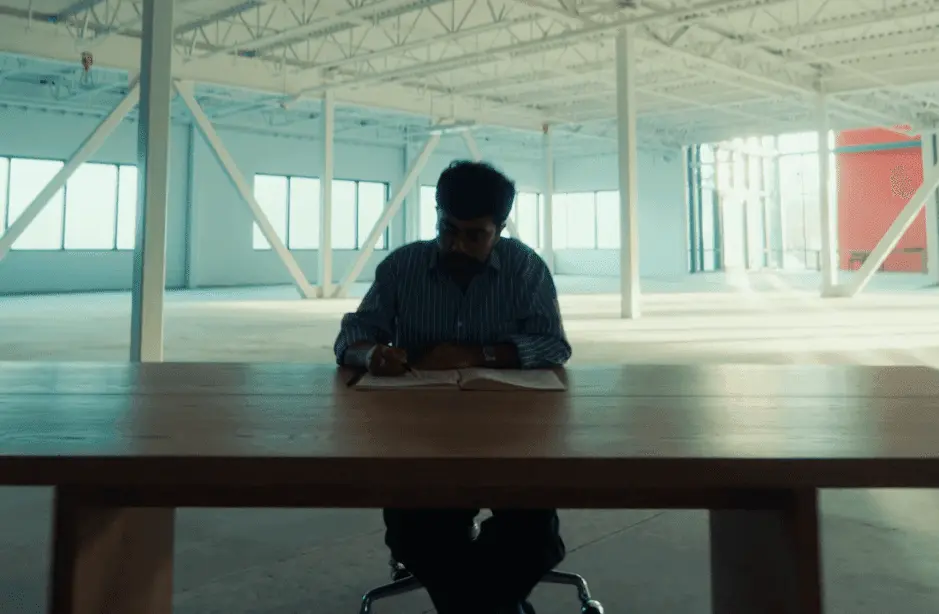
The company's most notable hire is Abidur Chowdhury, who served as a design lead at Apple and was credited with leading the design team behind the iPhone Air and other recent models
1
. The London-born industrial designer left Apple last fall after meeting with Adcock and embracing his vision for a new AI interface that moves beyond existing platforms1
. Chowdhury was prominent enough at Apple to narrate the iPhone Air product announcement in September before his abrupt departure3
.
Source: TechCrunch
Building Intelligence That Anticipates User Needs
Hark's approach centers on creating a system with persistent memory that can listen, see, and interact with the world in real time, working as a collaborative partner rather than traditional software
1
3
. "My view is simple: today's AI models aren't nearly intelligent enough, they feel quite dumb, and the devices we use to access them are fundamentally pre-AI," Adcock wrote in a January internal memo1
. The entrepreneur envisions systems that "anticipate, adapt, and genuinely care about the people using them," comparing his vision to sci-fi assistants like Jarvis or Her1
.The foundation models will focus on speech, computer use, and memory, with Adcock seeing an opportunity to improve on existing large language models that he believes are hampered by limited personalization
2
. The technology aims to create a proactive system that not only knows a user's calendar, preferences, and activity but can anticipate their needs without relying on prompts2
. Adcock wants to build "intelligence that lets you offload your mental workload into a system that begins to think like you and sometimes ahead of you"4
.Chowdhury points to everyday frustrations like filling out forms, sharing information between devices, or planning travel and home renovations as tasks that consume entire evenings and create background anxiety during work hours
1
. "We genuinely believe that all of the small tasks that pile up to be kind of gargantuan things today can be sort of automated from our lives," he said1
.A Family of AI Devices Beyond Smartphones and Wearables
While details remain intentionally sparse, Adcock revealed that Hark is working on a family of AI devices for both personal use and the home, distinct from existing handsets, wearables, and smart glasses
2
. "We do believe that there's more than one device to rule the world here," he told Bloomberg News, adding that the goal is for the products to feel so essential that their absence would be like "a day of lost information"2
.Chowdhury expressed skepticism about current wearable AI platforms, stating he doesn't believe "it's appropriate to put a layer between humanity and the interfaces we use in the world," expressing similar discomfort with pins or devices with cameras
1
. His vision suggests a different approach to integrated hardware that places intelligence at the base layer of everything users touch, rather than as an app or website at the upper layer1
.The company expects to release its first AI models this summer, followed shortly by hardware devices designed around those systems
1
4
. To accelerate development, Hark has secured a compute deal with Nvidia and expects to begin using a new cluster of thousands of NVIDIA B200 GPUs in April1
3
.Related Stories




Competition and Connections to Humanoid Robots
Hark enters a competitive landscape where OpenAI is collaborating with former Apple design chief Jony Ive on what has also been described as a family of AI devices
2
. Meta is pushing AI-enabled smart glasses, while earlier hardware attempts like the Humane AI Pin and Rabbit R1 have been notable flops2
3
.There's corporate synergy between Hark and Adcock's humanoid robotics company Figure AI, which was valued at $39 billion in 2025
2
4
. Hark's models are already being trained on Figure's robots, replacing third-party voice integration, though Adcock says he has no near-term plans to merge the companies under a parent entity1
2
. The work on AI agents at Hark will be "highly relevant to scaling humanoids at Figure," Adcock noted2
.Hark's team is expected to grow from its current 45-50 employees to between 100 and 150 by the end of summer, with all staff working on the same campus that hosts Adcock's other companies
1
2
4
. Adcock, who has an estimated net worth of $19.1 billion from ventures including selling hiring platform Vettery in 2018 and founding Archer Aviation, is financing Hark entirely with his own capital for now4
.References
Summarized by

Navi
Related Stories
Recent Highlights
1
OpenAI shuts down Sora video app after six months, ending Disney's $1 billion investment deal
Technology

2
AI-Generated Val Kilmer to Posthumously Appear in As Deep as the Grave After His Death
Entertainment and Society

3
Supermicro Co-Founder Indicted in $2.5 Billion Nvidia AI Chip Smuggling Scheme to China
Policy and Regulation
Recent Highlights
Today's Top Stories




Your Daily Dose of Curated AI News
Don’t drown in AI news. We cut through the noise - filtering, ranking and summarizing the most important AI news, breakthroughs and research daily. Spend less time searching for the latest in AI and get straight to action.

