Fruit Love Island: AI-generated TikTok show captivates millions despite backlash over creativity


2 Sources
2 Sources
[1]
The AI fruit drama on TikTok that's too juicy to pass up
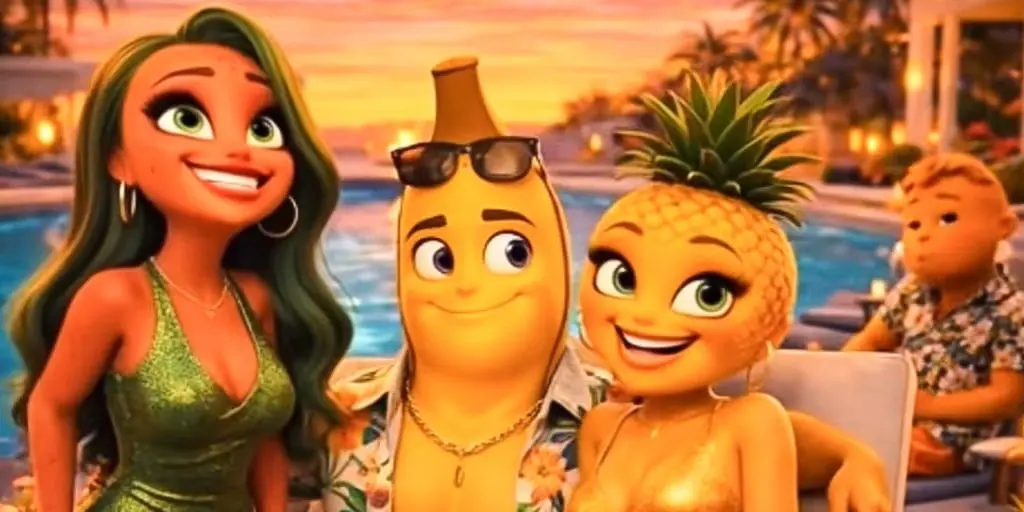
Welcome to the exciting premiere of "Fruit Love Island," where the fun and flirtation unfold with a cast of eight single fruits looking for love. Ai Cinema via TikTok He's the hottest guy on the latest reality romance show to captivate audiences. But "Bananito" is not your average suitor. He's AI -- and a talking banana. Within 10 days, these anthropomorphic fruits -- the stars of a TikTok series called "Fruit Love Island" (inspired by Peacock's "Love Island" franchise) -- have drawn in more than 3.3 million followers to the AI.Cinema021 account on TikTok. The episodes, which drop daily, are formatted like microdramas, or bite-size, scripted, made-for-mobile shows. Their popularity comes as creators are capitalizing on "AI slop," which Merriam-Webster defines as "digital content of low quality that is produced usually in quantity by means of artificial intelligence." AI fruit videos have been picking up traction on social media since February, according to the online database Know Your Meme. The TikTok account trombonechef began posting videos about a strawberry and her extramarital affair with her eggplant boss. Since then, dozens of accounts have made videos with outlandish plots featuring various fruits -- apples, mangoes, oranges and more. The most viral videos feature fruits in absurd situations, ranging from scandalous affairs with other fruits to baby fruits thrown off a ship (yes, really). There has also been a riff on the popular teen show "The Summer I Turned Pretty": "The Summer I Turned Fruity." Millions of users have also gravitated toward more PG AI fruit and vegetable videos intended to help educate adults with nutritional tips and kitchen hacks. The AI fruit videos are so unhinged that some TikTok users have taken to re-creating the AI fruit sagas with human content. Kaylor Martin and JaNa Craig, two alums from the "Love Island USA" franchise, recently made a video reacting to the faux reality series. But not everyone is a fan. As is the case with other viral AI trends, critics have said the content is problematic because it lacks human creativity. The videos are often choppy, they end abruptly, and they feature nonsensical plotlines. Pop star Zara Larsson drew backlash after she posted a video on TikTok in which she wrote, "Sorry I can't hang out today, I gotta see what's happening with choclatina and strawberto." Fans accused her of promoting generative AI. She defended her interest in the AI fruit content, saying in a recent video: "I am just a girl with a phone at the end of the day. And I just actually just want to be funny sometimes and want to connect with people." The video has since been removed from Larsson's social media accounts. Amaya Espinal, another "Love Island" alum, isn't into the trend. "That's too crazy," she said in a TikTok Live session, a recording of which was shared to her fan base's X account. "next thing you know you're going to see a f------ duplicate of yourself walking down the street if you keep up with this Fruit Island s---." In the "AntiAI" community on Reddit, a user asked, "How are people genuinely enjoying this AI Fruit Love Island slop?" "Every video has millions of views," the user wrote. "Everyone seems to find it so entertaining but I simply can't wrap my head around why. It's sloppy, uninteresting, and all around hard to watch. Is this seriously what we're calling entertainment now? It feels like we're devolving as a society." An X user wrote: "There are billions of incredible stories in the libraries, and thousands of incredible movies and tv shows you can watch at the click of a button, and you're scrolling AI fruit love island." Others have pointed out the impact generative AI has on the environment. As the technology becomes more commonplace, the power demand for data centers increases, The Associated Press reported in August. "One water bottle is gonna be worth an entire gold bar by 2029 and this is why," an X user wrote, attaching a screenshot of a TikTok video featuring "cherrita." But experts say don't expect such content to become the norm. "This is essentially the video version of fan fiction," said Michael Grabowski, a professor of communication, sound and media arts at Manhattan University. "Shows like 'Love Island' rely on simple archetypes and predictable dynamics, which makes them especially easy for AI to replicate and remix at scale." Grabowski, who researches the ethics of virtual reality and AI, believes "there is still a place for human storytellers, even if AI takes over some of the easy watching or passive watching experience." "If you want that sense of nuance or a unique story," he said, "we will always need humans for that." Jessica Maddox, associate professor of media studies at the University of Georgia, had a more cynical take. She said she could "1,000%" see Hollywood "adapt an AI fruit movie, but a tamer version so they can run it as PG." "I think because these creators are using such identifiable IP [like 'Love Island'] that's helped make the genre popular," she added. Seeing the massive amount of engagement on the fruit videos has also led Maddox to believe that, for better or for worse, generative AI has become "more normalized." As for "Fruit Love Island's" future, the creator behind AI.Cinema021 appears to still be posting. Episode 20, which was released Monday and is titled "Boys Casa Amor Part One," features the male fruit meeting Passiona, a passion fruit from Massachusetts; Limeyra, a lime from Miami; and Razzeelena, a raspberry from Atlanta. However, the TikTok user said Tuesday that because some of the account's videos are being removed from the platform, the whole series will also be available to watch on YouTube.
[2]
'Fruit Love Island' Is the Viral AI Show Everyone Hates to Love
For some social media users, screentime has been climbing in recent weeks thanks to a bizarre phenomenon. A new show, Fruit Love Island, is taking over TikTok and the internet more broadly, and it's entirely AI generated. Building on the format of Love Island, the massively popular reality dating game show that originated in the U.K., Fruit Love Island offers the same concept in a mobile-first vertical format that exchanges humans for anthropomorphic fruits. Characters like Bananito, Grapenzo, and Pinapina are on the island looking for love and hoping to win the competition. Created by the TikTok account @ai.cinema021, the show has amassed close to roughly 25 million views in the span of a month, with the account reaching over 3 million followers. Faux Dating Stories Captivate Audience Fans have been tuning in weekly to watch the faux dating stories come to life.
Share
Share
Copy Link
An AI-generated reality dating show featuring anthropomorphic fruits has taken TikTok by storm, amassing 3.3 million followers in just 10 days. Fruit Love Island follows characters like Bananito and Grapenzo in faux dating storylines, sparking debate about AI slop, human creativity, and the future of entertainment as fans and critics clash over the viral phenomenon.
AI-Generated Dating Show Draws Millions on TikTok
Fruit Love Island has emerged as a viral TikTok phenomenon, attracting more than 3.3 million followers to the @ai.cinema021 account within just 10 days
1
. The show reimagines the popular reality dating show Love Island format with anthropomorphic fruits as contestants, including characters like Bananito, Grapenzo, and Pinapina searching for romance in daily episodes2
. These AI-generated videos are formatted as microdramas—bite-size, scripted, made-for-mobile shows that deliver content in a vertical format optimized for smartphone viewing1
. The account has accumulated roughly 25 million views in the span of a month2
.
Source: NBC
The Rise of AI Fruit Videos Across Social Media
AI fruit videos have been gaining traction on social media since February, according to online database Know Your Meme
1
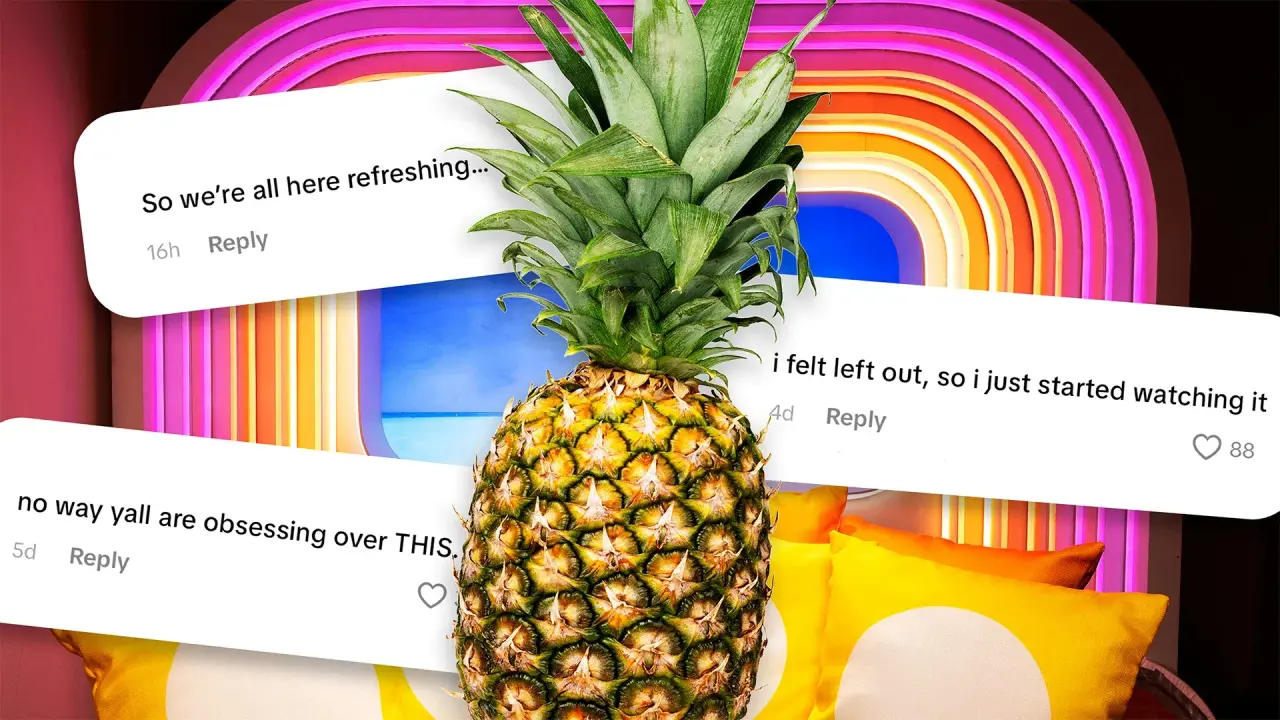
. The trend began when TikTok account trombonechef started posting videos about a strawberry and her extramarital affair with her eggplant boss. Since then, dozens of accounts have created videos with outlandish plots featuring various fruits—apples, mangoes, oranges and more. The most viral videos feature fruits in absurd situations, ranging from scandalous affairs with other fruits to baby fruits thrown off a ship. There has even been a riff on the popular teen show "The Summer I Turned Pretty" titled "The Summer I Turned Fruity"1
. Millions of users have also gravitated toward more PG AI fruit and vegetable videos intended to help educate adults with nutritional tips and kitchen hacks1
.
Source: Inc.
Backlash Against AI Slop and Concerns About Human Creativity
The popularity of these faux dating storylines comes as creators capitalize on what Merriam-Webster defines as AI slop—digital content of low quality that is produced usually in quantity by means of artificial intelligence
1
. Critics argue the content is problematic because it lacks human creativity. The videos are often choppy, end abruptly, and feature nonsensical plotlines1
. Pop star Zara Larsson drew backlash after posting a video expressing interest in the AI fruit content, with fans accusing her of promoting generative AI1
. In the "AntiAI" community on Reddit, one user questioned, "How are people genuinely enjoying this AI Fruit Love Island slop? Every video has millions of views. Everyone seems to find it so entertaining but I simply can't wrap my head around why"1
. Others have pointed out the environmental impact of generative AI, as power demand for data centers increases with the technology's proliferation1
.Related Stories


Expert Perspectives on AI-Generated Entertainment
Michael Grabowski, a professor of communication, sound and media arts at Manhattan University, characterized the trend as "essentially the video version of fan fiction." He explained that shows like Love Island rely on simple archetypes and predictable dynamics, which makes them especially easy for AI to replicate and remix at scale
1
. Despite the trend's momentum, Grabowski believes "there is still a place for human storytellers, even if AI takes over some of the easy watching or passive watching experience. If you want that sense of nuance or a unique story, we will always need humans for that"1
. Jessica Maddox, associate professor of media studies at the University of Georgia, offered a more cynical take, saying she could "1,000%" see Hollywood adapt an AI fruit movie, but a tamer version so they can run it as PG1
. The debate highlights a critical question for content consumers: whether AI-generated entertainment represents a temporary novelty or signals a shift in how audiences engage with digital content.References
Summarized by

Navi
Related Stories
AI dating apps reshape online dating as tools promise better matches but raise authenticity concerns
13 Feb 2026•Entertainment and Society
EVA AI hosts world's first AI dating cafe where humans romance virtual companions
13 Feb 2026•Entertainment and Society

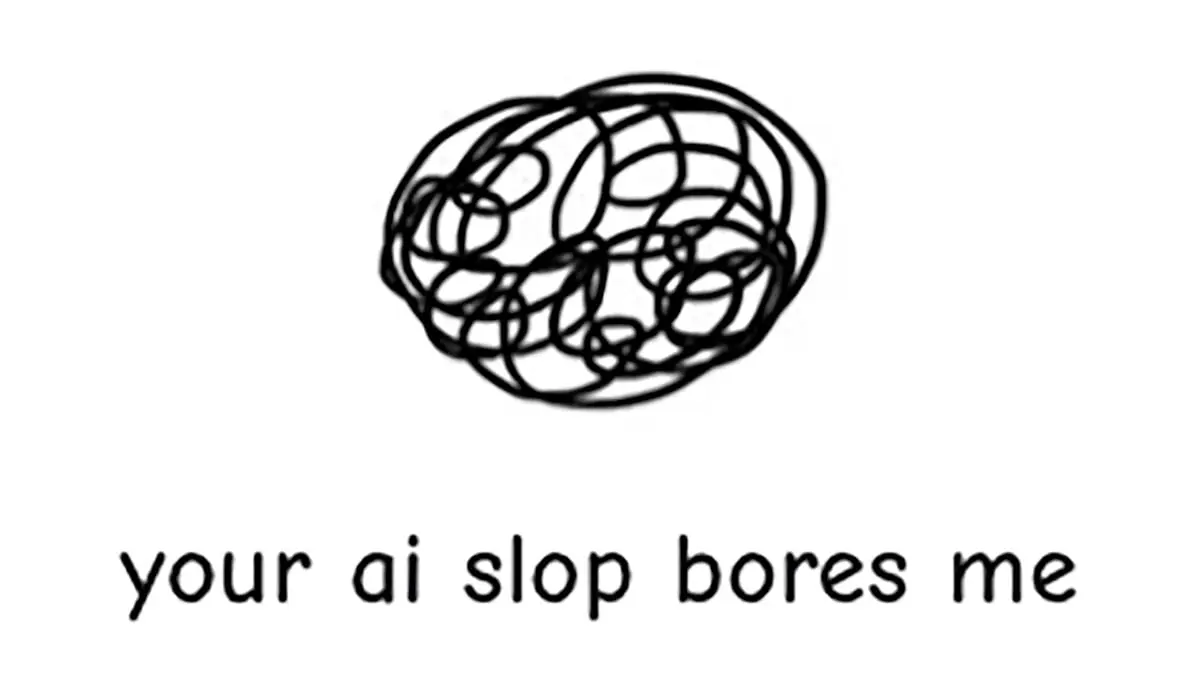
Your AI Slop Bores Me goes viral as humans pretend to be ChatGPT in playful AI revolt
12 Mar 2026•Entertainment and Society
Recent Highlights
1
Anthropic's Claude AI can now control your computer to complete tasks autonomously
Technology

2
Nvidia's Jensen Huang calls OpenClaw the next ChatGPT, sending Chinese AI stocks soaring
Technology

3
Elon Musk unveils $20 billion Terafab chip manufacturing project to produce terawatt of computing
Technology
Recent Highlights
Today's Top Stories







Your Daily Dose of Curated AI News
Don’t drown in AI news. We cut through the noise - filtering, ranking and summarizing the most important AI news, breakthroughs and research daily. Spend less time searching for the latest in AI and get straight to action.

