Goldman Sachs warns AI could automate 25% of work hours as white-collar jobs face disruption


2 Sources
2 Sources
[1]
AI Shockwave: Goldman Sachs Warns 25% Work Hours Face Automation
Sachs did not predict mass job losses overnight; the estimate refers to work hours, not entire roles. Most such professions consist of multiple tasks. AI is anticipated to replace humans in performing tedious, repetitive, and data-intensive tasks; humans will move to work that is more valuable. In reality, a lot of sectors will be transformed before they are eradicated. Office-based and knowledge-heavy roles sit at the center of the impact. Administrative work, customer support, legal research, finance operations, and parts of engineering and design show high automation potential. Generative AI is already capable of composing papers, conducting , programming, and contract management on a large scale. However, job roles that demand physical presence, manual skills, or human decision-making, like construction, medical treatments, and vocational trades, are still fairly resistant to automation.
[2]
Will AI take over jobs? Goldman Sachs predicts automation of 25 pct of work hours
Short-term disruption is likely, with unemployment potentially rising by 0.6 percentage points, making reskilling and policy response crucial to long-term outcomes. Ever since AI has become popular all over the world, there's an ongoing debate about whether it will affect jobs or not. Many experts have already made their statements on the topic hinting that it might affect some jobs but create some. A new report from Goldman Sachs has warned that AI may reshape the global workforce in the coming years, with automation expected to take over a big portion of existing job tasks. The investment bank estimated that AI technology could eventually handle nearly a quarter of total work hours, raising some concerns about job displacement but falling short of predicting a widespread employment crisis. Also read: Microsoft scrambles to fix Windows 11 after security update causes unexpected failures The analysis uses labour data from the US Department of Labour to assess how quickly advancing AI systems may change the structure of employment. According to the report, while automation will accelerate, the impact will vary by sector and occupation. According to the report, white-collar jobs, particularly those requiring repetitive cognitive work, are likely to bear the brunt of the effects. Clerical duties, data processing, entry-level coding, accounting, and legal research are expected to be among the most exposed roles as AI tools improve in capability and adoption. Also read: Amazon Great Republic Day sale 2026: Google Pixel 10 Pro price drops by over Rs 9,000, check details Even with these predictions, Goldman Sachs does not expect AI to eliminate jobs. According to the research project, AI has the potential to increase labour productivity by approximately 15% over time. Based on historical trends linking productivity gains to workforce changes, the report predicts that approximately 6 to 7 percent of jobs may be lost during the adoption phase. In the short period of time, however, this transition may impact the culture leading to a temporary rise in unemployment. The report added that the job displacement could push the unemployment rate up by about 0.6 percentage points at its peak, equivalent to roughly one million additional unemployed workers before new opportunities begin to materialise. Also read: Samsung Galaxy S26 Ultra design, colour options and specifications leaked ahead of launch next month: What we know Coming to the conclusion, the report stated that the long term impact of AI on employment will definitely depend on how quickly the employees, companies and policymakers respond. It also mentioned that the investment in reskilling, education and development of new AI enabled roles will be a critical factor in finding out if automation leads to impact on the jobs.
Share
Share
Copy Link
Goldman Sachs projects AI will automate nearly a quarter of total work hours, with white-collar and knowledge-intensive roles most exposed. The investment bank predicts a temporary rise in unemployment by 0.6 percentage points but emphasizes that reskilling and policy response will determine whether automation leads to lasting job displacement or productivity gains.
Goldman Sachs Projects Major Work Automation Shift
A new report from Goldman Sachs has sent ripples through the employment landscape, projecting that AI could eventually handle nearly a quarter of total work hours across the global workforce
2
. The investment bank's analysis, which draws on labor data from the US Department of Labour, warns of significant workforce changes ahead while stopping short of predicting a widespread employment crisis. The 25% work hours automation estimate represents a substantial AI shockwave for industries that have long relied on human cognitive labor, though the impact will vary considerably by sector and occupation.
Source: Analytics Insight
White-Collar Roles Bear the Brunt of Automation Potential
Office-based sectors and knowledge-intensive sectors sit at the center of this transformation. White-collar roles automation appears most imminent in positions requiring repetitive cognitive work, with clerical duties, data processing, entry-level coding, accounting, and legal research among the most exposed
2
. Administrative work, customer support, finance operations, and parts of engineering and design show high automation potential as generative AI impact expands1
. These systems are already capable of composing papers, programming, and contract management on a large scale. Conversely, job roles demanding physical presence, manual skills, or human decision-making—such as construction, medical treatments, and vocational trades—remain fairly resistant to automation.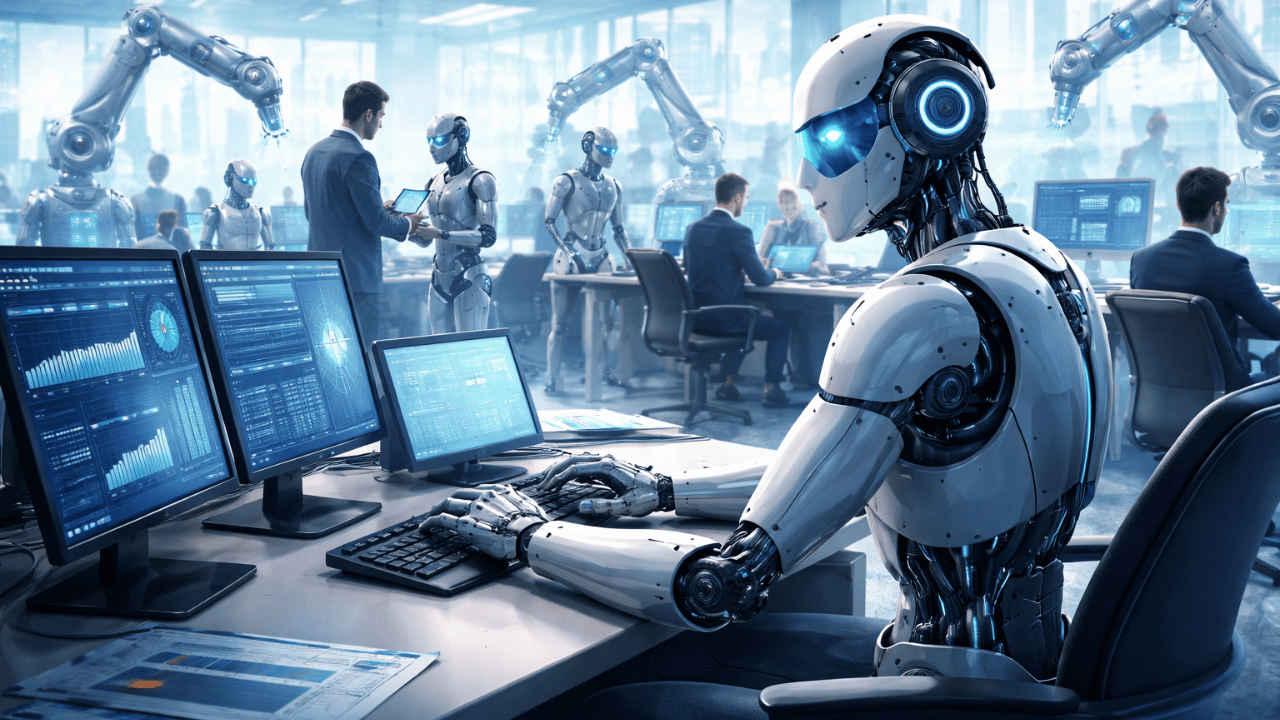
Source: Digit
Job Displacement Concerns and Productivity Gains
Goldman Sachs does not predict mass job losses overnight, emphasizing that the estimate refers to work hours rather than entire roles
1
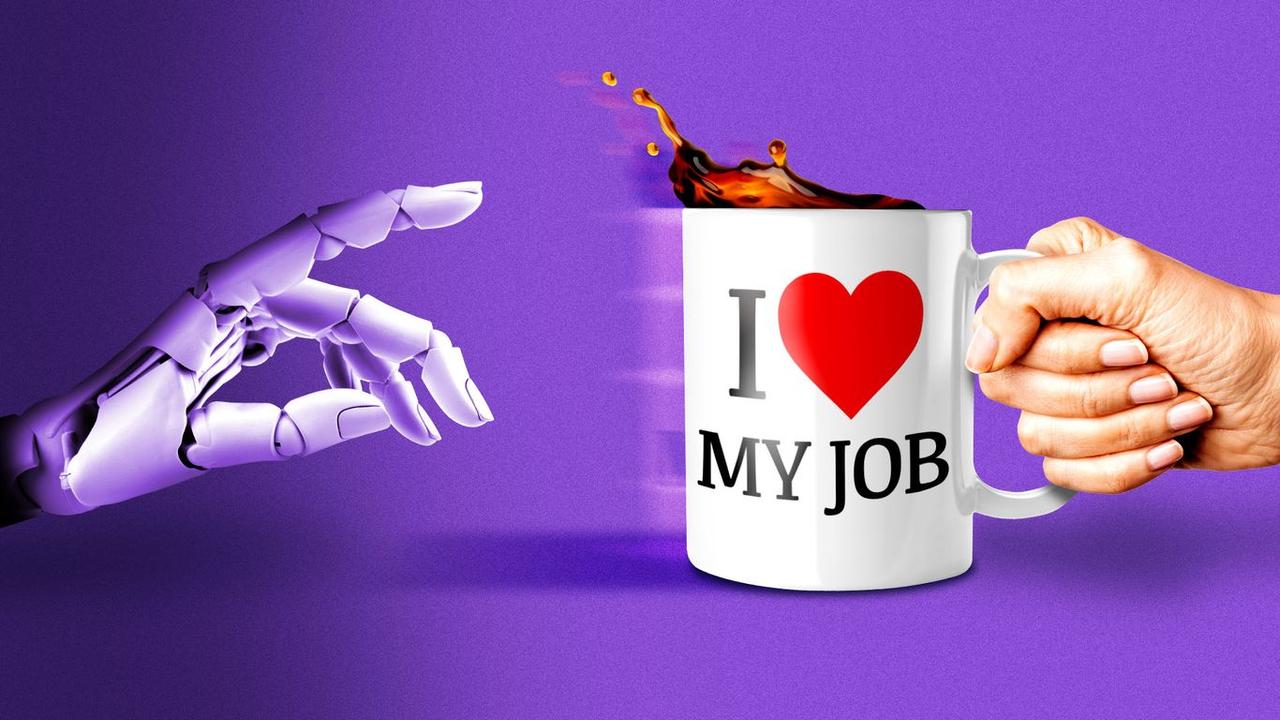
. Most professions consist of multiple tasks, and AI is anticipated to replace humans in performing tedious, repetitive tasks while workers move to more valuable activities. The research project suggests AI has the potential to increase labor productivity boost by approximately 15% over time2
. Based on historical trends linking productivity gains to workforce changes, the report predicts approximately 6 to 7 percent of jobs may be lost during the adoption phase.Related Stories
Temporary Rise in Unemployment Expected
Short-term disruption appears likely, with the job displacement potentially pushing unemployment up by about 0.6 percentage points at its peak—equivalent to roughly one million additional unemployed workers before new opportunities begin to materialize
2
. This temporary rise in unemployment underscores the transition period that workers and companies will navigate as AI take over jobs in certain sectors transforms from possibility to reality. Many sectors will be transformed before they are eradicated, creating a period of adjustment rather than immediate collapse.Reskilling and Policy Response Prove Critical
The long-term impact of AI on employment will depend heavily on how quickly employees, companies, and policymakers respond to these shifts
2
. Investment in reskilling, education, and development of new AI-enabled roles will prove critical in determining whether work automation leads to lasting negative impacts or opens pathways to higher-value work. The Goldman Sachs analysis makes clear that the coming years will test society's ability to adapt to technological change while supporting workers through the transition.References
Summarized by

Navi
[1]
Related Stories
AI's Impact on Entry-Level Jobs: A Growing Concern for Recent Graduates
30 Jul 2025•Business and Economy

Goldman Sachs Introduces AI Assistant, Signaling Shift in Wall Street's Workforce
22 Jan 2025•Business and Economy

AI's Global Impact: 40% of Jobs at Risk, UN Report Warns
06 May 2025•Business and Economy

Recent Highlights
1
OpenAI shuts down Sora video app after six months, ending Disney's $1 billion investment deal
Technology

2
AI-Generated Val Kilmer to Posthumously Appear in As Deep as the Grave After His Death
Entertainment and Society

3
Supermicro Co-Founder Indicted in $2.5 Billion Nvidia AI Chip Smuggling Scheme to China
Policy and Regulation

Recent Highlights
Today's Top Stories




Your Daily Dose of Curated AI News
Don’t drown in AI news. We cut through the noise - filtering, ranking and summarizing the most important AI news, breakthroughs and research daily. Spend less time searching for the latest in AI and get straight to action.

