Demis Hassabis warns AI hype masks real potential as startups raise tens of billions


3 Sources
3 Sources
[1]
A.I. Is Overhyped Yet Underappreciated, Says DeepMind CEO Demis Hassabis
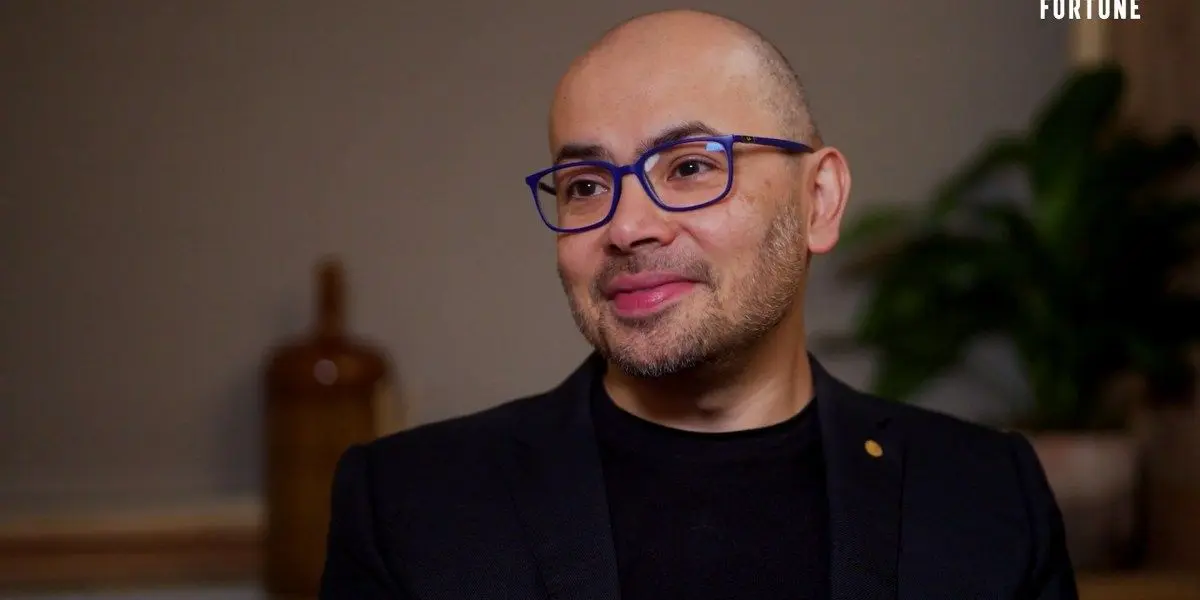
The DeepMind CEO says early A.I. hype masks real progress, especially in science and world-model research. For Demis Hassabis, CEO of Google DeepMind, there's little doubt that parts of the A.I. industry are in a bubble. The harder question, he says, is figuring out which areas are fueled by hype and which truly have the potential to be transformative. Sign Up For Our Daily Newsletter Sign Up Thank you for signing up! By clicking submit, you agree to our <a href="http://observermedia.com/terms">terms of service</a> and acknowledge we may use your information to send you emails, product samples, and promotions on this website and other properties. You can opt out anytime. See all of our newsletters "There are parts of the A.I. ecosystem that are probably in bubbles," Hassabis said during a recent episode of Google DeepMind: The Podcast. He pointed to the soaring valuations of nascent startups as a particular red flag, noting that companies landing "tens of billions of dollars valuations just out of the gate" are probably not sustainable. It shouldn't come as a surprise that Hassabis doesn't put DeepMind, co-founded by him in 2010 and still led by him following Alphabet's 2014 acquisition, in this category. When it comes to investment from Big Tech, he said, "there's a lot of real business underlying that." A.I., in his view, is "overhyped in the short term and still underappreciated in the medium to long term." Hassabis' confidence is rooted in firsthand experience, particularly in science. Last year, he won a Nobel Prize in Chemistry for his work on AlphaFold, an A.I. system that predicts protein structures. He also leads Isomorphic Labs, an Alphabet subsidiary focused on applying A.I. drug discovery. Still, Hassabis is clear-eyed about how far the technology has to go, especially when it comes to advanced milestones like AGI. Today's systems can deliver Ph.D.-level performance in some areas, even earning honors like gold medals from the International Mathematical Olympiad, while still making basic errors. Closing those inconsistencies is essential, he said. "We've got to close those gaps." Beyond pushing toward human-level intelligence, Google DeepMind is focused on building so-called world models -- systems that understand not just language, but the physical world itself. Through products like its Genie systems, the lab is working on A.I. that can grasp how objects move and interact. That kind of physical understanding, Hassabis said, is crucial for advances in robotics and universal assistants. World models could also reshape gaming, a longtime passion of the Google DeepMind CEO. Hassabis began his career as a video game programmer, later founding Elixir Studios, a games development company, and serving as lead A.I. programmer at Lionhead Studios. Physical A.I., he suggested, could one day enable "the ultimate game -- which of course, was maybe always my subconscious plan." Today, Hassabis is one of a small group of leaders shaping the future of A.I. He describes himself as friendly "with pretty much all of them," referring to fellow tech executives -- a level of harmony that isn't universal in the field. "Some of the others don't get on with each other." Those cordial relationships don't erase the competitive pressure. Google is racing alongside competitors like OpenAI, Meta and Anthropic to achieve AGI, a contest that has unleashed a wave of investment reminiscent of the dot-com boom. "It's hard, because we're also in the most ferocious capitalist competition there's ever been."
[2]
Google DeepMind CEO Warns AI Startup Bubble Is Forming As Early-Stage Firms Raise Tens Of Billions Before Launch - Alphabet (NASDAQ:GOOGL)
Alphabet Inc. (NASDAQ:GOOGL) (NASDAQ:GOOG) subsidiary Google DeepMind CEO Demis Hassabis cautioned that some AI startups are massively overvalued, signaling a potential market correction amid a surge of early-stage funding. AI Startups Raising Tens Of Billions Without Revenue On Tuesday, Hassabis, speaking on "Google DeepMind: The Podcast", said many AI startups are raising tens of billions in valuations before fully launching their products. Some startups "basically haven't even got going yet," he said. "It's sort of interesting to see how can that be sustainable. You know, my guess is probably not, at least not in general." Big Tech Investments Backed By Real Business He distinguished between these hyped seed-stage companies and established tech giants, noting that large firms like Google have "a lot of real business" underpinning their AI investments. Hassabis added that AI is "overhyped in the short term" but "still underappreciated in the medium to long-term." Hassabis also pointed out that technological shifts often swing from skepticism to obsession, inflating valuations quickly. "It's almost an overreaction to the underreaction," he said, reflecting on DeepMind's own early days when few believed in the company. See Also: 'I'm Always In A State Of Anxiety' Says Nvidia CEO As $5T Triumph Still Feels Like '30 Days From Going Out Of Business.' AI Market Remains Stable Despite Startup Volatility Despite recent stock declines in companies like CoreWeave Inc. (NASDAQ:CRWV), Goldman Sachs Asset Management maintained that the broader AI sector remained healthy. Sung Cho, co-head of public tech investing, said fears of a debt-fueled bubble were overstated, noting that 90% of AI infrastructure funding came from corporate cash flows. He described recent stock drops and supply chain issues at some firms as isolated incidents rather than systemic risks. Meanwhile, French startup Mistral launched its Mistral 3 AI model suite, featuring a large multimodal, multilingual model and nine smaller customizable models. By releasing open-weight models, Mistral allowed users to run AI on their own hardware, positioning itself as a challenger to OpenAI and Google. The launch coincided with reports that OpenAI CEO Sam Altman declared a "code red" internally due to intensifying competition. Read Next: Elon Musk Says His 'Running Robot' Will 'Actually Eliminate Poverty' As He Shares Video Of Tesla Optimus Jogging Disclaimer: This content was partially produced with the help of AI tools and was reviewed and published by Benzinga editors. Photo courtesy: Shutterstock/Nicoleta Ionescu GOOGLAlphabet Inc$307.680.36%OverviewCRWVCoreWeave Inc$70.311.17%GOOGAlphabet Inc$309.100.45%Market News and Data brought to you by Benzinga APIs
[3]
Google DeepMind chief Demis Hassabis says AI startup boom is overhyped and due for correction
Despite short-term hype, he believes AI remains underappreciated in its long-term impact. Google DeepMind CEO Demis Hassabis has warned that parts of the booming artificial intelligence investment landscape may be about to correct, implying that early-stage AI startups are overvalued and aimed at the growing investor frenzy. During a recent episode of Google DeepMind: The Podcast, Hassabis stated that he sees signs of speculative excess, particularly among young AI companies raising capital at extremely high valuations despite making little progress or gaining traction. He also questioned the long-term viability of startups that receive multibillion-dollar valuations at the seed or early growth stage, pointing out that many of them have only recently begun operations. He did, however, draw an obvious line between these early-stage funding rounds and the massive investment made by established tech firms. He stated that Big Tech companies investing billions of dollars in AI infrastructure and research are backed by existing businesses, revenues and long-term strategic roadmaps, making their valuations more credible. According to him, artificial intelligence is currently overhyped in the short term, while its long-term impact is underestimated. He also stated that major technological shifts frequently transition quickly from widespread scepticism to intense enthusiasm, resulting in inflated expectations and excessive valuations before the market adjusts. Such cycles, he added, usually result in an 'over-correction' as reality catches up to hype. When discussing DeepMind's early days, Hassabis stated that AI research struggled to attract belief or funding when the company was founded more than a decade ago. In contrast, artificial intelligence (AI) now dominates global business, investment and policy discussions. He suggested that the sharp swing in sentiment has contributed to some parts of the market moving too far, too quickly. Despite these concerns, Hassabis stated that he is not concerned with whether AI is in a bubble. His primary focus remains on developing foundational AI systems at Google DeepMind, which creates models that power Google products like Gemini and oversees the company's frontier AI research.
Share
Share
Copy Link
Google DeepMind CEO Demis Hassabis cautions that AI startups securing tens of billions in valuations before launch face unsustainable futures. Speaking on Google DeepMind: The Podcast, he distinguished between speculative early-stage AI companies and Big Tech investments backed by real business. Despite short-term AI hype, Hassabis believes the technology remains underappreciated for its long-term potential in science and world models.
Google DeepMind CEO Signals AI Startup Bubble Warning
Demis Hassabis, the Google DeepMind CEO who won a Nobel Prize in Chemistry for his work on AlphaFold, has issued a stark warning about the current state of AI investment. Speaking on a recent episode of Google DeepMind: The Podcast, Hassabis cautioned that parts of the artificial intelligence ecosystem are showing clear signs of a bubble, particularly among early-stage AI companies securing massive funding rounds
1
. He pointed to AI startups raising tens of billions in valuations before fully launching their products as a red flag that cannot be ignored2
.
Source: Digit
The Alphabet subsidiary leader questioned how these unsustainable valuations could persist when many companies "basically haven't even got going yet"
2
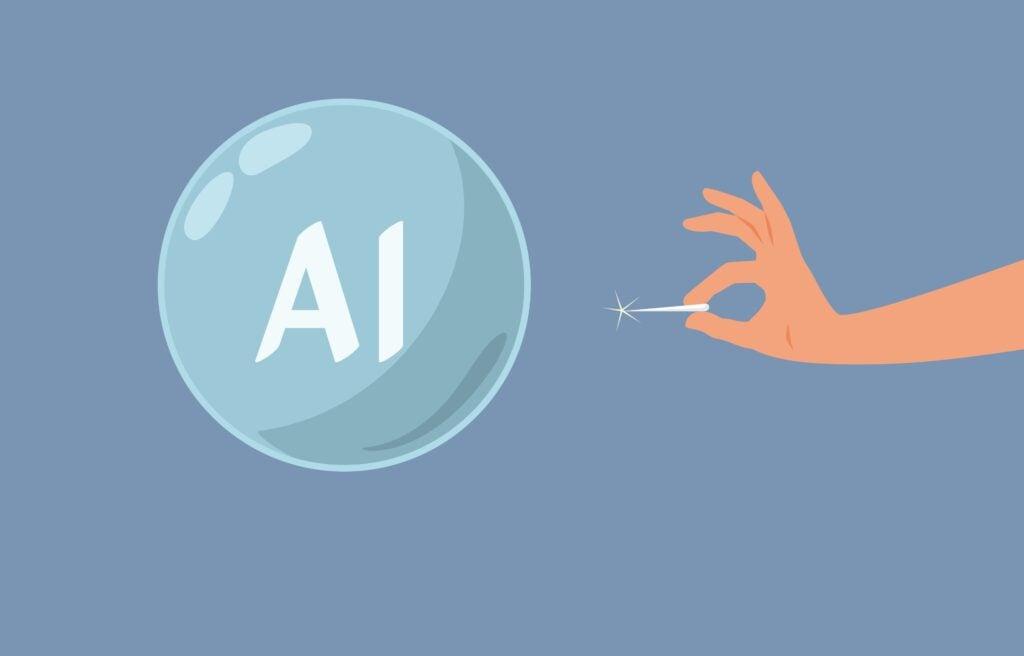
. His assessment comes amid an investor frenzy that has propelled the AI startup boom to unprecedented heights, with seed-stage companies commanding valuations that would have been unthinkable just years ago. Hassabis described the phenomenon as "an overreaction to the underreaction," reflecting on how technological shifts often swing rapidly from skepticism to obsession2
.
Source: Benzinga
Big Tech Investment Versus Speculative Funding
Hassabis drew a clear distinction between the speculative funding rounds of early-stage AI companies and the substantial investment pouring in from Big Tech giants like Google, OpenAI, Meta and Anthropic. When it comes to Big Tech spending on artificial intelligence infrastructure and research, he emphasized that "there's a lot of real business underlying that"
1
. These established companies are backed by existing revenues, operational infrastructure and long-term strategic roadmaps that make their valuations more credible3
.The Google DeepMind leader's perspective carries weight given his firsthand experience building one of the field's most respected research organizations. Founded by Hassabis in 2010 and acquired by Alphabet in 2014, DeepMind struggled to attract belief or funding in its early days
3
. Now, artificial intelligence dominates global business and policy discussions, creating what Hassabis sees as a market due for a correction as reality catches up to AI hype3
.Long-Term Potential of AI Remains Underappreciated
Despite his concerns about short-term speculation, Demis Hassabis maintains that AI is "overhyped in the short term and still underappreciated in the medium to long term"
1
. His confidence stems from tangible scientific breakthroughs, particularly his Nobel Prize-winning work on AlphaFold, an AI system that predicts protein structures. He also leads Isomorphic Labs, an Alphabet subsidiary focused on applying AI to drug discovery1
.Google DeepMind is pushing beyond current capabilities toward world models—systems that understand not just language but the physical world itself. Through products like its Genie systems, the lab is developing AI that can grasp how objects move and interact
1
. This physical understanding is essential for advances in robotics and universal assistants, representing the kind of foundational work that Hassabis believes will deliver lasting value. The technology could also reshape gaming, a longtime passion of the former video game programmer who once founded Elixir Studios1
.Related Stories
Intense Competition in AI Race to AGI
Hassabis acknowledged the intense competition in AI as companies race toward Artificial General Intelligence (AGI), describing it as "the most ferocious capitalist competition there's ever been"
1
. This contest has unleashed a wave of investment reminiscent of the dot-com boom, with Google competing alongside OpenAI, Meta and Anthropic. Recent developments underscore this pressure: French startup Mistral launched its Mistral 3 AI model suite with open-weight models, while reports emerged that OpenAI CEO Sam Altman declared a "code red" internally due to intensifying competition2
.Despite the competitive pressure, Hassabis describes himself as friendly "with pretty much all of them," referring to fellow tech executives—a level of harmony that isn't universal in the field
1
. Meanwhile, Goldman Sachs Asset Management maintained that the broader AI sector remained healthy despite recent stock declines in companies like CoreWeave. Sung Cho, co-head of public tech investing, noted that 90% of AI infrastructure funding came from corporate cash flows rather than debt, describing recent volatility as isolated incidents rather than systemic risks2
. Hassabis remains focused on developing foundational AI systems at Google DeepMind, including models that power Gemini and the company's frontier AI research3
.References
Summarized by

Navi
Related Stories
Demis Hassabis warns AI bubble concerns overblown but flags unsustainable startup funding levels
25 Jan 2026•Business and Economy
AI bubble concerns intensify as tech leaders seek returns on trillions in investment
17 Jan 2026•Business and Economy
Demis Hassabis predicts AGI in 5-8 years, sees new golden era transforming medicine and science
12 Feb 2026•Technology
Recent Highlights
1
Google Maps unveils Ask Maps with Gemini AI and 3D Immersive Navigation in biggest update
Technology
2
AI chatbots help plan violent attacks as safety guardrails fail, new investigation reveals
Technology

3
OpenAI secures $110 billion funding round as questions swirl around AI bubble and profitability
Business and Economy

Recent Highlights
Today's Top Stories




Your Daily Dose of Curated AI News
Don’t drown in AI news. We cut through the noise - filtering, ranking and summarizing the most important AI news, breakthroughs and research daily. Spend less time searching for the latest in AI and get straight to action.

