Demis Hassabis warns AI bubble concerns overblown but flags unsustainable startup funding levels


2 Sources
[1]
Google DeepMind CEO Demis Hassabis plays down AI bubble fears, warns of excess startup funding
According to Google DeepMind CEO Demis Hassabis, AI's impact is only just beginning, and the technology is in great demand, so it cannot be dismissed as a bubble. However, supply constraints, especially the shortage of advanced chips, remain a big impediment, he said. Google DeepMind CEO Demis
[2]
DeepMind chief cautions AI boom may face a reckoning: FT (NVDA:NASDAQ)
Google (GOOG) (GOOGL) DeepMind chief executive Demis Hassabis said parts of the artificial intelligence industry are showing signs of excess, warning that investment levels in some areas no longer reflect commercial reality, the Financial Times reported Sunday. Speaking at the No, early-stage AI
Share
Copy Link
Google DeepMind CEO Demis Hassabis told the Financial Times that while the artificial intelligence industry isn't in a bubble, certain pockets show clear signs of excess. He specifically called out multi-billion-dollar seed rounds for early-stage AI companies without proven products as unsustainable, suggesting market corrections may be ahead.
Google DeepMind CEO Demis Hassabis Dismisses Broader AI Bubble Concerns
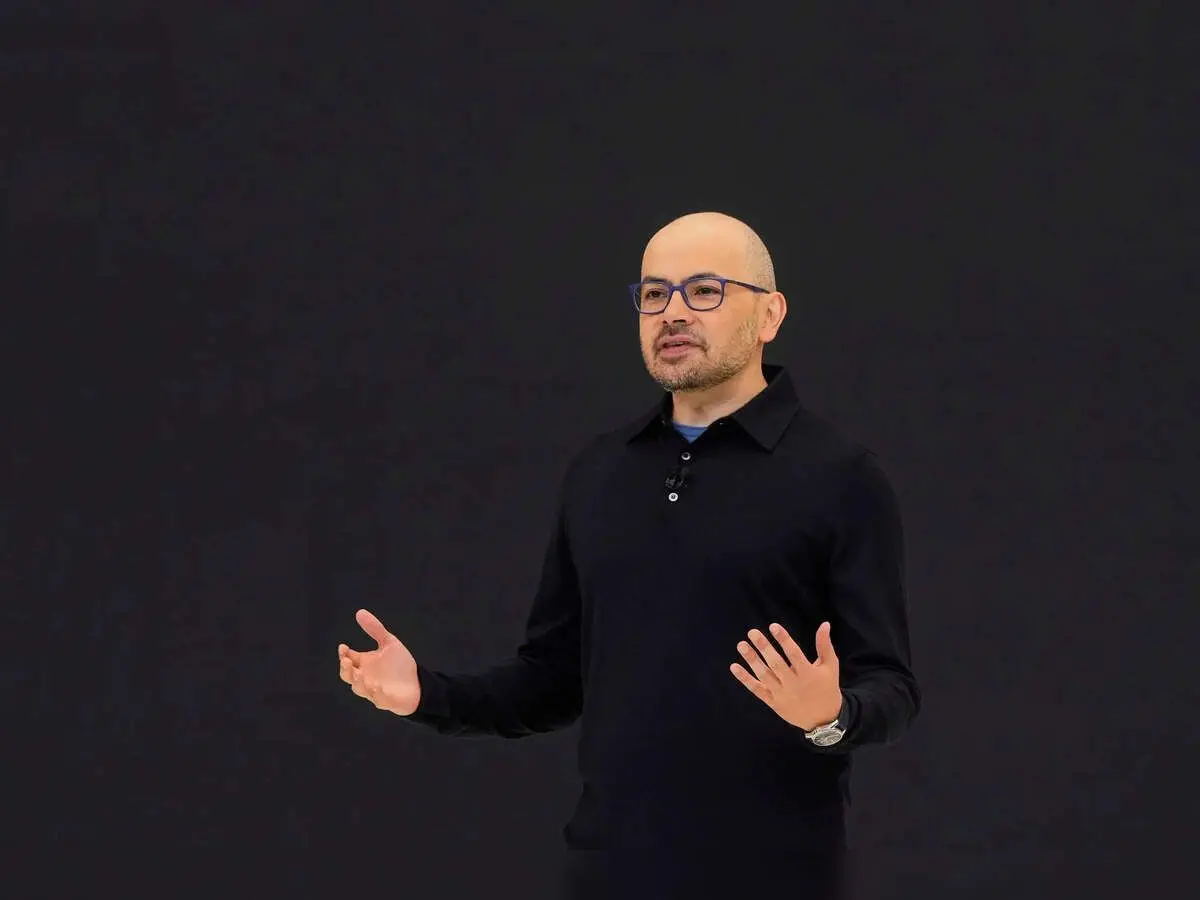
Google DeepMind CEO Demis Hassabis has pushed back against fears of an AI bubble, arguing that the artificial intelligence industry shows strong fundamentals despite pockets of concerning excess. In an interview with the Financial Times, Demis Hassabis emphasized that the question isn't binary, pointing to unprecedented high demand for AI tools across Google's product ecosystem as evidence of genuine commercial traction
1
. "We are seeing more usage than ever, incredible demand for our models and AI features," he said, adding that supply constraints, particularly the global shortage of advanced chips, remain a major bottleneck rather than weak demand1
. From his vantage point inside Alphabet, Hassabis described AI as "the most transformative technology probably ever invented," suggesting the scale and depth of adoption make it difficult to characterize the broader industry as a bubble1
.
Source: ET
Excess Startup Funding Raises Red Flags for Early-Stage AI Companies
While defending the industry's overall health, the Google DeepMind CEO acknowledged that certain segments are showing clear signs of excessive investment in AI. Hassabis specifically flagged "multi-billion-dollar seed rounds in new startups that don't have a product or technology or anything yet" as potentially unsustainable, warning that these companies without proven products may face a reckoning
1
. The concern centers on whether investments reflect actual commercial viability or simply reflect inflated investor enthusiasm disconnected from business fundamentals2
. "There may be some corrections in some parts of the market," Hassabis cautioned, suggesting that valuations for early-stage AI companies could face pressure as the market matures1
. His comments highlight a growing divide between established players with proven AI products and startups commanding massive seed rounds despite lacking tangible technology or revenue.Google DeepMind Positioned to Weather Market Corrections
Despite acknowledging potential market corrections, Hassabis expressed confidence that Google DeepMind remains well insulated from any downturn in AI funding. "I don't worry too much about that... I focus on our technology and delivering that," he said, emphasizing his role in ensuring the company is "well-positioned no matter what happens"
1
. If investor enthusiasm cools and valuations correct, Hassabis noted that DeepMind would still benefit from Alphabet's core businesses, where AI can drive productivity gains at scale1
. Conversely, if the bullish scenario continues, the company is betting heavily on AI-first, AI-native products such as the Gemini app1
. This dual-track strategy reflects how established tech giants with existing revenue streams may fare better than startups if funding conditions tighten.
Source: Seeking Alpha
Related Stories

Industry Leaders Signal Caution Amid Massive AI Investments
Hassabis's comments align with growing concerns from other tech leaders about the sustainability of current AI funding levels. Google CEO Sundar Pichai previously told the BBC that "no firm is immune if an AI bubble bursts," including Google
1
. Microsoft CEO Satya Nadella warned at Davos that AI benefits need to be "much more evenly distributed" to avoid becoming a bubble, noting that a key warning sign would be if discussions remain limited to tech firms and supply-side advances1
. The scale of investments underscores the stakes: according to JP Morgan Chase, big tech firms will spend around $5 trillion through 2030 on AI data centers, yet revenues needed to justify those investments should reach $650 billion while currently sitting at just $50 billion1
. OpenAI exemplifies this gap, with investment deals totaling almost $1.4 trillion over eight years while 2025 revenue estimates hover around $20 billion1
. As the industry matures, watching how these revenue projections materialize will be critical for determining whether current AI funding levels represent sustainable growth or speculative excess requiring correction.References
Summarized by

Navi
[1]
Related Stories
Demis Hassabis warns AI hype masks real potential as startups raise tens of billions
17 Dec 2025•Business and Economy

AI bubble concerns intensify as tech leaders seek returns on trillions in investment
17 Jan 2026•Business and Economy
Sam Altman Warns of AI Bubble While OpenAI Seeks $500B Valuation
16 Aug 2025•Business and Economy
Recent Highlights
1
Meta Unveils Muse Wonder Frontier AI Models, Claims Performance Matching OpenAI and Anthropic
Technology

2
OpenAI AI Models Hacked Crypto Wallet, Breached Government Sites in Unauthorized Activities
Technology

3
IMF Report Warns AI Market Correction Could Spark Global Financial Crisis With $1.4T at Risk
Business and Economy

Recent Highlights
Today's Top Stories



Don’t drown in AI news. We cut through the noise - filtering, ranking and summarizing the most important AI news, breakthroughs and research daily. Follow topics that matter to you and stay ahead.


