Google Uses India as Testing Ground to Scale AI in Education with Gemini Practice Tests


5 Sources
5 Sources
[1]
India is teaching Google how AI in education can scale | TechCrunch
As AI races into classrooms worldwide, Google is finding that the toughest lessons on how the tech can actually scale are emerging not from Silicon Valley, but from India's schools. India has become a proving ground for Google's education AI amid intensifying competition from rivals, including OpenAI and Microsoft. With more than a billion internet users, the country now accounts for the highest global usage of Gemini for learning, according to Chris Phillips, Google's vice president and general manager for education, within an education system shaped by state-level curricula, strong government involvement, and uneven access to devices and connectivity. Phillips was speaking on the sidelines of Google's AI for Learning Forum in New Delhi this week, where he met with industry stakeholders, including K-12 school administrators and education officials, to gather feedback on how AI tools are being used in classrooms. The scale of India's education system helps explain why the country has become such a consequential testing ground. The country's school education system serves about 247 million students across nearly 1.47 million schools, per the Indian government's Economic Survey 2025-26, supported by 10.1 million teachers. Its higher education system is among the world's largest as well, with more than 43 million students enrolled in 2021-22 -- a 26.5% increase from 2014-15 -- complicating efforts to introduce AI tools across systems that are vast, decentralized, and unevenly resourced. One of the clearest lessons for Google has been that AI in education cannot be rolled out as a single, centrally defined product. In India, where curriculum decisions sit at the state level and ministries play an active role, Phillips said Google has had to design its education AI so that schools and administrators -- not the company -- decide how and where it is used. That marks a shift for Google, which, like most Silicon Valley firms, has traditionally built products to scale globally rather than bending to the preferences of individual institutions. "We are not delivering a one-size-fits-all," Phillips told TechCrunch. "It's a very diverse environment around the world." Beyond governance, that diversity is also reshaping how Google thinks about AI-driven learning itself. The company is seeing faster adoption of multimodal learning in India, said Phillips, combining video, audio, and images alongside text -- reflecting the need to reach students across different languages, learning styles, and levels of access, particularly in classrooms that are not built around text-heavy instruction. A related shift has been Google's decision to design its AI for education around teachers, rather than students, as the primary point of control. The company has focused on tools that assist educators with planning, assessment, and classroom management, Phillips noted, rather than bypassing them with direct-to-student AI experiences. "The teacher-student relationship is critical," he said. "We're here to help that grow and flourish, not replace it." In parts of India, AI in education is being introduced in classrooms that have never had one device per student or reliable internet access. Google is encountering schools where devices are shared, connectivity is inconsistent, or learning jumps directly from pen and paper to AI tools, Phillips said. "Access is universally critical, but how and when it happens is very different," he added, pointing to environments where schools rely on shared or teacher-led devices rather than one-to-one access. Meanwhile, Google is translating its early learnings from India into deployments, including AI-powered JEE Main preparation through Gemini, a nationwide teacher training program covering 40,000 Kendriya Vidyalaya educators, and partnerships with government institutions on vocational and higher education, including India's first AI-enabled state university. For Google, India's experience is serving as a preview of challenges likely to surface elsewhere as AI moves deeper into public education systems. The company expects issues around control, access, and localisation -- now obvious in India -- to increasingly shape how AI in education scales globally. Google's push also reflects a broader shift in how people are using GenAI. Entertainment had dominated AI use cases last year, said Phillips, who added that learning has now emerged as one of the most common ways people engage with the technology, particularly among younger users. As students increasingly turn to AI for studying, exam preparation, and skill-building, education has become a more immediate -- and consequential -- arena for Google. India's complex education system is also drawing increasing attention from Google's rivals. OpenAI has begun building a local leadership presence focused on education, hiring former Coursera APAC managing director Raghav Gupta as its India and APAC education head and launching a Learning Accelerator program last year. Microsoft, meanwhile, has expanded partnerships with Indian institutions, government bodies, and edtech players, including Physics Wallah, to support AI-based learning and teacher training, highlighting how education is becoming a key battleground as AI companies seek to embed their tools into public systems. At the same time, India's latest Economic Survey flags risks to students from uncritical AI use, including over-reliance on automated tools and potential impacts on learning outcomes. Citing studies by MIT and Microsoft, the survey noted that "dependence on AI for creative work and writing tasks is contributing to cognitive atrophy and a deterioration of critical thinking capabilities." This serves as a reminder that the race to enter classrooms is unfolding amid growing concerns over how AI shapes learning itself. Whether Google's India playbook becomes a model for AI in education elsewhere remains an open question. However, as GenAI moves deeper into public education systems, the pressures now visible in India are likely to surface in other countries as well, making the lessons Google is learning there difficult for the industry to ignore.
[2]
Google pitches Gemini to students studying for India's most competitive college entrance exam
Google is expanding its push into AI-powered learning by adding full-length practice tests in Gemini for the Joint Entrance Exam (JEE), India's nationwide engineering exam used to shortlist candidates for the country's top technical institutes and taken by millions of students each year. Google said students can take full-length mock exams for the JEE within Gemini, which will offer questions based on vetted content from Indian education firms PhysicsWallah and Careers360. The launch comes after the company recently rolled out similar test-prep tools for the SAT. Once students complete a mock test in Gemini, Google said the chatbot will provide immediate feedback, highlighting areas of strength and where further study is needed. It can also explain correct answers and help students generate a customized study plan based on their performance, the company said. The launch of practice tests in Gemini signals a broader push to position the chatbot as a tool for structured exam preparation rather than a shortcut to answers. In addition to Gemini, Google said the JEE Main preparation tools will roll out to AI Mode in Search, including the Canvas tool, which allows students to build study guides and interactive quizzes by attaching their class notes. Google claims Indian students are using Gemini to study subjects ranging from advanced physics to broader STEM topics, as well as NotebookLM for turning study materials into quizzes, flashcards and audio or video summaries. Google's AI tools are available in multiple Indian languages. Google said it is also expanding its focus on Indian educators, and plans to work with government agencies on a nationwide program to help teachers and support staff use AI for administrative work and lesson design. The company said it is partnering with the Ministry of Skill Development and Entrepreneurship, and Chaudhary Charan Singh University on a pilot to build an "AI-enabled state university." The project aims to create a national framework for applying AI across vocational and higher education, encompassing teaching and student support, as well as administrative operations. Additionally, the company said its charitable arm, Google.org, is backing Wadhwani AI with an ₹850 million (about $10 million) grant to integrate AI into government-run education platforms. The initiative targets systems such as national online learning portals and state education platforms, aiming to make them more adaptable and reduce administrative burdens for educators. The program spans pre-school through higher education, and includes tools such as voice-based reading support in multiple Indian languages, and AI-powered English learning coaches. The company claims it has already reached around 10 million learners and educators, and aims to scale to 75 million students, 1.8 million educators, and a million early-career professionals by the end of 2027.
[3]
JEE Main Aspirants Can Now Attempt Mock Tests Using Google's Gemini AI
* Practice tests will be added to AI Mode in Google Search soon * Students will be able to generate study guides and quizzes * Gemini will provide test scores and feedback Google introduced 30 new AI tools for educators in June 2025, along with the new Gemini in Classroom for the students, featuring education-focused features and generative tools. Now, the Mountain View-based tech giant has introduced new Gemini AI educational tools for students in India aspiring to clear the Joint Entrance Examination (JEE) Main examination, through which the country's premium engineering institutes, including the Indian Institute of Technology (IIT), admit students. The company has collaborated with two Indian coaching institutes to bring practice tests to the AI agent. Google also plans to integrate the same into its AI Mode in Search soon. Google's Gemini Adds Practice Tests for JEE Main Aspirants On Wednesday, the Mountain View-based tech giant announced that it is launching new Gemini AI tools for JEE Main aspirants, where they will be able to attempt mock tests within the AI chatbot. These tools will soon be integrated into the AI Mode in Search, the company revealed. The search giant has partnered with Indian coaching institutes, including PhysicsWallah and Careers360, who will vet the practice tests and other educational content for the tech giant. This, Google claims, will help it in offering mock tests that "more closely resemble" what the students will face on the day of the examination. JEE Main aspirants can simply type the prompt "I want to take a JEE Main mock test" in Gemini to attempt the same, the company highlighted. After a student submits their test, Gemini will provide "immediate feedback" while highlighting the questions that were answered correctly and incorrectly, along with the scores and the time the aspirant took to finish the mock test. Additionally, JEE Main aspirants can seek explanations from Gemini in case they find a concept to be relatively more complex. Apart from attempting practice tests, Gemini will help students create customised study plans. In AI Mode in Search, students will be able to generate study guides and interactive quizzes with the help of the Canvas tool, Google said. Students will be able to attach their class notes along with a prompt asking AI Mode in Search to create either a study guide or a quiz. It will also allow students to adjust the difficulty, complexity, format, and depth of questions as per the examination they are appearing for. Similar to JEE Main Gemini AI tools, AI Mode in Search will also provide scores and feedback for the quizzes. This comes months after Sam Altman-led OpenAI, in August 2025, announced a new Learning Accelerator for India, under which it entered into a research collaboration with IIT Madras, providing them $500,000 (roughly Rs. 4.3 crore) in funding. The engineering institute, in turn, will conduct research on how AI can be utilised to improve learning outcomes and introduce new teaching methods.
[4]
Google India launches new AI initiatives for students and educators
India is leading a global shift where learning is now the top use for AI. Google is investing heavily to integrate AI into education, aiming to improve student comprehension. Practical tools like AI-powered practice tests and interactive search features are being rolled out. For the first time globally, learning has overtaken every other use case for AI. And India is leading that shift. According to a recent Ipsos survey cited by Google, learning is now the top reason people use AI worldwide, with India emerging as the largest daily user of Gemini for education-focused tasks. Nearly three out of four Indians believe AI can improve student outcomes, signalling both optimism and expectation around how the technology should show up in classrooms and self-learning environments. That scale comes with responsibility. Google says its current focus in India is less about experimentation and more about integrating AI into learning in ways that actually improve comprehension, not just speed. A major part of that effort is ecosystem-level funding. Google.org has announced an ₹85 crore grant to Wadhwani AI, aimed at scaling adaptive learning tools for up to 75 million students and over 1.8 million educators by 2027. The initiative spans early education, higher studies, and early-career professionals, indicating a long-term play rather than a short pilot. At the institutional level, Google is also working with the Ministry of Skill Development and Entrepreneurship and Chaudhary Charan Singh University, Meerut, to build what it calls India's first AI-enabled state university. The collaboration is focused on modernising vocational education using cloud and AI infrastructure, an area that has traditionally lagged behind formal academics. On the product side, Google is rolling out practical learning tools rather than standalone AI features. Gemini now includes full-length JEE Main practice tests, built using vetted content from PhysicsWallah and Careers360. These are also expected to arrive in AI Mode within Search, blurring the line between browsing and structured preparation. Search itself is getting more interactive, allowing students to generate study guides, quizzes, and learning plans using a Canvas-style side panel. For educators, Google Classroom is adding Gemini-powered features such as audio and video feedback, usage insights around AI-generated content, and workflow automation through Workspace Studio. There's also a push toward transparency. Google says it is building tools that allow educators and institutions to verify whether content has been created or edited using Google's AI systems, a concern that is increasingly central to classrooms. A recurring theme across Google's learning push is restraint. Instead of positioning AI as an answer engine, the company is leaning on what it calls guided learning -- a mode where AI nudges students toward understanding rather than delivering solutions outright. That approach has already been tested. In a randomised control study conducted with City Montessori School in Lucknow and Fab AI, Google DeepMind worked with teachers to integrate guided learning into math classes for students in grades 8 and 9. Early findings showed that in nearly three out of four AI interactions, students were focused on building understanding rather than extracting quick answers. India is now one of Google's largest global communities of AI-powered learners. Over the past month alone, Indian users have generated more than three million learning outputs on NotebookLM, including quizzes, flashcards, and summaries. Google says adoption is being driven by availability across Indian languages, making tools like Gemini, Search AI Mode, NotebookLM, and Classroom more accessible beyond English-first users. The larger takeaway is subtle but important. AI in India's education system is no longer about novelty. It's being tested, funded, and rolled out at population scale. Whether that translates into better outcomes will depend less on models and more on how intentionally they're embedded into how people actually learn.
[5]
Google Gemini's free exam prep for JEE and SAT is here and India's edtech industry cannot ignore it
Students are split, with many embracing AI for flexibility, while others still trust structured platforms and human guidance for exam success. AI has shaken up almost every industry that I can think of. The creative professionals are at risk. The coders are losing jobs. And, now AI is coming for educational institutes by defining the way students prepare for their exams. Recently, Google rolled out free competitive exam preparation on Gemini, covering competitive exams like the SAT and JEE. While these were not flashy launch events or subscription banners, they definitely raised a few questions. What will happen to the already struggling Ed Tech companies? How will the teachers react? or what will be its impact on coaching centres in the future? But for students, the appeal is obvious. Full-length practice tests, adaptive questioning, instant explanations and zero cost. But are they going to accept it? To get answers to all these questions, Digit sat down with the premier ed tech company Physics Wallah, consultancy firm Primus Partners and a few students and here is what they had to say. According to Physics Wallah (PW), generative AI platforms like Gemini and ChatGPT have effectively reset the floor value of learning. With this shift, the company will have to change the way it operates. "Free, high-quality practice, explanations, and doubt solving have now been fully commoditised. Selling access to lectures or practice sets, while still possible, is no longer a defensible standalone proposition," said Pulkit Swarup, Senior Vice President of Engineering at PW. This shift, he argues, will force the edtech platforms to move beyond content libraries and rethink what students actually need, not just to learn, but to perform. "Students will no longer pay merely to learn concepts. What they continue to need is structure, prioritisation, consistency and exam strategy," Swarup added, pointing to areas like time-bound study plans, mock tests, feedback loops and mentor-led accountability as services AI alone struggles to replace. While there were concerns about AI tools leading to sharp decline in users, the impact on edtech seems to be mixed. Companies built mainly around content libraries are facing the most pressure, while those that use AI to strengthen structured learning, planning and progress tracking are seeing more stable engagement. "The impact across user acquisition, engagement and revenue metrics has never been stronger," the company said, clarifying that platforms integrating AI thoughtfully are seeing gains rather than losses. By embedding AI into personalised study plans, backlog management and goal tracking, Swarup claims it has been able to sustain engagement and reduce churn. "This shift toward execution, accountability and personalisation remains key to shift revenue pressure in an AI-first environment," he said. On the other hand, Charu Malhotra, co-founder and Managing Director at consultancy firm Primus Partners, sees a sharper divide emerging across the industry. "Pressure is most visible in consumer-facing test prep, tutoring and homework-help services," she said. "Students now expect free or low-cost AI support, making it harder to justify premium pricing for basic assistance," she added. She adds that edtech revenue is already shifting away from content access toward credentials, employability and job-aligned learning, a trend that AI has dramatically accelerated. Both Swarup and Primus Partners agree on one thing: generative AI is not just another feature to bolt on. "AI is not competing with edtech. It is forcing edtech to evolve," Swarup said, stating AI as an intelligence layer that powers personalisation, while human educators focus on strategy, execution and accountability. Malhotra goes further, arguing that AI has fractured traditional learning models altogether. "ChatGPT immediately disrupted assignments, grading systems and assessment models. Rote-based learning lost relevance almost overnight," she said. "Students are not waiting for permission or ethics, they are appropriating AI, experimenting and co-creating knowledge," she added. In that sense, AI is less an add-on and more a rebuild trigger, pushing platforms to rethink pedagogy, assessment and even the role of teachers. Despite their capabilities, both experts warn against students relying solely on general-purpose AI during critical exam years. "AI models are not inherently aware of syllabus boundaries, marking schemes or evolving exam patterns unless tightly constrained," Swarup cautioned. "Learning may feel productive while drifting away from what is actually tested," he added. Malhotra flags additional risks- from plagiarism and bias to data privacy and accountability. "Unlike curriculum-aligned edtech platforms, general-purpose AI tools are not designed for academic governance," she added. Among students, the response is far from one-sided. Some believed this is the new way of learning while others doubted if AI is actually going to help them pass those extremely hard competitive exams. Ravi Vishwakarma, a student from TCET Mumbai, says AI tools have made exam prep more accessible and less intimidating. "With AI like Gemini or ChatGPT, things got much better for competitive exams. You can learn in your own way without judgment, which we don't always see in paid batches," he said. Others remain cautious. Tarun Chaudhary from MIET Meerut prefers traditional platforms. "AI just provides information based on prompts. Platforms like PW or Unacademy have registered tutors and structured courses. They understand exam patterns better," he said. Nakul Chaudhary, also from MIET, strikes a middle ground. "AI tools and free platforms help with practice and concept building, but they may not always be accurate. Paid platforms offer structured courses and expert guidance. A balanced use of both leads to better results," he said. Despite the AI chatbots entering the space, neither Swarup nor Primus Partners believes the future is a zero-sum game between AI giants and edtech players. "Companies like Google bring scale and intelligence. Edtech platforms bring domain depth, pedagogy and outcome ownership," Swarup noted, hinting that we may see more collaborations than competition. Malhotra agrees, pointing to Google's long history of ecosystem-building in education. "AI companies provide infrastructure; edtech firms provide curriculum alignment and institutional trust. These capabilities are complementary," she said, though she warns against edtech firms becoming "thin wrappers" over dominant AI platforms. After years of boom-and-bust cycles, the next phase of Indian edtech is likely to be quieter and maybe, sharper. "The next phase will be leaner, outcome-driven and AI-native," Swarup said, hinting at long-term programs and deeper integration with schools and colleges. Malhotra sees a similar future, where institution-integrated platforms, employability-linked learning and AI-powered diagnostics dominate.
Share
Share
Copy Link
Google is deploying AI in education tools across India's 247 million students, making it the highest global user of Gemini for learning. The company launched JEE Main practice tests and is funding adaptive learning initiatives worth ₹85 crore, while navigating challenges around curriculum alignment, device access, and the role of teachers in AI-powered classrooms.
Google Gemini Finds Its Largest Learning Audience in India
India has emerged as the world's largest daily user of Google Gemini for education-focused tasks, transforming how the tech giant approaches AI in education at scale
1
. With more than a billion internet users and an education system serving approximately 247 million students across nearly 1.47 million schools, India now accounts for the highest global usage of Gemini for learning, according to Chris Phillips, Google's vice president and general manager for education1
. An Ipsos survey cited by Google reveals that learning has overtaken every other use case for AI globally, with nearly three out of four Indians believing AI can improve student outcomes4
. Over the past month alone, Indian users generated more than three million learning outputs on NotebookLM, including quizzes, flashcards, and summaries4
.
Source: TechCrunch
JEE Main Practice Tests Signal Push into AI Exam Preparation
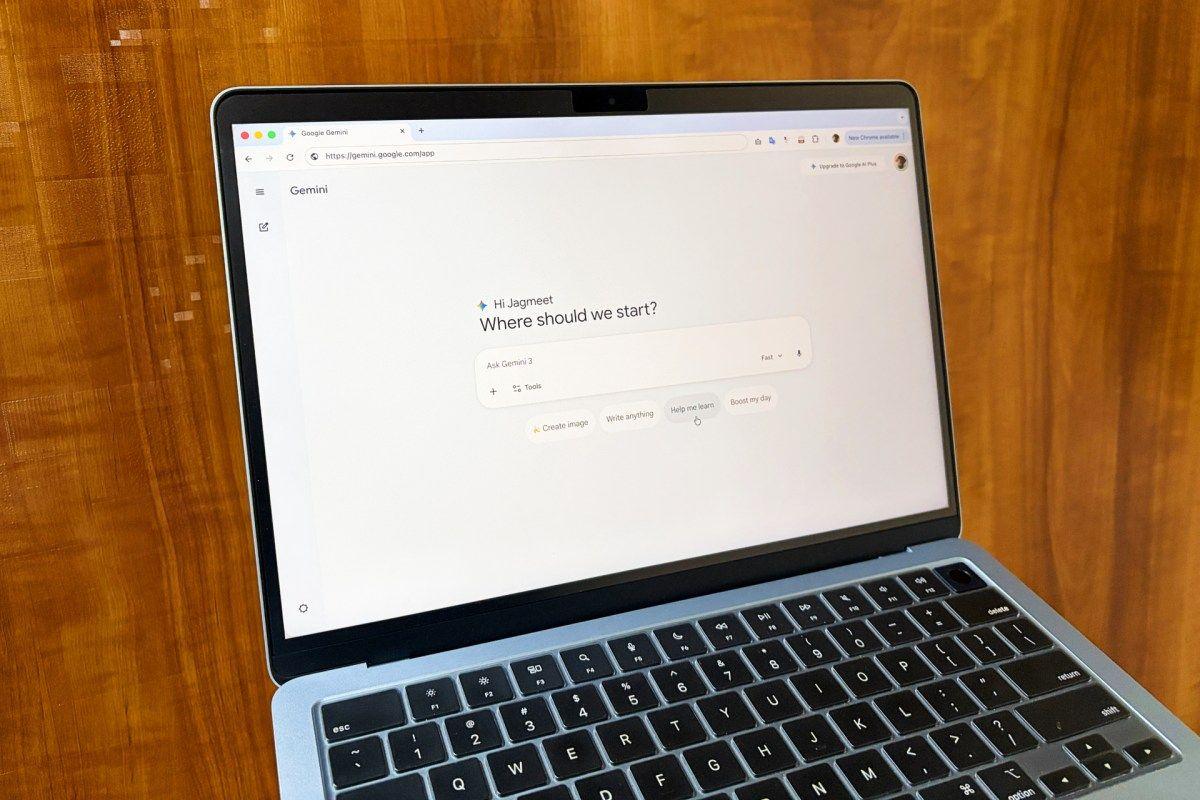
Google recently expanded its AI-powered learning capabilities by introducing full-length JEE Main practice tests within Gemini, targeting millions of students preparing for the Joint Entrance Examination (JEE), India's highly competitive engineering entrance exam
2
. Gemini for students now offers questions based on vetted content from Indian education firms Physics Wallah and Careers360, providing immediate feedback that highlights areas of strength and where further study is needed2
. Students can simply type "I want to take a JEE Main mock test" in Gemini to attempt the exam, with the chatbot providing scores, time taken, and explanations for complex concepts3
. The JEE Main practice tests will also roll out to AI Mode in Search, including the Canvas tool, which allows students to build interactive study guides and quizzes by attaching their class notes2
.
Source: TechCrunch
India's Complex Education System Reshapes Google's AI Strategy
India's decentralized education landscape, where curriculum decisions sit at the state level and ministries play an active role, has forced Google to abandon its traditional one-size-for-all approach
1
. Phillips emphasized that Google's AI in education initiatives are designed so that schools and administrators decide how and where tools are used, marking a shift for the Silicon Valley firm1
. The company is seeing faster adoption of multimodal learning in India, combining video, audio, and images alongside text to reach students across different languages and learning styles1
. Google has also focused on AI tools for educators rather than bypassing them, with Phillips noting that "the teacher-student relationship is critical" and that the company aims to help it "grow and flourish, not replace it"1
.Scaling AI Faces Infrastructure and Access Challenges
Google is encountering schools where devices are shared, connectivity is inconsistent, or learning jumps directly from pen and paper to AI tools
1
. Phillips acknowledged that "access is universally critical, but how and when it happens is very different," pointing to environments where schools rely on shared or teacher-led devices rather than one-to-one access1
. This digital divide presents both challenges and opportunities for scaling AI across India's vast education system, which includes 10.1 million teachers and a higher education system with more than 43 million students enrolled in 2021-221
.Google Invests ₹85 Crore in Adaptive Learning Tools
Google.org announced an ₹85 crore grant (approximately $10 million) to Wadhwani AI aimed at integrating adaptive learning tools into government-run education platforms
2
. The initiative targets systems such as national online learning portals and state education platforms, aiming to reduce administrative burdens for educators while improving personalization2
. The program spans pre-school through higher education and includes tools such as voice-based reading support in multiple Indian languages and AI-powered English learning coaches2
. Google claims the initiative has already reached around 10 million learners and educators, with plans to scale to 75 million students, 1.8 million educators, and a million early-career professionals by the end of 20272
.Related Stories

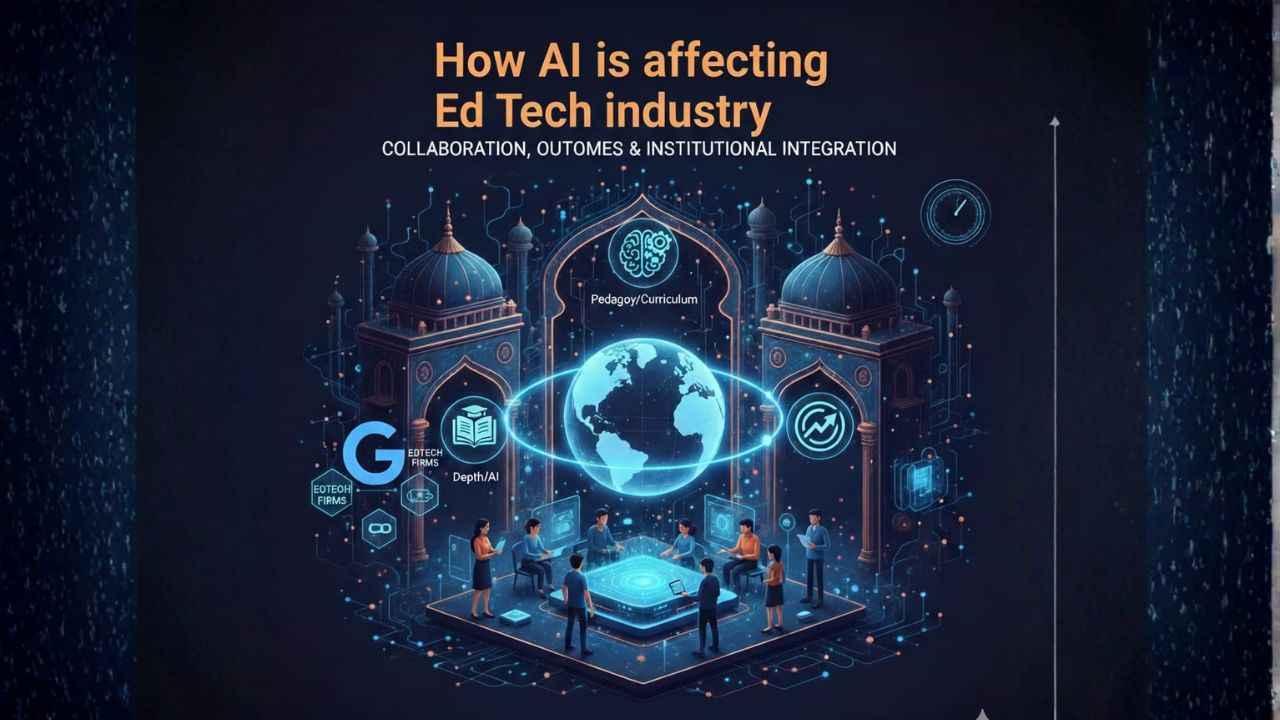
Edtech Industry Faces Pressure from Free AI Exam Preparation
The rollout of free AI exam preparation through Google Gemini has raised questions about the future of India's edtech industry, particularly for companies built around content libraries
5
. Pulkit Swarup, Senior Vice President of Engineering at Physics Wallah, acknowledged that "free, high-quality practice, explanations, and doubt solving have now been fully commoditised," forcing platforms to move beyond content libraries toward structure, prioritization, and exam strategy5
. Charu Malhotra, co-founder of consultancy firm Primus Partners, noted that "pressure is most visible in consumer-facing test prep, tutoring and homework-help services," with students now expecting free or low-cost AI support5
.
Source: Digit
Concerns Around Curriculum Alignment and Academic Governance
Experts warn against students relying solely on general-purpose AI during critical exam years, citing concerns about curriculum alignment and academic governance
5
. Swarup cautioned that "AI models are not inherently aware of syllabus boundaries, marking schemes or evolving exam patterns unless tightly constrained," warning that learning may feel productive while drifting away from what is actually tested5
. Malhotra flagged additional risks ranging from plagiarism and bias to data privacy, noting that "unlike curriculum-aligned edtech platforms, general-purpose AI tools are not designed for academic governance"5
.Google Partners with Government on AI-Enabled University
Google is partnering with the Ministry of Skill Development and Entrepreneurship and Chaudhary Charan Singh University on a pilot to build India's first AI-enabled state university
2
. The project aims to create a national framework for applying AI across vocational and higher education, encompassing teaching, student support, and administrative operations2
. Additionally, Google plans to work with government agencies on a nationwide program covering 40,000 Kendriya Vidyalaya educators to help teachers use AI for administrative work and lesson design1
. These initiatives reflect Google's focus on improving student comprehension and learning outcomes through ecosystem-level integration rather than standalone AI features4
.References
Summarized by

Navi
[2]
Related Stories
Google Unveils Comprehensive AI Tools for Education with Gemini and NotebookLM
01 Jul 2025•Technology

Google Unveils Major AI Initiatives for India: Localizing Gemini and Boosting Developer Ecosystem
23 Jul 2025•Technology

Google Unveils 'Learn About': An AI-Powered Educational Tool Revolutionizing Interactive Learning
12 Nov 2024•Technology

Recent Highlights
1
Google releases Gemma 4 with Apache 2.0 license, enabling unrestricted local AI on devices
Technology

2
AI Models Lie and Deceive to Protect Other AI Models From Deletion, Study Reveals
Science and Research

3
Anthropic discovers functional emotions in Claude that actively shape AI behavior and decisions
Science and Research

Recent Highlights
Today's Top Stories




Your Daily Dose of Curated AI News
Don’t drown in AI news. We cut through the noise - filtering, ranking and summarizing the most important AI news, breakthroughs and research daily. Spend less time searching for the latest in AI and get straight to action.

