Google launches Lyria 3 Pro to generate three-minute songs with enhanced creative control


6 Sources
6 Sources
[1]
Google launches Lyria 3 Pro music generation model | TechCrunch
Google announced on Wednesday that it's releasing Lyria 3 Pro, a music generation model, a month after Lyria 3's release. The new model will let users create tracks up to three minutes long, as compared to the 30-second-long tracks offered with the Lyria 3 model. The company said that, apart from allowing users to create longer tracks, the Lyria 3 Pro model will offer better creative control and customization. In the prompt, users can also specify different elements of a musical piece, such as intros, verses, choruses, and bridges, as the model understands track structure better than its predecessor. Google previously brought music generation capability to the Gemini app with the Lyria 3 release. The Pro model is also rolling out in the Gemini app, but only paid subscribers will gain access to it. The company is also rolling out Lyria3 Pro to its Google Vids video editing app and ProducerAI, a gen AI-powered music production tool, which Google acquired last month. In addition, Google is adding music generation capability to its enterprise tools with Vertex AI (in public preview), the Gemini API, and AI Studio through the Lyria 3 Pro model. Google emphasized that it used data from its partners and permissible data from YouTube and Google to train this model. It also said that the model doesn't mimic an artist. However, it said that if users specify an artist in prompts, it takes "broad inspiration" from that artist to generate a track. All tracks that are created using Lyria 3 and Lyria 3 Pro are marked with SynthID to denote that AI was used to make this track. Earlier this week, Spotify released new tools to let artists review songs released under their name so that AI slop creators don't misattribute music. Meanwhile, Deezer has launched tools to let any streaming service identify AI-generated music.
[2]
Google Lyria 3 Pro makes longer AI songs
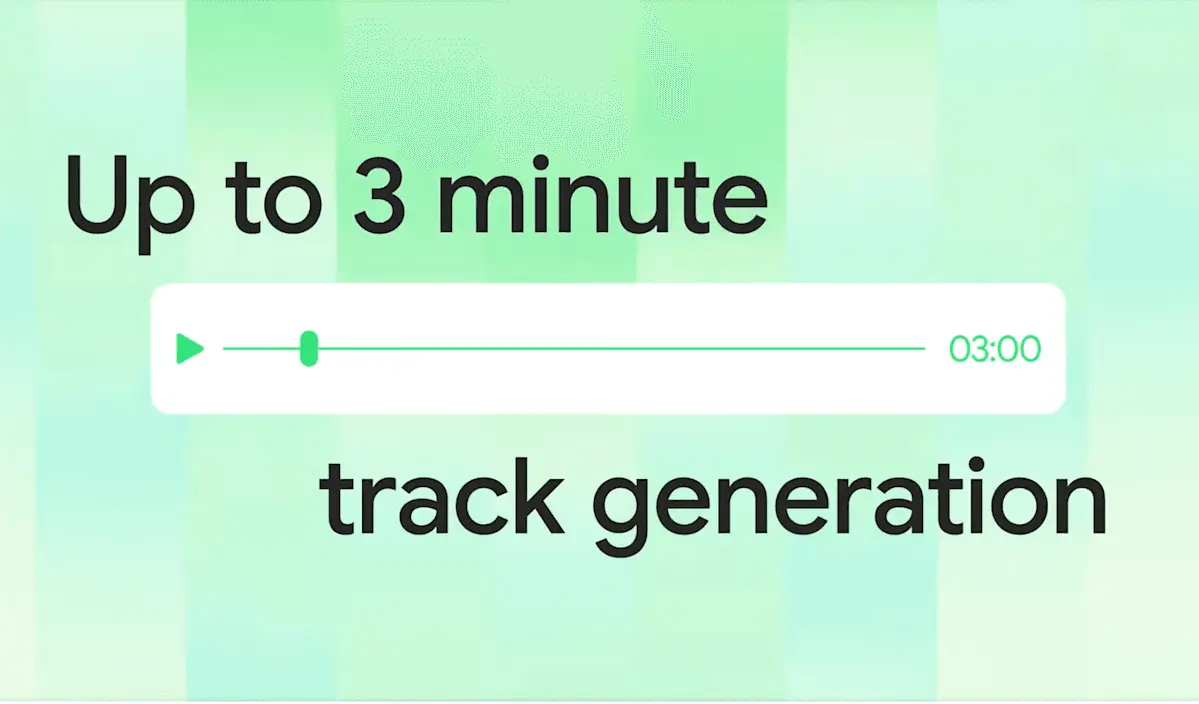
Google is expanding the capabilities of its Lyria 3 music-making AI, enabling it to create tracks up to three minutes long and from within multiple other Google Products. Until now, Lyria had been limited to 30-second clips. Lyria 3 Pro not only increases the maximum length sixfold, it also allows the user to prompt for specific elements like intros, choruses, and bridges for greater control over arrangements. Lyria 3 Pro works much like other popular music generation tools, such as Suno and Udio. Describe a mood, style, or instrumentation, and it spits out a track. It can also generate lyrics based on your prompt, or even a reference photo or video. One of the standout features of Lyria 3 Pro is its integration with other Google products. For one, you can create tracks from within Gemini, so there's no need to download a dedicated app. But Google is also adding the model to Vertex AI for enterprise customers, Google AI Studio and Gemini API for developers, Google Vids for office workers, and the recently purchased ProducerAI platform. The extended length will be of particular interest to users of ProducerAI, a direct competitor to Suno. Being able to generate a full song rather than just a 30-second clip is likely to raise concerns about impersonation and copyright infringement. In a press release, Google attempted to assuage these fears, saying, "Lyria 3 and Gemini do not mimic artists," adding, "if a prompt names a creator, the model takes that as broad inspiration." Google says it also checks Lyria 3 Pro's outputs against existing content to ensure the AI doesn't spit out infringing material, and embeds a silent SynthID watermark to identify them as AI-generated.
[3]
With Lyria 3 Pro, Gemini Can Now Generate 3-Minute Songs From Prompts
You don't have to provide the lyrics. Just mention the mood and tempo or upload an image for reference, and let Lyria 3 models do the rest. UPDATE : Google is expanding Gemini's music-generation capabilities with a new model called Lyria 3 Pro. When Lyria 3 launched last month, Gemini could generate 30-second audio clips from prompts. With the new advanced model, the chatbot can now create tracks up to 3 minutes long and follow instructions you provide for intros, verses, choruses, and bridges, Google says. For now, the feature remains limited to paying Gemini users. In the Gemini app and website, you can get started by selecting the Create Music option below the prompt box. Google is also integrating Gemini's "high-quality music generation" across many of its other services, such as Vertex AI, AI Studio, Vids, and Producer AI. Original Story (2/18): After image and video generation, it's time for music generation on Google's Gemini chatbot. The company just announced its latest music-generation model, Lyria 3, which will enable Gemini users to generate 30-second audio clips from textual and visual prompts. Getting started is as easy as generating images using Nano Banana. Click the "Create Music" button below the prompt box. You can choose from a set of tunes based on genres, such as 90s rap, Latin pop, R&B romance, Afropop, and more, or describe the mood, style, vocals, and tempo you'd like your track to have. Lyria 3 will also add lyrics based on your description, which can contain images for reference. Google's example for an image-based prompt says: "Use these photos to create a track about my dog Duncan on a hike in the woods." Once you hit Enter, Gemini will generate a 30-second clip with album art from Nano Banana. You'll be able to download the audio track and also share it using a link. The goal here isn't "to create a musical masterpiece, but rather to give you a fun, unique way to express yourself," Google says. The model is "designed for original expression, not for mimicking existing artists," and its filters should detect existing content. Additionally, all songs generated by Gemini will carry Google's Synth ID watermark. If you are unsure whether a clip was generated by Gemini, you can upload it to Gemini and ask the chatbot to verify. AI song generation isn't entirely new. Platforms like Suno and Udio have been at it for a couple of years, but they ran into copyright issues with major music labels like Sony, Universal Music, and Warner Bros. Suno settled its case with Warner, and Udio settled its case with Warner and Universal by signing licensing deals. YouTube was reportedly also considering licensing its AI tools in 2024. Earlier this month, it introduced AI Playlist generation for YouTube Premium and YouTube Music Premium. Lyria 3 in Gemini will roll out to all users aged 18+ on desktop starting today, and on the mobile app in the coming days. Gemini's music generation currently produces tracks in English, German, Spanish, French, Hindi, Japanese, Korean, and Portuguese. Google plans to add support for additional languages in the future. Google didn't specify the limit for free users, but said that AI Plus, Pro, and Ultra subscribers will enjoy higher limits. The model will also be made available in YouTube's Dream Track tool for creating Shorts.
[4]
Google's Lyria 3 Pro can now generate AI music (slop) up to 3 minutes in length
Google , an updated version of its AI model that generates songs based on prompts. The biggest improvement here is the ability to make full three-minute songs, up from 30 seconds . The tool also brings a lot more customization into the mix. Users can now prompt the model to create specific elements within a song, like intros, verses, choruses and bridges. Google says "Lyria 3 Pro better understands musical composition" when compared to the previous model and that it's "great for experimenting with different styles or generating songs with complex transitions." It's already available for paid Gemini users and for enterprise customers on Vertex AI. Additionally, developers have access to the tool via the Gemini API and Google AI Studio. The company is also integrating it into , an AI-based video-generation platform. Google says that "responsibility was foundational" when designing and training this model, so it only uses materials that the company has actual rights to. Additionally, all Lyria 3 Pro outputs are embedded with SynthID, which is a . That's all well and good, but do we need yet another AI music-making tool? Current estimates suggest that around get uploaded daily to Spotify alone. The platform had to delete, and this is not a typo, last year.
[5]

Build with Lyria 3, our newest music generation model
Lyria 3 is designed to combine deep musical awareness with structural coherence. This allows developers to build apps that offer high-fidelity compositions, including vocals, verses and choruses, that maintain musical consistency from the first note to the last. Developers can now choose between two distinct model variants designed to meet specific production and latency requirements: Both models support realistic vocals that convey expressive nuance, plus improved clarity for more natural sounds. Developers can also explore global languages and genres. Generate vocals in different languages, and create music spanning genres from pop to funk to Motown. Lyria 3 introduces granular controls that allow you to direct the model with precision through natural language prompts: To help you start experimenting immediately, we are also launching a new music generation experience in AI Studio. Using a paid API key, this dedicated workspace provides a first-class environment to create with Lyria 3 and explore its advanced features like image to music. Inside the playground, you can explore two powerful creation modes for music:
[6]

Google launches Lyria 3 Pro for longer AI-generated music tracks By Investing.com
Investing.com - Google released Lyria 3 Pro on Wednesday, an advanced music generation model that creates tracks up to three minutes long with structural awareness. The model understands musical composition elements including intros, verses, choruses and bridges, allowing users to prompt for specific song structures and complex transitions. Lyria 3 Pro is now available in public preview on Vertex AI for businesses requiring on-demand audio at scale. The model is also accessible through Google AI Studio and the Gemini API for developers. Google is integrating the technology into Google Vids, its AI-powered video creation app, for Google Workspace customers and Google AI Pro & Ultra subscribers starting this week. The company is making longer generations with Lyria 3 Pro available in the Gemini app for paid subscribers. The model is also integrated into ProducerAI, a collaborative music creation tool designed for artists, producers and songwriters at all levels. ProducerAI is available globally to free and paid subscribers. Google developed the technology through its Music AI Sandbox, which provides musicians, producers and songwriters with experimental tools. Grammy-winning producer Yung Spielburg used Lyria in his composition and production process for the score of the Google DeepMind short film "Dear Upstairs Neighbors." DJ and producer François K is collaborating with Google using Lyria to create a soon-to-be-released song. Google trains Lyria 3 using materials that YouTube and Google has a right to use under its terms of service, partner agreements and applicable law. The model does not mimic artists when prompted with creator names, instead taking broad inspiration. All Lyria 3 and Lyria 3 Pro outputs are embedded with SynthID, Google's watermark for identifying AI-generated content. This article was generated with the support of AI and reviewed by an editor. For more information see our T&C.
Share
Share
Copy Link
Google unveiled Lyria 3 Pro, a music generation model that creates tracks up to three minutes long, a significant leap from the 30-second limit of its predecessor. The model offers enhanced creative control over song structure and integrates across Google's ecosystem, including Gemini, Vertex AI, and ProducerAI, while embedding SynthID watermarks to identify AI-generated content.
Google Expands AI Music Generation Capabilities with Lyria 3 Pro
Google announced on Wednesday the release of Lyria 3 Pro, a music generation model that marks a substantial evolution in the company's AI music capabilities
1
. Arriving just one month after Lyria 3's debut, the new model enables users to generate three-minute songs, representing a sixfold increase from the previous 30-second limit2
. This expansion positions Google to compete more directly with established AI music platforms like Suno and Udio, which have dominated the space for years3
.
Source: Engadget
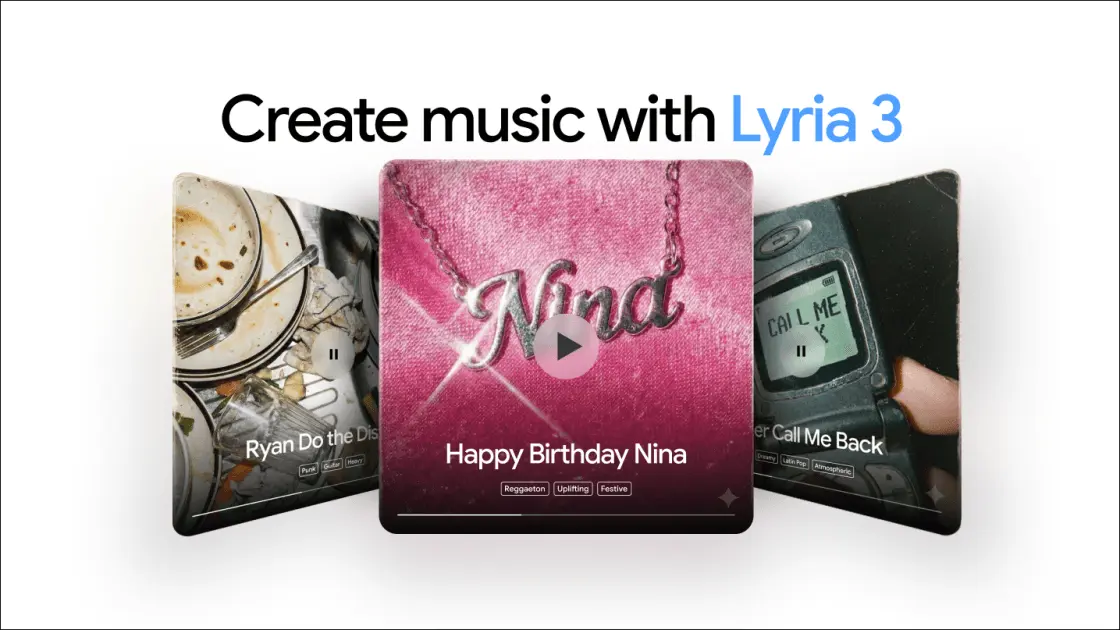
The music generation model delivers more than just extended track length. Lyria 3 Pro offers enhanced creative control, allowing users to create tracks from prompts that specify distinct musical elements including intros, verses, choruses, and bridges
1
. This song structure customization reflects what Google describes as the model's improved understanding of musical composition, making it particularly effective for experimenting with different styles or generating songs with complex transitions4
.
Source: PC Magazine
Gemini Integration and Broad Platform Availability
The Gemini integration strategy forms a central pillar of Google's rollout approach. Lyria 3 Pro is now available within the Gemini app, though access remains limited to paid subscribers
1
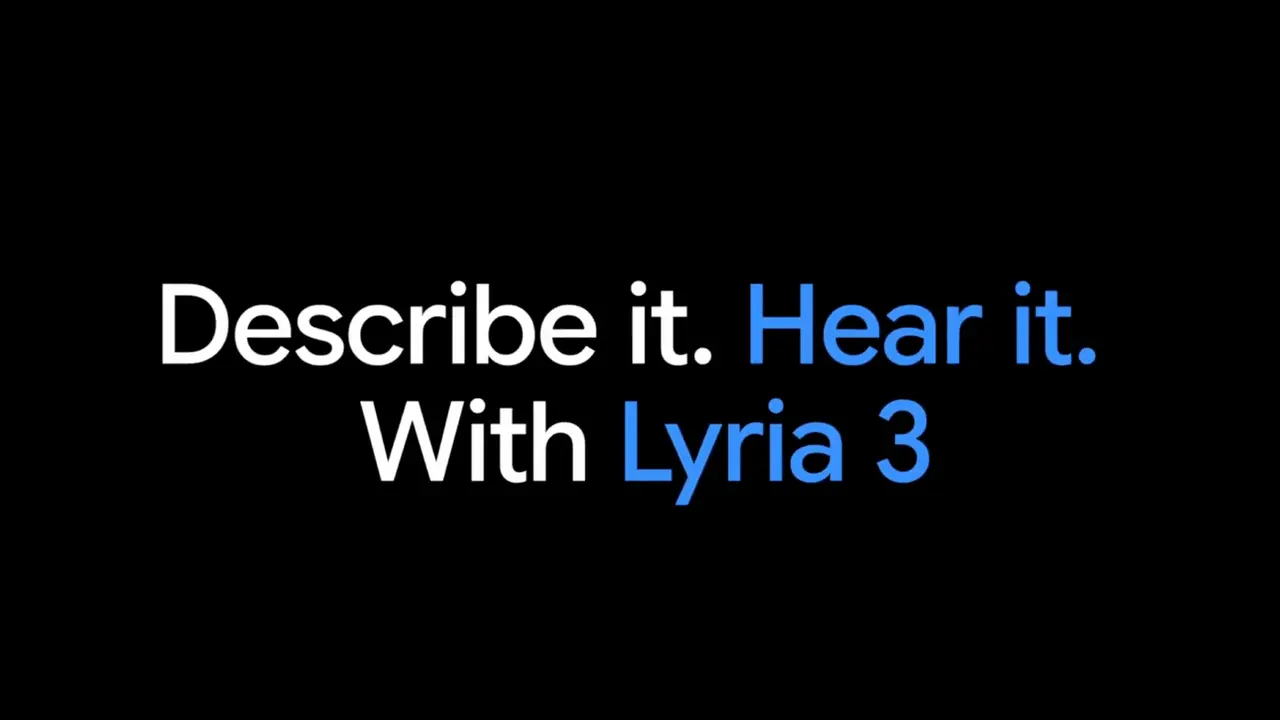
. Users can start creating music by selecting the "Create Music" option below the prompt box, where they can describe mood, style, vocals, and tempo, or even upload reference photos or videos2
3
.
Source: Google
Beyond consumer applications, Google is deploying the model across its enterprise and developer ecosystem. Vertex AI now offers Lyria 3 Pro in public preview for enterprise customers, while developers gain access through the Gemini API and AI Studio
1
5
. The company is also integrating the technology into Google Vids, its video editing application, and ProducerAI, a generative AI-powered music production tool that Google acquired last month1
. This ProducerAI integration is particularly significant, as the platform directly competes with Suno in the professional music creation space2
.Related Stories

Addressing Copyright Concerns and Responsible AI
As AI music generation extends to full-length tracks, copyright concerns intensify. Google has attempted to address these issues by emphasizing that it trained the model using data from partners and permissible content from YouTube and Google
1
. The company states that Lyria 3 Pro does not mimic artists, though if users specify an artist in prompts, the model takes "broad inspiration" from that creator to generate tracks1
2
.To maintain transparency and enable content verification, all tracks created using Lyria 3 and Lyria 3 Pro are embedded with SynthID, Google's AI watermark technology
1
4
. This silent watermark identifies content as AI-generated, and users can upload tracks to Gemini to verify their origin3
. Google also claims to check outputs against existing content to prevent the system from producing infringing material2
.The timing of this release coincides with growing industry efforts to combat AI-generated content misuse. Earlier this week, Spotify released tools enabling artists to review songs released under their name to prevent misattribution, while Deezer launched tools to help streaming services identify AI-generated music
1
. These parallel developments underscore the music industry's urgent need to establish frameworks for managing AI-generated content, particularly as platforms like Spotify reportedly see around 120,000 tracks uploaded daily, with the service having deleted millions of AI-generated songs last year4
. As responsible AI practices become central to deployment strategies, the industry watches to see whether Google's approach will set a standard or face the same licensing challenges that led Suno and Udio to settle copyright cases with major labels like Warner, Universal Music, and Sony.References
Summarized by

Navi
[2]
Related Stories
Google Gemini rolls out Lyria 3 to generate 30-second AI songs from text and images
18 Feb 2026•Technology

Google acquires ProducerAI, bringing AI music generation tool backed by The Chainsmokers to Labs
25 Feb 2026•Technology

ElevenLabs Launches AI Music Generator with Commercial Rights, Expanding its AI Audio Portfolio
06 Aug 2025•Technology

Recent Highlights
1
Anthropic's Claude AI can now control your computer to complete tasks autonomously
Technology

2
Nvidia's Jensen Huang calls OpenClaw the next ChatGPT, sending Chinese AI stocks soaring
Technology

3
Elon Musk unveils $20 billion Terafab chip manufacturing project to produce terawatt of computing
Technology

Recent Highlights
Today's Top Stories




Your Daily Dose of Curated AI News
Don’t drown in AI news. We cut through the noise - filtering, ranking and summarizing the most important AI news, breakthroughs and research daily. Spend less time searching for the latest in AI and get straight to action.

